Tag: Politics

  • The Eternal Flame: How Hestia, the Forgotten Goddess, Shaped Greek Life and Politics

    The Eternal Flame: How Hestia, the Forgotten Goddess, Shaped Greek Life and Politics

    When you picture the Greek gods, you likely think of Zeus’s thunderbolts, Athena’s wisdom, or Poseidon’s trident. But there was one goddess who received the first and last offering at every sacrifice, whose fire burned at the center of every home and every city, and who had virtually no myths at all. Her name was Hestia, and her quiet power held Greek society together.

    Hestia was the eldest Olympian, the first child of Cronus and Rhea, and yet she is often forgotten. She had no adventures, no love affairs, no battles just a flame. But that flame was the literal and symbolic heart of Greek life, bridging the private world of the household and the public world of the state.

    The First and Last: Hestia’s Unique Birth and Status

    Hestia’s story begins with a paradox. As the first-born of Cronus and Rhea, she was the first to be swallowed by her father, who feared his children would overthrow him. When Zeus eventually forced Cronus to disgorge his siblings, Hestia came out last. This made her both the eldest and the youngest a position that gave her a unique claim to honor. She was the alpha and the omega of the Olympian generation, and this duality was reflected in her role as the recipient of the first and last libations at every sacrifice.

    Her virginity was another defining feature. According to the Homeric Hymn to Aphrodite, Hestia swore an oath by the head of Zeus to remain a virgin, rejecting marriage offers from Poseidon and Apollo. This was not a rejection of the world, but a choice to stay rooted. While other gods ventured out to conquer, seduce, or battle, Hestia stayed put. She was the hearth, and the hearth does not move.

    The Hearth as the Center of the Home

    In an ancient Greek home, the hearth was more than a place to cook. It was the ritual and emotional center of the household, or oikos. The word for the goddess and the word for the hearth were the same: hestia. This was no coincidence. The hearth was where the family gathered for warmth, food, and stories. It was also where the most important moments of life unfolded.

    When a child was born, the family performed a ceremony called the amphidromia. The newborn was carried around the hearth, formally introducing the child to the household gods and the family. When a couple married, the bride was escorted from her father’s hearth to her husband’s, symbolizing her transition from one oikos to another. When someone died, the body was laid out near the hearth before burial, a final farewell in the presence of the sacred flame.

    The hearth was also a place of sanctuary. Those seeking refuge would sit at the hearth, and harming them was a grave offense against the gods. This custom underscored the hearth’s role as a sacred space, protected by Hestia herself.

    From Home to City: The Public Hearth

    Hestia’s influence extended far beyond the individual home. Every Greek city-state, or polis, maintained a public hearth in a building called the Prytaneion. Here, the prytaneis (chief magistrates) met, and the fire was kept burning continuously. This was the koinē hestia, the “common hearth,” and it represented the unity of the citizen body.

    The public hearth was not just a symbolic gesture. It was the literal center of civic life. Ambassadors and honored guests were entertained there, and it was considered the symbolic home of the city itself. When a colony was founded, settlers carried fire from the mother city’s hearth to the new settlement. This act transferred not just a flame, but the very identity of the city. The fire was a thread that connected the new colony to its origins, ensuring that the gods and the ancestors were present in the new land.

    The connection between Hestia and civic life was so strong that even the Delphic oracle began its rituals with an offering to her. The Prytaneion at Delphi housed a perpetual flame, and no consultation of the oracle could begin without first honoring the goddess of the hearth.

    The Silence of Myth: Stability Over Story

    One of the most striking things about Hestia is her absence from myth. Unlike Zeus, who has countless adventures, or Athena, who plays a central role in epic poems, Hestia has no stories. But this silence is not a lack—it is a feature. Myth requires movement, conflict, and change. Hestia is the fixed point around which all that movement occurs. She is the hearth that stays lit while heroes journey, wars rage, and gods scheme.

    Plato recognized this in his dialogue Phaedrus, where he places Hestia at the center of the cosmos as the unmoving hearth of the universe. This image of the axis mundi—the world axis—captures her essence. She is the still point in a turning world, the force that holds everything together.

    Contrasting Powers: Hestia and Athena

    To understand Hestia’s unique form of power, it helps to compare her to Athena. Both are virgin goddesses, but they embody very different kinds of authority. Athena is public, martial, and cerebral. She is the goddess of wisdom and strategy, always at the center of action, advising heroes and leading armies. Hestia, on the other hand, is private, pacific, and domestic. Her power is centripetal—she draws things inward and holds them together.

    This contrast is not a criticism of Hestia. Rather, it reveals how Greek culture valued different kinds of female-coded power. Athena’s power was outward, projecting influence through the state and its institutions. Hestia’s power was inward, creating the stability that made those institutions possible. Without the hearth, there would be no home; without the home, there would be no city; without the city, there would be no civilization.

    The Roman Echo: Vesta and the Vestal Virgins

    Hestia’s Roman counterpart, Vesta, carried this legacy even further. The Vestal Virgins, a college of priestesses dedicated to Vesta, maintained the sacred fire of Rome with strict discipline. If the fire went out, it was seen as a dire omen. The Vestals held unique privileges, such as the power to free condemned prisoners they encountered, which demonstrated the high status of their office. This direct continuation of Hestia’s cult shows how deeply the Greeks’ reverence for the hearth had shaped the wider ancient world.

    Why It Matters Today

    Hestia’s story challenges our assumptions about power and significance. We tend to celebrate the loud, the visible, and the disruptive. But Hestia reminds us that quiet, steady forces are just as important. The flame that never goes out is the one that holds a community together, whether it is a family gathered around a kitchen table or a nation united by shared symbols.

    In a world obsessed with motion and novelty, Hestia offers a counterpoint. She is the reminder that some things must remain constant—the home, the city, the sacred bond between them. Her flame may be forgotten in our textbooks, but it never went out in the ancient world, and its legacy still warms us today.

    Hestia is often the last goddess we think of when we remember Greek mythology. But she was the first-born, the first honored, and the last to receive her due. Her flame was the thread that connected the private hearth to the public state, the individual to the community, and the mortal to the divine. In her silence, she spoke volumes about the importance of stability, continuity, and the quiet power that holds the world together.

    Summary

    • Hestia was the eldest Olympian, first-born of Cronus and Rhea, yet she has virtually no myths, reflecting her role as a stable, unmoving force.
    • Her symbol was the hearth fire, which was central to both the home (oikos) and the city-state (polis), where a public hearth burned in the Prytaneion.
    • Life-cycle rituals such as birth (amphidromia), marriage, and death all took place around the hearth, making Hestia the guardian of family transitions.
    • Colonies carried fire from their mother city’s hearth to their new home, symbolically transferring civic identity and divine protection.
    • Plato placed Hestia at the center of the cosmos, reinforcing her as the axis mundi, and her Roman counterpart Vesta continued her cult with the Vestal Virgins.

    FAQ

    Q: Why doesn’t Hestia appear in any myths?
    A: Hestia’s absence from myth is intentional. Myth relies on narrative movement—adventures, conflicts, and changes. Hestia represents the opposite: stability and continuity. She is the fixed point that allows other stories to unfold, which is why she has no tales of her own.

    Q: What was the role of the public hearth in Greek cities?
    A: The public hearth, or koinē hestia, was housed in the Prytaneion, the civic hall where magistrates met. Its fire was kept burning continuously and symbolized the unity and continuity of the city. It was also a place of hospitality for ambassadors and honored guests.

    Q: How did Hestia’s cult connect the home and the state?
    A: The hearth was the center of both the private household and the public city. Rituals at the hearth marked key events in family life, while the public hearth represented the city’s identity. When colonies were founded, fire from the mother city’s hearth was carried to the new colony, linking the two through Hestia’s flame.

    Q: What was the significance of Hestia receiving the first and last libations?
    A: This practice honored Hestia as both the first-born and last-released of Cronus’s children. It acknowledged her as the beginning and end of all offerings, symbolizing her role as the foundational and enduring presence in Greek religious practice.

    Q: How does Hestia compare to Athena?
    A: Both are virgin goddesses, but Athena is public, martial, and intellectual, while Hestia is private, pacific, and domestic. Athena’s power projects outward, while Hestia’s draws inward and holds things together. Together, they show the different ways Greek culture valued female authority.
  • Crooked Media Revives FiveThirtyEight Politics Podcast as ‘Still Counting’ Ahead of 2026 Midterms

    Crooked Media Revives FiveThirtyEight Politics Podcast as ‘Still Counting’ Ahead of 2026 Midterms

    Crooked Media has acquired the rights to bring back the beloved ‘FiveThirtyEight Politics’ podcast, reuniting hosts Nate Silver, Clare Malone, and Galen Druke under a new name: ‘Still Counting.’ The relaunch, scheduled for next month, arrives just as the 2026 midterm election cycle heats up, positioning the show as a data-driven counterpoint to partisan commentary.

    The original podcast, which ran from 2016 until Disney shuttered FiveThirtyEight in April 2023, built a loyal following for its rigorous polling analysis and election forecasting. Its revival marks a strategic move by Crooked Media to capture an audience hungry for quantitative political coverage, while giving Silver a chance to reclaim his brand after a messy corporate exit.

    A Phoenix from the Ashes

    The revival of ‘FiveThirtyEight Politics’ as ‘Still Counting’ is a striking turnaround for a show that seemed permanently shelved when Disney/ABC News cut FiveThirtyEight in April 2023, part of broader cost-cutting that included layoffs across the company. Nate Silver, who founded FiveThirtyEight in 2008 and gained fame for correctly predicting 49 of 50 states in the 2008 presidential election, left the organization amid public criticism of its corporate structure.

    Now, under Crooked Media’s umbrella, Silver, Malone, and Druke are back together. The new name plays on the election-night phrase ‘still counting votes,’ signaling resilience and persistence. For Silver, the deal represents a vindication: he can now operate with editorial independence, free from the constraints he blamed for stifling his work at Disney.

    The Data vs. Punditry Divide

    ‘Still Counting’ will enter a crowded podcast market, competing with heavyweights like ‘The Daily,’ ‘Pod Save America,’ and ‘The Ezra Klein Show.’ But its niche is distinct: rigorous, quantitative analysis of polls, elections, and political strategy. In an era of widespread polling skepticism and misinformation, the show’s data-centric approach could resonate with listeners seeking grounded, evidence-based reporting.

    However, skeptics may question whether Silver’s models have lost credibility after misses in the 2016 and 2020 presidential elections. The show will need to address these critiques head-on, perhaps by evolving its methodology or being more transparent about uncertainty. Whether it meaningfully innovates or recycles old formats remains to be seen.

    Crooked Media’s Progressive Alignment

    Crooked Media, founded in 2017 by former Obama staffers Jon Favreau, Jon Lovett, and Tommy Vietor, is known for progressive political commentary. Its acquisition of a ‘neutral’ data brand raises questions about perceived bias. Will ‘Still Counting’ maintain FiveThirtyEight’s nonpartisan reputation, or will it lean left to fit Crooked’s ecosystem?

    Silver himself has been critical of both parties and has clashed with progressive activists, making his fit within Crooked Media a point of curiosity. The company’s leadership has emphasized editorial independence, but listeners will watch closely for any signs of political slant.

    The Business of Podcast Revivals

    The deal reflects a broader trend in podcasting: media companies acquiring proven intellectual property with built-in audiences. As election season approaches, political content becomes increasingly valuable for ad revenue and subscriber growth. Crooked Media’s strategic timing—relaunching ahead of the 2026 midterms—allows the show to capitalize on heightened interest in primaries, polling trends, and House/Senate races.

    The competitive landscape is fierce, but ‘Still Counting’ brings a recognizable name and a dedicated fanbase from the original show’s run. If the hosts can recapture their chemistry and deliver the same level of analysis, the show has strong potential to carve out a loyal audience in the crowded political podcast space.

    What to Expect Next Month

    With the relaunch scheduled for next month, details on the show’s format are still emerging. It will be a weekly podcast, a departure from the more frequent episodes of the original. The hosts are expected to cover the 2026 midterm cycle in depth, leveraging their combined expertise in polling, data analysis, and political strategy.

    For fans of the original show, the return of Silver, Malone, and Druke is a nostalgic moment. For Crooked Media, it’s a strategic expansion into the data-driven political niche. For the broader media landscape, it’s a test of whether a revived brand can thrive outside its original corporate home.

    The revival of ‘FiveThirtyEight Politics’ as ‘Still Counting’ is a bold move that reunites a beloved team and brings data-driven analysis back to the podcasting forefront. As the 2026 midterms approach, the show’s success will depend on its ability to retain its nonpartisan credibility while adapting to a new home and a changing media environment.

    Summary

    • Crooked Media has acquired the rights to revive the ‘FiveThirtyEight Politics’ podcast, renaming it ‘Still Counting.’
    • The show will relaunch next month, ahead of the 2026 midterm elections, as a weekly podcast.
    • Original hosts Nate Silver, Clare Malone, and Galen Druke will reunite for the project.
    • The revival raises questions about data journalism credibility, progressive media bias, and the business of podcast IP.
    • The show will compete with major political podcasts while aiming to fill a niche for quantitative analysis.

    FAQ

    Q: When will the ‘Still Counting’ podcast relaunch?
    A: The relaunch is scheduled for next month, though an exact date has not been announced.

    Q: Who are the hosts of the revived podcast?
    A: Nate Silver, Clare Malone, and Galen Druke will reunite as hosts.

    Q: Why was the original ‘FiveThirtyEight Politics’ podcast canceled?
    A: Disney/ABC News shut down FiveThirtyEight in April 2023 as part of broader cost-cutting measures and layoffs.

    Q: How will ‘Still Counting’ differ from the original show?
    A: It will be a weekly podcast, and the new name reflects a focus on resilience and ongoing vote counting. The format will likely maintain the data-driven approach of the original.

    Q: Is Crooked Media a progressive outlet, and could that affect the show’s neutrality?
    A: Crooked Media is known for progressive commentary, but the company has stated it will respect editorial independence. Whether the show maintains nonpartisan analysis remains to be seen.

  • How World War II Still Shapes the 21st Century: Politics, Memory, and Culture

    How World War II Still Shapes the 21st Century: Politics, Memory, and Culture

    On a quiet morning in 1945, the world emerged from six years of war with 70 to 85 million dead—roughly 3% of the global population at the time. The conflict had consumed continents, toppled empires, and introduced weapons that could end civilization. But the war did not end in 1945. Its institutions, its memories, and its unresolved tensions continue to shape the politics and culture of this century.

    Today, when a Russian official invokes the ‘Great Patriotic War’ to justify action in Ukraine, or when a German chancellor bows before the Holocaust memorial in Berlin, they are reaching for the same historical anchor. The post-war order—the United Nations, the European Union, the nuclear non-proliferation regime—was built as a direct response to the war’s horrors. Understanding the 21st century means tracing these lineages back to the conflict that defined the modern era.

    The Architecture of the Post-War World

    The war’s most enduring legacy is the institutional framework that governs international relations. In 1945, the United Nations was founded with a Security Council whose five permanent members—the United States, the United Kingdom, France, Russia, and China—are the war’s principal victors. That structure remains unchanged, giving the winners of 1945 a permanent veto over global security decisions. The Bretton Woods institutions (the IMF and World Bank) created in 1944 still anchor the global financial system, and the Universal Declaration of Human Rights (1948) set the standard for international law.

    Europe’s integration, too, is a war project. The 1951 European Coal and Steel Community was designed explicitly to bind France and Germany’s heavy industries so tightly that another war would be impossible. That coal-and-steel pact evolved into the European Union, a political and economic bloc of 27 nations. When the EU faces a crisis—whether the eurozone debt or Brexit—it is grappling with the legacy of a peace project born from the ashes of war.

    Nuclear Deterrence: A Fragile Peace

    The war’s final act, the atomic bombings of Hiroshima and Nagasaki, created a doctrine that has—so far—prevented direct great-power conflict. Nuclear deterrence theory holds that the fear of mutual assured destruction keeps rival states from open war. The Cold War’s proxy conflicts in Korea, Vietnam, and Afghanistan were bloody, but the US and Soviet Union never fought each other directly. That logic persists: the Treaty on the Non-Proliferation of Nuclear Weapons (1968) remains the cornerstone of arms control, even as states like North Korea and Iran challenge its limits.

    Yet the system is fragile. The war’s nuclear legacy has spread to nine countries, and the risk of use—through accident, miscalculation, or terrorism—remains a defining threat of this century. As the Bulletin of the Atomic Scientists’ Doomsday Clock has repeatedly warned, the world is closer to nuclear catastrophe than at any point since the Cold War’s darkest days.

    The Geopolitical Chessboard: From Colonies to Superpowers

    The war accelerated the collapse of European colonial empires. Britain, France, and the Netherlands emerged from the conflict financially exhausted and unable to maintain control over their colonies. India gained independence in 1947, followed by dozens of African and Asian nations in the following decades. But the war’s promise of self-determination clashed with colonial powers’ reluctance—a tension that still resonates in postcolonial states grappling with borders drawn during the war era.

    The war also created the bipolar superpower rivalry that defined the Cold War. The US and the Soviet Union emerged as the two dominant powers, each with a global sphere of influence. That rivalry shaped the post-war map: NATO expanded eastward after the Cold War’s end, and the US maintains approximately 750 military bases in over 80 countries—a posture that originated in WWII and Cold War strategy. When Russia invaded Ukraine in 2022, it explicitly invoked WWII memory, casting the conflict as a continuation of the ‘Great Patriotic War’ against Western encroachment. Ukraine’s president, Volodymyr Zelenskyy, in turn, has drawn parallels to the Nazi invasion.

    Memory as a Political Weapon

    The war’s memory is not a static relic; it is a living political tool. In Russia, 80% of the population views the war as the most important event of the 20th century. The ‘Great Patriotic War’ narrative is central to President Vladimir Putin’s legitimacy, framing Russia as the liberator of Europe and a bulwark against fascism. This memory justifies military actions and suppresses dissent by equating criticism with betrayal.

    In Germany, by contrast, the war has produced Vergangenheitsbewältigung—a term for ‘coming to terms with the past.’ Holocaust memory is a cornerstone of German and European identity. Germany has mandatory Holocaust education, and its leaders routinely visit memorials. But this reckoning is not universal. Japan’s handling of its wartime atrocities, particularly the ‘comfort women’ issue, remains a source of conflict with South Korea. Poland’s 2018 Holocaust law, which criminalized blaming the Polish nation for Nazi crimes, sparked international outrage.

    These divergent memories create real-world disputes. In 2023, the Polish government demanded reparations from Germany for WWII damages, while Germany insists the matter is closed. In the US, the ‘Greatest Generation’ myth of heroic unity contrasts with more critical European cinema, which explores collaboration and guilt.

    Culture: How We Remember and Represent

    Cultural production continually reinterprets the war, reflecting each generation’s concerns. Steven Spielberg’s Schindler’s List (1993) shaped American perceptions of the Holocaust, while Jonathan Glazer’s The Zone of Interest (2023) offers a more challenging view, focusing on the banality of evil. Novels, films, and video games—from The Book Thief to Call of Duty—keep the war in public consciousness, but each medium selects its own truths.

    The war also transformed gender roles. With millions of men mobilized, women entered the workforce in unprecedented numbers, symbolized by ‘Rosie the Riveter’ in the US. This shift laid groundwork for post-war feminist movements. The war’s racial dimensions—from Japanese American internment to the Holocaust’s racial ideology—sparked civil rights struggles that continue to this day.

    The Unfinished Business of Decolonization

    The war’s promise of self-determination, enshrined in the Atlantic Charter (1941), clashed with colonial realities. The post-war period saw a wave of decolonization, but it was neither smooth nor complete. The partition of India, the Algerian War, and the Vietnam War all traced their roots to the war’s aftermath. Today, postcolonial states still struggle with the arbitrary borders drawn by European powers during the war era, fueling conflicts from the Middle East to Africa.

    The Strained Liberal Order

    The post-war order—liberal internationalism, free trade, human rights—is now under strain. Revisionist powers like Russia and China view it as a Western-imposed hierarchy, while Western leaders defend it as the guarantor of peace. The war’s legacy is thus a contested one: is the ‘rules-based order’ a shield against tyranny, or a weapon of the powerful? The answer depends on where you stand.

    The Demographic Legacy: Migration and the Baby Boom

    The war triggered massive demographic upheaval. Millions of refugees, displaced persons, and soldiers crossed borders, reshaping nations. The ‘baby boom’ (1946–1964) created a generation whose size drove economic growth and cultural change in the US and Europe. The war also led to the entry of women into the workforce at scale, a shift that had lasting implications for family structures and gender equality.

    The War in the 21st Century: A Living Legacy

    Seventy-eight years after the war’s end, its influence is everywhere: in the UN Security Council’s vetoes, in Europe’s shared currency, in the nuclear warheads that guard against another great-power war, in the memory politics that inflame national pride. The war’s trauma and triumph are woven into the fabric of our political and cultural institutions. To understand the 21st century—from the rise of China to the war in Ukraine—one must trace the lines back to 1945.

    World War II was not a distant event but the foundation upon which the modern world was built. Its institutions, its memories, and its unresolved tensions continue to shape our politics and culture. As new powers rise and old alliances fray, the war’s legacy remains a touchstone—a reminder of both the worst of humanity and the fragile systems we have built to prevent it from repeating.

    Summary

    • The UN Security Council’s permanent members are WWII’s victors, a structure that still governs global security.
    • The EU’s origins lie in the 1951 European Coal and Steel Community, designed to prevent Franco-German conflict.
    • Nuclear deterrence, born from the war’s atomic conclusion, has prevented direct great-power conflict but remains fragile.
    • The war accelerated decolonization and created the bipolar superpower rivalry that defined the Cold War.
    • National memories of the war differ sharply and are used as political tools, from Russia’s ‘Great Patriotic War’ to Germany’s Holocaust reckoning.

    FAQ

    Q: How does World War II still influence international politics today?
    A: The war created the UN Security Council, the IMF, and the World Bank, which still govern global governance and finance. The US maintains ~750 military bases from that era, and the nuclear non-proliferation regime is a direct response to the war’s atomic bombings.

    Q: Why is WWII memory so contested in different countries?
    A: Nations remember the war through different lenses: victimhood (Russia, Poland), perpetrator reckoning (Germany, Japan), and triumph (US, UK). These narratives are used to justify contemporary policies and shape national identity.

    Q: What is the ‘rules-based order’ and why is it debated?
    A: The ‘rules-based order’ refers to the post-WWII framework of international law and institutions. Western powers see it as preventing great-power war, while revisionist states like Russia and China view it as a Western-imposed hierarchy.

    Q: How did WWII reshape gender roles?
    A: With men mobilized, women entered the workforce in unprecedented numbers (e.g., ‘Rosie the Riveter’), laying the groundwork for post-war feminist movements and lasting changes in family structures.

    Q: What is Germany’s ‘Vergangenheitsbewältigung’?
    A: It is the process of ‘coming to terms with the past,’ involving Holocaust education, memorials, and public reckoning. It has made Holocaust memory a central part of German and European identity.

  • The Fragile Experiment: Liberal Democracy and Capitalism in the Wake of World War I

    The Fragile Experiment: Liberal Democracy and Capitalism in the Wake of World War I

    In the winter of 1918, as the guns fell silent across Europe, a fragile hope took root. The world had just witnessed industrial capitalism’s darkest potential—ten million soldiers and seven million civilians dead, entire economies mobilized for slaughter. Yet from the rubble, a new order was supposed to emerge: liberal democracy, with its parliaments and universal suffrage, and capitalism, with its promise of mass prosperity. For a brief, dazzling moment in the 1920s, that promise seemed real. Then, in a cascade of bank failures and street violence, it collapsed.

    The Weight of the War

    The war had not just killed millions; it had bankrupted the nations that fought it. Britain’s national debt grew tenfold during the conflict; France’s quadrupled. European industrial production fell by roughly 40%. The pre-war faith in progress—the idea that liberal democracy and capitalism were the inevitable destiny of civilized nations—lay buried with the dead.

    The Russian Revolution of 1917 had already offered a stark alternative. The Bolsheviks had seized power, abolished private property, and proclaimed a new socialist state. For many workers and intellectuals across Europe, this was not a distant curiosity but a living proof that capitalism was not eternal. The Comintern, founded in 1919, actively worked to spread revolution westward.

    In Versailles, the victorious powers tried to rebuild the world order. The treaty imposed 132 billion gold marks in reparations on Germany, redrew borders, and created the League of Nations—the first real attempt at global liberal governance. But the United States, the very power that could have anchored it, refused to join. The League was crippled from its first session in 1920.

    The Roaring Twenties: A Temporary Respite

    And yet, against all odds, the 1920s brought a burst of prosperity. The Dawes Plan of 1924 pumped American loans into Germany, stabilizing its currency and restarting its factories. In the United States, GDP grew by about 40% between 1922 and 1929. Automobiles rolled off assembly lines, radios crackled in living rooms, and cinema became mass entertainment. This was capitalism’s triumph—or so it seemed.

    The Weimar Republic, Germany’s first democracy, embodied the experiment. It had universal suffrage, proportional representation, and strong civil liberties. Women voted for the first time in Germany in 1919, as they did in Britain (partially), the United States, and elsewhere. Democracy was expanding, not contracting.

    But the Weimar Republic was born under a curse. The “stab-in-the-back” myth—the lie that democratic politicians had betrayed the army—poisoned its legitimacy from the start. Violence was constant: Spartacist communists rose in 1919, right-wing nationalists attempted the Kapp Putsch in 1920, and Hitler’s Beer Hall Putsch followed in 1923. The republic survived each assault, but the wounds never healed.

    The Crash and the Cascade

    Then came October 1929. The Wall Street Crash turned a boom into a bust with shocking speed. By 1932, U.S. industrial output had fallen by 47%; unemployment hit 25%. The crisis jumped the Atlantic. In 1931, Austria’s largest bank, Credit-Anstalt, collapsed, and the contagion spread across Europe.

    Democracies fell like dominoes. Between 1929 and 1933, Spain, Portugal, Poland, Yugoslavia, Hungary, and the Baltic states all slid into authoritarianism. Italy had already been fascist since 1922, when Mussolini marched on Rome. In January 1933, Hitler was appointed Chancellor of Germany. By the end of that year, liberal democracy had been extinguished across most of the European continent.

    Why did the system fail so completely? The structural weaknesses were plain. Proportional representation in Germany and Italy produced fractured parliaments and unstable coalitions—the Weimar Republic had over twenty cabinets in fourteen years. Democratic culture was shallow; many states had only adopted democracy after the war and had no tradition of peaceful power transfer. And the old elites—landowners, generals, industrialists—never accepted the republics, actively working to undermine them.

    The economic collapse was the final blow. Keynes had warned in 1919 that the Versailles reparations would destroy capitalism and democracy in Europe. He was right, but not even he foresaw how quickly the crash would unleash the demons of fascism.

    The Intellectual Reckoning

    This was not just a political failure but an intellectual one. The war had already shattered the liberal belief in inevitable progress. Now the Depression seemed to prove that capitalism was inherently crisis-prone. Marxists, from Lenin to ordinary workers, argued that this was the final crisis of the system. Fascists offered a “third way”—corporatism, national unity, and a rejection of both liberal democracy and communist internationalism. In the chaos, that brutal simplicity won.

    The interwar experiment taught a harsh lesson: liberal democracy and capitalism are not self-sustaining. They require institutions, trust, and economic stability. When those fail, the alternatives—communism and fascism—stand ready to fill the void.

    The liberal democratic order that emerged from World War I was not doomed from the start, but it was fragile. It survived the 1920s only to be crushed by the Depression. The lesson of those years is not that capitalism inevitably leads to fascism, but that democracy cannot survive when its economic foundations collapse and its citizens lose faith in its institutions. The story of the interwar years is a warning: the path from prosperity to tyranny can be terrifyingly short.

    Summary

    • WWI killed roughly 17 million people and left European economies in ruins, shattering pre-war faith in liberal progress.
    • The Russian Revolution (1917) and the Treaty of Versailles (1919) created new political realities: a socialist alternative and a fragile League of Nations without U.S. participation.
    • The 1920s saw a temporary recovery fueled by American loans, but the Weimar Republic and other new democracies were weak, facing violence from both left and right.
    • The Great Depression after 1929 triggered banking collapses and mass unemployment, leading to democratic breakdowns across Europe and the rise of fascism.
    • The interwar collapse showed that liberal democracy and capitalism need strong institutions and economic stability to survive.

    FAQ

    Q: What was the League of Nations and why did it fail?
    A: The League of Nations was the first international organization aimed at maintaining peace, founded in 1920. It failed partly because the U.S. never joined, and later because it lacked enforcement power against aggressive nations like Germany, Italy, and Japan.

    Q: How did the Treaty of Versailles contribute to the crisis of democracy?
    A: The treaty imposed harsh reparations (132 billion gold marks) and humiliation on Germany, fueling the “stab-in-the-back” myth and economic instability. This weakened the Weimar Republic’s legitimacy and helped the rise of Hitler.

    Q: What were the main weaknesses of interwar democracies like the Weimar Republic?
    A: They faced proportional representation leading to fragmented parliaments, weak democratic traditions, hostility from old elites, and constant political violence from communists and fascists.

    Q: How did the Great Depression affect political systems in Europe?
    A: The Depression caused bank collapses, industrial decline, and mass unemployment, which led voters to turn to radical parties. Between 1929 and 1933, most interwar democracies fell to authoritarian regimes.

    Q: What was the “stab-in-the-back” myth?
    A: It was a false belief in Germany that democratic politicians had betrayed the army by signing the armistice. This myth delegitimized the Weimar Republic from its birth and was used by right-wing forces to attack democracy.

  • The Ottoman Empire: How a 600-Year Dynasty Shapes Modern Turkey’s Identity

    The Ottoman Empire: How a 600-Year Dynasty Shapes Modern Turkey’s Identity

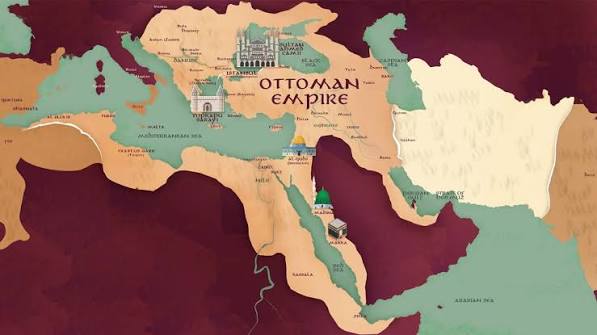
    For over six centuries, the Ottoman Empire was a superpower that bridged East and West, ruling from the gates of Vienna to the deserts of Arabia. Its collapse in the early 20th century gave birth to the Republic of Turkey, a state that deliberately turned its back on its imperial past. Yet today, the Ottoman legacy is experiencing a remarkable revival—not just in museums and architecture, but in the very fabric of Turkish politics, culture, and identity.

    Understanding this legacy is key to grasping modern Turkey’s complex relationship with its history. From the secular reforms of Atatürk to the neo-Ottomanist policies of Erdoğan, the empire’s shadow looms large. This article explores how a fallen dynasty continues to shape a nation’s soul, and why the debate over its meaning is far from settled.

    The Rise: From a Small Principality to a World Power

    The Ottoman Empire began as a tiny beylik (principality) in northwestern Anatolia around 1299, founded by Osman I on the frontier of the weakening Byzantine Empire. Over the next two centuries, it expanded rapidly, conquering the Balkans and, in 1453, achieving its defining moment: the fall of Constantinople under Mehmed II. This conquest ended the Byzantine Empire and transformed the city into Istanbul, the Ottoman capital and a global crossroads.

    By the 16th century, under Suleiman the Magnificent (r. 1520–1566), the empire reached its zenith, spanning three continents—Southeast Europe, Western Asia, and North Africa—with a population of 30–35 million. It was a multi-ethnic, multi-religious state where Turks, Arabs, Greeks, Armenians, Kurds, Jews, and many others coexisted under a sophisticated system of governance.

    The Ottoman System: A Unique Blend of Power and Diversity

    The empire’s success lay in its adaptability. The sultan held absolute authority but ruled through a complex bureaucracy. One of its most distinctive institutions was the devshirme system, which recruited Christian boys for elite military (Janissaries) and administrative roles—a remarkable mechanism for social mobility. Law combined Sharia (Islamic law) with kanun (sultanic secular law), allowing flexibility in governing diverse populations.

    The millet system granted religious communities—Orthodox Christians, Jews, Armenian Christians—autonomy over personal law and education. This fostered a cosmopolitan society, with Istanbul as a melting pot of cultures, languages, and faiths. The empire’s economy thrived on control of key trade routes, from the Silk Road to spice routes, supported by a robust guild system.

    The Fall: The ‘Sick Man of Europe’

    The 19th century brought decline. Military technological lag, nationalist uprisings among subject peoples, European imperial pressure, and financial bankruptcy (default in 1875) earned the empire the label ‘Sick Man of Europe.’ Territorial losses were staggering: Greece (1830), Algeria (1830), Egypt (1882), and nearly all of the Balkans by 1913.

    Attempts at reform, such as the Tanzimat reforms (1839–1876), modernized law, education, and administration, but they couldn’t stem the tide. World War I proved fatal. Defeat as part of the Central Powers led to the Armistice of Mudros (1918) and the subsequent Turkish War of Independence (1919–1923), led by Mustafa Kemal Atatürk. The sultanate was abolished in 1922, and the caliphate in 1924, ending 600 years of Ottoman rule.

    The Republican Break: Erasing the Ottoman Past

    Atatürk’s new Republic of Turkey was built on a deliberate rejection of Ottoman identity. His reforms were revolutionary: adoption of the Latin alphabet (1928), secularization of law and education, abolition of the caliphate, and promotion of a Turkish national identity over Ottoman cosmopolitanism. The early Republic’s historiography framed the Ottoman era as backward and corrupt—a ‘dark age’ to be overcome.

    This narrative minimized Ottoman history in school curricula, focusing instead on pre-Ottoman Turkic origins and the Republic’s modernizing achievements. For decades, the empire was a source of embarrassment, a relic of a theocratic, multi-ethnic past that contradicted the new secular, nationalist vision.

    The Neo-Ottoman Revival: Reclaiming a Glorious Past

    Since 2002, under President Recep Tayyip Erdoğan and the AKP, there has been a deliberate rehabilitation of Ottoman heritage. This ‘neo-Ottomanism’ seeks to restore Ottoman history as a source of national pride and soft power. Examples abound: the 2013 opening of the Panorama 1453 History Museum in Istanbul, the 2016 re-opening of the Hagia Sophia as a mosque (after being a museum since 1935), lavish celebrations of the 1453 conquest, and increased use of Ottoman motifs in state architecture and rhetoric.

    Supporters argue this revival reconnects Turkey with its rich heritage and asserts its influence in former Ottoman territories—the Balkans, Middle East, and North Africa. Critics, however, see it as a political tool to consolidate conservative Muslim identity and project power, often at the expense of secular values and minority rights.

    The Cultural Legacy: Beyond Politics

    Regardless of political debates, the Ottoman cultural legacy is undeniable and deeply embedded in modern Turkey:

    • Architecture: Mimar Sinan’s mosques—Süleymaniye in Istanbul and Selimiye in Edirne—are UNESCO World Heritage sites, masterpieces of engineering and design that still dominate skylines.
    • Cuisine: Ottoman palace cuisine shaped modern Turkish food, from kebabs and mezes to baklava and Turkish coffee, influencing Balkan, Levantine, and Middle Eastern cuisines.
    • Music and Arts: Ottoman classical music, calligraphy, and miniature painting remain vibrant traditions, celebrated in festivals and museums.
    • Language: Although the alphabet changed, Ottoman Turkish vocabulary and expressions persist in modern Turkish, enriching its lexicon.

    This cultural heritage transcends politics, offering a shared identity that many Turks embrace, regardless of their views on the empire’s political legacy.

    The Debate Continues: What Does the Ottoman Legacy Mean Today?

    The Ottoman Empire’s legacy is a battlefield of interpretations. For some, it represents a glorious past of conquest and civilization; for others, a period of oppression and backwardness. The official Republican narrative once demonized it; the current government romanticizes it. The truth lies somewhere in between.

    The empire was neither a golden age nor a dark age—it was a complex, multifaceted state that left an indelible mark on the region. Its legal systems, architectural wonders, and cultural fusion continue to influence modern Turkey and the wider world. As Turkey navigates its future, the Ottoman past remains a powerful lens through which its identity is contested and defined.

    The Ottoman Empire may have fallen a century ago, but its legacy is far from dead. In modern Turkey, it is a living force—shaping politics, culture, and identity. Whether viewed as a source of pride or a cautionary tale, the empire’s imprint is undeniable. As Turkey continues to evolve, the debate over its Ottoman heritage will remain a central thread in its national story, reminding us that history is never truly past.

    Summary

    • The Ottoman Empire lasted over 600 years, reaching its peak under Suleiman the Magnificent in the 16th century.
    • Its collapse after World War I led to the founding of the Republic of Turkey under Atatürk, who deliberately broke with Ottoman identity.
    • The AKP era has seen a neo-Ottomanist revival, rehabilitating Ottoman heritage as a source of national pride and soft power.
    • The cultural legacy—architecture, cuisine, music, and language—remains deeply embedded in modern Turkey, transcending political debates.
    • The Ottoman past is a contested symbol, interpreted differently by secularists, nationalists, and Islamists, reflecting broader struggles over Turkey’s identity.

    FAQ

    Q: When did the Ottoman Empire start and end?
    A: The empire was founded around 1299 by Osman I and lasted until 1922, when the sultanate was abolished. The caliphate was abolished in 1924.

    Q: What was the millet system?
    A: The millet system was an Ottoman governance mechanism that granted religious communities—such as Orthodox Christians, Jews, and Armenian Christians—autonomy over personal law and education, allowing them to manage their own affairs.

    Q: Why did the Ottoman Empire decline?
    A: Decline was driven by military technological lag, nationalist uprisings among subject peoples, European imperial pressure, and financial bankruptcy, culminating in defeat in World War I.

    Q: How did Atatürk break with the Ottoman past?
    A: Atatürk adopted the Latin alphabet, secularized law and education, abolished the caliphate, and promoted a Turkish national identity over Ottoman cosmopolitanism, framing the empire as a backward era.

    Q: What is neo-Ottomanism?
    A: Neo-Ottomanism is a political and cultural movement, particularly associated with the AKP, that seeks to revive Ottoman heritage as a source of national pride and to project Turkish influence in former Ottoman territories.