Tag: culture

  • Tea: The Ancient Leaf That Brewed Modern Culture

    8 Health Benefits of Drinking Green Tea

    From a mythical emperor’s accidental discovery to the global phenomenon of bubble tea, tea has traveled across centuries and continents, shaping economies, inspiring philosophies, and brewing connections between people. More than just a beverage, tea is a cultural artifact—a vessel for ritual, resistance, and relaxation. This article explores how a simple leaf became the world’s second most consumed drink, weaving through ancient ceremonies and modern trends to reveal its enduring cultural significance.

    The Legendary Origins and Early History

    Tea’s story begins in ancient China, wrapped in legend. Emperor Shennong, a mythical figure known as the ‘Divine Farmer,’ is said to have discovered tea around 2737 BCE when leaves from a wild tree blew into his pot of boiling water. While this tale is more folklore than fact, it anchors tea’s origin in Chinese culture. The first documented use of tea dates to the Han Dynasty (206 BCE–220 CE), where it was consumed primarily as a medicinal beverage.

    It was during the Tang Dynasty (618–907 CE) that tea transformed from a health tonic into a cultural cornerstone. Lu Yu’s The Classic of Tea (c. 760–780 CE) became the first comprehensive treatise on tea, covering cultivation, preparation, and philosophy. This text elevated tea from a simple drink to an art form, setting the stage for centuries of tea culture.

    The Song Dynasty (960–1279 CE) saw the rise of whipped powdered tea—a precursor to today’s matcha—and increasingly elaborate ceremonies. By the Ming Dynasty (1368–1644 CE), loose-leaf tea and steeping replaced powdered tea, shifting tea culture toward the brewing methods we use today. This evolution laid the groundwork for tea’s global journey.

    Tea as a Global Historical Force

    Tea’s spread across the globe was not just a matter of taste—it was a driver of history. Buddhist monks carried tea to Japan in the 9th century, where it became intertwined with Zen Buddhism. In the early 17th century, Portuguese and Dutch traders introduced tea to Europe, and by the 1650s, it had reached Britain. The British East India Company monopolized the Chinese tea trade, creating a massive trade deficit that led to the Opium Wars (1839–1842, 1856–1860). This conflict forced China to open its ports, reshaping global trade and power dynamics.

    Tea also played a role in the American Revolution. The Boston Tea Party of 1773 used tea as a symbol of colonial resistance against British taxation, turning a beverage into a political statement. Later, the British shifted tea cultivation to India (Assam, Darjeeling) and Ceylon (Sri Lanka), relying on indentured labor and colonial infrastructure. These plantations left lasting socioeconomic legacies that still resonate today.

    Rituals and Ceremonies: Tea as a Cultural Touchstone

    Across cultures, tea has been elevated into rituals that reflect deeper values. In China, Gongfu Cha is a meticulous, multi-step brewing method emphasizing skill, aroma, and small servings. Rooted in Chaoshan culture, it has gained global popularity in the 20th century, inviting practitioners to slow down and savor each infusion.

    Japan’s Chanoyu (tea ceremony), codified by Sen no Rikyū (1522–1591), is perhaps the most famous tea ritual. It embodies four principles: harmony (wa), respect (kei), purity (sei), and tranquility (jaku). Influenced by Zen Buddhism, the ceremony is a practice in mindfulness and discipline, where every movement is intentional.

    In Britain, Afternoon Tea was popularized by Anna Russell, Duchess of Bedford, around 1840 as a bridge between lunch and dinner. It evolved into a social ritual with specific etiquette—finger sandwiches, scones, and clotted cream—and became a marker of gentility. Meanwhile, Moroccan Mint Tea is a gesture of hospitality, poured from a height to aerate and cool, and served three times with different flavor intensities. In Russia, the samovar tradition involves brewing a strong concentrate (zavarka) and diluting it with hot water, central to social gatherings.

    India’s masala chai—spiced milk tea—is an everyday beverage and street-food staple, distinct from British colonial tea culture. And in Taiwan, bubble tea was invented in the 1980s in Taichung, combining tea, milk, and tapioca pearls. It has since become a global phenomenon, blending tradition with innovation.

    Modern Trends: Tea in the 21st Century

    Today, tea is the second most consumed beverage worldwide after water, with global production exceeding 6 million tonnes annually, led by China, India, Kenya, and Sri Lanka. Modern trends reflect a growing appreciation for quality, health, and sustainability.

    Specialty and third-wave tea—analogous to specialty coffee—emphasizes single-origin leaves, terroir, and artisanal processing. Consumers are increasingly interested in where their tea comes from and how it’s made. Wellness and functional teas like matcha, kombucha, and herbal blends are marketed for health benefits, from antioxidants to calm and energy.

    Sustainability and ethical sourcing are also gaining traction, with demand for fair-trade, organic, and regenerative agriculture practices. Digital tea culture has expanded through online communities, subscription boxes, and virtual tastings, especially during the COVID-19 pandemic. And tea tourism—visiting destinations like Wuyi Mountain in China, Uji in Japan, or Munnar in India—offers immersive experiences for enthusiasts.

    The Philosophical and Social Dimensions

    Tea is not just a drink; it’s a philosophy. In Zen Buddhism, tea promotes mindfulness and ritual discipline. In Daoism, it’s associated with harmony with nature and the flow of qi (vital energy). Confucianism uses tea ceremonies to reinforce social hierarchy and propriety. In North Africa and the Middle East, tea is tied to hospitality and communal bonding, often influenced by Sufism and Islam.

    Tea also reflects social and class dynamics. In Britain, tea was initially a luxury for the elite before becoming a working-class staple. Afternoon tea became a marker of gentility, and tea rooms in the 19th and 20th centuries provided women with socially acceptable public spaces. In Japan, the tea ceremony historically involved strict social protocols, reinforcing status and etiquette.

    Conclusion

    From a mythical emperor’s accidental brew to a global commodity that sparked wars and revolutions, tea has proven to be far more than a beverage. It is a cultural touchstone that adapts to each society it touches, embodying values of hospitality, mindfulness, and connection. As modern trends continue to evolve, tea remains a bridge between ancient rituals and contemporary life, inviting us to pause, savor, and share a moment—one cup at a time.

    Tea’s journey from ancient China to global modernity is a testament to its cultural versatility. Whether in a formal Japanese tea ceremony, a casual British afternoon tea, or a trendy bubble tea shop, tea continues to bring people together. As we look to the future, tea’s role as a symbol of hospitality, wellness, and sustainability ensures its place in our cups and cultures for generations to come.

    Summary

    • Tea originated in China, with legendary roots in Emperor Shennong’s discovery around 2737 BCE, and became a cultural cornerstone during the Tang Dynasty.
    • Tea drove global history, from the Opium Wars to the Boston Tea Party, and shaped colonial economies in India and Sri Lanka.
    • Cultural rituals like Chinese Gongfu Cha, Japanese Chanoyu, British Afternoon Tea, and Moroccan Mint Tea highlight tea’s diverse significance.
    • Modern trends include specialty teas, wellness-focused blends, ethical sourcing, digital tea culture, and tea tourism.
    • Tea is the world’s second most consumed beverage, with deep philosophical and social dimensions that continue to evolve.

    FAQ

    Q: Who discovered tea?
    A: According to legend, Chinese Emperor Shennong discovered tea around 2737 BCE when leaves blew into his boiling water. While mythological, this story anchors tea’s origin in Chinese culture.

    Q: What is the difference between Gongfu Cha and Japanese Chanoyu?
    A: Gongfu Cha is a Chinese brewing method that emphasizes skill, aroma, and small servings, while Chanoyu is a Japanese tea ceremony focused on harmony, respect, purity, and tranquility, influenced by Zen Buddhism.

    Q: How did tea lead to the Opium Wars?
    A: The British East India Company’s monopoly on Chinese tea trade created a massive trade deficit for Britain. To balance it, the British exported opium to China, leading to conflicts known as the Opium Wars (1839–1842, 1856–1860).

    Q: What is the significance of Moroccan mint tea?
    A: Moroccan mint tea is a gesture of hospitality, poured from a height to aerate and cool. It is served three times, each with a different flavor intensity, symbolizing the host’s generosity.

    Q: What are the modern trends in tea consumption?
    A: Modern trends include specialty and third-wave teas, wellness and functional teas like matcha and kombucha, sustainable and ethical sourcing, digital tea culture, and tea tourism.

  • Islands of Isolation: How Geography Shapes Unique Cultures and Languages

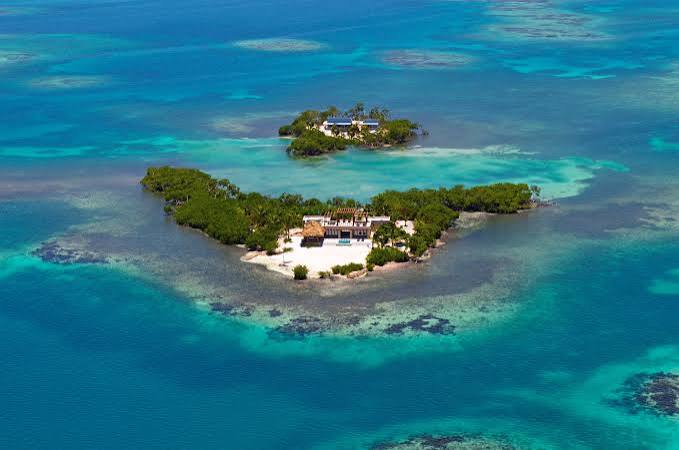
    Upgrade Isolation: The 12 Most Secluded Remote Islands And Private Hotels

    Imagine a place where the nearest neighbor is hundreds of miles away, where the ocean is both a barrier and a highway. Islands have long fascinated explorers, scientists, and travelers alike, not just for their breathtaking landscapes but for the extraordinary cultures and languages that have evolved in isolation. From the undeciphered script of Easter Island to the hundreds of languages spoken on a single Pacific archipelago, islands are living laboratories of human diversity.

    But why do islands produce such unique cultural and linguistic traits? The answer lies in the interplay of geography, history, and human ingenuity. This article explores how physical isolation has shaped the cultures and languages of islands, from the remote shores of Rapa Nui to the rugged fjords of Iceland, and how these unique societies are navigating the forces of globalization today.

    The Island Effect: A Natural Laboratory

    The concept of island biogeography, borrowed from ecology, explains how physical isolation affects the evolution of species. On islands, species often evolve into new forms, a phenomenon known as endemism. The same principle applies to human societies: smaller, more remote landmasses tend to develop distinct cultural traits, languages, and social structures. This is because isolation reduces the flow of genes, ideas, and words, allowing local innovations to take root and diverge from mainland counterparts.

    Take language, for example. Islands account for a disproportionate share of the world’s languages relative to their land area. Vanuatu, an archipelago in the South Pacific with a population of about 300,000, boasts over 100 actively spoken indigenous languages—the highest language density per capita on Earth. Each island, and sometimes each valley, has its own tongue, a testament to centuries of independent development.

    Case Studies: Islands of Unique Culture

    Easter Island (Rapa Nui)

    Easter Island, one of the most isolated inhabited places on Earth, lies about 3,700 kilometers from Chile and 2,000 kilometers from its nearest Polynesian neighbor, Pitcairn Island. This isolation gave rise to the famous moai statues—massive stone figures carved between the 13th and 16th centuries. The island also produced the Rongorongo script, a system of glyphs that remains undeciphered to this day. The island’s history is often cited as a cautionary tale of ecological collapse, but recent scholarship suggests a more nuanced story of resilience and adaptation.

    Madagascar

    Madagascar, the world’s fourth-largest island, sits just 400 kilometers off the coast of Africa, yet its people speak Malagasy, an Austronesian language with roots in Borneo, over 8,000 kilometers away. This linguistic anomaly is a result of settlement by seafarers from Southeast Asia around 1,500 years ago, who brought their language and culture with them. The island’s long isolation—it separated from mainland Africa about 88 million years ago—also fostered unique biodiversity, which in turn shaped the cultural practices of its inhabitants.

    Iceland

    Iceland was settled by Norse Vikings in 874 CE, and its relative isolation for centuries allowed the Old Norse language to evolve into modern Icelandic with remarkably little change. Today, Icelanders can read medieval sagas written a thousand years ago with relative ease, a feat impossible for speakers of most other Germanic languages. The preservation of archaic linguistic features is a direct result of limited contact with other languages, a phenomenon known as linguistic drift.

    North Sentinel Island

    The Sentinelese people of North Sentinel Island, part of the Andaman Islands, are perhaps the most isolated community on Earth. They have consistently rejected contact with outsiders, and the Indian government enforces a protective buffer zone around their island. As a result, their language and culture remain largely unknown, a living testament to the power of isolation to preserve a way of life untouched by modernity.

    Papua New Guinea

    While not a single island but a large island nation, Papua New Guinea exemplifies extreme linguistic fragmentation. With over 800 languages spoken by a population of about 9 million, it is the most linguistically diverse country in the world. The rugged terrain and island geography have created isolated communities that developed distinct languages over millennia.

    The Mechanisms of Linguistic Divergence

    How exactly does isolation shape language? One key mechanism is drift—the random accumulation of changes in pronunciation, grammar, and vocabulary over time. In isolated populations, these changes are not diluted by contact with other languages, so they can become fixed and accumulate. For example, Faroese, spoken on the Faroe Islands, retains more Old Norse grammar than mainland Scandinavian languages, which have undergone simplification due to contact and trade.

    However, isolation is not the only force at play. Some islands, such as Haiti and Mauritius, developed creole languages as a result of colonial contact and the mixing of African, European, and Asian languages. These exceptions show that history and human agency are just as important as geography.

    The Sea of Islands: Challenging the Isolation Narrative

    While the isolation narrative is compelling, some scholars argue that it overstates the case. Anthropologist Epeli Hau’ofa coined the term “sea of islands” to describe the Pacific as a connected world, where voyaging, trade, and intermarriage linked distant communities long before European contact. The Polynesian expansion, which reached Hawaii, New Zealand, and Easter Island by 1200 CE, demonstrates extraordinary maritime skills and a deliberate exploration of the ocean, not just accidental drift.

    Similarly, anthropologist Nicholas Thomas has critiqued the notion of isolation, pointing out that many island cultures were dynamic and interconnected. The Pacific was not a set of isolated dots but a network of relationships. This perspective challenges the romantic view of islands as “living museums” and emphasizes their historical dynamism.

    The Impact of Globalization

    Today, the forces of globalization—satellite internet, tourism, migration—are eroding the isolation that once shaped island cultures. Many island languages are endangered; UNESCO lists hundreds as vulnerable or critically endangered. For example, the Ainu language of Japan’s northern islands has only a handful of fluent speakers left.

    But there is hope. Revitalization movements are underway across the globe. In Hawaii, language immersion schools are producing a new generation of Hawaiian speakers. In New Zealand, Māori kohanga reo (language nests) have been instrumental in reviving the Māori language. These efforts show that while geography may have created unique cultures, human determination can preserve them in the face of change.

    Conclusion

    Islands are more than just landmasses surrounded by water; they are crucibles of human diversity. The isolation that once fostered unique languages and cultures is now giving way to global interconnectedness, but the legacy of that isolation remains. By understanding how geography shapes culture, we can better appreciate the richness of human experience and the importance of preserving it for future generations.

    Summary

    • Islands are natural laboratories for cultural and linguistic evolution, with physical isolation leading to unique traits.
    • Examples include Easter Island’s undeciphered Rongorongo script, Madagascar’s Austronesian language, and Iceland’s preserved Old Norse.
    • Linguistic drift and limited contact allow isolated languages to retain archaic features, as seen in Faroese.
    • The isolation narrative is challenged by scholars who emphasize Pacific interconnectedness and historical dynamism.
    • Globalization threatens island languages, but revitalization movements are working to preserve them.

    FAQ

    Q: Why do islands have so many unique languages?
    A: Islands often have high linguistic diversity because physical isolation reduces contact between communities, allowing languages to diverge independently. For example, Vanuatu has over 100 languages for a population of just 300,000.

    Q: Are all island cultures isolated?
    A: No, many island cultures were connected through trade, voyaging, and intermarriage. The Pacific, for instance, was a “sea of islands” with extensive networks, as highlighted by anthropologist Epeli Hau’ofa.

    Q: What is linguistic drift?
    A: Linguistic drift is the gradual, random change in a language over time. In isolated populations, these changes accumulate without being influenced by other languages, leading to distinct dialects or languages.

    Q: How does globalization affect island languages?
    A: Globalization can erode isolation, leading to language shift and endangerment. However, revitalization efforts, such as Hawaiian immersion schools, are helping to preserve and revive these languages.

    Q: Can geography alone explain cultural differences?
    A: Geography is a significant factor, but it doesn’t determine culture. History, human agency, and contact with other societies also play crucial roles, as seen in the development of creole languages on some islands.

  • 10 Remote Island Nations and the Unique Cultures That Define Them

    The World's Most Remote Islands | Times of India Travel

    Imagine a place where the nearest continent is a thousand miles away, where the ocean is your neighbor, and where traditions have evolved in splendid isolation. Remote island nations are not just dots on a map—they are living laboratories of culture, shaped by geography, history, and the sea. From the firewalkers of Fiji to the land divers of Vanuatu, these ten nations offer a glimpse into ways of life that are as fragile as they are fascinating.

    But why should we care about these far-flung places? Because they hold lessons in resilience, community, and adaptation that resonate far beyond their shores. As climate change threatens their very existence, understanding their unique cultures becomes not just an act of curiosity, but a matter of global significance. Let’s embark on a journey to the world’s most remote island nations and discover what makes each one extraordinary.

    What Makes an Island Nation ‘Remote’?

    A remote island nation is a sovereign state made up entirely of islands, far from major continental landmasses. This isolation isn’t just about distance—it’s about the profound impact that separation has on culture, economy, and daily life. For these nations, the ocean is both a barrier and a highway, shaping everything from trade to tradition.

    The Pacific: A Sea of Cultures

    The South Pacific is home to many of the world’s most remote island nations, each with a distinct identity rooted in Austronesian heritage.

    Fiji: Firewalkers and Kava

    Fiji consists of over 330 islands, with about 110 inhabited. Its culture is a dual tapestry: indigenous Fijian traditions and Indo-Fijian influences from indentured laborers brought in the 19th century. One of the most spectacular traditions is firewalking on Beqa Island, where performers walk barefoot over hot stones, a ritual steeped in legend. Kava, a ceremonial drink made from the root of a pepper plant, is central to social gatherings, fostering community and respect.

    Vanuatu: The Birthplace of Bungee Jumping

    Vanuatu’s 80-plus islands are volcanic and rugged. On Pentecost Island, men perform the naghol or land diving, leaping from wooden towers with vines tied to their ankles—a precursor to modern bungee jumping. This ritual, meant to ensure a good yam harvest, is both a test of courage and a spiritual act. With over 100 indigenous languages, Vanuatu is one of the most linguistically diverse places on Earth.

    Samoa: The Samoan Way

    Samoa’s culture is encapsulated in Faʻa Samoa—the Samoan way. It emphasizes the extended family (ʻaiga), the authority of chiefs (matai), and the importance of community. The traditional tattoo (tatau) is a rite of passage, marking one’s commitment to Samoan values. In 2011, Samoa made headlines by skipping December 30th entirely, shifting its dateline to align with trading partners—a bold move that reflects its pragmatic approach to globalization.

    Tonga: The Last Pacific Kingdom

    Tonga is the only Pacific nation never to be colonized, and it remains a monarchy—one of the world’s last. The lakalaka, a traditional dance, is a UNESCO-recognized masterpiece, performed at important events. The concept of anga faka-Tonga (the Tongan way) emphasizes respect, humility, and loyalty to the crown. Tonga’s royal heritage is a source of immense pride and continuity.

    Kiribati: The Nation That Spans Four Hemispheres

    Kiribati is a vast nation of 33 atolls and reef islands, straddling the equator and the International Date Line. It is the only country to lie in all four hemispheres. Its culture is rooted in the maneaba (meeting house), where community decisions are made. The phrase Te Mauri, Te Raoi, ao Te Tabomua (peace, health, prosperity) reflects the nation’s values. Kiribati was the first to welcome the year 2000, a symbolic moment for a nation on the front lines of climate change.

    Marshall Islands: Stick Charts and Nuclear Legacies

    The Marshall Islands are famous for stick charts—intricate navigational tools made of palm ribs and shells that map ocean swells and currents. These were the GPS of the ancient Pacific navigators. Land inheritance is matrilineal, with lineage traced through mothers. However, the islands also bear the scars of US nuclear testing from 1946 to 1958, a legacy that still affects health and environment.

    Palau: Conservation Pioneers

    Palau, a western Pacific nation, is a leader in marine conservation. In 2009, it established the world’s first shark sanctuary, and in 2017, it introduced the Palau Pledge—visitors must sign a stamp in their passport promising to act in an environmentally responsible way. The bai (men’s meeting house) is adorned with storyboard carvings that convey traditional knowledge and laws. Palau’s culture is deeply intertwined with the ocean, and its people are its fiercest guardians.

    The Indian Ocean: Crossroads of Cultures

    Seychelles: A Creole Mosaic

    Seychelles, an archipelago of 115 islands, is a melting pot of African, French, and Asian influences. The Creole language Seselwa is spoken by all, and music like moutya and sega reflects a blend of rhythms. The islands are unique for having both granitic and coral formations, creating a diverse landscape. Seychelles’ high-end tourism economy contrasts with its vibrant local culture, which remains rooted in community and tradition.

    Maldives: Low-Lying and Resilient

    The Maldives, with an average elevation of just 1.5 meters above sea level, is the lowest-lying country on Earth. It is also 100% Sunni Muslim, and its culture is a blend of South Asian, Arab, and African influences. Traditional bodu beru drumming is a lively art form, and family structures are matrilineal, with property often passed through the female line. The Maldives is a stark example of a nation facing existential threat from rising seas, yet its people maintain a vibrant culture.

    The Atlantic: Cape Verde’s Creole Identity

    Cape Verde, off the coast of West Africa, is a volcanic archipelago of 10 islands. Its culture is a rich Creole blend of Portuguese and West African heritage. The music of morna and coladeira, popularized by the legendary Cesária Évora, is melancholic yet soulful, reflecting the islands’ history of emigration and longing. In fact, more Cape Verdeans live abroad than at home, creating a strong diaspora that keeps the culture alive globally.

    Shared Challenges, Unique Responses

    These remote island nations face common challenges: geographic isolation, economic vulnerability, and the existential threat of climate change. Yet each responds in its own way. Kiribati has purchased land in Fiji as a climate refuge, while the Marshall Islands and Palau have Compacts of Free Association with the US, providing economic support. The Maldives and Seychelles have turned to high-end tourism, while Cape Verde leverages its diaspora. Their resilience is a testament to human adaptability.

    Why Their Cultures Matter

    The cultures of these island nations are not just curiosities; they are repositories of knowledge about sustainable living, community resilience, and harmony with nature. In a world facing environmental crises, these cultures offer valuable lessons. By understanding and respecting them, we not only preserve diversity but also enrich our own perspectives.

    From the firewalkers of Fiji to the conservationists of Palau, remote island nations are beacons of cultural richness and resilience. They remind us that isolation can foster uniqueness, and that even the smallest nations can have a profound impact on our global consciousness. As they navigate the challenges of the 21st century, their stories are not just about survival—they are about thriving in harmony with the world’s most powerful force: the ocean.

    Summary

    • Remote island nations are sovereign states isolated from continents, with cultures shaped by geography and history.
    • The Pacific nations (Fiji, Vanuatu, Samoa, Tonga, Kiribati, Marshall Islands, Palau) share Austronesian roots but have distinct traditions like firewalking, land diving, and stick charts.
    • Indian Ocean nations (Seychelles, Maldives) blend African, Arab, and Asian influences, with Creole languages and matrilineal structures.
    • Cape Verde in the Atlantic is a Creole nation with a strong diaspora and unique music like morna.
    • These nations face common challenges like climate change and economic isolation, but their cultures offer lessons in resilience and community.

    FAQ

    Q: What is the most remote island nation?
    A: ‘Remote’ is relative, but Kiribati is often cited because it spans all four hemispheres and is scattered over a vast area of the central Pacific, making many of its islands extremely isolated.

    Q: How do these nations preserve their cultures?
    A: Through oral traditions, communal practices, and legal protections. For example, Samoa’s Faʻa Samoa is a social system, and Palau’s Palau Pledge legally binds visitors to environmental responsibility.

    Q: Why are some island nations at risk from climate change?
    A: Low-lying atolls like the Maldives, Kiribati, and the Marshall Islands have an average elevation of just a few meters, making them highly vulnerable to sea-level rise and storm surges.

    Q: What is the Palau Pledge?
    A: It’s a commitment stamped into visitors’ passports, requiring them to act in an environmentally responsible way during their stay, as part of Palau’s conservation efforts.

    Q: Are there any island nations that were never colonized?
    A: Yes, Tonga is the only Pacific nation that was never formally colonized, maintaining its monarchy and independence throughout history.

  • AI Translators Are More Fluent Than Ever—But Words Are Only Half the Story

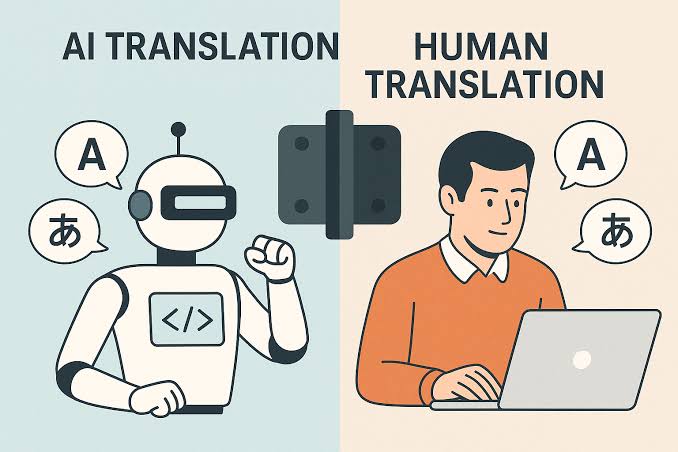
    AI vs Human Translation: Choosing the Right Solution

    Open any browser, and you’ll find a translation tool that can render a French menu, a Japanese news article, or a Spanish email into flawless English in seconds. Neural machine translation has reached near-human fluency for many languages, handling idioms and slang that stumped earlier systems. But here’s the catch: fluency in words doesn’t equal success in communication. A grammatically perfect translation can still miss the point entirely—because meaning lives in tone, context, and culture, not just vocabulary.

    This gap between what AI translates and what people actually communicate is becoming more critical as these tools spread into medicine, law, and diplomacy. Understanding why a fluent translation can fail is essential for anyone who relies on AI to bridge language gaps—and for the developers building the next generation of translation technology.

    The Rise of Fluent Machines

    Just a decade ago, machine translation was clunky. Statistical models produced word-for-word approximations that often read like robotic garble. Then came neural machine translation (NMT) in 2014, followed by the Transformer architecture in 2017, and suddenly AI could grasp context, idioms, and even some slang. Today, systems like Google Translate, DeepL, and GPT-based models score within a few points of professional human translators on standard benchmarks like BLEU and COMET for high-resource language pairs such as English↔French or English↔Chinese.

    The speed and scale are staggering. Google Translate alone processes over 100 billion words daily across more than 100 languages. Real-time speech translation is now a feature on smartphones, and Meta is researching simultaneous interpretation. For travelers, students, and casual users, AI translation is a miracle—instant, free, and often impressively accurate.

    The Fluency Illusion

    But here’s the problem: fluency can be deceptive. When a translation reads smoothly, we naturally assume it’s correct. Researchers call this the “fluency illusion”—the tendency to over-trust output that looks polished, especially when you can’t verify it against the original. In human-computer interaction, this is a form of automation bias: we trust the machine because it sounds confident.

    Consider a real-world example from a medical consultation. A patient might say, “I’m feeling a bit off,” which in some cultures is a euphemism for severe pain. A literal translation—”I feel slightly unwell”—loses the urgency. The AI produces a fluent sentence, but the doctor misreads the severity. The words are right; the meaning is wrong.

    Communication Is More Than Words

    Linguists and anthropologists have long known that language is only one layer of communication. Meaning also comes from non-verbal cues like tone and gesture, shared background knowledge, cultural norms about directness and politeness, and the situational context—who is speaking, to whom, and why.

    For example, in high-context cultures (like Japan or Arab countries), much of the message is implicit, relying on the listener to read between the lines. In low-context cultures (like Germany or the U.S.), communication is more explicit. A literal translation from Japanese to English might strip away the indirectness that signals respect or hesitation, making a polite refusal sound like a hard “no.” In business negotiations, that can derail a deal.

    Speech act theory adds another layer: we use words not just to convey information but to perform actions—promising, warning, apologizing, flattering. A translation that gets the propositional content right but misses the intended speech act fails communicatively. Sarcasm, humor, and irony are notoriously hard for AI because they rely on shared context and cultural cues that aren’t in the text itself.

    Where AI Still Stumbles

    Despite progress, AI translation has documented weaknesses:

    • Low-resource languages: Languages with little training data still produce poor translations, perpetuating a digital divide.
    • Culturally embedded expressions: Proverbs, idioms, and metaphors often have no direct equivalent. “It’s raining cats and dogs” doesn’t translate literally into most languages.
    • Politeness registers: Many languages have formal vs. informal address (tu/vous, du/Sie). AI often defaults to one, which can sound rude or overly familiar.
    • Domain-specific jargon: Legal, medical, and literary texts require specialized knowledge that generic models lack.
    • Code-switching: Mixed-language input (common in multilingual communities) confuses systems trained on single-language corpora.

    These aren’t edge cases—they’re everyday communication. And in high-stakes settings like refugee intake or emergency response, a mistranslation can have life-or-death consequences.

    The Human Element: Translation vs. Localization

    Professional translators are trained to do more than convert words. They consider the purpose, audience, and cultural context—a process called localization. A marketing slogan might be adapted entirely to resonate with a new culture, not translated literally. Human translators also make judgment calls about ambiguity, something AI cannot do because it lacks lived experience.

    This is why many professionals argue that AI is a tool, not a replacement. The emerging skill is “post-editing”—humans refining AI output to ensure fidelity and cultural appropriateness. In fields like law and medicine, human oversight remains non-negotiable.

    The Trust Paradox

    Interestingly, user studies reveal a trust paradox. When people can’t tell if a translation is AI-generated, they may over-trust it (the fluency illusion). But when they know it’s AI, they may discount it even when it’s accurate. This inconsistency complicates how we integrate AI translation into our lives.

    There’s also an ethical dimension. AI translation can flatten linguistic diversity, favoring dominant languages and encoding biases from training data. For endangered languages, it might offer a lifeline—or it might standardize and erase dialects. The choice of how to use these tools is ours.

    Looking Ahead: Multimodal and Context-Aware AI

    The next frontier is multimodal AI that can process vision, audio, and text together. Imagine a translator that sees a speaker’s facial expression or hears their tone of voice—capturing some of the non-verbal cues that text alone misses. Researchers are also working on context-aware models that track conversation history and cultural norms.

    But even the most advanced AI will never fully replicate human understanding. Communication is a deeply human act, rooted in shared experience and empathy. As AI translators become more fluent, we must remember that words are just the surface. The real meaning lies beneath—in the pauses, the gestures, and the unspoken assumptions that machines cannot yet grasp.

    AI translation is a remarkable achievement, breaking down language barriers in ways that were unimaginable a generation ago. But fluency is not the same as understanding. As we rely more on these tools, we must stay aware of their limits—and complement them with human judgment, especially in high-stakes situations. The best translation isn’t always the most literal; it’s the one that truly communicates.

    Summary

    • AI translation has achieved near-human fluency in many languages, but fluency doesn’t guarantee communicative success.
    • The “fluency illusion” causes users to over-trust polished AI output, even when it misses cultural or contextual meaning.
    • Communication relies on non-verbal cues, shared knowledge, and cultural norms—elements AI cannot fully capture.
    • AI still struggles with low-resource languages, idioms, politeness registers, and domain-specific jargon.
    • Human oversight, especially in medicine, law, and diplomacy, remains essential; AI is a tool, not a replacement.

    FAQ

    Q: Can AI translation replace human translators?
    A: Not entirely. AI is excellent for everyday, low-stakes translation, but human translators are still needed for high-stakes domains like law and medicine, where cultural nuance and accuracy are critical. The role is shifting toward post-editing AI output.

    Q: Why does a fluent AI translation sometimes sound wrong?
    A: Because fluency is about grammar and word choice, not meaning. AI may miss sarcasm, politeness, or cultural references, producing text that reads well but conveys the wrong message.

    Q: What are the biggest limitations of AI translation today?
    A: Low-resource languages, culturally embedded expressions, sarcasm, humor, politeness registers, and domain-specific jargon are the main weak points.

    Q: How can I avoid miscommunication when using AI translation?
    A: Use it as a starting point, not a final answer. For important conversations, verify with a human who understands both languages and cultures.

    Q: Will AI translation improve to fully capture meaning?
    A: Multimodal models that process tone and visuals may help, but full understanding requires lived experience and empathy, which machines lack. It’s unlikely AI will ever fully replicate human communication.