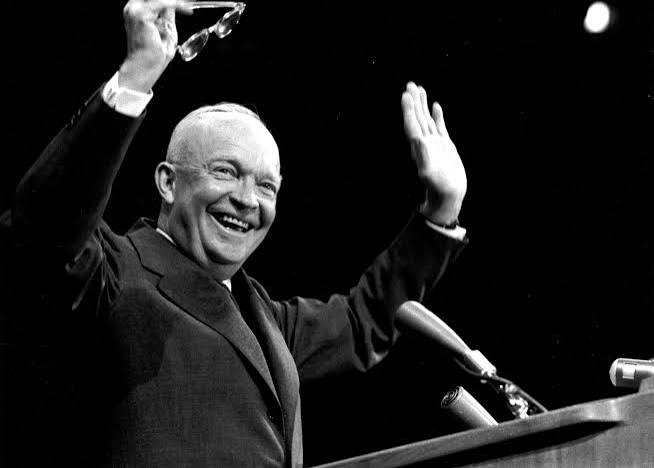
When Dwight Eisenhower left the White House in January 1961, many Americans saw him as a kindly, golf-loving grandfather who had coasted through eight years. The press nicknamed his presidency the ‘era of happy days,’ and critics joked that the country was run by his chief of staff, Sherman Adams. But behind the folksy smile and the apparent passivity was one of the most calculating and effective presidents in American history.
Eisenhower didn’t just preside over peace and prosperity. He ended a war, built a 41,000-mile interstate highway system, created NASA, desegregated a high school at gunpoint, and warned the nation against the rise of a ‘military-industrial complex.’ He did it all while making it look easy. As historian Fred Greenstein later put it, Eisenhower ran a ‘hidden-hand presidency’—a style so subtle that it took decades for scholars to recognize its brilliance.
The Unlikely General
Ike’s path to the presidency began in Abilene, Kansas, where he was born in 1890 to a poor Mennonite family. The original family name, Eisenhauer, meant ‘iron hewer’—fitting for a man who would later forge an alliance of 12 nations. Eisenhower won an appointment to West Point, where he was an average student but a standout football player until a knee injury ended his athletic career. After graduating in 1915—a class so talented that 59 of its 164 members became generals—Eisenhower spent 20 years in the peacetime army without seeing combat. He trained tank crews in World War I but never deployed. It was his brilliance as a staff officer, not a battlefield commander, that caught the eye of General George Marshall.
During World War II, Marshall promoted Eisenhower rapidly, first to lead the Allied invasion of North Africa, then Sicily, and finally to serve as Supreme Allied Commander in Europe. On D-Day, June 6, 1944, Eisenhower made the call to launch the invasion despite a stormy forecast, a decision that cost thousands of lives but ultimately won the war. He also had to manage a coalition of towering egos—George Patton, Bernard Montgomery, Charles de Gaulle—with a patience that became his trademark. When Germany surrendered in May 1945, Eisenhower was a five-star general and a national hero.
The Hidden-Hand Presidency
After the war, both parties courted Eisenhower. He chose the Republicans and won the 1952 election in a landslide against Adlai Stevenson, with the slogan ‘I Like Ike.’ But many political insiders expected a passive president who would let Congress run the show. Instead, Eisenhower used what historians now call the ‘hidden-hand’ style: he worked deliberately behind the scenes, using intermediaries and plausible deniability to achieve his goals without appearing to pull the strings.
Consider how he handled Senator Joseph McCarthy. Rather than confront the demagogue directly—which would have elevated McCarthy’s status—Eisenhower quietly worked to undermine him. He urged Republican leaders to censure McCarthy and used his own staff to leak damaging information. By the time McCarthy fell, Eisenhower’s fingerprints were nowhere to be seen.
The same indirect approach guided his foreign policy. Eisenhower authorized CIA coups in Iran (1953) and Guatemala (1954), toppling governments he saw as Soviet threats. He used back-channel diplomacy with Soviet leaders, even as he publicly maintained a tough anti-communist stance. His ‘New Look’ defense policy emphasized nuclear deterrence over large conventional forces, cutting the Army while building up the Air Force’s nuclear arsenal. Critics called it risky, but Eisenhower argued it was the only way to contain communism without bankrupting the nation.
The Builder of Modern America
Eisenhower’s domestic achievements were anything but passive. In 1956, he signed the Federal-Aid Highway Act, creating the Interstate Highway System—the largest public works project in American history. Spanning 41,000 miles, the highways reshaped American life, enabling suburban growth, long-haul trucking, and cross-country road trips. Eisenhower had seen the German autobahn during World War II and recognized its military value; he sold the project to Congress as a national defense need.
He also responded to the Soviet launch of Sputnik by creating NASA in 1958 and signing the National Defense Education Act, which poured federal money into science and math education. When Arkansas Governor Orval Faubus refused to integrate Little Rock Central High School in 1957, Eisenhower federalized the National Guard and sent in the 101st Airborne Division to escort nine Black students to class—a dramatic assertion of federal authority.
Eisenhower didn’t just react to events; he shaped them. He balanced the federal budget in three of his eight years, kept inflation low, and managed to end the Korean War within months of taking office. He also signed the Civil Rights Act of 1957, the first civil rights legislation since Reconstruction, even if its enforcement powers were weak.
The Warning That Defined His Legacy
On January 17, 1961, three days before leaving office, Eisenhower delivered a farewell address that shocked the nation. He warned of the rise of a ‘military-industrial complex’—a permanent alliance between the defense industry and the armed forces that could threaten American democracy. ‘We must never let the weight of this combination endanger our liberties or democratic processes,’ he said. The speech, written with his own hand, reflected his deep concern that the Cold War had created a permanent war economy.
At the time, many dismissed it as the ramblings of an old general. But over the decades, the warning has proven prescient. The military-industrial complex has only grown, and Eisenhower’s phrase has become a touchstone for critics of defense spending and foreign intervention. It was a fitting end for a president who had spent his career in uniform but understood its dangers better than most.
Eisenhower’s post-presidency was quiet. He retired to his farm in Gettysburg, wrote his memoirs, and played golf. He died in 1969 at Walter Reed Army Medical Center in Washington, D.C. But his legacy was already being rewritten. In the 1980s, historians began to reassess his presidency, recognizing the strategic brilliance behind the folksy exterior. Today, Eisenhower is consistently ranked among the top five presidents in American history—a remarkable achievement for a man who made it all look so easy.
Dwight Eisenhower’s presidency was a masterclass in indirection. He ended a war, built an interstate system, launched NASA, and desegregated a school—all while maintaining an image of passive detachment. His ‘hidden-hand’ style was so effective that it took historians decades to recognize. Eisenhower proved that the most powerful leaders are often the ones who work quietly, behind the scenes, making difficult decisions look effortless. His warning about the military-industrial complex remains as urgent today as it was in 1961.
Summary
- Eisenhower was a five-star general who led the D-Day invasion and served as Supreme Allied Commander in Europe during World War II.
- As president, he ended the Korean War, created the Interstate Highway System, founded NASA, and enforced desegregation at Little Rock Central High School.
- His ‘hidden-hand’ presidency used indirect methods to achieve his goals, including CIA coups in Iran and Guatemala and covert diplomacy with the Soviet Union.
- His farewell address warned of the rise of a ‘military-industrial complex,’ a phrase that has become a cornerstone of American political discourse.
- Historians now rank Eisenhower among the top five U.S. presidents, a dramatic reversal from the earlier view of him as a passive leader.
FAQ
Q: Was Eisenhower a Democrat or a Republican?
A: Eisenhower was a Republican. He was courted by both parties in 1948 but declared himself a Republican and won the 1952 nomination after a bitter primary battle with Senator Robert Taft.
Q: What was the ‘hidden-hand’ presidency?
A: Historian Fred Greenstein coined the term to describe Eisenhower’s leadership style. Instead of openly directing policy, Eisenhower worked through staff, intermediaries, and secret operations to achieve his goals while maintaining plausible deniability.
Q: What was Eisenhower’s most significant domestic achievement?
A: Many consider the Interstate Highway System his greatest domestic achievement. The Federal-Aid Highway Act of 1956 created 41,000 miles of highways, transforming American travel and commerce.
Q: How did Eisenhower handle the Little Rock crisis?
A: When Arkansas Governor Orval Faubus blocked desegregation at Central High School, Eisenhower federalized the Arkansas National Guard and sent in the 101st Airborne Division to protect nine Black students, demonstrating federal authority over state segregation laws.
Q: Why did Eisenhower warn about the military-industrial complex?
A: In his farewell address, Eisenhower cautioned that the permanent alliance between the defense industry and the armed forces could threaten democratic processes. He believed the Cold War had created a powerful interest group that could push the country toward unnecessary wars.
Leave a Reply