Tag: Cold War

  • The Theremin: How a Soviet Spy’s Invention Became the Soundtrack of Science Fiction and Psychedelia

    The Theremin: How a Soviet Spy’s Invention Became the Soundtrack of Science Fiction and Psychedelia

    Imagine an instrument you play without touching. Your hands hover in the air, shaping sound from invisible fields. It wails like a human voice, glides like a bird, and sends chills down the spine. This is the theremin, invented in 1920 by a Russian physicist who would later build a bug for the Kremlin. Its eerie tone became the voice of alien visitors in 1950s cinema and the psychedelic buzz of 1960s rock. But the story behind it is stranger than any sci-fi plot.

    Léon Theremin didn’t set out to create a spy gadget. He wanted to measure gas density, but stumbled onto a way to make music from radio waves. Yet his later espionage work would forever color how the world heard his invention. The same technology that produced celestial melodies also hid a covert listening device. That irony turned the theremin into a perfect metaphor for the Cold War: beautiful, mysterious, and just a little threatening.

    A Musical Accident Born from Radio Waves

    In 1919, a young physicist named Lev Termen was working on proximity sensors for the Soviet military. He noticed that moving his hand near a circuit changed its frequency, producing a whistle. Instead of dismissing it as noise, he tuned it into music. By 1920, he had a working prototype: a box with two antennas. One controlled pitch, the other volume. Players move their hands through the air, and the instrument sings.

    The principle is called heterodyning. Two high-frequency radio oscillators create an audible beat frequency. Your hand’s capacitance—its ability to store electrical charge—shifts that frequency. The result is a sound that slides between notes with seamless glides. No keys, no strings, no contact. Just you and the electromagnetic field.

    Termen, now known as Léon Theremin, showed his invention to Vladimir Lenin in 1922. The Soviet leader was reportedly delighted and even took lessons. Lenin sent Theremin on a world tour to showcase Soviet ingenuity. In 1927, he arrived in the United States, where he patented his device in 1928 and licensed it to RCA. But RCA’s attempt to sell it as a home instrument flopped. It was too difficult to play well. Most people produced only wails and squeaks.

    The Spy Who Came in from the Cold

    Theremin’s American years were glamorous. He lived in a Greenwich Village studio, mingled with celebrities, and performed with the New York Philharmonic. But in 1938, he vanished. Accounts differ: some say he was kidnapped by Soviet agents, others that he returned voluntarily to escape debt. Either way, he ended up back in Moscow—not to applause, but to arrest. In 1939, he was sent to a sharashka, a secret prison lab where scientists worked under guard. The same system that built Soviet jet engines and the atomic bomb now held the inventor of the theremin.

    While in the sharashka, Theremin didn’t build musical instruments. He built espionage devices. In 1945, he created “The Thing,” a passive listening bug hidden in a wooden replica of the Great Seal of the United States. Soviet schoolchildren presented the seal to the US Ambassador in Moscow, who hung it in his office. It required no power source and transmitted conversations via a resonant cavity. American intelligence didn’t discover it until 1952. This is the “Soviet spy” connection that would retroactively taint the theremin’s innocent sound.

    Theremin’s espionage work was not the theremin itself—the instrument was never a secret listening device. But the timing mattered. As the Cold War escalated, Hollywood needed a sound for alien threats and psychological dread. The theremin’s wobbly, ethereal tone fit perfectly. The same man who made music for peace had also made tools for surveillance. That irony wasn’t lost on audiences who felt watched by an unseen enemy.

    The Sound of Science Fiction

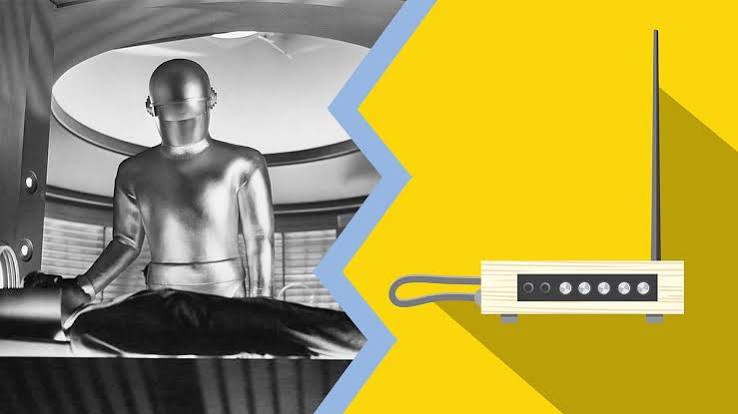
    The theremin first crept into film through composer Miklós Rózsa, who used it in Alfred Hitchcock’s Spellbound (1945) to evoke madness. The performer was Clara Rockmore, a virtuoso who had trained as a violinist and became the theremin’s greatest classical player. Her precision gave the instrument legitimacy. But it was Bernard Herrmann’s score for The Day the Earth Stood Still (1951) that cemented the theremin as the voice of the unknown. Samuel Hoffman, a podiatrist by day and thereminist by night, played the haunting theme for the alien Klaatu. From then on, the theremin signaled “not of this world.” It appeared in sci-fi and horror films throughout the 1950s, from The Thing from Another World to It Came from Outer Space.

    Why did this instrument become shorthand for the alien? Its sound has no obvious source. It doesn’t mimic a familiar acoustic instrument—it sounds like a voice, but not a human one. It glides in ways no singer can sustain. In an era of atomic anxiety and UFO sightings, the theremin gave voice to the unknown. It was the sonic equivalent of a shadowy figure in a trench coat.

    Psychedelia and Rock ‘n’ Roll

    By the 1960s, the theremin had crossed over from movie scores to popular music. The Beach Boys used an Electro-Theremin—a box with a slide controller, not the original antenna version—on Good Vibrations (1966). The song’s woozy, oscillating hook captured the psychedelic mood of the era. Led Zeppelin’s Jimmy Page went further. He bought a real theremin and used it live, coaxing eerie screams from it during performances. On Whole Lotta Love (1969), the theremin’s wail became a centerpiece of the song’s psychedelic middle section.

    Why did the theremin fit psychedelia? The genre embraced altered states, cosmic exploration, and the breaking of boundaries. The theremin broke the boundary between performer and instrument. It produced sounds that seemed to come from nowhere, bending pitch and volume in ways that defied conventional music. For listeners on acid, the theremin’s glissandos felt like a trip through space. For rock stars seeking an otherworldly edge, it was the perfect prop—you didn’t even have to touch it to make it scream.

    A Technical Pioneer: Robert Moog and the Modern Theremin

    Long before he invented the synthesizer, Robert Moog was building theremins. As a teenager in the 1950s, he sold theremin kits through a mail-order business. His early work with heterodyning oscillators directly influenced his later synthesizer designs. Moog’s company, Moog Music, began producing the Etherwave theremin in the 1990s, bringing the instrument to a new generation. Modern digital theremins are more stable than the original vacuum-tube models, which were bulky and prone to drift. But the playing technique remains the same—hands in the air, coaxing sound from invisible fields.

    The theremin’s technical evolution mirrors its cultural journey. From a Soviet lab to American concert halls, from spy bugs to rock stages, it has always been an instrument of paradoxes. It is one of the first fully electronic instruments, yet it demands the most human of gestures—a delicate touch that never actually touches. That paradox is its enduring appeal.

    Clara Rockmore and the Female Virtuosos

    The theremin is unusual in that its performance interface is the human body itself. No keys, no strings, no reeds—just the capacitance of your hands. This made it uniquely accessible to women, who were often excluded from classical music’s male-dominated institutions. Clara Rockmore became the instrument’s greatest exponent, performing with orchestras and commissioning works from composers like Bohuslav Martinů. Lucie Bigelow Rosen, a wealthy patron, helped popularize the theremin in high society and performed at Carnegie Hall. Lydia Kavina, Theremin’s grand-niece, kept the instrument alive in Russia after his death, teaching a new generation of players.

    Some scholars argue that the theremin offered women a rare space for musical agency. Because it required no physical contact, it sidestepped the gendered expectations of instrumental technique. A woman could play it with the same authority as a man, and the most celebrated players were women. This was a quiet revolution in a field that often overlooked female musicians.

    The Failed Instrument That Refused to Die

    RCA’s commercial failure in 1929 seemed to seal the theremin’s fate as a novelty. It was too hard to play, too eerie for most tastes, and too alien for mainstream music. Yet it kept resurfacing—in film scores, in psychedelic rock, in the hands of dedicated virtuosos. Robert Moog’s kits gave it a cult following. Modern artists like Carolina Eyck and Pamelia Stickney have pushed it into contemporary music. The theremin is no longer a one-hit wonder; it’s a niche instrument with a passionate community.

    Why has it persisted? Perhaps because it’s the only instrument that looks like magic. Watching a thereminist play—gliding hands, no contact, impossible sounds—is a performance in itself. It reminds us that music can come from anywhere, even from the air between our fingers. And that’s a lesson that never gets old.

    The theremin started as a Soviet physicist’s curiosity, became a Cold War spy’s footnote, and ended up as the soundtrack to our wildest imaginings. Its eerie voice still resonates in film, rock, and concert halls. Léon Theremin died in 1993, but his invention lives on—not as a spy gadget, but as a testament to human creativity’s strange and beautiful paths.

    Summary

    • The theremin was invented in 1920 by Russian physicist Léon Theremin, who later built a covert listening device for Soviet intelligence.
    • It is played without physical contact, using hand movements to control pitch and volume via radio oscillators.
    • Its eerie sound became iconic in sci-fi films like The Day the Earth Stood Still and in psychedelic rock like Led Zeppelin’s Whole Lotta Love.
    • Clara Rockmore and other female virtuosos elevated the theremin as a serious concert instrument.
    • Robert Moog built theremins as a teenager, which influenced his later synthesizer work.

    FAQ

    Q: How does a theremin produce sound without being touched?
    A: The theremin uses two high-frequency radio oscillators. The difference between their frequencies creates an audible beat. When you move your hand near the pitch antenna, your hand’s capacitance changes one oscillator’s frequency, altering the pitch. The volume antenna controls amplitude similarly.

    Q: Was the theremin actually used as a spy device?
    A: No, the theremin itself was not a spy device. However, its inventor, Léon Theremin, developed a passive listening bug called “The Thing” in 1945, which was hidden in a wooden seal and used to eavesdrop on the US Ambassador.

    Q: Why did the theremin become associated with science fiction?
    A: Its ethereal, gliding sound was unlike any traditional instrument, making it perfect for evoking the unknown and alien. Composers like Miklós Rózsa and Bernard Herrmann used it in films like Spellbound and The Day the Earth Stood Still.

    Q: Can I learn to play the theremin easily?
    A: The theremin is notoriously difficult to play well because pitch control requires precise hand movements with no physical reference. However, modern digital theremins are more stable, and with practice, it’s possible to produce melodic lines.

    Q: What’s the difference between a theremin and an Electro-Theremin?
    A: An original theremin uses antennas and hand capacitance to control sound without contact. An Electro-Theremin, used by the Beach Boys on Good Vibrations, has a slide controller for pitch and a knob for volume, so it’s played with physical touch.
  • Ike’s Hidden Hand: How Dwight Eisenhower Quietly Remade America

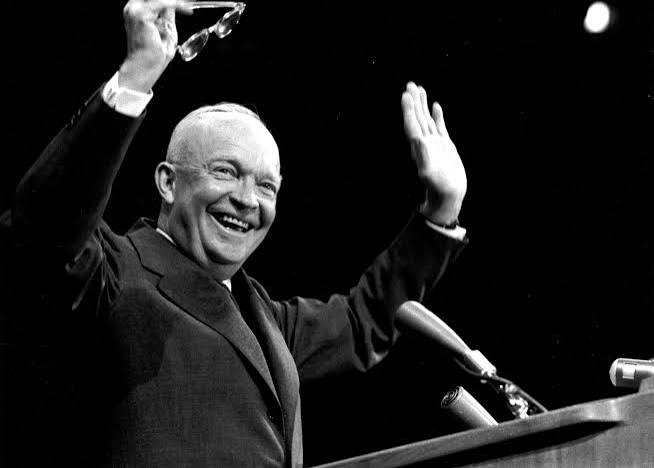
    Ike’s Hidden Hand: How Dwight Eisenhower Quietly Remade America

    When Dwight Eisenhower left the White House in January 1961, many Americans saw him as a kindly, golf-loving grandfather who had coasted through eight years. The press nicknamed his presidency the ‘era of happy days,’ and critics joked that the country was run by his chief of staff, Sherman Adams. But behind the folksy smile and the apparent passivity was one of the most calculating and effective presidents in American history.

    Eisenhower didn’t just preside over peace and prosperity. He ended a war, built a 41,000-mile interstate highway system, created NASA, desegregated a high school at gunpoint, and warned the nation against the rise of a ‘military-industrial complex.’ He did it all while making it look easy. As historian Fred Greenstein later put it, Eisenhower ran a ‘hidden-hand presidency’—a style so subtle that it took decades for scholars to recognize its brilliance.

    The Unlikely General

    Ike’s path to the presidency began in Abilene, Kansas, where he was born in 1890 to a poor Mennonite family. The original family name, Eisenhauer, meant ‘iron hewer’—fitting for a man who would later forge an alliance of 12 nations. Eisenhower won an appointment to West Point, where he was an average student but a standout football player until a knee injury ended his athletic career. After graduating in 1915—a class so talented that 59 of its 164 members became generals—Eisenhower spent 20 years in the peacetime army without seeing combat. He trained tank crews in World War I but never deployed. It was his brilliance as a staff officer, not a battlefield commander, that caught the eye of General George Marshall.

    During World War II, Marshall promoted Eisenhower rapidly, first to lead the Allied invasion of North Africa, then Sicily, and finally to serve as Supreme Allied Commander in Europe. On D-Day, June 6, 1944, Eisenhower made the call to launch the invasion despite a stormy forecast, a decision that cost thousands of lives but ultimately won the war. He also had to manage a coalition of towering egos—George Patton, Bernard Montgomery, Charles de Gaulle—with a patience that became his trademark. When Germany surrendered in May 1945, Eisenhower was a five-star general and a national hero.

    The Hidden-Hand Presidency

    After the war, both parties courted Eisenhower. He chose the Republicans and won the 1952 election in a landslide against Adlai Stevenson, with the slogan ‘I Like Ike.’ But many political insiders expected a passive president who would let Congress run the show. Instead, Eisenhower used what historians now call the ‘hidden-hand’ style: he worked deliberately behind the scenes, using intermediaries and plausible deniability to achieve his goals without appearing to pull the strings.

    Consider how he handled Senator Joseph McCarthy. Rather than confront the demagogue directly—which would have elevated McCarthy’s status—Eisenhower quietly worked to undermine him. He urged Republican leaders to censure McCarthy and used his own staff to leak damaging information. By the time McCarthy fell, Eisenhower’s fingerprints were nowhere to be seen.

    The same indirect approach guided his foreign policy. Eisenhower authorized CIA coups in Iran (1953) and Guatemala (1954), toppling governments he saw as Soviet threats. He used back-channel diplomacy with Soviet leaders, even as he publicly maintained a tough anti-communist stance. His ‘New Look’ defense policy emphasized nuclear deterrence over large conventional forces, cutting the Army while building up the Air Force’s nuclear arsenal. Critics called it risky, but Eisenhower argued it was the only way to contain communism without bankrupting the nation.

    The Builder of Modern America

    Eisenhower’s domestic achievements were anything but passive. In 1956, he signed the Federal-Aid Highway Act, creating the Interstate Highway System—the largest public works project in American history. Spanning 41,000 miles, the highways reshaped American life, enabling suburban growth, long-haul trucking, and cross-country road trips. Eisenhower had seen the German autobahn during World War II and recognized its military value; he sold the project to Congress as a national defense need.

    He also responded to the Soviet launch of Sputnik by creating NASA in 1958 and signing the National Defense Education Act, which poured federal money into science and math education. When Arkansas Governor Orval Faubus refused to integrate Little Rock Central High School in 1957, Eisenhower federalized the National Guard and sent in the 101st Airborne Division to escort nine Black students to class—a dramatic assertion of federal authority.

    Eisenhower didn’t just react to events; he shaped them. He balanced the federal budget in three of his eight years, kept inflation low, and managed to end the Korean War within months of taking office. He also signed the Civil Rights Act of 1957, the first civil rights legislation since Reconstruction, even if its enforcement powers were weak.

    The Warning That Defined His Legacy

    On January 17, 1961, three days before leaving office, Eisenhower delivered a farewell address that shocked the nation. He warned of the rise of a ‘military-industrial complex’—a permanent alliance between the defense industry and the armed forces that could threaten American democracy. ‘We must never let the weight of this combination endanger our liberties or democratic processes,’ he said. The speech, written with his own hand, reflected his deep concern that the Cold War had created a permanent war economy.

    At the time, many dismissed it as the ramblings of an old general. But over the decades, the warning has proven prescient. The military-industrial complex has only grown, and Eisenhower’s phrase has become a touchstone for critics of defense spending and foreign intervention. It was a fitting end for a president who had spent his career in uniform but understood its dangers better than most.

    Eisenhower’s post-presidency was quiet. He retired to his farm in Gettysburg, wrote his memoirs, and played golf. He died in 1969 at Walter Reed Army Medical Center in Washington, D.C. But his legacy was already being rewritten. In the 1980s, historians began to reassess his presidency, recognizing the strategic brilliance behind the folksy exterior. Today, Eisenhower is consistently ranked among the top five presidents in American history—a remarkable achievement for a man who made it all look so easy.

    Dwight Eisenhower’s presidency was a masterclass in indirection. He ended a war, built an interstate system, launched NASA, and desegregated a school—all while maintaining an image of passive detachment. His ‘hidden-hand’ style was so effective that it took historians decades to recognize. Eisenhower proved that the most powerful leaders are often the ones who work quietly, behind the scenes, making difficult decisions look effortless. His warning about the military-industrial complex remains as urgent today as it was in 1961.

    Summary

    • Eisenhower was a five-star general who led the D-Day invasion and served as Supreme Allied Commander in Europe during World War II.
    • As president, he ended the Korean War, created the Interstate Highway System, founded NASA, and enforced desegregation at Little Rock Central High School.
    • His ‘hidden-hand’ presidency used indirect methods to achieve his goals, including CIA coups in Iran and Guatemala and covert diplomacy with the Soviet Union.
    • His farewell address warned of the rise of a ‘military-industrial complex,’ a phrase that has become a cornerstone of American political discourse.
    • Historians now rank Eisenhower among the top five U.S. presidents, a dramatic reversal from the earlier view of him as a passive leader.

    FAQ

    Q: Was Eisenhower a Democrat or a Republican?
    A: Eisenhower was a Republican. He was courted by both parties in 1948 but declared himself a Republican and won the 1952 nomination after a bitter primary battle with Senator Robert Taft.

    Q: What was the ‘hidden-hand’ presidency?
    A: Historian Fred Greenstein coined the term to describe Eisenhower’s leadership style. Instead of openly directing policy, Eisenhower worked through staff, intermediaries, and secret operations to achieve his goals while maintaining plausible deniability.

    Q: What was Eisenhower’s most significant domestic achievement?
    A: Many consider the Interstate Highway System his greatest domestic achievement. The Federal-Aid Highway Act of 1956 created 41,000 miles of highways, transforming American travel and commerce.

    Q: How did Eisenhower handle the Little Rock crisis?
    A: When Arkansas Governor Orval Faubus blocked desegregation at Central High School, Eisenhower federalized the Arkansas National Guard and sent in the 101st Airborne Division to protect nine Black students, demonstrating federal authority over state segregation laws.

    Q: Why did Eisenhower warn about the military-industrial complex?
    A: In his farewell address, Eisenhower cautioned that the permanent alliance between the defense industry and the armed forces could threaten democratic processes. He believed the Cold War had created a powerful interest group that could push the country toward unnecessary wars.

  • Harry S. Truman: The Accidental President Who Defined an Era

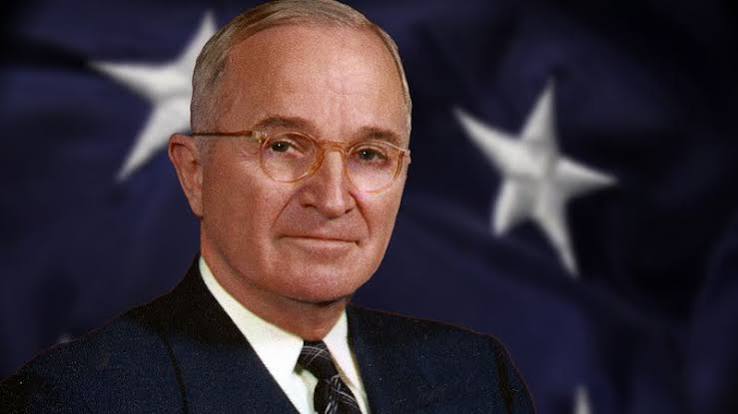
    Harry S. Truman: The Accidental President Who Defined an Era

    On April 12, 1945, Harry S. Truman had been Vice President for just 82 days when Franklin D. Roosevelt died. He was thrust into the presidency at the most critical moment in modern history: World War II was still raging, the atomic bomb was a secret he knew nothing about, and the global order was about to be reshaped. Truman, a plain-spoken farmer and haberdasher from Missouri with no college degree, became the man who would make decisions that defined the second half of the 20th century.

    His presidency was a whirlwind of monumental choices: dropping the atomic bomb, rebuilding Europe, containing communism, desegregating the military, and fighting a war in Korea. He was deeply controversial in his time, with approval ratings that plunged to 22%, and yet historians consistently rank him among the top ten presidents. How did this ‘accidental president’ become a defining figure of the Cold War era? The answer lies in his character a man who accepted responsibility, made tough calls, and famously kept a sign on his desk that read: ‘The Buck Stops Here.’

    The Making of a President: From Farm to Senate

    Harry S. Truman was born on May 8, 1884, in Lamar, Missouri. The ‘S’ in his name was a compromise between his grandfathers, Anderson Shipp Truman and Solomon Young it didn’t stand for a middle name, a quirk that reflected his humble, pragmatic upbringing. He grew up on a farm, never attended college (the only 20th-century president without a degree), and worked as a bank clerk, farmer, and then a haberdasher. His clothing store went bankrupt, leaving him with debts he spent years repaying. This experience of failure and personal responsibility shaped his later worldview.

    His political career began in local administration as a county judge in Jackson County, where he was known for honest, efficient governance. He moved to the U.S. Senate in 1935, but it was the Truman Committee that brought him national fame. During World War II, he chaired this committee that investigated waste and corruption in defense spending, saving an estimated $15 billion and earning a reputation for no-nonsense integrity. That reputation made him an attractive running mate for FDR in 1944, chosen to balance the ticket and replace the controversial Henry Wallace. Truman was kept in the dark about the Manhattan Project he only learned of the atomic bomb after becoming president.

    When Roosevelt died, Truman was stunned. His first words to reporters were: ‘I felt like the moon, the stars, and all the planets had fallen on me.’ Yet within months, he would make some of the most consequential decisions in human history.

    The Atomic Bomb: A Decision That Ended a War and Haunted History

    In August 1945, Truman authorized the use of atomic bombs on Hiroshima and Nagasaki. Japan surrendered shortly after. The decision remains the most debated of his presidency. Truman and his contemporaries argued that the bomb saved hundreds of thousands of American and Japanese lives by avoiding an invasion of Japan. The projected casualties for an invasion were staggering estimates ran into the millions. Truman saw the bomb as a military weapon to end a brutal war, and he never expressed public regret.

    Later critics have questioned whether Japan was already near surrender, whether the bomb was partly intended to intimidate the Soviet Union, and whether targeting civilians was morally defensible. Historians remain divided. What is clear is that Truman faced an impossible choice and made a decisive one. As he later wrote: ‘I knew what I was doing when I stopped the war that would have killed half a million boys on both sides.’ The bombings killed an estimated 200,000 people, mostly civilians, but the war ended within days. Truman’s decision set a precedent for nuclear deterrence that defined the Cold War.

    Architect of the Cold War: Containment, Marshall Plan, and NATO

    Truman’s response to Soviet expansionism was swift and assertive. In 1947, he announced the Truman Doctrine, pledging to support free peoples resisting communist subjugation initially in Greece and Turkey, but it became the foundation of U.S. containment policy. That same year, Secretary of State George Marshall proposed the European Recovery Program, better known as the Marshall Plan, which poured over $13 billion into rebuilding Western Europe. The plan was a stunning success: by 1952, European industrial output was 35% above pre-war levels, and the economic recovery helped stabilize democratic governments.

    In 1948, the Soviet Union blockaded Berlin, cutting off all land routes to the western sectors of the city. Truman refused to abandon the city, launching the Berlin Airlift. For 15 months, American and British planes delivered food, fuel, and supplies averaging 8,000 tons per day until the blockade was lifted. This bold move demonstrated Truman’s resolve to stand up to Soviet pressure without resorting to war. In 1949, he signed the North Atlantic Treaty, creating NATO, the first peacetime military alliance in U.S. history. These actions collectively built the framework for winning the Cold War, though they also committed the U.S. to a global interventionist posture that would later escalate in Vietnam.

    Civil Rights: A Reluctant Reformer Who Changed the Military

    Truman’s record on civil rights is a study in contradiction. He grew up in segregated Missouri, and his early language reflected the racism of his era. Yet as president, he took landmark steps toward equality. In 1946, he appointed a commission on civil rights, which issued a report that called for ending segregation and lynching. In 1948, he issued Executive Order 9981, desegregating the armed forces a move that overrode military leadership and set a precedent for federal action on civil rights. He also ordered fair employment practices in the federal government and proposed anti-lynching, anti-poll tax, and fair employment legislation, though Congress blocked most of it.

    The military desegregation was transformative. It integrated 1.2 million Black soldiers and sailors into units with whites, a precursor to the broader civil rights movement of the 1950s and 1960s. Truman’s motives were both moral and political—he needed Black voters to win the 1948 election, and he saw the contradiction in fighting a war against tyranny while maintaining segregation at home. His actions were progressive for the time, but they were also cautious and limited. He never supported a comprehensive civil rights bill, and his administration did little to dismantle segregation in the South. Nevertheless, his executive orders were a turning point, and they helped pave the way for later legislation.

    The 1948 Upset: Defying the Polls and the Press

    Truman’s 1948 reelection campaign was a masterclass in political grit. Virtually every poll predicted a loss to Republican Thomas Dewey. The Chicago Tribune even printed an early edition with the headline ‘DEWEY DEFEATS TRUMAN’ before the results were final. Truman, undeterred, mounted a ‘whistle-stop’ campaign, traveling over 31,000 miles by train, giving hundreds of speeches from the back platform. He attacked the ‘do-nothing’ Republican Congress, which had passed the Taft-Hartley Act over his veto—a law that restricted union power and which Truman saw as a betrayal of working people. He won with 303 electoral votes to Dewey’s 189, a stunning upset that proved his connection with ordinary Americans.

    His victory was also a triumph for the New Deal coalition. He ran on the ‘Fair Deal,’ an extension of FDR’s legacy that included national health insurance, federal aid to education, and expanded Social Security. While much of the Fair Deal was blocked by Congress, Truman did secure increases in the minimum wage, expanded Social Security coverage, and a housing program. His domestic legacy was a mixed bag, but it kept the liberal flame alive during a conservative era.

    The Korean War and the ‘Truman Doctrine’ in Action

    When North Korea invaded South Korea in June 1950, Truman moved quickly, calling for UN intervention. He did so without prior Congressional approval, setting a precedent for presidential war powers. The UN forces, led by General Douglas MacArthur, initially repelled the invasion and pushed into North Korea. But when China intervened in November 1950, the war turned into a bloody stalemate. MacArthur wanted to expand the war into China, possibly using nuclear weapons. Truman, fearing a wider conflict, fired him in April 1951. The decision was deeply unpopular but upheld the principle of civilian control over the military. The war dragged on until an armistice in 1953, after Truman left office, leaving the Korean Peninsula divided—a conflict that remains unresolved today.

    The Korean War was a turning point. It solidified the U.S. role as a global police officer and led to a massive military buildup, but it also exposed the limits of containment. The war cost over 36,000 American lives and billions of dollars, and Truman’s approval ratings plummeted to 22%. Yet his decision to fire MacArthur was widely supported by legal scholars and later historians, who saw it as a defense of democratic governance. The war also shaped U.S. policy in Asia for decades, including the Vietnam War, which Truman’s successor Eisenhower initiated.

    The Steel Seizure and the Limits of Presidential Power

    Truman’s domestic policies were often met with fierce resistance. In 1952, facing a steel strike that threatened the Korean War effort, he seized the steel mills to keep them operating. The Supreme Court ruled this unconstitutional in Youngstown Sheet & Tube v. Sawyer, a landmark case that limited presidential powers. Truman accepted the ruling, though he grumbled that the steel companies were ‘bigger than the government.’ This episode highlighted his willingness to push the boundaries of executive authority, but also his respect for the rule of law. It remains a key case in constitutional law, illustrating the checks and balances that define American governance.

    The Legacy: ‘The Buck Stops Here’

    Truman left office in 1953, unpopular but undeterred. He retired to Independence, Missouri, where he wrote his memoirs and established the Truman Presidential Library—the first under the 1955 Presidential Libraries Act. He lived to see the civil rights movement and the Vietnam War, and he defended his decisions until his death in 1972 at age 88. In retrospect, historians have reevaluated him as a ‘near-great’ president, ranking him in the top tier. His blunt, decisive style and his willingness to accept responsibility—embodied by his famous motto ‘The Buck Stops Here’—have become symbolic of presidential leadership.

    Truman’s presidency was a crucible of the 20th century. He made the atomic bomb decision, built the Cold War institutions, desegregated the military, and fired a general. He was often criticized as being impulsive or crude, but his actions were grounded in a simple, stubborn American pragmatism. As he once said: ‘I am not a leader. I am a moderate man, trying to do the right thing.’ That attempt, in the face of unprecedented challenges, is what defines his legacy.

    Harry S. Truman rose from a Missouri farm to the highest office at the most dangerous moment in history. He was an accidental president who became a decisive leader, shaping the postwar world through the atomic bomb, the Truman Doctrine, the Marshall Plan, NATO, and the desegregation of the military. His decisions were often controversial, but his willingness to bear the burden of responsibility—to let the buck stop with him—set a standard for presidential leadership. In a time of crisis, he provided the resolve that defined an era.

    Summary

    • Accidental president: Truman served only 82 days as VP before FDR’s death, inheriting the presidency during WWII.
    • Atomic bomb decision: Authorized the bombings of Hiroshima and Nagasaki in 1945, ending the war but sparking enduring debate.
    • Cold War architect: Created the Truman Doctrine, Marshall Plan, and NATO, establishing containment policy that won the Cold War.
    • Civil rights steps: Desegregated the military with Executive Order 9981, a landmark move for racial equality.
    • 1948 election upset: Defeated Thomas Dewey despite all polls, cementing his reputation as a fighter.

    FAQ

    Q: Why is Harry S. Truman’s middle initial ‘S’?
    A: The ‘S’ doesn’t stand for a middle name. It was a compromise between his grandfathers, Anderson Shipp Truman and Solomon Young.

    Q: What was the Truman Doctrine?
    A: A 1947 policy pledging U.S. support to free peoples resisting communist subjugation, initially for Greece and Turkey, and later the foundation of containment.

    Q: How did Truman desegregate the military?
    A: He issued Executive Order 9981 in 1948, which mandated equality of treatment and opportunity in the armed forces, leading to full integration.

    Q: Why did Truman fire General MacArthur?
    A: MacArthur wanted to expand the Korean War into China, possibly using nuclear weapons. Truman fired him to maintain civilian control over the military and avoid a wider conflict.

    Q: What was the ‘Fair Deal’?
    A: Truman’s domestic agenda, extending the New Deal with proposals for national health insurance, federal aid to education, and expanded social security. Much was blocked by Congress, but some parts passed.

  • The Marshall Plan: How America Rebuilt Europe After the War

    The Marshall Plan: How America Rebuilt Europe After the War

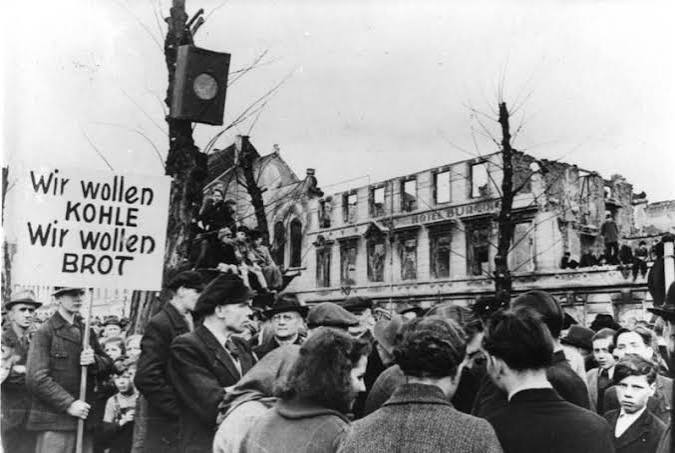
    In the spring of 1947, Europe was a continent of ruins. Industrial output had fallen to a third of pre-war levels, fields lay fallow, and millions of people huddled in bombed-out cities. The winter of 1946-47 had been brutally cold, freezing coal barges on the Rhine and closing factories across France and Britain. In Paris, bread rations were cut to 250 grams a day less than a pound. In Berlin, people burned books for warmth.

    Into this landscape stepped a single speech. On June 5, 1947, U.S. Secretary of State George C. Marshall stood before the graduating class at Harvard University and offered an unprecedented promise: America would help rebuild Europe not as charity, but as a strategic investment in stability. The program that followed, officially called the European Recovery Program, would disburse $13.3 billion over four years, reshape the continent’s economies, and draw the dividing lines of the Cold War.

    A Continent on the Brink

    The scale of destruction in 1947 is hard to overstate. The war had killed tens of millions, and the survivors faced a daily struggle for food, fuel, and shelter. Agriculture was in shambles grain harvests in France were half of what they had been before the war. Coal production in the Ruhr, the industrial heartland of Germany, had collapsed to barely a fifth of its pre-war output. In the winter of 1946-47, factories shut down across the continent because there was simply no power to run them.

    Europe was also starved of dollars. The continent needed to import food, raw materials, and machinery from the United States the only major industrial power left intact but it had no way to earn the currency to pay for them. This “dollar gap” threatened to strangle any recovery. Without American imports, Europe could not feed itself or rebuild its factories. Without a rebuilt Europe, American exports would have no market, and the global economy would remain stalled.

    The political stakes were equally dire. In France and Italy, powerful communist parties were gaining strength, fueled by economic desperation and the prestige of the Soviet Union’s role in defeating Hitler. In March 1947, President Truman had already pledged military and economic aid to Greece and Turkey to counter Soviet pressure—the Truman Doctrine. But a broader response was needed, one that would address the root causes of instability.

    The Speech at Harvard

    Marshall’s speech at Harvard was deliberately low-key. He spoke for only about ten minutes, with no grand rhetoric. He described a Europe “requiring far more help than it is now receiving” and warned that without it, the continent would face “economic, social, and political deterioration of a very grave character.” Crucially, he framed the problem not as charity but as self-interest: “It is logical that the United States should do whatever it is able to do to assist in the return of normal economic health in the world, without which there can be no political stability and no assured peace.”

    The plan was open to all European nations, including the Soviet Union. But Moscow quickly saw the danger. The conditions open economic reporting, cooperative planning among recipient countries, and integration into a Western-led system were incompatible with Soviet control. In July 1947, Soviet Foreign Minister Vyacheslav Molotov walked out of a meeting in Paris, and the USSR forced its satellites to refuse the aid. Czechoslovakia and Poland, which had initially expressed interest, were ordered to withdraw. Europe was splitting in two.

    How the Money Flowed

    Congress approved the Economic Cooperation Act in April 1948, and the program officially began. The total cost was $13.3 billion, roughly $170 billion in today’s dollars. But the mechanics were not a simple transfer of cash. The United States shipped goods wheat, coal, machinery, cotton, even tractors to recipient countries. The European governments then sold these goods to their own businesses and citizens in local currency. These “counterpart funds” were placed in a special account and used for infrastructure projects, debt reduction, or stabilizing currencies.

    This system had two advantages. First, it ensured that American aid actually translated into tangible goods, avoiding inflation. Second, it gave European governments a local-currency pool they could invest in reconstruction without printing more money. In France, counterpart funds financed the modernization of steel and coal industries. In the Netherlands, they funded land reclamation projects. In Britain, they helped stabilize the pound.

    The Results

    The program ran from April 1948 to December 1951. By the time it ended, Western Europe had not only recovered; it had transformed. Industrial production in the recipient countries rose by more than 35% during the program’s tenure. Agricultural output returned to pre-war levels. Trade among European nations expanded, and the dollar gap narrowed as exports picked up.

    West Germany, which received about $1.4 billion—roughly 10% of the total—is often cited as the most dramatic success. Combined with the currency reform of 1948, which replaced the worthless Reichsmark with the Deutsche Mark, the Marshall Plan helped unleash the “economic miracle” that would make West Germany the strongest economy on the continent. Chancellor Konrad Adenauer famously called the Plan “the great achievement” of American policy.

    The largest recipient was the United Kingdom, which received about $3.3 billion, followed by France ($2.7 billion) and Italy ($1.5 billion). But the Plan’s impact went beyond these numbers. It forced European nations to cooperate with each other through the Organisation for European Economic Co-operation (OEEC), the precursor to the OECD. This institutional habit of coordination laid the groundwork for the European Coal and Steel Community and, eventually, the European Union.

    A Legacy Debated

    Not all historians agree on the Plan’s role. Some revisionist scholars argue that Europe’s recovery was already underway by 1948, driven by domestic reforms and the revival of trade. They point out that the U.S. aid, while helpful, was not the sole cause of the boom. The German currency reform, for instance, is often credited with being more important than the Marshall Plan in restarting the German economy.

    Others, particularly on the left, view the Plan more critically, as a tool of American hegemony. The conditions attached—open markets to U.S. imports, anti-cartel policies, and the promotion of American business practices—opened Europe to American corporate influence. The productivity missions, which sent European factory managers to the United States to learn mass-production techniques, were part of a broader effort to reshape European capitalism along American lines.

    Still, the broad consensus remains that the Marshall Plan was a turning point. It gave Europeans the breathing room to rebuild, and it gave Americans a model of constructive engagement that would influence foreign policy for decades. As the historian Tony Judt put it, the Plan “did not rebuild Europe—Europeans did that themselves—but it provided the essential margin of support that made it possible.”

    The Marshall Plan ended in December 1951, but its effects rippled far beyond the four years it operated. It staved off the economic collapse that might have brought communist governments to power in Western Europe, and it cemented the transatlantic alliance that would define the Cold War. The program’s legacy is not just in the rebuilt cities and reopened factories, but in the very idea that generosity and self-interest can coincide—and that rebuilding an enemy can create a friend.

    Summary

    • The Marshall Plan, officially the European Recovery Program, disbursed $13.3 billion from 1948 to 1951 to 16 Western European nations.
    • Aid was delivered as goods, not cash, and counterpart funds were used for local infrastructure investment.
    • The plan was offered to the Soviet Union, but Moscow rejected it, deepening the division of Europe.
    • West Germany received about $1.4 billion and became a key example of the plan’s success.
    • The plan is credited with easing Europe’s recovery, but historians debate its causal importance.

    FAQ

    Q: Did the Marshall Plan give cash directly to European governments?
    A: No. The U.S. supplied goods and machinery, which governments sold to their citizens for local currency—these counterpart funds were then used for infrastructure and stabilization projects.

    Q: Why did the Soviet Union refuse the Marshall Plan?
    A: The USSR saw the conditions—open economic reporting and integration with Western Europe—as a threat to its control over Eastern Europe, and forced its satellites to decline.

    Q: Which country received the most aid?
    A: The United Kingdom received the most, about $3.3 billion, followed by France with $2.7 billion.

    Q: Was the Marshall Plan the main cause of Europe’s recovery?
    A: Historians differ. Many credit it with easing the recovery, but others note that domestic reforms, like Germany’s currency reform of 1948, were equally important.

    Q: What was the OEEC?
    A: It was the Organisation for European Economic Co-operation, created to coordinate the distribution of Marshall Plan funds. It later became the OECD.

  • The Cambridge Five: How Britain’s Elite Became Moscow’s Most Valuable Spies

    The Cambridge Five: How Britain’s Elite Became Moscow’s Most Valuable Spies

    In the 1930s, as fascism swept across Europe, a group of brilliant young men at Cambridge University made a choice that would haunt British intelligence for decades. They were not recruited for money or blackmail, but for ideology. They believed the Soviet Union was the only true bulwark against Hitler.

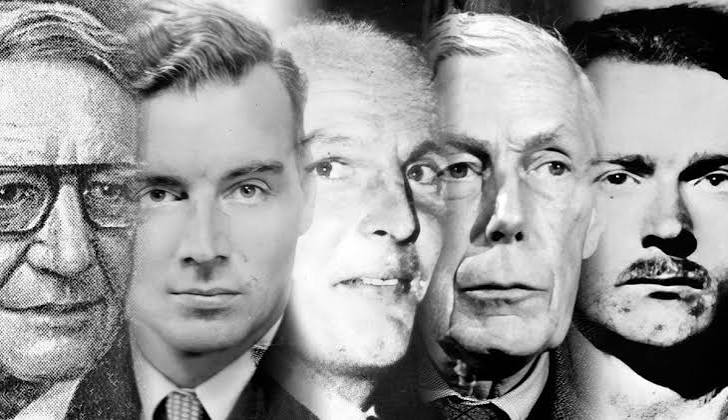
    Over the next thirty years, these five men Kim Philby, Donald Maclean, Guy Burgess, Anthony Blunt, and John Cairncross rose to the highest echelons of British power. They became diplomats, intelligence officers, and even the Queen’s art adviser. All the while, they fed the Kremlin the West’s most guarded secrets, from atomic weapons research to the identities of Western spies.

    The Making of a Spy Ring

    Cambridge University in the 1930s was a cauldron of radical ideas. The Great Depression had shattered economies, the Spanish Civil War was a rallying cry for anti-fascists, and Hitler’s rise in Germany made communism seem like the only credible opposition. For many students, Marxism wasn’t just a theory it was a moral imperative.

    The Soviet NKVD, the predecessor to the KGB, saw an opportunity. They targeted elite universities, reasoning that upper-class recruits could infiltrate Britain’s corridors of power with ease. Their key recruiter was Arnold Deutsch, a Soviet agent who arrived in London in 1934.

    Deutsch found fertile ground. Kim Philby, the son of a British diplomat, was already a committed communist. Donald Maclean, a tall, charismatic Scot, shared his zeal. Guy Burgess, flamboyant and brilliant, was a member of the Apostles, a secret intellectual society that also included Anthony Blunt. The ring grew organically, bound by shared ideology and friendship. John Cairncross, a scholarship boy, joined later, recruited by Blunt.

    Their class background was their shield. Public school, Oxbridge, family connections these were the keys to Britain’s establishment, and the Five had them in spades. No one suspected that these gentlemen could be traitors.

    The Cambridge Five remain a cautionary tale about the power of ideology, the dangers of complacency, and the blindness of privilege. Their story is not just a spy thriller, but a mirror held up to the British establishment a reflection of how easily the elite can be deceived when they cannot imagine betrayal from within.

    Summary

    • The Cambridge Five were five British spies who leaked secrets to the Soviet Union from the 1930s to the 1950s, including atomic intelligence and the identities of Western agents.
    • They were recruited at Cambridge University by Soviet handler Arnold Deutsch, motivated by anti-fascism and Marxist ideology.
    • Their privileged backgrounds made them above suspicion, allowing them to rise to senior positions in MI6, the Foreign Office, and even the royal household.
    • The ring unraveled slowly, beginning with the Venona decrypts and the 1951 defection of Burgess and Maclean, followed by Philby in 1963, and the public unmasking of Blunt in 1979 and Cairncross in 1990.
    • Their actions caused immense damage to Western intelligence and highlighted systemic failures in British intelligence’s old boy network.

    FAQ

    Q: Who were the Cambridge Five?
    A: The Cambridge Five were a ring of British spies—Kim Philby, Donald Maclean, Guy Burgess, Anthony Blunt, and John Cairncross—who passed classified information to the Soviet Union from the 1930s through the 1950s.

    Q: Why did they spy for the Soviet Union?
    A: They were ideologically motivated communists who believed the USSR was the only real bulwark against fascism. They were not paid mercenaries but committed believers in Marxism.

    Q: How were they eventually caught?
    A: The Venona project, a US code-breaking effort, identified Soviet agents codenamed “Homer” (Maclean) and “Stanley” (Philby). The 1951 defection of Burgess and Maclean, the 1963 defection of Philby, and the 1964 confession of Blunt all contributed to the unraveling.

    Q: What was the scale of the damage they caused?
    A: They compromised Western intelligence operations, exposed agents inside Soviet intelligence, and leaked atomic secrets that accelerated the Soviet nuclear program. They also alerted Moscow to the Venona project, allowing the Soviets to change their codes.

    Q: Why were they able to evade detection for so long?
    A: Their class background and establishment connections made them above suspicion. The “old boy network” protected them, and senior figures found it hard to believe that Oxbridge elites could be traitors.

  • From Dictated Peace to Constitutional Patriotism: German Foreign Policy and Nationalism After Two Defeats

    From Dictated Peace to Constitutional Patriotism: German Foreign Policy and Nationalism After Two Defeats

    In 1919, German delegates had no choice but to sign the Treaty of Versailles in the Hall of Mirrors, the same room where the German Empire had been proclaimed in 1871. The treaty stripped Germany of territory, capped its army at 100,000 men, and most woundingly forced it to accept sole responsibility for the war. Twenty-six years later, in 1945, Germany lay in ruins, divided into four Allied occupation zones, its cities reduced to rubble, its moral standing shattered by the Holocaust. Two defeats, two very different responses: the first bred a nationalism so toxic it led to a second world war; the second gave rise to a political culture that, in the West, deliberately suppressed nationalism in favor of ‘constitutional patriotism.’ This article traces that arc—from the ‘stab-in-the-back’ myth to Willy Brandt’s kneeling at the Warsaw Ghetto Memorial—and asks how a country can rebuild its identity after catastrophe.

    The Poisoned Legacy of 1918

    The Weimar Republic was born from defeat, revolution, and economic chaos. The Kaiser had abdicated, the army was shattered, and the new democratic government was saddled with the burden of signing a peace treaty that almost all Germans rejected. The treaty’s ‘war guilt’ clause—Article 231—was not just a legal provision; it was a national humiliation that united the political spectrum in opposition. Even moderates like Gustav Stresemann, who served as Foreign Minister from 1923 to 1929, built their policy on ‘revisionism’: the peaceful, diplomatic reversal of Versailles. Stresemann achieved real successes—the Locarno Treaties in 1925, Germany’s admission to the League of Nations in 1926, the Kellogg-Briand Pact in 1928—but he always insisted that these steps were means to an end: restoring Germany’s great-power status.

    Yet revisionism had a dark twin. The ‘stab-in-the-back’ myth—the claim that the army had been undefeated on the battlefield but betrayed by socialists, Jews, and liberal politicians—poisoned German politics. It gave radical nationalists, including the Nazis, a ready-made narrative of betrayal. When the Great Depression hit in 1929, the fragile Weimar coalition collapsed, and by 1933, Hitler was chancellor. Nazi foreign policy took revisionism and acceleration: withdrawal from the League of Nations (1933), remilitarization of the Rhineland (1936), annexation of Austria (1938), and the destruction of Czechoslovakia. Each step was justified as righting the wrongs of Versailles. The road to World War II was paved with the rhetoric of 1919.

    A Different Defeat: 1945 and the Moral Reckoning

    The second defeat was unconditional. There was no ‘stab-in-the-back’ myth because the Allies occupied the country, and the Nuremberg Trials made the Nazis’ crimes undeniable. The Holocaust changed everything: nationalism itself became suspect. In West Germany, the political culture that emerged in the 1950s and 1960s was deliberately anti-nationalist. The philosopher Jürgen Habermas later coined the term ‘constitutional patriotism’ (Verfassungspatriotismus) to describe a form of attachment not to an ethnic nation but to the democratic values of the Basic Law. This was not a rejection of Germany, but a redefinition of what it meant to be German.

    West German foreign policy mirrored this shift. The Federal Republic anchored itself in the West: it joined NATO in 1955 and was a founding member of the European Coal and Steel Community (1951) and the European Economic Community (1957). The Hallstein Doctrine (1955–1969) was a strange hybrid—it refused to recognize East Germany and broke diplomatic relations with any state that did (except the USSR). This was a Cold War policy, but it also reflected a deep ambivalence: the FRG claimed to be the only legitimate German state, yet it avoided any overt display of national pride.

    The breakthrough came with Willy Brandt’s Ostpolitik (1969–1974). Brandt, a Social Democrat who had fled Nazi persecution, pursued détente with the East. The Treaties of Moscow and Warsaw (1970) accepted the post-war borders, including the Oder-Neisse line, and the Basic Treaty with East Germany (1972) recognized the GDR as a second German state. Brandt’s most famous gesture was his Kniefall—kneeling in silence at the Warsaw Ghetto Memorial in 1970. It was a moment that stunned the world and, at home, was controversial: polls showed a majority of Germans disapproved. Yet it signaled a new kind of politics, one that acknowledged guilt and sought reconciliation. Ostpolitik was not a rejection of the West; it was a way to ease the human costs of division while maintaining NATO membership.

    Nationalism in the East: Anti-Fascism as State Ideology

    Meanwhile, East Germany constructed a very different identity. The GDR, born in 1949, was officially an ‘anti-fascist’ state. It portrayed itself as the true heir of the anti-Nazi resistance, while dismissing West Germany as a remnant of ‘imperialism.’ This was a state-sponsored nationalism that claimed to have overcome the past, yet it was entirely subordinated to Soviet foreign policy. The GDR was a member of the Warsaw Pact and Comecon, and its border with West Germany—especially the Berlin Wall, built in 1961—became the most concrete symbol of the Cold War division. East German nationalism was not ethnic or chauvinistic in the traditional sense, but it served the regime’s need for legitimacy: it claimed to be the ‘better’ Germany, even as it imprisoned its own citizens for trying to leave.

    Reunification and the Persistence of the Past

    When the Berlin Wall fell in 1989, German reunification seemed to happen almost overnight. The Two-plus-Four Treaty (1990) restored full sovereignty, and the united Germany remained in NATO and the European Community. But the question of German nationalism did not disappear. In the early 1990s, there were outbreaks of xenophobic violence in towns like Rostock and Hoyerswerda, and debates about a ‘German Leitkultur’ (leading culture) have continued. Yet the political mainstream has remained committed to the post-national consensus. Germany’s role in the EU, its reluctance to project military power, and its willingness to take in over a million refugees in 2015 all reflect a political culture shaped by the lessons of the past. The memory of the Holocaust is not a burden to be shrugged off; it is a foundational element of German democracy.

    Comparative Lessons

    The contrast is stark. After 1918, Germany’s defeat was seen as a humiliation to be avenged; after 1945, it was seen as a moral catastrophe to be confronted. The first response led to World War II; the second to a stable, democratic, and internationally integrated state. The difference lies not in the severity of the defeat—if anything, 1945 was worse—but in the way the past was processed. Denazification, Nuremberg, and the constant public reckoning with Nazi crimes made it impossible to revive the old nationalism. The Weimar Republic failed partly because it could not control the narrative of the lost war. The Federal Republic succeeded because it did, by making the Holocaust the centerpiece of its civic identity. As Habermas argued, the only acceptable patriotism for Germans is one that is critical, constitutional, and universalist. It is a fragile achievement, but it has held for over seventy years.

    Two defeats, two very different paths. After 1918, nationalism was the poison that killed the republic; after 1945, its suppression became the foundation of a new one. The story of German foreign policy is thus a story of how a country learned to be a nation without nationalism—or rather, with a nationalism that is self-critical and bound to democratic values. It is a lesson that may hold relevance for any country grappling with the legacies of war and the lure of national mythology.

    Summary

    • The Treaty of Versailles (1919) imposed war guilt and heavy reparations on Germany, fueling revisionist nationalism in the Weimar Republic.
    • The ‘stab-in-the-back’ myth blamed civilians for defeat, undermining democracy and paving the way for Nazi expansionist foreign policy.
    • After 1945, West Germany rejected nationalism in favor of ‘constitutional patriotism’ and anchored itself in Western institutions like NATO and the EEC.
    • Willy Brandt’s Ostpolitik and his famous kneel at the Warsaw Ghetto Memorial marked a shift toward reconciliation with the East.
    • East Germany’s state ideology was ‘anti-fascist’ but subordinated to Soviet interests, culminating in the Berlin Wall.
    • Reunification (1990) preserved the post-national consensus, and Germany’s political culture remains shaped by the memory of the Holocaust.

    FAQ

    Q: What was the ‘stab-in-the-back’ myth?
    A: The claim, popular among German nationalists after World War I, that the German army was not defeated on the battlefield but was betrayed by civilians, socialists, and Jews. It undermined the Weimar Republic’s legitimacy.

    Q: What was the Hallstein Doctrine?
    A: A West German foreign policy (1955–1969) that refused to recognize East Germany and broke diplomatic relations with any state that did (except the Soviet Union), asserting that the FRG was the only legitimate German state.

    Q: What is ‘constitutional patriotism’?
    A: A term coined by philosopher Jürgen Habermas to describe a form of political attachment based on democratic values and the constitution, rather than ethnic or cultural nationalism. It became a key concept in West German political culture.

    Q: What was Willy Brandt’s Ostpolitik?
    A: A policy of détente toward the Soviet Union and Eastern Europe pursued by West German Chancellor Willy Brandt (1969–1974). It led to treaties accepting post-war borders and normalizing relations with East Germany.

    Q: How did the two German states handle nationalism after 1945?
    A: West Germany rejected traditional nationalism in favor of constitutional patriotism and Western integration, while East Germany adopted an ‘anti-fascist’ state ideology that distinguished itself from ‘West German imperialism.’