Tag: American history

  • Ike’s Hidden Hand: How Dwight Eisenhower Quietly Remade America

    Ike’s Hidden Hand: How Dwight Eisenhower Quietly Remade America

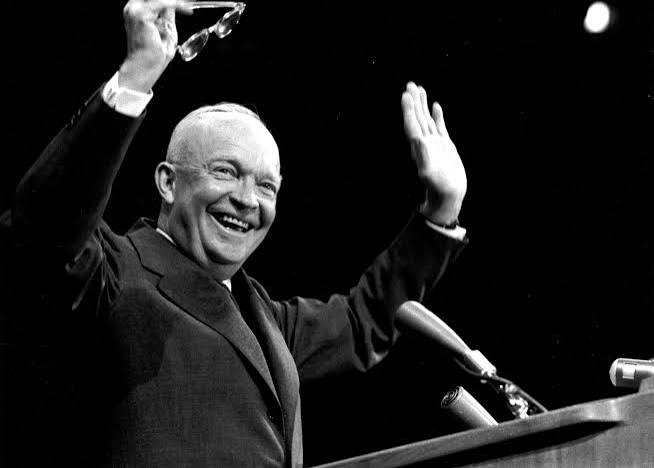
    When Dwight Eisenhower left the White House in January 1961, many Americans saw him as a kindly, golf-loving grandfather who had coasted through eight years. The press nicknamed his presidency the ‘era of happy days,’ and critics joked that the country was run by his chief of staff, Sherman Adams. But behind the folksy smile and the apparent passivity was one of the most calculating and effective presidents in American history.

    Eisenhower didn’t just preside over peace and prosperity. He ended a war, built a 41,000-mile interstate highway system, created NASA, desegregated a high school at gunpoint, and warned the nation against the rise of a ‘military-industrial complex.’ He did it all while making it look easy. As historian Fred Greenstein later put it, Eisenhower ran a ‘hidden-hand presidency’—a style so subtle that it took decades for scholars to recognize its brilliance.

    The Unlikely General

    Ike’s path to the presidency began in Abilene, Kansas, where he was born in 1890 to a poor Mennonite family. The original family name, Eisenhauer, meant ‘iron hewer’—fitting for a man who would later forge an alliance of 12 nations. Eisenhower won an appointment to West Point, where he was an average student but a standout football player until a knee injury ended his athletic career. After graduating in 1915—a class so talented that 59 of its 164 members became generals—Eisenhower spent 20 years in the peacetime army without seeing combat. He trained tank crews in World War I but never deployed. It was his brilliance as a staff officer, not a battlefield commander, that caught the eye of General George Marshall.

    During World War II, Marshall promoted Eisenhower rapidly, first to lead the Allied invasion of North Africa, then Sicily, and finally to serve as Supreme Allied Commander in Europe. On D-Day, June 6, 1944, Eisenhower made the call to launch the invasion despite a stormy forecast, a decision that cost thousands of lives but ultimately won the war. He also had to manage a coalition of towering egos—George Patton, Bernard Montgomery, Charles de Gaulle—with a patience that became his trademark. When Germany surrendered in May 1945, Eisenhower was a five-star general and a national hero.

    The Hidden-Hand Presidency

    After the war, both parties courted Eisenhower. He chose the Republicans and won the 1952 election in a landslide against Adlai Stevenson, with the slogan ‘I Like Ike.’ But many political insiders expected a passive president who would let Congress run the show. Instead, Eisenhower used what historians now call the ‘hidden-hand’ style: he worked deliberately behind the scenes, using intermediaries and plausible deniability to achieve his goals without appearing to pull the strings.

    Consider how he handled Senator Joseph McCarthy. Rather than confront the demagogue directly—which would have elevated McCarthy’s status—Eisenhower quietly worked to undermine him. He urged Republican leaders to censure McCarthy and used his own staff to leak damaging information. By the time McCarthy fell, Eisenhower’s fingerprints were nowhere to be seen.

    The same indirect approach guided his foreign policy. Eisenhower authorized CIA coups in Iran (1953) and Guatemala (1954), toppling governments he saw as Soviet threats. He used back-channel diplomacy with Soviet leaders, even as he publicly maintained a tough anti-communist stance. His ‘New Look’ defense policy emphasized nuclear deterrence over large conventional forces, cutting the Army while building up the Air Force’s nuclear arsenal. Critics called it risky, but Eisenhower argued it was the only way to contain communism without bankrupting the nation.

    The Builder of Modern America

    Eisenhower’s domestic achievements were anything but passive. In 1956, he signed the Federal-Aid Highway Act, creating the Interstate Highway System—the largest public works project in American history. Spanning 41,000 miles, the highways reshaped American life, enabling suburban growth, long-haul trucking, and cross-country road trips. Eisenhower had seen the German autobahn during World War II and recognized its military value; he sold the project to Congress as a national defense need.

    He also responded to the Soviet launch of Sputnik by creating NASA in 1958 and signing the National Defense Education Act, which poured federal money into science and math education. When Arkansas Governor Orval Faubus refused to integrate Little Rock Central High School in 1957, Eisenhower federalized the National Guard and sent in the 101st Airborne Division to escort nine Black students to class—a dramatic assertion of federal authority.

    Eisenhower didn’t just react to events; he shaped them. He balanced the federal budget in three of his eight years, kept inflation low, and managed to end the Korean War within months of taking office. He also signed the Civil Rights Act of 1957, the first civil rights legislation since Reconstruction, even if its enforcement powers were weak.

    The Warning That Defined His Legacy

    On January 17, 1961, three days before leaving office, Eisenhower delivered a farewell address that shocked the nation. He warned of the rise of a ‘military-industrial complex’—a permanent alliance between the defense industry and the armed forces that could threaten American democracy. ‘We must never let the weight of this combination endanger our liberties or democratic processes,’ he said. The speech, written with his own hand, reflected his deep concern that the Cold War had created a permanent war economy.

    At the time, many dismissed it as the ramblings of an old general. But over the decades, the warning has proven prescient. The military-industrial complex has only grown, and Eisenhower’s phrase has become a touchstone for critics of defense spending and foreign intervention. It was a fitting end for a president who had spent his career in uniform but understood its dangers better than most.

    Eisenhower’s post-presidency was quiet. He retired to his farm in Gettysburg, wrote his memoirs, and played golf. He died in 1969 at Walter Reed Army Medical Center in Washington, D.C. But his legacy was already being rewritten. In the 1980s, historians began to reassess his presidency, recognizing the strategic brilliance behind the folksy exterior. Today, Eisenhower is consistently ranked among the top five presidents in American history—a remarkable achievement for a man who made it all look so easy.

    Dwight Eisenhower’s presidency was a masterclass in indirection. He ended a war, built an interstate system, launched NASA, and desegregated a school—all while maintaining an image of passive detachment. His ‘hidden-hand’ style was so effective that it took historians decades to recognize. Eisenhower proved that the most powerful leaders are often the ones who work quietly, behind the scenes, making difficult decisions look effortless. His warning about the military-industrial complex remains as urgent today as it was in 1961.

    Summary

    • Eisenhower was a five-star general who led the D-Day invasion and served as Supreme Allied Commander in Europe during World War II.
    • As president, he ended the Korean War, created the Interstate Highway System, founded NASA, and enforced desegregation at Little Rock Central High School.
    • His ‘hidden-hand’ presidency used indirect methods to achieve his goals, including CIA coups in Iran and Guatemala and covert diplomacy with the Soviet Union.
    • His farewell address warned of the rise of a ‘military-industrial complex,’ a phrase that has become a cornerstone of American political discourse.
    • Historians now rank Eisenhower among the top five U.S. presidents, a dramatic reversal from the earlier view of him as a passive leader.

    FAQ

    Q: Was Eisenhower a Democrat or a Republican?
    A: Eisenhower was a Republican. He was courted by both parties in 1948 but declared himself a Republican and won the 1952 nomination after a bitter primary battle with Senator Robert Taft.

    Q: What was the ‘hidden-hand’ presidency?
    A: Historian Fred Greenstein coined the term to describe Eisenhower’s leadership style. Instead of openly directing policy, Eisenhower worked through staff, intermediaries, and secret operations to achieve his goals while maintaining plausible deniability.

    Q: What was Eisenhower’s most significant domestic achievement?
    A: Many consider the Interstate Highway System his greatest domestic achievement. The Federal-Aid Highway Act of 1956 created 41,000 miles of highways, transforming American travel and commerce.

    Q: How did Eisenhower handle the Little Rock crisis?
    A: When Arkansas Governor Orval Faubus blocked desegregation at Central High School, Eisenhower federalized the Arkansas National Guard and sent in the 101st Airborne Division to protect nine Black students, demonstrating federal authority over state segregation laws.

    Q: Why did Eisenhower warn about the military-industrial complex?
    A: In his farewell address, Eisenhower cautioned that the permanent alliance between the defense industry and the armed forces could threaten democratic processes. He believed the Cold War had created a powerful interest group that could push the country toward unnecessary wars.
  • Franklin D. Roosevelt: The President Who Redefined America

    Franklin D. Roosevelt: The President Who Redefined America

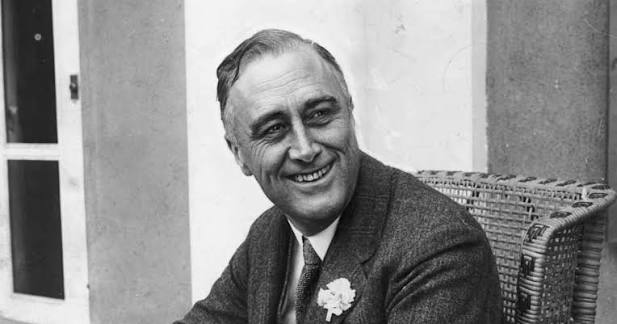
    When Franklin Delano Roosevelt took the oath of office on March 4, 1933, the United States was in freefall. Unemployment had hit 25%, banks were shuttering by the hundreds, and industrial production had been cut in half. In his first inaugural address, he told a terrified nation that “the only thing we have to fear is fear itself.” But FDR didn’t just offer words; he launched an unprecedented wave of legislation that would forever change the relationship between the government and its citizens.

    From Hyde Park to the White House

    Born into privilege in Hyde Park, New York, on January 30, 1882, Franklin Delano Roosevelt seemed destined for a life of comfort, not crisis. A distant cousin of Theodore Roosevelt, he attended Harvard and Columbia Law School (without graduating), then followed his cousin’s path into politics. He served as Assistant Secretary of the Navy under Woodrow Wilson and ran as the vice-presidential candidate on the losing Democratic ticket in 1920.

    Then, in 1921, at age 39, disaster struck. Roosevelt contracted polio, leaving him permanently paralyzed from the waist down. He spent years in rehabilitation, learning to move with braces and a wheelchair. This experience, historians often argue, deepened his empathy for the suffering of ordinary Americans a quality that would define his presidency.

    The New Deal: A New Relationship Between Government and Citizens

    When FDR took office, the nation was in the grips of the Great Depression. His response was the New Deal, a series of programs and reforms that unfolded in two waves. The First New Deal (1933-1934) focused on relief and recovery, creating agencies like the Civilian Conservation Corps (CCC), the Tennessee Valley Authority (TVA), and the Federal Deposit Insurance Corporation (FDIC), which guaranteed bank deposits to restore public confidence.

    The Second New Deal (1935-1936) shifted toward reform and security. The Social Security Act of 1935 established a permanent safety net for the elderly and unemployed. The Wagner Act protected workers’ rights to unionize. The Works Progress Administration (WPA) put millions of Americans to work on public projects, from roads and bridges to murals and plays.

    These programs were transformative, but they were not without controversy. In 1937, FDR overreached with his “court-packing” plan, proposing to expand the Supreme Court to secure favorable rulings on New Deal legislation. The move was widely seen as a political miscalculation, and it tarnished his prestige. A recession in 1937-1938, partly caused by premature spending cuts, also raised doubts about the New Deal’s effectiveness.

    Leading Through World War II

    As the world lurched toward war in the late 1930s, FDR initially pursued neutrality, but he quietly aided the Allies through programs like “cash-and-carry.” In January 1941, he delivered his famous “Four Freedoms” speech, envisioning a world founded on freedom of speech, worship, from want, and from fear.

    When Japan attacked Pearl Harbor on December 7, 1941, FDR led the United States into total war. He served as Commander-in-Chief, implementing a “Germany First” strategy and overseeing the Manhattan Project. He played a central role in Allied conferences at Casablanca, Tehran, and Yalta, shaping the postwar world.

    His leadership was indispensable, but his record is not without stains. In 1942, he signed Executive Order 9066, which led to the internment of over 100,000 Japanese Americans—a grave violation of civil liberties that remains a dark chapter in American history.

    The Legacy: Four Terms and a Transformed Nation

    FDR was elected to an unprecedented four terms, a feat that led to the 22nd Amendment limiting future presidents to two. He was the first president to appear on television and the first to appoint a woman to a cabinet post, choosing Frances Perkins as Secretary of Labor.

    His partnership with his wife, Eleanor Roosevelt, was revolutionary. She transformed the role of First Lady, advocating for human rights and social justice both at home and abroad.

    FDR died of a cerebral hemorrhage on April 12, 1945, just weeks before Germany’s surrender. He never lived to see the final Allied victory or the postwar boom that his policies helped set in motion.

    Scholars continue to debate his economic legacy. Some argue that the New Deal saved capitalism and restored public confidence; others, like economist Amity Shlaes, contend that it prolonged the Depression and that only WWII mobilization brought full recovery. Regardless, FDR’s presidency fundamentally redefined the social contract, establishing the expectation that the federal government would protect its citizens from economic devastation.

    Franklin D. Roosevelt is not just a historical figure; he is the architect of modern America. His presidency expanded the powers of the federal government, created the social safety net, and guided the nation through the two greatest crises of the 20th century. His flaws—from court-packing to internment—remind us that even the most transformative leaders are human. But his vision of a government that actively works for the welfare of its people remains a defining ideal of American democracy.

    Summary

    • FDR served as the 32nd U.S. President from 1933 until his death in 1945, winning four terms.
    • His New Deal programs, including Social Security and the FDIC, created the modern social safety net.
    • He led the U.S. through the Great Depression and World War II, shaping the postwar order.
    • His presidency was marked by both transformative achievements and significant failures, such as the internment of Japanese Americans.
    • His partnership with Eleanor Roosevelt set a new standard for the role of First Lady.

    FAQ

    Q: How many terms did Franklin D. Roosevelt serve?
    A: FDR was elected to four terms, serving from March 4, 1933, until his death on April 12, 1945. His unprecedented tenure led to the 22nd Amendment, which limits presidents to two terms.

    Q: What was the New Deal?
    A: The New Deal was a series of programs and reforms launched by FDR to combat the Great Depression. It included relief for the unemployed, recovery of the economy, and reforms to prevent future crises, such as the Social Security Act and the creation of the SEC.

    Q: Did FDR really have polio?
    A: Yes, FDR contracted polio in 1921 at age 39, which left him paralyzed from the waist down. He used a wheelchair and leg braces, though he worked hard to hide his disability from the public.

    Q: What was the court-packing plan?
    A: In 1937, FDR proposed expanding the Supreme Court to add more justices who would support his New Deal legislation. The plan was widely criticized as an overreach and was rejected by Congress.

    Q: How did FDR handle World War II?
    A: FDR initially pursued neutrality but aided the Allies through programs like Lend-Lease. After Pearl Harbor, he led the U.S. as Commander-in-Chief, implementing a “Germany First” strategy and participating in key Allied conferences like Tehran and Yalta.

  • Rosie’s Rivets: How Six Million Women Built the Arsenal of Democracy

    Rosie’s Rivets: How Six Million Women Built the Arsenal of Democracy

    In 1942, a 20 year old farm girl named Rose Monroe walked into a Detroit aircraft plant and picked up a rivet gun for the first time. Within months, she was helping build B-24 bombers, part of a workforce that would change the face of American industry forever. Rose was one of millions a real-life Rosie the Riveter, though the name would later become a symbol far bigger than any single woman.

    When President Franklin D. Roosevelt promised to make America the ‘Arsenal of Democracy’ in 1940, he was talking about machines and munitions. But the arsenal needed hands to build it, and those hands were increasingly female. By 1943, women were not just a token presence in factories; they were the backbone of production, riveting fuselages, welding hulls, and loading shells. This is the story of how they got there, what they did, and what happened when the war ended.

    The Labor Crisis That Opened the Factory Gates

    Before the war, heavy industry was a man’s world. Women worked in textile mills, as domestic servants, or in offices, but the idea of a woman operating a drill press or welding a ship’s hull was considered absurd even dangerous. The Great Depression had reinforced the notion that a woman’s place was in the home, with many states passing laws that barred married women from certain jobs.

    Then the war came. Between 1941 and 1945, over 16 million men left civilian life for the military. The factories that had been retooling for war production suddenly faced a catastrophic shortage of workers. In 1942, the War Manpower Commission realized that voluntary male labor could not meet the desperate need for aircraft, ships, and ammunition. The government and industry had to swallow their prejudices.

    At first, they tried to recruit women into “light” work assembling small parts, packing supplies. But the need was too great. Soon, women were being trained for the same jobs as men: riveting, welding, operating cranes, and working in foundries. The U.S. Employment Service launched a campaign with the slogan, “The More Women at Work, the Sooner We Win!”

    6 Million Strong: The Scale of the Shift

    By the war’s end, roughly 6 million women had entered the workforce. Of those, between 2 and 3 million went directly into war industries aircraft factories like Boeing and Lockheed, shipyards like the Kaiser yards on the West Coast, and munitions plants scattered across the country. At peak, women made up 37% of the civilian labor force in war production.

    The numbers were staggering. In 1940, there were almost no women building airplanes. By 1943, women constituted nearly 40% of the aircraft industry workforce. In shipyards, they were welding hulls and installing electrical systems. One Kaiser shipyard in Richmond, California, employed over 20,000 women, many of whom had never held a job outside the home.

    These women were not all young and single. Many were married, some with children. They came from all backgrounds former waitresses, teachers, and housewives. They learned to read blueprints, use micrometers, and operate heavy machinery. They worked 48 to 60-hour weeks, often on night shifts, and then went home to cook, clean, and care for their families.

    The Icon and the Reality

    The name “Rosie the Riveter” comes from a 1942 song by Redd Evans and John Jacob Loeb, which told of a woman working on an assembly line. The song was a hit, and the name stuck. But the image we know today the bandana, the rolled-up sleeve, the flexed bicep comes from two different sources.

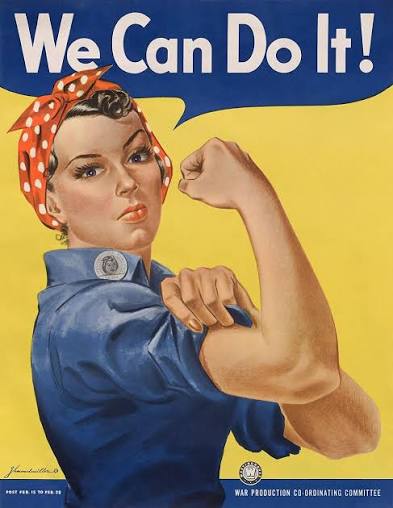
    In 1943, Norman Rockwell painted a cover for the Saturday Evening Post depicting a muscular Rosie with a rivet gun in her lap and a copy of Mein Kampf under her foot. That image, with its blend of patriotism and power, was what most Americans saw during the war. A year earlier, J. Howard Miller had created a poster for Westinghouse Electric showing a woman in a red bandana with the slogan “We Can Do It!” That poster was hung in factories for a few weeks, then largely forgotten—until the 1980s, when feminist activists rediscovered it and turned it into a symbol of women’s empowerment.

    The reality was more complicated. Women were paid significantly less than men—on average, 50 to 65% of what men earned for the same work. Some unions, like the United Auto Workers, pushed for equal pay, but it rarely happened. The government’s propaganda, meanwhile, emphasized that women were working as a “temporary” measure, a patriotic duty rather than a career.

    The Double Shift and the Struggle for Respect

    Media portrayed women as effortlessly balancing factory work and home life—”She can do it!” was a common refrain. But the truth was that many women were exhausted. They worked eight or ten-hour shifts, then came home to cook dinner, do laundry, and care for children. The federal government did fund over 3,000 childcare centers under the Lanham Act, but coverage was spotty. Many women relied on grandparents, neighbors, or older siblings to watch their kids.

    In the factories, women faced skepticism and sometimes outright hostility. Male supervisors often assumed they couldn’t handle the work and gave them the dirtiest, most dangerous jobs. African American women, who made up about 600,000 of the industrial workforce, faced segregation in many plants. They were often assigned to the most hazardous tasks, like handling explosives, and were excluded from the better-paying positions reserved for white women.

    Despite all this, women proved themselves. They learned to rivet, weld, and operate cranes. They built the B-29 bombers that would end the war. They laid the steel plates of Liberty ships, sometimes in record time. A woman named Beatrice Morales, a Mexican American from Los Angeles, worked as a welder at a shipyard and later said, “I loved it. I felt like I was doing something important.”

    When the War Ended

    The war ended in 1945, and the industrial machine slowed. Women were the first to be laid off. By 1947, the female labor force participation rate had dropped to near pre-war levels, though it never fully returned to the 1940 figure. Many women left willingly, exhausted by the double shift and eager to return to normal life. Others were pushed out—their jobs given to returning veterans.

    The government and media, which had spent four years urging women to work, now told them to go home. A 1945 article in The New York Times advised women to “return to the home” and make room for the men who had fought for their country. The “We Can Do It!” poster was retired.

    But something had changed. Millions of women had earned their own money, learned new skills, and tasted a kind of independence they had never known. They may have left the factories, but they carried that experience into the post-war world. Many returned to work within a few years, not in factories but in the growing clerical and service sectors. The Rosie the Riveter generation laid the groundwork for the women’s rights movement of the 1960s, even if they didn’t always see it themselves.

    The Legacy

    Today, Rosie the Riveter is a symbol of women’s strength and capability. The “We Can Do It!” poster is reproduced on T-shirts, coffee mugs, and posters. But the real Rosies—the millions of women who worked in the arsenal of democracy—were not just symbols. They were real people who got their hands dirty, who built the machines that won the war, and who challenged the notion of what women could do.

    In 2000, the Rosie the Riveter/World War II Home Front National Historical Park was established in Richmond, California, at the site of one of the largest Kaiser shipyards. It stands as a tribute to the women and men who worked there. But the greatest tribute is the memory: a generation of women who, when their country called, answered with their hands and their courage.

    Rosie the Riveter was never one woman, but millions. They built the planes, ships, and arms that turned the tide of World War II. They worked for less pay, faced discrimination, and carried the double burden of work and home. Yet they did it—and in doing so, they changed America forever. Their legacy is not just in the machines they built, but in the doors they opened for the women who came after them.

    Summary

    • Over 6 million women entered the workforce during WWII, with 2-3 million in war industries like aircraft, shipbuilding, and munitions.
    • At peak, women made up 37% of the civilian labor force in war production.
    • Women were paid 50-65% of men’s wages for the same work, despite equal-pay rhetoric.
    • The ‘We Can Do It!’ poster was created in 1943 but only became famous in the 1980s; Norman Rockwell’s 1943 cover was more iconic during the war.
    • Women faced a ‘double shift’ of factory work and home duties, with limited childcare support.
    • After the war, most women were laid off, but their wartime work laid the foundation for future women’s rights movements.

    FAQ

    Q: Who was the real Rosie the Riveter?
    A: Rosie is a composite icon, not a single person. Several women have been proposed as inspirations, including Rose Monroe, a riveter at Willow Run, and Geraldine Hoff Doyle, who may have been the model for the ‘We Can Do It!’ poster. But the name comes from a 1942 song, not any one individual.

    Q: What did women actually do in the war industries?
    A: They did almost everything: riveting aircraft fuselages, welding ship hulls, operating cranes, assembling ammunition, and working in steel mills. They were trained on the job and often excelled at precision work.

    Q: Were women paid the same as men?
    A: No. On average, women earned 50-65% of what men were paid for the same work. Some unions fought for equal pay, but it was rarely achieved.

    Q: How did women manage childcare while working?
    A: The federal government funded over 3,000 Lanham Act childcare centers, but they were unevenly distributed. Many women relied on family members or informal arrangements.

    Q: What happened to women workers after the war?
    A: Most were laid off to make room for returning veterans. By 1947, women’s labor force participation had dropped to near pre-war levels, though it never fully returned to 1940 rates.

  • The War That Moved America: How WWII Reshaped the Nation’s Population

    The War That Moved America: How WWII Reshaped the Nation’s Population

    In 1940, one in ten Americans was unemployed, and the country’s industrial heartland was the Northeast and Midwest. By 1945, the map of where Americans lived had been redrawn. The war had set in motion the largest internal migration in U.S. history 15 million people crossed state lines, roughly one in ten Americans and the direction was unmistakably south and west.

    The Pre-War Map

    Before Pearl Harbor, the United States was a different country. The South was poor, agricultural, and segregated. The West was sparsely populated, dependent on timber, mining, and farming. The Great Depression still lingered, with unemployment hovering around 15 percent. The classic Great Migration of African Americans from the rural South to Northern cities had already been underway for three decades, but the West Coast had relatively small Black populations Los Angeles counted just 75,000 Black residents in 1940.

    The War as Catalyst

    The attack on Pearl Harbor on December 7, 1941, changed everything. The federal government mobilized for war, and the War Production Board began directing contracts to locations with available labor, land, and power. Defense spending during WWII reached roughly $300 billion in 1940s dollars, and about 70 percent of war contracts went to just a handful of states: California, Washington, Texas, New York, and Michigan.

    California alone received about 10 percent of all prime war supply contracts. Los Angeles County received more war contracts than any single state except California itself. The aircraft industry in Southern California Lockheed, Douglas, North American became a magnet for workers. Shipbuilding boomed in the Pacific Northwest, in Portland, Seattle, and Vancouver. Military bases sprouted across the South and West, chosen for year-round flying weather and cheap land San Diego, Norfolk, San Antonio, Phoenix, and inland California cities like Riverside and Fresno.

    The Westward Surge

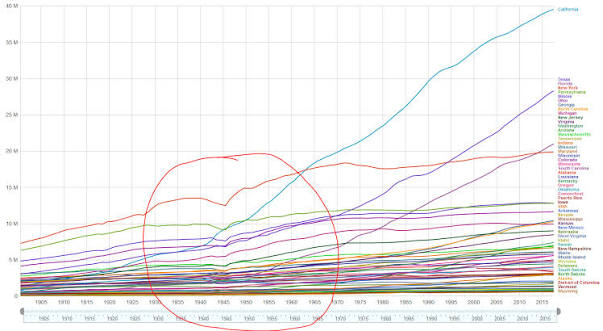
    The result was explosive growth. California gained nearly 2 million residents between 1940 and 1945, making it the fastest-growing state in the nation. Sunbelt cities—Los Angeles, San Diego, Phoenix, Houston, Dallas, Atlanta, Miami—saw their populations soar. Meanwhile, rural areas and the Rust Belt stagnated or declined as workers left for defense jobs.

    This was not just a continuation of earlier trends; it was a distinct, war-driven phenomenon. The federal government was, in effect, moving the population. The Pacific Coast transformed from a resource-extractive periphery into a manufacturing powerhouse.

    The Second Great Migration

    The war also marked the beginning of the second wave of the Great Migration, when African Americans left the South in even larger numbers than before. During the 1940s alone, about 1.5 million Black Americans left the South, many drawn to West Coast defense plants like the Kaiser Shipyards in Richmond, California, and aircraft factories in Los Angeles, where labor shortages were acute.

    But the war was not a haven of racial equality. Black migrants faced discrimination in housing, unions, and the military itself, which remained segregated until 1948. Race riots erupted in 1943 in Detroit, Harlem, and Los Angeles—the Zoot Suit Riots. The experience gave rise to the “Double V” campaign: victory abroad against fascism, victory at home against racism. The political base for the Civil Rights Movement was being built, as Black voters in Northern and Western cities gained influence.

    The White Migrant Experience

    Millions of white Southerners, many from Appalachia and the rural South, also moved to defense plants in the Midwest and West. The “Okies” and “Arkies” of the Dust Bowl era continued their westward trek, now finding work in California’s war industries. They too faced stigma, labeled “hillbillies” and often settling in segregated white working-class neighborhoods.

    The Post-War Legacy

    The shift did not end in 1945. Cold War defense spending kept the Sunbelt booming. The GI Bill of 1944 subsidized housing and education, disproportionately benefiting veterans who settled in the South and West. The interstate highway system, air conditioning, and suburbanization further entrenched the region’s rise. By 1960, California had surpassed New York as the most populous state—a position it held until 2020.

    World War II was not just a conflict fought overseas; it was a domestic revolution. The federal government’s wartime spending—directed to the coasts and the South—permanently reoriented the nation’s economy and population. The 15 million Americans who moved during the war years carried the country’s center of gravity with them, and the Sunbelt’s dominance today is a direct legacy of the choices made in 1941.

    Summary

    • WWII triggered the largest internal migration in American history: 15 million people moved across state lines between 1940 and 1945.
    • California gained ~2 million residents, becoming the fastest-growing state, driven by aircraft manufacturing and shipbuilding.
    • The South and West received the bulk of $300 billion in defense spending, with ~70% of war contracts going to just a handful of states.
    • The war marked the beginning of the Second Great Migration, as 1.5 million African Americans left the South during the 1940s, many heading west.
    • The GI Bill and Cold War spending extended the shift, cementing the Sunbelt’s rise and California’s status as the most populous state by 1960.

    FAQ

    Q: How many Americans moved during WWII?
    A: Roughly 15 million Americans moved across state lines during the war years (1940–1945), about one in ten of the population.

    Q: Why did the population shift south and west?
    A: The federal government directed defense contracts and military bases to the South and West due to available labor, land, climate, and power resources. California alone received ~10% of all prime war supply contracts.

    Q: What was the Second Great Migration?
    A: The Second Great Migration (1940–1970) was the larger, more westward-oriented wave of African American migration from the South. During the 1940s alone, ~1.5 million Black Americans left the South, many for West Coast defense jobs.

    Q: Did the migration end after the war?
    A: No. The GI Bill, Cold War defense spending, and later the interstate highway system and air conditioning continued to attract people to the Sunbelt. California surpassed New York as the most populous state in 1960.

    Q: What were the social impacts of the migration?
    A: The migration created both economic opportunity and racial tension. Discrimination in housing and jobs persisted, leading to race riots in 1943. It also built a political base for the Civil Rights Movement.

  • How the U.S. Lost State Churches and Gained a Thriving Religious Marketplace

    How the U.S. Lost State Churches and Gained a Thriving Religious Marketplace

    In 1833, Massachusetts became the last state to stop funding its official church. That decision, part of a broader disestablishment movement, could have crippled American religion. Instead, it sparked a financial revolution that made U.S. churches the envy of the world.

    The End of Tax-Funded Religion

    For most of American history, churches relied on taxes. In colonial Virginia, the Anglican Church was paid for by public funds. In Massachusetts, the Congregational Church held the same privilege. Dissenters Baptists, Quakers, Presbyterians were forced to support a church they didn’t belong to, facing fines and even imprisonment if they refused.

    The First Amendment, ratified in 1791, only prohibited a national church. It left state establishments intact. But over the next four decades, one state after another cut ties. Connecticut did it in 1818, and Massachusetts followed in 1833.

    Suddenly, churches had to survive on voluntary contributions. No more guaranteed income from taxes. No more captive congregations. They had to convince people to join and give.

    This was the financial dilemma that could have destroyed American religion. Instead, it became its greatest asset.

    The Voluntary System Takes Root

    Lyman Beecher, a prominent Congregationalist minister, initially fought against disestablishment in Connecticut. He feared it would ruin the church. But a few years later, he called it a “great political and moral blessing.” Why the change of heart?

    Because the voluntary system worked. Churches became more entrepreneurial. They introduced pew rents, where families paid for reserved seating. They launched subscription drives, asking members to pledge annual amounts. They created missionary societies and benevolent associations to pool resources for outreach and social causes.

    The American Bible Society, founded in 1816, and the American Home Missionary Society, founded in 1826, were early examples. These organizations channeled donations from thousands of ordinary members to fund evangelists, print Bibles, and build churches on the frontier.

    Competition Breeds Innovation

    Without a government monopoly, denominations had to compete. This created what economists Roger Finke and Rodney Stark call a “religious free market.” Churches that adapted thrived; those that didn’t withered.

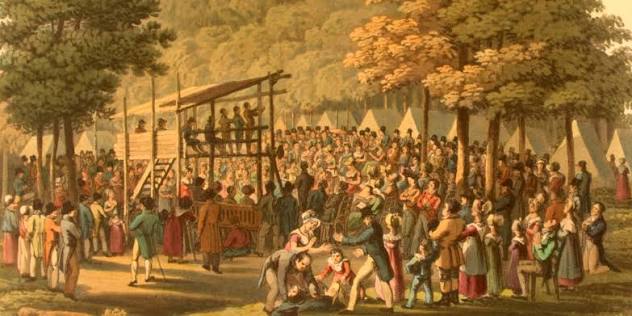
    The results were dramatic. The Methodists and Baptists, which were small sects in the colonial era, exploded in numbers. They used circuit-riding preachers, revivals, and emotional worship to attract working-class Americans. By 1850, they were the largest Protestant denominations in the country.

    This competition didn’t just grow churches. It diversified them. The U.S. now has hundreds of denominations, from Jehovah’s Witnesses to Pentecostals, each carving out a niche. That diversity is a direct product of the voluntary system.

    Not Everyone Thrived

    The voluntary system wasn’t a guaranteed success. Many rural and poor congregations struggled. Ministers often went unpaid. Church buildings fell into disrepair. Financial instability was common, especially on the frontier where cash was scarce.

    Some churches relied on itinerant preachers because they couldn’t afford a full-time pastor. Others closed their doors entirely. The system was harsh, but it also filtered out ineffective churches and rewarded those that genuinely served their communities.

    The Rise of Philanthropic Giants

    As the 19th century progressed, wealthy donors began to shape the religious landscape. John D. Rockefeller funded urban missions and seminaries. Andrew Carnegie gave to churches that promoted social reform. In the 20th century, the Pew Charitable Trusts and the Lilly Endowment became major forces, steering millions toward particular theological programs.

    This philanthropic influence has been criticized. It concentrates power in the hands of a few wealthy individuals who can decide which religious projects flourish. But it also allowed churches to undertake ambitious ventures—hospitals, universities, international missions—that would have been impossible with pew rents alone.

    The Modern Contrast

    Today, the U.S. stands out among wealthy nations. About 70% of Americans identify as Christian (Pew Research, 2021), and congregational giving remains high. In Europe, where state churches persist, attendance has plummeted. The Church of England, the Lutheran churches of Scandinavia, and others struggle to fill pews despite receiving tax support.

    Why the difference? The voluntary system created a culture of participation. American churches don’t just receive passive funding; they engage members as stakeholders. Giving is a commitment, not a tax. This fosters a deeper connection to the institution.

    A Theological Shift

    Disestablishment also changed how Americans thought about religion. Many came to see it as providential. A church supported by the state becomes complacent, they argued. But a church that must earn its support stays vigorous.

    This view became a cornerstone of American religious identity. It’s why the U.S. embraces religious pluralism rather than a single established faith. The separation of church and state, often seen as a secular victory, was also a religious one—it forced faith to compete, and in competing, it thrived.

    The financial dilemma of disestablishment turned out to be a blessing in disguise. By losing state support, American churches gained independence, innovation, and a competitive spirit that fueled their growth. The voluntary system wasn’t easy, but it built a religious landscape that remains vibrant today, even as other wealthy nations see their churches empty.

    Summary

    • The First Amendment banned a national church, but states continued funding churches until Massachusetts ended the practice in 1833.
    • After disestablishment, churches relied on voluntary contributions, leading to innovations like pew rents, subscription drives, and missionary societies.
    • Competition among denominations in a “religious free market” drove growth, especially for Methodists and Baptists.
    • The voluntary system was precarious for many congregations, but it favored those that effectively served their communities.
    • The U.S. remains highly religious compared to Europe, with ~70% of Americans identifying as Christian (Pew Research, 2021).

    FAQ

    Q: Why did states disestablish their churches?
    A: Coalitions of religious dissenters (like Baptists) and Enlightenment thinkers, including James Madison, argued that state support violated religious freedom and created inequality. Over time, states like Virginia, Connecticut, and Massachusetts ended their official churches.

    Q: How did churches raise money without taxes?
    A: They introduced pew rents, where families paid for seats, launched annual subscription drives, and created voluntary societies like the American Bible Society to fund missions and outreach.

    Q: Did all churches thrive under the voluntary system?
    A: No. Many rural and poor congregations struggled to pay ministers or maintain buildings. The system was competitive and harsh, but it rewarded churches that were responsive to their members.

    Q: How does this compare to Europe?
    A: In Europe, state churches often became complacent and saw declining attendance. In the U.S., the voluntary system created a vibrant “religious marketplace” where denominations competed for members, leading to higher overall religious participation.

    Q: What role did wealthy donors play?
    A: Philanthropists like John D. Rockefeller funded seminaries and urban missions, while later foundations like Pew and Lilly Endowments shaped religious projects. This gave donors significant influence over which religious initiatives received funding.