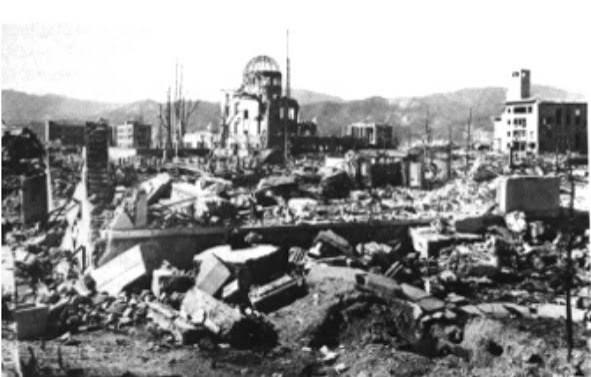
At 11:02 on the morning of August 9, 1945, a plutonium bomb nicknamed ‘Fat Man’ detonated 500 meters above the streets of Nagasaki. The blast killed tens of thousands instantly, leveling factories, homes, and a cathedral. Halfway around the world, in Moscow, the Soviet Foreign Minister was handing the Japanese ambassador a declaration of war. The date was no coincidence: the Red Army had rolled into Manchuria just hours earlier, and the second atomic bomb fell as Soviet tanks crossed the border. Within six days, Japan announced its surrender.
For decades, the standard American narrative held that the bombs alone forced Japan to its knees. But historians have long debated whether the Soviet entry into the Pacific War a massive, swift offensive that shattered Japan’s last military hopes was the true final blow. The evidence from Japanese decision-making suggests a more complex story: both events, separated by hours, combined to break a deadlocked government that had been preparing to fight to the death.
The Summer of 1945: A Nation on the Brink
By mid-1945, Japan’s situation was dire. The Imperial Navy was crippled; the merchant fleet had been decimated by American submarines, cutting off oil and food imports. The U.S. Army Air Forces had firebombed dozens of cities, including the March 9 raid on Tokyo that killed an estimated 100,000 people. Yet the government had not surrendered. The military leadership, particularly the Army, had staked its honor on fighting a decisive battle on Japanese soil. They believed they could inflict such heavy casualties on an Allied invasion that the United States would offer more lenient terms than unconditional surrender.
The Potsdam Declaration, issued July 26, 1945, demanded exactly that: unconditional surrender, or Japan would face “prompt and utter destruction.” Prime Minister Kantarō Suzuki initially responded with the word mokusatsu often translated as “ignore” or “treat with silent contempt.” Whether he meant to stall for time or outright reject, the Allies took it as a refusal. The war would continue.
The Soviet Factor: A Diplomatic Lifeline Snapped
Behind the scenes, Japan had been clutching at one last straw: the Soviet Union. Despite being allies with the United States and Britain, the Soviets had signed a neutrality pact with Japan in April 1941. Japan’s foreign minister, Shigenori Tōgō, had been desperately trying to get Moscow to broker a negotiated peace with the Allies. As late as August 8, Ambassador Naotake Satō was still in Moscow, awaiting a reply.
That reply came at midnight, August 8–9 (Japan time), when Soviet Foreign Minister Vyacheslav Molotov summoned Satō to the Kremlin and read a declaration of war. The Soviets had already launched Operation August Storm, a three-pronged offensive into Manchuria, Korea, and the islands north of Japan. Over 1.5 million Soviet troops, backed by more than 5,000 tanks and 4,000 aircraft, swept into Japanese-held territory. The Kwantung Army, once an elite force, was now a hollow shell, its best units stripped for the home island defense. Within days, the Red Army had advanced hundreds of kilometers, overwhelming Japanese positions.
The declaration was a devastating blow to Japan’s diplomatic strategy. Tōgō had pinned his hopes on Soviet mediation; now that hope was gone. In his memoirs, Tōgō described the news as bringing a feeling of “despair.” The war, which had seemed unwinnable, now seemed hopeless.
The Bombs Fall: August 6 and 9
Three days before the Soviet declaration, the first atomic bomb had fallen on Hiroshima. On August 6, the B-29 Enola Gay dropped “Little Boy,” killing an estimated 90,000 to 166,000 people by the end of the year, many from radiation sickness. The Japanese government was stunned but did not immediately capitulate. The military leadership downplayed the destruction, insisting that the United States could not have many such bombs.
Then came Nagasaki. At 11:02 AM on August 9, the second bomb killed 60,000 to 80,000 people. The timing—just hours after the Soviet invasion began created a one-two punch that would crack the government’s resolve.
The Deadlock Breaks: August 9–10
That night, the Supreme War Council met in an underground bunker. The six members Prime Minister Suzuki, Foreign Minister Tōgō, Army Minister Korechika Anami, Navy Minister Mitsumasa Yonai, and the two chiefs of staff were split. Three favored accepting the Potsdam terms, with the sole condition that the imperial system be preserved. Three, led by Anami and the Army, insisted on additional conditions: no Allied occupation, no war crimes trials, and the right to disarm Japanese forces themselves.
The meeting dragged on for hours, but no consensus emerged. At 2:00 AM on August 10, Prime Minister Suzuki made an unprecedented move: he took the matter to the Emperor. Hirohito, who had been largely sidelined from decision-making, listened as the council laid out the options. Then he spoke. He said that continuing the war was “unbearable” for the people, and he could not bear to see them suffer further. He referenced the “new type of bomb” as a reason, but he also noted that the Soviet entry had made the situation “impossible.” He accepted the Potsdam terms with the condition of preserving the imperial line.
The cabinet accepted, and a message was sent to the Allies later that day.
The Byrnes Note and the Second Deadlock
The Allied reply came on August 11, drafted by Secretary of State James Byrnes. It stated that the Emperor’s authority would be subject to the Supreme Commander of the Allied Powers—a subtle way of saying Hirohito could stay, but under MacArthur’s thumb. This triggered a second deadlock. The military hardliners balked, arguing that this was still a form of unconditional surrender. For three days, the cabinet dithered.
Meanwhile, the war continued. American B-29s dropped leaflets over Japanese cities, revealing the surrender offer. Soviet forces swept through Sakhalin and the Kuril Islands, and the Kwantung Army was in full retreat. On August 14, the Emperor called another imperial conference. Again, he broke the tie. He told the ministers that he could not let his people suffer any longer. He asked them to “endure the unendurable” and accept the Allies’ terms. That night, the cabinet signed the acceptance, and the next day, Hirohito broadcast the surrender speech to the nation.
What the Evidence Says
So which was decisive? The traditional American narrative points to the atomic bombs, and it’s true that they shocked the leadership. But the Soviet invasion was equally—if not more—important in strategic terms. It eliminated Japan’s last diplomatic hope, destroyed its best remaining army, and threatened the home islands from the north. The bombs were untested weapons; the military might have dismissed them as one-off atrocities. But the Soviet entry was a conventional military defeat that could not be argued away.
Modern historians often cite the Soviet invasion as the more decisive factor. Tsuyoshi Hasegawa, in his book Racing the Enemy, argues that the Soviet entry was the “final blow” that tipped the scales. Japanese officials themselves, in postwar interrogations, often cited the Soviet entry as the primary reason for surrender. They had been prepared to fight an American invasion, but the war with the Soviets made that impossible.
Yet the bombs played a role too. They gave the Emperor a face-saving reason to surrender—a weapon of such terrible power that resistance was futile. They also demonstrated that the United States could and would use them again. The two events, separated by hours, created a psychological shock that shattered the government’s will.
In the end, Japan’s surrender was the result of a convergence: the Soviet invasion destroyed Japan’s ability to continue the war, while the atomic bombs provided a compelling justification for the Emperor to intervene. Neither alone may have been sufficient. Together, they were overwhelming.
The debate over why Japan surrendered will never have a single, simple answer. The bombs and the Soviet invasion were not rival causes but twin blows that landed within days of each other. They broke a deadlocked government, shattered a desperate diplomatic gambit, and gave the Emperor a reason to speak. As the world marks the anniversaries of these events, it’s worth remembering that history is rarely made by a single act—it’s made by the collision of forces, both human and mechanical, that together change the course of nations.
Summary
- The Japanese government was deadlocked in August 1945, with military hardliners refusing to accept unconditional surrender.
- The atomic bombings of Hiroshima and Nagasaki killed an estimated 150,000–246,000 people and shocked the leadership.
- The Soviet invasion of Manchuria on August 8–9 involved 1.5 million troops and eliminated Japan’s last hope for a negotiated peace.
- Emperor Hirohito broke the deadlock twice, citing the “unbearable” suffering of his people and the new bomb.
- Historians debate the relative weight of the bombs versus the Soviet entry; many argue the Soviet invasion was the decisive factor.
FAQ
Q: Was the atomic bomb the only reason Japan surrendered?
A: No. The Soviet invasion of Manchuria was also a major factor, eliminating Japan’s last diplomatic option and defeating its main army. The bombs and the invasion together broke the government’s deadlock.
Q: What was Japan’s initial response to the Potsdam Declaration?
A: Prime Minister Suzuki responded with mokusatsu, which can mean “ignore” or “treat with silent contempt.” The Allies interpreted this as a rejection, leading to the atomic bombings.
Q: How did the Soviet Union’s entry affect Japan’s diplomatic strategy?
A: Japan had hoped the Soviets would mediate a negotiated peace. The Soviet declaration of war on August 8, 1945, shattered that hope, leaving Japan with no diplomatic exit.
Q: What role did Emperor Hirohito play in the surrender?
A: The Emperor broke two deadlocked cabinet votes (August 10 and August 14) to accept the Potsdam terms, citing the suffering of his people and the new weapon.
Q: Did the Soviet invasion cause many casualties?
A: The Soviet invasion involved over 1.5 million troops and resulted in the capture of hundreds of thousands of Japanese soldiers, many of whom were sent to Siberian labor camps. Exact casualty numbers are less documented than those of the atomic bombs.
Leave a Reply