Tag: Japan

  • Four Asian Economies Are Building the AI Age’s Infrastructure

    Four Asian Economies Are Building the AI Age’s Infrastructure

    When people talk about the AI race, they usually picture American and Chinese tech giants competing to build the biggest models. But the physical backbone of AI the chips, memory, materials, and governance frameworks largely comes from four smaller Asian economies: Taiwan, South Korea, Japan, and Singapore. These nations don’t lead in flashy foundation models, yet they’ve carved out indispensable roles in the AI value chain.

    Taiwan fabricates 90% of the world’s most advanced AI chips. South Korean firms control 70% of the global memory chip market. Japan supplies half of the semiconductor materials. Singapore ranks second globally in AI readiness. Each is leveraging its unique strengths to secure a place in the AI-driven future, navigating geopolitical pressures and demographic challenges along the way.

    The AI Value Chain: Where Each Economy Fits

    AI doesn’t exist in a vacuum. It relies on a complex supply chain that spans design, fabrication, memory, materials, and deployment. These four economies have each staked out a critical position:

    • Taiwan sits at the design and fabrication stage. TSMC, the world’s largest contract chipmaker, produces the advanced accelerators that power AI models from NVIDIA, AMD, and Apple. Its “pure-play” foundry model—focusing solely on manufacturing—has made it indispensable.
    • South Korea dominates memory and packaging. Samsung and SK Hynix produce High Bandwidth Memory (HBM), which is essential for training large AI models. As one industry analyst put it, HBM is the “bottleneck within the bottleneck.”
    • Japan excels in materials and equipment. Companies like Tokyo Electron and Nikon make the lithography tools and chemicals—photoresists, silicon wafers—that are required for chip production. Japan holds about half the global market for these critical inputs.
    • Singapore plays the orchestration and governance role. It’s a regional data center hub, a talent magnet, and a leader in AI ethics frameworks. Its National AI Strategy 2.0, launched in 2023, positions the city-state as a trusted neutral player for Southeast Asia.

    This division isn’t accidental. It reflects decades of industrial policy, strategic pivots, and, in some cases, loss and recovery.

    Japan: From Chip Dominance to Materials Leadership

    Japan was once the undisputed leader in semiconductors, controlling over 50% of the global market in the 1980s. Then came the US-Japan trade war, the rise of South Korean and Taiwanese competitors, and a series of management missteps. By the 1990s, Japan’s chip industry had collapsed.

    What remained was the upstream expertise. Japanese companies kept their dominance in the materials and equipment needed to make chips. That legacy now gives Japan leverage in an AI-driven world.

    But Japan isn’t resting on its laurels. The government’s AI Strategy 2024 includes a $1.2 billion investment in a domestic AI computing facility, planned for 2025. It’s also partnering with the US on semiconductor R&D, aiming to reclaim some manufacturing ground.

    Japan’s second priority is applying AI to its shrinking workforce. With one of the world’s oldest populations, automation isn’t optional—it’s a survival strategy. The country is deploying AI in manufacturing and robotics, turning its demographic crisis into a testing ground for human-centric AI.

    South Korea: The Memory Powerhouse

    South Korea’s path to AI relevance runs through memory chips. Samsung and SK Hynix together control about 70% of the global HBM market. These chips—stacked layers of memory that allow AI processors to access data quickly—have become as critical as the processors themselves.

    The country is doubling down. In 2024, South Korea announced over $1.2 billion in funding for AI chip development, plus plans for domestic AI computing centers. It’s also the first nation to adopt a “Digital Bill of Rights” (2023), a legal framework that aims to balance innovation with citizen protections.

    Unlike Taiwan, South Korea has a meaningful domestic market. It’s pushing AI adoption at home to address its own demographic decline, even as it exports the memory chips that power AI everywhere.

    Taiwan: The Indispensable Fabricator

    Taiwan’s role in AI is the most visible. TSMC manufactures the advanced chips that train and run large language models. When the US restricted exports of advanced AI chips to China, TSMC became a geopolitical flashpoint.

    Taiwan’s strategy is simple: be irreplaceable. The government’s AI Action Plan (2024) doubles down on advanced packaging, specifically TSMC’s CoWoS (Chip-on-Wafer-on-Substrate) technology, which is crucial for AI accelerators. The planned Taiwania supercomputer series further cements Taiwan’s role as a computing hub.

    There’s a vulnerability, though. Taiwan’s domestic AI market is small, making it almost entirely dependent on exports. Any disruption—geopolitical or otherwise—could hit hard. But for now, the world needs Taiwan more than Taiwan needs any single customer.

    Singapore: The Trusted Orchestrator

    Singapore is the outlier. It doesn’t make chips or memory. Instead, it’s building a regional AI ecosystem. The National AI Strategy 2.0 (2023) and a $743 million investment in the 2024 budget are aimed at making Singapore the go-to hub for AI talent, data, and governance in Southeast Asia.

    The strategy hinges on trust. Singapore has developed the AI Verify framework, a world-first governance testing toolkit, and has led the ASEAN AI Guide. It’s positioning itself as Switzerland in the AI world—neutral, reliable, and rules-based.

    That’s a smart play for a country of 5.9 million people. Singapore can’t compete with China’s scale or America’s tech giants. But it can serve as a gateway for the 680 million people in Southeast Asia, offering data center capacity, legal clarity, and a skilled workforce.

    The Geopolitical Tightrope

    All four economies are caught between the US and China. Washington’s export controls on advanced AI chips have reshaped supply chains, forcing these nations to navigate between American pressure and Chinese market access.

    Each is handling it differently. Japan and South Korea are deepening tech ties with the US, even as they maintain economic links with China. Taiwan is bracing for potential conflict. Singapore is trying to stay neutral, positioning itself as a hub for anyone who wants to do business in Asia without taking sides.

    The result is a delicate balancing act, but so far, it’s working. The four economies have managed to turn their geographic and political constraints into strategic advantages.

    The Second-Mover Strategy

    What unites these four economies is that none is trying to build the next ChatGPT. They’re not leading in foundation models—that’s a contest between the US and China. Instead, they’re providing the infrastructure: the chips, memory, materials, and governance that make AI possible.

    This is often called the “picks and shovels” approach, but it’s more deliberate than that. Each economy has identified a bottleneck in the AI value chain and made itself indispensable. That’s a more defensible position than being the first to market with a flashy model.

    As the AI industry matures, the bottleneck will shift. Maybe packaging becomes more critical than fabrication. Maybe memory becomes commoditized. These economies know this, and they’re all investing in R&D to stay ahead of the curve.

    For now, though, the world’s AI ambitions rest on these four small but mighty economies.

    The AI age won’t be built solely by tech giants in California or Beijing. It will be built on the chips from Taiwan, the memory from South Korea, the materials from Japan, and the governance frameworks from Singapore. These four economies have turned their limitations—small markets, aging populations, geopolitical exposure—into strengths by occupying indispensable niches. As AI continues to evolve, their bets on hardware, materials, and trust may prove to be the most durable positions of all.

    Summary

    • Taiwan fabricates 90% of the world’s most advanced AI chips, making it indispensable.
    • South Korea controls ~70% of the global HBM memory market, critical for AI training.
    • Japan supplies ~50% of semiconductor materials and is investing in domestic AI compute.
    • Singapore ranks #2 globally in AI readiness and is building a regional AI governance hub.
    • None of the four leads in foundation models; instead, they focus on infrastructure and niche dominance.
    FAQ

  • The Two Swords: Did the Atomic Bomb or the Soviet Invasion End Japan’s War?

    The Two Swords: Did the Atomic Bomb or the Soviet Invasion End Japan’s War?

    At 11:02 on the morning of August 9, 1945, a plutonium bomb nicknamed ‘Fat Man’ detonated 500 meters above the streets of Nagasaki. The blast killed tens of thousands instantly, leveling factories, homes, and a cathedral. Halfway around the world, in Moscow, the Soviet Foreign Minister was handing the Japanese ambassador a declaration of war. The date was no coincidence: the Red Army had rolled into Manchuria just hours earlier, and the second atomic bomb fell as Soviet tanks crossed the border. Within six days, Japan announced its surrender.

    For decades, the standard American narrative held that the bombs alone forced Japan to its knees. But historians have long debated whether the Soviet entry into the Pacific War a massive, swift offensive that shattered Japan’s last military hopes was the true final blow. The evidence from Japanese decision-making suggests a more complex story: both events, separated by hours, combined to break a deadlocked government that had been preparing to fight to the death.

    The Summer of 1945: A Nation on the Brink

    By mid-1945, Japan’s situation was dire. The Imperial Navy was crippled; the merchant fleet had been decimated by American submarines, cutting off oil and food imports. The U.S. Army Air Forces had firebombed dozens of cities, including the March 9 raid on Tokyo that killed an estimated 100,000 people. Yet the government had not surrendered. The military leadership, particularly the Army, had staked its honor on fighting a decisive battle on Japanese soil. They believed they could inflict such heavy casualties on an Allied invasion that the United States would offer more lenient terms than unconditional surrender.

    The Potsdam Declaration, issued July 26, 1945, demanded exactly that: unconditional surrender, or Japan would face “prompt and utter destruction.” Prime Minister Kantarō Suzuki initially responded with the word mokusatsu often translated as “ignore” or “treat with silent contempt.” Whether he meant to stall for time or outright reject, the Allies took it as a refusal. The war would continue.

    The Soviet Factor: A Diplomatic Lifeline Snapped

    Behind the scenes, Japan had been clutching at one last straw: the Soviet Union. Despite being allies with the United States and Britain, the Soviets had signed a neutrality pact with Japan in April 1941. Japan’s foreign minister, Shigenori Tōgō, had been desperately trying to get Moscow to broker a negotiated peace with the Allies. As late as August 8, Ambassador Naotake Satō was still in Moscow, awaiting a reply.

    That reply came at midnight, August 8–9 (Japan time), when Soviet Foreign Minister Vyacheslav Molotov summoned Satō to the Kremlin and read a declaration of war. The Soviets had already launched Operation August Storm, a three-pronged offensive into Manchuria, Korea, and the islands north of Japan. Over 1.5 million Soviet troops, backed by more than 5,000 tanks and 4,000 aircraft, swept into Japanese-held territory. The Kwantung Army, once an elite force, was now a hollow shell, its best units stripped for the home island defense. Within days, the Red Army had advanced hundreds of kilometers, overwhelming Japanese positions.

    The declaration was a devastating blow to Japan’s diplomatic strategy. Tōgō had pinned his hopes on Soviet mediation; now that hope was gone. In his memoirs, Tōgō described the news as bringing a feeling of “despair.” The war, which had seemed unwinnable, now seemed hopeless.

    The Bombs Fall: August 6 and 9

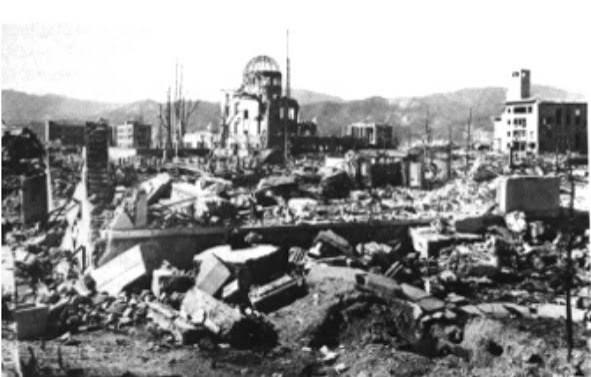
    Three days before the Soviet declaration, the first atomic bomb had fallen on Hiroshima. On August 6, the B-29 Enola Gay dropped “Little Boy,” killing an estimated 90,000 to 166,000 people by the end of the year, many from radiation sickness. The Japanese government was stunned but did not immediately capitulate. The military leadership downplayed the destruction, insisting that the United States could not have many such bombs.

    Then came Nagasaki. At 11:02 AM on August 9, the second bomb killed 60,000 to 80,000 people. The timing—just hours after the Soviet invasion began created a one-two punch that would crack the government’s resolve.

    The Deadlock Breaks: August 9–10

    That night, the Supreme War Council met in an underground bunker. The six members Prime Minister Suzuki, Foreign Minister Tōgō, Army Minister Korechika Anami, Navy Minister Mitsumasa Yonai, and the two chiefs of staff were split. Three favored accepting the Potsdam terms, with the sole condition that the imperial system be preserved. Three, led by Anami and the Army, insisted on additional conditions: no Allied occupation, no war crimes trials, and the right to disarm Japanese forces themselves.

    The meeting dragged on for hours, but no consensus emerged. At 2:00 AM on August 10, Prime Minister Suzuki made an unprecedented move: he took the matter to the Emperor. Hirohito, who had been largely sidelined from decision-making, listened as the council laid out the options. Then he spoke. He said that continuing the war was “unbearable” for the people, and he could not bear to see them suffer further. He referenced the “new type of bomb” as a reason, but he also noted that the Soviet entry had made the situation “impossible.” He accepted the Potsdam terms with the condition of preserving the imperial line.

    The cabinet accepted, and a message was sent to the Allies later that day.

    The Byrnes Note and the Second Deadlock

    The Allied reply came on August 11, drafted by Secretary of State James Byrnes. It stated that the Emperor’s authority would be subject to the Supreme Commander of the Allied Powers—a subtle way of saying Hirohito could stay, but under MacArthur’s thumb. This triggered a second deadlock. The military hardliners balked, arguing that this was still a form of unconditional surrender. For three days, the cabinet dithered.

    Meanwhile, the war continued. American B-29s dropped leaflets over Japanese cities, revealing the surrender offer. Soviet forces swept through Sakhalin and the Kuril Islands, and the Kwantung Army was in full retreat. On August 14, the Emperor called another imperial conference. Again, he broke the tie. He told the ministers that he could not let his people suffer any longer. He asked them to “endure the unendurable” and accept the Allies’ terms. That night, the cabinet signed the acceptance, and the next day, Hirohito broadcast the surrender speech to the nation.

    What the Evidence Says

    So which was decisive? The traditional American narrative points to the atomic bombs, and it’s true that they shocked the leadership. But the Soviet invasion was equally—if not more—important in strategic terms. It eliminated Japan’s last diplomatic hope, destroyed its best remaining army, and threatened the home islands from the north. The bombs were untested weapons; the military might have dismissed them as one-off atrocities. But the Soviet entry was a conventional military defeat that could not be argued away.

    Modern historians often cite the Soviet invasion as the more decisive factor. Tsuyoshi Hasegawa, in his book Racing the Enemy, argues that the Soviet entry was the “final blow” that tipped the scales. Japanese officials themselves, in postwar interrogations, often cited the Soviet entry as the primary reason for surrender. They had been prepared to fight an American invasion, but the war with the Soviets made that impossible.

    Yet the bombs played a role too. They gave the Emperor a face-saving reason to surrender—a weapon of such terrible power that resistance was futile. They also demonstrated that the United States could and would use them again. The two events, separated by hours, created a psychological shock that shattered the government’s will.

    In the end, Japan’s surrender was the result of a convergence: the Soviet invasion destroyed Japan’s ability to continue the war, while the atomic bombs provided a compelling justification for the Emperor to intervene. Neither alone may have been sufficient. Together, they were overwhelming.

    The debate over why Japan surrendered will never have a single, simple answer. The bombs and the Soviet invasion were not rival causes but twin blows that landed within days of each other. They broke a deadlocked government, shattered a desperate diplomatic gambit, and gave the Emperor a reason to speak. As the world marks the anniversaries of these events, it’s worth remembering that history is rarely made by a single act—it’s made by the collision of forces, both human and mechanical, that together change the course of nations.

    Summary

    • The Japanese government was deadlocked in August 1945, with military hardliners refusing to accept unconditional surrender.
    • The atomic bombings of Hiroshima and Nagasaki killed an estimated 150,000–246,000 people and shocked the leadership.
    • The Soviet invasion of Manchuria on August 8–9 involved 1.5 million troops and eliminated Japan’s last hope for a negotiated peace.
    • Emperor Hirohito broke the deadlock twice, citing the “unbearable” suffering of his people and the new bomb.
    • Historians debate the relative weight of the bombs versus the Soviet entry; many argue the Soviet invasion was the decisive factor.

    FAQ

    Q: Was the atomic bomb the only reason Japan surrendered?
    A: No. The Soviet invasion of Manchuria was also a major factor, eliminating Japan’s last diplomatic option and defeating its main army. The bombs and the invasion together broke the government’s deadlock.

    Q: What was Japan’s initial response to the Potsdam Declaration?
    A: Prime Minister Suzuki responded with mokusatsu, which can mean “ignore” or “treat with silent contempt.” The Allies interpreted this as a rejection, leading to the atomic bombings.

    Q: How did the Soviet Union’s entry affect Japan’s diplomatic strategy?
    A: Japan had hoped the Soviets would mediate a negotiated peace. The Soviet declaration of war on August 8, 1945, shattered that hope, leaving Japan with no diplomatic exit.

    Q: What role did Emperor Hirohito play in the surrender?
    A: The Emperor broke two deadlocked cabinet votes (August 10 and August 14) to accept the Potsdam terms, citing the suffering of his people and the new weapon.

    Q: Did the Soviet invasion cause many casualties?
    A: The Soviet invasion involved over 1.5 million troops and resulted in the capture of hundreds of thousands of Japanese soldiers, many of whom were sent to Siberian labor camps. Exact casualty numbers are less documented than those of the atomic bombs.

  • The Balloon Bombs: Japan’s Silent, Deadly Attack on the American Mainland

    The Balloon Bombs: Japan’s Silent, Deadly Attack on the American Mainland

    On May 5, 1945, six people died in a quiet forest near Bly, Oregon. They weren’t soldiers on a battlefield; they were a minister’s wife and five children on a Sunday school picnic. The weapon that killed them had traveled over 5,000 miles, carried by the wind, launched from a secret Japanese laboratory. It was a balloon 33 feet wide, made of paper, and armed with explosives.

    This was the Fu-Go campaign, Japan’s only attack on the American mainland during World War II. Over 9,000 balloon bombs were launched across the Pacific in the winter of 1944-45. They were designed to burn down America’s forests, sow panic, and pull military resources away from the front lines. But a combination of bad weather, luck, and a government-imposed news blackout kept the threat hidden from the public until it was too late for a handful of civilians.

    The Paper Weapon

    Japan’s balloon bombs were a feat of engineering, built from humble materials. Each balloon was made of four to five layers of washi, a paper crafted from mulberry bark, glued together with konnyaku, a paste derived from devil’s tongue root. The result was a lightweight but durable envelope that could hold about 19,000 cubic feet of hydrogen. At launch, the balloon stood three stories tall.

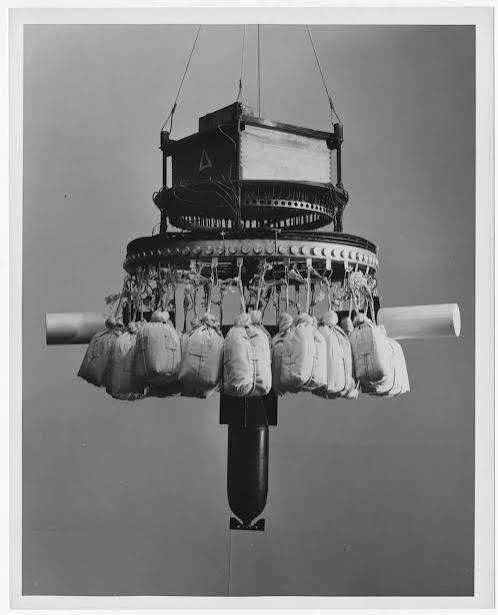
    Suspended from the balloon was a payload of 33 to 36 pounds: thermite incendiary bombs to start fires, a single anti-personnel fragmentation bomb with a delayed fuse, and sandbags for ballast. An altimeter mechanism released the sandbags as the balloon lost altitude, keeping it cruising at around 30,000 feet high enough to catch the jet stream, a wind current that Japanese meteorologists had discovered could carry objects across the Pacific in 30 to 60 hours.

    The program, developed by the Imperial Japanese Army’s Noborito Research Institute a secret weapons lab was a direct response to the Doolittle Raid of April 1942. That bombing of Tokyo had shown Japan’s vulnerability, and the military sought both revenge and a way to stretch American resources. Major General Sueyoshi Kusaba oversaw the effort, and by November 1944, launch sites on Honshu were sending balloons skyward.

    The Silent Crossing

    On November 3, 1944, the first balloons were launched. The next day, a U.S. Navy patrol spotted something unusual off the coast of San Pedro, California. It was the first confirmed sighting, but it would be months before the military understood what they were dealing with.

    Over the next six months, roughly 9,300 balloons were launched from three sites: Ōtsu, Ichinomiya, and Nakoso. The peak came in March 1945, with about 1,400 balloons sent off in a single month. Not all made the journey, but an estimated 340 to 370 reached North America, with some reports suggesting the number could be as high as 1,000.

    The balloons landed everywhere from the Pacific Northwest to the Midwest, and as far east as Michigan. They were found in fields, forests, and even on a farm in Iowa. One balloon caused a brief scare when it tangled in power lines in Washington state, knocking out electricity for a few hours. But the intended damage massive forest fires never materialized. The winter of 1944–45 was unusually wet, and the remote, damp forests where most balloons landed were poor fuel for thermite.

    The Silence Campaign

    The U.S. military quickly identified the balloons’ origin through an unlikely clue: the sand in the ballast bags contained diatom species unique to Japanese beaches. That evidence, along with serial numbers on bomb components, confirmed the threat. But rather than alert the public, the government did the opposite.

    The Office of Censorship and the War Department asked newspapers, radio stations, and broadcasters to keep all balloon incidents quiet. The rationale was simple: officials feared that public reports would cause panic, give the Japanese valuable intelligence on where balloons landed, and encourage them to refine the program. The media largely complied, making this one of the most successful censorship campaigns of the war.

    In the background, the military took action. Fighter aircraft were scrambled to intercept balloons, a program called Project Sunset, but the balloons flew too high and too fast for most planes. Radar stations were upgraded, and a network of ground observers was established. Still, the balloons kept coming, and the silence held.

    The silence had a deadly cost. On May 5, 1945, Reverend Archie Mitchell and his wife Elsie took a group of children from their church on a picnic near Bly, Oregon. While the reverend was parking the car, the children ran ahead into the woods and found a strange object lying on the ground—a balloon bomb that had landed days earlier. When they dragged it, the anti-personnel bomb exploded. Elsie Mitchell, 26 and pregnant, was killed along with five children aged 11 to 14. They were the only casualties of the balloon campaign on American soil.

    The End and the Aftermath

    The Bly tragedy broke the silence. The military, fearing more deaths, finally lifted the news blackout, and the story of the balloon bombs became public. But by then, the campaign was already winding down. Japan launched its last balloons in April 1945, its supply of paper and hydrogen exhausted. The program had failed in its primary goals: it started no significant fires and caused no military disruption. It did, however, achieve a kind of psychological effect—after the war, the U.S. public learned that their home front had not been entirely safe.

    The declassification in 1947 revealed the full scope of the operation. In Japan, the Noborito Research Institute’s work was largely forgotten, obscured by the larger narrative of the war. But for the families of the Bly victims, the memory remained. Today, a stone monument at the site of the explosion marks the spot where six civilians died, the only deaths from enemy action on the U.S. mainland during World War II.

    The balloon bombs were a desperate gamble, a weapon of limited technology and even more limited results. They were a reminder that even in a world war, the home front could be a target—and that sometimes, the most dangerous weapons are the ones that arrive silently, carried by the wind.

    The Fu-Go campaign was a failure in military terms, but its legacy is a cautionary tale about the unforeseen consequences of warfare. Japan’s paper balloons flew farther than any other weapon of their kind, yet they caused no fires, no panic, and no strategic diversion. Instead, they left a small, quiet tragedy in an Oregon forest—a reminder that even the most ambitious plans can end in unexpected, heartbreaking ways.

    Summary

    • Japan launched over 9,000 balloon bombs (Fu-Go) from November 1944 to April 1945, aiming to start forest fires and disrupt the U.S. home front.
    • The balloons were made of paper and glue, carried thermite and anti-personnel bombs, and rode the jet stream across the Pacific in 30–60 hours.
    • The U.S. military imposed a news blackout on all balloon incidents to prevent panic and deny Japan intelligence, and the media largely complied.
    • The only casualties were six civilians—Elsie Mitchell and five children—killed on May 5, 1945, near Bly, Oregon.
    • The campaign failed to cause any significant damage, but it remains the only enemy attack on the U.S. mainland during WWII to result in deaths.

    FAQ

    Q: How many balloon bombs reached the United States?
    A: There were 340–370 documented incidents, but some estimates suggest up to 1,000 balloons may have arrived, with many going unreported or undiscovered.

    Q: What were the balloons made of?
    A: Each balloon was constructed from four to five layers of washi (mulberry bark paper) glued with konnyaku (devil’s tongue root paste). They were about 33 feet in diameter and filled with hydrogen.

    Q: Why did the U.S. government hide the balloon attacks?
    A: Officials feared public knowledge would cause panic, provide Japan with valuable intelligence on landing sites, and encourage improvements to the program. The media voluntarily complied with a news blackout.

    Q: Did the balloon bombs cause any major fires?
    A: No. Despite the intent, the bombs caused negligible damage, largely due to wet winter conditions and the remote, forested areas where most landed.

    Q: When did the public learn about the balloon bombs?
    A: The full story was declassified in 1947, though the Bly, Oregon deaths in May 1945 forced the military to partially lift the news blackout.

  • The Code That Forbade Surrender: Bushido and the Japanese Soldier in WWII

    The Code That Forbade Surrender: Bushido and the Japanese Soldier in WWII

    In the spring of 1945, on the island of Okinawa, a Japanese soldier named Kiyoshi Ogawa climbed into a bomb-laden plane. His mission was not to return. He was one of thousands of pilots who volunteered for suicide attacks, believing that dying for the Emperor was the highest honor. But Ogawa’s choice was not simply the result of an ancient warrior code. It was the product of a modern, carefully constructed ideology that had been built over decades.

    This ideology, called bushido, or ‘the Way of the Warrior,’ has become synonymous with the Japanese refusal to surrender. Yet the reality is more complex. The code that demanded death before dishonor was not a timeless tradition but a reinvented doctrine, wielded by the state to create an army that would fight to the last man. This article explores how bushido was transformed from a samurai ideal into a weapon of war, and why so many Japanese soldiers chose death over capture.

    The Samurai Ideal: A Flexible Code

    The samurai emerged in Japan during the Heian period (794–1185) as provincial warriors. Their early ethos was pragmatic. In the Gempei War (1180–1185), samurai surrendered, ransomed captives, and even changed sides when it suited them. The romanticized ideal of death before dishonor was not absolute.

    It was only during the long peace of the Edo period (1603–1868) that bushido was codified. With no wars to fight, samurai became bureaucrats, and their code became a philosophy of loyalty and self-discipline. In 1716, Yamamoto Tsunetomo wrote the Hagakure, a manual that declared, ‘The Way of the Samurai is found in death.’ But this was a spiritual ideal, not a practical guide. Many samurai lived long lives, and surrender was not always seen as shameful.

    The Meiji Reinvention

    The Meiji Restoration of 1868 abolished the samurai class, but the new government needed a unifying ideology. It revived bushido, but with a new twist. The code was fused with Shinto emperor-worship and Confucian loyalty to create a state religion of sacrifice.

    In 1882, Emperor Meiji issued the Imperial Rescript to Soldiers and Sailors, which demanded absolute loyalty and obedience. Soldiers were taught that death in battle was the highest honor. This was a break from the past: the samurai’s loyalty had been to a lord, but now it was to the Emperor, a divine figure.

    The Indoctrination Machine

    By the 1930s, Japan was a militarist state, and indoctrination was systematic. Children in schools learned ‘moral education’ (shushin), which glorified self-sacrifice. They heard stories of the ‘Three Brave Warriors’ of the 1932 Shanghai Incident, who died in a suicide charge. The military itself was a brutal institution. Recruits were hazed and beaten to break their individuality. Surrender was equated with cowardice and betrayal.

    In 1941, General Tojo Hideki issued the Senjinkun, or Field Code of Conduct. It was a simple, chilling document that stated: ‘Do not suffer the shame of being taken alive.’ It was read aloud daily and treated as sacred. The code left no room for interpretation: capture was a crime against the Emperor and the nation.

    The Battlefield Reality

    On the battlefield, the no-surrender ethos was reinforced by fear. Japanese soldiers were told that Allied forces would torture and execute prisoners. This was partly propaganda, but there were real instances of Allied atrocities, such as the killing of Japanese POWs at the Battle of the Bismarck Sea in 1943. The Japanese military also had no provision for surrender. There was no protocol, no training. Officers often shot men who tried to give up.

    Cultural shame was a powerful force. Surrender brought disgrace not only to the soldier but to his family and hometown. Families of POWs were ostracized, and some soldiers’ families were told they had died honorably even when they were captured. This social pressure made death seem like the only acceptable option.

    The result was a staggering casualty rate. Of approximately 1.74 million Japanese soldiers killed in WWII, only about 20,000 to 50,000 were taken prisoner by Western Allies (excluding Soviet captures). This ratio of dead to captured was far higher than in other major armies, such as the German or American.

    The Modern Invention

    Scholars like John Dower and Edward Drea argue that the ‘death cult’ was a modern invention. They point out that the Hagakure was not widely read until the 1930s, when it was resurrected as propaganda. The Meiji and Showa states deliberately cherry-picked and distorted bushido to create a military ethos that prioritized efficiency over life.

    This view is supported by the fact that the phenomenon was not uniform. Some Japanese soldiers did surrender, especially late in the war. Some units fought for survival rather than honor. The no-surrender ethos was strongest among officers and the most indoctrinated. Even so, the pressure was immense. Group dynamics and peer pressure made individual survival unthinkable. The unit was a ‘total institution’ that demanded absolute conformity.

    The Post-War Repudiation

    After 1945, under Allied occupation, bushido was officially repudiated as militaristic propaganda. The 1947 Constitution renounced war, and the Japanese military was disbanded. But the legacy of bushido did not disappear. It persists in corporate culture, where loyalty and hard work are still valued, and in martial arts, where discipline and honor are emphasized.

    The story of bushido is a cautionary tale about the power of ideology. It shows how an ancient code, reinvented for modern purposes, can drive ordinary men to extraordinary acts of self-destruction. It also reminds us that the line between honor and fanaticism is often drawn by those in power.

    The Japanese soldiers who fought to the death were not the products of an unchanging ancient code. They were the products of a modern state that systematically indoctrinated them with a distorted version of bushido. Understanding this distinction is crucial, not only for historical accuracy but for recognizing how ideologies can be weaponized. The code that forbade surrender was a choice, made by leaders who valued military efficiency over human life. And it cost over a million lives.

    Summary

    • Bushido, the ‘Way of the Warrior,’ was not an unchanging ancient code but a flexible ethic that was reinvented in the Meiji era for nation-building.
    • The 1882 Imperial Rescript and the 1941 Senjinkun explicitly forbade surrender, framing capture as a shameful crime.
    • Indoctrination through education, military training, and propaganda created a culture where death was preferred over dishonor.
    • Of 1.74 million Japanese soldiers killed, only 20,000–50,000 were taken prisoner, a far lower ratio than in other armies.
    • After WWII, bushido was repudiated, but its legacy persists in modern Japanese culture.

    FAQ

    Q: Was bushido the sole cause of Japanese soldiers’ refusal to surrender?
    A: No. Bushido was a key factor, but it was supplemented by military indoctrination, the Senjinkun, fear of Allied mistreatment, and deep cultural shame. The state deliberately promoted a distorted version of bushido to create soldiers who would fight to the death.

    Q: Did any Japanese soldiers surrender during WWII?
    A: Yes. Some did, especially late in the war. The no-surrender ethos was strongest among officers and the most indoctrinated. The overall ratio of dead to captured, however, was far higher than in other armies.

    Q: What is the Senjinkun?
    A: The Senjinkun, issued in 1941 by General Tojo, was the Field Code of Conduct for the Japanese military. It explicitly stated, ‘Do not suffer the shame of being taken alive,’ and was read aloud daily.

    Q: How was bushido used after the Meiji Restoration?
    A: The Meiji government revived bushido as a tool for nation-building, fusing it with Shinto emperor-worship and Confucian loyalty. It became a state ideology that demanded absolute sacrifice for the Emperor.

    Q: What happened to bushido after WWII?
    A: Under Allied occupation, bushido was officially repudiated as militaristic propaganda. The 1947 Constitution renounced war. However, elements of the code persist in Japanese corporate culture and martial arts.