Tag: atomic bomb

  • The Pacific War: A Chronicle of Fire, Ash, and the Shape of the Modern World

    The Pacific War: A Chronicle of Fire, Ash, and the Shape of the Modern World

    At 7:48 a.m. on December 7, 1941, the first wave of Japanese aircraft descended on Pearl Harbor. Within two hours, 2,403 Americans were dead, eight battleships were sunk or damaged, and the United States was irrevocably at war. But the attack on Hawaii was only one stroke in a coordinated sweep across the Pacific—Japanese troops were simultaneously landing in Malaya, the Philippines, and Hong Kong. The war that followed would last nearly four years, consume millions of lives, and redraw the map of Asia and the Pacific.

    This is not a story of clean battle lines or simple heroes. It is a story of island hopping through coral and jungle, of firebombed cities and atomic flashes, of empires crumbling and new nations rising. To understand the Pacific War is to understand how the modern world took shape—through the roar of carrier aircraft, the silence of a surrendered fleet in Tokyo Bay, and the long shadows cast by decisions made in smoke-filled rooms on both sides of the ocean.

    The Road to War: An Empire’s Gamble

    Japan’s path to Pearl Harbor was paved with decades of ambition and desperation. After the Meiji Restoration of 1868, Japan industrialized at a breathtaking pace, but it lacked the raw materials to sustain its growth. The Great Depression of the 1930s only sharpened the crisis, pushing Tokyo toward expansion as a solution. In 1931, Japan occupied Manchuria, establishing the puppet state of Manchukuo. Six years later, it launched a full-scale invasion of China, plunging the region into a brutal conflict that would last until 1945.

    The Western powers watched with growing alarm. The United States, Britain, and the Netherlands—the colonial rulers of Southeast Asia—controlled the oil, rubber, and tin that Japan so desperately needed. When Japan joined Germany and Italy in the Tripartite Pact in 1940, the Western response was swift: embargoes on oil, steel, and scrap metal. Japan’s oil reserves were estimated at only two years’ worth. Facing economic strangulation, Tokyo chose war.

    The strategic logic was simple: strike the U.S. Pacific Fleet at Pearl Harbor to buy time, then seize the Southern Resource Area—the oil fields of the Dutch East Indies, the rubber of Malaya, the rice of Burma—and fortify a defensive perimeter across the Pacific. The plan was a gamble, but Japanese leaders saw it as a necessity. As Admiral Isoroku Yamamoto, who opposed the war, reportedly said, “I shall run wild considerably for the first six months or a year, but I have utterly no confidence for the second and third years.”

    The First Six Months: The Japanese Blitzkrieg

    Yamamoto’s prediction proved accurate. In the months after Pearl Harbor, Japanese forces swept through Southeast Asia and the Pacific with shocking speed. Hong Kong fell on Christmas Day 1941. Singapore, the supposedly impregnable British fortress, surrendered on February 15, 1942, with 80,000 troops captured. The Philippines—where American and Filipino forces under General Douglas MacArthur fought a desperate delaying action—fell by May. The Dutch East Indies, with its vital oil, was overrun in March. By the summer of 1942, Japan controlled a vast empire stretching from the Aleutians to the Solomon Islands.

    The brutality of the occupation was immediate. In the Philippines, the Bataan Death March in April 1942 forced 75,000 prisoners on a 65-mile trek; thousands died from starvation, disease, and execution. In Burma, Allied POWs and Asian laborers were conscripted to build the Death Railway, where an estimated 12,000 POWs and 90,000 laborers perished. The Japanese military, guided by the Bushido code that forbade surrender, treated its captives with a contempt that shocked the Western world.

    The Tide Turns: Midway and Guadalcanal

    Japan’s expansion had to stop somewhere. It stopped at Midway.

    In June 1942, the Japanese fleet—four heavy aircraft carriers, dozens of support ships—steamed toward Midway Atoll, intending to lure the U.S. Navy into a decisive battle. But American codebreakers had cracked Japanese naval codes. Admiral Chester Nimitz knew the plan in advance. On June 4, dive bombers from USS Enterprise and USS Yorktown caught the Japanese carriers rearming and refueling their aircraft. Within five minutes, three of the four carriers were burning wrecks. The fourth was sunk later that day. Japan lost 3,000 men and the core of its naval aviation. The battle halted Japanese expansion in the Pacific—permanently.

    But Midway was not the end. The Allies needed to go on the offensive, and their first target was Guadalcanal, a jungle-covered island in the Solomon Islands where the Japanese were building an airfield. In August 1942, U.S. Marines landed, beginning a six-month campaign of attrition that would define the war in the Pacific. The battles around Guadalcanal—on land, at sea, and in the air—were brutal and costly. The Japanese called it “Starvation Island” as supply lines were cut and troops withered. The Americans held, and by February 1943, the Japanese had evacuated. The first major Allied land offensive had succeeded, but at a terrible price: over 7,000 Allied dead, and over 19,000 Japanese dead, most from starvation and disease.

    Island Hopping: The Road to Tokyo

    After Guadalcanal, the Allies adopted a strategy of “island hopping”: bypass heavily fortified Japanese positions, seize lightly defended islands to build airfields and naval bases, and let the isolated garrisons “wither on the vine.” Admiral Nimitz advanced across the central Pacific, while General MacArthur pushed up from the southwest. The pace was relentless: Tarawa in November 1943, where 1,000 Marines died in 76 hours; the Marshalls in early 1944; then the Marianas—Saipan, Tinian, Guam—in June and July 1944.

    Saipan was a turning point. Its capture brought Japan’s home islands within range of American B-29 bombers. The Japanese knew it, and they defended the island with desperation. When defeat was inevitable, hundreds of civilians threw themselves from the cliffs at Marpi Point rather than surrender. The battle for Saipan cost over 3,000 U.S. dead and over 29,000 Japanese dead.

    The largest naval battle in history occurred on October 23–26, 1944, in Leyte Gulf, in the Philippines. The Imperial Japanese Navy deployed nearly its entire remaining fleet in a desperate bid to destroy the U.S. invasion force. The result was a disaster for Japan: three battleships, four carriers, and ten cruisers were sunk, effectively destroying the Japanese fleet as a fighting force. It was also at Leyte Gulf that the Japanese first used kamikaze attacks—suicide pilots who crashed their planes into American ships. They would become a chilling symbol of Japan’s defiance in the face of inevitable defeat.

    The Bloody Islands: Iwo Jima and Okinawa

    By early 1945, the war had moved to Japan’s doorstep. The first target was Iwo Jima, a volcanic island 750 miles from Tokyo, needed as an emergency landing strip for B-29s. The Japanese had fortified the island with 21,000 troops in an elaborate network of tunnels and bunkers. The U.S. Marine assault, starting on February 19, 1945, was supposed to last five days. It took over a month. The iconic photograph of Marines raising the flag on Mount Suribachi became a symbol of American valor, but the cost was staggering: 6,821 U.S. dead and over 18,000 wounded. Of the 21,000 Japanese defenders, only 216 were taken prisoner.

    Okinawa, in April 1945, was even worse. The island was the last defensive ring before the Japanese home islands. The Japanese garrison of over 100,000 troops fought with a fury that stunned the Americans. The battle dragged on for 82 days, the longest and bloodiest in the Pacific theater. The U.S. lost over 12,000 dead; the Japanese lost about 100,000 military dead. But the most tragic casualties were Okinawan civilians—about 150,000, roughly one-third of the island’s population, were killed in the crossfire, forced to commit suicide, or used as human shields.

    Fire from the Sky: The Bombing of Japan

    Even before Iwo Jima and Okinawa, the U.S. had begun a strategic bombing campaign against Japan’s cities. From late 1944, B-29s flew from bases in the Marianas, striking factories, railways, and urban areas. In March 1945, Major General Curtis LeMay ordered a change in tactics: low-altitude night raids using incendiary bombs. The first such raid on Tokyo on March 9–10, 1945, killed an estimated 100,000 people and destroyed 16 square miles of the city. Over the next five months, similar firebombing raids devastated 67 Japanese cities. The raids were horrifically effective, but Japan showed no sign of surrender.

    The firebombing raids were a prelude to something even more terrible. On August 6, 1945, a B-29 named Enola Gay dropped an atomic bomb on Hiroshima, instantly killing an estimated 70,000 people. Three days later, a second bomb was dropped on Nagasaki, killing another 40,000. The long-term effects of radiation would raise the death toll to 200,000 by the end of 1945. On August 8, the Soviet Union declared war on Japan and invaded Manchuria, shattering any hope of a negotiated peace. On August 15, Emperor Hirohito—in a radio broadcast that was the first time most Japanese had heard his voice—announced Japan’s surrender. The formal ceremony took place on September 2, 1945, aboard the battleship USS Missouri in Tokyo Bay.

    The Wider War: China, Southeast Asia, and the Colonial Collapse

    While the U.S. and Japan fought across the Pacific, the war in China raged on. For the Chinese, the war had begun in 1937, not 1941. The conflict between Nationalists under Chiang Kai-shek and Communists under Mao Zedong had been interrupted by a fragile united front against the Japanese, but the two factions also fought each other. China suffered catastrophic losses: an estimated 10 to 20 million military and civilian deaths. The Rape of Nanjing in December 1937, where Japanese troops massacred hundreds of thousands of civilians and committed widespread sexual violence, remains one of the most horrific events of the war.

    In Southeast Asia, the Japanese occupation had a dual legacy. It brutally exploited the region’s resources and peoples: forced labor on the Burma Railway, forced farming of crops for the Japanese war effort, and systematic starvation in the Dutch East Indies, where an estimated 4 million civilians died. But it also shattered the myth of white colonial invincibility. The Japanese defeated British, Dutch, and American colonial powers with stunning ease, and their propaganda of “Asia for the Asiatics” resonated with many who had long resented European rule. When the Japanese surrendered, they left a power vacuum. Independence movements in Indonesia, Vietnam, and the Philippines surged forward, leading to the end of Western colonialism in Asia within a decade.

    The Pacific Islands themselves bore the brunt of the fighting. Tens of thousands of islanders were killed, displaced, or conscripted as laborers by both sides. The war’s end did not bring peace to the islands: the U.S. military continued to occupy and test nuclear weapons in the Marshall Islands, beginning with the Bikini Atoll tests in 1946, a continuation of militarization that would have lasting health and environmental consequences.

    Legacy: The Shape of the Modern World

    The Pacific War remade the world in ways that are still visible today. It ended the Japanese Empire and led to the transformation of Japan into a pacifist democracy under the American occupation. It raised the United States to superpower status, with a network of military bases across the Pacific. It accelerated the collapse of European colonialism and the emergence of new nations. It also left deep scars: the occupation of the Korean peninsula by the U.S. and Soviet Union set the stage for the Korean War; the division of Vietnam led to the Vietnam War; and the unresolved grievances of the war continue to shape relations between Japan, China, and Korea today.

    The war also raised profound moral questions. The atomic bombings of Hiroshima and Nagasaki, the firebombing of Tokyo, the internment of 120,000 Japanese-Americans, the use of kamikaze attacks, and the systematic sexual slavery of “comfort women” all remain subjects of intense debate. Were the atomic bombs necessary? Did the firebombing of cities cross a moral line? These questions have no easy answers, but they are essential to understanding the war’s true cost.

    In the end, the Pacific War was a war of extremes—of islands that were little more than specks on a map, of battles that turned on a few minutes of carrier aircraft, of civilian suffering on a scale that defies imagination. It was a war that began with a surprise attack on a quiet Sunday morning and ended with the flash of an atomic bomb over a city. Its legacy is written in the skyline of modern Tokyo, the independence of former colonies, and the memorials that dot the Pacific—from the USS Arizona in Pearl Harbor to the Peace Memorial in Hiroshima. To walk these sites is to remember that the modern world was forged in fire and ash.

    The Pacific War ended on September 2, 1945, but its consequences have not ended. The war’s battles are re-fought in the history books, its wounds are re-opened in diplomatic disputes, and its lessons are re-examined in every new crisis. The war’s veterans are nearly gone, but the memory of what they did—and what was done in their name—remains. To understand the Pacific War is to understand the price of empire, the fragility of peace, and the enduring power of human resilience. It is a story that deserves to be told, not as a distant relic, but as a living part of our shared history.

    Summary

    • The Pacific War began on December 7/8, 1941, with the attack on Pearl Harbor and simultaneous invasions across Southeast Asia, and ended on September 2, 1945, with the formal surrender ceremony aboard USS Missouri.
    • Key turning points included the Battle of Midway (June 1942), which halted Japanese expansion; Guadalcanal (1942–43), the first major Allied offensive; and Leyte Gulf (October 1944), the largest naval battle in history, which effectively destroyed the Japanese fleet.
    • The war was fought with extreme brutality, including kamikaze attacks, firebombing of Japanese cities, the Bataan Death March, the Burma Railway, and the atomic bombings of Hiroshima and Nagasaki.
    • The war had a devastating human cost: an estimated 2.1–2.5 million Japanese military dead, ~104,000 U.S. military dead, 10–20 million Chinese deaths, and millions of civilian deaths across Southeast Asia, including ~150,000 Okinawan civilians.
    • The war’s end accelerated the collapse of European colonialism in Asia, leading to independence movements in Indonesia, Vietnam, and the Philippines, and set the stage for the Cold War in the Pacific.

    FAQ

    Q: Why did Japan attack Pearl Harbor?
    A: Japan’s attack was a preventive strike to neutralize the U.S. Pacific Fleet, which threatened Japan’s ability to seize oil-rich territories in Southeast Asia. The U.S. had imposed embargoes on oil and steel, and Japan’s reserves were dwindling. The attack was designed to buy time for Japan to fortify its defensive perimeter.

    Q: What was the “island hopping” strategy?
    A: Island hopping was the Allied strategy of bypassing heavily fortified Japanese islands and instead seizing lightly defended islands to build airfields and naval bases. This allowed the Allies to advance toward Japan more quickly, while isolating and starving out Japanese garrisons that were cut off from supply lines.

    Q: How many people died in the atomic bombings of Hiroshima and Nagasaki?
    A: The immediate death toll was an estimated 70,000 in Hiroshima (August 6, 1945) and 40,000 in Nagasaki (August 9, 1945). By the end of 1945, the toll had risen to about 200,000 due to injuries and radiation sickness.

    Q: What role did China play in the Pacific War?
    A: China was a major battleground long before Pearl Harbor. The Second Sino-Japanese War began in 1937, and China suffered 10–20 million deaths, making it one of the largest contributors to the Allied cause. China’s resistance tied down millions of Japanese troops, preventing them from being deployed elsewhere.

    Q: What were the “comfort women”?
    A: “Comfort women” were an estimated 50,000 to 200,000 women, mostly Korean, who were forced into sexual slavery by the Japanese military during the war. The issue remains a major point of friction between Japan and its neighbors, as Japan has not fully acknowledged responsibility.
  • The Two Swords: Did the Atomic Bomb or the Soviet Invasion End Japan’s War?

    The Two Swords: Did the Atomic Bomb or the Soviet Invasion End Japan’s War?

    At 11:02 on the morning of August 9, 1945, a plutonium bomb nicknamed ‘Fat Man’ detonated 500 meters above the streets of Nagasaki. The blast killed tens of thousands instantly, leveling factories, homes, and a cathedral. Halfway around the world, in Moscow, the Soviet Foreign Minister was handing the Japanese ambassador a declaration of war. The date was no coincidence: the Red Army had rolled into Manchuria just hours earlier, and the second atomic bomb fell as Soviet tanks crossed the border. Within six days, Japan announced its surrender.

    For decades, the standard American narrative held that the bombs alone forced Japan to its knees. But historians have long debated whether the Soviet entry into the Pacific War a massive, swift offensive that shattered Japan’s last military hopes was the true final blow. The evidence from Japanese decision-making suggests a more complex story: both events, separated by hours, combined to break a deadlocked government that had been preparing to fight to the death.

    The Summer of 1945: A Nation on the Brink

    By mid-1945, Japan’s situation was dire. The Imperial Navy was crippled; the merchant fleet had been decimated by American submarines, cutting off oil and food imports. The U.S. Army Air Forces had firebombed dozens of cities, including the March 9 raid on Tokyo that killed an estimated 100,000 people. Yet the government had not surrendered. The military leadership, particularly the Army, had staked its honor on fighting a decisive battle on Japanese soil. They believed they could inflict such heavy casualties on an Allied invasion that the United States would offer more lenient terms than unconditional surrender.

    The Potsdam Declaration, issued July 26, 1945, demanded exactly that: unconditional surrender, or Japan would face “prompt and utter destruction.” Prime Minister Kantarō Suzuki initially responded with the word mokusatsu often translated as “ignore” or “treat with silent contempt.” Whether he meant to stall for time or outright reject, the Allies took it as a refusal. The war would continue.

    The Soviet Factor: A Diplomatic Lifeline Snapped

    Behind the scenes, Japan had been clutching at one last straw: the Soviet Union. Despite being allies with the United States and Britain, the Soviets had signed a neutrality pact with Japan in April 1941. Japan’s foreign minister, Shigenori Tōgō, had been desperately trying to get Moscow to broker a negotiated peace with the Allies. As late as August 8, Ambassador Naotake Satō was still in Moscow, awaiting a reply.

    That reply came at midnight, August 8–9 (Japan time), when Soviet Foreign Minister Vyacheslav Molotov summoned Satō to the Kremlin and read a declaration of war. The Soviets had already launched Operation August Storm, a three-pronged offensive into Manchuria, Korea, and the islands north of Japan. Over 1.5 million Soviet troops, backed by more than 5,000 tanks and 4,000 aircraft, swept into Japanese-held territory. The Kwantung Army, once an elite force, was now a hollow shell, its best units stripped for the home island defense. Within days, the Red Army had advanced hundreds of kilometers, overwhelming Japanese positions.

    The declaration was a devastating blow to Japan’s diplomatic strategy. Tōgō had pinned his hopes on Soviet mediation; now that hope was gone. In his memoirs, Tōgō described the news as bringing a feeling of “despair.” The war, which had seemed unwinnable, now seemed hopeless.

    The Bombs Fall: August 6 and 9

    Three days before the Soviet declaration, the first atomic bomb had fallen on Hiroshima. On August 6, the B-29 Enola Gay dropped “Little Boy,” killing an estimated 90,000 to 166,000 people by the end of the year, many from radiation sickness. The Japanese government was stunned but did not immediately capitulate. The military leadership downplayed the destruction, insisting that the United States could not have many such bombs.

    Then came Nagasaki. At 11:02 AM on August 9, the second bomb killed 60,000 to 80,000 people. The timing—just hours after the Soviet invasion began created a one-two punch that would crack the government’s resolve.

    The Deadlock Breaks: August 9–10

    That night, the Supreme War Council met in an underground bunker. The six members Prime Minister Suzuki, Foreign Minister Tōgō, Army Minister Korechika Anami, Navy Minister Mitsumasa Yonai, and the two chiefs of staff were split. Three favored accepting the Potsdam terms, with the sole condition that the imperial system be preserved. Three, led by Anami and the Army, insisted on additional conditions: no Allied occupation, no war crimes trials, and the right to disarm Japanese forces themselves.

    The meeting dragged on for hours, but no consensus emerged. At 2:00 AM on August 10, Prime Minister Suzuki made an unprecedented move: he took the matter to the Emperor. Hirohito, who had been largely sidelined from decision-making, listened as the council laid out the options. Then he spoke. He said that continuing the war was “unbearable” for the people, and he could not bear to see them suffer further. He referenced the “new type of bomb” as a reason, but he also noted that the Soviet entry had made the situation “impossible.” He accepted the Potsdam terms with the condition of preserving the imperial line.

    The cabinet accepted, and a message was sent to the Allies later that day.

    The Byrnes Note and the Second Deadlock

    The Allied reply came on August 11, drafted by Secretary of State James Byrnes. It stated that the Emperor’s authority would be subject to the Supreme Commander of the Allied Powers—a subtle way of saying Hirohito could stay, but under MacArthur’s thumb. This triggered a second deadlock. The military hardliners balked, arguing that this was still a form of unconditional surrender. For three days, the cabinet dithered.

    Meanwhile, the war continued. American B-29s dropped leaflets over Japanese cities, revealing the surrender offer. Soviet forces swept through Sakhalin and the Kuril Islands, and the Kwantung Army was in full retreat. On August 14, the Emperor called another imperial conference. Again, he broke the tie. He told the ministers that he could not let his people suffer any longer. He asked them to “endure the unendurable” and accept the Allies’ terms. That night, the cabinet signed the acceptance, and the next day, Hirohito broadcast the surrender speech to the nation.

    What the Evidence Says

    So which was decisive? The traditional American narrative points to the atomic bombs, and it’s true that they shocked the leadership. But the Soviet invasion was equally—if not more—important in strategic terms. It eliminated Japan’s last diplomatic hope, destroyed its best remaining army, and threatened the home islands from the north. The bombs were untested weapons; the military might have dismissed them as one-off atrocities. But the Soviet entry was a conventional military defeat that could not be argued away.

    Modern historians often cite the Soviet invasion as the more decisive factor. Tsuyoshi Hasegawa, in his book Racing the Enemy, argues that the Soviet entry was the “final blow” that tipped the scales. Japanese officials themselves, in postwar interrogations, often cited the Soviet entry as the primary reason for surrender. They had been prepared to fight an American invasion, but the war with the Soviets made that impossible.

    Yet the bombs played a role too. They gave the Emperor a face-saving reason to surrender—a weapon of such terrible power that resistance was futile. They also demonstrated that the United States could and would use them again. The two events, separated by hours, created a psychological shock that shattered the government’s will.

    In the end, Japan’s surrender was the result of a convergence: the Soviet invasion destroyed Japan’s ability to continue the war, while the atomic bombs provided a compelling justification for the Emperor to intervene. Neither alone may have been sufficient. Together, they were overwhelming.

    The debate over why Japan surrendered will never have a single, simple answer. The bombs and the Soviet invasion were not rival causes but twin blows that landed within days of each other. They broke a deadlocked government, shattered a desperate diplomatic gambit, and gave the Emperor a reason to speak. As the world marks the anniversaries of these events, it’s worth remembering that history is rarely made by a single act—it’s made by the collision of forces, both human and mechanical, that together change the course of nations.

    Summary

    • The Japanese government was deadlocked in August 1945, with military hardliners refusing to accept unconditional surrender.
    • The atomic bombings of Hiroshima and Nagasaki killed an estimated 150,000–246,000 people and shocked the leadership.
    • The Soviet invasion of Manchuria on August 8–9 involved 1.5 million troops and eliminated Japan’s last hope for a negotiated peace.
    • Emperor Hirohito broke the deadlock twice, citing the “unbearable” suffering of his people and the new bomb.
    • Historians debate the relative weight of the bombs versus the Soviet entry; many argue the Soviet invasion was the decisive factor.

    FAQ

    Q: Was the atomic bomb the only reason Japan surrendered?
    A: No. The Soviet invasion of Manchuria was also a major factor, eliminating Japan’s last diplomatic option and defeating its main army. The bombs and the invasion together broke the government’s deadlock.

    Q: What was Japan’s initial response to the Potsdam Declaration?
    A: Prime Minister Suzuki responded with mokusatsu, which can mean “ignore” or “treat with silent contempt.” The Allies interpreted this as a rejection, leading to the atomic bombings.

    Q: How did the Soviet Union’s entry affect Japan’s diplomatic strategy?
    A: Japan had hoped the Soviets would mediate a negotiated peace. The Soviet declaration of war on August 8, 1945, shattered that hope, leaving Japan with no diplomatic exit.

    Q: What role did Emperor Hirohito play in the surrender?
    A: The Emperor broke two deadlocked cabinet votes (August 10 and August 14) to accept the Potsdam terms, citing the suffering of his people and the new weapon.

    Q: Did the Soviet invasion cause many casualties?
    A: The Soviet invasion involved over 1.5 million troops and resulted in the capture of hundreds of thousands of Japanese soldiers, many of whom were sent to Siberian labor camps. Exact casualty numbers are less documented than those of the atomic bombs.

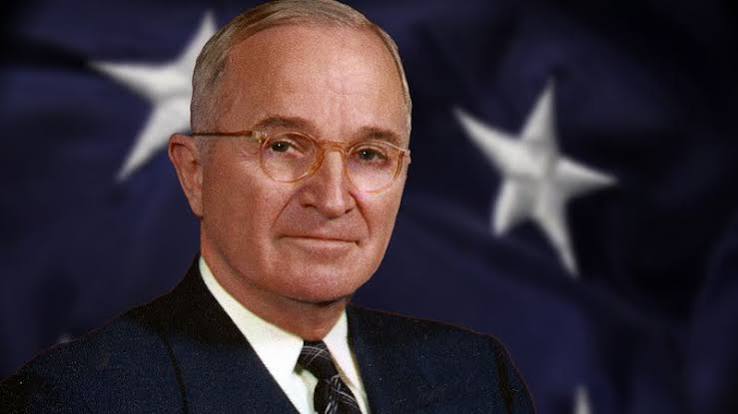
  • Harry S. Truman: The Accidental President Who Defined an Era

    Harry S. Truman: The Accidental President Who Defined an Era

    On April 12, 1945, Harry S. Truman had been Vice President for just 82 days when Franklin D. Roosevelt died. He was thrust into the presidency at the most critical moment in modern history: World War II was still raging, the atomic bomb was a secret he knew nothing about, and the global order was about to be reshaped. Truman, a plain-spoken farmer and haberdasher from Missouri with no college degree, became the man who would make decisions that defined the second half of the 20th century.

    His presidency was a whirlwind of monumental choices: dropping the atomic bomb, rebuilding Europe, containing communism, desegregating the military, and fighting a war in Korea. He was deeply controversial in his time, with approval ratings that plunged to 22%, and yet historians consistently rank him among the top ten presidents. How did this ‘accidental president’ become a defining figure of the Cold War era? The answer lies in his character a man who accepted responsibility, made tough calls, and famously kept a sign on his desk that read: ‘The Buck Stops Here.’

    The Making of a President: From Farm to Senate

    Harry S. Truman was born on May 8, 1884, in Lamar, Missouri. The ‘S’ in his name was a compromise between his grandfathers, Anderson Shipp Truman and Solomon Young it didn’t stand for a middle name, a quirk that reflected his humble, pragmatic upbringing. He grew up on a farm, never attended college (the only 20th-century president without a degree), and worked as a bank clerk, farmer, and then a haberdasher. His clothing store went bankrupt, leaving him with debts he spent years repaying. This experience of failure and personal responsibility shaped his later worldview.

    His political career began in local administration as a county judge in Jackson County, where he was known for honest, efficient governance. He moved to the U.S. Senate in 1935, but it was the Truman Committee that brought him national fame. During World War II, he chaired this committee that investigated waste and corruption in defense spending, saving an estimated $15 billion and earning a reputation for no-nonsense integrity. That reputation made him an attractive running mate for FDR in 1944, chosen to balance the ticket and replace the controversial Henry Wallace. Truman was kept in the dark about the Manhattan Project he only learned of the atomic bomb after becoming president.

    When Roosevelt died, Truman was stunned. His first words to reporters were: ‘I felt like the moon, the stars, and all the planets had fallen on me.’ Yet within months, he would make some of the most consequential decisions in human history.

    The Atomic Bomb: A Decision That Ended a War and Haunted History

    In August 1945, Truman authorized the use of atomic bombs on Hiroshima and Nagasaki. Japan surrendered shortly after. The decision remains the most debated of his presidency. Truman and his contemporaries argued that the bomb saved hundreds of thousands of American and Japanese lives by avoiding an invasion of Japan. The projected casualties for an invasion were staggering estimates ran into the millions. Truman saw the bomb as a military weapon to end a brutal war, and he never expressed public regret.

    Later critics have questioned whether Japan was already near surrender, whether the bomb was partly intended to intimidate the Soviet Union, and whether targeting civilians was morally defensible. Historians remain divided. What is clear is that Truman faced an impossible choice and made a decisive one. As he later wrote: ‘I knew what I was doing when I stopped the war that would have killed half a million boys on both sides.’ The bombings killed an estimated 200,000 people, mostly civilians, but the war ended within days. Truman’s decision set a precedent for nuclear deterrence that defined the Cold War.

    Architect of the Cold War: Containment, Marshall Plan, and NATO

    Truman’s response to Soviet expansionism was swift and assertive. In 1947, he announced the Truman Doctrine, pledging to support free peoples resisting communist subjugation initially in Greece and Turkey, but it became the foundation of U.S. containment policy. That same year, Secretary of State George Marshall proposed the European Recovery Program, better known as the Marshall Plan, which poured over $13 billion into rebuilding Western Europe. The plan was a stunning success: by 1952, European industrial output was 35% above pre-war levels, and the economic recovery helped stabilize democratic governments.

    In 1948, the Soviet Union blockaded Berlin, cutting off all land routes to the western sectors of the city. Truman refused to abandon the city, launching the Berlin Airlift. For 15 months, American and British planes delivered food, fuel, and supplies averaging 8,000 tons per day until the blockade was lifted. This bold move demonstrated Truman’s resolve to stand up to Soviet pressure without resorting to war. In 1949, he signed the North Atlantic Treaty, creating NATO, the first peacetime military alliance in U.S. history. These actions collectively built the framework for winning the Cold War, though they also committed the U.S. to a global interventionist posture that would later escalate in Vietnam.

    Civil Rights: A Reluctant Reformer Who Changed the Military

    Truman’s record on civil rights is a study in contradiction. He grew up in segregated Missouri, and his early language reflected the racism of his era. Yet as president, he took landmark steps toward equality. In 1946, he appointed a commission on civil rights, which issued a report that called for ending segregation and lynching. In 1948, he issued Executive Order 9981, desegregating the armed forces a move that overrode military leadership and set a precedent for federal action on civil rights. He also ordered fair employment practices in the federal government and proposed anti-lynching, anti-poll tax, and fair employment legislation, though Congress blocked most of it.

    The military desegregation was transformative. It integrated 1.2 million Black soldiers and sailors into units with whites, a precursor to the broader civil rights movement of the 1950s and 1960s. Truman’s motives were both moral and political—he needed Black voters to win the 1948 election, and he saw the contradiction in fighting a war against tyranny while maintaining segregation at home. His actions were progressive for the time, but they were also cautious and limited. He never supported a comprehensive civil rights bill, and his administration did little to dismantle segregation in the South. Nevertheless, his executive orders were a turning point, and they helped pave the way for later legislation.

    The 1948 Upset: Defying the Polls and the Press

    Truman’s 1948 reelection campaign was a masterclass in political grit. Virtually every poll predicted a loss to Republican Thomas Dewey. The Chicago Tribune even printed an early edition with the headline ‘DEWEY DEFEATS TRUMAN’ before the results were final. Truman, undeterred, mounted a ‘whistle-stop’ campaign, traveling over 31,000 miles by train, giving hundreds of speeches from the back platform. He attacked the ‘do-nothing’ Republican Congress, which had passed the Taft-Hartley Act over his veto—a law that restricted union power and which Truman saw as a betrayal of working people. He won with 303 electoral votes to Dewey’s 189, a stunning upset that proved his connection with ordinary Americans.

    His victory was also a triumph for the New Deal coalition. He ran on the ‘Fair Deal,’ an extension of FDR’s legacy that included national health insurance, federal aid to education, and expanded Social Security. While much of the Fair Deal was blocked by Congress, Truman did secure increases in the minimum wage, expanded Social Security coverage, and a housing program. His domestic legacy was a mixed bag, but it kept the liberal flame alive during a conservative era.

    The Korean War and the ‘Truman Doctrine’ in Action

    When North Korea invaded South Korea in June 1950, Truman moved quickly, calling for UN intervention. He did so without prior Congressional approval, setting a precedent for presidential war powers. The UN forces, led by General Douglas MacArthur, initially repelled the invasion and pushed into North Korea. But when China intervened in November 1950, the war turned into a bloody stalemate. MacArthur wanted to expand the war into China, possibly using nuclear weapons. Truman, fearing a wider conflict, fired him in April 1951. The decision was deeply unpopular but upheld the principle of civilian control over the military. The war dragged on until an armistice in 1953, after Truman left office, leaving the Korean Peninsula divided—a conflict that remains unresolved today.

    The Korean War was a turning point. It solidified the U.S. role as a global police officer and led to a massive military buildup, but it also exposed the limits of containment. The war cost over 36,000 American lives and billions of dollars, and Truman’s approval ratings plummeted to 22%. Yet his decision to fire MacArthur was widely supported by legal scholars and later historians, who saw it as a defense of democratic governance. The war also shaped U.S. policy in Asia for decades, including the Vietnam War, which Truman’s successor Eisenhower initiated.

    The Steel Seizure and the Limits of Presidential Power

    Truman’s domestic policies were often met with fierce resistance. In 1952, facing a steel strike that threatened the Korean War effort, he seized the steel mills to keep them operating. The Supreme Court ruled this unconstitutional in Youngstown Sheet & Tube v. Sawyer, a landmark case that limited presidential powers. Truman accepted the ruling, though he grumbled that the steel companies were ‘bigger than the government.’ This episode highlighted his willingness to push the boundaries of executive authority, but also his respect for the rule of law. It remains a key case in constitutional law, illustrating the checks and balances that define American governance.

    The Legacy: ‘The Buck Stops Here’

    Truman left office in 1953, unpopular but undeterred. He retired to Independence, Missouri, where he wrote his memoirs and established the Truman Presidential Library—the first under the 1955 Presidential Libraries Act. He lived to see the civil rights movement and the Vietnam War, and he defended his decisions until his death in 1972 at age 88. In retrospect, historians have reevaluated him as a ‘near-great’ president, ranking him in the top tier. His blunt, decisive style and his willingness to accept responsibility—embodied by his famous motto ‘The Buck Stops Here’—have become symbolic of presidential leadership.

    Truman’s presidency was a crucible of the 20th century. He made the atomic bomb decision, built the Cold War institutions, desegregated the military, and fired a general. He was often criticized as being impulsive or crude, but his actions were grounded in a simple, stubborn American pragmatism. As he once said: ‘I am not a leader. I am a moderate man, trying to do the right thing.’ That attempt, in the face of unprecedented challenges, is what defines his legacy.

    Harry S. Truman rose from a Missouri farm to the highest office at the most dangerous moment in history. He was an accidental president who became a decisive leader, shaping the postwar world through the atomic bomb, the Truman Doctrine, the Marshall Plan, NATO, and the desegregation of the military. His decisions were often controversial, but his willingness to bear the burden of responsibility—to let the buck stop with him—set a standard for presidential leadership. In a time of crisis, he provided the resolve that defined an era.

    Summary

    • Accidental president: Truman served only 82 days as VP before FDR’s death, inheriting the presidency during WWII.
    • Atomic bomb decision: Authorized the bombings of Hiroshima and Nagasaki in 1945, ending the war but sparking enduring debate.
    • Cold War architect: Created the Truman Doctrine, Marshall Plan, and NATO, establishing containment policy that won the Cold War.
    • Civil rights steps: Desegregated the military with Executive Order 9981, a landmark move for racial equality.
    • 1948 election upset: Defeated Thomas Dewey despite all polls, cementing his reputation as a fighter.

    FAQ

    Q: Why is Harry S. Truman’s middle initial ‘S’?
    A: The ‘S’ doesn’t stand for a middle name. It was a compromise between his grandfathers, Anderson Shipp Truman and Solomon Young.

    Q: What was the Truman Doctrine?
    A: A 1947 policy pledging U.S. support to free peoples resisting communist subjugation, initially for Greece and Turkey, and later the foundation of containment.

    Q: How did Truman desegregate the military?
    A: He issued Executive Order 9981 in 1948, which mandated equality of treatment and opportunity in the armed forces, leading to full integration.

    Q: Why did Truman fire General MacArthur?
    A: MacArthur wanted to expand the Korean War into China, possibly using nuclear weapons. Truman fired him to maintain civilian control over the military and avoid a wider conflict.

    Q: What was the ‘Fair Deal’?
    A: Truman’s domestic agenda, extending the New Deal with proposals for national health insurance, federal aid to education, and expanded social security. Much was blocked by Congress, but some parts passed.

  • The Secret City: Inside the Manhattan Project’s Race to Build the Bomb

    The Secret City: Inside the Manhattan Project’s Race to Build the Bomb

    In the summer of 1945, a handful of scientists gathered on a remote stretch of New Mexico desert. At 5:29 a.m., the first atomic bomb detonated, turning night into day and sand into glass. The Trinity test was the culmination of a three-year, $2 billion gamble that had consumed the lives of 130,000 people most of whom had no idea what they were building.

    This is the story of that gamble: a secret race against Nazi Germany, a convergence of brilliant minds and brute industrial force, and the moment when humanity’s relationship with science changed forever.

    A Letter That Changed History

    The Manhattan Project began with a letter. In August 1939, Albert Einstein and physicist Leo Szilard wrote to President Franklin D. Roosevelt, warning that Nazi Germany might be developing an atomic bomb. The theoretical groundwork was already in place: Einstein’s equation E=mc² had hinted at the energy locked inside matter, and in 1938, German chemists Otto Hahn and Fritz Strassmann had split the uranium atom a discovery explained by Lise Meitner and Otto Frisch as nuclear fission.

    Roosevelt took action. The U.S. Advisory Committee on Uranium was formed, but it moved slowly. It wasn’t until 1942, when the U.S. Army Corps of Engineers took over, that the project gained its name and its urgency. The Manhattan Project was born.

    A City of Secrets

    General Leslie Groves, a no-nonsense military engineer, was put in charge. He chose J. Robert Oppenheimer, a theoretical physicist with a reputation for brilliance and a left-leaning past, to lead the scientific effort. Together, they created a network of secret sites across the country.

    Los Alamos, New Mexico, became the brain a remote laboratory on a mesa where Oppenheimer gathered the greatest minds in physics: Enrico Fermi, Hans Bethe, Richard Feynman, Edward Teller. They worked in an atmosphere of urgency and secrecy, solving problems that had never been attempted.

    At Oak Ridge, Tennessee, workers built the K-25 gaseous diffusion plant the largest building in the world at the time, covering 44 acres to separate the rare uranium-235 isotope from its more common cousin. In Hanford, Washington, nuclear reactors churned out plutonium, an element that barely existed in nature.

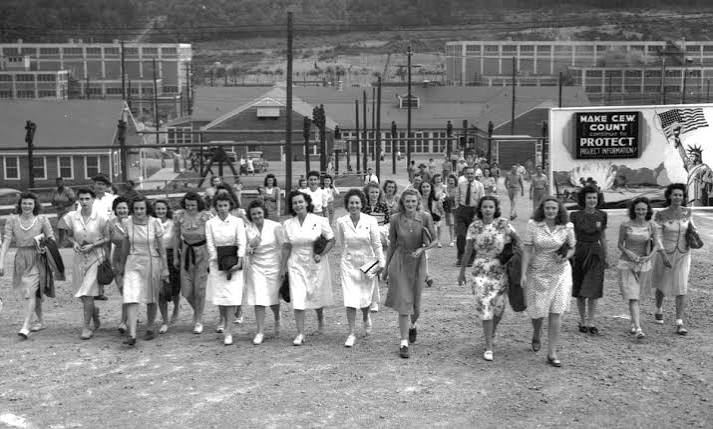
    The scale was staggering. At its peak, the project employed 130,000 people across 30 sites. Most of them the factory workers, the technicians, the clerks had no idea what they were building. They knew only that it was vital to the war effort, and that they must never speak of it.

    The Race Against Germany

    The project was driven by fear. German scientists had discovered fission, and the Nazis had a head start. But the German program, the Uranverein, was underfunded and fragmented. It never came close to a weapon. The Manhattan Project’s scientists didn’t know that. They worked as if every day mattered, because it might.

    There was also a quieter race: the Soviet Union. Even as the United States worked in secret, Soviet spies were inside the project. Klaus Fuchs, a British physicist, passed detailed information to the Soviets. Theodore Hall, a young American scientist, did the same. Their espionage would accelerate the Soviet bomb program by years.

    The First Chain Reaction

    On December 2, 1942, Enrico Fermi stood beneath the stands of a squash court at the University of Chicago. Above him, a pile of graphite and uranium—Chicago Pile-1—was about to become the world’s first controlled nuclear chain reaction. When the neutron count began to rise, and the reaction sustained itself, Fermi smiled. He had proven that a chain reaction was possible. The bomb was now a matter of engineering.

    But engineering was a challenge. The gun-type design, which fired one piece of uranium into another, was relatively straightforward—but it required uranium-235. The implosion design, which squeezed a sphere of plutonium with explosives, was far more complex. At Los Alamos, Oppenheimer’s team wrestled with the physics of implosion, testing and retesting until they got it right.

    Trinity and the End of the War

    On July 16, 1945, the world’s first nuclear explosion lit up the New Mexico sky. The blast was visible 200 miles away. Oppenheimer later recalled a line from the Bhagavad Gita: “Now I am become Death, the destroyer of worlds.”

    Less than a month later, on August 6, a B-29 bomber named Enola Gay dropped “Little Boy” on Hiroshima, Japan. Three days later, “Fat Man” fell on Nagasaki. The bombs killed an estimated 200,000 people, most of them civilians. Japan surrendered on August 15, 1945.

    The war was over. But the questions were just beginning.

    A Moral Reckoning

    Even before the bombs were dropped, scientists had debated their use. The Franck Report, written in June 1945, urged a demonstration explosion rather than an attack on cities. Leo Szilard, who had helped start the project, petitioned against use. But the decision was made by President Harry Truman, who had only learned of the project after Roosevelt’s death. Truman’s stated goal was to end the war and save American lives. An invasion of Japan, he argued, would have cost hundreds of thousands of casualties.

    Oppenheimer, initially supportive, later expressed deep regret. He opposed the development of the hydrogen bomb, a weapon far more powerful than the ones he had helped create. He was called before a security hearing in 1954 and stripped of his security clearance—a punishment for his past associations and his outspokenness.

    The project officially ended with the Atomic Energy Act of 1946, which transferred control to the civilian Atomic Energy Commission. But its legacy was permanent. It had created the template for “big science”—government-funded research on a massive scale—and it had unleashed a nuclear age that would define the Cold War and beyond.

    The workers at Oak Ridge and Hanford, many of whom had labored in ignorance, later learned what they had built. Some faced health problems from radiation exposure. The communities around the sites absorbed the environmental costs. The full human toll is still being measured.

    The Manhattan Project was a triumph of science and a tragedy of war. It was a race that ended with a weapon that could destroy the world—and a question that still haunts us: what do we do with it?

    The Manhattan Project was not just a scientific achievement or a military milestone; it was a profound turning point in human history. It demonstrated that the same knowledge that could power cities could also vaporize them. As we live with the legacy of that secret race—the nuclear arsenals, the national laboratories, the ethical quandaries—we are still, in a sense, inside that desert test site, watching the light and wondering what it means.

    Summary

    • The Manhattan Project was a secret U.S. program (1942-1946) that built the first atomic bombs, employing 130,000 people across 30 sites.
    • Key sites included Los Alamos (design), Oak Ridge (uranium enrichment), and Hanford (plutonium production).
    • The bombs, “Little Boy” and “Fat Man,” were dropped on Hiroshima and Nagasaki in August 1945, leading to Japan’s surrender.
    • The project was motivated by fear of a Nazi bomb, but Soviet espionage (Klaus Fuchs, Theodore Hall) accelerated the Soviet program.
    • It sparked debates over ethics, led to the Atomic Energy Act of 1946, and established the model for large-scale government-funded science.

    FAQ

    Q: Why was it called the Manhattan Project?
    A: It began in the Manhattan Engineer District of the U.S. Army Corps of Engineers, and the name stuck even as the work moved to other sites.

    Q: How much did the project cost?
    A: Roughly $2 billion at the time, equivalent to over $30 billion today.

    Q: Did Germany have an atomic bomb program?
    A: Yes, the Uranverein, but it was underfunded and never came close to building a weapon.

    Q: How did Soviet spies affect the outcome?
    A: Klaus Fuchs and others passed secrets that allowed the Soviet Union to build its own bomb by 1949, accelerating the Cold War arms race.

    Q: Were there protests against using the bomb?
    A: Yes, the Franck Report and Leo Szilard’s petition urged a demonstration instead of use on cities, but the U.S. government decided to drop the bombs to end the war quickly.

  • The Moral Calculus of Hiroshima: A City, a Bomb, and a Choice

    The Moral Calculus of Hiroshima: A City, a Bomb, and a Choice

    At 8:15 on the morning of August 6, 1945, the city of Hiroshima disappeared behind a fireball that reached temperatures hotter than the surface of the sun. The bomb, nicknamed ‘Little Boy,’ had fallen from the Enola Gay, a B-29 Superfortress, and exploded 1,900 feet above the city. In the seconds that followed, an estimated 70,000 to 80,000 people were killed outright. By the end of the year, radiation sickness would push that number to roughly 140,000.

    The decision to drop that bomb and the one that followed three days later on Nagasaki has never stopped being argued. Was it a necessary act that saved millions of lives by ending World War II quickly? Or was it an atrocity that killed civilians on a scale that no military necessity could justify? The facts of those August days are not in dispute. The meaning of those facts remains as contentious as the radioactive fallout itself.

    The Weight of the Pacific War

    To understand Hiroshima, you have to understand the war that preceded it. By the summer of 1945, the United States had been fighting Japan for nearly four years. The battles were brutal and the casualty counts staggering. At Iwo Jima, roughly 26,000 Americans were killed or wounded. At Okinawa, the numbers were worse: about 50,000 American casualties and an estimated 150,000 Okinawan civilians died. The Japanese fought with a ferocity that suggested they would never surrender.

    Japan still had about 2 million troops in the home islands. They had organized a civilian militia that was training with bamboo spears. Their military doctrine was to fight to the death. Kamikaze attacks were intensifying, and the U.S. military was planning Operation Downfall, an invasion of the Japanese home islands set for November 1945. The projected American casualties ranged from 250,000 to 1 million. Japanese deaths would have been in the millions.

    President Harry Truman, who had learned about the Manhattan Project only after Franklin Roosevelt’s death in April 1945, saw the atomic bomb as a way to avoid that bloodbath. In his memoirs, he would later write that he authorized the bomb to save half a million American lives. Secretary of War Henry Stimson put the number at 1 million. The estimates were rough, but the fear was real.

    The Bomb’s Genesis

    The Manhattan Project was a $2 billion gamble—roughly $30 billion in today’s dollars—run by physicist J. Robert Oppenheimer and General Leslie Groves. It employed over 100,000 people across secret sites, from Los Alamos, New Mexico, to Oak Ridge, Tennessee. On July 16, 1945, at the Trinity test site in New Mexico, the first atomic bomb was detonated. Oppenheimer later recalled a line from the Bhagavad Gita: “Now I am become Death, the destroyer of worlds.” But at the time, the mood among the scientists and military leaders was more pragmatic than philosophical. The weapon worked. Now they had to decide what to do with it.

    The Debate Among Scientists

    Not everyone inside the project agreed on how the bomb should be used. In July 1945, a group of scientists led by James Franck submitted a petition—known as the Franck Report—urging that the bomb be demonstrated in an uninhabited area rather than used on a city. They warned that using it without warning would trigger a nuclear arms race with the Soviet Union.

    The Scientific Advisory Panel, which included Oppenheimer, Enrico Fermi, Ernest Lawrence, and Arthur Compton, considered the idea. They rejected it. A demonstration, they argued, was too risky. The bomb might be a dud. The Japanese might move Allied prisoners of war to the target area. And even if the demonstration succeeded, the Japanese government might not believe it—or might not be impressed enough to surrender. The panel recommended military use, without warning.

    The Interim Committee, a group established in May 1945 to advise on atomic policy, came to the same conclusion. On June 1, they recommended that the bomb be used against Japan as soon as possible, without prior warning. The target, they said, should be a military installation surrounded by houses—which, in practice, meant a city.

    The Ultimatum and the Silence

    On July 26, 1945, the Allies issued the Potsdam Declaration, an ultimatum demanding Japan’s unconditional surrender. It threatened “prompt and utter destruction” if Japan refused. The Japanese government did not formally respond. Prime Minister Kantaro Suzuki used the word “mokusatsu,” which can be translated as “to ignore” or “to treat with silent contempt.” The Allies took this as a rejection.

    Historians still debate whether Japan was close to surrender before the bombs fell. Japan’s core condition was preservation of the emperor. The U.S. State Department had discussed this, but the decision to allow the emperor to remain was not communicated clearly to Japan before Hiroshima. The Japanese government was also deeply divided. The “peace party” favored a negotiated surrender, but the military hardliners were determined to fight on, hoping to inflict enough casualties to force a more favorable settlement.

    The Soviet Union was scheduled to declare war on Japan in August 1945, as agreed at Yalta. The U.S. was eager to end the war before the Soviets could gain territory in Asia. Some historians argue that the bomb was used at least in part to send a message to Stalin.

    August 6, 1945

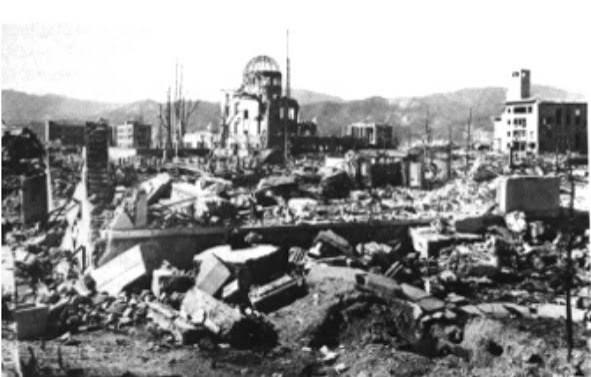
    At 8:15 a.m., the Enola Gay dropped Little Boy over Hiroshima. The bomb exploded with the force of about 15,000 tons of TNT. The city was flattened. Of the estimated 350,000 people in the city, 70,000 to 80,000 died immediately. Many were incinerated. Others were trapped under collapsed buildings. In the days and weeks that followed, radiation sickness began to claim more lives. By the end of 1945, the death toll had reached about 140,000.

    Truman received the news aboard the USS Augusta, returning from the Potsdam Conference. He announced, “This is the greatest thing in history.” The president framed the bomb as a military weapon, used to end the war quickly and save American lives. He did not lose sleep, by his own account.

    Three days later, on August 9, the U.S. dropped a second bomb, “Fat Man,” on Nagasaki. The immediate death toll was 40,000 to 75,000. By the end of the year, it was 70,000 to 80,000. On August 15, Emperor Hirohito announced Japan’s surrender. The formal surrender was signed on September 2 aboard the USS Missouri.

    The Justification and Its Critics

    The traditional justification for the bomb rests on three pillars. First, it saved lives—American lives, and potentially Japanese lives too, by ending the war before the invasion. Second, it shortened the war, preventing the continued slaughter of Allied prisoners and civilians in occupied territories. Third, it demonstrated American power, which some argue helped deter Soviet expansion in the postwar era.

    Revisionist historians challenge each of these points. They argue that Japan was already defeated by August 1945. The U.S. Navy had blockaded the home islands, and the strategic bombing campaign had devastated Japanese cities. The Japanese economy was in ruins. The Soviet declaration of war, which came on August 8, was arguably the decisive blow that convinced the Japanese leadership to surrender—not the atomic bombs.

    They also point out that the U.S. had other options. A demonstration over an uninhabited area might have shocked the Japanese into surrender. Or the U.S. could have clarified its position on the emperor, which it eventually did anyway. The atomic bombings, they argue, were not necessary to end the war. They were acts of terror designed to intimidate the Soviet Union.

    The Human Cost

    The numbers are so large that they risk becoming abstract. But the human cost was not abstract. The survivors, known as hibakusha, suffered from radiation sickness, burns, and cancers. They faced discrimination in Japanese society, which feared contamination. Many were left without families, homes, or livelihoods. The psychological trauma persisted for decades.

    The bomb also changed the world forever. It introduced the possibility of nuclear annihilation, and it set the stage for the Cold War arms race that the Franck Report had warned about. Within a few years, the Soviet Union had its own bomb, and the world entered a standoff that lasted for half a century.

    The Question That Won’t Go Away

    Was Hiroshima justified? The answer depends on how you weigh the lives saved against the lives taken. If you believe that the invasion of Japan would have cost millions of lives—American and Japanese—then the bomb can be seen as the lesser evil. If you believe that Japan was on the verge of surrender and that the bomb was dropped for political reasons, then it looks like a war crime.

    The historical record supports neither side completely. The casualty estimates for the invasion were speculative, but they were based on the ferocious fighting of the Pacific War. The Japanese government was divided, but the hardliners were still in control. The Soviet entry helped, but it came after Hiroshima. The truth is that we will never know what would have happened if the bombs had not been dropped.

    What we do know is that the decision was made by men who were exhausted by four years of war and who had a weapon that they believed could end it. They were not monsters, but they made a choice that killed more than 200,000 people in the span of a week. The question of whether that choice was justified is not just a historical debate. It is a moral question that continues to haunt us.

    The atomic bombings of Hiroshima and Nagasaki remain a singular event in human history—the only time nuclear weapons have been used in war. The debate over their justification will never be settled because it is not simply a matter of facts. It is a matter of values. How much weight do we give to the lives of soldiers who might have died in an invasion? How much weight do we give to the lives of civilians who actually died under the bomb? These are not academic questions. They are the questions that define what it means to be human in the nuclear age.

    Summary

    • The atomic bombings of Hiroshima (August 6, 1945) and Nagasaki (August 9, 1945) resulted in an estimated 140,000 and 70,000–80,000 deaths by the end of 1945, respectively.
    • The U.S. decision to use the bomb was based on the belief that it would end the war quickly and save hundreds of thousands of American lives that would be lost in an invasion.
    • The Manhattan Project’s scientists were divided, with the Franck Report urging a non-combat demonstration, but the Scientific Advisory Panel and Interim Committee recommended military use without warning.
    • Revisionist historians argue that Japan was already near surrender and that the bombs were dropped primarily to intimidate the Soviet Union.
    • Japan’s surrender on August 15, 1945, came after the bombings and the Soviet declaration of war, but the relative importance of each factor remains debated.

    FAQ

    Q: How many people died in the Hiroshima bombing?
    A: The immediate death toll was estimated at 70,000–80,000. By the end of 1945, radiation-related illnesses brought the total to approximately 140,000.

    Q: Why did the U.S. choose Hiroshima as a target?
    A: Hiroshima was a military and industrial center with a population of about 350,000. The Interim Committee selected it as a target because it had not been heavily bombed, which would allow for a clear assessment of the bomb’s destructive power.

    Q: What was the Potsdam Declaration?
    A: It was an ultimatum issued on July 26, 1945, demanding Japan’s unconditional surrender and threatening “prompt and utter destruction” if refused. Japan did not formally respond, which the Allies interpreted as rejection.

    Q: Did the bombings lead directly to Japan’s surrender?
    A: The bombings contributed to Japan’s surrender, but the Soviet Union’s declaration of war on August 8, 1945, also played a significant role. The relative importance of each factor is still debated by historians.

    Q: Were there alternatives to dropping the bomb?
    A: Some scientists proposed a demonstration over an uninhabited area. The idea was rejected due to concerns about a dud, potential capture of the weapon, and the possibility that Japan would not be impressed enough to surrender.