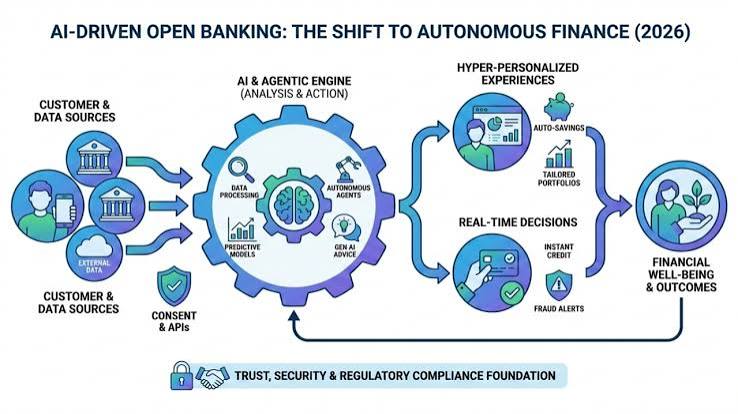
Imagine a world where your bills pay themselves, your savings grow on autopilot, and your investments rebalance without you lifting a finger. That world is not just a fantasy—it’s the reality of financial automation in 2026. With the fintech sector maturing and open banking finally taking hold, automating your finances has never been easier or more powerful.
But automation isn’t just about convenience; it’s about overcoming human nature. Behavioral research shows we’re terrible at consistently saving and avoiding late fees. Automation leverages ‘default bias’—the tendency to stick with pre-set choices—to help you build wealth effortlessly. In this guide, we’ll explore six concrete ways to automate your finances in 2026, from AI-driven cash flow analysis to smart bill negotiation, and show you how to avoid the pitfalls of over-automation.
1. Split Direct Deposit: Pay Yourself First, Automatically
The simplest and most powerful automation starts with your paycheck. In 2026, more employers and payroll providers like ADP and Gusto offer split direct deposit, allowing you to route portions of your paycheck to multiple accounts automatically. Instead of manually transferring money to savings each month, you can set it up so that, say, 20% of your paycheck goes directly into a high-yield savings account or investment account, and the rest goes to checking.
This ‘pay yourself first’ strategy ensures that saving happens before you even see the money, making it nearly impossible to spend. It’s the ultimate set-and-forget move, and it’s available to anyone with a regular paycheck.
2. AI-Driven Cash Flow Analysis: Sweep Excess Funds Automatically
In 2026, the most innovative automation apps use machine learning to analyze your income and spending patterns. Apps like Digit and Qapital now offer ‘smart sweep’ features that automatically move ‘excess’ funds from your checking account into savings or investments. For example, if you typically spend $3,000 a month and your income is $4,000, the app might automatically transfer $500 to savings on payday—but it also adapts to your behavior, so if you have an unusually high month, it won’t leave you overdrawn.
This is a game-changer for people with variable income, like freelancers or gig workers, because the AI learns your cash flow patterns and only moves money when it’s safe. It’s like having a personal financial assistant that never sleeps.
3. Smart Bill Pay and Subscription Management
Subscription creep is a silent budget killer. In 2026, services like Rocket Money and Trim have taken bill automation to the next level. They don’t just pay your bills; they negotiate them. These apps can automatically cancel unused subscriptions, negotiate lower rates on cable, internet, and phone bills, and even dispute bank fees on your behalf.
For example, if you’re paying $150 a month for cable but a competitor offers the same package for $100, the app will negotiate with your provider to match the price—or cancel it if you don’t use it. This is automation that saves you money without any effort on your part.
4. Robo-Advisors: Automate Your Investing
Robo-advisors like Betterment, Wealthfront, and Vanguard’s Digital Advisor have been around for a while, but by 2026 they’ve become even more sophisticated. They automatically invest your contributions based on your risk tolerance, rebalance your portfolio, and even harvest tax losses to minimize your tax bill. Assets under management in robo-advisors are projected to exceed $2 trillion by 2026, a testament to their popularity.
The key is to set up automatic contributions from your checking account to your robo-advisor on payday. You can choose to have a fixed amount or a percentage of your income invested automatically. Over time, compound interest does the heavy lifting, and you don’t have to think about it.
5. Automated Debt Payoff: Snowball and Avalanche on Autopilot
While most articles focus on saving and investing, automating debt repayment is arguably the most impactful use case. In 2026, you can set up your bank or a debt payoff app to automatically make more than the minimum payment on your highest-interest debt (the avalanche method) or your smallest debt (the snowball method).
Apps like Tally and Even can automate this for you, distributing extra payments across your credit cards or loans strategically. For example, if you have three credit cards with different balances and interest rates, the app will automatically apply your extra payment to the card that saves you the most in interest. This removes the temptation to skip a payment or spend the money elsewhere.
6. Open Banking: See Everything, Automate Everything
The biggest game-changer in 2026 is open banking. The CFPB’s Section 1033 rule, finalized in 2024, requires banks to share your financial data with authorized third-party apps. This means you can now connect all your accounts—checking, savings, credit cards, investments, and even your mortgage—in one place, and automate actions across them.
For example, an app can see that you have $5,000 in a low-interest checking account and $10,000 in credit card debt at 20% APR. It can automatically transfer $4,000 to pay down the debt, leaving a $1,000 buffer. Or it can move money from a savings account to an investment account when your balance exceeds a certain threshold. This cross-account automation was impossible before open banking, and it’s now becoming mainstream.
Avoiding the Pitfalls of Over-Automation
While automation is powerful, it’s not a substitute for oversight. Critics warn of ‘financial numbness’—you stop checking your accounts, miss fraud, or fail to adjust when life changes. To avoid this, schedule a quarterly ‘financial check-in’ to review your automated rules, update your budget, and ensure you’re not overpaying for subscriptions you no longer use.
Also, be mindful of security. Only use regulated, well-reviewed apps, enable two-factor authentication, and understand what data you’re sharing. Open banking is secure, but it’s still wise to monitor your accounts regularly for unauthorized activity.
Finally, automation assumes a steady income. If you’re a freelancer or have variable cash flow, use ‘smart’ tools that adapt to your spending patterns, and always keep a buffer in your checking account to avoid overdrafts.
Automating your finances in 2026 is about working smarter, not harder. From split direct deposit to AI-driven cash flow analysis and open banking, these six strategies can help you save more, invest consistently, and pay off debt faster—all without lifting a finger. Just remember to stay engaged with a quarterly review and keep an eye on security. The future of personal finance is here, and it’s automated.
Summary
- Split direct deposit to pay yourself first automatically.
- Use AI-driven cash flow apps to sweep excess funds into savings or investments.
- Automate bill pay and subscription management to negotiate and cancel unused services.
- Set up robo-advisors to invest and rebalance automatically.
- Automate debt payoff with snowball or avalanche methods.
- Leverage open banking to see all accounts and automate cross-account actions.
FAQ
Q: Is financial automation safe?
A: Yes, if you use regulated, well-reviewed apps and enable two-factor authentication. Open banking is secure, but always monitor your accounts for fraud.
Q: Can I automate finances with variable income?
A: Yes, newer ‘smart’ tools use AI to analyze your cash flow and only move money when it’s safe, making them suitable for freelancers and gig workers.
Q: Do I still need to check my accounts if I automate everything?
A: Yes, automation reduces manual work but doesn’t eliminate the need for oversight. Schedule quarterly reviews to catch errors, fraud, or subscription creep.
Q: What’s the best way to start automating?
A: Start with split direct deposit to savings, then add automatic bill pay and a robo-advisor. Gradually incorporate more advanced tools like AI cash flow analysis.
Q: Will automation help me pay off debt faster?
A: Absolutely. Automating extra payments toward your highest-interest or smallest debt can accelerate payoff and remove the temptation to skip payments.
Leave a Reply