Tag: savings

  • 6 Ways to Automate Your Finances in 2026: From AI Cash Flow to Open Banking

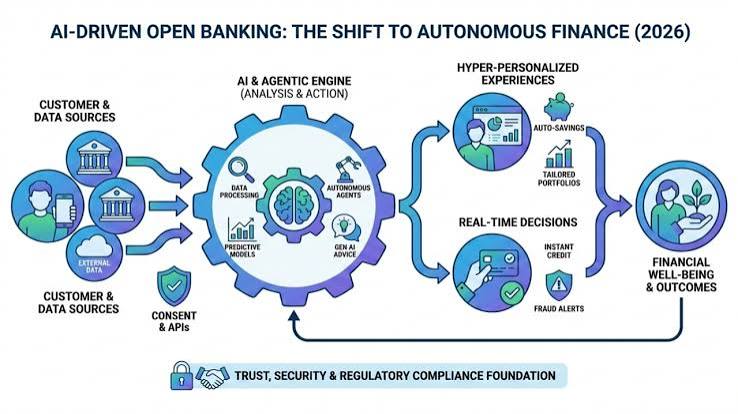
    Open Banking in 2026 : AI-Driven Personalization and Decision-Making

    Imagine a world where your bills pay themselves, your savings grow on autopilot, and your investments rebalance without you lifting a finger. That world is not just a fantasy—it’s the reality of financial automation in 2026. With the fintech sector maturing and open banking finally taking hold, automating your finances has never been easier or more powerful.

    But automation isn’t just about convenience; it’s about overcoming human nature. Behavioral research shows we’re terrible at consistently saving and avoiding late fees. Automation leverages ‘default bias’—the tendency to stick with pre-set choices—to help you build wealth effortlessly. In this guide, we’ll explore six concrete ways to automate your finances in 2026, from AI-driven cash flow analysis to smart bill negotiation, and show you how to avoid the pitfalls of over-automation.

    1. Split Direct Deposit: Pay Yourself First, Automatically

    The simplest and most powerful automation starts with your paycheck. In 2026, more employers and payroll providers like ADP and Gusto offer split direct deposit, allowing you to route portions of your paycheck to multiple accounts automatically. Instead of manually transferring money to savings each month, you can set it up so that, say, 20% of your paycheck goes directly into a high-yield savings account or investment account, and the rest goes to checking.

    This ‘pay yourself first’ strategy ensures that saving happens before you even see the money, making it nearly impossible to spend. It’s the ultimate set-and-forget move, and it’s available to anyone with a regular paycheck.

    2. AI-Driven Cash Flow Analysis: Sweep Excess Funds Automatically

    In 2026, the most innovative automation apps use machine learning to analyze your income and spending patterns. Apps like Digit and Qapital now offer ‘smart sweep’ features that automatically move ‘excess’ funds from your checking account into savings or investments. For example, if you typically spend $3,000 a month and your income is $4,000, the app might automatically transfer $500 to savings on payday—but it also adapts to your behavior, so if you have an unusually high month, it won’t leave you overdrawn.

    This is a game-changer for people with variable income, like freelancers or gig workers, because the AI learns your cash flow patterns and only moves money when it’s safe. It’s like having a personal financial assistant that never sleeps.

    3. Smart Bill Pay and Subscription Management

    Subscription creep is a silent budget killer. In 2026, services like Rocket Money and Trim have taken bill automation to the next level. They don’t just pay your bills; they negotiate them. These apps can automatically cancel unused subscriptions, negotiate lower rates on cable, internet, and phone bills, and even dispute bank fees on your behalf.

    For example, if you’re paying $150 a month for cable but a competitor offers the same package for $100, the app will negotiate with your provider to match the price—or cancel it if you don’t use it. This is automation that saves you money without any effort on your part.

    4. Robo-Advisors: Automate Your Investing

    Robo-advisors like Betterment, Wealthfront, and Vanguard’s Digital Advisor have been around for a while, but by 2026 they’ve become even more sophisticated. They automatically invest your contributions based on your risk tolerance, rebalance your portfolio, and even harvest tax losses to minimize your tax bill. Assets under management in robo-advisors are projected to exceed $2 trillion by 2026, a testament to their popularity.

    The key is to set up automatic contributions from your checking account to your robo-advisor on payday. You can choose to have a fixed amount or a percentage of your income invested automatically. Over time, compound interest does the heavy lifting, and you don’t have to think about it.

    5. Automated Debt Payoff: Snowball and Avalanche on Autopilot

    While most articles focus on saving and investing, automating debt repayment is arguably the most impactful use case. In 2026, you can set up your bank or a debt payoff app to automatically make more than the minimum payment on your highest-interest debt (the avalanche method) or your smallest debt (the snowball method).

    Apps like Tally and Even can automate this for you, distributing extra payments across your credit cards or loans strategically. For example, if you have three credit cards with different balances and interest rates, the app will automatically apply your extra payment to the card that saves you the most in interest. This removes the temptation to skip a payment or spend the money elsewhere.

    6. Open Banking: See Everything, Automate Everything

    The biggest game-changer in 2026 is open banking. The CFPB’s Section 1033 rule, finalized in 2024, requires banks to share your financial data with authorized third-party apps. This means you can now connect all your accounts—checking, savings, credit cards, investments, and even your mortgage—in one place, and automate actions across them.

    For example, an app can see that you have $5,000 in a low-interest checking account and $10,000 in credit card debt at 20% APR. It can automatically transfer $4,000 to pay down the debt, leaving a $1,000 buffer. Or it can move money from a savings account to an investment account when your balance exceeds a certain threshold. This cross-account automation was impossible before open banking, and it’s now becoming mainstream.

    Avoiding the Pitfalls of Over-Automation

    While automation is powerful, it’s not a substitute for oversight. Critics warn of ‘financial numbness’—you stop checking your accounts, miss fraud, or fail to adjust when life changes. To avoid this, schedule a quarterly ‘financial check-in’ to review your automated rules, update your budget, and ensure you’re not overpaying for subscriptions you no longer use.

    Also, be mindful of security. Only use regulated, well-reviewed apps, enable two-factor authentication, and understand what data you’re sharing. Open banking is secure, but it’s still wise to monitor your accounts regularly for unauthorized activity.

    Finally, automation assumes a steady income. If you’re a freelancer or have variable cash flow, use ‘smart’ tools that adapt to your spending patterns, and always keep a buffer in your checking account to avoid overdrafts.

    Automating your finances in 2026 is about working smarter, not harder. From split direct deposit to AI-driven cash flow analysis and open banking, these six strategies can help you save more, invest consistently, and pay off debt faster—all without lifting a finger. Just remember to stay engaged with a quarterly review and keep an eye on security. The future of personal finance is here, and it’s automated.

    Summary

    • Split direct deposit to pay yourself first automatically.
    • Use AI-driven cash flow apps to sweep excess funds into savings or investments.
    • Automate bill pay and subscription management to negotiate and cancel unused services.
    • Set up robo-advisors to invest and rebalance automatically.
    • Automate debt payoff with snowball or avalanche methods.
    • Leverage open banking to see all accounts and automate cross-account actions.

    FAQ

    Q: Is financial automation safe?
    A: Yes, if you use regulated, well-reviewed apps and enable two-factor authentication. Open banking is secure, but always monitor your accounts for fraud.

    Q: Can I automate finances with variable income?
    A: Yes, newer ‘smart’ tools use AI to analyze your cash flow and only move money when it’s safe, making them suitable for freelancers and gig workers.

    Q: Do I still need to check my accounts if I automate everything?
    A: Yes, automation reduces manual work but doesn’t eliminate the need for oversight. Schedule quarterly reviews to catch errors, fraud, or subscription creep.

    Q: What’s the best way to start automating?
    A: Start with split direct deposit to savings, then add automatic bill pay and a robo-advisor. Gradually incorporate more advanced tools like AI cash flow analysis.

    Q: Will automation help me pay off debt faster?
    A: Absolutely. Automating extra payments toward your highest-interest or smallest debt can accelerate payoff and remove the temptation to skip payments.
  • 7 Smart Money-Saving Hacks That Actually Work in 2026

    I'm a finance expert - seven fast ways to save money in 2026

    In 2026, the financial landscape is a mixed bag. Inflation has cooled from its 2022–2023 peaks, but prices are still climbing at a rate that outpaces wage growth for many. The Federal Reserve is holding interest rates in the 3.5–4.5% range, which means borrowing is expensive, but saving can be rewarding if you know where to look. Meanwhile, consumer debt has hit a record $1.2 trillion, and the average American is bleeding $219 a month on subscriptions they barely use. The old advice—clip coupons, use cash envelopes, manually track every penny—feels outdated and exhausting. The good news? Technology has evolved to do the heavy lifting for you. In 2026, the smartest money-saving strategies aren’t about willpower; they’re about setting up automated systems that work in the background. From AI-powered budgeting apps to smart home devices that cut your energy bills, here are seven hacks that actually work in the current economic climate.

    1. Automate Your Savings with AI-Powered Budgeting Apps

    Gone are the days of manually logging every coffee purchase. In 2026, budgeting apps like Cleo, Monarch, and YNAB have integrated AI and open banking APIs to give you real-time tracking and personalized insights. These apps can automatically categorize your spending, identify wasteful subscriptions, and even transfer spare change to a savings account. For example, Cleo uses AI to chat with you about your finances, flagging unusual charges and suggesting a weekly savings goal. The key is to set up ‘set-and-forget’ rules: auto-round-up purchases to the nearest dollar, auto-transfer a fixed amount to savings on payday, and let the app negotiate your bills. The result? You save without thinking about it. Just be sure to monitor your account to avoid overdrafts—automation isn’t a substitute for occasional check-ins.

    2. Kill the Subscription Trap with Virtual Cards and Audits

    The average American spends $219 a month on subscriptions—a 143% increase since 2020. Free trials auto-renew, forgotten memberships pile up, and bundled services seem like a deal until you realize you’re paying for 10 channels you never watch. The hack? Do a quarterly subscription audit. List every recurring charge, then cancel what you don’t use. To prevent future slip-ups, use virtual card numbers from services like Privacy.com or your Apple Card. These generate unique card numbers for each merchant, so you can set spending limits or block charges entirely. The FTC’s new ‘click-to-cancel’ rule (effective 2025) makes it easier to cancel online, so there’s no excuse to keep paying for that gym you never visit. Remember, not all subscriptions are bad—bundles like Disney+/Hulu/ESPN can save money if you actually use them. The goal is intentionality, not elimination.

    3. Let Smart Home Tech Cut Your Energy Bills

    Smart thermostats like the EcoBee or Nest have been around for a while, but in 2026 they’re cheaper and more effective than ever. On average, they save 10–15% on heating and cooling costs by learning your schedule and adjusting temperatures automatically. Pair them with smart plugs for your electronics—these can turn off standby power vampires (think TVs, game consoles, and chargers) that waste energy even when off. The upfront cost is $100–$250 per device, but utility rebates and IRA tax credits (still active in 2026) can offset that. For example, many utilities offer $50–$100 rebates for smart thermostats, and the federal tax credit covers up to 30% of the cost for energy-efficient upgrades. The payback period varies by climate, but in most regions, you’ll break even within a year or two, then enjoy pure savings.

    4. Buy Refurbished Electronics and Save 30–50%

    The refurbished electronics market has exploded, and major brands now sell certified refurbished directly. Apple, Samsung, and Dell offer ‘renewed’ products with warranties that match new items—AppleCare even covers refurbished iPhones. You can save 30–50% off retail prices, and the quality is often indistinguishable from new. The key is to buy from reputable sources: the manufacturer’s own store, or certified sellers on Amazon or Best Buy. Check the warranty and return policy, and look for ‘grade A’ or ‘like new’ condition. Battery health and cosmetic condition vary, so read the fine print. For example, a refurbished iPhone 14 might cost $600 instead of $800, and you get the same performance. This hack is a win for your wallet and the planet.

    5. Use Flash-Food Apps to Slash Grocery Bills

    Food waste is a huge expense—the average family throws away $1,500 of food a year. Apps like Too Good To Go and Flashfood are changing that by connecting you with restaurants and grocery stores that sell surplus food at deep discounts. You can get a ‘surprise bag’ of groceries for $5–$10 that would normally cost $20–$30. The catch? You don’t know exactly what you’ll get, and you need to pick it up during a specific time window. It’s a fun way to try new foods and cut your grocery bill by up to 50%. Pair this with AI meal-planning apps that suggest recipes based on what’s in your fridge, and you’ll waste less and save more. For example, the app ‘SuperCook’ scans your pantry and gives you recipes you can make with what you have, reducing impulse buys.

    6. Optimize Your Credit Card Rewards (If You Pay in Full)

    Credit card rewards are a double-edged sword. If you carry a balance, the interest (average APR of 22–24%) will wipe out any rewards. But if you pay your balance in full every month, you can earn serious cash back. In 2026, the best strategy is to use a card with 5% rotating categories (like the Chase Freedom Flex) and pair it with card-linked offers from Amex Offers or Chase Offers. These give you statement credits for spending at specific merchants—for example, $10 back on a $50 purchase at a restaurant. Sign-up bonuses are also lucrative; you can earn $200–$500 in cash back by meeting a minimum spend. Just be disciplined: set up autopay for the full balance, and never spend more than you normally would just to earn rewards. This hack is about optimization, not spending more.

    7. Slash Your Phone and Internet Bills with MVNOs and Negotiation

    The telecom industry is more competitive than ever. Mobile Virtual Network Operators (MVNOs) like Mint, Visible, and US Mobile offer plans on the same networks as the big carriers (Verizon, T-Mobile, AT&T) for under $25 a month. For example, Mint’s 15GB plan is $15 a month if you pay annually. The catch? You may get deprioritized during peak times, but for most users, the difference is negligible. For internet, use the FCC’s broadband map to see all available providers in your area, then call your current provider and threaten to switch—retention offers are common. You can also check if you qualify for the Affordable Connectivity Program (if it’s still funded) or local fiber deals. The key is to renegotiate every year; loyalty doesn’t pay in 2026.

    Saving money in 2026 isn’t about deprivation or coupon-clipping—it’s about leveraging technology to make saving automatic. From AI budgeting apps that do the math for you, to smart home devices that cut your energy bills, to refurbished electronics that save you hundreds, these hacks are designed to work with your lifestyle, not against it. Start with one or two that resonate with you, and you’ll see the difference in your bank account within months. The future of personal finance is smart, automated, and—best of all—painless.

    Summary

    • Automate savings with AI budgeting apps that round up purchases and auto-transfer to savings.
    • Audit and cancel unused subscriptions using virtual card numbers to block future charges.
    • Install smart thermostats and plugs to save 10–15% on energy, with rebates offsetting upfront costs.
    • Buy certified refurbished electronics to save 30–50% with warranties that match new.
    • Use flash-food apps like Too Good To Go to cut grocery bills by up to 50% and reduce waste.
    • Optimize credit card rewards only if you pay in full—avoid interest that erases gains.
    • Switch to MVNOs and negotiate internet bills to save on phone and broadband costs.

    FAQ

    Q: Are AI budgeting apps safe to use with my bank accounts?\nA: Yes, reputable apps use bank-level encryption and read-only access via open banking APIs. They can’t move money without your permission, but always enable two-factor authentication and review permissions regularly.\n\nQ: How do I know if a refurbished product is worth it?\nA: Look for ‘certified refurbished’ from the manufacturer or a reputable seller, check the warranty (should be at least 1 year), and read reviews on battery health and condition. If the price is 30–50% off new, it’s usually a good deal.\n\nQ: Will smart home devices really save me money?\nA: On average, smart thermostats save 10–15% on heating and cooling, and smart plugs can cut standby power usage by up to 10% of your electricity bill. The payback period is typically 1–2 years, after which you’re saving money.\n\nQ: What’s the best way to cancel a subscription that’s hard to cancel?\nA: The FTC’s ‘click-to-cancel’ rule requires companies to make it as easy to cancel as it was to sign up. If you’re still having trouble, use a virtual card number to block future charges, or contact your bank to stop the payment.\n\nQ: Can I really get a phone plan for under $25 a month?\nA: Yes, MVNOs like Mint and Visible offer plans for $15–$25 a month on major networks. You may experience slower data during peak times, but for most people, it’s a great trade-off for the savings.