
Tag: fintech

  • How Do I… The Rise of Action-Oriented Search Queries in Finance

    How Do I… The Rise of Action-Oriented Search Queries in Finance

    When someone types “How do I open a Roth IRA?” into Google, they’re not just looking for information they’re looking for a step-by-step path to action. This type of query, known as an action-oriented or transactional search, has become increasingly common in finance. Unlike the older informational queries like “What is a bond?” which seek knowledge, these commands ask the search engine to help complete a task.

    This shift reflects broader changes in how people manage money: the rise of mobile devices, the growth of self-service fintech tools, and a generational preference for doing things yourself. As search engines and AI assistants get better at understanding natural language, the line between searching and doing is blurring. This article explores what action-oriented queries are, why they’ve grown, and what they mean for consumers and the financial industry.

    What Are Action-Oriented Queries?

    Action-oriented queries are search phrases that function as direct requests or commands. They often start with “How do I…”, “Make me…”, or “Find me…”. In finance, examples include:

    • “How do I invest in index funds?”
    • “Make me a budget spreadsheet”
    • “Find me the best high-yield savings account”

    These sit alongside two other classic query types. Informational queries seek knowledge (e.g., “What is an ETF?”), while navigational queries aim to locate a specific website (e.g., “Vanguard login”). Action-oriented queries are distinct because they imply a desire to complete a task, not just learn about it.

    The Growth of Action-Oriented Search

    Action-oriented queries have grown significantly in recent years, driven by several factors. First, the rise of voice search has changed how people phrase queries. Studies show that voice searches are 3 times more likely to be full questions or commands than typed searches. When you speak to a phone or smart speaker, you naturally say, “Hey Siri, how do I transfer money to my brokerage?” instead of typing “transfer money brokerage”.

    Second, the mobile-first behavior means users often search on the go and want immediate, executable answers. They’re not sitting at a desk researching for hours; they’re on a bus, wondering how to start saving for retirement.

    Third, the rise of self-service finance—fintech apps like Robinhood, Chime, and TurboTax—has made DIY finance the norm. Users expect to complete tasks entirely online without talking to a human advisor. The search query is often the first step in that process.

    Finally, generational change plays a role. Millennials and Gen Z are more likely to search for “how to” content than to read long-form educational articles. They prefer actionable, step-by-step guidance.

    The Role of Search Engines and AI

    Search engines have adapted to this trend. Google’s algorithm updates, such as BERT and MUM, have improved natural language understanding, allowing the engine to parse conversational, action-oriented phrasing. This is why you now see featured snippets and “People Also Ask” boxes that provide step-by-step answers to queries like “How do I consolidate debt?”

    AI chatbots have accelerated the shift. Users now ask ChatGPT or Perplexity things like “Make me a debt payoff plan” and receive a customized output—no search results page needed. This represents a fundamental change: instead of searching for information and then acting, the AI can guide the user through the action in real time.

    The Consumer Empowerment Angle

    Action-oriented search democratizes financial knowledge. A person with no prior investing experience can go from “How do I start investing?” to a funded brokerage account in under an hour. This is especially valuable for underserved groups—low-income individuals, first-generation investors, or non-native English speakers—who may lack access to traditional financial advisors.

    For example, a query like “How do I file taxes for free?” can lead a user to IRS Free File or a nonprofit tax assistance program, saving them hundreds of dollars. This type of direct, actionable information was harder to find before the rise of action-oriented content.

    The Financial Industry and Marketing Perspective

    For banks, brokerages, and fintechs, action-oriented queries represent high-intent leads. A user asking “How do I open a CD?” is much closer to opening an account than someone asking “What is a CD?” This has shifted SEO and content marketing strategies. Companies now create conversational, step-by-step guides that directly answer “how do I” questions, rather than keyword-stuffed informational articles.

    However, there’s a risk. Over-optimization can lead to generic, low-value content that doesn’t actually help users. Regulators and consumer advocates have expressed concern about content that prioritizes search rankings over genuine utility. The challenge for the industry is to create content that is both SEO-friendly and genuinely helpful.

    Privacy and Data Security Concerns

    Action-oriented queries can reveal sensitive financial intentions. For example, a search like “How do I hide money from my spouse?” could indicate marital problems, and “How do I consolidate debt?” might suggest financial distress. This data is valuable to marketers, but it also raises privacy concerns.

    Search engines and AI assistants collect vast amounts of data on these queries, which could be used for targeted advertising or even shared with third parties. Users may not realize how much they’re revealing when they type a personal financial question. This is an emerging issue that regulators are starting to examine.

    The Future of Action-Oriented Search

    As AI continues to improve, action-oriented queries will likely become even more common. We may see a shift from typing queries to speaking them, and from searching to directly asking an AI assistant to complete a task. Instead of “How do I open a Roth IRA?”, a user might say, “Open a Roth IRA for me”—and an AI could do it, if given the right permissions.

    This could further blur the line between searching and doing. For the financial industry, it means optimizing not just for search engines, but for AI systems that might recommend products or services. For consumers, it offers the promise of even more seamless financial management—though it also raises questions about trust and control.

    What This Means for You

    If you’re a consumer, understanding action-oriented queries can help you get better results from your searches. Instead of typing vague terms, try to be specific and action-focused. For example, instead of “best savings account”, search “How do I open a high-yield savings account?” This is more likely to yield step-by-step guides and direct links to sign-up pages.

    If you work in finance or content marketing, the takeaway is clear: create content that answers questions and provides actionable steps. The days of purely informational articles are numbered. Users want to know not just what something is, but how to do it.

    In short, action-oriented search is not a passing trend. It reflects a fundamental shift in how people interact with information—from passive consumption to active doing. And in finance, that shift is particularly pronounced.

    Action-oriented queries are reshaping the financial search landscape. They represent a move from passive information gathering to active task completion, driven by mobile technology, self-service finance, and AI. For consumers, this means more accessible and actionable financial guidance. For the industry, it presents both opportunities and challenges. As search continues to evolve, the divide between searching and doing may vanish entirely—and finance will be at the forefront of that change.

    Summary

    • Action-oriented queries are direct commands like “How do I open a Roth IRA?” and are distinct from informational and navigational queries.
    • They have grown due to voice search, mobile behavior, self-service fintech, and generational preferences.
    • Search engines and AI chatbots now prioritize step-by-step answers to these queries.
    • For consumers, they democratize financial knowledge, especially for underserved groups.
    • For the industry, they represent high-intent leads but also raise privacy concerns and risks of low-quality content.

    FAQ

    Q: What is an action-oriented search query?
    A: An action-oriented query is a search phrase that acts as a direct request or command, such as “How do I invest in index funds?” or “Make me a budget spreadsheet.” It implies a desire to complete a task, rather than just learn about a topic.

    Q: Why are action-oriented queries becoming more common?
    A: Several factors contribute, including the rise of voice search (which is 3x more likely to be phrased as a question), mobile-first behavior, the growth of self-service fintech tools, and a generational preference for actionable content among Millennials and Gen Z.

    Q: How do search engines handle these queries?
    A: Search engines like Google use AI algorithms (e.g., BERT, MUM) to understand natural language and provide featured snippets, step-by-step guides, and “People Also Ask” boxes that directly answer action-oriented questions.

    Q: What are the benefits of action-oriented search for consumers?
    A: It makes financial information more accessible and actionable, allowing users to go from a query like “How do I file taxes for free?” to completing the task quickly. This is especially helpful for people without access to traditional financial advisors.

    Q: What are the risks of action-oriented search?
    A: For the industry, there’s a risk of creating low-value content that’s optimized for search but not genuinely helpful. For consumers, there are privacy concerns, as these queries can reveal sensitive financial intentions. Additionally, reliance on AI-generated answers may lead to errors or oversimplification.

  • 6 Ways to Automate Your Finances in 2026: From AI Cash Flow to Open Banking

    6 Ways to Automate Your Finances in 2026: From AI Cash Flow to Open Banking

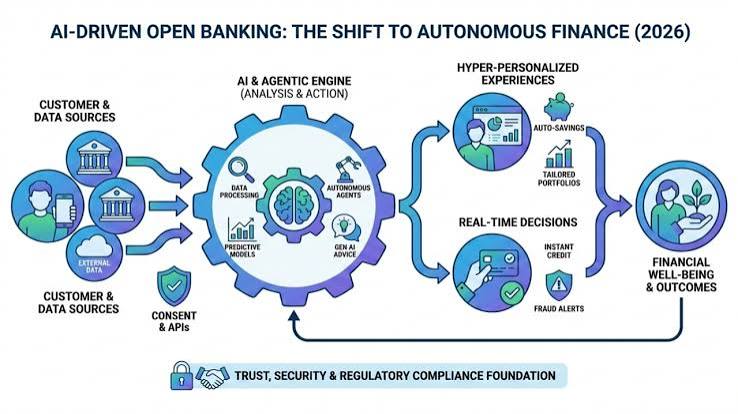
    Imagine a world where your bills pay themselves, your savings grow on autopilot, and your investments rebalance without you lifting a finger. That world is not just a fantasy—it’s the reality of financial automation in 2026. With the fintech sector maturing and open banking finally taking hold, automating your finances has never been easier or more powerful.

    But automation isn’t just about convenience; it’s about overcoming human nature. Behavioral research shows we’re terrible at consistently saving and avoiding late fees. Automation leverages ‘default bias’—the tendency to stick with pre-set choices—to help you build wealth effortlessly. In this guide, we’ll explore six concrete ways to automate your finances in 2026, from AI-driven cash flow analysis to smart bill negotiation, and show you how to avoid the pitfalls of over-automation.

    1. Split Direct Deposit: Pay Yourself First, Automatically

    The simplest and most powerful automation starts with your paycheck. In 2026, more employers and payroll providers like ADP and Gusto offer split direct deposit, allowing you to route portions of your paycheck to multiple accounts automatically. Instead of manually transferring money to savings each month, you can set it up so that, say, 20% of your paycheck goes directly into a high-yield savings account or investment account, and the rest goes to checking.

    This ‘pay yourself first’ strategy ensures that saving happens before you even see the money, making it nearly impossible to spend. It’s the ultimate set-and-forget move, and it’s available to anyone with a regular paycheck.

    2. AI-Driven Cash Flow Analysis: Sweep Excess Funds Automatically

    In 2026, the most innovative automation apps use machine learning to analyze your income and spending patterns. Apps like Digit and Qapital now offer ‘smart sweep’ features that automatically move ‘excess’ funds from your checking account into savings or investments. For example, if you typically spend $3,000 a month and your income is $4,000, the app might automatically transfer $500 to savings on payday—but it also adapts to your behavior, so if you have an unusually high month, it won’t leave you overdrawn.

    This is a game-changer for people with variable income, like freelancers or gig workers, because the AI learns your cash flow patterns and only moves money when it’s safe. It’s like having a personal financial assistant that never sleeps.

    3. Smart Bill Pay and Subscription Management

    Subscription creep is a silent budget killer. In 2026, services like Rocket Money and Trim have taken bill automation to the next level. They don’t just pay your bills; they negotiate them. These apps can automatically cancel unused subscriptions, negotiate lower rates on cable, internet, and phone bills, and even dispute bank fees on your behalf.

    For example, if you’re paying $150 a month for cable but a competitor offers the same package for $100, the app will negotiate with your provider to match the price—or cancel it if you don’t use it. This is automation that saves you money without any effort on your part.

    4. Robo-Advisors: Automate Your Investing

    Robo-advisors like Betterment, Wealthfront, and Vanguard’s Digital Advisor have been around for a while, but by 2026 they’ve become even more sophisticated. They automatically invest your contributions based on your risk tolerance, rebalance your portfolio, and even harvest tax losses to minimize your tax bill. Assets under management in robo-advisors are projected to exceed $2 trillion by 2026, a testament to their popularity.

    The key is to set up automatic contributions from your checking account to your robo-advisor on payday. You can choose to have a fixed amount or a percentage of your income invested automatically. Over time, compound interest does the heavy lifting, and you don’t have to think about it.

    5. Automated Debt Payoff: Snowball and Avalanche on Autopilot

    While most articles focus on saving and investing, automating debt repayment is arguably the most impactful use case. In 2026, you can set up your bank or a debt payoff app to automatically make more than the minimum payment on your highest-interest debt (the avalanche method) or your smallest debt (the snowball method).

    Apps like Tally and Even can automate this for you, distributing extra payments across your credit cards or loans strategically. For example, if you have three credit cards with different balances and interest rates, the app will automatically apply your extra payment to the card that saves you the most in interest. This removes the temptation to skip a payment or spend the money elsewhere.

    6. Open Banking: See Everything, Automate Everything

    The biggest game-changer in 2026 is open banking. The CFPB’s Section 1033 rule, finalized in 2024, requires banks to share your financial data with authorized third-party apps. This means you can now connect all your accounts—checking, savings, credit cards, investments, and even your mortgage—in one place, and automate actions across them.

    For example, an app can see that you have $5,000 in a low-interest checking account and $10,000 in credit card debt at 20% APR. It can automatically transfer $4,000 to pay down the debt, leaving a $1,000 buffer. Or it can move money from a savings account to an investment account when your balance exceeds a certain threshold. This cross-account automation was impossible before open banking, and it’s now becoming mainstream.

    Avoiding the Pitfalls of Over-Automation

    While automation is powerful, it’s not a substitute for oversight. Critics warn of ‘financial numbness’—you stop checking your accounts, miss fraud, or fail to adjust when life changes. To avoid this, schedule a quarterly ‘financial check-in’ to review your automated rules, update your budget, and ensure you’re not overpaying for subscriptions you no longer use.

    Also, be mindful of security. Only use regulated, well-reviewed apps, enable two-factor authentication, and understand what data you’re sharing. Open banking is secure, but it’s still wise to monitor your accounts regularly for unauthorized activity.

    Finally, automation assumes a steady income. If you’re a freelancer or have variable cash flow, use ‘smart’ tools that adapt to your spending patterns, and always keep a buffer in your checking account to avoid overdrafts.

    Automating your finances in 2026 is about working smarter, not harder. From split direct deposit to AI-driven cash flow analysis and open banking, these six strategies can help you save more, invest consistently, and pay off debt faster—all without lifting a finger. Just remember to stay engaged with a quarterly review and keep an eye on security. The future of personal finance is here, and it’s automated.

    Summary

    • Split direct deposit to pay yourself first automatically.
    • Use AI-driven cash flow apps to sweep excess funds into savings or investments.
    • Automate bill pay and subscription management to negotiate and cancel unused services.
    • Set up robo-advisors to invest and rebalance automatically.
    • Automate debt payoff with snowball or avalanche methods.
    • Leverage open banking to see all accounts and automate cross-account actions.

    FAQ

    Q: Is financial automation safe?
    A: Yes, if you use regulated, well-reviewed apps and enable two-factor authentication. Open banking is secure, but always monitor your accounts for fraud.

    Q: Can I automate finances with variable income?
    A: Yes, newer ‘smart’ tools use AI to analyze your cash flow and only move money when it’s safe, making them suitable for freelancers and gig workers.

    Q: Do I still need to check my accounts if I automate everything?
    A: Yes, automation reduces manual work but doesn’t eliminate the need for oversight. Schedule quarterly reviews to catch errors, fraud, or subscription creep.

    Q: What’s the best way to start automating?
    A: Start with split direct deposit to savings, then add automatic bill pay and a robo-advisor. Gradually incorporate more advanced tools like AI cash flow analysis.

    Q: Will automation help me pay off debt faster?
    A: Absolutely. Automating extra payments toward your highest-interest or smallest debt can accelerate payoff and remove the temptation to skip payments.

  • How Technology Is Changing the Rent vs. Buy Decision

    How Technology Is Changing the Rent vs. Buy Decision

    For decades, the choice between renting and buying a home was a straightforward financial calculation, often distilled into a simple rule of thumb: if you plan to stay put for at least five years, buying is the better investment. But the landscape has shifted dramatically. With mortgage rates hovering near 7%, home prices at record highs, and a new generation of digital tools reshaping everything from how we search for homes to how we build credit, the decision is no longer just about numbers—it’s about navigating a complex ecosystem of technology, data, and evolving lifestyles.

    This article explores how fintech, proptech, and AI are transforming the rent vs. buy equation. We’ll look at the traditional financial metrics, the new digital tools that are changing the game, and the broader implications for wealth-building and flexibility. Whether you’re a first-time buyer, a long-term renter, or someone just curious about the future of housing, understanding these technological shifts is essential to making an informed choice.

    The Traditional Financial Framework

    Before diving into the tech, it’s helpful to understand the classic metrics used to compare renting and buying. These are the tools that financial advisors and online calculators have used for years.

    Price-to-Rent Ratio

    This is a simple metric: divide the price of a home by the annual rent for a comparable property. For example, if a home costs $300,000 and would rent for $1,500 per month ($18,000 per year), the price-to-rent ratio is 300,000 / 18,000 = 16.7. A ratio below 15–20 generally suggests that buying is financially favorable, while a higher ratio indicates renting might be the smarter choice. This ratio gives a quick snapshot of whether a market is buyer-friendly or renter-friendly.

    The 5% Rule

    Another rule of thumb is the 5% rule, which compares the annual cost of owning a home to the annual cost of renting. The annual cost of owning includes:

    • Maintenance: about 1% of the home’s value
    • Property taxes: 1–2%
    • Insurance: about 0.5%
    • Opportunity cost of the down payment: if you put 20% down, that money could be invested elsewhere, potentially earning 3–4% annually

    Add these up, and you get roughly 5–7% of the home’s value per year. If that total is less than what you’d pay in rent for a similar property, buying may be the better deal. For example, if you own a $300,000 home, the annual cost of ownership might be around $15,000–$21,000. If you could rent the same home for $1,500 per month ($18,000 per year), it’s a close call.

    Breakeven Horizon

    This is the number of years you need to stay in a home for buying to become more cost-effective than renting. It accounts for upfront costs (down payment, closing costs) and ongoing costs (mortgage, taxes, maintenance) versus rent, and factors in appreciation. Historically, the breakeven horizon has been 5–7 years, but it varies widely by market and interest rates. With today’s high rates, the breakeven point has stretched longer in many areas.

    The Tech Revolution in Real Estate

    Now, let’s look at how technology is disrupting this traditional framework. The rise of proptech (property technology) and fintech (financial technology) has introduced new tools that change the way we evaluate and execute the rent vs. buy decision.

    Proptech: Smarter Home Search and Data

    Platforms like Zillow, Redfin, and Compass have transformed home search. Instead of relying on a real estate agent to show you listings, you can now:

    • Access real-time data: See historical price trends, neighborhood statistics, and school ratings.
    • Take virtual tours: 3D walkthroughs and video tours let you explore homes from anywhere.
    • Use predictive analytics: AI tools can estimate future home appreciation and rental price trends, helping you make a more informed guess about the future.

    For example, Zillow’s ‘Zestimate’ uses machine learning to estimate home values, and while it’s not perfect, it provides a data-driven starting point. Redfin offers ‘Redfin Estimate’ and also provides tools to compare the cost of buying vs. renting in a specific area.

    Fintech: Digital Mortgages and Alternative Credit

    Getting a mortgage used to involve piles of paperwork and weeks of waiting. Now, digital lenders like Better.com, Rocket Mortgage, and SoFi offer:

    • Online pre-approval: Get pre-approved in minutes, not days.
    • Automated underwriting: AI algorithms can assess your financial profile faster and sometimes more accurately than human underwriters.
    • Lower down payment options: Some fintechs offer loans with as little as 3% down, and some even offer zero-down options for qualified buyers.

    But perhaps the most significant fintech innovation is the use of alternative data in credit scoring. Traditional credit scores often exclude rent payments, which can hurt renters who are financially responsible but have limited credit history. Now, services like Experian Boost and RentTrack allow renters to report their on-time rent payments to credit bureaus, helping them build credit without a mortgage. This narrows the historical advantage of homeownership for credit building.

    RentTech: Streamlining the Rental Experience

    Renting has also gone digital. Platforms like Zumper and Apartments.com offer:

    • Online applications: Apply for apartments entirely online.
    • Digital lease signing: E-sign your lease without meeting the landlord in person.
    • Security deposit alternatives: Companies like Rhino offer insurance instead of a large upfront deposit, making renting more affordable.

    These tools make renting more convenient and flexible, which is particularly appealing to younger generations who value mobility.

    The Rise of ‘Buy Now, Rent Later’ and Fractional Ownership

    One of the most intriguing developments is the blurring of lines between renting and buying. Startups like Divvy Homes offer ‘rent-to-own’ programs where a portion of your rent goes toward a future down payment. Others like Pacaso and Arrived allow you to buy fractional shares of a property, so you can invest in real estate without buying a whole home. These models are still evolving, but they represent a new middle ground.

    The Impact of High Interest Rates and the Lock-In Effect

    As of late 2024, mortgage rates are around 6.5–7.5%, up from sub-3% in 2021. This has had a profound effect on the market. Many existing homeowners who locked in low rates are reluctant to sell and give up that cheap mortgage, a phenomenon known as the ‘lock-in effect.’ This has reduced the supply of homes for sale, keeping prices high even as demand cools.

    For potential buyers, this means the financial math is less favorable than it was a few years ago. The breakeven horizon has lengthened, and the price-to-rent ratio has risen in many metros. This is where technology can help: by using AI-powered calculators that incorporate current rates, taxes, and maintenance costs, you can get a more personalized and accurate picture.

    The Lifestyle and Flexibility Angle

    Beyond the numbers, technology has also changed the lifestyle calculus. The rise of remote work has made location flexibility more valuable. If you can work from anywhere, renting might be more appealing because it allows you to move easily to a new city or even a new country. Digital nomads, in particular, may find renting aligns better with their lifestyle.

    On the other hand, technology has also made homeownership more manageable. Smart home devices can monitor and automate maintenance, and apps can connect you with service providers. Some platforms even offer ‘home management’ services that handle repairs and upkeep for a fee, reducing the burden of ownership.

    The Wealth-Building and Generational Perspective

    Homeownership has long been a primary wealth-building tool, especially for middle-class families. However, historical discriminatory practices like redlining have created disparities in homeownership rates among different racial and ethnic groups. Fintech is attempting to address this by democratizing access:

    • Lower down payment options: Some lenders now offer 1% down programs.
    • Down payment assistance: Apps can help you find grants and assistance programs.
    • Rent reporting: As mentioned, this helps renters build credit.

    But critics argue that some of these innovations, like rent-to-own programs, can be predatory if not carefully regulated. It’s essential to read the fine print and understand the terms.

    Making the Decision: A Tech-Enabled Approach

    So, how do you decide? Here’s a step-by-step approach that leverages technology:

    1. Use a comprehensive rent vs. buy calculator: The New York Times, Zillow, and NerdWallet offer calculators that factor in your specific situation, including down payment, interest rate, and expected length of stay.
    2. Analyze market data: Use sites like Zillow and Redfin to see price trends and rental rates in your desired area.
    3. Check your credit score: Use free services like Credit Karma to see where you stand. If your score is low, consider using rent reporting to boost it.
    4. Explore financing options: Get pre-approved from multiple lenders, including online fintechs, to see what rates and terms you qualify for.
    5. Consider your lifestyle: Think about your career plans, family goals, and how much you value flexibility. Technology can help you work remotely, but it can’t make a decision for you.

    Remember, the decision is not just about money—it’s about your life. Technology provides data and tools, but the final choice is personal.

    The rent vs. buy decision has always been complex, but technology is making it more nuanced and more accessible. From AI-powered calculators that crunch the numbers to fintech innovations that lower barriers to entry, the tools we have today are powerful. However, they also require a new level of digital literacy. As you weigh your options, remember that the best choice depends on your financial situation, your lifestyle, and your long-term goals. Use the technology to inform your decision, but don’t let it make the decision for you.

    Summary

    • The traditional metrics (price-to-rent ratio, 5% rule, breakeven horizon) still provide a useful baseline, but they must be adapted to current high-interest-rate conditions.
    • Proptech platforms like Zillow and Redfin offer data-driven insights and predictive analytics that can help you evaluate markets.
    • Fintech innovations, including digital mortgages and rent reporting, are making homeownership more accessible and helping renters build credit.
    • RentTech tools streamline the rental process, making renting more convenient and flexible.
    • The ‘lock-in effect’ of low-rate mortgages is reducing housing inventory, keeping prices high, and making the buy decision less financially favorable in many areas.
    • Emerging models like rent-to-own and fractional ownership are blurring the lines between renting and buying, offering new options.

    FAQ

    Q: What is the price-to-rent ratio and how do I use it?
    A: The price-to-rent ratio is the home price divided by the annual rent for a comparable property. A ratio below 15–20 suggests buying is favorable, while above that, renting may be better. For example, a $300,000 home that rents for $1,500/month has a ratio of 16.7, which is borderline.

    Q: How does the 5% rule work?
    A: The 5% rule estimates the annual cost of owning as a percentage of the home’s value: 1% maintenance, 1–2% property taxes, 0.5% insurance, and 3–4% opportunity cost of the down payment. If this total (around 5–7%) is less than what you’d pay in annual rent, buying may be better.

    Q: What is the breakeven horizon?
    A: The breakeven horizon is the number of years you need to stay in a home for buying to become more cost-effective than renting. It accounts for upfront and ongoing costs. Historically 5–7 years, it’s longer now due to high interest rates.

    Q: How can technology help me decide?
    A: Use online calculators (NYT, Zillow, NerdWallet) that factor in your specifics. Use proptech sites for market data and predictive analytics. Get pre-approved from digital lenders to see your rate. Use rent reporting to build credit if you’re a renter.

    Q: What is the lock-in effect?
    A: The lock-in effect refers to homeowners with low mortgage rates (e.g., 3%) being reluctant to sell and give up that cheap financing, reducing housing supply and keeping prices high. This makes buying less affordable for new buyers.