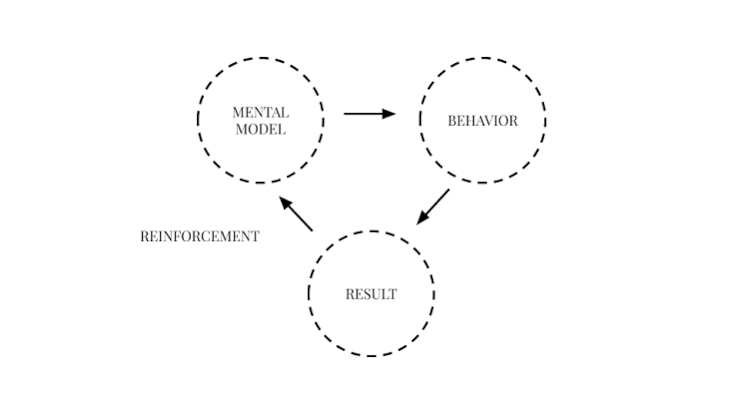
Every decision you make—from choosing a career to investing in a startup—relies on mental models: simplified frameworks that help you interpret the world and predict outcomes. Charlie Munger, Warren Buffett’s partner, built his legendary investing career on a ‘latticework’ of these models, and modern thinkers like Elon Musk have used them to revolutionize industries. But with dozens of models to choose from, which ones matter most?
After cross-referencing the most authoritative sources—Munger’s speeches, Farnam Street’s curriculum, and decision-making literature—three models consistently rise to the top: Inversion, First Principles Thinking, and The Map Is Not the Territory. These aren’t just abstract concepts; they’re practical tools that can help you avoid catastrophic mistakes, innovate where others fail, and stay humble in the face of uncertainty. Here’s how they work and why they matter.
Why Mental Models Matter
Before diving into the models, it’s worth understanding why they’re so powerful. Human brains are wired for shortcuts, but those shortcuts often lead to bias and error. Mental models act as a corrective lens, forcing you to see problems from multiple angles. Munger once said that having about 80–100 models from various disciplines is enough for ‘worldly wisdom.’ But if you’re just starting out, these three are the foundation.
Inversion: The Power of Avoiding Stupidity
The mathematician Carl Jacobi famously advised, ‘Invert, always invert.’ Charlie Munger adopted this as a core principle, and it’s easy to see why. Instead of asking, ‘How do I succeed?’ you ask, ‘What would guarantee failure?’ Then you systematically avoid those things.
How It Works
Inversion exploits the asymmetry of risk: avoiding a disaster is often easier than achieving a triumph. For example, if you’re launching a product, instead of asking, ‘What will make it successful?’ ask, ‘What would make it fail?’ The answers—poor marketing, bad pricing, ignoring customer feedback—become a checklist of what not to do.
Real-World Application
Investors use inversion to screen out bad bets. Munger once said that he and Buffett spend most of their time ‘thinking about what could kill a business.’ By identifying fatal flaws early, they avoid losses that would be hard to recover from. In engineering, inversion is standard practice: ‘What would cause this bridge to collapse?’ ensures every failure point is addressed.
First Principles Thinking: Breaking Down to Build Up
First principles thinking has roots in Aristotelian philosophy, but Elon Musk brought it into the mainstream. Instead of reasoning by analogy—copying what others do—you break a problem down to its most fundamental truths and reason upward from there.
How It Works
Musk’s approach is simple: ‘Boil things down to physics.’ When he started SpaceX, he asked, ‘What does a rocket actually cost?’ The raw materials were about 2% of the price. By starting from that truth, he realized he could build rockets for a fraction of the cost, disrupting the entire aerospace industry.
Why It’s Powerful
Reasoning by analogy is what Munger called ‘the worst kind of thinking.’ It leads to incremental improvements, not breakthroughs. First principles, on the other hand, lets you question assumptions. When everyone else sees ‘the way things are,’ you see ‘the way things could be.’
The Map Is Not the Territory: Stay Humble, Stay Flexible
This model was coined by Alfred Korzybski in 1931 and later adopted by Munger. It reminds us that our mental models are approximations of reality, not reality itself. The map is always incomplete, and sometimes it’s just wrong.
How It Works
Think of a city map: it helps you navigate, but it doesn’t show every pothole or construction detour. Similarly, your business plan, your investment thesis, your understanding of a friend—all are maps. When reality doesn’t match your map, it’s easy to get frustrated. But the model teaches you to update your map instead of ignoring reality.
Why It’s the Meta-Model
This is the model that keeps all other models honest. Inversion and first principles are powerful, but they can lead to overconfidence if you forget they’re just tools. The Map Is Not the Territory reminds you to hold your beliefs loosely. As Munger put it, you should be ‘learning all the time’ and rarely be ‘sure of anything.’
Putting It All Together
These three models work best in combination. Inversion helps you avoid mistakes; first principles helps you find new solutions; and the map model helps you stay adaptable when reality shifts. For example, a startup founder might use first principles to design a new product, inversion to identify potential pitfalls, and the map model to pivot when customer feedback contradicts initial assumptions.
Practical Tips for Daily Use
- Start an ‘inversion journal’: For any important decision, write down three ways it could go wrong, then plan to avoid them.
- Practice first principles on small problems: Pick a routine task and ask, ‘What am I assuming that might not be true?’
- Label your maps: When you form an opinion, write it down with a date. When new information comes in, update it—and note the change. This keeps you honest.
Why These Three, Not Others?
There are dozens of mental models—from supply and demand to game theory—but these three stand out because they’re foundational. Inversion addresses the asymmetry of risk, first principles addresses the limits of analogy, and the map model addresses the limits of all models. Together, they form a complete toolkit for clear thinking.
Mental models aren’t just intellectual exercises; they’re practical survival tools. By mastering inversion, first principles, and the map-is-not-the-territory, you can think more clearly, decide more wisely, and avoid the pitfalls that trap most people. Start small: apply inversion to a decision this week, use first principles on a problem you’ve been putting off, and remind yourself that your maps are never perfect. The results will speak for themselves.
Summary
- Inversion flips the question from ‘How to succeed?’ to ‘What would cause failure?’—making it easier to avoid disasters.
- First Principles Thinking breaks problems down to fundamental truths, enabling true innovation rather than incremental change.
- The Map Is Not the Territory reminds us that all models are imperfect, keeping us humble and adaptable.
- These three models are the most frequently cited across authoritative sources like Charlie Munger and Farnam Street.
- Combining them gives you a robust framework for decision-making in any domain.
FAQ
Q: What are mental models?
A: Mental models are simplified frameworks for understanding how the world works. They help you interpret information, predict outcomes, and make better decisions by providing a structure for thinking.
Q: Who created these three mental models?
A: Inversion is attributed to mathematician Carl Jacobi and popularized by Charlie Munger. First principles dates back to Aristotle but was modernized by Elon Musk. The Map Is Not the Territory was coined by Alfred Korzybski in 1931 and adopted by Munger.
Q: How can I use inversion in my daily life?
A: For any goal, ask ‘What would guarantee failure?’ and then avoid those things. For example, if you want to save money, list what would ruin your savings (impulse buying, high-interest debt) and avoid them.
Q: Is first principles thinking only for entrepreneurs?
A: No. You can apply it to any problem, like career planning. Instead of following the traditional path, ask ‘What do I need to be happy and fulfilled?’ and build from there.
Q: How do I know when my ‘map’ is wrong?
A: When reality contradicts your expectations, that’s a sign. Instead of getting defensive, ask ‘What does this tell me about my model?’ and update it accordingly.
Leave a Reply