Tag: mental models

  • 3 Mental Models That Will Change How You Make Decisions

    3 Mental Models That Will Change How You Make Decisions

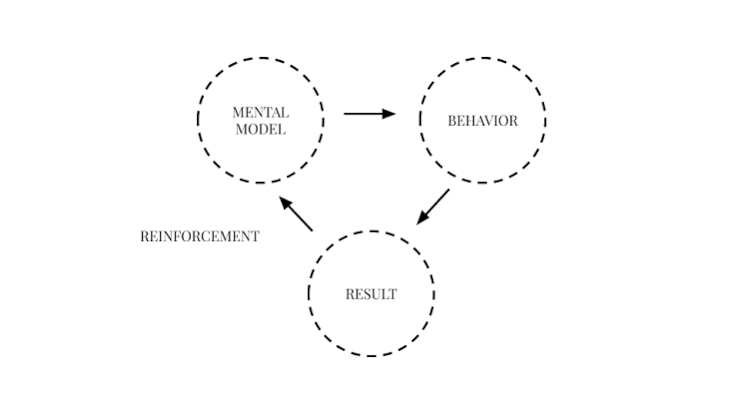
    Every decision you make—from choosing a career to investing in a startup—relies on mental models: simplified frameworks that help you interpret the world and predict outcomes. Charlie Munger, Warren Buffett’s partner, built his legendary investing career on a ‘latticework’ of these models, and modern thinkers like Elon Musk have used them to revolutionize industries. But with dozens of models to choose from, which ones matter most?

    After cross-referencing the most authoritative sources—Munger’s speeches, Farnam Street’s curriculum, and decision-making literature—three models consistently rise to the top: Inversion, First Principles Thinking, and The Map Is Not the Territory. These aren’t just abstract concepts; they’re practical tools that can help you avoid catastrophic mistakes, innovate where others fail, and stay humble in the face of uncertainty. Here’s how they work and why they matter.

    Why Mental Models Matter

    Before diving into the models, it’s worth understanding why they’re so powerful. Human brains are wired for shortcuts, but those shortcuts often lead to bias and error. Mental models act as a corrective lens, forcing you to see problems from multiple angles. Munger once said that having about 80–100 models from various disciplines is enough for ‘worldly wisdom.’ But if you’re just starting out, these three are the foundation.

    Inversion: The Power of Avoiding Stupidity

    The mathematician Carl Jacobi famously advised, ‘Invert, always invert.’ Charlie Munger adopted this as a core principle, and it’s easy to see why. Instead of asking, ‘How do I succeed?’ you ask, ‘What would guarantee failure?’ Then you systematically avoid those things.

    How It Works

    Inversion exploits the asymmetry of risk: avoiding a disaster is often easier than achieving a triumph. For example, if you’re launching a product, instead of asking, ‘What will make it successful?’ ask, ‘What would make it fail?’ The answers—poor marketing, bad pricing, ignoring customer feedback—become a checklist of what not to do.

    Real-World Application

    Investors use inversion to screen out bad bets. Munger once said that he and Buffett spend most of their time ‘thinking about what could kill a business.’ By identifying fatal flaws early, they avoid losses that would be hard to recover from. In engineering, inversion is standard practice: ‘What would cause this bridge to collapse?’ ensures every failure point is addressed.

    First Principles Thinking: Breaking Down to Build Up

    First principles thinking has roots in Aristotelian philosophy, but Elon Musk brought it into the mainstream. Instead of reasoning by analogy—copying what others do—you break a problem down to its most fundamental truths and reason upward from there.

    How It Works

    Musk’s approach is simple: ‘Boil things down to physics.’ When he started SpaceX, he asked, ‘What does a rocket actually cost?’ The raw materials were about 2% of the price. By starting from that truth, he realized he could build rockets for a fraction of the cost, disrupting the entire aerospace industry.

    Why It’s Powerful

    Reasoning by analogy is what Munger called ‘the worst kind of thinking.’ It leads to incremental improvements, not breakthroughs. First principles, on the other hand, lets you question assumptions. When everyone else sees ‘the way things are,’ you see ‘the way things could be.’

    The Map Is Not the Territory: Stay Humble, Stay Flexible

    This model was coined by Alfred Korzybski in 1931 and later adopted by Munger. It reminds us that our mental models are approximations of reality, not reality itself. The map is always incomplete, and sometimes it’s just wrong.

    How It Works

    Think of a city map: it helps you navigate, but it doesn’t show every pothole or construction detour. Similarly, your business plan, your investment thesis, your understanding of a friend—all are maps. When reality doesn’t match your map, it’s easy to get frustrated. But the model teaches you to update your map instead of ignoring reality.

    Why It’s the Meta-Model

    This is the model that keeps all other models honest. Inversion and first principles are powerful, but they can lead to overconfidence if you forget they’re just tools. The Map Is Not the Territory reminds you to hold your beliefs loosely. As Munger put it, you should be ‘learning all the time’ and rarely be ‘sure of anything.’

    Putting It All Together

    These three models work best in combination. Inversion helps you avoid mistakes; first principles helps you find new solutions; and the map model helps you stay adaptable when reality shifts. For example, a startup founder might use first principles to design a new product, inversion to identify potential pitfalls, and the map model to pivot when customer feedback contradicts initial assumptions.

    Practical Tips for Daily Use

    • Start an ‘inversion journal’: For any important decision, write down three ways it could go wrong, then plan to avoid them.
    • Practice first principles on small problems: Pick a routine task and ask, ‘What am I assuming that might not be true?’
    • Label your maps: When you form an opinion, write it down with a date. When new information comes in, update it—and note the change. This keeps you honest.

    Why These Three, Not Others?

    There are dozens of mental models—from supply and demand to game theory—but these three stand out because they’re foundational. Inversion addresses the asymmetry of risk, first principles addresses the limits of analogy, and the map model addresses the limits of all models. Together, they form a complete toolkit for clear thinking.

    Mental models aren’t just intellectual exercises; they’re practical survival tools. By mastering inversion, first principles, and the map-is-not-the-territory, you can think more clearly, decide more wisely, and avoid the pitfalls that trap most people. Start small: apply inversion to a decision this week, use first principles on a problem you’ve been putting off, and remind yourself that your maps are never perfect. The results will speak for themselves.

    Summary

    • Inversion flips the question from ‘How to succeed?’ to ‘What would cause failure?’—making it easier to avoid disasters.
    • First Principles Thinking breaks problems down to fundamental truths, enabling true innovation rather than incremental change.
    • The Map Is Not the Territory reminds us that all models are imperfect, keeping us humble and adaptable.
    • These three models are the most frequently cited across authoritative sources like Charlie Munger and Farnam Street.
    • Combining them gives you a robust framework for decision-making in any domain.

    FAQ

    Q: What are mental models?
    A: Mental models are simplified frameworks for understanding how the world works. They help you interpret information, predict outcomes, and make better decisions by providing a structure for thinking.

    Q: Who created these three mental models?
    A: Inversion is attributed to mathematician Carl Jacobi and popularized by Charlie Munger. First principles dates back to Aristotle but was modernized by Elon Musk. The Map Is Not the Territory was coined by Alfred Korzybski in 1931 and adopted by Munger.

    Q: How can I use inversion in my daily life?
    A: For any goal, ask ‘What would guarantee failure?’ and then avoid those things. For example, if you want to save money, list what would ruin your savings (impulse buying, high-interest debt) and avoid them.

    Q: Is first principles thinking only for entrepreneurs?
    A: No. You can apply it to any problem, like career planning. Instead of following the traditional path, ask ‘What do I need to be happy and fulfilled?’ and build from there.

    Q: How do I know when my ‘map’ is wrong?
    A: When reality contradicts your expectations, that’s a sign. Instead of getting defensive, ask ‘What does this tell me about my model?’ and update it accordingly.
  • Invert, Always Invert: The Ancient Mental Model That Solves Problems by Thinking Backwards

    Invert, Always Invert: The Ancient Mental Model That Solves Problems by Thinking Backwards

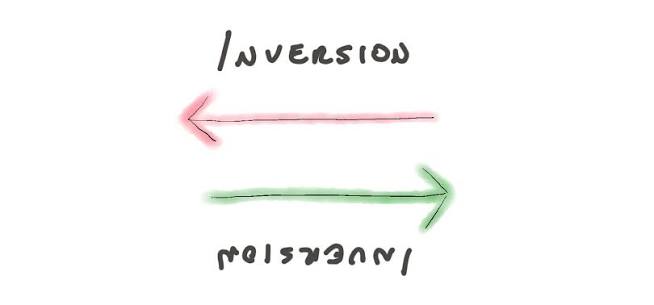
    When faced with a tough problem, most of us ask, “How can I make this work?” But a quieter, more powerful approach asks the opposite: “What would make this fail?” This is inversion — a mental model that flips the question to reveal hidden obstacles and smarter solutions.

    Practiced by Stoic philosophers, championed by investor Charlie Munger, and validated by cognitive science, inversion is a simple yet profound tool. It helps you avoid disaster before it strikes, make better decisions, and break free from mental ruts. Let’s explore how thinking backwards can move you forward.

    The Ancient Roots of Inversion

    Inversion isn’t new. The Stoics, who flourished in ancient Greece and Rome, built a whole philosophy around it. Seneca and Epictetus practiced premeditatio malorum — the premeditation of evils. They would imagine losing their wealth, status, or even loved ones, not to wallow in despair, but to build gratitude and resilience. By mentally rehearsing worst-case scenarios, they softened the blow of real misfortunes and sharpened their appreciation for what they had.

    Centuries later, the German mathematician Carl Gustav Jacob Jacobi (1804–1851) gave the technique its famous slogan. He advised his students to solve difficult problems by “man muss immer umkehren” — one must always invert. For Jacobi, this meant working backward from the desired conclusion to the given conditions, a method that often cracked proofs that seemed impenetrable from the front.

    The phrase “Invert, always invert” later became a cornerstone of Charlie Munger’s investment philosophy. The vice chairman of Berkshire Hathaway used it to avoid stupidity rather than seek brilliance. He knew that a few big mistakes could sink a portfolio, so he spent more time figuring out how to lose money than how to make it.

    Why Inversion Works: The Science Behind the Trick

    Inversion isn’t just a clever parlor game — it taps into fundamental quirks of the human brain.

    First, there’s functional fixedness. We tend to see objects and problems only in their conventional use. A brick is for building, a deadline is for meeting. Inversion breaks that mental lockstep by forcing you to consider the opposite: What if we used the brick as a paperweight? What if we deliberately missed the deadline? Suddenly, new possibilities appear.

    Second, loss aversion — the famous finding by psychologists Daniel Kahneman and Amos Tversky — shows that losses hurt about twice as much as equivalent gains please us. This asymmetry means we’re often more motivated to avoid pain than to seek pleasure. Inversion leverages this by turning “How do I succeed?” into “How do I avoid failing?” The latter question feels more urgent, and so it gets our full attention.

    Third, there’s the negativity bias. Our brains are wired to spot threats faster than opportunities — a survival trait from our hunter-gatherer days. Inversion works with this bias instead of fighting it. When you ask “What could go wrong?”, your brain lights up with answers.

    Finally, there’s the pre-mortem, a formalized version of inversion developed by cognitive psychologist Gary Klein. In a post-mortem, you analyze failure after it happens. In a pre-mortem, you imagine the project has already failed — and then work backward to find the causes. Klein’s research shows this technique dramatically improves risk identification because it overrides the optimism bias that makes us blind to potential problems.

    How to Apply Inversion in Five Steps

    Inversion is simple to practice. Here’s a framework you can use today:

    1. State your goal. Be specific. “Launch a successful product” is a start, but “Launch a mobile app that gets 10,000 downloads in the first month” is better.
    2. Invert the goal. Ask: “What would guarantee this fails?” or “What would make this an absolute disaster?”
    3. Brainstorm failure causes. Write down everything that could go wrong — poor pricing, ignoring customer feedback, bad timing, a buggy interface, weak marketing. Don’t censor yourself.
    4. Reverse the causes into actions. For each cause, flip it into a positive step. “Poor pricing” becomes “Test pricing with early users.” “Ignoring feedback” becomes “Build a feedback loop from day one.”
    5. Use the inverted list as a checklist. Review it before making key decisions to avoid known pitfalls.

    This five-step method turns a vague worry into a concrete action plan.

    Inversion in the Real World: From Amazon to the Military

    Inversion isn’t just for philosophers and mathematicians. It’s a workhorse in business, strategy, and innovation.

    Amazon reportedly uses a pre-mortem culture. Jeff Bezos would ask teams to imagine a product launch had failed — then work backward to figure out why. This practice helps the company catch problems before they cost millions.

    The military and cybersecurity worlds use Red Team exercises: deliberately attacking your own plan to find weaknesses. It’s inversion in action — instead of asking “How do we win?”, you ask “How could we lose?” and then shore up those vulnerabilities.

    Even SWOT analysis — that staple of business planning — leans on inversion. The “T” for threats is essentially a structured way to ask “What could go wrong?”

    In personal life, inversion can be just as powerful. Want to improve your health? Ask: “What would make me unhealthy?” Then avoid those things. Want to build a stronger relationship? Ask: “What would destroy it?” Then don’t do those things. The negative path is often clearer than the positive one.

    The Risks of Inversion: When Backward Thinking Backfires

    Inversion is a tool, not a cure-all. Done poorly, it can spiral into chronic pessimism or catastrophizing. If you spend too much time imagining worst-case scenarios, you might become paralyzed with fear, unable to take reasonable risks.

    The Stoics themselves were careful to balance negative visualization with gratitude. They imagined loss not to dread it, but to appreciate what they had. The goal was equanimity, not anxiety.

    Inversion also has limits in creative contexts. Sometimes you need to think forward, to imagine a bold new possibility without immediately asking “What could go wrong?” If you invert every idea, you might never launch anything. The key is to use inversion for risk management and problem-solving, but not as the only lens through which you view the world.

    Invert as a Habit

    Charlie Munger didn’t just use inversion occasionally — he made it a habit, a reflex. He famously said, “It is remarkable how much long-term advantage people like us have gotten by trying to be consistently not stupid, instead of trying to be very intelligent.”

    That’s the heart of inversion: it’s a humility hack. It acknowledges that the path to success is often paved with avoiding failure. By asking “What would make this fail?” you sidestep the arrogance of assuming you already know what will work.

    So the next time you’re stuck on a problem, try flipping it. Instead of “How can I make this succeed?”, ask “What would make this fail?” You might be surprised at how quickly the answer appears — and how much better your decisions become.

    Inversion is a deceptively simple mental model with deep roots and wide applications. Whether you’re an investor, a project manager, or just someone trying to make better life choices, asking “What could go wrong?” can be more illuminating than “What could go right?” By flipping the question, you tap into your brain’s natural threat-detection, overcome overconfidence, and build a practical checklist for avoiding disaster. The Stoics knew it, Jacobi knew it, and Munger knows it: sometimes the best way forward is to think backward. So go ahead — invert your next problem and see what you’ve been missing.

    Summary

    • Inversion flips your question from “How do I succeed?” to “What would make this fail?” — a shift that reveals hidden obstacles and practical actions.
    • The technique has ancient roots: Stoics practiced premeditatio malorum (imagining worst-case scenarios) to build resilience and gratitude.
    • Cognitive science backs it up: loss aversion, negativity bias, and functional fixedness all make inversion a natural fit for the human brain.
    • Formalized as the “pre-mortem” by Gary Klein, it’s used by companies like Amazon and in military Red Team exercises to identify risks before they happen.
    • The five-step method — state goal, invert, brainstorm causes, reverse into actions, use as a checklist — makes it easy to apply today.

    FAQ

    Q: What is the inversion technique?
    A: Inversion is a mental model where you approach a problem by asking the opposite of what you want. Instead of “How can I make this succeed?”, you ask “What would guarantee failure?” This helps you identify obstacles and avoid them.

    Q: Who invented inversion?
    A: The technique has no single inventor. It was practiced by ancient Stoic philosophers like Seneca and Epictetus, popularized in mathematics by Carl Jacobi, and championed in modern times by investor Charlie Munger.

    Q: How is inversion different from just being pessimistic?
    A: Inversion is a structured problem-solving tool, not a mindset. It involves a specific question-and-answer process to uncover risks, then flipping those risks into positive actions. Pessimism is a general negative outlook; inversion is a targeted exercise.

    Q: Can inversion be used in everyday life?
    A: Absolutely. For any goal — health, relationships, career — you can ask “What would destroy this?” and then avoid those behaviors. It’s often easier to identify negative actions than positive ones.

    Q: Are there any downsides to inversion?
    A: If overused, inversion can lead to excessive focus on negatives and anxiety. The Stoics balanced it with gratitude. Use it for risk assessment, but don’t let it stop you from taking calculated risks.