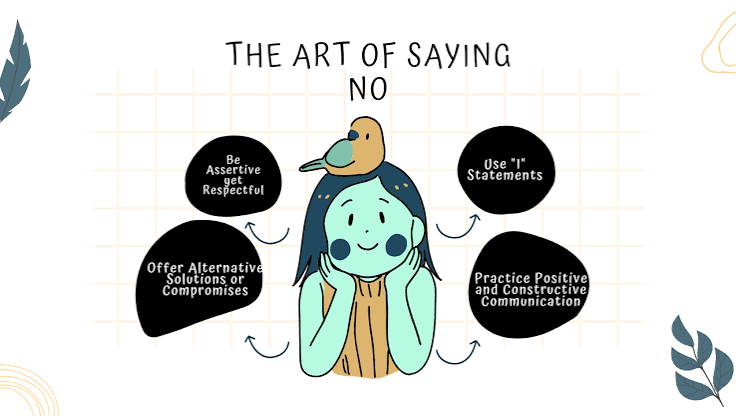
You know the feeling: your phone buzzes with a request you’d rather decline, but before you can think, you’ve typed ‘Sure, no problem!’ and hit send. The instant regret, the knot in your stomach, the quiet resentment toward yourself and the requester. You’re not alone. A 2018 study in the Journal of Personality and Social Psychology found that people agree to unreasonable requests far more often than they’d like, driven by social pressure and a desire to be liked.
Why We Say ‘Yes’ When We Mean ‘No’
Our brains are wired to seek approval. Saying ‘yes’ triggers a dopamine release—a ‘helper’s high’ that feels good in the moment, even if it costs us later. This creates a loop: we say ‘yes’ to feel good, then rationalize it (“It’s fine, I have time”), which makes the next ‘no’ even harder. Meanwhile, the ‘spotlight effect’—a concept from Cornell psychologist Thomas Gilovich—makes us overestimate how much others notice and remember our refusals. In reality, people are too busy worrying about themselves to scrutinize your polite decline.
Guilt itself is a learned response. We’re conditioned from childhood to associate ‘no’ with selfishness or conflict, especially in cultures where direct refusal is taboo. In collectivist societies, indirect refusals like ‘I’ll try’ are the norm, but that vagueness only delays the discomfort and often leads to more stress later.
The Real Cost of Chronic ‘Yes’
Saying ‘yes’ when you mean ‘no’ isn’t just annoying—it’s harmful. The American Psychological Association identifies chronic overcommitment as a leading cause of workplace burnout. But the damage goes deeper: you produce lower-quality work, you’re less present in relationships, and you breed resentment that surfaces as passive-aggressiveness. That hollow ‘yes’ becomes a broken promise, eroding trust in the long run.
A Practical Framework for Saying ‘No’
You can break the cycle with a simple framework: Pause, Assess, Respond. Here’s how it works.
1. Pause: The 24-Hour Rule
Never give an immediate answer. Buy yourself time with a simple phrase: “Let me check my schedule and get back to you.” This shifts the dynamic from reaction to reflection. If the request is truly urgent, a brief pause of even 30 seconds can prevent a reflexive ‘yes’.
2. Assess: Your Values and Capacity
Ask yourself two questions:
– Does this align with my priorities or values?
– Do I have the time and energy to do this well?
If the answer to either is ‘no,’ that’s your signal. You can also use a ‘yes/no/maybe’ list: categorize incoming requests to make decisions faster in the future.
3. Respond: The ‘No’ That’s Firm and Kind
A good ‘no’ is direct, brief, and doesn’t over-explain. Try these templates:
- The Simple No: “I can’t take this on right now.”
- The Alternative: “I can’t do this, but I can help with X instead.”
- The Redirect: “I’m not the right person, but you might ask Y.”
Avoid over-apologizing. A single ‘I’m sorry’ is enough; too many apologies weaken your stance. And never invent a fake excuse—it can backfire when the truth surfaces.
The ‘No’ in Professional Settings
In the workplace, the fear of saying ‘no’ to a boss or client is intense, but research on negotiation shows that setting boundaries actually increases respect and credibility. The ‘good soldier’ syndrome—never refusing tasks even when overloaded—leads to presenteeism and burnout. Instead, frame your ‘no’ as a strategic trade-off: “I can’t take this on, but I’m prioritizing X, which aligns with our goals.” This shows you’re thoughtful, not unhelpful.
The ‘No’ in Personal Relationships
Saying ‘no’ to loved ones is harder because the stakes feel higher. But people-pleasing—rooted in fear of abandonment or low self-esteem—is a maladaptive coping mechanism. Dr. Henry Cloud, author of Boundaries, calls ‘no’ a healthy boundary, not a rejection. You can soften it without compromising: “I can’t help with that, but I’m here to listen.” Or: “I’m not able to do that, but let’s find a time that works for both of us.”
Handling Guilt When It Arises
Even with practice, guilt will surface. Remember: guilt is a signal, not a command. It’s often a ‘false alarm’ from outdated conditioning. When you feel guilty, ask yourself: “Did I violate a value, or am I just disappointing someone?” If it’s the latter, let it pass. Over time, the guilt fades as you build evidence that setting boundaries doesn’t destroy relationships—it improves them.
Practical Tips to Reinforce the Habit
- Start small: Practice ‘no’ on low-stakes requests (e.g., a colleague’s coffee run).
- Use the ‘positive no’: Lead with what you can do: “I can’t make it tonight, but I’d love to catch up next week.”
- Visualize the outcome: Imagine the relief of not having the task. That feeling is your motivation.
- Review your ‘yeses’: Weekly, look at what you agreed to. Which were worth it? Which weren’t? Adjust accordingly.
The Long-Term Payoff
Saying ‘no’ isn’t about being selfish—it’s about protecting your time and energy for what truly matters. When you say ‘no’ to the right things, you say ‘yes’ to your health, your relationships, and your best work. And contrary to what you might fear, people respect a clear boundary far more than a resentful ‘yes.’
The art of saying ‘no’ is really the art of knowing yourself. It’s a skill you can build, one small refusal at a time. So the next time a request comes in, pause, assess, and respond. Your future self will thank you.
Summary
- Saying ‘yes’ too often leads to burnout, resentment, and lower-quality work.
- The ‘spotlight effect’ means people won’t judge your ‘no’ as harshly as you fear.
- Use the Pause-Assess-Respond framework to make deliberate decisions.
- A firm, kind ‘no’ is more respected than a reluctant ‘yes’.
- Guilt is a learned response that fades with practice.
FAQ
Q: How do I say no to my boss without risking my job?
A: Frame it as a prioritization issue: ‘I can’t take this on without deprioritizing X. Which should I focus on?’ This shows you’re thinking strategically, not refusing work.
Q: What if the person keeps pushing after I say no?
A: Hold your ground. Repeat your ‘no’ calmly, and if necessary, add: ‘I understand this is important, but my answer won’t change.’ You don’t need to justify further.
Q: Is it okay to say no to a friend or family member?
A: Absolutely. Healthy relationships require boundaries. You can soften it with empathy, but don’t sacrifice your own needs to avoid discomfort.
Q: How do I overcome the guilt of saying no?
A: Remind yourself that guilt is a false alarm. Ask: ‘Did I violate a value?’ If not, let it go. Practice self-compassion and remember that setting boundaries is a form of self-respect.
Q: What if I’ve already said yes to too much?
A: It’s okay to renegotiate. Say: ‘I realize I’m overcommitted. I need to bow out of X to do justice to Y.’ Most reasonable people will understand.
Leave a Reply