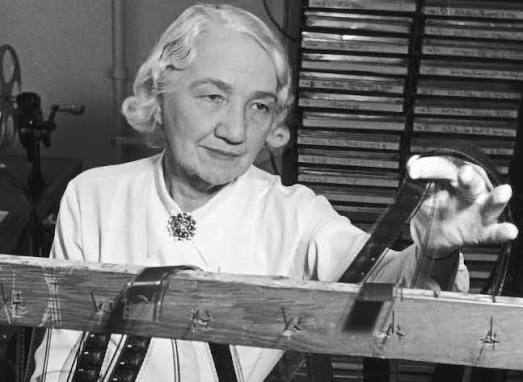
In the 1920s, more than 60% of Hollywood film editors were women. They worked in cramped cutting rooms, splicing celluloid by hand, and in the process invented the visual grammar that still governs every movie you watch. But by the 1960s, the number had plummeted to single digits. What happened?
This is the story of the female editors who built the language of cinema and how the industry erased them as soon as the job became prestigious. Their names Margaret Booth, Anne Bauchens, Barbara McLean are not household names, but their fingerprints are on every cut, every jump, every emotional beat in film history.
The Silent Era’s Secret: Editing Was Women’s Work
Today, film editing is seen as a creative, powerful role—the editor shapes the story, controls pacing, and can make or break a movie. But that wasn’t always the case. In the early 1900s, editing was considered mechanical labor, not much different from sewing or typing. It involved splicing physical strips of film, cataloging shots, and keeping meticulous logs—tasks deemed “suitable” for women because they required patience and attention to detail, not the “genius” of male directors and cinematographers.
So studios hired women as “negative cutters” or “splicers,” paying them less than men. The film industry was born in an era of rigid gender roles, and editing fit neatly into the category of women’s work. A 1920s industry survey found that over 60% of film editors were women—a figure that has never been approached since.
From Cutters to Creators: The Invisible Art Takes Shape
But something unexpected happened. The women in these cutting rooms started making decisions. They chose which take to use, where to make a cut, how to pace a scene. They weren’t just splicing; they were telling stories without words.
Silent films had no dialogue to carry exposition. Everything—emotion, plot, character—had to be conveyed through images. An editor had to decide when to show a character’s face, when to cut away to what they were looking at, how long to hold a shot. These decisions created meaning, and the women in the cutting rooms were the ones making them.
Margaret Booth, who started at MGM in the 1920s and worked there for over 60 years, became a legend for her “invisible” cutting style. She prioritized story flow over flashy technique, believing that the best edit is one the audience doesn’t notice. Her approach—seamless, unobtrusive, emotionally driven—became the model for classical Hollywood editing.
Anne Bauchens worked with Cecil B. DeMille for over 40 years, editing epics like The Ten Commandments (1923). She won an Academy Award for Northwest Mounted Police (1940). Barbara McLean, head of editing at 20th Century Fox, won the Oscar for Wilson (1944) and is remembered for her work on All About Eve (1950). Blanche Sewell edited The Wizard of Oz (1939). These women weren’t just technicians; they were shaping the films that defined an era.
The Grammar of Cinema: How Women Codified the Rules
As films grew from short novelties to feature-length narratives in the 1910s and 1920s, editors had to develop a new system for making stories coherent. This became known as the “continuity system”—a set of rules for editing that ensured viewers always knew where they were and what was happening.
These rules included matching eyelines (if character A looks right, character B should look left), maintaining screen direction (if a car moves left-to-right in one shot, it should continue left-to-right in the next), and cutting on action (so the movement flows smoothly from one shot to the next).
These techniques are so fundamental that we take them for granted today. But they had to be invented, and they were largely codified in the cutting rooms staffed by women. These editors discovered that by manipulating the order and duration of shots, they could control the audience’s emotional response. A quick cut could create tension; a long hold could build empathy. This was the birth of modern film language, and it was born in the hands of women.
The Script Girl Pipeline: How Women Became Editors
Many early female editors didn’t start with the title “editor.” They entered the industry as “script girls”—now called script supervisors—whose job was to track what had been shot, noting details like which take was good, what props were used, and where actors were standing. This gave them an encyclopedic knowledge of the footage, which made them natural candidates for editing when the need arose.
The role was also a way for women to be near the creative process without being seen as a threat. Directors like D.W. Griffith and Cecil B. DeMille came to rely on their editors’ instincts. Irving Thalberg, the legendary MGM producer, famously said that the editor was the only person who could “save” a film in post-production. In the studio system, editors worked in centralized cutting rooms, often far from the director’s oversight, which gave them unusual autonomy.
The Sound Revolution and the Slow Erasure
The arrival of sound in the late 1920s was a turning point. Sound editing—handling dialogue, music, and effects—was seen as technical and “male,” so those jobs went to men. But picture editing remained a female-dominated role for another decade. By the 1930s, editing was becoming recognized as a creative and powerful position, and that’s when the tide began to turn.
The first Academy Award for Film Editing went to a man, Conrad Nervig, in 1934. Women won later—Barbara McLean in 1944, for example—but the pattern was clear. As editing gained prestige, men increasingly took over. By the 1950s, the percentage of female editors had dropped dramatically, and by the 1960s it was in the single digits.
This wasn’t a natural evolution; it was a systematic exclusion. The same work that was once dismissed as “women’s work” became too important for women once it was valued. The history of editing is a stark example of how gendered labor is often a matter of convenience: when the job is seen as clerical, it’s for women; when it becomes “creative,” it’s for men.
Legacies Hidden in Plain Sight
The editing styles developed by these women didn’t disappear when they left. The continuity system remained the backbone of Hollywood filmmaking for decades. The “invisible” cutting style—perfected by Margaret Booth—dominated until the 1960s, when a new wave of editors like Dede Allen began to break the rules.
Allen, who worked from the 1950s through the 1990s, is often seen as the bridge between the silent-era editors and the New Hollywood of the 1970s. She brought a more aggressive, noticeable cutting style to films like Bonnie and Clyde (1967), but she always credited the women who came before her. The techniques they developed—matching action, controlling rhythm, building emotion—remain the foundation of every film edit today.
Yet their names are barely known. Ask most film fans to name a great editor, and they’ll likely say Walter Murch or Thelma Schoonmaker. But without Margaret Booth’s invisible cuts, without Anne Bauchens’s epic pacing, without the hundreds of unnamed women in cutting rooms, the very language of film would be unrecognizable.
The Reckoning
In recent years, there has been a push to recognize the contributions of women in film history, and editing is finally getting its due. Documentaries, books, and retrospective screenings have begun to shine a light on the women who built the medium. The Academy’s own history is being reexamined, and the role of female editors in the silent era is now a subject of scholarly study.
But the story is more than a list of forgotten names. It’s a lesson about how we assign value to work. The women who “saved” Hollywood’s silent era weren’t doing something inherently feminine—they were doing something that required skill, creativity, and intelligence. They were censored by the industry only when that work was recognized as valuable.
Today, the editing room is again seeing a resurgence of women, though they still face an uphill battle. The legacy of the silent-era editors is a reminder that the medium of film is built on the labor of people who were often denied credit, denied status, and eventually denied a place in history. But their work endures in every cut, every transition, every moment of cinematic magic that moves us.
The women who edited silent films didn’t just save individual movies—they built the entire grammar of cinema. They turned a mechanical task into a creative art, only to be pushed out when the art was recognized. Their story is a silent film in itself: full of meaning conveyed through images and actions, but with the title cards missing. The least we can do now is restore their names to the credits.
Summary
- In the 1920s, over 60% of film editors were women, but the role was initially dismissed as mechanical “women’s work.”
- Female editors like Margaret Booth, Anne Bauchens, and Barbara McLean developed and standardized the continuity system—the invisible editing rules that still govern filmmaking.
- As editing gained prestige in the 1930s and 1940s, men increasingly took over, and by the 1960s, the percentage of female editors had fallen to single digits.
- The “invisible” editing style perfected by women remained dominant until the 1960s, when editors like Dede Allen began a more aggressive approach.
- The story of these editors reveals how gendered labor is assigned and reassigned based on the perceived status of the work.
FAQ
Q: Who was Margaret Booth?
A: Margaret Booth was an editor at MGM for over 60 years, starting in the 1920s. She was known for her “invisible” editing style that prioritized story flow and emotional pacing. She is often cited as the first true “film editor.”
Q: Why were women initially hired as editors?
A: Editing was seen as meticulous handwork, similar to sewing or typing. Studios also hired women at lower wages, making it economically attractive. It wasn’t until editing was recognized as a creative role that men began to dominate.
Q: What is the “continuity system”?
A: The continuity system is a set of editing rules—matching eyelines, screen direction, and action—that ensure visual coherence in narrative films. It was largely developed and codified by female editors in the 1910s and 1920s.
Q: How did the arrival of sound affect female editors?
A: Sound editing was seen as technical and male, so men took over those roles. Picture editing remained female-dominated for a while, but as editing gained prestige, men increasingly took over that as well.
Q: Who was Dede Allen?
A: Dede Allen was an editor active from the 1950s to the 1990s, known for her work on Bonnie and Clyde (1967). She is often considered a bridge between the invisible style of the silent-era editors and the more aggressive cutting of the New Hollywood era.
Leave a Reply