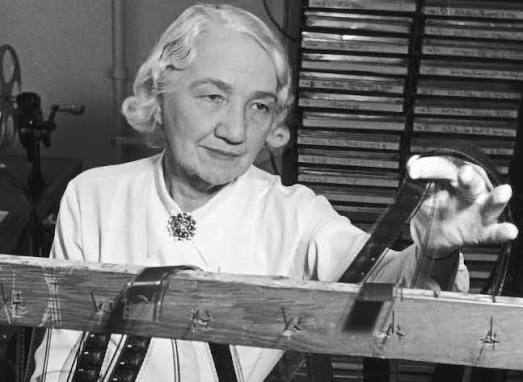
Tag: film editing

  • The Women Who Invented Film Editing and Why History Forgot Them

    The Women Who Invented Film Editing and Why History Forgot Them

    In the 1920s, more than 60% of Hollywood film editors were women. They worked in cramped cutting rooms, splicing celluloid by hand, and in the process invented the visual grammar that still governs every movie you watch. But by the 1960s, the number had plummeted to single digits. What happened?

    This is the story of the female editors who built the language of cinema and how the industry erased them as soon as the job became prestigious. Their names Margaret Booth, Anne Bauchens, Barbara McLean are not household names, but their fingerprints are on every cut, every jump, every emotional beat in film history.

    The Silent Era’s Secret: Editing Was Women’s Work

    Today, film editing is seen as a creative, powerful role—the editor shapes the story, controls pacing, and can make or break a movie. But that wasn’t always the case. In the early 1900s, editing was considered mechanical labor, not much different from sewing or typing. It involved splicing physical strips of film, cataloging shots, and keeping meticulous logs—tasks deemed “suitable” for women because they required patience and attention to detail, not the “genius” of male directors and cinematographers.

    So studios hired women as “negative cutters” or “splicers,” paying them less than men. The film industry was born in an era of rigid gender roles, and editing fit neatly into the category of women’s work. A 1920s industry survey found that over 60% of film editors were women—a figure that has never been approached since.

    From Cutters to Creators: The Invisible Art Takes Shape

    But something unexpected happened. The women in these cutting rooms started making decisions. They chose which take to use, where to make a cut, how to pace a scene. They weren’t just splicing; they were telling stories without words.

    Silent films had no dialogue to carry exposition. Everything—emotion, plot, character—had to be conveyed through images. An editor had to decide when to show a character’s face, when to cut away to what they were looking at, how long to hold a shot. These decisions created meaning, and the women in the cutting rooms were the ones making them.

    Margaret Booth, who started at MGM in the 1920s and worked there for over 60 years, became a legend for her “invisible” cutting style. She prioritized story flow over flashy technique, believing that the best edit is one the audience doesn’t notice. Her approach—seamless, unobtrusive, emotionally driven—became the model for classical Hollywood editing.

    Anne Bauchens worked with Cecil B. DeMille for over 40 years, editing epics like The Ten Commandments (1923). She won an Academy Award for Northwest Mounted Police (1940). Barbara McLean, head of editing at 20th Century Fox, won the Oscar for Wilson (1944) and is remembered for her work on All About Eve (1950). Blanche Sewell edited The Wizard of Oz (1939). These women weren’t just technicians; they were shaping the films that defined an era.

    The Grammar of Cinema: How Women Codified the Rules

    As films grew from short novelties to feature-length narratives in the 1910s and 1920s, editors had to develop a new system for making stories coherent. This became known as the “continuity system”—a set of rules for editing that ensured viewers always knew where they were and what was happening.

    These rules included matching eyelines (if character A looks right, character B should look left), maintaining screen direction (if a car moves left-to-right in one shot, it should continue left-to-right in the next), and cutting on action (so the movement flows smoothly from one shot to the next).

    These techniques are so fundamental that we take them for granted today. But they had to be invented, and they were largely codified in the cutting rooms staffed by women. These editors discovered that by manipulating the order and duration of shots, they could control the audience’s emotional response. A quick cut could create tension; a long hold could build empathy. This was the birth of modern film language, and it was born in the hands of women.

    The Script Girl Pipeline: How Women Became Editors

    Many early female editors didn’t start with the title “editor.” They entered the industry as “script girls”—now called script supervisors—whose job was to track what had been shot, noting details like which take was good, what props were used, and where actors were standing. This gave them an encyclopedic knowledge of the footage, which made them natural candidates for editing when the need arose.

    The role was also a way for women to be near the creative process without being seen as a threat. Directors like D.W. Griffith and Cecil B. DeMille came to rely on their editors’ instincts. Irving Thalberg, the legendary MGM producer, famously said that the editor was the only person who could “save” a film in post-production. In the studio system, editors worked in centralized cutting rooms, often far from the director’s oversight, which gave them unusual autonomy.

    The Sound Revolution and the Slow Erasure

    The arrival of sound in the late 1920s was a turning point. Sound editing—handling dialogue, music, and effects—was seen as technical and “male,” so those jobs went to men. But picture editing remained a female-dominated role for another decade. By the 1930s, editing was becoming recognized as a creative and powerful position, and that’s when the tide began to turn.

    The first Academy Award for Film Editing went to a man, Conrad Nervig, in 1934. Women won later—Barbara McLean in 1944, for example—but the pattern was clear. As editing gained prestige, men increasingly took over. By the 1950s, the percentage of female editors had dropped dramatically, and by the 1960s it was in the single digits.

    This wasn’t a natural evolution; it was a systematic exclusion. The same work that was once dismissed as “women’s work” became too important for women once it was valued. The history of editing is a stark example of how gendered labor is often a matter of convenience: when the job is seen as clerical, it’s for women; when it becomes “creative,” it’s for men.

    Legacies Hidden in Plain Sight

    The editing styles developed by these women didn’t disappear when they left. The continuity system remained the backbone of Hollywood filmmaking for decades. The “invisible” cutting style—perfected by Margaret Booth—dominated until the 1960s, when a new wave of editors like Dede Allen began to break the rules.

    Allen, who worked from the 1950s through the 1990s, is often seen as the bridge between the silent-era editors and the New Hollywood of the 1970s. She brought a more aggressive, noticeable cutting style to films like Bonnie and Clyde (1967), but she always credited the women who came before her. The techniques they developed—matching action, controlling rhythm, building emotion—remain the foundation of every film edit today.

    Yet their names are barely known. Ask most film fans to name a great editor, and they’ll likely say Walter Murch or Thelma Schoonmaker. But without Margaret Booth’s invisible cuts, without Anne Bauchens’s epic pacing, without the hundreds of unnamed women in cutting rooms, the very language of film would be unrecognizable.

    The Reckoning

    In recent years, there has been a push to recognize the contributions of women in film history, and editing is finally getting its due. Documentaries, books, and retrospective screenings have begun to shine a light on the women who built the medium. The Academy’s own history is being reexamined, and the role of female editors in the silent era is now a subject of scholarly study.

    But the story is more than a list of forgotten names. It’s a lesson about how we assign value to work. The women who “saved” Hollywood’s silent era weren’t doing something inherently feminine—they were doing something that required skill, creativity, and intelligence. They were censored by the industry only when that work was recognized as valuable.

    Today, the editing room is again seeing a resurgence of women, though they still face an uphill battle. The legacy of the silent-era editors is a reminder that the medium of film is built on the labor of people who were often denied credit, denied status, and eventually denied a place in history. But their work endures in every cut, every transition, every moment of cinematic magic that moves us.

    The women who edited silent films didn’t just save individual movies—they built the entire grammar of cinema. They turned a mechanical task into a creative art, only to be pushed out when the art was recognized. Their story is a silent film in itself: full of meaning conveyed through images and actions, but with the title cards missing. The least we can do now is restore their names to the credits.

    Summary

    • In the 1920s, over 60% of film editors were women, but the role was initially dismissed as mechanical “women’s work.”
    • Female editors like Margaret Booth, Anne Bauchens, and Barbara McLean developed and standardized the continuity system—the invisible editing rules that still govern filmmaking.
    • As editing gained prestige in the 1930s and 1940s, men increasingly took over, and by the 1960s, the percentage of female editors had fallen to single digits.
    • The “invisible” editing style perfected by women remained dominant until the 1960s, when editors like Dede Allen began a more aggressive approach.
    • The story of these editors reveals how gendered labor is assigned and reassigned based on the perceived status of the work.

    FAQ

    Q: Who was Margaret Booth?
    A: Margaret Booth was an editor at MGM for over 60 years, starting in the 1920s. She was known for her “invisible” editing style that prioritized story flow and emotional pacing. She is often cited as the first true “film editor.”

    Q: Why were women initially hired as editors?
    A: Editing was seen as meticulous handwork, similar to sewing or typing. Studios also hired women at lower wages, making it economically attractive. It wasn’t until editing was recognized as a creative role that men began to dominate.

    Q: What is the “continuity system”?
    A: The continuity system is a set of editing rules—matching eyelines, screen direction, and action—that ensure visual coherence in narrative films. It was largely developed and codified by female editors in the 1910s and 1920s.

    Q: How did the arrival of sound affect female editors?
    A: Sound editing was seen as technical and male, so men took over those roles. Picture editing remained female-dominated for a while, but as editing gained prestige, men increasingly took over that as well.

    Q: Who was Dede Allen?
    A: Dede Allen was an editor active from the 1950s to the 1990s, known for her work on Bonnie and Clyde (1967). She is often considered a bridge between the invisible style of the silent-era editors and the more aggressive cutting of the New Hollywood era.
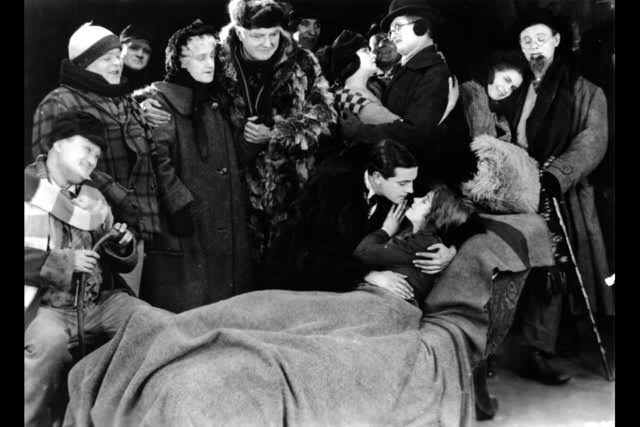
  • The Women Who Cut Classic Hollywood: Five Editors Behind the Scenes

    The Women Who Cut Classic Hollywood: Five Editors Behind the Scenes

    When you watch a classic film like Gone with the Wind or Singin’ in the Rain, you might think of the director, the stars, or the sweeping score. But the person who decided exactly when to cut from Scarlett’s face to the burning of Atlanta, or how to time Gene Kelly’s dance steps to the music, was often a woman. In the first decades of Hollywood, editing was considered “women’s work” — meticulous, detail-oriented, akin to sewing. That gendered assumption gave women an entry into a craft that would shape the very language of cinema. They were called “cutters,” and at times they made up a third of working editors in the industry.

    Yet today, most of these women are forgotten. Their names rarely appear in film history books, and their contributions are often absorbed into the director’s vision. This is the story of five editors who defined the look and feel of classic Hollywood: Margaret Booth, Barbara McLean, Anne Bauchens, Adrienne Fazan, and Viola Lawrence. They didn’t just assemble footage; they built performances, controlled emotions, and created the invisible art that makes movies feel effortless.

    The Invisible Art of Editing

    Editing is sometimes called “the invisible art” because when it’s done well, you don’t notice it. A seamless cut, a perfectly timed reaction shot, a rhythm that builds tension — these are choices made by an editor. In the silent era, editing was even more basic. Early “cutters” were often women who physically spliced film reels, cutting and gluing strips of celluloid. It was painstaking work, and it was low-paid. Studios hired women because they were considered more dexterous and were willing to work for less than men.

    But as filmmaking became more sophisticated, so did editing. The transition to sound in the late 1920s made the job more technical, but women remained. By the 1930s, a significant portion of Hollywood’s editors were women — estimates range from 20 to 40 percent. They were concentrated at certain studios: MGM had Margaret Booth, Adrienne Fazan, and Blanche Sewell; Fox had Barbara McLean; Columbia had Viola Lawrence; and Paramount had Anne Bauchens.

    Margaret Booth: The MGM Maestro

    Margaret Booth started as a negative cutter at MGM in the 1920s and worked her way up to become the studio’s supervising editor — a rare executive role for a woman. She was known for shaping the “invisible” MGM house style, where editing was so smooth that the audience never noticed the cuts. She worked on some of the most beloved films of the era, including Mutiny on the Bounty (1935) and Camille (1936).

    Booth’s influence was so great that she was called “the first lady of editing.” She was also fiercely protective of her craft. When a director would complain about a cut, she’d famously respond, “If you want to direct, go make your own film.” She worked at MGM for over four decades, and in 1978, she received an Honorary Academy Award for her contributions to film editing — the first editor, male or female, to be so honored.

    Barbara McLean: The Oscars’ First Woman Winner

    Barbara McLean worked at 20th Century Fox for over 40 years, editing many of Darryl F. Zanuck’s prestige pictures, including The Grapes of Wrath (1940) and All About Eve (1950). But her biggest milestone came in 1944, when she became the first woman to win the Academy Award for Best Film Editing, for Wilson. That film, a biography of President Woodrow Wilson, is now largely forgotten, but her win was historic.

    What made McLean’s editing distinctive was her ability to shape performances. In All About Eve, the film’s famous overlapping dialogue and sharp cuts between characters create a sense of wit and tension that is purely editorial. She was nominated for three Oscars in her career, and her work helped define the Fox “house style” — polished, economical, and emotionally direct.

    Anne Bauchens: The DeMille Collaborator

    Anne Bauchens worked with director Cecil B. DeMille for over 40 years, a partnership that began in the silent era and lasted until the 1950s. She edited both versions of The Ten Commandments (1923 and 1956), as well as The Greatest Show on Earth (1952). Her editing was often epic in scale — handling massive crowd scenes and intricate special effects — but she also knew how to make a personal moment land.

    In 1940, Bauchens won the Academy Award for Best Film Editing for Northwest Mounted Police, a DeMille western. She was one of the few editors of her time to work with a single director for so long, and her collaboration with DeMille was a model of trust and mutual respect. Yet, when we talk about DeMille’s films, we rarely mention Bauchens. She remains an invisible partner.

    Adrienne Fazan: The MGM Musical Maven

    Adrienne Fazan was MGM’s go-to editor for musicals, working closely with director Vincente Minnelli on some of the most iconic films of the 1950s: An American in Paris (1951), Singin’ in the Rain (1952), and Gigi (1958). Editing a musical requires a different kind of precision — the cuts must match the music, the dance, and the emotion. Fazan was a master of this, earning three Oscar nominations.

    Her work on Singin’ in the Rain is a masterclass in comedic timing. The film’s famous “Make ‘Em Laugh” sequence, where Donald O’Connor performs a physically demanding routine, is edited with a rhythm that makes the gags land perfectly. Fazan’s cuts seem effortless, but they are the result of meticulous planning and an intuitive sense of performance.

    Viola Lawrence: The Columbia Workhorse

    Viola Lawrence was a pioneering editor at Columbia Pictures, working from the silent era into the 1960s. She was known for her speed and versatility — she could edit a drama, a comedy, or a musical with equal skill. Her credits include The Jolson Story (1946) and Pal Joey (1957), both of which required careful handling of musical numbers.

    Lawrence was also one of the few women to edit films in a variety of genres, which was unusual in an era when editors were often pigeonholed. She worked on over 70 films, and her career spanned the transition from silent to sound to color. Despite this longevity, she is barely remembered today.

    Why Were Women Pushed Out?

    The golden age of female editors didn’t last. After World War II, returning veterans displaced women in many industries, including film. As editing became more professionalized and unionized, it gained prestige — and men took over. The percentage of female editors dropped sharply, and by the 1970s, it was below 20%.

    Another factor was the rise of the “auteur” theory, which placed the director as the sole creative force behind a film. This cultural shift further erased editors’ contributions. If a film was good, it was because of the director; if it was bad, it was often the editor’s fault. This narrative, championed by French critics and later American film schools, made it even harder for women to claim credit for their work.

    The Legacy and the Recovery

    For decades, these female editors were forgotten. But in recent years, film historians have worked to recover their stories. Projects like the Women Film Editors database and academic studies by scholars like Karen Pearlman have shed new light on their contributions. The Academy of Motion Picture Arts and Sciences has also hosted exhibitions highlighting women’s roles in early cinema.

    Still, much work remains. Margaret Booth, Barbara McLean, Anne Bauchens, Adrienne Fazan, and Viola Lawrence were not just assistants to great directors — they were artists who shaped the films we still watch today. They understood pacing, performance, and emotion, and they used the cutting room as their canvas.

    The next time you watch a classic movie, pay attention to the editing. Notice how a cut makes you feel, how a reaction shot changes the meaning of a scene. That’s the work of an editor — and in Hollywood’s golden age, that work was often done by women.

    The forgotten female editors of classic Hollywood were not a footnote; they were a foundation. Their craft made movies feel inevitable, as if the story could not have been told any other way. By recovering their names, we don’t just correct history — we understand that cinema has always been a collaborative art, and that women were central to its language. Their legacy is in every smooth cut and every perfectly timed laugh.

    Summary

    • Women made up an estimated 20–40% of film editors in Hollywood’s early decades, but their numbers dropped drastically after World War II.
    • Margaret Booth shaped MGM’s “invisible” house style and became the first editor to receive an Honorary Academy Award.
    • Barbara McLean was the first woman to win an Oscar for Best Film Editing, for Wilson (1944).
    • Anne Bauchens worked with Cecil B. DeMille for over 40 years, editing both versions of The Ten Commandments.
    • Adrienne Fazan’s precise editing defined musicals like Singin’ in the Rain and Gigi.
    • The rise of the auteur theory and post-war professionalization contributed to the erasure of women editors from film history.

    FAQ

    Q: Why were women initially hired as film editors?
    A: In the early 20th century, editing was seen as meticulous, detail-oriented work, similar to sewing or secretarial tasks. Studios hired women because they were considered more dexterous and were willing to work for lower wages.

    Q: Who was the first woman to win an Oscar for Best Film Editing?
    A: Barbara McLean won the Academy Award for Best Film Editing in 1944 for Wilson.

    Q: Did any of these editors work on famous musicals?
    A: Yes, Adrienne Fazan edited An American in Paris, Singin’ in the Rain, and Gigi. Viola Lawrence also edited musicals like The Jolson Story and Pal Joey.

    Q: Why did the number of female editors decline?
    A: After World War II, returning veterans took over many jobs, including editing. Also, as editing became more professionalized and prestigious, it became more male-dominated. The auteur theory further minimized the editor’s role.

    Q: Are there any efforts to rediscover these women today?
    A: Yes, film historians like Karen Pearlman have written about them, and projects like the Women Film Editors database aim to document their work. The Academy has also hosted exhibitions on women in early cinema.