Tag: women in film

  • The Women Who Invented Film Editing and Why History Forgot Them

    The Women Who Invented Film Editing and Why History Forgot Them

    In the 1920s, more than 60% of Hollywood film editors were women. They worked in cramped cutting rooms, splicing celluloid by hand, and in the process invented the visual grammar that still governs every movie you watch. But by the 1960s, the number had plummeted to single digits. What happened?

    This is the story of the female editors who built the language of cinema and how the industry erased them as soon as the job became prestigious. Their names Margaret Booth, Anne Bauchens, Barbara McLean are not household names, but their fingerprints are on every cut, every jump, every emotional beat in film history.

    The Silent Era’s Secret: Editing Was Women’s Work

    Today, film editing is seen as a creative, powerful role—the editor shapes the story, controls pacing, and can make or break a movie. But that wasn’t always the case. In the early 1900s, editing was considered mechanical labor, not much different from sewing or typing. It involved splicing physical strips of film, cataloging shots, and keeping meticulous logs—tasks deemed “suitable” for women because they required patience and attention to detail, not the “genius” of male directors and cinematographers.

    So studios hired women as “negative cutters” or “splicers,” paying them less than men. The film industry was born in an era of rigid gender roles, and editing fit neatly into the category of women’s work. A 1920s industry survey found that over 60% of film editors were women—a figure that has never been approached since.

    From Cutters to Creators: The Invisible Art Takes Shape

    But something unexpected happened. The women in these cutting rooms started making decisions. They chose which take to use, where to make a cut, how to pace a scene. They weren’t just splicing; they were telling stories without words.

    Silent films had no dialogue to carry exposition. Everything—emotion, plot, character—had to be conveyed through images. An editor had to decide when to show a character’s face, when to cut away to what they were looking at, how long to hold a shot. These decisions created meaning, and the women in the cutting rooms were the ones making them.

    Margaret Booth, who started at MGM in the 1920s and worked there for over 60 years, became a legend for her “invisible” cutting style. She prioritized story flow over flashy technique, believing that the best edit is one the audience doesn’t notice. Her approach—seamless, unobtrusive, emotionally driven—became the model for classical Hollywood editing.

    Anne Bauchens worked with Cecil B. DeMille for over 40 years, editing epics like The Ten Commandments (1923). She won an Academy Award for Northwest Mounted Police (1940). Barbara McLean, head of editing at 20th Century Fox, won the Oscar for Wilson (1944) and is remembered for her work on All About Eve (1950). Blanche Sewell edited The Wizard of Oz (1939). These women weren’t just technicians; they were shaping the films that defined an era.

    The Grammar of Cinema: How Women Codified the Rules

    As films grew from short novelties to feature-length narratives in the 1910s and 1920s, editors had to develop a new system for making stories coherent. This became known as the “continuity system”—a set of rules for editing that ensured viewers always knew where they were and what was happening.

    These rules included matching eyelines (if character A looks right, character B should look left), maintaining screen direction (if a car moves left-to-right in one shot, it should continue left-to-right in the next), and cutting on action (so the movement flows smoothly from one shot to the next).

    These techniques are so fundamental that we take them for granted today. But they had to be invented, and they were largely codified in the cutting rooms staffed by women. These editors discovered that by manipulating the order and duration of shots, they could control the audience’s emotional response. A quick cut could create tension; a long hold could build empathy. This was the birth of modern film language, and it was born in the hands of women.

    The Script Girl Pipeline: How Women Became Editors

    Many early female editors didn’t start with the title “editor.” They entered the industry as “script girls”—now called script supervisors—whose job was to track what had been shot, noting details like which take was good, what props were used, and where actors were standing. This gave them an encyclopedic knowledge of the footage, which made them natural candidates for editing when the need arose.

    The role was also a way for women to be near the creative process without being seen as a threat. Directors like D.W. Griffith and Cecil B. DeMille came to rely on their editors’ instincts. Irving Thalberg, the legendary MGM producer, famously said that the editor was the only person who could “save” a film in post-production. In the studio system, editors worked in centralized cutting rooms, often far from the director’s oversight, which gave them unusual autonomy.

    The Sound Revolution and the Slow Erasure

    The arrival of sound in the late 1920s was a turning point. Sound editing—handling dialogue, music, and effects—was seen as technical and “male,” so those jobs went to men. But picture editing remained a female-dominated role for another decade. By the 1930s, editing was becoming recognized as a creative and powerful position, and that’s when the tide began to turn.

    The first Academy Award for Film Editing went to a man, Conrad Nervig, in 1934. Women won later—Barbara McLean in 1944, for example—but the pattern was clear. As editing gained prestige, men increasingly took over. By the 1950s, the percentage of female editors had dropped dramatically, and by the 1960s it was in the single digits.

    This wasn’t a natural evolution; it was a systematic exclusion. The same work that was once dismissed as “women’s work” became too important for women once it was valued. The history of editing is a stark example of how gendered labor is often a matter of convenience: when the job is seen as clerical, it’s for women; when it becomes “creative,” it’s for men.

    Legacies Hidden in Plain Sight

    The editing styles developed by these women didn’t disappear when they left. The continuity system remained the backbone of Hollywood filmmaking for decades. The “invisible” cutting style—perfected by Margaret Booth—dominated until the 1960s, when a new wave of editors like Dede Allen began to break the rules.

    Allen, who worked from the 1950s through the 1990s, is often seen as the bridge between the silent-era editors and the New Hollywood of the 1970s. She brought a more aggressive, noticeable cutting style to films like Bonnie and Clyde (1967), but she always credited the women who came before her. The techniques they developed—matching action, controlling rhythm, building emotion—remain the foundation of every film edit today.

    Yet their names are barely known. Ask most film fans to name a great editor, and they’ll likely say Walter Murch or Thelma Schoonmaker. But without Margaret Booth’s invisible cuts, without Anne Bauchens’s epic pacing, without the hundreds of unnamed women in cutting rooms, the very language of film would be unrecognizable.

    The Reckoning

    In recent years, there has been a push to recognize the contributions of women in film history, and editing is finally getting its due. Documentaries, books, and retrospective screenings have begun to shine a light on the women who built the medium. The Academy’s own history is being reexamined, and the role of female editors in the silent era is now a subject of scholarly study.

    But the story is more than a list of forgotten names. It’s a lesson about how we assign value to work. The women who “saved” Hollywood’s silent era weren’t doing something inherently feminine—they were doing something that required skill, creativity, and intelligence. They were censored by the industry only when that work was recognized as valuable.

    Today, the editing room is again seeing a resurgence of women, though they still face an uphill battle. The legacy of the silent-era editors is a reminder that the medium of film is built on the labor of people who were often denied credit, denied status, and eventually denied a place in history. But their work endures in every cut, every transition, every moment of cinematic magic that moves us.

    The women who edited silent films didn’t just save individual movies—they built the entire grammar of cinema. They turned a mechanical task into a creative art, only to be pushed out when the art was recognized. Their story is a silent film in itself: full of meaning conveyed through images and actions, but with the title cards missing. The least we can do now is restore their names to the credits.

    Summary

    • In the 1920s, over 60% of film editors were women, but the role was initially dismissed as mechanical “women’s work.”
    • Female editors like Margaret Booth, Anne Bauchens, and Barbara McLean developed and standardized the continuity system—the invisible editing rules that still govern filmmaking.
    • As editing gained prestige in the 1930s and 1940s, men increasingly took over, and by the 1960s, the percentage of female editors had fallen to single digits.
    • The “invisible” editing style perfected by women remained dominant until the 1960s, when editors like Dede Allen began a more aggressive approach.
    • The story of these editors reveals how gendered labor is assigned and reassigned based on the perceived status of the work.

    FAQ

    Q: Who was Margaret Booth?
    A: Margaret Booth was an editor at MGM for over 60 years, starting in the 1920s. She was known for her “invisible” editing style that prioritized story flow and emotional pacing. She is often cited as the first true “film editor.”

    Q: Why were women initially hired as editors?
    A: Editing was seen as meticulous handwork, similar to sewing or typing. Studios also hired women at lower wages, making it economically attractive. It wasn’t until editing was recognized as a creative role that men began to dominate.

    Q: What is the “continuity system”?
    A: The continuity system is a set of editing rules—matching eyelines, screen direction, and action—that ensure visual coherence in narrative films. It was largely developed and codified by female editors in the 1910s and 1920s.

    Q: How did the arrival of sound affect female editors?
    A: Sound editing was seen as technical and male, so men took over those roles. Picture editing remained female-dominated for a while, but as editing gained prestige, men increasingly took over that as well.

    Q: Who was Dede Allen?
    A: Dede Allen was an editor active from the 1950s to the 1990s, known for her work on Bonnie and Clyde (1967). She is often considered a bridge between the invisible style of the silent-era editors and the more aggressive cutting of the New Hollywood era.
  • The Forgotten Women of the French New Wave: Beyond Godard and Truffaut

    The Forgotten Women of the French New Wave: Beyond Godard and Truffaut

    When we think of the French New Wave, names like Jean-Luc Godard and François Truffaut dominate. But behind the jump cuts and existential dialogues, a cohort of women were shaping the movement as directors, editors, and collaborators. Their contributions, often erased by the cult of the male auteur, are finally getting their due. This article uncovers the hidden figures who made the New Wave what it was, and why their stories matter today.

    The New Wave’s “Mother” Who Arrived First

    Agnès Varda’s La Pointe Courte (1955) is now recognized as the true starting point of the French New Wave, but for decades, the credit went to Godard’s Breathless (1960) or Truffaut’s The 400 Blows (1959). Varda, who called herself a “young woman who made films” rather than a New Wave director, was the only woman in the Left Bank group. Her debut used location shooting and non-linear editing years before the movement was named. She resisted the label, but history has crowned her the “mother of the New Wave.”

    The Editors Who Made the Cuts

    Editing was a rare space where women could rise, and they were essential to the New Wave’s signature style. Cécile Decugis edited Godard’s Breathless, whose jump cuts became a global sensation. She also worked on Truffaut’s Jules and Jim and Varda’s Cléo from 5 to 7. Marie-Josèphe Yoyotte, a Black French editor, collaborated with Varda on Cléo and Le Bonheur, but her name barely appears in the standard histories. Nathalie Lafaurie edited several Godard films, including Vivre sa vie and Bande à part, yet her work is often overshadowed by the director’s fame.

    The Forgotten Directors: Audry and Kaplan

    Jacqueline Audry was one of France’s most commercially successful directors in the 1950s, with films like Olivia (1951) exploring female desire and sexuality. But the Cahiers du Cinéma critics dismissed her as “literary,” and she was excluded from the New Wave canon. Nelly Kaplan, an Argentine-born filmmaker, made La Fiancée du pirate (1969), a feminist revenge comedy that aligned with the movement’s later radical phase. Both women fought against a system that saw female directors as anomalies.

    The Auteur Theory That Silenced Them

    The “politique des auteurs” prized the director as the sole creative genius, which systematically devalued collaborative labor—especially editing, a feminized craft. This theory, championed by the male critics who became the New Wave’s stars, erased the contributions of women like Decugis and Yoyotte. It also marginalized directors who didn’t fit the mold of the male cinephile-critic.

    Institutional Barriers and Cultural Norms

    Post-war France was conservative about gender roles. The IDHEC film school had quotas that limited women’s admission, and producing a first feature required connections in a male-dominated industry. While the New Wave broke formally with the past, it did not break with its patriarchal structures. Women often entered via editing or acting, not directing, and were rarely granted the same creative autonomy.

    Why It Matters Today

    Rediscovering these women is not just an academic exercise. It challenges the myth of the lone genius and highlights the collaborative nature of cinema. It also inspires a new generation of filmmakers to question who gets credited, who gets remembered, and why. As Varda once said, “I’m not a mother of the New Wave; I’m its grandmother.” But her grandmother status—and the work of editors like Yoyotte—is precisely what deserves our attention.

    The French New Wave was not just Godard and Truffaut. It was Varda, Audry, Kaplan, Decugis, Yoyotte, and countless others whose names have been forgotten. By bringing them back into the spotlight, we don’t just correct history—we enrich our understanding of a movement that was never as revolutionary as it claimed to be, and yet was far more diverse than we’ve been told.

    Summary

    • Agnès Varda’s La Pointe Courte (1955) predates the canonical New Wave films, making her the movement’s true originator.
    • Editors like Cécile Decugis and Marie-Josèphe Yoyotte were crucial to the New Wave’s visual style, but their work was often uncredited or overshadowed.
    • The auteur theory systematically erased collaborative labor and marginalized women directors who didn’t fit the male critic-turned-director mold.
    • Jacqueline Audry and Nelly Kaplan are among the forgotten female directors whose work challenged gender norms.
    • Institutional barriers, such as IDHEC’s quotas and male-dominated production networks, kept women from directing in the New Wave era.

    FAQ

    Q: Who was the only female director in the core French New Wave?
    A: Agnès Varda was the only woman in the Left Bank group, and she directed her debut feature La Pointe Courte in 1955, before the movement’s canonical start.

    Q: What did Cécile Decugis contribute to the French New Wave?
    A: She edited Godard’s Breathless (1960), which featured the famous jump cuts, as well as Truffaut’s Jules and Jim and Varda’s Cléo from 5 to 7.

    Q: Why were women largely excluded from directing in the New Wave?
    A: Institutional barriers like IDHEC’s quotas, critical bias from the male Cahiers critics, and economic challenges in a male-dominated industry all contributed to their exclusion.

    Q: What is the auteur theory and how did it affect women?
    A: The “politique des auteurs” argues that the director is the primary creative force behind a film. This minimized the contributions of editors and other collaborators, many of whom were women, and marginalized female directors who didn’t fit the male auteur mold.

    Q: Are there any other forgotten female directors from that era?
    A: Yes, Jacqueline Audry, who made Olivia (1951), and Nelly Kaplan, who directed La Fiancée du pirate (1969), are notable examples. Both were overlooked by the New Wave canon despite their significant work.

  • The Women Who Cut Classic Hollywood: Five Editors Behind the Scenes

    The Women Who Cut Classic Hollywood: Five Editors Behind the Scenes

    When you watch a classic film like Gone with the Wind or Singin’ in the Rain, you might think of the director, the stars, or the sweeping score. But the person who decided exactly when to cut from Scarlett’s face to the burning of Atlanta, or how to time Gene Kelly’s dance steps to the music, was often a woman. In the first decades of Hollywood, editing was considered “women’s work” — meticulous, detail-oriented, akin to sewing. That gendered assumption gave women an entry into a craft that would shape the very language of cinema. They were called “cutters,” and at times they made up a third of working editors in the industry.

    Yet today, most of these women are forgotten. Their names rarely appear in film history books, and their contributions are often absorbed into the director’s vision. This is the story of five editors who defined the look and feel of classic Hollywood: Margaret Booth, Barbara McLean, Anne Bauchens, Adrienne Fazan, and Viola Lawrence. They didn’t just assemble footage; they built performances, controlled emotions, and created the invisible art that makes movies feel effortless.

    The Invisible Art of Editing

    Editing is sometimes called “the invisible art” because when it’s done well, you don’t notice it. A seamless cut, a perfectly timed reaction shot, a rhythm that builds tension — these are choices made by an editor. In the silent era, editing was even more basic. Early “cutters” were often women who physically spliced film reels, cutting and gluing strips of celluloid. It was painstaking work, and it was low-paid. Studios hired women because they were considered more dexterous and were willing to work for less than men.

    But as filmmaking became more sophisticated, so did editing. The transition to sound in the late 1920s made the job more technical, but women remained. By the 1930s, a significant portion of Hollywood’s editors were women — estimates range from 20 to 40 percent. They were concentrated at certain studios: MGM had Margaret Booth, Adrienne Fazan, and Blanche Sewell; Fox had Barbara McLean; Columbia had Viola Lawrence; and Paramount had Anne Bauchens.

    Margaret Booth: The MGM Maestro

    Margaret Booth started as a negative cutter at MGM in the 1920s and worked her way up to become the studio’s supervising editor — a rare executive role for a woman. She was known for shaping the “invisible” MGM house style, where editing was so smooth that the audience never noticed the cuts. She worked on some of the most beloved films of the era, including Mutiny on the Bounty (1935) and Camille (1936).

    Booth’s influence was so great that she was called “the first lady of editing.” She was also fiercely protective of her craft. When a director would complain about a cut, she’d famously respond, “If you want to direct, go make your own film.” She worked at MGM for over four decades, and in 1978, she received an Honorary Academy Award for her contributions to film editing — the first editor, male or female, to be so honored.

    Barbara McLean: The Oscars’ First Woman Winner

    Barbara McLean worked at 20th Century Fox for over 40 years, editing many of Darryl F. Zanuck’s prestige pictures, including The Grapes of Wrath (1940) and All About Eve (1950). But her biggest milestone came in 1944, when she became the first woman to win the Academy Award for Best Film Editing, for Wilson. That film, a biography of President Woodrow Wilson, is now largely forgotten, but her win was historic.

    What made McLean’s editing distinctive was her ability to shape performances. In All About Eve, the film’s famous overlapping dialogue and sharp cuts between characters create a sense of wit and tension that is purely editorial. She was nominated for three Oscars in her career, and her work helped define the Fox “house style” — polished, economical, and emotionally direct.

    Anne Bauchens: The DeMille Collaborator

    Anne Bauchens worked with director Cecil B. DeMille for over 40 years, a partnership that began in the silent era and lasted until the 1950s. She edited both versions of The Ten Commandments (1923 and 1956), as well as The Greatest Show on Earth (1952). Her editing was often epic in scale — handling massive crowd scenes and intricate special effects — but she also knew how to make a personal moment land.

    In 1940, Bauchens won the Academy Award for Best Film Editing for Northwest Mounted Police, a DeMille western. She was one of the few editors of her time to work with a single director for so long, and her collaboration with DeMille was a model of trust and mutual respect. Yet, when we talk about DeMille’s films, we rarely mention Bauchens. She remains an invisible partner.

    Adrienne Fazan: The MGM Musical Maven

    Adrienne Fazan was MGM’s go-to editor for musicals, working closely with director Vincente Minnelli on some of the most iconic films of the 1950s: An American in Paris (1951), Singin’ in the Rain (1952), and Gigi (1958). Editing a musical requires a different kind of precision — the cuts must match the music, the dance, and the emotion. Fazan was a master of this, earning three Oscar nominations.

    Her work on Singin’ in the Rain is a masterclass in comedic timing. The film’s famous “Make ‘Em Laugh” sequence, where Donald O’Connor performs a physically demanding routine, is edited with a rhythm that makes the gags land perfectly. Fazan’s cuts seem effortless, but they are the result of meticulous planning and an intuitive sense of performance.

    Viola Lawrence: The Columbia Workhorse

    Viola Lawrence was a pioneering editor at Columbia Pictures, working from the silent era into the 1960s. She was known for her speed and versatility — she could edit a drama, a comedy, or a musical with equal skill. Her credits include The Jolson Story (1946) and Pal Joey (1957), both of which required careful handling of musical numbers.

    Lawrence was also one of the few women to edit films in a variety of genres, which was unusual in an era when editors were often pigeonholed. She worked on over 70 films, and her career spanned the transition from silent to sound to color. Despite this longevity, she is barely remembered today.

    Why Were Women Pushed Out?

    The golden age of female editors didn’t last. After World War II, returning veterans displaced women in many industries, including film. As editing became more professionalized and unionized, it gained prestige — and men took over. The percentage of female editors dropped sharply, and by the 1970s, it was below 20%.

    Another factor was the rise of the “auteur” theory, which placed the director as the sole creative force behind a film. This cultural shift further erased editors’ contributions. If a film was good, it was because of the director; if it was bad, it was often the editor’s fault. This narrative, championed by French critics and later American film schools, made it even harder for women to claim credit for their work.

    The Legacy and the Recovery

    For decades, these female editors were forgotten. But in recent years, film historians have worked to recover their stories. Projects like the Women Film Editors database and academic studies by scholars like Karen Pearlman have shed new light on their contributions. The Academy of Motion Picture Arts and Sciences has also hosted exhibitions highlighting women’s roles in early cinema.

    Still, much work remains. Margaret Booth, Barbara McLean, Anne Bauchens, Adrienne Fazan, and Viola Lawrence were not just assistants to great directors — they were artists who shaped the films we still watch today. They understood pacing, performance, and emotion, and they used the cutting room as their canvas.

    The next time you watch a classic movie, pay attention to the editing. Notice how a cut makes you feel, how a reaction shot changes the meaning of a scene. That’s the work of an editor — and in Hollywood’s golden age, that work was often done by women.

    The forgotten female editors of classic Hollywood were not a footnote; they were a foundation. Their craft made movies feel inevitable, as if the story could not have been told any other way. By recovering their names, we don’t just correct history — we understand that cinema has always been a collaborative art, and that women were central to its language. Their legacy is in every smooth cut and every perfectly timed laugh.

    Summary

    • Women made up an estimated 20–40% of film editors in Hollywood’s early decades, but their numbers dropped drastically after World War II.
    • Margaret Booth shaped MGM’s “invisible” house style and became the first editor to receive an Honorary Academy Award.
    • Barbara McLean was the first woman to win an Oscar for Best Film Editing, for Wilson (1944).
    • Anne Bauchens worked with Cecil B. DeMille for over 40 years, editing both versions of The Ten Commandments.
    • Adrienne Fazan’s precise editing defined musicals like Singin’ in the Rain and Gigi.
    • The rise of the auteur theory and post-war professionalization contributed to the erasure of women editors from film history.

    FAQ

    Q: Why were women initially hired as film editors?
    A: In the early 20th century, editing was seen as meticulous, detail-oriented work, similar to sewing or secretarial tasks. Studios hired women because they were considered more dexterous and were willing to work for lower wages.

    Q: Who was the first woman to win an Oscar for Best Film Editing?
    A: Barbara McLean won the Academy Award for Best Film Editing in 1944 for Wilson.

    Q: Did any of these editors work on famous musicals?
    A: Yes, Adrienne Fazan edited An American in Paris, Singin’ in the Rain, and Gigi. Viola Lawrence also edited musicals like The Jolson Story and Pal Joey.

    Q: Why did the number of female editors decline?
    A: After World War II, returning veterans took over many jobs, including editing. Also, as editing became more professionalized and prestigious, it became more male-dominated. The auteur theory further minimized the editor’s role.

    Q: Are there any efforts to rediscover these women today?
    A: Yes, film historians like Karen Pearlman have written about them, and projects like the Women Film Editors database aim to document their work. The Academy has also hosted exhibitions on women in early cinema.

  • The Forgotten Women of Early Cinema: How Female Directors Shaped the Silent Era

    The Forgotten Women of Early Cinema: How Female Directors Shaped the Silent Era

    In 1910, women directed roughly 10% of all American films. By 1929, they had virtually disappeared from the director’s chair. This isn’t a story of gradual progress it’s a story of erasure.

    Alice Guy-Blaché, Lois Weber, Dorothy Arzner, and dozens of other women built the language of cinema itself. They invented techniques, tackled bold subjects, and ran their own studios. Then the industry consolidated, sound arrived, and history books wrote them out.

    Their films survive in fragments, their names survive in archives. Here’s what they achieved and how they were forgotten.

    The First Narrative Filmmaker Was a Woman

    In 1896, a 23-year-old secretary at Gaumont in Paris named Alice Guy-Blaché directed La Fée aux Choux (The Cabbage Fairy). It wasn’t just the first film by a woman—it was one of the first narrative films ever made. At the time, cinema was mostly about recording real-life scenes: trains pulling into stations, workers leaving factories. Guy-Blaché told a story.

    She went on to direct over 1,000 films, including The Life of Christ (1906), a sprawling epic with hundreds of extras and elaborate sets. In 1910, she moved to the United States and founded Solax Studios in Fort Lee, New Jersey—one of the largest pre-Hollywood studios in America. She wrote, produced, and directed, handling every aspect of production with an authority that made her a force in the industry.

    But by the 1950s, her work was so thoroughly forgotten that when film historian Anthony Slide rediscovered her in the 1970s, the public had no idea who she was. She received the French Legion of Honor in 1953, but her name remained absent from most film histories until decades later.

    The Highest-Paid Director at Universal Was a Woman

    Lois Weber didn’t just direct movies—she used them to argue. At Universal Studios in the 1910s, she was one of the highest-paid directors, male or female. Her films tackled issues that were considered too hot for the screen: capital punishment in The Blot (1921), birth control in Where Are My Children? (1916), and poverty in multiple works. She wrote, directed, and often starred in her own films, giving her complete creative control.

    Weber also made history as the first American woman to direct a feature-length film, The Merchant of Venice (1914). She mentored Frances Marion, who would become Hollywood’s most celebrated screenwriter. But her career collapsed in the 1920s as studio consolidation pushed women out. By the end of the decade, she was nearly unemployable.

    The Only Woman to Survive the Sound Transition

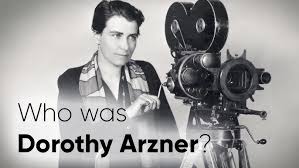
    Dorothy Arzner holds a unique distinction: she’s the only woman who directed films in Hollywood continuously through the transition to sound. Between 1927 and 1943, she made 20 films, including Christopher Strong (1933) and Dance, Girl, Dance (1940). Her films featured strong female protagonists, a rarity for the time.

    She also solved a practical problem that shaped film technology. On the set of The Wild Party (1929), she needed to record dialogue while allowing the actors to move freely. Her solution—a boom microphone on a fishing rod—became standard equipment. Arzner was also openly lesbian at a time when that was professionally dangerous, and her films often explored gender dynamics with subtlety and subversion.

    After retiring from directing, she taught at UCLA, where she mentored a young Francis Ford Coppola.

    The Avant-Garde Theorist

    Not all early women directors worked in Hollywood. Germaine Dulac was a French filmmaker and theorist who pushed cinema toward abstraction. Her 1923 film The Smiling Madame Beudet is a landmark of feminist and impressionist cinema, depicting a woman trapped in a loveless marriage through visual metaphors rather than dialogue. Dulac wrote extensively about cinema as a pure art form, arguing that film should move beyond storytelling to evoke emotion through rhythm and image. She was a key figure in the French impressionist and surrealist movements.

    The Comedian Who Directed Chaplin

    Mabel Normand was one of the most popular comediennes of the silent era—a star of Mack Sennett’s slapstick comedies. But she also directed. In 1914, she co-directed Mabel at the Wheel with Charlie Chaplin and directed Mabel’s Blunder. Her work behind the camera is often overshadowed by her fame in front of it, but she was one of the few women who moved between acting and directing with ease.

    The Numbers: Rise and Fall

    Women’s presence in early cinema wasn’t marginal—it was foundational. In 1910, women directed roughly 10% of all American films. By 1920, that number had dropped to around 2%. By 1929, with the arrival of synchronized sound, women directors had essentially vanished from Hollywood. To put that in perspective, in 2023, women directed 16% of the top 250 grossing films—a figure considered a historic high. The silent era’s 10% was higher than anything Hollywood would see again for a century.

    Why Women Thrived in Early Film

    The film industry in the 1900s and 1910s was wide open. It was new, unregulated, and not yet considered respectable. Because it was seen as a novelty or working-class entertainment, it attracted few gatekeepers. Anyone with ambition and a camera could enter. Many studios were family-run, so wives and daughters naturally participated. The technical skills of silent filmmaking—cranking a camera, editing—were not yet gendered. And acting was one of the few public careers considered acceptable for women, so many actresses moved into directing.

    The Rise of the Studio System and Erasure

    As films grew longer and more expensive, production consolidated into large studios. These corporations were hierarchical and male-dominated. Distribution and exhibition required capital connections that women often lacked. The star system elevated male directors as “auteurs,” while women’s contributions were erased or attributed to their male colleagues.

    The arrival of sound in the late 1920s was the final blow. It required new technical expertise and massive investment. Studios used the disruption to purge “risky” personnel—including women directors. Many were pushed into screenwriting, editing, or costume design, roles seen as “supportive” rather than “creative.”

    Erasure wasn’t accidental. Film archives and histories were built by men who favored male directors. Many of women’s films were lost, destroyed, or misattributed. When they survived, they were often credited to male collaborators or dismissed as “domestic” or “sentimental.” The term “auteur” was applied to men like D.W. Griffith, while Alice Guy-Blaché was forgotten until the 1970s.

    The Women Who Kept Working

    Some women sustained careers by adapting. Frances Marion wrote over 300 films, becoming one of the most powerful screenwriters in Hollywood. Cleo Madison directed and starred in serials at Universal. Ruth Stonehouse directed over 40 shorts at Essanay. Elsie Jane Wilson and Ida May Park directed features at Universal in the late 1910s. They worked within the system, but the director’s chair was increasingly closed to them.

    Why Their Stories Matter Today

    These women didn’t just participate in early cinema—they shaped it. Alice Guy-Blaché invented narrative filmmaking. Lois Weber made socially conscious art decades before it was fashionable. Dorothy Arzner pioneered technology and told stories from a female perspective. Germaine Dulac expanded cinema’s visual vocabulary.

    Their erasure is a warning: progress in the film industry is not linear. Women’s participation has been deliberately rolled back before. The 10% of 1910 was higher than the industry achieved for over a century. Remembering these directors isn’t just about honoring the past—it’s about understanding how easily women can be written out of history, and how fragile their gains can be.

    The forgotten women of early cinema didn’t fail—they were erased. Alice Guy-Blaché, Lois Weber, Dorothy Arzner, and dozens of others built the foundations of filmmaking, only to be written out of the story. Their films may be lost, but their influence is not. The next time you watch a movie, remember that a woman helped invent the language of cinema.

    Summary

    • Alice Guy-Blaché directed the first narrative film in 1896 and founded Solax Studios, but her work was forgotten until the 1970s.
    • Lois Weber was the highest-paid director at Universal in the 1910s, tackling social issues like birth control and capital punishment.
    • Dorothy Arzner was the only woman to direct through the transition to sound, inventing the boom microphone.
    • Women directed 10% of American films in 1910, but by 1929 they were virtually absent from the director’s chair.
    • The rise of the studio system and the sound transition were used to purge women from directing roles.

    FAQ

    Q: Who was the first female filmmaker?
    A: Alice Guy-Blaché is widely credited as the first female filmmaker. She directed La Fée aux Choux in 1896, one of the first narrative films.

    Q: How many films did Alice Guy-Blaché direct?
    A: She directed over 1,000 films throughout her career, including The Life of Christ (1906), one of the first epic-scale productions.

    Q: Why did women stop directing in Hollywood?
    A: The consolidation of the studio system and the transition to sound in the late 1920s led to women being pushed out. Studios used the disruption to purge “risky” personnel, and women were often moved to screenwriting or other roles.

    Q: What was Dorothy Arzner’s major technical contribution?
    A: She invented the boom microphone on the set of The Wild Party (1929) to solve a sound recording problem.

    Q: Is the percentage of women directors today higher than in the silent era?
    A: In 2023, women directed 16% of the top 250 grossing films, which is higher than the 10% of 1910, but it took over a century to surpass that earlier figure.

  • The Forgotten Auteur: How Dorothy Arzner Broke Barriers in Classic Hollywood

    The Forgotten Auteur: How Dorothy Arzner Broke Barriers in Classic Hollywood

    In 1929, Hollywood was in the throes of a technological revolution: the transition to sound. Most directors struggled with the bulky, stationary microphones that limited actors to standing in one spot. Dorothy Arzner, a former editor who had just been handed her first sound film, reportedly solved the problem by mounting a microphone on a fishing rod and dangling it over the actors’ heads—an early version of the boom mic. Whether or not the story is entirely true, it captures the ingenuity of a woman who repeatedly found creative solutions to the obstacles placed in her path.

    Arzner directed about 20 feature films between 1927 and 1943, making her the only woman directing movies in Hollywood’s studio system during the 1930s. She was the first woman to join the Directors Guild of America, and she directed Katharine Hepburn, Lucille Ball, and Rosalind Russell in some of their most memorable roles. Then she vanished from the industry’s memory—until feminist film scholars in the 1970s rediscovered her work and re-established her as a pioneering filmmaker whose films still resonate today.

    From Typist to Director

    Arzner’s path to the director’s chair was anything but typical. She started at Paramount as a script typist, then moved up to script clerk, and then to editor. Her editing skills—she was known for her technical precision—earned her a promotion to director when the studio needed someone to take over a silent film, Fashions for Women (1927).

    She didn’t just survive in the male-dominated industry; she thrived. Arzner was known for delivering films on time and on budget, a reputation that kept her employed even as other women directors were pushed out. She worked primarily at Paramount, then at RKO and Columbia, navigating the rigid studio system where directors were essentially contract employees with little creative freedom.

    The Sound Innovation (and the Dispute)

    When Arzner directed The Wild Party (1929), starring Clara Bow, she faced a unique challenge: the technology for sound film was primitive. Microphones were fixed in place, often hidden in props, which meant actors had to stay close to them to be heard. This severely limited their movement and made scenes feel static.

    Arzner’s solution, according to legend, was to attach a microphone to a long pole—essentially inventing the boom microphone. This allowed actors to move more freely while still being recorded. Some film historians dispute this claim, pointing out that other crew members may have developed similar devices around the same time. But the story persists, and it illustrates Arzner’s willingness to think outside the box to get the best performance from her actors.

    A Body of Work with a Feminist Edge

    Arzner’s films often centered on women’s lives, and she approached them with a perspective that was rare for the era. In Christopher Strong (1933), Katharine Hepburn plays an aviator who has an affair with a married man and ultimately dies by suicide—a tragic ending that was typical for women in Hollywood films, but Arzner frames it with a sense of consequence and critique rather than simple moralizing.

    Her most studied film today is Dance, Girl, Dance (1940), starring Lucille Ball as a ballet dancer and Maureen O’Hara as a burlesque performer. The film includes a famous scene where O’Hara’s character, Judy, confronts the male audience that has been leering at her. She delivers a speech that directly challenges the male gaze: “You’re all of you—you’re all of you—wrong!” It’s a moment that feels decades ahead of its time and has made the film a cornerstone of feminist film theory.

    The Limitations of a “Compromised” Career

    For all her achievements, Arzner’s career was not without its constraints. She directed only about 20 films over 16 years—a modest output compared to her male peers. Many of her assignments were “women’s pictures,” a genre that was often dismissed by critics as melodrama. Some scholars argue that her legacy has been inflated by feminist critics who read subversion into every frame, and that her work is actually uneven in quality.

    The tension between the “barrier-breaker” and the “compromised career” narratives is real. Arzner did open doors, but she also worked within a system that limited what she could do. She often had to fight for projects, and she left studio directing in 1943 after a dispute with Columbia Pictures over The Man Who Wouldn’t Talk. Her retirement from features was not entirely voluntary.

    Leaving Hollywood, Shaping Future Filmmakers

    After leaving the studio system, Arzner directed training films for the Women’s Army Corps during World War II. Then, in the late 1940s, she became the first woman to teach film at UCLA. Her students included Francis Ford Coppola and Eleanor Coppola, among others. She passed on her knowledge to a new generation, even as her own contributions were being forgotten.

    Rediscovery and Legacy

    The 1970s brought a renewed interest in Arzner’s work, thanks to feminist film scholars like Claire Johnston, Pam Cook, and Judith Mayne. They argued that Arzner’s films offered a unique perspective on female subjectivity and gender performance, and they placed her in the canon of important directors. This revival was part of a broader movement to recover the contributions of women artists who had been marginalized by history.

    Today, Arzner is recognized as a trailblazer—not just for being a woman in a male-dominated field, but for making films that challenged gender norms in subtle and not-so-subtle ways. Her work is studied in film courses, and her influence can be seen in the work of contemporary women directors who, like her, have had to navigate a system that often doesn’t make room for them.

    Dorothy Arzner’s story is not a simple tale of triumph. She was a pioneering woman in a field that didn’t want her, and she made films that pushed back against the constraints of her time. Her legacy is complicated—she was both a barrier-breaker and a product of a system that limited her. But that complexity is precisely what makes her worth remembering. She didn’t just break through; she left a body of work that still has the power to challenge and inspire.

    Summary

    • Dorothy Arzner was the only woman directing films in Hollywood’s studio system during the 1930s, directing about 20 features from 1927 to 1943.
    • She started as a script typist and worked her way up through editing to become a director, a rare path in the studio era.
    • Arzner reportedly invented the boom microphone for her first sound film, The Wild Party (1929), though the claim is disputed.
    • Her films, especially Dance, Girl, Dance (1940), are now studied for their feminist critique of the male gaze.
    • After leaving Hollywood in 1943, she taught at UCLA, where her students included Francis Ford Coppola, and she was rediscovered by feminist scholars in the 1970s.

    FAQ

    Q: How many films did Dorothy Arzner direct?
    A: She directed approximately 20 feature films between 1927 and 1943, including The Wild Party, Christopher Strong, Dance, Girl, Dance, and Craig’s Wife.

    Q: Did Dorothy Arzner really invent the boom microphone?
    A: The story is that she mounted a microphone on a fishing rod to allow actors to move freely during the filming of The Wild Party (1929). While some film historians dispute this, the anecdote is widely cited.

    Q: What is Dorothy Arzner’s most famous film?
    A: Dance, Girl, Dance (1940) is her most studied film today, particularly for its feminist critique of the male gaze in a famous scene where the protagonist confronts the male audience.

    Q: Why did Dorothy Arzner leave Hollywood?
    A: She left feature directing in 1943 after a dispute with Columbia Pictures over the film The Man Who Wouldn’t Talk. She then directed training films for the Women’s Army Corps during WWII.

    Q: Where did Dorothy Arzner teach?
    A: She taught film at UCLA, where she was the first woman in the film department. Her students included Francis Ford Coppola and Eleanor Coppola.