Every night, as you drift into sleep, your brain transforms into a vivid theater, projecting stories that can be thrilling, terrifying, or utterly nonsensical. You might find yourself flying over cities, conversing with long-lost friends, or facing impossible challenges—all while your body lies still. This universal experience has fascinated humans for millennia, but only in recent decades have scientists begun to unravel its mysteries. Why do we dream? What purpose does this nightly cinema serve? In this article, we’ll explore the leading scientific theories, the neurobiology behind dreams, and why this question continues to captivate researchers and dreamers alike.
The Basics: What Happens When We Dream?
Dreaming is a universal human experience—virtually all of us dream multiple times each night, even if we rarely remember it. Most dreams are forgotten within minutes of waking, which is why you might recall only fragments or nothing at all. Dreams occur primarily during a phase of sleep called REM (rapid eye movement), which cycles every 90 minutes or so throughout the night. As the night progresses, REM periods lengthen, with the longest episodes occurring in the final third of your sleep.
During REM, your brain is nearly as active as when you’re awake, but your body is in a state of temporary paralysis called muscle atonia. This paralysis is a safety mechanism—it prevents you from acting out your dreams. Interestingly, dreams can also occur during non-REM (NREM) sleep, but they tend to be more thought-like, less vivid, and less narrative-driven.
On average, humans spend about two hours per night dreaming, which is roughly 25% of total sleep time. Infants spend even more—up to 50% of their sleep in REM—while adults average 20–25%. And here’s a staggering statistic: studies suggest that about 95% of dreams are forgotten upon waking unless you’re awakened during or immediately after REM. That’s why keeping a dream journal can be so effective—you catch the dream before it fades.
The Leading Theories: Why Do We Dream?
Scientists have proposed several major theories to explain why we dream. No single theory fully accounts for all aspects of dreaming, but each offers a piece of the puzzle.
Activation-Synthesis: The Brain’s Best Guess
In 1977, psychiatrists J. Allan Hobson and Robert McCarley proposed the activation-synthesis hypothesis. They argued that dreams are the brain’s attempt to make sense of random neural signals originating from the brainstem during REM sleep. According to this theory, the brain receives chaotic signals and tries to weave them into a coherent story—much like a person looking at inkblots and seeing shapes. This explains why dreams can be bizarre and illogical: the brain is synthesizing random input.
Hobson later updated this as “activation-synthesis hypothesis 2.0,” incorporating newer findings, but the core idea remains: dreams are a byproduct of neural activity, not necessarily meaningful messages.
Threat Simulation: A Virtual Reality for Survival
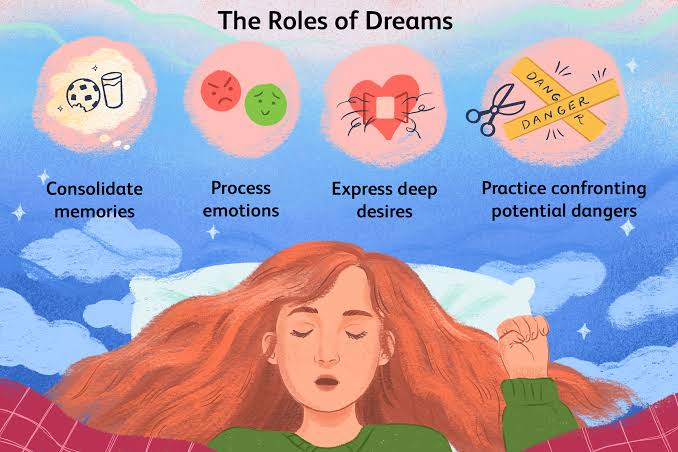
Evolutionary psychologist Antti Revonsuo proposed the threat simulation theory in 2000. He suggested that dreams evolved as a kind of virtual reality simulator, allowing our ancestors to rehearse responses to threats in a safe environment. By simulating dangerous situations—like being chased or attacked—the brain could practice survival strategies without real-world risks. This theory is supported by the fact that dreams often involve threatening scenarios, and it aligns with the idea that dreaming has adaptive value.
Memory Consolidation: Filing Away the Day
Another prominent theory is that dreams help with memory consolidation. During sleep, the brain processes and integrates memories from waking life, moving them from short-term to long-term storage. Researchers like Robert Stickgold and Matthew Walker have shown that the hippocampus—a brain region crucial for memory—replays recent experiences during sleep. This replay is thought to strengthen important memories and discard irrelevant ones. Dreams may be the subjective experience of this consolidation process, as the brain weaves fragments of the day into narratives.
Emotional Regulation: Overnight Therapy
Matthew Walker, a sleep researcher, describes dreaming as “overnight therapy.” During REM sleep, the amygdala—a brain structure involved in processing emotions—is highly active, while the prefrontal cortex, which handles logic and reasoning, is largely deactivated. This combination allows the brain to process emotional experiences in a safe, dream-like context, helping to regulate mood and reduce emotional reactivity. Studies have shown that people who dream about stressful events tend to cope better with them, supporting this theory.
The Default Mode Network and Creative Problem-Solving
Some researchers view dreaming as an extension of the default mode network (DMN), a set of brain regions active when we’re not focused on external tasks. The DMN is associated with mind-wandering, creativity, and self-reflection. During dreaming, the brain is free to make novel associations and connections, which can lead to creative insights. This is why some people report solving problems in their dreams—the brain is exploring possibilities without the constraints of waking logic.
Predictive Processing: Simulating the Future
A more recent computational framework suggests that dreams are a form of predictive processing. The brain is constantly building models of the world to predict future events. During sleep, it simulates possible scenarios to refine these models, testing what might happen in various situations. This theory, rooted in Bayesian brain concepts, posits that dreams are a way to update our internal predictions based on past experiences, preparing us for future challenges.
The Neurobiology: A Tour of the Dreaming Brain
To understand dreams, we need to look at the brain’s activity during REM sleep. The process begins in the pons, a region in the brainstem that triggers REM sleep. During REM, there’s a surge of acetylcholine, a neurotransmitter associated with arousal and attention, while norepinephrine and serotonin—chemicals linked to alertness and mood—are suppressed. This chemical cocktail creates a state of heightened brain activity but with reduced self-awareness.
The amygdala, as mentioned, is highly active, which explains the emotional intensity of dreams. The prefrontal cortex, responsible for logic and self-awareness, is largely deactivated, which is why dreams can feel bizarre yet believable—you don’t question the impossible events unfolding. The hippocampus replays recent experiences, supporting the memory consolidation theory. The visual cortex is active, generating vivid imagery, and the motor cortex is active but suppressed by atonia, so you feel movement without actually moving.
A Brief History: From Divine Messages to Neural Signals
Dreams have been interpreted in various ways throughout history. Ancient civilizations, like the Egyptians and Greeks, saw dreams as divine messages or portals to other realms. They built dream temples where people would sleep to receive healing or prophetic dreams. In 1900, Sigmund Freud published The Interpretation of Dreams, proposing that dreams are “the royal road to the unconscious.” He distinguished between manifest content (the surface story) and latent content (hidden wishes). Though modern neuroscience has largely rejected Freud’s specific ideas, his influence on popular culture persists.
Carl Jung, a student of Freud, expanded on this, viewing dreams as expressions of the collective unconscious and archetypes—universal symbols shared across humanity. In 1953, Eugene Aserinsky and Nathaniel Kleitman discovered REM sleep, which launched modern dream science. Then, in 1977, Hobson and McCarley’s activation-synthesis model shifted the field from psychoanalysis to neurobiology. Since the 1990s, neuroimaging techniques like fMRI and PET have allowed researchers to map the dreaming brain in real time, and computational models have emerged, bringing us closer to understanding this mysterious phenomenon.
Why the Mystery Persists
Despite decades of research, no single theory fully explains dreaming. This is partly because dreams are subjective—researchers can’t directly observe another person’s dream. They rely on self-reports, which are often incomplete or distorted. Additionally, studying dreams in non-human animals is challenging, as we can’t ask a rat what it dreamed about. The question also sits at the intersection of neuroscience, psychology, philosophy, and even artificial intelligence—can machines dream? These complexities keep the mystery alive and drive ongoing research.
Conclusion
Dreaming is a fascinating and complex phenomenon that reflects the brain’s remarkable ability to generate rich experiences from neural activity. While we don’t have a complete answer to why we dream, the leading theories offer compelling insights: dreams may help us rehearse threats, consolidate memories, regulate emotions, foster creativity, and refine our predictive models of the world. As research continues, we may one day unlock the full purpose of this nightly theater. For now, the next time you wake from a vivid dream, you can appreciate the intricate neural choreography that made it possible—and perhaps wonder what your brain was rehearsing for.
Summary
- Dreams occur primarily during REM sleep, which cycles every 90 minutes, and most are forgotten within minutes of waking.
- Leading theories include activation-synthesis (random signals), threat simulation (rehearsing dangers), memory consolidation (processing memories), emotional regulation (overnight therapy), and predictive processing (simulating futures).
- During REM, the amygdala is active, the prefrontal cortex is deactivated, and the hippocampus replays memories, explaining the emotional, bizarre, and narrative nature of dreams.
- The history of dream interpretation spans from ancient divine messages to Freud’s psychoanalysis to modern neurobiology.
- No single theory fully explains dreaming, making it an ongoing mystery at the intersection of science and philosophy.
FAQ
Q: Why do we forget most dreams?
A: Most dreams are forgotten because they occur during REM sleep, and unless you wake up during or immediately after REM, the memory of the dream fades quickly. The brain doesn’t prioritize storing dream memories, as they are not essential for survival.
Q: Can dreams predict the future?
A: There is no scientific evidence that dreams can predict the future. While some people report prophetic dreams, these are likely coincidences or the brain’s tendency to find patterns. Dreams are more about processing past experiences and simulating possible scenarios.
Q: Do animals dream?
A: Many animals, especially mammals, exhibit REM sleep, which is associated with dreaming in humans. While we can’t ask animals about their dreams, studies on rats have shown that their brains replay maze-running patterns during sleep, suggesting they may dream about their experiences.
Q: Why are dreams so bizarre?
A: Dreams are bizarre because the prefrontal cortex, which handles logic and self-awareness, is largely deactivated during REM sleep. This allows the brain to make unusual connections and create scenarios that would seem impossible when awake.
Q: Can I control my dreams?
A: Yes, some people can learn to control their dreams through a practice called lucid dreaming. In a lucid dream, you become aware that you’re dreaming and can sometimes influence the dream’s content. Techniques like reality testing and keeping a dream journal can help increase the likelihood of lucid dreams.
Leave a Reply