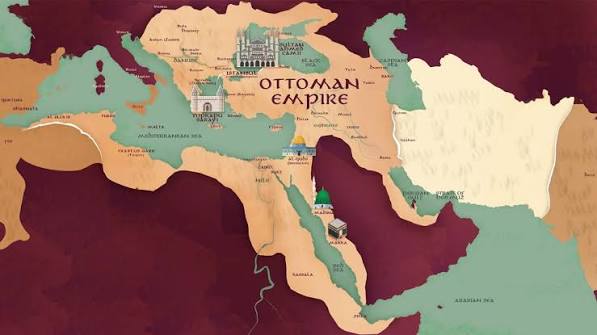
For over six centuries, the Ottoman Empire was a superpower that bridged East and West, ruling from the gates of Vienna to the deserts of Arabia. Its collapse in the early 20th century gave birth to the Republic of Turkey, a state that deliberately turned its back on its imperial past. Yet today, the Ottoman legacy is experiencing a remarkable revival—not just in museums and architecture, but in the very fabric of Turkish politics, culture, and identity.
Understanding this legacy is key to grasping modern Turkey’s complex relationship with its history. From the secular reforms of Atatürk to the neo-Ottomanist policies of Erdoğan, the empire’s shadow looms large. This article explores how a fallen dynasty continues to shape a nation’s soul, and why the debate over its meaning is far from settled.
The Rise: From a Small Principality to a World Power
The Ottoman Empire began as a tiny beylik (principality) in northwestern Anatolia around 1299, founded by Osman I on the frontier of the weakening Byzantine Empire. Over the next two centuries, it expanded rapidly, conquering the Balkans and, in 1453, achieving its defining moment: the fall of Constantinople under Mehmed II. This conquest ended the Byzantine Empire and transformed the city into Istanbul, the Ottoman capital and a global crossroads.
By the 16th century, under Suleiman the Magnificent (r. 1520–1566), the empire reached its zenith, spanning three continents—Southeast Europe, Western Asia, and North Africa—with a population of 30–35 million. It was a multi-ethnic, multi-religious state where Turks, Arabs, Greeks, Armenians, Kurds, Jews, and many others coexisted under a sophisticated system of governance.
The Ottoman System: A Unique Blend of Power and Diversity
The empire’s success lay in its adaptability. The sultan held absolute authority but ruled through a complex bureaucracy. One of its most distinctive institutions was the devshirme system, which recruited Christian boys for elite military (Janissaries) and administrative roles—a remarkable mechanism for social mobility. Law combined Sharia (Islamic law) with kanun (sultanic secular law), allowing flexibility in governing diverse populations.
The millet system granted religious communities—Orthodox Christians, Jews, Armenian Christians—autonomy over personal law and education. This fostered a cosmopolitan society, with Istanbul as a melting pot of cultures, languages, and faiths. The empire’s economy thrived on control of key trade routes, from the Silk Road to spice routes, supported by a robust guild system.
The Fall: The ‘Sick Man of Europe’
The 19th century brought decline. Military technological lag, nationalist uprisings among subject peoples, European imperial pressure, and financial bankruptcy (default in 1875) earned the empire the label ‘Sick Man of Europe.’ Territorial losses were staggering: Greece (1830), Algeria (1830), Egypt (1882), and nearly all of the Balkans by 1913.
Attempts at reform, such as the Tanzimat reforms (1839–1876), modernized law, education, and administration, but they couldn’t stem the tide. World War I proved fatal. Defeat as part of the Central Powers led to the Armistice of Mudros (1918) and the subsequent Turkish War of Independence (1919–1923), led by Mustafa Kemal Atatürk. The sultanate was abolished in 1922, and the caliphate in 1924, ending 600 years of Ottoman rule.
The Republican Break: Erasing the Ottoman Past
Atatürk’s new Republic of Turkey was built on a deliberate rejection of Ottoman identity. His reforms were revolutionary: adoption of the Latin alphabet (1928), secularization of law and education, abolition of the caliphate, and promotion of a Turkish national identity over Ottoman cosmopolitanism. The early Republic’s historiography framed the Ottoman era as backward and corrupt—a ‘dark age’ to be overcome.
This narrative minimized Ottoman history in school curricula, focusing instead on pre-Ottoman Turkic origins and the Republic’s modernizing achievements. For decades, the empire was a source of embarrassment, a relic of a theocratic, multi-ethnic past that contradicted the new secular, nationalist vision.
The Neo-Ottoman Revival: Reclaiming a Glorious Past
Since 2002, under President Recep Tayyip Erdoğan and the AKP, there has been a deliberate rehabilitation of Ottoman heritage. This ‘neo-Ottomanism’ seeks to restore Ottoman history as a source of national pride and soft power. Examples abound: the 2013 opening of the Panorama 1453 History Museum in Istanbul, the 2016 re-opening of the Hagia Sophia as a mosque (after being a museum since 1935), lavish celebrations of the 1453 conquest, and increased use of Ottoman motifs in state architecture and rhetoric.
Supporters argue this revival reconnects Turkey with its rich heritage and asserts its influence in former Ottoman territories—the Balkans, Middle East, and North Africa. Critics, however, see it as a political tool to consolidate conservative Muslim identity and project power, often at the expense of secular values and minority rights.
The Cultural Legacy: Beyond Politics
Regardless of political debates, the Ottoman cultural legacy is undeniable and deeply embedded in modern Turkey:
- Architecture: Mimar Sinan’s mosques—Süleymaniye in Istanbul and Selimiye in Edirne—are UNESCO World Heritage sites, masterpieces of engineering and design that still dominate skylines.
- Cuisine: Ottoman palace cuisine shaped modern Turkish food, from kebabs and mezes to baklava and Turkish coffee, influencing Balkan, Levantine, and Middle Eastern cuisines.
- Music and Arts: Ottoman classical music, calligraphy, and miniature painting remain vibrant traditions, celebrated in festivals and museums.
- Language: Although the alphabet changed, Ottoman Turkish vocabulary and expressions persist in modern Turkish, enriching its lexicon.
This cultural heritage transcends politics, offering a shared identity that many Turks embrace, regardless of their views on the empire’s political legacy.
The Debate Continues: What Does the Ottoman Legacy Mean Today?
The Ottoman Empire’s legacy is a battlefield of interpretations. For some, it represents a glorious past of conquest and civilization; for others, a period of oppression and backwardness. The official Republican narrative once demonized it; the current government romanticizes it. The truth lies somewhere in between.
The empire was neither a golden age nor a dark age—it was a complex, multifaceted state that left an indelible mark on the region. Its legal systems, architectural wonders, and cultural fusion continue to influence modern Turkey and the wider world. As Turkey navigates its future, the Ottoman past remains a powerful lens through which its identity is contested and defined.
The Ottoman Empire may have fallen a century ago, but its legacy is far from dead. In modern Turkey, it is a living force—shaping politics, culture, and identity. Whether viewed as a source of pride or a cautionary tale, the empire’s imprint is undeniable. As Turkey continues to evolve, the debate over its Ottoman heritage will remain a central thread in its national story, reminding us that history is never truly past.
Summary
- The Ottoman Empire lasted over 600 years, reaching its peak under Suleiman the Magnificent in the 16th century.
- Its collapse after World War I led to the founding of the Republic of Turkey under Atatürk, who deliberately broke with Ottoman identity.
- The AKP era has seen a neo-Ottomanist revival, rehabilitating Ottoman heritage as a source of national pride and soft power.
- The cultural legacy—architecture, cuisine, music, and language—remains deeply embedded in modern Turkey, transcending political debates.
- The Ottoman past is a contested symbol, interpreted differently by secularists, nationalists, and Islamists, reflecting broader struggles over Turkey’s identity.
FAQ
Q: When did the Ottoman Empire start and end?
A: The empire was founded around 1299 by Osman I and lasted until 1922, when the sultanate was abolished. The caliphate was abolished in 1924.
Q: What was the millet system?
A: The millet system was an Ottoman governance mechanism that granted religious communities—such as Orthodox Christians, Jews, and Armenian Christians—autonomy over personal law and education, allowing them to manage their own affairs.
Q: Why did the Ottoman Empire decline?
A: Decline was driven by military technological lag, nationalist uprisings among subject peoples, European imperial pressure, and financial bankruptcy, culminating in defeat in World War I.
Q: How did Atatürk break with the Ottoman past?
A: Atatürk adopted the Latin alphabet, secularized law and education, abolished the caliphate, and promoted a Turkish national identity over Ottoman cosmopolitanism, framing the empire as a backward era.
Q: What is neo-Ottomanism?
A: Neo-Ottomanism is a political and cultural movement, particularly associated with the AKP, that seeks to revive Ottoman heritage as a source of national pride and to project Turkish influence in former Ottoman territories.
Leave a Reply