Tag: Auschwitz

  • The Bombs That Never Fell: Why the Allies Didn’t Target Auschwitz

    The Bombs That Never Fell: Why the Allies Didn’t Target Auschwitz

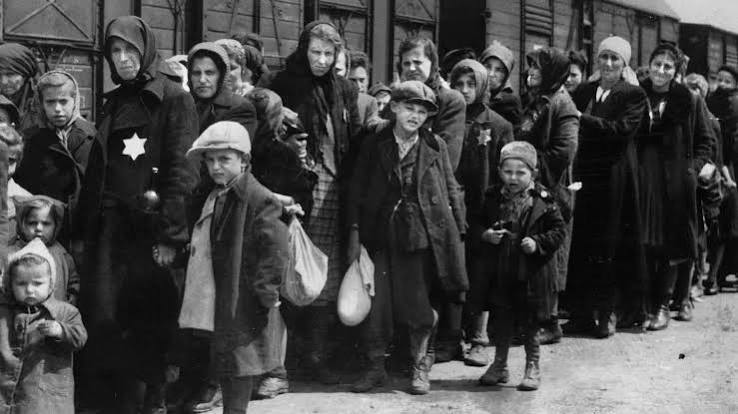
    Why Wasn't Auschwitz Bombed? - Warfare History NetworkIn the summer of 1944, American B-17 bombers roared over the Polish countryside, their bomb bays opening over the I.G. Farben synthetic fuel plant at Monowitz, just five miles from the gas chambers of Auschwitz-Birkenau. The bombs shook the earth, and prisoners in the camp felt the vibrations. Some dared to hope that the next wave would hit the crematoria. It never did.

    This is the story of a moral and military quandary that has haunted historians for decades: why did the Allies, who had the planes, the intelligence, and the proximity, choose not to bomb Auschwitz? The answers are tangled in strategy, bureaucracy, and the brutal calculus of war, but they begin with a simple fact: the Allies knew, and they did not act.

    The Knowledge They Had

    By mid-1944, the Allies possessed irrefutable evidence of the horrors at Auschwitz. The most detailed account came from two escapees, Rudolf Vrba and Alfred Wetzler, who in April 1944 produced a report describing the camp’s layout, the gas chambers, and the crematoria in chilling detail. The report reached London and Washington within weeks. Polish underground intelligence had been sending similar warnings since 1942. Aerial reconnaissance photographs taken during the Monowitz raids even captured the gas chambers and crematoria, though interpreters at the time failed to identify them.

    Yet knowledge did not translate into action. When Jewish organizations formally petitioned the U.S. and British governments in May 1944 to bomb Auschwitz or the railway lines leading to it, the requests were met with a wall of official reluctance. The U.S. War Department called the idea “impracticable” and warned it would require “the diversion of considerable air support essential for the success of our forces elsewhere.” Assistant Secretary of War John J. McCloy added a chilling caveat: bombing might “provoke even more vindictive action by the Germans.”

    The Strategic Priorities of 1944

    The summer of 1944 was not a time of slack for Allied air power. D-Day had just launched on June 6, and the Normandy campaign was consuming vast resources. The strategic bombing offensive—Operation Pointblank—was hammering German oil production, aircraft factories, and transportation networks. Every bomber was assigned to a target that would shorten the war. The prevailing doctrine, articulated by Churchill and Roosevelt, was that the fastest way to save the victims was to win the war outright. Diverting planes to Auschwitz, the argument went, would not end the killing—it might even prolong it.

    This was not a decision made lightly, but it was made firmly. In July 1944, McCloy wrote again, repeating that bombing Auschwitz “might provoke even more vindictive action by the Germans.” The requests were denied, and no serious military planning was ever undertaken.

    What the Bombers Could Have Done

    The counterargument is stark: Allied aircraft were already flying over the area. On April 4, 1944, U.S. planes bombed the I.G. Farben plant at Monowitz, and on August 20, 1944, 127 B-17 Flying Fortresses dropped their loads on the same target, with bombs landing within two miles of the gas chambers. A raid on September 13 caused bombs to fall on Auschwitz I, killing both SS personnel and prisoners. These raids proved that the Allies had the capability to reach the camp complex. The moral question is whether they had the will.

    Proponents of bombing argued that even an imprecise raid could disrupt the killing machinery, destroy the rail lines, or at least demonstrate Allied resolve. Rail lines, however, were a weak point in the argument—German engineers could repair them within days. The gas chambers themselves were harder to hit without precision, and a direct hit risked killing the very prisoners the Allies sought to save.

    The Soviet Factor and the Politics of Rescue

    Another layer of complexity was the geopolitical reality. Auschwitz lay in the Soviet zone of operations. The Western Allies argued that the Red Army was best positioned to liberate the camp, which it did on January 27, 1945. Stalin was never consulted about bombing requests, and Soviet cooperation was never explored. Some historians suggest that the Western Allies were reluctant to expend resources in a theater where the Soviets would claim the credit.

    But the deeper issue was the “rescue versus victory” debate. Jewish organizations and some politicians argued that targeted rescue operations could save lives without delaying victory. The Allies countered that every bomb diverted to Auschwitz was a bomb not dropped on a German factory or a V-2 launch site. In the brutal arithmetic of war, the lives of the prisoners were weighed against the lives of soldiers and civilians across Europe.

    The Aftermath and the Enduring Question

    In November 1944, Himmler ordered the cessation of gassings, and the crematoria were dismantled as the Red Army advanced. Auschwitz was liberated on January 27, 1945. The Allies had not bombed the camp, and the debate over why has never fully subsided. Historians have offered many explanations—military impracticality, strategic priorities, bureaucratic inertia, and even indifference. But the fact remains that the Allies had the intelligence, the aircraft, and the proximity. They chose not to act, and that choice has become a permanent scar on the moral history of World War II.

    The question of why the Allies did not bomb Auschwitz is not a comfortable one. It forces us to confront the limits of military power in the face of human evil, and the uncomfortable reality that even the most righteous war has its blind spots. The bombs that fell on Monowitz were aimed at German industry, not at the machinery of murder. In the end, the answer is a complex web of strategic calculation, political hesitation, and a failure of moral imagination that continues to resonate today.

    Summary

    • The Allies had credible intelligence about Auschwitz as early as 1942, and detailed reports by 1944, yet no bombing mission was ever ordered.
    • Requests from Jewish organizations to bomb the camp or rail lines were formally rejected by the U.S. War Department in 1944 as “impracticable” and a diversion of resources.
    • Allied aircraft bombed the nearby I.G. Farben plant at Monowitz multiple times in 1944, proving the area was within reach.
    • The official rationale was that bombing would not shorten the war and might provoke even more vindictive German actions.
    • The debate remains a moral flashpoint, highlighting the tension between military priorities and humanitarian intervention.

    FAQ

    Q: Was there ever a formal plan to bomb Auschwitz?
    A: No. Despite requests from Jewish organizations, the U.S. War Department and British government never authorized or planned a bombing mission against the camp complex or its rail infrastructure.

    Q: How close did Allied bombs come to the gas chambers?
    A: During a raid on August 20, 1944, bombs landed within two miles of the gas chambers at Birkenau. Another raid on September 13 caused bombs to fall on Auschwitz I, but these were accidental and not aimed at the camp.

    Q: Were the railway lines to Auschwitz ever bombed?
    A: No. The Allies never targeted the rail lines, despite arguments that disrupting the deportations of Hungarian Jews in mid-1944 could have saved lives.

    Q: Did the Allies have enough information to act?
    A: Yes. The Vrba-Wetzler Report, Polish underground intelligence, and aerial reconnaissance provided detailed knowledge of the camp’s layout and the mass murders.

    Q: What was the main reason for not bombing?
    A: The official position was that bombing was “impracticable” and would divert resources from the strategic bombing campaign aimed at winning the war. There was also concern about precision and the risk of killing prisoners.
  • The Man Who Walked Into Hell: Witold Pilecki’s Voluntary Mission to Auschwitz

    The Man Who Walked Into Hell: Witold Pilecki’s Voluntary Mission to Auschwitz

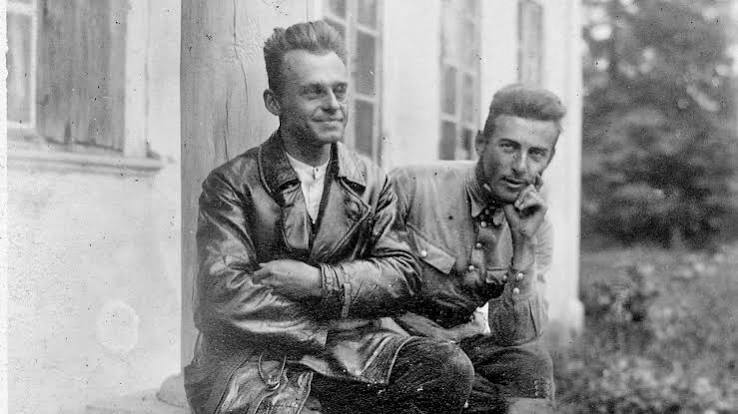
    In September 1940, a Polish cavalry officer named Witold Pilecki made a decision that defies easy comprehension. He walked into the heart of Nazi terror not as a prisoner, but as a volunteer. His mission: to infiltrate Auschwitz, gather intelligence, and organize resistance from within. For nearly two and a half years, he lived among the horrors he had come to document, sending out reports that would later be dismissed by Allied leaders who couldn’t believe the truth.

    Pilecki’s story is not just a tale of extraordinary courage. It is a stark reminder of how easily truth can be ignored when it is inconvenient. This is the account of a man who risked everything to bear witness—and who paid the ultimate price not at the hands of the Nazis, but his own country’s post-war communist regime.

    The Man Behind the Mission

    Witold Pilecki was born on May 13, 1901, in Olonets, Russia, into a Polish noble family. Raised in the eastern borderlands, he grew up with a deep sense of patriotism and duty. He fought in the Polish-Soviet War of 1919–1921, then settled as a cavalry officer and landowner. When Germany invaded Poland in September 1939, Pilecki was already involved in underground resistance. He helped organize networks that would become the foundation of the Polish Underground State.

    By 1940, the Nazis had established Auschwitz as a concentration camp for Polish political prisoners. Pilecki saw an opportunity. If he could get inside, he could gather firsthand intelligence on the camp’s operations and atrocities—and perhaps even spark an uprising. In September 1940, he deliberately allowed himself to be caught in a Warsaw street roundup, using the cover name “Tomasz Serafiński.” On September 22, he arrived at Auschwitz as prisoner number 4859.

    Inside the Camp

    The conditions Pilecki encountered were beyond anything he had imagined. Prisoners were beaten, starved, and worked to death. Executions were routine. Yet Pilecki’s resolve did not waver. He began quietly recruiting fellow prisoners who shared his commitment to resistance. Within months, they formed the ZOW (Związek Organizacji Wojskowej—Union of Military Organization), a secret cell dedicated to gathering intelligence and preparing for a possible uprising.

    The ZOW operated under the constant threat of betrayal. Any slip could mean torture and death. Despite this, they managed to smuggle out detailed reports on camp conditions, including the gas chambers and medical experiments. Pilecki’s reports were among the earliest firsthand accounts of the Holocaust to reach the outside world.

    The Uprising That Never Came

    Pilecki and his comrades hoped that if the Allies knew the truth, they would act—perhaps by bombing the camp or supporting an armed uprising. They prepared plans, cached weapons, and waited for a signal that never came. The Allies received Pilecki’s reports but were skeptical. Many officials simply could not believe the scale of the atrocities. Others argued that bombing the camp was not feasible or strategically justified.

    By 1943, Pilecki realized that an uprising without outside support would be suicidal. He also knew that his continued presence endangered the ZOW network. On the night of April 26–27, 1943, he escaped with two comrades, using a diversion and bribed guards. He had spent nearly two and a half years inside Auschwitz.

    The Report and Its Fate

    After his escape, Pilecki wrote a detailed account of his experiences—known as the Pilecki Report. He delivered it to the Polish Underground, who passed it to the British government. The report described the camp’s layout, the daily brutality, the mass murder of Jews, and the possibility of an uprising. It was a treasure trove of intelligence.

    Yet the Allies did little with it. The report was filed away, and Auschwitz remained a target that was never bombed. The British government later acknowledged receiving the information but said it was “not considered to be of great importance.” Pilecki’s mission had succeeded in gathering the truth, but the world was not ready to act on it.

    War After Auschwitz

    Pilecki did not stop fighting after his escape. In 1944, he participated in the Warsaw Uprising against the Germans. When the uprising was crushed, he was captured and sent to POW camps in Lamsdorf and Murnau. He survived the war, but his ordeal was far from over.

    In 1945, Poland fell under Soviet influence, and the new communist government viewed former resistance fighters as enemies. Pilecki returned to Poland in 1947, hoping to resume a normal life. Instead, he was arrested and accused of espionage and plotting to overthrow the government. After a show trial, he was executed by firing squad on May 25, 1948, in Warsaw’s Mokotów Prison. His body was buried in a secret location.

    Legacy

    For over four decades, Pilecki’s name was erased from Polish history. It was only after the fall of communism in 1990 that he was officially rehabilitated. In 2006, he was posthumously awarded the Order of the White Eagle, Poland’s highest state decoration. Today, he is remembered as a national hero—a man who voluntarily entered hell to bear witness and who paid for his courage with his life.

    Witold Pilecki’s story is a reminder that courage is not always rewarded, and that truth does not always prevail. He gave up his freedom, risked his life, and ultimately lost it—all in the hope that his reports would move the world to action. They did not. But his legacy endures as a testament to the power of individual conscience in the face of unimaginable evil. In a world that often looks away, Pilecki chose to look directly into the abyss and tell us what he saw.

    Summary

    • Witold Pilecki voluntarily infiltrated Auschwitz in September 1940, becoming prisoner number 4859.
    • Inside the camp, he organized a resistance network called ZOW and smuggled out detailed reports on atrocities.
    • His reports were largely ignored by Allied leaders, who doubted their accuracy or deemed them not actionable.
    • Pilecki escaped in April 1943, fought in the Warsaw Uprising, and was later executed by Poland’s communist regime in 1948.
    • He was rehabilitated in 1990 and posthumously awarded the Order of the White Eagle in 2006.

    FAQ

    Q: Why did Witold Pilecki volunteer to enter Auschwitz?
    A: Pilecki’s mission was to gather intelligence on the camp’s conditions and atrocities, organize a resistance network inside, and prepare for a potential uprising or Allied liberation. He believed that if the Allies knew the truth, they would act.

    Q: How did he escape from Auschwitz?
    A: In April 1943, Pilecki escaped with two comrades after being assigned to the camp bakery, which gave him access to the outer perimeter. The escape was aided by a planned diversion and bribed guards.

    Q: What was the Pilecki Report?
    A: The Pilecki Report was a detailed firsthand account of Auschwitz, including the gas chambers, medical experiments, and daily life in the camp. It was delivered to the Polish Underground and then to the British government, but was largely ignored.

    Q: Why didn’t the Allies bomb Auschwitz?
    A: The decision not to bomb Auschwitz remains debated. Some argue it was not strategically feasible, while others believe the Allies were skeptical of the reports or prioritized other military objectives.

    Q: How was Pilecki treated after the war?
    A: Pilecki returned to Poland in 1947, where the Soviet-backed communist government arrested him on false charges of espionage. He was executed in 1948, and his name was cleared only after the fall of communism in 1990.