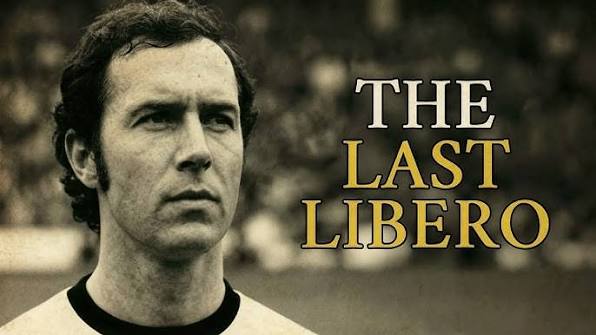
In the summer of 1996, Matthias Sammer lifted the European Championship trophy for Germany, having just completed a tournament that redefined the sweeper’s role. He played as a free defender, roaming behind his back line, launching attacks, and even scoring crucial goals. It was the last great hurrah for a position that had dominated football for three decades. By the end of the decade, the libero was all but extinct, a casualty of tactical evolution and the sport’s relentless march toward athleticism and pressing.
Today, the libero is a ghost on the modern pitch. Teams play with flat back fours, zonal marking, and high defensive lines. The idea of a player who doesn’t mark anyone, who sweeps up behind the defense, and who carries the ball into midfield seems like a relic from a bygone era. But for a generation of fans and players, the libero was the most beautiful expression of defensive art—a position that combined last-ditch defending with the vision of a playmaker.
This is the story of that forgotten art: how the libero evolved from a purely destructive ‘bolt’ in Italian catenaccio to an attacking weapon in the hands of Franz Beckenbauer, and why it vanished so completely.
The Birth of the Sweeper: Catenaccio’s Last Line
The libero’s roots lie in the Italian obsession with defense. In the 1950s and 1960s, coaches like Nereo Rocco and Helenio Herrera perfected catenaccio, or ‘door-bolt’—a system designed to smother opponents. At the back, a sweeper, or libero, sat behind the man-marking defenders, with no specific opponent to mark. He was the ‘free’ player, the bolt that locked the door.
In those early days, the libero was purely destructive. His job was to sweep up loose balls, clear danger, and mark space. He rarely crossed the halfway line. Inter Milan’s Armando Picchi, one of the first great liberos, was a hard-tackling, no-nonsense defender who embodied the role’s defensive spirit. But the position’s potential for more was already apparent: because he wasn’t tied to an opponent, he could read the game and pick his moments to step forward.
Beckenbauer’s Revolution: The Libero as Playmaker
If catenaccio gave the libero life, Franz Beckenbauer gave it wings. In the late 1960s, the German defender began doing something unheard of: he carried the ball out of defense, surged into midfield, and even scored goals. ‘Der Kaiser’ redefined the sweeper as an attacking force, a ‘quarterback’ who dictated play from deep.
Beckenbauer’s performances at the 1970 and 1974 World Cups were a revelation. He roamed freely behind his defense, stepping up to intercept passes, then launching attacks with precise long-range passes. In the 1974 final against the Netherlands, he neutralized Johan Cruyff’s movement by stepping out of defense to close him down—a move that would have been impossible for a traditional marker. West Germany won 2-1, and the libero became the most celebrated position in football.
The Golden Age: Scirea, Baresi, and the Italian School
Italy, the libero’s birthplace, produced its finest exponents in the 1980s. Gaetano Scirea, who won the 1982 World Cup, was the anti-Picchi: elegant, technically gifted, and a model of sportsmanship (he never received a red card in his career). He played the role with grace, stepping forward to join midfield and even scoring goals—a rarity for a sweeper.
Franco Baresi, the AC Milan legend, adapted the libero to the modern era. In Arrigo Sacchi’s high-pressing, zonal system of the late 1980s, Baresi played as a sweeper within a flat back four, sweeping up behind his center-backs while also initiating attacks. His reading of the game was so exceptional that he seemed to anticipate every move before it happened. Milan’s dominance in Europe and Baresi’s performances in World Cup 1990 and 1994 (where he played despite injury) cemented the libero’s reputation as a thinking fan’s position.
The Last Great Libero: Matthias Sammer
By the 1990s, the libero was already in decline, but Matthias Sammer proved it could still win at the highest level. At Euro 96, the German played as a sweeper with a license to attack. He scored crucial goals, including one against Russia in the group stage, and was named European Footballer of the Year. His performances were a throwback to Beckenbauer—aggressive, intelligent, and decisive.
But even as Sammer triumphed, the game was changing. The tactical winds were shifting toward zonal marking, offside traps, and a flat back four. The libero’s freedom created a ‘hole’ that modern attacking midfielders could exploit, and his deep position made it harder to play a high line. The rise of pressing, popularized by Dutch and Spanish coaches, meant that defenders needed to be athletic and aggressive, not just intelligent.
Why the Libero Vanished: A Tactical Autopsy
The libero’s death was not sudden but a slow decline across the 1990s. Several factors contributed:
- Zonal marking: Coaches abandoned man-marking in favor of zonal systems, where each defender is responsible for a zone rather than an opponent. This made a free defender redundant.
- Offside traps: Modern defenses use a high line and step up in unison to catch attackers offside. A sweeper playing deep would break this line, making the trap impossible.
- Pressing: The game became more intense, with teams pressing high up the pitch. A libero dropping deep would leave a hole in midfield, allowing opponents to play through.
- Athleticism: Players became faster and stronger, and the libero’s need for acceleration and reading of the game was no longer enough. Teams needed defenders who could match quick, physical strikers.
By the early 2000s, the libero was a relic. The last notable exponents were players like Fernando Hierro and Roberto Ayala, who occasionally dropped deep but were primarily conventional center-backs. The position survived in youth football and lower leagues, but at the top level, it was gone.
The Libero’s Legacy: Echoes in Modern Football
Though the classic libero is extinct, its DNA survives in modern positions. Sweeper-keepers like Manuel Neuer and Alisson Becker play a similar role, rushing off their line to clear balls and starting attacks with short passes. Deep-lying playmakers like Andrea Pirlo and Jorginho drop between the center-backs to receive the ball—a modern approximation of the libero’s attacking freedom.
Some teams have even tried to revive the role. At the 2014 World Cup, Germany’s Jerome Boateng occasionally dropped into a sweeper position, and Pep Guardiola has experimented with a ‘false libero’ at Manchester City, using John Stones or Aymeric Laporte to step into midfield. But these are hybrid solutions, not the pure libero of old.
The libero’s legacy is more than tactical—it’s cultural. It represented a time when football valued intelligence and elegance over pure athleticism. Players like Beckenbauer, Scirea, and Baresi were celebrated as ‘professors’ of the game, artists who could defend and create in equal measure. The position’s demise was inevitable, but its memory endures among those who love the beautiful game’s intellectual side.
The libero was a product of its time, a tactical innovation that flourished for three decades before the game moved on. But its influence persists, not just in the sweeper-keepers and deep-lying playmakers of today, but in the ideal that defenders can be more than destroyers—they can be creators. The football world may never see another Beckenbauer, but the ghost of the libero still wanders the pitch, whispering that the best defense is not just about stopping goals, but about starting something beautiful.
Summary
- The libero, or sweeper, was a defensive position that operated behind the back line with no man-marking duties, sweeping up loose balls and initiating attacks.
- It evolved from catenaccio’s purely defensive ‘bolt’ to an attacking weapon in the hands of Franz Beckenbauer, who redefined the role in the 1970s.
- The golden age of the libero ran from the 1960s to the 1990s, with legends like Gaetano Scirea, Franco Baresi, and Matthias Sammer.
- The role vanished due to the rise of zonal marking, offside traps, pressing, and increased athleticism, which made a free defender redundant.
- The libero’s legacy lives on in modern sweeper-keepers, deep-lying playmakers, and occasional tactical experiments at top clubs.
FAQ
Q: What exactly was the libero’s role?
A: The libero was a defender who played behind the main defensive line, with no specific opponent to mark. They swept up loose balls, covered for beaten teammates, and often carried the ball forward to start attacks.
Q: Why was the libero called ‘free’?
A: ‘Libero’ is Italian for ‘free.’ Because they weren’t assigned a man to mark, they had the freedom to read the game and position themselves where needed, both defensively and offensively.
Q: Who was the greatest libero of all time?
A: Franz Beckenbauer is widely considered the greatest. He transformed the role from a purely defensive position into an attacking playmaker role, leading West Germany to the 1974 World Cup title.
Q: Why did the libero disappear?
A: The rise of zonal marking, offside traps, and high pressing made the libero’s deep position a liability. Modern defenses need to play as a flat, coordinated unit, and the libero’s freedom created gaps that opponents could exploit.
Q: Are there any modern players who play like a libero?
A: Yes, in a sense. Sweeper-keepers like Manuel Neuer and deep-lying playmakers like Andrea Pirlo share some of the libero’s traits, and some coaches have experimented with using center-backs in a ‘false libero’ role, but the classic position is largely extinct.
Leave a Reply