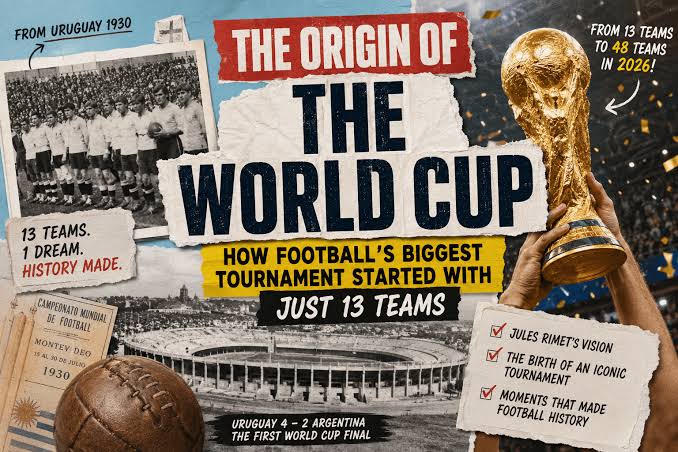
In 1930, thirteen teams gathered in Uruguay for a tournament that would eventually captivate the planet. The first World Cup was a modest affair—no qualification rounds, a handful of European stragglers, and a final watched by a fraction of today’s audience. Fast forward to 2022, and the spectacle in Qatar drew an estimated 5 billion cumulative viewers, with the final alone attracting 1.5 billion. That trajectory—from a regional curiosity to a global behemoth—is not just a story of sports; it’s a mirror of geopolitical shifts, technological leaps, and the relentless commercialization of entertainment.
This article breaks down the key expansions, the political undercurrents, and the commercial juggernaut that transformed a simple football competition into the world’s most-watched event. The numbers are stark: 13 teams to 48 by 2026, a prize pool of $440 million, and a host selection process that now spans three countries. Understanding this evolution requires more than a glance at the scorelines; it demands a look at the forces that shaped every edition, from fascist propaganda to satellite broadcasting.
The Humble Beginnings: Uruguay 1930
The first World Cup was an act of faith. FIFA, founded in 1904, had long championed a standalone professional championship, but it was only in 1928 that the organization voted to hold one. Uruguay, fresh off Olympic gold in 1924 and 1928 and celebrating its centenary of independence, was the natural host. The tournament featured 13 teams—all invited, no qualifications—divided into four groups. Only four European nations made the transatlantic journey: France, Belgium, Romania, and Yugoslavia. The long, expensive trip deterred the rest, leaving a predominantly South American field. Uruguay beat Argentina 4–2 in the final, a fitting start for a nation that had already proven its footballing pedigree on the Olympic stage.
The Expansion Decades: 1934–1982
The tournament quickly grew from 13 to 16 teams in 1934, a format that would hold for decades, with a notable hiccup in 1950 when 13 teams returned post-WWII. That edition also featured a round-robin final group instead of a single final—a quirk that produced one of the most iconic upsets: England’s 1–0 loss to the United States. The 1950s and 1960s saw the tournament solidify its structure, but it wasn’t until 1982 that FIFA expanded to 24 teams, introducing a second group stage that added complexity and more matches. That expansion reflected the growing number of FIFA member nations, especially from Africa and Asia, who demanded a seat at the table.
The Modern Era: 1998 to 2022
The 1998 World Cup in France marked a turning point. The field jumped to 32 teams, a format that remains familiar: eight groups of four, followed by a knockout stage. This structure struck a balance between inclusivity and quality, and it has been the template for the last seven tournaments. The 2022 edition in Qatar, while controversial for its host selection and human rights record, showcased the tournament’s global reach. Approximately 210 national teams competed in qualification, and the 64 matches were broadcast across every continent, with streaming platforms and social media amplifying the experience. The final between Argentina and France drew 1.5 billion viewers, a testament to the sport’s universal appeal.
The 2026 Expansion: 48 Teams and a New Frontier
The next World Cup, hosted jointly by the USA, Canada, and Mexico—the first three-nation host—will expand to 48 teams. This is the most significant change since 1998, and it’s not without critics. The format will feature 12 groups of four, with 32 teams advancing to the knockout stage. Proponents argue it gives more nations a chance to participate, growing the sport’s footprint. Skeptics worry about diluted quality and fixture congestion. Either way, the expansion signals FIFA’s ambition to turn the World Cup into an even more inclusive global festival, one that touches every corner of the planet.
Political and Historical Influences: From Fascism to the Cold War
The World Cup has never been apolitical. The 1934 and 1938 tournaments were held under the shadow of rising fascism, and Italy’s wins were exploited by Mussolini’s propaganda machine. The 1942 and 1946 editions were canceled due to World War II, with the trophy famously hidden under a bed in Italy to keep it from Nazi hands. The Cold War era brought its own tensions: in 1974, East Germany beat West Germany in a politically charged group match, and the 1978 tournament in Argentina was criticized as a cover for the military junta’s abuses. These moments remind us that the World Cup is not just a game; it’s a stage for national identity and geopolitical maneuvering.
The Trophy and Its Lore
The original Jules Rimet Trophy, named after the FIFA president who championed the tournament, was awarded permanently to Brazil after their third win in 1970. It was then stolen in 1983 and never recovered, likely melted down. The current trophy, designed by Silvio Gazzaniga, was introduced in 1974. It stands 36.8 cm tall, weighs 6.175 kg, and is made of solid 18-carat gold—a symbol of the tournament’s immense value and prestige. The trophy’s journey mirrors the World Cup’s own evolution from a modest prize to a priceless artifact.
Broadcasting and Commercial Growth
The World Cup’s transformation into a global phenomenon is inseparable from broadcasting. The 1954 tournament in Switzerland was the first to be televised. By 1966, satellite technology allowed live broadcasts to multiple continents. The 1970 edition, broadcast in color, reached an estimated 600 million viewers. Under FIFA president João Havelange in the 1980s, the sponsorship model exploded, turning the tournament into a commercial powerhouse. The 1998 World Cup rode the internet wave, and by 2010, social media had become a co-host: that tournament generated 1.2 billion Facebook interactions. The 2022 edition saw streaming platforms and short-form video dominate, making the World Cup a multi-platform experience that transcends television.
The Global Game: Host Nations and Champions
The list of host nations reads like a geopolitical timeline: from Uruguay in 1930 to Qatar in 2022, and now a tri-nation bid in 2026. Each host has left its mark, from Mexico in 1970 and 1986 to South Africa in 2010, the first African host, and Japan/South Korea in 2002, the first co-hosts. The champions’ list is equally telling. Brazil leads with five titles, followed by Germany and Italy with four each, Argentina with three, and France and Uruguay with two. England and Spain have one each. These nations have defined the tournament’s history, but the expansion to 48 teams will likely diversify the pool of contenders, even if the traditional powerhouses remain dominant.
The World Cup has come a long way from its 13-team start in a small South American country. It has survived wars, boycotts, and controversies, while growing into a global event that unites billions. The expansion to 48 teams in 2026 is the latest chapter in this evolution, one that promises to bring more nations into the fold. But the core appeal remains unchanged: a simple game that, for a month every four years, makes the world feel a little smaller and a lot more connected.
Summary
- The first World Cup in 1930 featured 13 teams, no qualifications, and only four European participants.
- The tournament expanded to 16 teams in 1934, 24 in 1982, 32 in 1998, and will reach 48 in 2026.
- Political forces have shaped the World Cup, from fascist propaganda to Cold War tensions.
- Broadcasting and sponsorship turned the World Cup into a global commercial juggernaut, with 5 billion viewers in 2022.
- Brazil holds the record with five titles, while the trophy’s history includes a theft and a redesign.
FAQ
Q: Why did only 13 teams participate in the first World Cup?
A: The 1930 tournament was held in Uruguay, and the long, expensive transatlantic journey deterred many European teams. Only four made the trip, resulting in a 13-team field.
Q: How has the World Cup format changed over time?
A: The tournament has expanded from a simple group stage and knockout in 1930 to a 16-team format in 1934, a 24-team format in 1982, a 32-team format in 1998, and will feature 48 teams in 2026.
Q: What is the significance of the 2026 World Cup?
A: The 2026 edition will be hosted by the USA, Canada, and Mexico—the first three-nation host—and will feature 48 teams, the largest field ever.
Q: Which country has won the most World Cups?
A: Brazil has won five titles (1958, 1962, 1970, 1994, 2002).
Q: How has television impacted the World Cup’s popularity?
A: Broadcasting allowed the tournament to reach a global audience, starting with the first televised World Cup in 1954 and expanding to satellite and color broadcasts by the 1960s and 1970s, culminating in 5 billion viewers in 2022.
Leave a Reply