Tag: tactics

  • The Wingless Wonders: How England’s 1966 World Cup Victory Reshaped Football Tactics

    The Wingless Wonders: How England’s 1966 World Cup Victory Reshaped Football Tactics

    On July 30, 1966, at Wembley Stadium, Geoff Hurst scored his third goal in extra time to seal a 4–2 win over West Germany, and England had its first—and so far only—World Cup title. But beneath the delirium of the final whistle lay a quiet tactical revolution. Manager Alf Ramsey had dismantled the conventional wisdom that wingers were essential to attacking play, and in doing so, he didn’t just win a tournament; he offered a template for the future of football.

    Ramsey’s system, derided as the ‘wingless wonders,’ was a radical departure from the status quo. It wasn’t just about removing wingers—it was about reshaping the midfield, redefining the striker’s role, and prioritizing team shape over individual flair. The approach was pragmatic, disciplined, and extraordinarily effective, and its echoes can be heard in every modern team that presses, rotates, and plays without a traditional number 9.

    The Tactical Landscape Before 1966

    To understand the shock of Ramsey’s revolution, you need to look at the world England was playing in. The WM formation—a 3-2-2-3 that had dominated since the 1930s—was crumbling. Brazil’s 4-2-4, with its dazzling attacking quartet, had won the 1958 and 1962 World Cups and was considered the height of modern play. Meanwhile, Italy’s catenaccio system, perfected by Helenio Herrera at Inter Milan, had won back-to-back European Cups in 1964 and 1965. It was a defensive masterclass that prioritized stopping the opponent over creating chances.

    The 1962 World Cup in Chile had been brutally physical, and the game’s athletic demands were rising. Into this maelstrom stepped Alf Ramsey, appointed England manager in 1963. He had a clear vision, and it didn’t include the traditional English winger—a position as beloved as the striker in the nation’s football culture. Ramsey’s declaration that England would ‘win without wingers’ was met with disbelief and hostility. It was heresy.

    But Ramsey wasn’t being contrarian for its own sake. He saw that the 4-2-4 left teams vulnerable in midfield, and that catenaccio’s negativity could be beaten by patience and movement. His solution was a hybrid—a 4-4-2 that became known as the ‘wingless wonders’—that emphasized compactness and control.

    The Anatomy of Ramsey’s System

    At its core, Ramsey’s system was a 4-4-2, but it was a 4-4-2 unlike anything seen before. The midfield was narrow, with four players—Alan Ball, Nobby Stiles, Bobby Charlton, and Martin Peters—packed into the center. There were no traditional wide midfielders; instead, the full-backs, George Cohen and Ray Wilson, provided width, but they were disciplined, defensive first and foremost. This narrow setup suffocated opponents in the center of the pitch, where most teams still tried to build play.

    Nobby Stiles was the linchpin, a proto-‘destroyer’ or holding midfielder. His job was simple: man-mark the opponents’ most dangerous player out of the game. In the semi-final against Portugal, he shadowed Eusébio—the tournament’s top scorer with nine goals—so effectively that the great forward was reduced to a spectator until a late penalty. That role, now ubiquitous in modern football as the defensive midfielder, was revolutionary in 1966.

    Bobby Charlton was given a free role as a deep-lying playmaker, dropping off the striker to pick up the ball and drive forward. Geoff Hurst, the target man, was instructed to drop deep, dragging defenders out of position and creating space for the midfielders to run into. This was a precursor to the modern ‘false nine’—a striker who doesn’t stay on the shoulder of the last defender but instead comes deep to link play and open up channels for runners. Hurst’s mobility and selflessness were key to the system’s success, and it’s no coincidence that his hat-trick in the final came from exactly these movements.

    Ramsey’s England wasn’t a purely defensive side—it was a possession-based team that controlled games and struck quickly on the counter. The Wembley pitch, which was wide at 100 yards, suited this style, allowing England’s full-backs to push forward and the midfield to find space. Fitness was also a deliberate focus, with players conditioned to last the full 90 minutes plus extra time in July heat that sapped many European teams.

    The Controversies That Shaped the Narrative

    The tournament wasn’t without its dark moments. The quarter-final against Argentina descended into a bitter, defensive slog, culminating in Antonio Rattín’s sending-off for alleged dissent. Ramsey’s infamous description of the Argentinians as ‘animals’—later retracted—reflected the tension of a match that was more about disruption than football. England’s resilience in that game, and in the semi-final against Portugal, proved that the system could win ugly when necessary.

    The final itself was a microcosm of everything that was new and contentious about England’s approach. Hurst’s second goal, which made it 3–2 in extra time, is still debated today. The ball hit the crossbar, bounced down, and was ruled to have crossed the line by Swiss referee Gottfried Dienst, with assistance from linesman Tofiq Bahramov. Modern goal-line technology would almost certainly have confirmed the goal, but the dispute persists, adding to the mythos of the match. Hurst’s fourth goal, scored in the final minute after a pitch invasion, was also controversial—some argue play should have been stopped. But the result stood, and England had won.

    The Legacy: A Blueprint for Modern Football

    Ramsey’s wingless wonders were the direct ancestor of the modern 4-4-2 and 4-2-3-1. The narrow midfield with a holding player and a box-to-box runner is now the standard template in leagues across the globe. The ‘false nine’ role, popularized by players like Roberto Firmino and Lionel Messi in his later Barcelona years, has its roots in Hurst’s movements. And the emphasis on team shape over individual flair—a lesson reinforced by this tournament—has influenced generations of coaches from Arrigo Sacchi to Pep Guardiola.

    But there’s a paradox in Ramsey’s revolution. Some historians see him as a reactionary, simply adapting to the physical demands of the era rather than innovating. Others view him as a pragmatic genius who understood that winning mattered more than style. The truth is probably both. Ramsey didn’t invent a new system out of thin air; he synthesized existing ideas—the holding role, the narrow midfield, the dropping striker—and applied them with a discipline and rigor that was ahead of its time.

    The 1966 World Cup also marked a shift in the global game. It was the first with comprehensive TV coverage and the first to be broadcast live via satellite, making it a true global event. The tournament’s controversies, from the stolen Jules Rimet Trophy (found by a dog named Pickles) to the disputed goals, have become part of football’s cultural memory. But its tactical legacy is more profound: it proved that a well-organized team could beat more talented opponents, and that success was not a matter of tradition but of adaptation.

    England’s victory in 1966 was more than a moment of national glory—it was a turning point in football’s tactical evolution. Ramsey’s wingless wonders didn’t just win a World Cup; they demonstrated that the future belonged to systems that prioritized control, discipline, and collective movement over individual brilliance. The echoes of that approach are visible in every modern team that presses, rotates, and plays without a traditional winger or striker. While England has never won the World Cup again, the tactical blueprint from that summer at Wembley remains a permanent part of football’s DNA.

    Summary

    • Alf Ramsey’s ‘wingless wonders’ replaced the traditional winger with a narrow, packed midfield, a radical departure that shaped the modern 4-4-2 and 4-2-3-1.
    • Nobby Stiles’ role as a man-marking holding midfielder anticipated the modern defensive midfielder, while Geoff Hurst’s dropping deep was an early version of the false nine.
    • England’s possession-based, disciplined approach proved that team shape could overcome individual flair, a lesson that influenced European football’s tactical development.
    • The 1966 World Cup was the first with comprehensive TV coverage and live satellite broadcast, making it a global event that amplified the impact of England’s tactical innovation.
    • The tournament’s controversies, including the disputed ‘Wembley Goal’ and the ‘animals’ remark, are inseparable from its legacy, but the tactical revolution remains its most enduring contribution.

    FAQ

    Q: What was the ‘wingless wonders’ formation?
    A: It was a 4-4-2 hybrid with a narrow midfield—Alan Ball, Nobby Stiles, Bobby Charlton, and Martin Peters—and no traditional wingers. Full-backs provided width, and the system emphasized control and quick transitions.

    Q: How did Geoff Hurst’s role anticipate the false nine?
    A: Hurst was instructed to drop deep from the striker position, dragging defenders out of position and creating space for midfield runners. This is a precursor to modern false nines like Roberto Firmino or Lionel Messi.

    Q: Why was Nobby Stiles important?
    A: Stiles operated as a proto-destroyer, man-marking key opponents out of the game. His role in neutralizing Eusébio in the semi-final was pivotal, and it set a template for the defensive midfielder role we see today.

    Q: Was Ramsey’s approach purely defensive?
    A: No. It was a possession-based system with quick transitions. England controlled games and struck on the counter, as evidenced by their four goals in the final.

    Q: How has 1966 influenced modern football tactics?
    A: The 4-4-2 and 4-2-3-1 formations trace their lineage to Ramsey’s system. The emphasis on team shape, pressing, and positional discipline has become the standard in modern football.
  • The Rise of the Super Sub: How Impact Substitutes Rewrote Football’s Rulebook

    Why Football Substitution Rules Are Changing

    In the 1977 European Cup semi-final, Liverpool trailed Saint-Étienne 1-0 on aggregate. With 15 minutes left, a 20-year-old local lad named David Fairclough came off the bench and sprinted onto a through ball, slotting past the keeper to send Anfield into delirium. Fairclough earned the nickname ‘Supersub’ for that goal and many more like it. But in those days, he was a rarity—a player specifically deployed to change a game. Fifty years later, the super sub is a tactical staple, and the rules have shifted to accommodate a role that once barely existed.

    This is not just a story about individual heroes. It’s about how the laws of football have slowly, grudgingly allowed for more substitutions, and how managers have turned that allowance into a science. From one sub for injuries only in 1958 to five subs in the modern game, the change has been tectonic. At the 2022 World Cup, substitutes scored nearly a third of all knockout-stage goals—a number that would have been unthinkable in the era of Fairclough. The super sub isn’t a novelty anymore; it’s a necessity.

    From Injury Standby to Tactical Weapon

    For decades, the idea of a substitute was almost offensive to football’s purists. The game was meant to be 11 versus 11, a test of endurance and wit. Early substitution rules, introduced in the English Football League in 1958, allowed one replacement only for an injured player, and even then, the injured player had to leave the field. It wasn’t until 1965 that tactical substitutions were permitted—still one per team. The change was slow: two subs in 1967, three in 1995. Each increment opened new tactical possibilities, but it was the 2020 COVID-19 pandemic that forced the biggest leap. With congested fixtures and player welfare concerns, leagues temporarily allowed five subs, and many—including the Premier League—made it permanent by 2022. The 2022 World Cup followed suit, even adding a sixth for extra time.

    This evolution wasn’t just about numbers. It changed how managers think about the game. With one sub, you might replace a tired winger. With three, you could overhaul your entire front line. With five, you can chase a game, protect a lead, and rest key players all in one match. The bench became a tactical toolbox, and the super sub became a specialist.

    The Icons of the Bench

    Certain players have defined the art of the impact substitute. Ole Gunnar Solskjær scored 28 goals as a substitute for Manchester United, but none more famous than his stoppage-time winner in the 1999 Champions League final. That goal was not a fluke—it was the product of Sir Alex Ferguson’s belief that Solskjær’s sharpness and intelligence could exploit tired defenders. Similarly, Javier ‘Chicharito’ Hernández built a career on those late runs into the box, scoring 20 goals off the bench in his first two seasons at United. At Liverpool, Divock Origi became a cult hero for his knack of scoring decisive goals as a sub, including two in the 2019 Champions League semi-final comeback against Barcelona.

    It’s not just about goals. Dries Mertens and Lorenzo Insigne at Napoli were known for changing games with their movement and creativity when introduced. Wout Weghorst came on for the Netherlands in the 2022 World Cup quarter-final against Argentina and scored twice to force extra time—a performance that, despite the loss, became a case study in the impact sub’s value. And in that same tournament, Argentina’s Lautaro Martínez and Nicolás Tagliafico scored and assisted in the final, proving that even the best teams need a bench that can deliver.

    The Tactical Revolution: From Plan B to Plan A

    Early substitutes were often like-for-like swaps—a winger for a winger, a striker for a striker. The idea of a ‘game-changer’ emerged in the 1970s and 1980s, as managers like Bob Paisley and Brian Clough kept a pacey forward or a tricky winger in reserve. David Fairclough was one of the first to embody this: a player with raw speed who could exploit tiring defenses. The concept of ‘Plan B’—a different tactical approach via substitutions—became standard in the 1990s and 2000s, with Ferguson, Arsène Wenger, and José Mourinho all using subs to shift their team’s shape and momentum.

    Modern managers have taken this further. Jürgen Klopp uses substitutes to maintain his team’s pressing intensity in the final 30 minutes, bringing on fresh legs to keep the energy high. Pep Guardiola uses subs to control tempo, either by adding a creative player to unlock a stubborn defense or a defensive midfielder to close out a game. Data now drives these decisions: GPS trackers monitor players’ fatigue, and opposition analysis identifies specific weaknesses to exploit. Substitutions are no longer gut instinct; they’re evidence-based. Some players are now signed specifically for their impact-sub ability, like Chicharito or Origi—players who might not start every week but are guaranteed to change a game when called upon.

    The Psychology of the Super Sub

    The role isn’t for everyone. Coming on as a sub requires a unique mindset—you have to be ready at a moment’s notice, often with little time to warm up. You must read the game quickly and execute a specific task, whether that’s scoring, holding the ball, or tracking back. The best super subs thrive on this pressure. They see the bench not as a demotion but as an opportunity. Solskjær reportedly studied opposition defenders’ weaknesses before games, knowing he might be asked to exploit them late. Chicharito’s movement was so sharp because he watched the game from the bench, analyzing how defenders positioned themselves.

    But there’s also a psychological toll. Players who consistently start are often more confident and in rhythm. Super subs must cope with the frustration of not starting and still deliver when called upon. Managers play a crucial role here, maintaining trust and communication. Ferguson was a master at this, making Solskjær feel valued even when he wasn’t in the starting XI. The best managers know that a happy bench is a productive bench.

    The Data: Substitutes Are Scoring More Than Ever

    Statistics underscore the growing importance of substitutes. In recent seasons, goals scored by substitutes have accounted for roughly 15–20% of all goals in top European leagues. At the 2022 World Cup, that figure jumped to about 30% in the knockout stage—a record. This isn’t just because there are more subs allowed; it’s because teams are using them more effectively. Fresh legs against tired defenses, specific matchups, and the ability to change formation late all contribute to this trend. The five-sub rule has also enabled more rotation, keeping starters fresher and making substitutes more integral to a team’s overall plan.

    The Future of the Super Sub

    As rules continue to evolve, the super sub’s role will only grow. With five subs now standard, managers can plan for multiple scenarios, and players can specialize in the role. Some pundits worry this could devalue starting lineups, but the evidence suggests otherwise—starting a match remains the goal for most players, but the ability to change a game from the bench is now a coveted skill. The super sub has come a long way from the days of injury-only replacements. It’s now a legitimate career path, a tactical weapon, and a source of some of football’s most thrilling moments.

    The super sub is no longer a footnote in football history; it’s a headline. From Fairclough’s sprint in 1977 to Weghorst’s double in 2022, these players have shown that the game can change in an instant—and that the bench is often where the real power lies. As substitutions become more frequent and data-driven, the impact substitute will only become more central to how the game is won and lost. The next time a manager sends on a fresh forward with 20 minutes to go, remember: you’re watching a tactical tradition that took decades to build and now defines modern football.

    Summary

    • Substitutes have been officially allowed since 1958, but only for injuries; tactical subs came in 1965, and the number has grown to five in many leagues.
    • Iconic super subs like David Fairclough, Ole Gunnar Solskjær, and Chicharito have changed the course of matches and even won titles.
    • Modern managers use data and psychology to deploy substitutes as game-changers, not just replacements.
    • Goals from substitutes account for 15-20% of all goals in top leagues, rising to 30% in the 2022 World Cup knockout stage.
    • The role of the super sub is now a legitimate specialty, with players signed specifically to come off the bench and make an impact.

    FAQ

    Q: What exactly is a ‘super sub’?
    A: A super sub is a player who consistently makes a significant impact when coming on as a substitute, often scoring or assisting crucial goals that change the outcome of a match.

    Q: When were substitutes first allowed in football?
    A: Substitutes were first officially allowed in the English Football League in 1958, but only for injured players. Tactical substitutions were permitted in 1965, and the number has gradually increased over time.

    Q: How many substitutes are allowed now?
    A: In most top leagues, five substitutes are allowed per team per match, a change that became permanent in many competitions after the COVID-19 pandemic. The 2022 World Cup also allowed five, plus an extra in extra time.

    Q: Who is the most famous super sub of all time?
    A: Many would argue it’s Ole Gunnar Solskjær, who scored 28 goals as a substitute for Manchester United, including the stoppage-time winner in the 1999 Champions League final. Others might point to David Fairclough, the original ‘Supersub’ for Liverpool.

    Q: Do substitutes really make a difference statistically?
    A: Yes. Substitutes score roughly 15-20% of all goals in top European leagues, and at the 2022 World Cup, they scored about 30% of knockout-stage goals—showing their growing impact on the game.

  • The Libero’s Last Stand: How Football’s Most Elegant Position Vanished

    The Libero’s Last Stand: How Football’s Most Elegant Position Vanished

    In the summer of 1996, Matthias Sammer lifted the European Championship trophy for Germany, having just completed a tournament that redefined the sweeper’s role. He played as a free defender, roaming behind his back line, launching attacks, and even scoring crucial goals. It was the last great hurrah for a position that had dominated football for three decades. By the end of the decade, the libero was all but extinct, a casualty of tactical evolution and the sport’s relentless march toward athleticism and pressing.

    Today, the libero is a ghost on the modern pitch. Teams play with flat back fours, zonal marking, and high defensive lines. The idea of a player who doesn’t mark anyone, who sweeps up behind the defense, and who carries the ball into midfield seems like a relic from a bygone era. But for a generation of fans and players, the libero was the most beautiful expression of defensive art—a position that combined last-ditch defending with the vision of a playmaker.

    This is the story of that forgotten art: how the libero evolved from a purely destructive ‘bolt’ in Italian catenaccio to an attacking weapon in the hands of Franz Beckenbauer, and why it vanished so completely.

    The Birth of the Sweeper: Catenaccio’s Last Line

    The libero’s roots lie in the Italian obsession with defense. In the 1950s and 1960s, coaches like Nereo Rocco and Helenio Herrera perfected catenaccio, or ‘door-bolt’—a system designed to smother opponents. At the back, a sweeper, or libero, sat behind the man-marking defenders, with no specific opponent to mark. He was the ‘free’ player, the bolt that locked the door.

    In those early days, the libero was purely destructive. His job was to sweep up loose balls, clear danger, and mark space. He rarely crossed the halfway line. Inter Milan’s Armando Picchi, one of the first great liberos, was a hard-tackling, no-nonsense defender who embodied the role’s defensive spirit. But the position’s potential for more was already apparent: because he wasn’t tied to an opponent, he could read the game and pick his moments to step forward.

    Beckenbauer’s Revolution: The Libero as Playmaker

    If catenaccio gave the libero life, Franz Beckenbauer gave it wings. In the late 1960s, the German defender began doing something unheard of: he carried the ball out of defense, surged into midfield, and even scored goals. ‘Der Kaiser’ redefined the sweeper as an attacking force, a ‘quarterback’ who dictated play from deep.

    Beckenbauer’s performances at the 1970 and 1974 World Cups were a revelation. He roamed freely behind his defense, stepping up to intercept passes, then launching attacks with precise long-range passes. In the 1974 final against the Netherlands, he neutralized Johan Cruyff’s movement by stepping out of defense to close him down—a move that would have been impossible for a traditional marker. West Germany won 2-1, and the libero became the most celebrated position in football.

    The Golden Age: Scirea, Baresi, and the Italian School

    Italy, the libero’s birthplace, produced its finest exponents in the 1980s. Gaetano Scirea, who won the 1982 World Cup, was the anti-Picchi: elegant, technically gifted, and a model of sportsmanship (he never received a red card in his career). He played the role with grace, stepping forward to join midfield and even scoring goals—a rarity for a sweeper.

    Franco Baresi, the AC Milan legend, adapted the libero to the modern era. In Arrigo Sacchi’s high-pressing, zonal system of the late 1980s, Baresi played as a sweeper within a flat back four, sweeping up behind his center-backs while also initiating attacks. His reading of the game was so exceptional that he seemed to anticipate every move before it happened. Milan’s dominance in Europe and Baresi’s performances in World Cup 1990 and 1994 (where he played despite injury) cemented the libero’s reputation as a thinking fan’s position.

    The Last Great Libero: Matthias Sammer

    By the 1990s, the libero was already in decline, but Matthias Sammer proved it could still win at the highest level. At Euro 96, the German played as a sweeper with a license to attack. He scored crucial goals, including one against Russia in the group stage, and was named European Footballer of the Year. His performances were a throwback to Beckenbauer—aggressive, intelligent, and decisive.

    But even as Sammer triumphed, the game was changing. The tactical winds were shifting toward zonal marking, offside traps, and a flat back four. The libero’s freedom created a ‘hole’ that modern attacking midfielders could exploit, and his deep position made it harder to play a high line. The rise of pressing, popularized by Dutch and Spanish coaches, meant that defenders needed to be athletic and aggressive, not just intelligent.

    Why the Libero Vanished: A Tactical Autopsy

    The libero’s death was not sudden but a slow decline across the 1990s. Several factors contributed:

    • Zonal marking: Coaches abandoned man-marking in favor of zonal systems, where each defender is responsible for a zone rather than an opponent. This made a free defender redundant.
    • Offside traps: Modern defenses use a high line and step up in unison to catch attackers offside. A sweeper playing deep would break this line, making the trap impossible.
    • Pressing: The game became more intense, with teams pressing high up the pitch. A libero dropping deep would leave a hole in midfield, allowing opponents to play through.
    • Athleticism: Players became faster and stronger, and the libero’s need for acceleration and reading of the game was no longer enough. Teams needed defenders who could match quick, physical strikers.

    By the early 2000s, the libero was a relic. The last notable exponents were players like Fernando Hierro and Roberto Ayala, who occasionally dropped deep but were primarily conventional center-backs. The position survived in youth football and lower leagues, but at the top level, it was gone.

    The Libero’s Legacy: Echoes in Modern Football

    Though the classic libero is extinct, its DNA survives in modern positions. Sweeper-keepers like Manuel Neuer and Alisson Becker play a similar role, rushing off their line to clear balls and starting attacks with short passes. Deep-lying playmakers like Andrea Pirlo and Jorginho drop between the center-backs to receive the ball—a modern approximation of the libero’s attacking freedom.

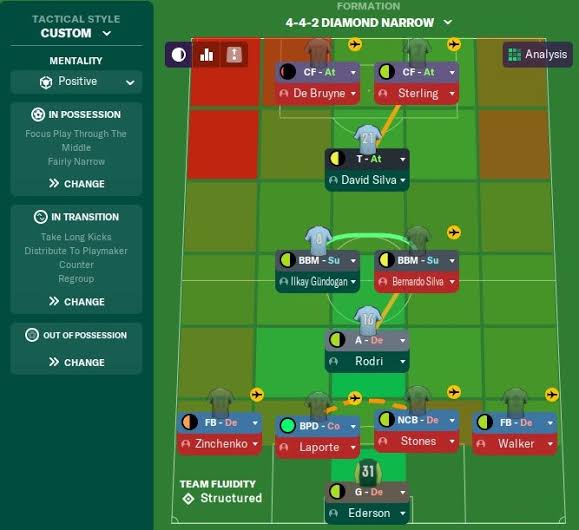
    Some teams have even tried to revive the role. At the 2014 World Cup, Germany’s Jerome Boateng occasionally dropped into a sweeper position, and Pep Guardiola has experimented with a ‘false libero’ at Manchester City, using John Stones or Aymeric Laporte to step into midfield. But these are hybrid solutions, not the pure libero of old.

    The libero’s legacy is more than tactical—it’s cultural. It represented a time when football valued intelligence and elegance over pure athleticism. Players like Beckenbauer, Scirea, and Baresi were celebrated as ‘professors’ of the game, artists who could defend and create in equal measure. The position’s demise was inevitable, but its memory endures among those who love the beautiful game’s intellectual side.

    The libero was a product of its time, a tactical innovation that flourished for three decades before the game moved on. But its influence persists, not just in the sweeper-keepers and deep-lying playmakers of today, but in the ideal that defenders can be more than destroyers—they can be creators. The football world may never see another Beckenbauer, but the ghost of the libero still wanders the pitch, whispering that the best defense is not just about stopping goals, but about starting something beautiful.

    Summary

    • The libero, or sweeper, was a defensive position that operated behind the back line with no man-marking duties, sweeping up loose balls and initiating attacks.
    • It evolved from catenaccio’s purely defensive ‘bolt’ to an attacking weapon in the hands of Franz Beckenbauer, who redefined the role in the 1970s.
    • The golden age of the libero ran from the 1960s to the 1990s, with legends like Gaetano Scirea, Franco Baresi, and Matthias Sammer.
    • The role vanished due to the rise of zonal marking, offside traps, pressing, and increased athleticism, which made a free defender redundant.
    • The libero’s legacy lives on in modern sweeper-keepers, deep-lying playmakers, and occasional tactical experiments at top clubs.

    FAQ

    Q: What exactly was the libero’s role?
    A: The libero was a defender who played behind the main defensive line, with no specific opponent to mark. They swept up loose balls, covered for beaten teammates, and often carried the ball forward to start attacks.

    Q: Why was the libero called ‘free’?
    A: ‘Libero’ is Italian for ‘free.’ Because they weren’t assigned a man to mark, they had the freedom to read the game and position themselves where needed, both defensively and offensively.

    Q: Who was the greatest libero of all time?
    A: Franz Beckenbauer is widely considered the greatest. He transformed the role from a purely defensive position into an attacking playmaker role, leading West Germany to the 1974 World Cup title.

    Q: Why did the libero disappear?
    A: The rise of zonal marking, offside traps, and high pressing made the libero’s deep position a liability. Modern defenses need to play as a flat, coordinated unit, and the libero’s freedom created gaps that opponents could exploit.

    Q: Are there any modern players who play like a libero?
    A: Yes, in a sense. Sweeper-keepers like Manuel Neuer and deep-lying playmakers like Andrea Pirlo share some of the libero’s traits, and some coaches have experimented with using center-backs in a ‘false libero’ role, but the classic position is largely extinct.