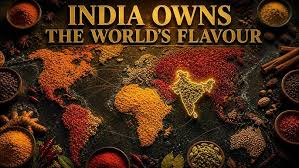
Imagine a world where a single peppercorn could buy a slave, where nations went to war over a nutmeg, and where the quest for cinnamon launched ships into unknown oceans. This was the reality of the Silk Road, a vast network of trade routes that for over a millennium connected the East and West not just with silk, but with the most coveted commodities of the ancient world: spices.
Today, we sprinkle black pepper on our eggs without a second thought, but in the time of the Roman Empire, it was a luxury so precious it was used as currency. The story of how these humble seeds, barks, and roots traveled thousands of miles, crossing deserts and oceans, is not just a tale of commerce—it’s a saga of human ambition, cultural fusion, and the birth of globalization. This article takes you on a culinary journey along the Silk Road, exploring how the spice trade didn’t just flavor our food, but fundamentally connected civilizations.
The Spice Road: More Than Just Silk
When we think of the Silk Road, we often picture caravans laden with shimmering fabrics. But in reality, spices were the true engine of this ancient trade network. Active from roughly 130 BCE, when the Han Dynasty of China opened routes to the West, to the mid-15th century, the Silk Road was a complex web of overland paths through Central Asia and maritime routes across the Indian Ocean. The latter, often called the ‘Spice Route,’ was equally crucial for moving bulk quantities of spices.
Key hubs like Chang’an (modern Xi’an) in China, Samarkand in Uzbekistan, Baghdad in Iraq, and Constantinople (Istanbul) in Turkey became bustling melting pots where merchants from different worlds exchanged goods, ideas, and recipes. At the western end, Venice and Genoa grew wealthy as the final European gateways for these exotic flavors.
The Golden Spices: A Pantheon of Flavor
Each region contributed its own treasures to this global pantry. From India came black pepper, the ‘King of Spices,’ and turmeric, the golden root that would define curries. Sri Lanka offered cinnamon, while the remote Moluccas (Indonesia) supplied cloves and nutmeg, so valuable that they were worth more than gold by weight. China contributed star anise and Sichuan pepper, while Persia (modern Iran) gave us saffron, the world’s most expensive spice, and sumac. Even Africa played a part, with grains of paradise from West Africa and long pepper from Ethiopia.
These spices were not just for the elite. They transformed cooking across the globe. In Europe, pepper and cloves became essential for preserving meat and masking the taste of spoilage—a practice that, while debated by historians, certainly shaped medieval cuisine. In Central Asia, the fusion of Persian and Chinese techniques gave birth to dishes like laghman noodles and pilaf, which are still enjoyed today. In India, the Mughal Empire, which itself arose from Central Asian conquerors, integrated dried fruits and nuts into its cuisine, creating the rich, complex flavors we associate with Mughlai food.
The Business of Spice: Middlemen, Monopolies, and Risk
The spice trade was a brutal business. A single peppercorn might change hands ten to fifteen times before reaching a European kitchen, with each middleman adding a hefty markup. Caravans of camels faced bandits, harsh deserts, and political instability, while maritime dhows relied on monsoon winds—sailing east in summer and west in winter—to make their perilous journeys.
This complexity created immense wealth for those who controlled the routes. Arab and Venetian merchants held a near-monopoly on the European spice trade for centuries, keeping prices artificially high. This stranglehold was a major motivation for European exploration. When Vasco da Gama sailed around Africa to India in 1498, he broke the monopoly, and when Christopher Columbus sailed west in 1492, he was seeking a direct route to the spice islands. The Dutch later took control of the nutmeg and clove trade in the 17th century, often with brutal violence, such as the infamous Banda Islands massacre of 1621.
Beyond the Kitchen: A Cultural Superhighway
The Silk Road was never just about spices. It was a superhighway for culture. Buddhism traveled from India to China along these routes, as did Islam, papermaking, gunpowder, and the compass. Spices were often bundled with other luxury goods like silk and porcelain, making them part of a broader system of exchange.
This cultural fusion is visible in the spice blends we use today. Garam masala in India, baharat in the Middle East, Chinese five-spice, and North African ras el hanout are all palimpsests of centuries of trade, each blend a unique record of the flavors that passed through their regions. The very concept of ‘curry’ is a British colonial umbrella term, not a single Silk Road dish, but it reflects the diversity of spiced cooking that emerged from this interconnected world.
The Modern Legacy: From Ancient Trade to Global Cuisine
The legacy of the Silk Road spice trade is still on our plates. Persian stews, Indian curries, Turkish kebabs, and North African tagines all trace their lineage to this ancient network. The spice trade also laid the groundwork for modern capitalism, with its complex logistics, financing, and risk management, and for the monopolies and cartels that would shape global commerce.
Today, UNESCO has recognized parts of the Silk Road as World Heritage sites, and China’s Belt and Road Initiative has revived interest in the route’s history. But the most tangible reminder is in our kitchens. Every time we reach for a jar of cumin or a stick of cinnamon, we are connecting with a history that spans continents and millennia—a testament to the power of flavor to bring the world together.
The Silk Road spice trade was more than a commercial enterprise; it was a force that shaped the modern world. It fueled exploration, built empires, and created a global palate that transcends borders. As we savor the complex flavors of a curry or the warmth of a cinnamon bun, we are tasting the legacy of those ancient traders who braved the unknown to connect civilizations through the simple, yet profound, desire for good food.
Summary
- The Silk Road was a network of overland and maritime routes that carried spices, not just silk, from East Asia to Europe for over a millennium.
- Spices like black pepper, cinnamon, cloves, and nutmeg were worth more than gold, driving trade and exploration.
- The trade was controlled by middlemen and monopolies, leading to high prices and motivating European voyages of discovery.
- Spices transformed cuisines worldwide, creating fusion dishes and spice blends that are still central to regional identities.
- The spice trade was a cultural superhighway, spreading religion, technology, and ideas alongside flavors.
FAQ
Q: What was the most valuable spice on the Silk Road?
A: Black pepper was known as the ‘King of Spices’ and was often used as currency. However, saffron, cloves, and nutmeg were also extremely valuable, sometimes worth more than gold by weight.
Q: Did spices really preserve meat, or is that a myth?
A: The idea that spices were used primarily to mask spoilage is debated. While some spices have antimicrobial properties, the amounts needed for preservation would have been prohibitively expensive. More likely, spices were used to add flavor to bland or salted foods and as status symbols.
Q: How did the spice trade end?
A: The spice trade didn’t end, but it was transformed. The Portuguese broke the Arab-Venetian monopoly in 1498, and later the Dutch and British East India companies dominated the trade. The routes shifted to maritime paths, and spices became more accessible and affordable.
Q: What is the ‘Spice Route’?
A: The Spice Route refers to the maritime trade routes across the Indian Ocean that connected Southeast Asia, India, the Middle East, and East Africa. It was a crucial complement to the overland Silk Road, especially for bulk spice transport.
Q: How did the spice trade influence modern cuisine?
A: The spice trade created a global palate, introducing ingredients and techniques that blended across cultures. It gave rise to iconic spice blends like garam masala and five-spice, and shaped the culinary identities of regions from Persia to China.
Leave a Reply