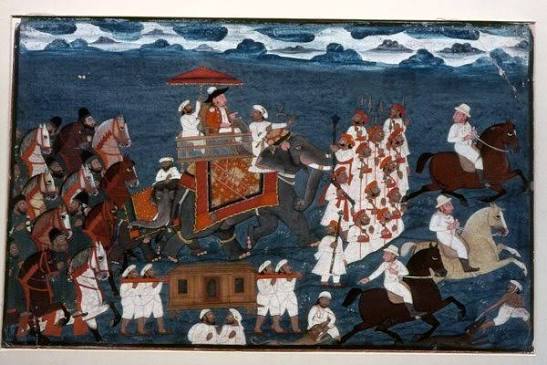
On 31 December 1600, Queen Elizabeth I signed a charter that would reshape the world. The ‘Governor and Company of Merchants of London Trading into the East Indies’ better known as the East India Company was granted a monopoly on all English trade east of the Cape of Good Hope. It started as a spice trader. It ended as a sovereign ruler of 200 million people, with a private army larger than the British Army and control over 40% of global trade in several commodities.
The story of the East India Company is not just a historical curiosity. It’s the first example of a corporation exercising state-like power, of ‘too big to fail’ economics, and of the dark side of globalization. Understanding its rise and fall offers lessons about corporate power, government oversight, and the human cost of unchecked ambition.
The Birth of a Corporate Giant
The late 16th century was the age of exploration and monopoly. Portugal and Holland had carved up the lucrative spice trade. England wanted in. The solution was a joint-stock company: investors pooled capital, shared risk, and received dividends. The East India Company was born, and its early voyages were financed separately, with profits distributed after each return. It wasn’t until 1657 that the company established a permanent joint stock, allowing for continuous trading and long-term planning.
From Pepper to Power
Initially, the EIC focused on spices—pepper, cloves, nutmeg. But as European tastes evolved, so did the company’s portfolio. Textiles like calico and muslin became hot commodities. Then came tea, which would become Britain’s national drink and the EIC’s golden goose. By the 18th century, the company had established trading posts at Surat, Madras, Bombay, and Calcutta. These ‘factories’ were fortified, requiring local alliances and military protection. The company was already blending commerce with conflict.
The Mughal Empire, which had ruled India for centuries, began to fracture after Emperor Aurangzeb’s death in 1707. Regional states rose, creating a power vacuum. The EIC, with its private armies, filled the void. The Seven Years’ War (1756–1763) between Britain and France turned India into a global battleground. The EIC, as a proxy for British military power, emerged victorious, but the real turning point came in 1757 at the Battle of Plassey.
Plassey: The Corporate Coup
Robert Clive, a company officer, defeated Nawab Siraj-ud-Daulah of Bengal, but the victory was less a military triumph and more a financial transaction. Clive had bribed the Nawab’s general, Mir Jafar, to defect. The battle was effectively won before a shot was fired. This set a dangerous precedent: the EIC would use military force and political manipulation to secure commercial advantages. The company installed Mir Jafar as a puppet ruler and demanded massive payments.
In 1765, the Treaty of Allahabad granted the EIC the diwani—the right to collect revenue from Bengal, Bihar, and Orissa. Bengal was one of the wealthiest regions on Earth. The company now had a guaranteed income to fund its trade and armies. It was no longer a trading firm; it was a tax collector and sovereign power.
The Financial Engine: Opium and Tea
The EIC’s profitability rested on a triangular trade. British manufactured goods went to India. Indian opium went to China. Chinese tea went to Britain. By the 1830s, opium accounted for over 50% of the company’s total revenue. The Chinese government, alarmed by the addiction and social decay, tried to stop the trade, leading to the Opium Wars (1839–1842 and 1856–1860). The EIC was literally fighting wars to sell drugs.
The company also pioneered corporate finance. It issued bonds, paid dividends, and its stock was traded on the London exchange. It was the first ‘too big to fail’ corporation. When it faced financial crises, the British government bailed it out—in 1772, 1784, and again in 1858. This pattern of private profits and public bailouts has a familiar ring.
The Human Cost
The company’s ambition had a devastating toll. The Bengal Famine of 1770 killed an estimated 10 million people—about one-third of the region’s population. While people starved, the EIC continued to collect revenue with full force. This callousness was criticized even in Britain. The company also deindustrialized India. Indian textile weavers were driven out of business as British manufactured goods flooded the market, often with the help of tariffs and coercion. India was transformed from a manufacturing powerhouse to a supplier of raw materials.
Government Oversight and the End of Monopoly
The British government began to rein in the company in 1773 with the Regulating Act, followed by Pitt’s India Act in 1784. These acts established government oversight but left the company in charge. The Charter Act of 1813 ended the company’s monopoly on Indian trade, and the Charter Act of 1833 ended its monopoly on China trade. The company was now purely administrative, a strange hybrid of a business and a government.
Rebellion and Dissolution
The final blow came in 1857. The Indian Rebellion, also called the Sepoy Mutiny, was a massive uprising against British rule. It was sparked by a variety of grievances, including the use of animal fat on rifle cartridges, which offended both Hindu and Muslim soldiers. The rebellion was brutally suppressed, but it exposed the instability of the EIC’s rule. In 1858, the Government of India Act transferred all powers from the company to the British Crown. The EIC was stripped of its governing role, and in 1874, it was formally dissolved.
Lessons for Today
The East India Company’s story is not just a historical footnote. It illustrates the dangers of allowing corporations to gain too much power. The company used its economic might to acquire political and military authority, leading to exploitation and suffering. It also shows the importance of government regulation. The EIC was only reined in after centuries of damage. The modern world has its own multinational corporations, some with revenues larger than nation-states. The EIC’s rise and fall serves as a cautionary tale about what happens when profit is prioritized over human welfare.
The East India Company was a marvel of commercial ambition and a monster of exploitation. It transformed global trade, but at a cost measured in lives and livelihoods. Its dissolution in 1874 marked the end of an era, but its legacy—the corporate form, global supply chains, and the ethical questions they raise—remains with us. The story reminds us that corporations are not natural sovereigns. They are creations of the state, and they can be controlled. The lesson of the EIC is not that corporations are evil, but that power without accountability is dangerous. As we navigate the complexities of modern globalization, the East India Company offers a timeless warning: watch the corporations, for they may seek to become kings.
Summary
- The East India Company was chartered in 1600 and lasted 274 years, becoming the longest-lived corporation of its kind.
- It evolved from a spice trader to a military power, ruling 200-250 million people with a private army of over 260,000 troops.
- The Battle of Plassey in 1757, won through bribery, marked the shift from trade to conquest.
- Its profits depended on opium, which made up over 50% of its revenue, and it fought wars to protect that trade.
- The company’s rule led to devastating famines and deindustrialization, with the Bengal Famine of 1770 killing 10 million.
- Government oversight increased from 1773, but the company was only dissolved in 1874 after the 1857 rebellion.
FAQ
Q: What was the East India Company?
A: The East India Company was a joint-stock company chartered in 1600 to trade with the East Indies. It grew to rule large parts of India, with its own army and government.
Q: How did a trading company conquer India?
A: It exploited the decline of the Mughal Empire, used military force and bribery (as at Plassey), and gained revenue rights, which funded further conquest.
Q: What role did opium play?
A: Opium was the company’s biggest revenue source, making up over 50% of income by the 1830s. The trade to China led to the Opium Wars.
Q: Why did the company fall?
A: Financial crises, government regulation, and the 1857 rebellion led the British Crown to take over in 1858. The company was dissolved in 1874.
Q: What can modern businesses learn from the East India Company?
A: The EIC shows the dangers of corporate power without accountability and the need for ethical oversight. It’s a cautionary tale for modern multinationals.
Leave a Reply