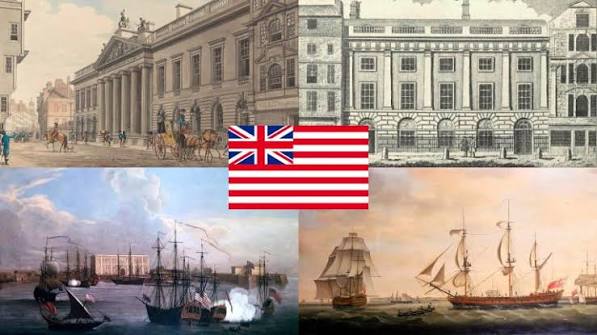
Tag: British Empire

  • How a Trading Company Conquered an Empire: The Rise and Fall of the East India Company

    How a Trading Company Conquered an Empire: The Rise and Fall of the East India Company

    In 1600, a group of London merchants received a royal charter to trade in the East Indies. They had no army, no territory, and no intention of ruling anyone. Yet within 150 years, this joint-stock company controlled a private army larger than Britain’s, collected taxes from millions of Indians, and launched wars that reshaped Asia. How did a firm become an empire, and why did it ultimately collapse?

    The story of the East India Company is not just a tale of conquest—it is the origin story of modern global capitalism. It pioneered the corporate form, pioneered cross-subsidization, and pioneered the fusion of commercial and state power. Its methods and missteps still echo in boardrooms and government halls today.

    A Monopoly on Spice, and a Pivot to Power

    The East India Company (EIC) began with pepper and cloves, not conquest. For its first century, it was one of several European trading companies vying for access to the spice islands of Southeast Asia. The Dutch East India Company (VOC) was the dominant player, and the English firm struggled to compete.

    But in the 17th century, the EIC found a more lucrative niche in India: textiles. Calico and muslin from Bengal and Gujarat were in high demand in Europe. The company established factories (trading posts) at Surat, Madras, and Calcutta, always with the permission of local rulers—initially the Mughal emperors, who tolerated European traders as minor players in their vast domain.

    The Mughal Empire was then the world’s largest economy, producing about a quarter of global GDP. India was a manufacturing superpower, and the EIC was a middleman. That changed when Mughal authority crumbled after the death of Emperor Aurangzeb in 1707. Regional nawabs became de facto rulers, and European companies—now with forts and armed guards—became players in the power vacuum.

    The decisive moment came in 1757 at the Battle of Plassey. Robert Clive, a company official with a knack for military improvisation, defeated the Nawab of Bengal, Siraj-ud-Daulah, with a combination of muskets and bribery. It was not a massive battle—the EIC fielded only about 3,000 men—but it was a political earthquake. For the first time, the company had installed a puppet ruler on a major Indian throne.

    Eight years later, the Treaty of Allahabad gave the company the right to collect land revenue in Bengal, Bihar, and Orissa—the richest provinces in India, home to about 20 million people. The EIC was now a sovereign power, with the revenue of a kingdom to fund its commercial operations. It was a staggering leap: from trade to taxation, from merchant to monarch.

    The First Multi-National Corporation

    Long before the term existed, the EIC was the world’s first multinational corporation. It had its own flags, forts, currency, and legal system. At its peak, it maintained an army of about 260,000 soldiers—larger than the British Army at the time. It owned a navy of its own warships. It issued corporate bonds, paid dividends to shareholders, and had a governance structure with a Court of Directors elected by shareholders.

    The joint-stock model was revolutionary. Unlike earlier ventures that were dissolved after each voyage, the EIC pooled capital permanently, allowing investors to buy and sell shares. The London Stock Exchange grew partly out of the trade in EIC stock. The separation of ownership (shareholders) from management (directors and officials) became the template for modern corporations.

    The company also pioneered cross-subsidization. Its conquest of Bengal provided a steady stream of tax revenue that it used to bankroll its loss-making trade in China, where it bought tea but had little to sell in return—until it found a product the Chinese wanted: opium.

    Opium, Tea, and Global Trade

    By the early 19th century, the EIC had built a global trading system that connected Britain, India, and China. The pattern was simple and devastating:

    • British manufactured goods were shipped to India, but the company found it hard to sell them profitably.
    • From India, it exported opium to China, despite China’s official ban on the drug.
    • The opium sales generated silver, which the company used to buy Chinese tea, which it shipped back to Britain.

    This triangular trade made the EIC the largest commercial enterprise in the world. By the 1830s, opium was the biggest single commodity trade on the planet. The company’s trade in tea became central to British life, but the financial engine was the narcotics trade. When China tried to stop the flow, the company—now backed by the British state—fought two wars to keep it going: the Opium Wars of 1839–1842 and 1856–1860.

    The EIC’s revenue from Bengal land taxes alone exceeded the entire revenue of Britain in the late 18th century. The company was simultaneously a commercial enterprise, a colonial government, and a military power. Its reach was vast: at its height, it controlled about one-fifth of the world’s population and accounted for half of global trade in several key commodities.

    From Corporation to Crown Colony

    The EIC’s hybrid nature—part firm, part state—created tensions from the start. Its shareholders wanted profits; its officials in India wanted to build an empire. The British government watched with growing unease as a private company accrued enormous power, often with little accountability.

    The first crack appeared in the 1770s, when the company was nearly bankrupted by a famine in Bengal and the cost of its own conquests. The Regulating Act of 1773 brought the British government into the picture for the first time. The Prime Minister, Lord North, was not trying to nationalize the company; he was trying to save it—and to curb its excesses.

    Legislation followed in 1784 (Pitt’s India Act), which created a Board of Control in London to supervise the company’s political activities. The company lost its commercial monopoly on Indian trade in 1813, and then lost all its trade functions in 1833. By then, it had become a pure administrative agency for the British Crown—a shell of its former commercial self.

    The final blow came in 1857. The Indian Rebellion, known to the British as the Sepoy Mutiny, was a massive uprising against company rule. It had many causes: resentment of British annexations, fears of religious pollution from new rifle cartridges, and a broader rebellion against foreign domination. The company’s army, composed largely of Indian sepoys, turned against it in many regions.

    The rebellion was suppressed after a brutal conflict, but the British government had had enough. In 1858, the Government of India Act dissolved the company as a governing body. The Crown took direct control, establishing the British Raj. The East India Company continued a shadow existence for another decade, but in 1874, it was formally wound up. Its remaining assets were absorbed by the state, and its shareholders were paid off.

    What the East India Company Left Behind

    The EIC’s legacy is contested. On one hand, it laid the foundations for modern global corporations, international trade networks, and the rise of Britain as a world power. On the other, its methods were ruthless: it monopolized trade, enforced opium cultivation on Indian farmers, and extracted wealth from India on a scale that contributed to devastating famines.

    Its corporate innovations—limited liability, permanent capital, professional management—became standard practice. Its political innovations were equally influential: the idea that a private company could exercise sovereignty, and that trade could be backed by military force, shaped the age of imperialism.

    The company’s rise is a cautionary tale about the dangers of concentrated corporate power. It was a firm that became more powerful than many states, and its fall shows how governments eventually reassert control. But its story also illustrates how the boundaries between public and private power have always been porous—and that the corporate form can be used for purposes far beyond commerce.

    Today, when we debate the role of multinational corporations, we are echoing arguments that first emerged around the East India Company. Its rise and fall offer lessons that remain remarkably fresh: about the limits of corporate autonomy, the interplay between business and state, and the human cost of economic empire.

    The East India Company was not just an early multinational—it was an empire that wore a corporate mask. Its rise was driven by innovation and ambition, but also by violence and exploitation. Its fall was a lesson in the limits of private power. For anyone interested in how the modern world came to be, the EIC is an essential study.

    Summary

    • The East India Company was chartered in 1600 as a spice-trading firm and grew into a sovereign power controlling one-fifth of the world’s population.
    • It pioneered the joint-stock corporate model, with shares, bonds, and professional management, becoming the blueprint for modern corporations.
    • Its transformation from trader to ruler came through the Battle of Plassey (1757) and the grant of revenue rights in Bengal (1765).
    • The company financed its tea trade through opium exports to China, leading to the Opium Wars.
    • It was dissolved in 1858 after the Indian Rebellion, with the British Crown taking direct control of India.

    FAQ

    Q: How did the East India Company start?
    A: It was chartered by Queen Elizabeth I on 31 December 1600 as a monopoly for English trade east of the Cape of Good Hope. It began as a spice-trading venture but soon shifted to textiles in India.

    Q: Why did the East India Company need an army?
    A: Initially to protect its factories from rival European companies and local rulers. As the Mughal Empire weakened, it used its military to expand territory and secure trade privileges, eventually conquering Bengal.

    Q: What role did opium play?
    A: The company exported opium from India to China to pay for Chinese tea. This trade was illegal in China but massively profitable, and it led to the Opium Wars when China tried to suppress it.

    Q: What was the Indian Rebellion of 1857?
    A: A major uprising against company rule, sparked by various grievances including fears of religious pollution from new rifle cartridges. It was suppressed, but it led to the end of company rule.

    Q: When did the East India Company end?
    A: It lost its governing role in 1858 after the rebellion, and was formally wound up in 1874. The British government took direct control of India, beginning the British Raj.
  • The 38-Minute War: When Britain Bombarded a Sultanate Before Breakfast


    At 9:02 AM on August 27, 1896, the British Royal Navy opened fire on the royal palace in Zanzibar. By 9:40 AM, it was all over. The sultan had fled, hundreds lay dead, and a new ruler had been installed. The Anglo-Zanzibar War holds the Guinness World Record for the shortest war in history—but its brevity masks a brutal colonial reality.

    This was not a quirky footnote but a sharp example of 19th-century gunboat diplomacy. A succession crisis on a tiny island off East Africa triggered a British ultimatum, a naval bombardment, and a decisive regime change—all before most people had finished their morning tea. Understanding why it happened reveals how European powers carved up Africa with little regard for local sovereignty.

    A Succession Crisis in a Spice Island

    In the late 19th century, Zanzibar was a wealthy trading hub, controlling the East African coast and profiting from the spice and slave trades. Though nominally independent, the sultanate had been a British protectorate in all but name since the 1886 Heligoland-Zanzibar Treaty, which split the mainland between British and German spheres of influence. The British effectively controlled Zanzibar’s foreign policy and had the right to approve any new sultan.

    When the pro-British Sultan Hamad bin Thuwaini died suddenly on August 25, 1896—possibly poisoned by his cousin—his nephew Khalid bin Barghash seized the palace and declared himself sultan. The British had other plans. They preferred Hamoud bin Mohammed, a known friend to British interests. Khalid’s unilateral power grab was a direct challenge to British authority.

    British Consul Basil Cave issued an ultimatum: step down by 9:00 AM on August 27, or face military action. Khalid refused, barricading himself in the palace with about 2,800 defenders—palace guards, sailors, and civilians. The British assembled a naval force in the harbor: three cruisers, two gunboats, 150 marines, and 900 Zanzibari troops loyal to their cause. Rear-Admiral Harry Rawson commanded the operation.

    The Anglo-Zanzibar War lasted just 38 minutes, but its effects rippled far beyond that morning. It entrenched British control over Zanzibar, installed a compliant sultan, and demonstrated the ruthless efficiency of imperial power. For the approximately 500 Zanzibaris killed or wounded, the “shortest war” was no trivia—it was a devastating loss. The war remains a stark reminder of how quickly colonial powers resorted to violence to enforce their will, and how the Scramble for Africa played out in human lives.

    Summary

    • The Anglo-Zanzibar War lasted about 38 minutes (9:02 AM to 9:40 AM) on August 27, 1896, making it the shortest war in history.
    • It was fought between the British Empire and the Sultanate of Zanzibar over a succession dispute, with Britain backing a different candidate for sultan.
    • British forces bombarded the palace and sank the royal yacht Glasgow, killing about 500 Zanzibari defenders while suffering only one wounded sailor.
    • Sultan Khalid bin Barghash fled to German East Africa, and the pro-British Hamoud bin Mohammed was installed as sultan.
    • The war exemplifies Victorian gunboat diplomacy and the broader context of European colonial expansion in Africa.

    FAQ

    Q: How did the war start?
    A: After the death of the pro-British Sultan Hamad bin Thuwaini, his nephew Khalid bin Barghash seized power without British approval. Britain issued an ultimatum demanding he step down by 9:00 AM on August 27, 1896. When he refused, British naval forces opened fire.

    Q: Why did Britain get involved?
    A: Zanzibar was a British protectorate, and Britain had the right to approve the succession. They feared Khalid would destabilize the region and threaten their strategic and economic interests. They preferred Hamoud bin Mohammed, who was friendlier to British ambitions.

    Q: What was the Zanzibari warship Glasgow?
    A: The Glasgow was the royal yacht of the Sultan of Zanzibar, named after a previous British naval visit. It was an outdated vessel armed with small guns and was no match for the modern British cruisers. It was sunk within minutes.

    Q: Was the war legal?
    A: Legally, it was more of a police action within a protectorate than a formal war between sovereign states. The British argued they were enforcing treaty obligations and upholding order. However, the term “war” is commonly used, and the conflict is listed in the Guinness Book of World Records.

    Q: How many people died?
    A: Approximately 500 Zanzibari defenders were killed or wounded. On the British side, only one sailor was wounded and later recovered. The lopsided casualty count highlights the technological and military disparity between the two sides.

  • The Rise and Fall of the East India Company: How a Trading Firm Conquered a Subcontinent

    The Rise and Fall of the East India Company: How a Trading Firm Conquered a Subcontinent

    On 31 December 1600, Queen Elizabeth I signed a charter that would reshape the world. The ‘Governor and Company of Merchants of London Trading into the East Indies’ better known as the East India Company was granted a monopoly on all English trade east of the Cape of Good Hope. It started as a spice trader. It ended as a sovereign ruler of 200 million people, with a private army larger than the British Army and control over 40% of global trade in several commodities.

    The story of the East India Company is not just a historical curiosity. It’s the first example of a corporation exercising state-like power, of ‘too big to fail’ economics, and of the dark side of globalization. Understanding its rise and fall offers lessons about corporate power, government oversight, and the human cost of unchecked ambition.

    The Birth of a Corporate Giant

    The late 16th century was the age of exploration and monopoly. Portugal and Holland had carved up the lucrative spice trade. England wanted in. The solution was a joint-stock company: investors pooled capital, shared risk, and received dividends. The East India Company was born, and its early voyages were financed separately, with profits distributed after each return. It wasn’t until 1657 that the company established a permanent joint stock, allowing for continuous trading and long-term planning.

    From Pepper to Power

    Initially, the EIC focused on spices—pepper, cloves, nutmeg. But as European tastes evolved, so did the company’s portfolio. Textiles like calico and muslin became hot commodities. Then came tea, which would become Britain’s national drink and the EIC’s golden goose. By the 18th century, the company had established trading posts at Surat, Madras, Bombay, and Calcutta. These ‘factories’ were fortified, requiring local alliances and military protection. The company was already blending commerce with conflict.

    The Mughal Empire, which had ruled India for centuries, began to fracture after Emperor Aurangzeb’s death in 1707. Regional states rose, creating a power vacuum. The EIC, with its private armies, filled the void. The Seven Years’ War (1756–1763) between Britain and France turned India into a global battleground. The EIC, as a proxy for British military power, emerged victorious, but the real turning point came in 1757 at the Battle of Plassey.

    Plassey: The Corporate Coup

    Robert Clive, a company officer, defeated Nawab Siraj-ud-Daulah of Bengal, but the victory was less a military triumph and more a financial transaction. Clive had bribed the Nawab’s general, Mir Jafar, to defect. The battle was effectively won before a shot was fired. This set a dangerous precedent: the EIC would use military force and political manipulation to secure commercial advantages. The company installed Mir Jafar as a puppet ruler and demanded massive payments.

    In 1765, the Treaty of Allahabad granted the EIC the diwani—the right to collect revenue from Bengal, Bihar, and Orissa. Bengal was one of the wealthiest regions on Earth. The company now had a guaranteed income to fund its trade and armies. It was no longer a trading firm; it was a tax collector and sovereign power.

    The Financial Engine: Opium and Tea

    The EIC’s profitability rested on a triangular trade. British manufactured goods went to India. Indian opium went to China. Chinese tea went to Britain. By the 1830s, opium accounted for over 50% of the company’s total revenue. The Chinese government, alarmed by the addiction and social decay, tried to stop the trade, leading to the Opium Wars (1839–1842 and 1856–1860). The EIC was literally fighting wars to sell drugs.

    The company also pioneered corporate finance. It issued bonds, paid dividends, and its stock was traded on the London exchange. It was the first ‘too big to fail’ corporation. When it faced financial crises, the British government bailed it out—in 1772, 1784, and again in 1858. This pattern of private profits and public bailouts has a familiar ring.

    The Human Cost

    The company’s ambition had a devastating toll. The Bengal Famine of 1770 killed an estimated 10 million people—about one-third of the region’s population. While people starved, the EIC continued to collect revenue with full force. This callousness was criticized even in Britain. The company also deindustrialized India. Indian textile weavers were driven out of business as British manufactured goods flooded the market, often with the help of tariffs and coercion. India was transformed from a manufacturing powerhouse to a supplier of raw materials.

    Government Oversight and the End of Monopoly

    The British government began to rein in the company in 1773 with the Regulating Act, followed by Pitt’s India Act in 1784. These acts established government oversight but left the company in charge. The Charter Act of 1813 ended the company’s monopoly on Indian trade, and the Charter Act of 1833 ended its monopoly on China trade. The company was now purely administrative, a strange hybrid of a business and a government.

    Rebellion and Dissolution

    The final blow came in 1857. The Indian Rebellion, also called the Sepoy Mutiny, was a massive uprising against British rule. It was sparked by a variety of grievances, including the use of animal fat on rifle cartridges, which offended both Hindu and Muslim soldiers. The rebellion was brutally suppressed, but it exposed the instability of the EIC’s rule. In 1858, the Government of India Act transferred all powers from the company to the British Crown. The EIC was stripped of its governing role, and in 1874, it was formally dissolved.

    Lessons for Today

    The East India Company’s story is not just a historical footnote. It illustrates the dangers of allowing corporations to gain too much power. The company used its economic might to acquire political and military authority, leading to exploitation and suffering. It also shows the importance of government regulation. The EIC was only reined in after centuries of damage. The modern world has its own multinational corporations, some with revenues larger than nation-states. The EIC’s rise and fall serves as a cautionary tale about what happens when profit is prioritized over human welfare.

    The East India Company was a marvel of commercial ambition and a monster of exploitation. It transformed global trade, but at a cost measured in lives and livelihoods. Its dissolution in 1874 marked the end of an era, but its legacy—the corporate form, global supply chains, and the ethical questions they raise—remains with us. The story reminds us that corporations are not natural sovereigns. They are creations of the state, and they can be controlled. The lesson of the EIC is not that corporations are evil, but that power without accountability is dangerous. As we navigate the complexities of modern globalization, the East India Company offers a timeless warning: watch the corporations, for they may seek to become kings.

    Summary

    • The East India Company was chartered in 1600 and lasted 274 years, becoming the longest-lived corporation of its kind.
    • It evolved from a spice trader to a military power, ruling 200-250 million people with a private army of over 260,000 troops.
    • The Battle of Plassey in 1757, won through bribery, marked the shift from trade to conquest.
    • Its profits depended on opium, which made up over 50% of its revenue, and it fought wars to protect that trade.
    • The company’s rule led to devastating famines and deindustrialization, with the Bengal Famine of 1770 killing 10 million.
    • Government oversight increased from 1773, but the company was only dissolved in 1874 after the 1857 rebellion.

    FAQ

    Q: What was the East India Company?
    A: The East India Company was a joint-stock company chartered in 1600 to trade with the East Indies. It grew to rule large parts of India, with its own army and government.

    Q: How did a trading company conquer India?
    A: It exploited the decline of the Mughal Empire, used military force and bribery (as at Plassey), and gained revenue rights, which funded further conquest.

    Q: What role did opium play?
    A: Opium was the company’s biggest revenue source, making up over 50% of income by the 1830s. The trade to China led to the Opium Wars.

    Q: Why did the company fall?
    A: Financial crises, government regulation, and the 1857 rebellion led the British Crown to take over in 1858. The company was dissolved in 1874.

    Q: What can modern businesses learn from the East India Company?
    A: The EIC shows the dangers of corporate power without accountability and the need for ethical oversight. It’s a cautionary tale for modern multinationals.

  • The Longest Retreat: How the Forgotten Army Turned the Tide in Burma

    The Longest Retreat: How the Forgotten Army Turned the Tide in Burma

    In March 1942, the British Empire suffered its longest retreat in history. Outnumbered and outmaneuvered, Allied forces trudged over 1,000 miles from Rangoon back to India, leaving Burma to the Japanese. The monsoon rains turned the roads to mud, and disease cut down more men than enemy fire. For the soldiers who survived, it was a humiliating low point of the war.

    Yet within two years, the same force now rebuilt and renamed the Fourteenth Army would shatter the Japanese Army at Imphal and Kohima, a battle often called the ‘Stalingrad of the East.’ This is the story of how a forgotten army, composed mostly of Indian soldiers, stopped the Japanese advance and reclaimed Burma.

    The Fall of Burma: A Disaster in the Jungle

    Japan’s invasion of Burma began in January 1942, just weeks after the attack on Pearl Harbor. The British forces in Burma were woefully unprepared. They lacked jungle training, had no air cover, and their commanders dismissed tanks as useless in the dense terrain. The RAF was outnumbered ten to one. Within months, Rangoon fell, and the British began a desperate retreat.

    The retreat was a humanitarian catastrophe. Thousands of civilians British, Anglo-Indian, and Indian fled on foot over the mountains, carrying what they could. Many died of starvation, disease, or exhaustion. The army itself lost most of its equipment and morale. By the time the survivors reached India, they were a shattered remnant.

    The Birth of the Fourteenth Army

    In 1943, General William Slim took command of the newly formed Fourteenth Army. He faced a daunting task: rebuild a demoralized force, train it for jungle warfare, and do it all with minimal resources. Burma was a secondary theater; the priority was Europe and the Pacific.

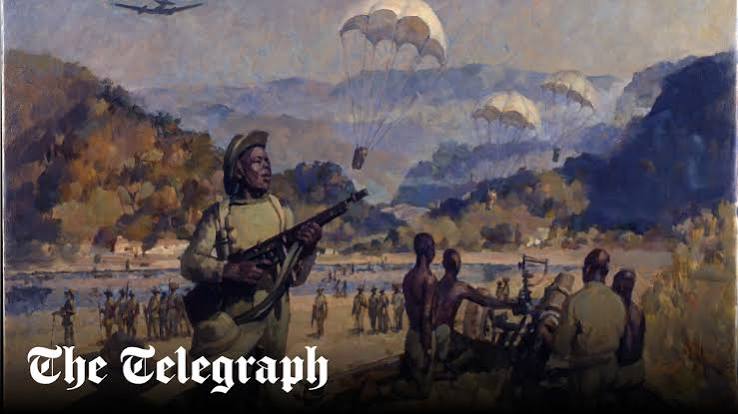
    Slim’s solution was revolutionary. He emphasized air supply using transport planes to drop food, ammunition, and medicine to troops deep in the jungle. This freed the army from vulnerable ground supply lines. He also insisted on aggressive patrolling and sent his men to jungle training schools. Morale slowly improved as soldiers gained confidence in their ability to fight in the terrain that had once seemed impenetrable.

    The Fourteenth Army grew into the largest Commonwealth army of the war, peaking at over one million men. The backbone was the Indian Army, which had expanded from 200,000 in 1939 to over 2.5 million by 1945. These were volunteers Hindus, Muslims, Sikhs, and Gurkhas who fought for the British Empire while their homeland was under colonial rule.

    The Battle of the Admin Box: A New Way of Fighting

    In February 1944, the Japanese launched a local offensive in the Arakan region, aiming to cut off Allied supply lines. They surrounded a division at a position called the Admin Box. In previous battles, encirclement meant disaster. But this time, the Allies held their ground.

    Supplied entirely by air, the troops inside the box fought off repeated Japanese attacks. The Japanese, accustomed to surrounding and destroying isolated units, found themselves facing a determined defense that refused to break. After two weeks, the Japanese withdrew, having suffered heavy losses. The Battle of the Admin Box proved that the Allies could defeat the Japanese at their own game—if they had the right tactics and logistics.

    Imphal and Kohima: The Turning Point

    In March 1944, the Japanese launched Operation U-Go, a major offensive aimed at invading India and sparking a rebellion against British rule. Their target was the town of Imphal, the gateway to India. The plan was bold: cross the Chindwin River, cut off the Allied supply lines, and force a decisive battle.

    The Japanese were confident. They had a new ally: Subhas Chandra Bose and the Indian National Army (INA), composed of Indian prisoners of war who had switched sides to fight for Indian independence. For the British Indian Army, this created a moral dilemma—they were fighting their own countrymen who wanted the same thing they did: freedom from colonial rule.

    But the INA was poorly equipped and never fully integrated into Japanese strategy. The Japanese also underestimated the Allied air supply. When they surrounded Imphal and the nearby town of Kohima, they expected the Allies to starve. Instead, the Allies flew in supplies and reinforcements, sustaining a defense that ground the Japanese down.

    The fighting was brutal. At Kohima, the battle raged around the tennis court of the Deputy Commissioner’s bungalow, with the front line shifting back and forth for weeks. By July 1944, the Japanese offensive had collapsed. They retreated in disarray, losing an estimated 50,000 men—many to starvation and disease. The Allies reaped a decisive victory, and the initiative passed permanently to them.

    The Reconquest of Burma

    With the Japanese broken, Slim’s army surged forward. They crossed the Irrawaddy River and fought a series of battles to capture Mandalay in March 1945. The Japanese, cut off from supplies and reinforcements, fell back in chaos. Rangoon was taken in May, just as the monsoon broke.

    The campaign was not without cost. The Japanese lost over 150,000 men, many from disease and starvation during their retreat. Allied casualties were lower—around 30,000 to 40,000—but every death was felt. The Burmese civilian population suffered immensely, caught between two armies and subjected to Allied bombing and Japanese repression.

    The Aftermath: A Complex Legacy

    The Burma Campaign ended in August 1945 with Japan’s surrender. But the war had sown the seeds of change. The Indian soldiers who had fought so bravely returned to a country that was on the brink of independence. The trials of INA officers in Delhi in 1945-46 sparked massive protests, accelerating the end of British rule.

    In Burma, Aung San—who had initially collaborated with the Japanese—switched sides in March 1945 and helped the Allies. He would later negotiate Burma’s independence in 1948. The British return to Burma was brief; they had neither the will nor the resources to re-impose colonial rule.

    The Fourteenth Army was disbanded, its soldiers returning to their homes. For decades, their achievements were overshadowed by other theaters of war. But the campaign was a testament to the courage and resilience of the ordinary soldier—especially the Indian soldier—who fought in a forgotten corner of the world and helped stop the Japanese tide.

    The Burma Campaign was a brutal struggle fought in the shadow of more famous battles. But it was here that the Japanese Army was first broken on land, and it was here that the British Empire demonstrated its ability to adapt and fight back. The story of the Fourteenth Army is not just one of military victory, but of human endurance—of soldiers who overcame disease, terrain, and despair to achieve what seemed impossible. Their legacy lives on in the independent nations of India, Burma, and the Commonwealth, and in the memory of a war that changed the world.

    Summary

    • The Burma Campaign (1942-1945) began with the fall of Rangoon and the longest retreat in British military history.
    • General William Slim rebuilt the defeated army into the Fourteenth Army, using air supply and jungle training to transform its fortunes.
    • The Battles of Imphal and Kohima (1944) were the turning point, breaking the Japanese offensive and forcing a disastrous retreat.
    • The Fourteenth Army was the largest Commonwealth army of the war, with over 1 million men, mostly Indian soldiers.
    • The campaign had far-reaching consequences, including the weakening of British colonial rule in India and Burma.

    FAQ

    Q: Why is the Burma Campaign called the ‘Forgotten Army’?
    A: The Fourteenth Army fought in a secondary theater, with resources going to Europe and the Pacific. Its soldiers felt forgotten by the rest of the world, and later by history.

    Q: What was the Battle of the Admin Box?
    A: It was a February 1944 battle where Allied troops, supplied by air, held a defensive position against Japanese encirclement, proving that the Allies could beat the Japanese at their own tactics.

    Q: Who was Subhas Chandra Bose and what was the Indian National Army?
    A: Bose was an Indian nationalist who led the INA, formed from Indian prisoners of war who switched sides to fight for Indian independence. They fought alongside the Japanese against the British.

    Q: What was the role of the Indian Army in the Burma Campaign?
    A: The Indian Army was the backbone of the Fourteenth Army, providing over a million soldiers who fought bravely in the jungle. Their contributions were crucial to the Allied victory.

    Q: How did the campaign end and what was its impact?
    A: The Allies reconquered Burma in 1945, but the war weakened British colonial power and accelerated the independence of India and Burma. The INA trials sparked protests that led to India’s independence.