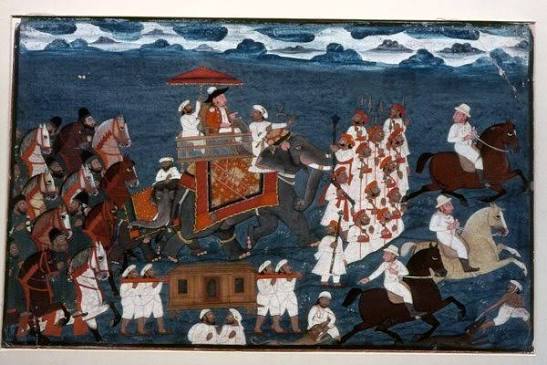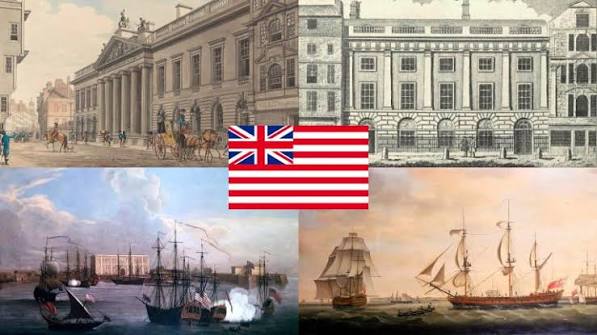
In 1600, a group of London merchants received a royal charter to trade in the East Indies. They had no army, no territory, and no intention of ruling anyone. Yet within 150 years, this joint-stock company controlled a private army larger than Britain’s, collected taxes from millions of Indians, and launched wars that reshaped Asia. How did a firm become an empire, and why did it ultimately collapse?
The story of the East India Company is not just a tale of conquest—it is the origin story of modern global capitalism. It pioneered the corporate form, pioneered cross-subsidization, and pioneered the fusion of commercial and state power. Its methods and missteps still echo in boardrooms and government halls today.
A Monopoly on Spice, and a Pivot to Power
The East India Company (EIC) began with pepper and cloves, not conquest. For its first century, it was one of several European trading companies vying for access to the spice islands of Southeast Asia. The Dutch East India Company (VOC) was the dominant player, and the English firm struggled to compete.
But in the 17th century, the EIC found a more lucrative niche in India: textiles. Calico and muslin from Bengal and Gujarat were in high demand in Europe. The company established factories (trading posts) at Surat, Madras, and Calcutta, always with the permission of local rulers—initially the Mughal emperors, who tolerated European traders as minor players in their vast domain.
The Mughal Empire was then the world’s largest economy, producing about a quarter of global GDP. India was a manufacturing superpower, and the EIC was a middleman. That changed when Mughal authority crumbled after the death of Emperor Aurangzeb in 1707. Regional nawabs became de facto rulers, and European companies—now with forts and armed guards—became players in the power vacuum.
The decisive moment came in 1757 at the Battle of Plassey. Robert Clive, a company official with a knack for military improvisation, defeated the Nawab of Bengal, Siraj-ud-Daulah, with a combination of muskets and bribery. It was not a massive battle—the EIC fielded only about 3,000 men—but it was a political earthquake. For the first time, the company had installed a puppet ruler on a major Indian throne.
Eight years later, the Treaty of Allahabad gave the company the right to collect land revenue in Bengal, Bihar, and Orissa—the richest provinces in India, home to about 20 million people. The EIC was now a sovereign power, with the revenue of a kingdom to fund its commercial operations. It was a staggering leap: from trade to taxation, from merchant to monarch.
The First Multi-National Corporation
Long before the term existed, the EIC was the world’s first multinational corporation. It had its own flags, forts, currency, and legal system. At its peak, it maintained an army of about 260,000 soldiers—larger than the British Army at the time. It owned a navy of its own warships. It issued corporate bonds, paid dividends to shareholders, and had a governance structure with a Court of Directors elected by shareholders.
The joint-stock model was revolutionary. Unlike earlier ventures that were dissolved after each voyage, the EIC pooled capital permanently, allowing investors to buy and sell shares. The London Stock Exchange grew partly out of the trade in EIC stock. The separation of ownership (shareholders) from management (directors and officials) became the template for modern corporations.
The company also pioneered cross-subsidization. Its conquest of Bengal provided a steady stream of tax revenue that it used to bankroll its loss-making trade in China, where it bought tea but had little to sell in return—until it found a product the Chinese wanted: opium.
Opium, Tea, and Global Trade
By the early 19th century, the EIC had built a global trading system that connected Britain, India, and China. The pattern was simple and devastating:
- British manufactured goods were shipped to India, but the company found it hard to sell them profitably.
- From India, it exported opium to China, despite China’s official ban on the drug.
- The opium sales generated silver, which the company used to buy Chinese tea, which it shipped back to Britain.
This triangular trade made the EIC the largest commercial enterprise in the world. By the 1830s, opium was the biggest single commodity trade on the planet. The company’s trade in tea became central to British life, but the financial engine was the narcotics trade. When China tried to stop the flow, the company—now backed by the British state—fought two wars to keep it going: the Opium Wars of 1839–1842 and 1856–1860.
The EIC’s revenue from Bengal land taxes alone exceeded the entire revenue of Britain in the late 18th century. The company was simultaneously a commercial enterprise, a colonial government, and a military power. Its reach was vast: at its height, it controlled about one-fifth of the world’s population and accounted for half of global trade in several key commodities.
From Corporation to Crown Colony
The EIC’s hybrid nature—part firm, part state—created tensions from the start. Its shareholders wanted profits; its officials in India wanted to build an empire. The British government watched with growing unease as a private company accrued enormous power, often with little accountability.
The first crack appeared in the 1770s, when the company was nearly bankrupted by a famine in Bengal and the cost of its own conquests. The Regulating Act of 1773 brought the British government into the picture for the first time. The Prime Minister, Lord North, was not trying to nationalize the company; he was trying to save it—and to curb its excesses.
Legislation followed in 1784 (Pitt’s India Act), which created a Board of Control in London to supervise the company’s political activities. The company lost its commercial monopoly on Indian trade in 1813, and then lost all its trade functions in 1833. By then, it had become a pure administrative agency for the British Crown—a shell of its former commercial self.
The final blow came in 1857. The Indian Rebellion, known to the British as the Sepoy Mutiny, was a massive uprising against company rule. It had many causes: resentment of British annexations, fears of religious pollution from new rifle cartridges, and a broader rebellion against foreign domination. The company’s army, composed largely of Indian sepoys, turned against it in many regions.
The rebellion was suppressed after a brutal conflict, but the British government had had enough. In 1858, the Government of India Act dissolved the company as a governing body. The Crown took direct control, establishing the British Raj. The East India Company continued a shadow existence for another decade, but in 1874, it was formally wound up. Its remaining assets were absorbed by the state, and its shareholders were paid off.
What the East India Company Left Behind
The EIC’s legacy is contested. On one hand, it laid the foundations for modern global corporations, international trade networks, and the rise of Britain as a world power. On the other, its methods were ruthless: it monopolized trade, enforced opium cultivation on Indian farmers, and extracted wealth from India on a scale that contributed to devastating famines.
Its corporate innovations—limited liability, permanent capital, professional management—became standard practice. Its political innovations were equally influential: the idea that a private company could exercise sovereignty, and that trade could be backed by military force, shaped the age of imperialism.
The company’s rise is a cautionary tale about the dangers of concentrated corporate power. It was a firm that became more powerful than many states, and its fall shows how governments eventually reassert control. But its story also illustrates how the boundaries between public and private power have always been porous—and that the corporate form can be used for purposes far beyond commerce.
Today, when we debate the role of multinational corporations, we are echoing arguments that first emerged around the East India Company. Its rise and fall offer lessons that remain remarkably fresh: about the limits of corporate autonomy, the interplay between business and state, and the human cost of economic empire.
The East India Company was not just an early multinational—it was an empire that wore a corporate mask. Its rise was driven by innovation and ambition, but also by violence and exploitation. Its fall was a lesson in the limits of private power. For anyone interested in how the modern world came to be, the EIC is an essential study.
Summary
- The East India Company was chartered in 1600 as a spice-trading firm and grew into a sovereign power controlling one-fifth of the world’s population.
- It pioneered the joint-stock corporate model, with shares, bonds, and professional management, becoming the blueprint for modern corporations.
- Its transformation from trader to ruler came through the Battle of Plassey (1757) and the grant of revenue rights in Bengal (1765).
- The company financed its tea trade through opium exports to China, leading to the Opium Wars.
- It was dissolved in 1858 after the Indian Rebellion, with the British Crown taking direct control of India.
FAQ
Q: How did the East India Company start?
A: It was chartered by Queen Elizabeth I on 31 December 1600 as a monopoly for English trade east of the Cape of Good Hope. It began as a spice-trading venture but soon shifted to textiles in India.
Q: Why did the East India Company need an army?
A: Initially to protect its factories from rival European companies and local rulers. As the Mughal Empire weakened, it used its military to expand territory and secure trade privileges, eventually conquering Bengal.
Q: What role did opium play?
A: The company exported opium from India to China to pay for Chinese tea. This trade was illegal in China but massively profitable, and it led to the Opium Wars when China tried to suppress it.
Q: What was the Indian Rebellion of 1857?
A: A major uprising against company rule, sparked by various grievances including fears of religious pollution from new rifle cartridges. It was suppressed, but it led to the end of company rule.
Q: When did the East India Company end?
A: It lost its governing role in 1858 after the rebellion, and was formally wound up in 1874. The British government took direct control of India, beginning the British Raj.