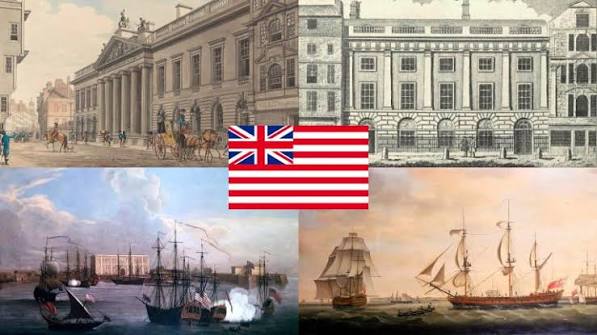
Tag: corporate history

  • How a Trading Company Conquered an Empire: The Rise and Fall of the East India Company

    How a Trading Company Conquered an Empire: The Rise and Fall of the East India Company

    In 1600, a group of London merchants received a royal charter to trade in the East Indies. They had no army, no territory, and no intention of ruling anyone. Yet within 150 years, this joint-stock company controlled a private army larger than Britain’s, collected taxes from millions of Indians, and launched wars that reshaped Asia. How did a firm become an empire, and why did it ultimately collapse?

    The story of the East India Company is not just a tale of conquest—it is the origin story of modern global capitalism. It pioneered the corporate form, pioneered cross-subsidization, and pioneered the fusion of commercial and state power. Its methods and missteps still echo in boardrooms and government halls today.

    A Monopoly on Spice, and a Pivot to Power

    The East India Company (EIC) began with pepper and cloves, not conquest. For its first century, it was one of several European trading companies vying for access to the spice islands of Southeast Asia. The Dutch East India Company (VOC) was the dominant player, and the English firm struggled to compete.

    But in the 17th century, the EIC found a more lucrative niche in India: textiles. Calico and muslin from Bengal and Gujarat were in high demand in Europe. The company established factories (trading posts) at Surat, Madras, and Calcutta, always with the permission of local rulers—initially the Mughal emperors, who tolerated European traders as minor players in their vast domain.

    The Mughal Empire was then the world’s largest economy, producing about a quarter of global GDP. India was a manufacturing superpower, and the EIC was a middleman. That changed when Mughal authority crumbled after the death of Emperor Aurangzeb in 1707. Regional nawabs became de facto rulers, and European companies—now with forts and armed guards—became players in the power vacuum.

    The decisive moment came in 1757 at the Battle of Plassey. Robert Clive, a company official with a knack for military improvisation, defeated the Nawab of Bengal, Siraj-ud-Daulah, with a combination of muskets and bribery. It was not a massive battle—the EIC fielded only about 3,000 men—but it was a political earthquake. For the first time, the company had installed a puppet ruler on a major Indian throne.

    Eight years later, the Treaty of Allahabad gave the company the right to collect land revenue in Bengal, Bihar, and Orissa—the richest provinces in India, home to about 20 million people. The EIC was now a sovereign power, with the revenue of a kingdom to fund its commercial operations. It was a staggering leap: from trade to taxation, from merchant to monarch.

    The First Multi-National Corporation

    Long before the term existed, the EIC was the world’s first multinational corporation. It had its own flags, forts, currency, and legal system. At its peak, it maintained an army of about 260,000 soldiers—larger than the British Army at the time. It owned a navy of its own warships. It issued corporate bonds, paid dividends to shareholders, and had a governance structure with a Court of Directors elected by shareholders.

    The joint-stock model was revolutionary. Unlike earlier ventures that were dissolved after each voyage, the EIC pooled capital permanently, allowing investors to buy and sell shares. The London Stock Exchange grew partly out of the trade in EIC stock. The separation of ownership (shareholders) from management (directors and officials) became the template for modern corporations.

    The company also pioneered cross-subsidization. Its conquest of Bengal provided a steady stream of tax revenue that it used to bankroll its loss-making trade in China, where it bought tea but had little to sell in return—until it found a product the Chinese wanted: opium.

    Opium, Tea, and Global Trade

    By the early 19th century, the EIC had built a global trading system that connected Britain, India, and China. The pattern was simple and devastating:

    • British manufactured goods were shipped to India, but the company found it hard to sell them profitably.
    • From India, it exported opium to China, despite China’s official ban on the drug.
    • The opium sales generated silver, which the company used to buy Chinese tea, which it shipped back to Britain.

    This triangular trade made the EIC the largest commercial enterprise in the world. By the 1830s, opium was the biggest single commodity trade on the planet. The company’s trade in tea became central to British life, but the financial engine was the narcotics trade. When China tried to stop the flow, the company—now backed by the British state—fought two wars to keep it going: the Opium Wars of 1839–1842 and 1856–1860.

    The EIC’s revenue from Bengal land taxes alone exceeded the entire revenue of Britain in the late 18th century. The company was simultaneously a commercial enterprise, a colonial government, and a military power. Its reach was vast: at its height, it controlled about one-fifth of the world’s population and accounted for half of global trade in several key commodities.

    From Corporation to Crown Colony

    The EIC’s hybrid nature—part firm, part state—created tensions from the start. Its shareholders wanted profits; its officials in India wanted to build an empire. The British government watched with growing unease as a private company accrued enormous power, often with little accountability.

    The first crack appeared in the 1770s, when the company was nearly bankrupted by a famine in Bengal and the cost of its own conquests. The Regulating Act of 1773 brought the British government into the picture for the first time. The Prime Minister, Lord North, was not trying to nationalize the company; he was trying to save it—and to curb its excesses.

    Legislation followed in 1784 (Pitt’s India Act), which created a Board of Control in London to supervise the company’s political activities. The company lost its commercial monopoly on Indian trade in 1813, and then lost all its trade functions in 1833. By then, it had become a pure administrative agency for the British Crown—a shell of its former commercial self.

    The final blow came in 1857. The Indian Rebellion, known to the British as the Sepoy Mutiny, was a massive uprising against company rule. It had many causes: resentment of British annexations, fears of religious pollution from new rifle cartridges, and a broader rebellion against foreign domination. The company’s army, composed largely of Indian sepoys, turned against it in many regions.

    The rebellion was suppressed after a brutal conflict, but the British government had had enough. In 1858, the Government of India Act dissolved the company as a governing body. The Crown took direct control, establishing the British Raj. The East India Company continued a shadow existence for another decade, but in 1874, it was formally wound up. Its remaining assets were absorbed by the state, and its shareholders were paid off.

    What the East India Company Left Behind

    The EIC’s legacy is contested. On one hand, it laid the foundations for modern global corporations, international trade networks, and the rise of Britain as a world power. On the other, its methods were ruthless: it monopolized trade, enforced opium cultivation on Indian farmers, and extracted wealth from India on a scale that contributed to devastating famines.

    Its corporate innovations—limited liability, permanent capital, professional management—became standard practice. Its political innovations were equally influential: the idea that a private company could exercise sovereignty, and that trade could be backed by military force, shaped the age of imperialism.

    The company’s rise is a cautionary tale about the dangers of concentrated corporate power. It was a firm that became more powerful than many states, and its fall shows how governments eventually reassert control. But its story also illustrates how the boundaries between public and private power have always been porous—and that the corporate form can be used for purposes far beyond commerce.

    Today, when we debate the role of multinational corporations, we are echoing arguments that first emerged around the East India Company. Its rise and fall offer lessons that remain remarkably fresh: about the limits of corporate autonomy, the interplay between business and state, and the human cost of economic empire.

    The East India Company was not just an early multinational—it was an empire that wore a corporate mask. Its rise was driven by innovation and ambition, but also by violence and exploitation. Its fall was a lesson in the limits of private power. For anyone interested in how the modern world came to be, the EIC is an essential study.

    Summary

    • The East India Company was chartered in 1600 as a spice-trading firm and grew into a sovereign power controlling one-fifth of the world’s population.
    • It pioneered the joint-stock corporate model, with shares, bonds, and professional management, becoming the blueprint for modern corporations.
    • Its transformation from trader to ruler came through the Battle of Plassey (1757) and the grant of revenue rights in Bengal (1765).
    • The company financed its tea trade through opium exports to China, leading to the Opium Wars.
    • It was dissolved in 1858 after the Indian Rebellion, with the British Crown taking direct control of India.

    FAQ

    Q: How did the East India Company start?
    A: It was chartered by Queen Elizabeth I on 31 December 1600 as a monopoly for English trade east of the Cape of Good Hope. It began as a spice-trading venture but soon shifted to textiles in India.

    Q: Why did the East India Company need an army?
    A: Initially to protect its factories from rival European companies and local rulers. As the Mughal Empire weakened, it used its military to expand territory and secure trade privileges, eventually conquering Bengal.

    Q: What role did opium play?
    A: The company exported opium from India to China to pay for Chinese tea. This trade was illegal in China but massively profitable, and it led to the Opium Wars when China tried to suppress it.

    Q: What was the Indian Rebellion of 1857?
    A: A major uprising against company rule, sparked by various grievances including fears of religious pollution from new rifle cartridges. It was suppressed, but it led to the end of company rule.

    Q: When did the East India Company end?
    A: It lost its governing role in 1858 after the rebellion, and was formally wound up in 1874. The British government took direct control of India, beginning the British Raj.

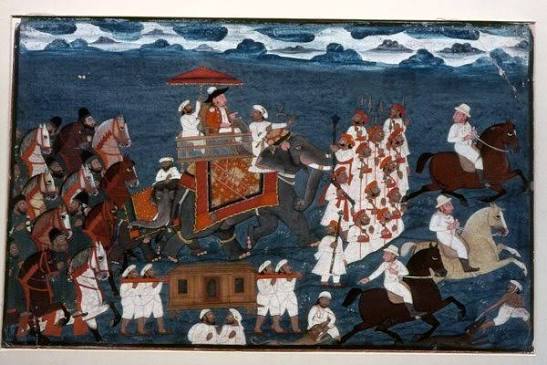
  • The Dutch East India Company: The World’s First Multinational and Its Spectacular Collapse

    The Dutch East India Company: The World’s First Multinational and Its Spectacular Collapse

    In 1602, a group of Dutch merchants pooled their money to fund a risky voyage to the Spice Islands. That gamble became the Vereenigde Oostindische Compagnie (VOC)—the world’s first multinational corporation. It invented the stock market, controlled trade across half the globe, and at its peak was worth more than Apple, Amazon, and Google combined. But within two centuries, this colossal enterprise collapsed into bankruptcy. How did a company that once commanded the world’s oceans end up a cautionary tale? The answer lies in its own brilliant, and brutal, innovations.

    The Birth of a Corporate Giant

    The VOC was born from a crisis. In the 1590s, Spain closed Lisbon’s port to Dutch ships, cutting off their access to Asian spices. Dutch merchants had to sail directly to the East Indies, but the voyages were long, dangerous, and expensive. Competing Dutch companies were undercutting each other, driving up prices in Asia and crashing them in Europe. So the Dutch government forced them to merge. In 1602, they formed a single entity with a 21-year monopoly on trade east of the Cape of Good Hope and west of the Strait of Magellan.

    The VOC’s structure was revolutionary. It had a permanent capital base, funded by public investment. Anyone could buy shares, and those shares could be traded on the newly established Amsterdam Stock Exchange. This was the world’s first initial public offering (IPO). Investors weren’t just funding a single voyage; they were buying into a company that would exist indefinitely. This model of permanent, transferable equity became the blueprint for modern corporations.

    The company was governed by a board of 17 directors, the Heeren XVII, with Amsterdam holding 8 seats. Six regional chambers managed operations, but the real power lay in the boardroom. The VOC wasn’t just a trading company; it was a state within a state. It could wage war, sign treaties, and govern territories. Its charter gave it the authority to maintain its own army and navy.

    The Spice Monopoly and the Brutal Logic of Profit

    The VOC’s core business was spices—pepper, nutmeg, cloves, and cinnamon. These were luxury goods in Europe, worth more than gold by weight. The company’s “Grand Design” was to control the entire supply chain, from production to distribution. That meant conquering the source of the spices and eliminating competitors.

    Jan Pieterszoon Coen, the Governor-General from 1619, embodied this ruthless strategy. He established Batavia (modern Jakarta) as the company’s Asian headquarters, and from there, he waged a campaign to dominate the spice trade. The most infamous incident was the Banda Islands massacre in 1621. The local population, who sold nutmeg to the English, were systematically killed or enslaved to secure a monopoly. Coen’s actions were brutal, but they were effective. The VOC achieved a near-total control of the nutmeg market, and profits soared.

    At its peak, the VOC operated over 150 merchant ships and 40 warships, employing more than 70,000 people. It maintained forts and trading posts from the Cape of Good Hope to Japan. In Japan, it was the only Western company allowed to trade, operating from the artificial island of Dejima in Nagasaki harbor. The VOC was, in every sense, a global enterprise.

    Financial Innovation and the World’s First Stock Market Bubble

    The VOC’s financial innovations were as groundbreaking as its military conquests. By issuing shares that could be freely traded, it created a secondary market. This allowed investors to buy and sell stakes without waiting for a voyage to return. The Amsterdam Stock Exchange, established in 1602, became the hub of this new financial world.

    The company’s dividend policy was remarkably consistent. Over its lifetime, the VOC paid an average annual dividend of 18%. At its height, its market capitalization was estimated to be worth roughly $7.9 trillion in modern dollars, adjusted for inflation and GDP share. That makes it the most valuable company in history relative to the global economy.

    But this success bred complacency. The VOC’s permanent capital meant shareholders had little say in management, and the directors grew increasingly corrupt and inefficient. The company’s focus shifted from innovation to exploitation. It relied on forced cultivation and monopolistic practices, which alienated local populations and invited competition.

    The Long Decline: Corruption, Competition, and Changing Tides

    The VOC’s decline was gradual but inexorable. By the late 17th century, its profitability was already waning. The company paid high dividends even when profits were falling, borrowing to maintain the payouts. This eroded its financial base. Corruption was rampant; directors and employees embezzled funds, and the company’s books were a mess.

    Competition from the English and French East India Companies eroded its monopoly. The VOC’s military costs soared as it fought to maintain its territories. The Fourth Anglo-Dutch War (1780-1784) was a disaster, crippling its navy and trade. By the 1790s, the company was effectively bankrupt.

    In 1799, the VOC was formally dissolved, and its debts were taken over by the Dutch state. Its territories became the Dutch East Indies, which would remain a Dutch colony until 1949. The company that had once been the world’s mightiest corporation ended in ignominy.

    Lessons for Modern Business

    The VOC’s rise and fall offer enduring lessons. Its innovations—permanent capital, transferable shares, and limited liability—became the foundation of modern capitalism. But its failures also highlight the dangers of unchecked power, corruption, and a short-term focus on dividends. The VOC was a pioneer, but it also showed how a company can become too big, too arrogant, and too detached from the realities of its market.

    Today, as multinational corporations wield unprecedented influence, the VOC’s story is a cautionary tale. It reminds us that corporate power, when left unchecked, can lead to exploitation and collapse. But it also shows the transformative potential of financial innovation. The VOC didn’t just build an empire; it built the template for the global economy we live in today.

    The End of an Era

    When the VOC was dissolved, it left behind a legacy of innovation and brutality. Its rise was driven by a bold vision and financial genius; its fall was a result of hubris and decay. The world’s first multinational was a product of its time, but its influence persists. Every time a company issues shares on a stock exchange, it is following in the footsteps of the Dutch East India Company. And every time a corporation collapses under the weight of its own excess, it echoes the VOC’s final days.

    The Dutch East India Company was a marvel of its age, a corporation that changed the course of history. Its innovations laid the groundwork for modern finance, but its methods were often brutal, and its decline was as dramatic as its ascent. The VOC’s story is a reminder that even the mightiest companies are not immortal. They rise on the strength of their ideas, but they fall when they lose sight of the very principles that made them great.

    Summary

    • The VOC, founded in 1602, was the world’s first multinational corporation, with a permanent capital base and publicly traded shares.
    • It controlled the spice trade through territorial conquest and brutal monopolistic practices, including the Banda Islands massacre.
    • At its peak, it employed 70,000 people, operated 150 ships, and had a market cap equivalent to $7.9 trillion today.
    • Its decline was fueled by corruption, excessive dividends, military overreach, and rising competition from the English and French.
    • Dissolved in 1799, the VOC’s legacy includes the blueprint for modern corporations and a cautionary tale about unchecked corporate power.

    FAQ

    Q: Why was the Dutch East India Company considered the first multinational?
    A: It was the first company to operate across multiple continents with a permanent capital base, tradeable shares, and a hierarchical governance structure. It had operations from Africa to Asia and was chartered by a government to act with quasi-sovereign powers.

    Q: What was the VOC’s most significant financial innovation?
    A: The VOC pioneered the concept of a permanent, transferable equity capital. It issued shares that were freely traded on the Amsterdam Stock Exchange, allowing for liquidity and continuous investment. This became the foundation of modern stock markets.

    Q: How did the VOC maintain its monopoly on spices?
    A: Through a combination of military force and strategic treaties. The company conquered key spice-producing regions, such as the Banda Islands, and used violence to eliminate competitors, ensuring its sole control over the supply.

    Q: Why did the VOC decline?
    A: The decline was due to a mix of internal corruption, excessive dividend payouts that drained cash, rising competition from rival East India companies, and costly military conflicts. The company became overextended and inefficient.

    Q: What can modern businesses learn from the VOC?
    A: The VOC’s rise shows the power of financial innovation and strategic vision. Its fall warns against complacency, corruption, and a short-term focus on shareholder returns at the expense of long-term sustainability.

  • The Rise and Fall of the East India Company: How a Trading Firm Conquered a Subcontinent

    The Rise and Fall of the East India Company: How a Trading Firm Conquered a Subcontinent

    On 31 December 1600, Queen Elizabeth I signed a charter that would reshape the world. The ‘Governor and Company of Merchants of London Trading into the East Indies’ better known as the East India Company was granted a monopoly on all English trade east of the Cape of Good Hope. It started as a spice trader. It ended as a sovereign ruler of 200 million people, with a private army larger than the British Army and control over 40% of global trade in several commodities.

    The story of the East India Company is not just a historical curiosity. It’s the first example of a corporation exercising state-like power, of ‘too big to fail’ economics, and of the dark side of globalization. Understanding its rise and fall offers lessons about corporate power, government oversight, and the human cost of unchecked ambition.

    The Birth of a Corporate Giant

    The late 16th century was the age of exploration and monopoly. Portugal and Holland had carved up the lucrative spice trade. England wanted in. The solution was a joint-stock company: investors pooled capital, shared risk, and received dividends. The East India Company was born, and its early voyages were financed separately, with profits distributed after each return. It wasn’t until 1657 that the company established a permanent joint stock, allowing for continuous trading and long-term planning.

    From Pepper to Power

    Initially, the EIC focused on spices—pepper, cloves, nutmeg. But as European tastes evolved, so did the company’s portfolio. Textiles like calico and muslin became hot commodities. Then came tea, which would become Britain’s national drink and the EIC’s golden goose. By the 18th century, the company had established trading posts at Surat, Madras, Bombay, and Calcutta. These ‘factories’ were fortified, requiring local alliances and military protection. The company was already blending commerce with conflict.

    The Mughal Empire, which had ruled India for centuries, began to fracture after Emperor Aurangzeb’s death in 1707. Regional states rose, creating a power vacuum. The EIC, with its private armies, filled the void. The Seven Years’ War (1756–1763) between Britain and France turned India into a global battleground. The EIC, as a proxy for British military power, emerged victorious, but the real turning point came in 1757 at the Battle of Plassey.

    Plassey: The Corporate Coup

    Robert Clive, a company officer, defeated Nawab Siraj-ud-Daulah of Bengal, but the victory was less a military triumph and more a financial transaction. Clive had bribed the Nawab’s general, Mir Jafar, to defect. The battle was effectively won before a shot was fired. This set a dangerous precedent: the EIC would use military force and political manipulation to secure commercial advantages. The company installed Mir Jafar as a puppet ruler and demanded massive payments.

    In 1765, the Treaty of Allahabad granted the EIC the diwani—the right to collect revenue from Bengal, Bihar, and Orissa. Bengal was one of the wealthiest regions on Earth. The company now had a guaranteed income to fund its trade and armies. It was no longer a trading firm; it was a tax collector and sovereign power.

    The Financial Engine: Opium and Tea

    The EIC’s profitability rested on a triangular trade. British manufactured goods went to India. Indian opium went to China. Chinese tea went to Britain. By the 1830s, opium accounted for over 50% of the company’s total revenue. The Chinese government, alarmed by the addiction and social decay, tried to stop the trade, leading to the Opium Wars (1839–1842 and 1856–1860). The EIC was literally fighting wars to sell drugs.

    The company also pioneered corporate finance. It issued bonds, paid dividends, and its stock was traded on the London exchange. It was the first ‘too big to fail’ corporation. When it faced financial crises, the British government bailed it out—in 1772, 1784, and again in 1858. This pattern of private profits and public bailouts has a familiar ring.

    The Human Cost

    The company’s ambition had a devastating toll. The Bengal Famine of 1770 killed an estimated 10 million people—about one-third of the region’s population. While people starved, the EIC continued to collect revenue with full force. This callousness was criticized even in Britain. The company also deindustrialized India. Indian textile weavers were driven out of business as British manufactured goods flooded the market, often with the help of tariffs and coercion. India was transformed from a manufacturing powerhouse to a supplier of raw materials.

    Government Oversight and the End of Monopoly

    The British government began to rein in the company in 1773 with the Regulating Act, followed by Pitt’s India Act in 1784. These acts established government oversight but left the company in charge. The Charter Act of 1813 ended the company’s monopoly on Indian trade, and the Charter Act of 1833 ended its monopoly on China trade. The company was now purely administrative, a strange hybrid of a business and a government.

    Rebellion and Dissolution

    The final blow came in 1857. The Indian Rebellion, also called the Sepoy Mutiny, was a massive uprising against British rule. It was sparked by a variety of grievances, including the use of animal fat on rifle cartridges, which offended both Hindu and Muslim soldiers. The rebellion was brutally suppressed, but it exposed the instability of the EIC’s rule. In 1858, the Government of India Act transferred all powers from the company to the British Crown. The EIC was stripped of its governing role, and in 1874, it was formally dissolved.

    Lessons for Today

    The East India Company’s story is not just a historical footnote. It illustrates the dangers of allowing corporations to gain too much power. The company used its economic might to acquire political and military authority, leading to exploitation and suffering. It also shows the importance of government regulation. The EIC was only reined in after centuries of damage. The modern world has its own multinational corporations, some with revenues larger than nation-states. The EIC’s rise and fall serves as a cautionary tale about what happens when profit is prioritized over human welfare.

    The East India Company was a marvel of commercial ambition and a monster of exploitation. It transformed global trade, but at a cost measured in lives and livelihoods. Its dissolution in 1874 marked the end of an era, but its legacy—the corporate form, global supply chains, and the ethical questions they raise—remains with us. The story reminds us that corporations are not natural sovereigns. They are creations of the state, and they can be controlled. The lesson of the EIC is not that corporations are evil, but that power without accountability is dangerous. As we navigate the complexities of modern globalization, the East India Company offers a timeless warning: watch the corporations, for they may seek to become kings.

    Summary

    • The East India Company was chartered in 1600 and lasted 274 years, becoming the longest-lived corporation of its kind.
    • It evolved from a spice trader to a military power, ruling 200-250 million people with a private army of over 260,000 troops.
    • The Battle of Plassey in 1757, won through bribery, marked the shift from trade to conquest.
    • Its profits depended on opium, which made up over 50% of its revenue, and it fought wars to protect that trade.
    • The company’s rule led to devastating famines and deindustrialization, with the Bengal Famine of 1770 killing 10 million.
    • Government oversight increased from 1773, but the company was only dissolved in 1874 after the 1857 rebellion.

    FAQ

    Q: What was the East India Company?
    A: The East India Company was a joint-stock company chartered in 1600 to trade with the East Indies. It grew to rule large parts of India, with its own army and government.

    Q: How did a trading company conquer India?
    A: It exploited the decline of the Mughal Empire, used military force and bribery (as at Plassey), and gained revenue rights, which funded further conquest.

    Q: What role did opium play?
    A: Opium was the company’s biggest revenue source, making up over 50% of income by the 1830s. The trade to China led to the Opium Wars.

    Q: Why did the company fall?
    A: Financial crises, government regulation, and the 1857 rebellion led the British Crown to take over in 1858. The company was dissolved in 1874.

    Q: What can modern businesses learn from the East India Company?
    A: The EIC shows the dangers of corporate power without accountability and the need for ethical oversight. It’s a cautionary tale for modern multinationals.