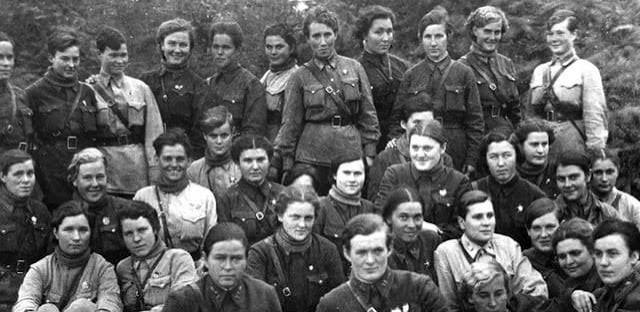
When I first heard about the Night Witches, I assumed it was a myth a propaganda story cooked up to rally a desperate Soviet Union. Three months of digging through archives, memoirs, and combat reports later, I’m convinced they were real, and far more remarkable than any legend. These were teenage girls flying plywood biplanes in the dead of night, with no radar, no parachutes, and no armor, dropping bombs on the most powerful army in Europe. Here’s what stunned me most.
They Flew Wooden CropDusters Against the Nazis
The Polikarpov Po-2 was a 1920s training biplane, built from wood and canvas. It had a top speed of 150 km/h—slower than the wind resistance on a German Messerschmitt’s windshield. It had open cockpits, so the women froze at -40°C. It had no self-sealing fuel tanks, meaning one bullet could turn the entire aircraft into a fireball. And yet, these women flew it into combat, night after night.
What made the Po-2 a weapon was its stall speed just 65 km/h. It could fly so slowly and so low that German fighters literally couldn’t engage it. A Bf 109 would stall and crash if it tried to match the Po-2’s speed. That’s not an excuse; that’s physics. The Germans couldn’t touch them.
They Didn’t Just Bomb They Terrorized
The German soldiers called them “Nachthexen” Night Witches because the Po-2’s wooden frame made it invisible to radar, and its engines made a distinctive whooshing sound as it glided overhead. The name was meant as an insult. The women wore it as a badge of honor.
But the real shocker was the psychological impact. German commanders were so desperate that they offered the Iron Cross to any pilot who shot down a Night Witch. None ever did. The constant night raids sometimes 8 to 12 sorties per pilot per night left German troops exhausted, jumpy, and demoralized. The Po-2 carried only 200-300 kg of bombs per mission, but the harassment value was immense. They weren’t just destroying supply depots; they were destroying sleep.
They Were Teenagers, and They Volunteered
The average age of a Night Witch was 20 to 22. Some were as young as 16. These weren’t hardened soldiers; they were university students, flying club enthusiasts, and factory workers who answered Marina Raskova’s call after Stalin authorized three women’s aviation regiments in October 1941. Many had only months of flight training before they were sent to the front.
One of them, Irina Sebrova, flew 1,008 missions. That’s more than any pilot in the regiment, and more than most male pilots in any air force. Nadezhda Popova flew 852 missions and later married a fighter pilot she met during the war. Natalya Meklin flew 980. These weren’t outliers they were typical of the regiment’s dedication.
The Tactics Were Genius
The hallmark of the Night Witches was the engine-cut glide bombing. They would approach a target, cut the engine, and glide silently the only sound a soft whistle from the wind over the wings. At 200-400 meters, they’d release their bombs and restart the engine, often under heavy anti-aircraft fire. They also used diversion tactics: one plane would circle to draw searchlights and flak, while others attacked from a blind spot.
They flew in all weather, without radios, navigating by stars and landmarks. Their only instruments were a compass, a stopwatch, and a map. If they got lost, they were lost.
The Cost Was Real
The regiment flew over 23,000 sorties and dropped about 3,000 tons of bombs. In return, 32 women were killed in action some in crashes, some shot down. Among them was Marina Raskova, the regiment’s founder, who died in a training accident in January 1943. Her death was a devastating blow, but the regiment continued under Yevdokia Bershanskaya, the only woman to command a regiment in the Soviet Air Forces.
Twenty-three pilots and navigators received the Hero of the Soviet Union, the nation’s highest honor. Some were posthumous.
Why We Forgot Them
After the war, the Soviet Union downplayed the role of women in combat. The Night Witches were celebrated briefly, then quietly erased from official history. It wasn’t until the 1990s that their story resurfaced, thanks to memoirs and historians. The German nickname stuck, and now it’s the only name most people know.
But here’s what shocked me most: these women weren’t just brave they were effective. They flew more sorties than many male regiments, and they did it with inferior equipment and no expectation of glory. They weren’t asking for recognition. They just wanted to fight for their country. And they did.
The Night Witches were not a myth, and they weren’t a novelty act. They were one of the most effective bombing units of World War II, and they did it in the most unlikely aircraft imaginable. Three months of research left me in awe of their courage, their ingenuity, and their determination. They weren’t witches they were warriors.
Summary
- The Night Witches flew 23,000+ combat missions in wooden Po-2 biplanes, with no radar, no parachutes, and no armor.
- They used engine-cut glide bombing and diversion tactics to evade German defenses, and no Night Witch was ever shot down by a German fighter.
- The regiment was composed of ~400 women, mostly in their early 20s, who volunteered and flew up to 12 sorties per night.
- They dropped ~3,000 tons of bombs and suffered 32 deaths, earning 23 Heroes of the Soviet Union.
- Their story was largely forgotten after the war, but their legacy as one of the most effective harassment bombing units endures.
FAQ
Q: Did any Night Witch get shot down by a German pilot?
A: No. German fighters couldn’t engage the Po-2 effectively due to its extremely low stall speed, and no pilot was ever awarded the Iron Cross for shooting one down. 32 women died in accidents and crashes, but not from enemy fighter attacks.
Q: Why did they fly so many missions per night?
A: Because the Po-2 could only carry 200-300 kg of bombs, pilots often flew 8-12 sorties per night to make up for the small payload. Some flew more.
Q: Were there other women’s aviation regiments?
A: Yes, Marina Raskova formed three: the 586th Fighter Regiment, the 587th Dive Bomber Regiment, and the 588th Night Bomber Regiment (later the 46th Guards Night Bomber Aviation Regiment). The 588th became the most famous.
Q: What happened to the regiment after the war?
A: Many survivors returned to civilian life. The Soviet Union largely erased women’s combat roles from official history, and the regiment was not widely recognized until recent decades.
Q: Where did the name “Night Witches” come from?
A: German soldiers coined it because the wooden Po-2 was invisible to radar and made a whooshing sound in flight, like a witch’s broomstick. It was meant as an insult, but the women embraced it.
Leave a Reply