Tag: aviation history

  • I Spent 3 Months Researching the Night Witches. Here’s What Shocked Me.

    I Spent 3 Months Researching the Night Witches. Here’s What Shocked Me.

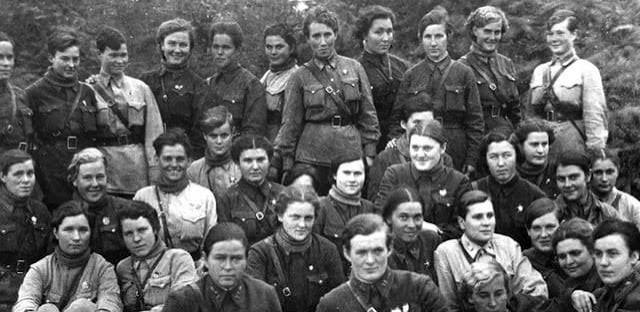
    When I first heard about the Night Witches, I assumed it was a myth a propaganda story cooked up to rally a desperate Soviet Union. Three months of digging through archives, memoirs, and combat reports later, I’m convinced they were real, and far more remarkable than any legend. These were teenage girls flying plywood biplanes in the dead of night, with no radar, no parachutes, and no armor, dropping bombs on the most powerful army in Europe. Here’s what stunned me most.

    They Flew Wooden CropDusters Against the Nazis

    The Polikarpov Po-2 was a 1920s training biplane, built from wood and canvas. It had a top speed of 150 km/h—slower than the wind resistance on a German Messerschmitt’s windshield. It had open cockpits, so the women froze at -40°C. It had no self-sealing fuel tanks, meaning one bullet could turn the entire aircraft into a fireball. And yet, these women flew it into combat, night after night.

    What made the Po-2 a weapon was its stall speed just 65 km/h. It could fly so slowly and so low that German fighters literally couldn’t engage it. A Bf 109 would stall and crash if it tried to match the Po-2’s speed. That’s not an excuse; that’s physics. The Germans couldn’t touch them.

    They Didn’t Just Bomb They Terrorized

    The German soldiers called them “Nachthexen” Night Witches because the Po-2’s wooden frame made it invisible to radar, and its engines made a distinctive whooshing sound as it glided overhead. The name was meant as an insult. The women wore it as a badge of honor.

    But the real shocker was the psychological impact. German commanders were so desperate that they offered the Iron Cross to any pilot who shot down a Night Witch. None ever did. The constant night raids sometimes 8 to 12 sorties per pilot per night left German troops exhausted, jumpy, and demoralized. The Po-2 carried only 200-300 kg of bombs per mission, but the harassment value was immense. They weren’t just destroying supply depots; they were destroying sleep.

    They Were Teenagers, and They Volunteered

    The average age of a Night Witch was 20 to 22. Some were as young as 16. These weren’t hardened soldiers; they were university students, flying club enthusiasts, and factory workers who answered Marina Raskova’s call after Stalin authorized three women’s aviation regiments in October 1941. Many had only months of flight training before they were sent to the front.

    One of them, Irina Sebrova, flew 1,008 missions. That’s more than any pilot in the regiment, and more than most male pilots in any air force. Nadezhda Popova flew 852 missions and later married a fighter pilot she met during the war. Natalya Meklin flew 980. These weren’t outliers they were typical of the regiment’s dedication.

    The Tactics Were Genius

    The hallmark of the Night Witches was the engine-cut glide bombing. They would approach a target, cut the engine, and glide silently the only sound a soft whistle from the wind over the wings. At 200-400 meters, they’d release their bombs and restart the engine, often under heavy anti-aircraft fire. They also used diversion tactics: one plane would circle to draw searchlights and flak, while others attacked from a blind spot.

    They flew in all weather, without radios, navigating by stars and landmarks. Their only instruments were a compass, a stopwatch, and a map. If they got lost, they were lost.

    The Cost Was Real

    The regiment flew over 23,000 sorties and dropped about 3,000 tons of bombs. In return, 32 women were killed in action some in crashes, some shot down. Among them was Marina Raskova, the regiment’s founder, who died in a training accident in January 1943. Her death was a devastating blow, but the regiment continued under Yevdokia Bershanskaya, the only woman to command a regiment in the Soviet Air Forces.

    Twenty-three pilots and navigators received the Hero of the Soviet Union, the nation’s highest honor. Some were posthumous.

    Why We Forgot Them

    After the war, the Soviet Union downplayed the role of women in combat. The Night Witches were celebrated briefly, then quietly erased from official history. It wasn’t until the 1990s that their story resurfaced, thanks to memoirs and historians. The German nickname stuck, and now it’s the only name most people know.

    But here’s what shocked me most: these women weren’t just brave they were effective. They flew more sorties than many male regiments, and they did it with inferior equipment and no expectation of glory. They weren’t asking for recognition. They just wanted to fight for their country. And they did.

    The Night Witches were not a myth, and they weren’t a novelty act. They were one of the most effective bombing units of World War II, and they did it in the most unlikely aircraft imaginable. Three months of research left me in awe of their courage, their ingenuity, and their determination. They weren’t witches they were warriors.

    Summary

    • The Night Witches flew 23,000+ combat missions in wooden Po-2 biplanes, with no radar, no parachutes, and no armor.
    • They used engine-cut glide bombing and diversion tactics to evade German defenses, and no Night Witch was ever shot down by a German fighter.
    • The regiment was composed of ~400 women, mostly in their early 20s, who volunteered and flew up to 12 sorties per night.
    • They dropped ~3,000 tons of bombs and suffered 32 deaths, earning 23 Heroes of the Soviet Union.
    • Their story was largely forgotten after the war, but their legacy as one of the most effective harassment bombing units endures.

    FAQ

    Q: Did any Night Witch get shot down by a German pilot?
    A: No. German fighters couldn’t engage the Po-2 effectively due to its extremely low stall speed, and no pilot was ever awarded the Iron Cross for shooting one down. 32 women died in accidents and crashes, but not from enemy fighter attacks.

    Q: Why did they fly so many missions per night?
    A: Because the Po-2 could only carry 200-300 kg of bombs, pilots often flew 8-12 sorties per night to make up for the small payload. Some flew more.

    Q: Were there other women’s aviation regiments?
    A: Yes, Marina Raskova formed three: the 586th Fighter Regiment, the 587th Dive Bomber Regiment, and the 588th Night Bomber Regiment (later the 46th Guards Night Bomber Aviation Regiment). The 588th became the most famous.

    Q: What happened to the regiment after the war?
    A: Many survivors returned to civilian life. The Soviet Union largely erased women’s combat roles from official history, and the regiment was not widely recognized until recent decades.

    Q: Where did the name “Night Witches” come from?
    A: German soldiers coined it because the wooden Po-2 was invisible to radar and made a whooshing sound in flight, like a witch’s broomstick. It was meant as an insult, but the women embraced it.
  • The Flying Fortress: How the B-17 Redefined Strategic Bombing

    The Flying Fortress: How the B-17 Redefined Strategic Bombing

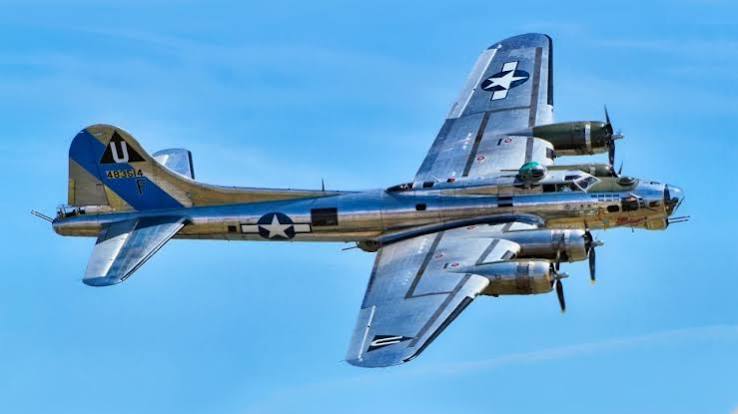
    On August 17, 1942, twelve B-17Es of the 97th Bomb Group lifted off from an English airfield, their target a rail yard in Rouen, France. It was the first combat mission for the US Army Air Forces in Europe, and it embodied a theory that had been two decades in the making: that a heavily armed bomber, flying high and in tight formation, could fight its way to a target and back without fighter escort.

    The B-17’s story is one of that theory’s rise, its brutal testing, and its eventual vindication though not in the way its designers had imagined. By the war’s end, 12,731 B-17s had rolled off assembly lines, and the aircraft had become the backbone of the American daylight bombing campaign. But the Fortress’s success came at a staggering human cost, and its ultimate effectiveness depended on a fighter it was originally built to make unnecessary.

    The Birth of an Idea

    In 1935, a Boeing prototype called the Model 299 took to the air for the first time. It was a four-engine behemoth, bristling with machine guns and capable of flying higher than any pursuit plane of its era. A reporter for the Seattle Daily Times, Richard Williams, took one look and dubbed it a “flying fortress.” Boeing knew a good name when it heard one and trademarked it.

    The B-17 was the physical embodiment of an interwar doctrine that had been brewing in the minds of airpower theorists like Giulio Douhet and Billy Mitchell. They argued that a bomber force, flying in formation, could generate enough overlapping defensive fire to make interception suicidal. With the Norden bombsight, they could place bombs on a pickle barrel from 20,000 feet. High altitude, long range, heavy guns the B-17 had all of it. The Air Corps bought the vision, ordering 13 YB-17s for testing in 1936 and ramping up mass production by 1938.

    There was just one problem: the theory had never been tested in combat. The B-17’s first real test would come over Europe, and it would nearly break the bomber force.

    The B-17’s Best Defense: Its Own Ruggedness

    The Fortress was built to take punishment. Its turbo-supercharged engines allowed it to cruise at 35,600 feet, far above most flak and enemy fighters. Its defensive armament, especially on the B-17G with 13 .50-caliber machine guns, made it a formidable target. But the aircraft’s real claim to fame was its ability to absorb damage and keep flying.

    Crews brought home Fortresses with wings shredded, engines dead, and tails barely attached. The most famous example: the “All American,” which collided with a German fighter over Tunisia in 1943. The collision tore off much of the tail section, yet the pilot managed to fly the bomber back to base and land it. Every crew member survived.

    This ruggedness wasn’t an accident. Boeing designed the B-17 with redundant systems and a sturdy airframe, knowing that a bomber hit by flak or fighters had to get its crew home. It was a lesson learned from the B-17’s predecessor, and it paid off in saved lives though not enough of them.

    The Crucible: Schweinfurt and Black Thursday

    In 1943, the Eighth Air Force began pushing deeper into Germany. The B-17s flew unescorted, relying on their formation and their guns. The Luftwaffe was waiting.

    On August 17, 1943, a double raid on Schweinfurt and Regensburg cost 60 B-17s. Two months later, on October 14, the Eighth sent 291 B-17s to Schweinfurt again. The Luftwaffe threw everything at them. Sixty bombers went down, and 600 airmen were killed, wounded, or captured. The mission became known as “Black Thursday.” The self-defending bomber theory lay in tatters.

    For a month, the Eighth halted deep-penetration missions. The B-17 could reach the targets, but it couldn’t guarantee the crews would come back. The math was brutal: a 25-mission tour was the goal, but the average crewman had roughly a one in three chance of becoming a casualty. The psychological toll was immense, with crews watching neighboring Fortresses explode in mid-air or spin down in flames.

    The Fighter That Changed Everything

    The B-17’s salvation came not from more guns, but from a new escort fighter: the P-51 Mustang. With external drop tanks, the Mustang could fly the entire mission profile—to the target and back. In December 1943, the first P-51s began flying escort for the Eighth Air Force.

    The impact was immediate. During “Big Week” in February 1944, the Eighth launched sustained deep-penetration raids against German aircraft factories. With Mustangs covering them, B-17 losses plummeted, and the Luftwaffe’s fighter force was broken in the air. The B-17, it turned out, wasn’t self-defending after all—but it was the perfect bomber to exploit fighter escort once that escort arrived.

    The Final Verdict

    The B-17’s contribution to the Allied victory is hard to overstate. From “Big Week” onward, the Fortress hammered German industry, oil production, and transportation. It flew tactical support on D-Day and continued striking strategic targets until the final mission of the war on April 25, 1945, against the Skoda works in Pilsen, Czechoslovakia.

    Of the 12,731 B-17s built, nearly 5,000 were lost in combat. Roughly 28,000 airmen died in the European theater, many of them flying Fortresses. The B-17 didn’t win the war alone, but it proved that strategic bombing could work—if paired with the right fighters and enough sacrifice. The theory that birthed it was flawed, but the aircraft itself was a masterpiece of engineering, and its legacy as the icon of American airpower endures.

    The B-17 Flying Fortress was more than a machine; it was a statement of intent. It carried the hopes of interwar airpower theorists into the brutal skies over Europe, and it paid for their overconfidence in blood. Yet it also adapted, evolved, and ultimately helped break the back of the Luftwaffe. Its story is a reminder that in war, the best-laid plans often fail—and that success belongs to those who can take a beating and keep flying.

    Summary

    • The B-17 was designed to embody the pre-war theory that heavily armed bombers could fly unescorted and destroy targets with precision daylight bombing.
    • The aircraft’s ruggedness became legendary, with crews surviving catastrophic damage that would have downed lesser planes.
    • The disastrous Schweinfurt raids of 1943 exposed the fallacy of the self-defending bomber, costing 60 B-17s and 600 airmen on “Black Thursday” alone.
    • The arrival of the P-51 Mustang with drop tanks in December 1943 transformed the B-17’s effectiveness, allowing deep missions with fighter cover.
    • By the end of the war, 12,731 B-17s had been built, and the aircraft had become the backbone of the US daylight bombing campaign.

    FAQ

    Q: Why was the B-17 called the “Flying Fortress”?
    A: The name came from a 1935 newspaper report by Richard Williams of the Seattle Daily Times, who saw the heavily armed Boeing Model 299 prototype and called it a “flying fortress.” Boeing adopted and trademarked the name.

    Q: How many B-17s were built?
    A: A total of 12,731 B-17s were produced between 1936 and 1945, with the B-17G being the most numerous variant at 8,680 aircraft.

    Q: What was the B-17’s maximum bomb load?
    A: The B-17 could carry a maximum of 17,600 lbs on short-range missions, but a typical combat load was 4,000–6,000 lbs to maintain altitude and range.

    Q: What were the consequences of the Schweinfurt raids?
    A: The raids of August 17 and October 14, 1943, resulted in massive losses—60 B-17s on the first and another 60 on “Black Thursday”—forcing a temporary halt to unescorted deep penetration missions and proving that bombers needed fighter escort.

    Q: How did the P-51 Mustang change the B-17’s role?
    A: The P-51, with its long range and drop tanks, could escort B-17s all the way to targets and back, dramatically reducing bomber losses and enabling the sustained campaign that broke the Luftwaffe in early 1944.

  • The Jet That Outran the War: How the Me 262 Redefined Aerial Combat

    The Jet That Outran the War: How the Me 262 Redefined Aerial Combat

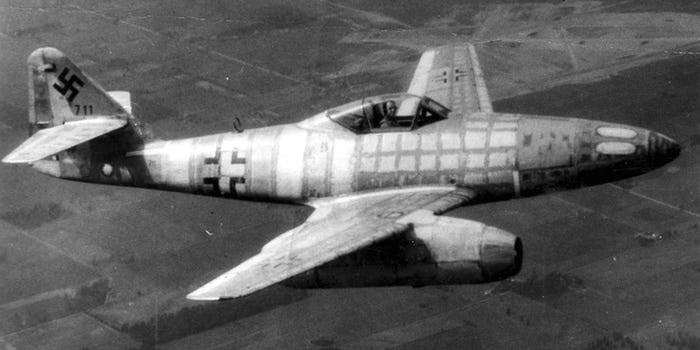
    On a July afternoon in 1942, test pilot Fritz Wendel climbed into a sleek, twin-engine Messerschmitt and roared down a German runway. When he lifted off, he was flying faster than any propeller-driven aircraft ever had and the world of aerial combat shifted forever. The Me 262, Germany’s ‘Schwalbe’ (Swallow), wasn’t just another fighter; it was a technological leap that would render every piston-engine fighter obsolete.

    The First Jet Combat Aircraft

    The Me 262 was the first operational jet fighter in history. Its two Junkers Jumo 004B turbojets the world’s first operational turbojet engines propelled it to roughly 540 mph at altitude, about 100 mph faster than the famed P-51 Mustang. Its four 30 mm MK 108 cannons in the nose could tear a B-17 apart with just a few hits, and its climb rate made it a terror at high altitude.

    But the Me 262’s story is not just one of triumph. It was a weapon born from desperation, plagued by production delays, strategic blunders, and a fuel crisis that grounded many of its sorties. By the time it entered combat in 1944, Germany was already losing the war. The jet could outrun any Allied fighter, but it couldn’t outrun the inevitable.

    The Race to Build a Jet

    Germany and Britain were in a parallel race to harness jet propulsion in the 1930s. German physicist Hans von Ohain and British engineer Frank Whittle independently developed jet engine concepts, but Germany got a head start. The Heinkel He 178, flown in August 1939, was the world’s first jet aircraft. By 1941, Germany had multiple jet programs underway, including the Me 262 and the He 280.

    The British Gloster Meteor entered service in July 1944, but it was deliberately kept out of German airspace to prevent capture and it was slower than the Me 262. So, when the Me 262 finally took to the skies in combat, it faced no equal in speed or firepower.

    A Wonder Weapon in a Burning Reich

    By 1943, the Allied bombing offensive was devastating German industry. The USAAF’s daylight raids, escorted by P-51 Mustangs and P-47 Thunderbolts, were grinding down the Luftwaffe in an attrition war. Germany needed a miracle. The Me 262 was touted as a ‘wonder weapon’ that could restore air superiority.

    But production was a nightmare. The Jumo 004 engine required strategic materials like chrome, nickel, and cobalt for turbine blades all in short supply. Factories were dispersed and bombed. Skilled labor was scarce. Only about 1,430 Me 262s were ever produced, and fewer than 300 saw combat.

    Hitler’s Fatal Interference

    Perhaps the most damaging blow was self-inflicted. Adolf Hitler insisted the Me 262 be built primarily as a fast bomber, or ‘Blitzbomber,’ believing it could blunt the Allied invasion of France. This forced a change in production priorities, delaying fighter production by several months and diverting resources.

    The debate over Hitler’s meddling remains a major historical controversy, but the outcome is clear: the Me 262 was never used to its full potential as a fighter. Instead of intercepting the bomber streams that were leveling German cities, many jets were held back for a bomber role that never materialized.

    Combat: The Brief, Violent Encounters

    The first operational unit, Kommando Nowotny, formed in April 1944. By July, Me 262s were flying combat sorties against Allied reconnaissance aircraft. The first confirmed kill came in October 1944, when a British Mosquito was shot down.

    For Allied bomber crews, the sight of a Me 262 was terrifying. It approached so fast that gunners barely had time to react. Its 30 mm cannons could destroy a B-17 with a few hits, and its speed meant it could strike and escape before escort fighters could respond.

    But the jet had fatal vulnerabilities. The Jumo 004 engine was unreliable, with a lifespan of only about 25 hours. It was prone to compressor stalls and flameouts. Pilot training was inadequate many pilots had minimal time in jets. And by 1945, Germany’s synthetic fuel plants were destroyed, leaving many Me 262s grounded for lack of fuel.

    Allied pilots quickly learned to exploit these weaknesses. They attacked Me 262s during takeoff and landing, when they were slow and vulnerable. They strafed German airfields to catch jets on the ground. The jet’s speed became irrelevant if it couldn’t get off the runway or couldn’t land safely.

    The Legacy: Shaping the Post-War Skies

    Despite its strategic failure, the Me 262’s engineering was revolutionary. Its swept-wing design, about 18.5 degrees, was a pioneering aerodynamic feature that would influence post-war jet design, including the Soviet MiG-15 and the American F-86 Sabre. The axial-flow turbojet, the cannon armament, and the concept of a high-speed interceptor all shaped the future of military aviation.

    When the war ended in May 1945, many Me 262s were destroyed by their crews or captured by the Allies. The technology was divided among the victors, who would spend the next decade developing their own jet fighters based on what they learned from the Schwalbe.

    The Paradox of the Me 262

    The Me 262 was a tactical marvel and a strategic failure. It was the fastest, most heavily armed fighter of its time, yet it couldn’t change the outcome of the war. It was a weapon of desperation, a glimpse of the future that arrived too late and in too few numbers.

    For the pilots who flew it, the Me 262 offered a taste of what was possible—a machine that could outrun anything in the sky, if only it could stay in the air long enough. For the Allies, it was a warning of what lay ahead, a preview of the jet age that would define the Cold War.

    The Me 262 didn’t just change aerial combat; it ended an era and began another. It was the first step toward a future where speed was king, and nothing would ever be the same.

    The Me 262’s story is a reminder that technological brilliance alone cannot win a war. It was a revolutionary machine that outclassed everything in the sky, but it was hobbled by leadership, resources, and time. Its legacy, however, is undeniable: it set the template for every jet fighter that followed, and its influence is still felt in the skies today.

    Summary

    • The Me 262 was the world’s first operational jet fighter, with a top speed of ~540 mph, about 100 mph faster than the P-51 Mustang.
    • It was armed with four 30 mm cannons and optional R4M rockets, capable of destroying a B-17 with a few hits.
    • Only ~1,430 were built, and fewer than 300 saw combat due to production problems, Hitler’s insistence on a bomber role, and fuel shortages.
    • Its first confirmed kill was a British Mosquito in October 1944.
    • The swept-wing design and axial-flow turbojets influenced post-war jets like the MiG-15 and F-86 Sabre.

    FAQ

    Q: What made the Me 262 so fast?
    A: Its two Junkers Jumo 004B turbojets were the world’s first operational turbojet engines, providing a top speed of ~540 mph—about 100 mph faster than the P-51 Mustang.

    Q: Why didn’t the Me 262 change the outcome of the war?
    A: It was produced in small numbers (fewer than 300 saw combat), was grounded by fuel shortages, and was delayed by Hitler’s insistence on using it as a bomber rather than a fighter.

    Q: How did Allied pilots counter the Me 262?
    A: They attacked it during takeoff and landing, when it was slow and vulnerable, and strafed German airfields to destroy jets on the ground.

    Q: What was the Me 262’s first confirmed kill?
    A: A British Mosquito reconnaissance aircraft, shot down in October 1944.

    Q: How did the Me 262 influence post-war aviation?
    A: Its swept-wing design and axial-flow turbojets were copied by the Soviets and Americans, leading to jets like the MiG-15 and F-86 Sabre.

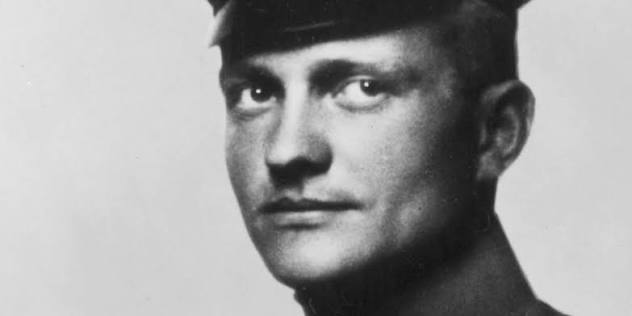
  • The Red Baron: How a Prussian Nobleman Became WWI’s Deadliest Ace

    The Red Baron: How a Prussian Nobleman Became WWI’s Deadliest Ace

    On April 21, 1918, a single bullet ended the life of the most feared pilot of World War I. Manfred von Richthofen, the ‘Red Baron,’ had just claimed his 80th aerial victory, a record that still stands. His death, shrouded in controversy, marked the end of an era of chivalrous air combat.

    But who was the man behind the red Fokker triplane? Born into Prussian aristocracy, Richthofen was less a daredevil and more a cold, calculating hunter. His story is one of adaptation, from cavalry to cockpit, and of a legend that grew far beyond the facts of his life.

    From Cavalry to Cockpit

    Manfred Albrecht Freiherr von Richthofen entered the world on May 2, 1892, in Kleinburg, then part of the German Empire. His family was aristocratic, with a father who served as a cavalry officer. Following tradition, young Manfred joined the Uhlan regiment in 1911, eager to prove himself on horseback.

    But the Great War shattered that romantic vision. By 1915, trench warfare had made cavalry charges obsolete. Horses were mowed down by machine guns; glory was found in the mud. Richthofen, seeking a new way to fight, transferred to the Imperial German Army Air Service. He started as an observer, learning the war from above, before earning his pilot’s wings.

    His first confirmed kill came on September 17, 1916, when he downed a British FE.2b. It was the beginning of a meteoric rise. By January 1917, he commanded Jasta 11, a squadron that would become legendary under his leadership.

    The Birth of the Red Baron

    The red paint was a practical choice. In the chaotic swirl of dogfights, Richthofen wanted to be instantly recognizable to his own pilots—and to strike fear in his enemies. He began painting his Albatros D.III red in early 1917, and later switched to the iconic Fokker Dr.I triplane, also painted a vivid crimson.

    The British and French press dubbed him the ‘Red Baron’ (der Rote Baron in German), while the French called him ‘Le Petit Rouge.’ His unit, Jagdgeschwader 1, formed in June 1917, became known as the ‘Flying Circus’—not just for the bright colors of its aircraft, but for its mobile, tent-based operations that moved across the front like a traveling show.

    The Hunter’s Ethos

    Richthofen was not a flamboyant ace. Contemporaries described him as cold, methodical, and calculating. He approached aerial combat like a hunter, not a sportsman. In his memoir, Der rote Kampfflieger (‘The Red Battle Flyer’), he wrote clinically about his kills, often comparing them to game hunting.

    He collected trophies from his victims—serial numbers, machine guns, even a table that he had made from the wreckage of a British plane. Yet, there were moments of strange chivalry. He reportedly once refused to shoot a downed enemy pilot who was struggling in the water. Such contradictions made him both admired and feared.

    The Deadliest Month: Bloody April

    April 1917 was Richthofen’s apex. During ‘Bloody April,’ he shot down 22 British aircraft, a staggering feat that cemented his reputation. The German air force enjoyed a period of superiority, and the Red Baron was its undisputed master.

    But the war was changing. The Allies were producing more planes, and new tactics were emerging. Richthofen, ever the strategist, adapted. Yet, after a severe head wound in July 1917, some historians argue his judgment began to falter. He became more reckless in 1918, pushing into danger with a bravado that was uncharacteristic.

    The Final Flight

    On April 21, 1918, Richthofen took to the skies near the Somme River. He was pursuing a Canadian pilot, Wilfrid ‘Wop’ May, when a single bullet tore through his chest. He managed to land his red triplane in a field, but he was dead by the time Allied soldiers reached him.

    The question of who fired the fatal shot has fueled debate for over a century. The Royal Air Force officially credited Captain Arthur Roy Brown, a Canadian ace who attacked Richthofen from behind and above. But many historians believe the bullet came from Australian ground fire—specifically from machine gunners like Sergeant Cedric Popkin or Gunner Robert Buie.

    Modern forensic analysis of the bullet trajectory (entering from the right and exiting left) suggests the shot came from the ground, not from Brown’s position. Yet, the debate persists, with no definitive answer.

    The Legacy

    Richthofen was buried with full military honors by the Allies at Bertangles, France—a mark of respect for a worthy adversary. His remains were later moved to Wiesbaden, Germany, where they rest today. He had 80 confirmed victories, the highest of any ace in World War I, and his legend only grew after his death.

    The Red Baron became a symbol of a bygone era of air combat, where knights of the sky dueled above the trenches. But the reality was brutal, and Richthofen was a product of that brutality. His death, just seven months before the Armistice, was a turning point—not just for the German air force, but for the mythology of the war itself.

    Manfred von Richthofen was more than a pilot; he was a phenomenon. His life and death encapsulate the contradictions of World War I: the chivalry and the carnage, the skill and the luck. The Red Baron remains a haunting figure, a reminder that even the most skilled hunter can become the hunted.

    Summary

    • Manfred von Richthofen was a German aristocrat who became WWI’s top ace with 80 confirmed victories.
    • He painted his aircraft red for recognition and fear, earning the nickname ‘Red Baron.’
    • His unit, the ‘Flying Circus,’ was famous for its mobile operations and colorful planes.
    • Richthofen was killed on April 21, 1918, and the identity of his killer remains disputed.
    • He was buried with honors by the Allies, and his legacy endures as a symbol of WWI aviation.

    FAQ

    Q: How many planes did the Red Baron shoot down?
    A: Manfred von Richthofen had 80 confirmed aerial victories, the highest of any ace in World War I.

    Q: Why was his plane red?
    A: He painted his aircraft red for easy recognition in combat and to intimidate enemies. The color became his trademark.

    Q: Who shot down the Red Baron?
    A: The official credit went to Canadian Captain Roy Brown, but many historians believe he was killed by Australian ground fire. The exact shooter remains a subject of debate.

    Q: What was the ‘Flying Circus’?
    A: It was the nickname for Jagdgeschwader 1, Richthofen’s unit, known for its brightly colored aircraft and mobile, tent-based operations.

    Q: Where is the Red Baron buried?
    A: He was initially buried in France, then moved to Wiesbaden, Germany, where he rests in the Südfriedhof cemetery.

  • Beyond Amelia: The Forgotten Women Who Took to the Skies

    Beyond Amelia: The Forgotten Women Who Took to the Skies

    When we think of early aviation, names like Charles Lindbergh and Howard Hughes often dominate the narrative. But behind these celebrated male pioneers, a cadre of daring women defied societal norms, broke records, and paved the way for future generations. Their stories, however, have been largely untold, overshadowed by tragedy, timing, and a world that wasn’t ready to celebrate female achievement.

    From a French actress who became the world’s first licensed female pilot to an African American woman who had to travel to France to earn her wings, these women faced not only the physical dangers of early flight but also the deep-seated prejudices of their time. Their courage and determination reshaped aviation, yet many of their names remain obscure. This article brings their stories back into the light.

    The Pioneers Who Defied Gravity and Society

    In the early 1900s, aviation was a perilous pursuit, with fragile aircraft and frequent crashes. It was also a male-dominated field, where women were often deemed too weak or emotionally unstable to fly. Despite these barriers, a handful of women dared to take to the skies.

    Raymonde de Laroche, a former actress and sculptor from France, became the first woman in the world to earn a pilot’s license on March 8, 1910. Her achievement was a testament to her determination, as she had to overcome both the dangers of flying and the skepticism of a male-dominated aviation community.

    Across the Atlantic, Harriet Quimby made history as the first American woman to earn a pilot’s license in 1911. A journalist and screenwriter, Quimby was not just a pilot but a storyteller. In April 1912, she became the first woman to fly solo across the English Channel. Yet, her monumental feat was overshadowed by the sinking of the Titanic the same day, a tragic twist of fate that relegated her achievement to the back pages of history.

    Breaking Barriers of Race and Gender

    While white women faced significant obstacles, women of color encountered even greater hurdles. Bessie Coleman, the daughter of sharecroppers, was denied admission to American flight schools because of her race and gender. Undeterred, she learned French, moved to France, and earned her international pilot’s license in 1921 from the Fédération Aéronautique Internationale. Coleman became the first African American woman and first Native American woman to hold a pilot’s license. She dazzled audiences with her aerial stunts, but tragically died in a plane crash in 1926 while preparing for an airshow.

    Amelia Earhart, perhaps the most famous of these pioneers, captured the world’s imagination with her record-breaking flights. She was the first woman to fly solo across the Atlantic in 1932 and the first person to fly solo from Hawaii to the U.S. mainland in 1935. Her mysterious disappearance in 1937 during an around-the-world flight cemented her legend, but it also overshadowed the contributions of her contemporaries.

    The Golden Age and the Rise of Women’s Aviation

    The late 1920s and 1930s marked a golden age for aviation, and women were determined to be part of it. In 1929, the Women’s Air Derby became the first official women’s air race in the U.S., from Santa Monica, California, to Cleveland, Ohio. Nicknamed the “Powder Puff Derby” by humorist Will Rogers, the race featured notable pilots like Earhart, Pancho Barnes, and Louise Thaden. The event was a milestone, proving that women could compete in long-distance flying.

    That same year, the Ninety-Nines was founded, an international organization of women pilots named after the 99 licensed women pilots who attended its founding meeting. Amelia Earhart served as its first president, and the organization remains active today, supporting and promoting women in aviation.

    Jacqueline Cochran was another trailblazer who shattered records and glass ceilings. She was the first woman to break the sound barrier in 1953 and held more speed, altitude, and distance records than any pilot, male or female, at the time of her death. During World War II, she headed the Women Airforce Service Pilots (WASP), a program that proved women could fly military aircraft with skill and precision.

    Wartime Service and Post-War Erasure

    World War II was a turning point for women in aviation. In the U.S., the WASP program enlisted about 1,100 women to ferry military aircraft, tow targets, and train male pilots. In the UK, the Air Transport Auxiliary (ATA) employed around 168 women pilots, including Amy Johnson and Lettice Curtis, to transport aircraft for the Royal Air Force.

    These women flew every type of military aircraft, from fighters to bombers, and their contributions were vital to the war effort. Yet, they were classified as civilians, not military personnel, and were denied veteran status until 1977. After the war, they were pushed out of aviation jobs to make way for returning male veterans, and their achievements were systematically downplayed.

    Amy Johnson, a British mechanic, had already made history in 1930 as the first woman to fly solo from England to Australia. She set numerous long-distance records in the 1930s and died while serving with the ATA in 1941. Beryl Markham, another British aviator, became the first person to fly solo nonstop from England to North America in 1936, a feat that was also overshadowed by the era’s focus on male aviators.

    The Legacy of the Untold Stories

    The stories of these women are not just about aviation; they are about resilience, courage, and the fight for equality. They faced not only the physical dangers of early flight but also the societal barriers that sought to keep them grounded. Their achievements were often minimized or erased, but their legacy lives on.

    Today, organizations like the Ninety-Nines continue to support women pilots, and the WASP finally received the Congressional Gold Medal in 2010. Yet, many of these pioneers remain unknown to the general public. By telling their stories, we honor their contributions and inspire future generations to reach for the skies.

    The untold stories of women in early aviation are a testament to the indomitable human spirit. From Raymonde de Laroche to Bessie Coleman, these women defied the odds and broke barriers, not just for themselves but for all who followed. Their legacy is not just in the records they set but in the doors they opened. As we look back, let us remember not only the famous names but also the countless unsung heroines who helped shape the skies.

    Summary

    • Raymonde de Laroche was the first woman to earn a pilot’s license in 1910, breaking gender barriers in aviation.
    • Harriet Quimby’s solo flight across the English Channel in 1912 was overshadowed by the Titanic disaster.
    • Bessie Coleman overcame racial and gender discrimination to become the first African American and Native American woman pilot.
    • The Women’s Air Derby and the Ninety-Nines organization were pivotal in promoting women in aviation.
    • During WWII, the WASP and ATA programs proved women’s capabilities, but their contributions were erased until decades later.

    FAQ

    Q: Who was the first woman to fly solo across the Atlantic?
    A: Amelia Earhart was the first woman to fly solo across the Atlantic in 1932.

    Q: Why did Bessie Coleman go to France to learn to fly?
    A: Bessie Coleman was denied admission to American flight schools because of her race and gender, so she learned French and earned her pilot’s license in France in 1921.

    Q: What was the Women’s Air Derby?
    A: The Women’s Air Derby was the first official women’s air race in the U.S., held in 1929 from Santa Monica, California, to Cleveland, Ohio. It was nicknamed the “Powder Puff Derby.”

    Q: What was the WASP program?
    A: The Women Airforce Service Pilots (WASP) was a U.S. program during WWII that employed about 1,100 women to ferry military aircraft, tow targets, and train male pilots. They were denied military status until 1977.

    Q: Who was the first woman to break the sound barrier?
    A: Jacqueline Cochran was the first woman to break the sound barrier in 1953.