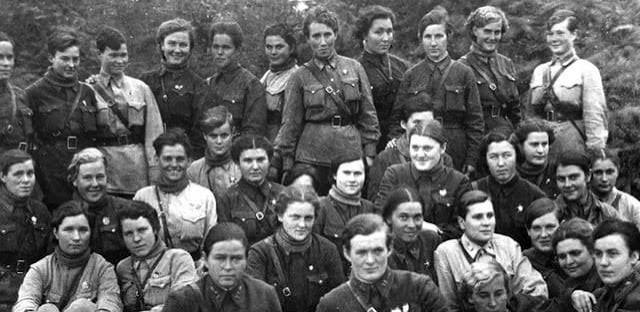
Tag: Night Witches

  • I Spent 3 Months Researching the Night Witches. Here’s What Shocked Me.

    I Spent 3 Months Researching the Night Witches. Here’s What Shocked Me.

    When I first heard about the Night Witches, I assumed it was a myth a propaganda story cooked up to rally a desperate Soviet Union. Three months of digging through archives, memoirs, and combat reports later, I’m convinced they were real, and far more remarkable than any legend. These were teenage girls flying plywood biplanes in the dead of night, with no radar, no parachutes, and no armor, dropping bombs on the most powerful army in Europe. Here’s what stunned me most.

    They Flew Wooden CropDusters Against the Nazis

    The Polikarpov Po-2 was a 1920s training biplane, built from wood and canvas. It had a top speed of 150 km/h—slower than the wind resistance on a German Messerschmitt’s windshield. It had open cockpits, so the women froze at -40°C. It had no self-sealing fuel tanks, meaning one bullet could turn the entire aircraft into a fireball. And yet, these women flew it into combat, night after night.

    What made the Po-2 a weapon was its stall speed just 65 km/h. It could fly so slowly and so low that German fighters literally couldn’t engage it. A Bf 109 would stall and crash if it tried to match the Po-2’s speed. That’s not an excuse; that’s physics. The Germans couldn’t touch them.

    They Didn’t Just Bomb They Terrorized

    The German soldiers called them “Nachthexen” Night Witches because the Po-2’s wooden frame made it invisible to radar, and its engines made a distinctive whooshing sound as it glided overhead. The name was meant as an insult. The women wore it as a badge of honor.

    But the real shocker was the psychological impact. German commanders were so desperate that they offered the Iron Cross to any pilot who shot down a Night Witch. None ever did. The constant night raids sometimes 8 to 12 sorties per pilot per night left German troops exhausted, jumpy, and demoralized. The Po-2 carried only 200-300 kg of bombs per mission, but the harassment value was immense. They weren’t just destroying supply depots; they were destroying sleep.

    They Were Teenagers, and They Volunteered

    The average age of a Night Witch was 20 to 22. Some were as young as 16. These weren’t hardened soldiers; they were university students, flying club enthusiasts, and factory workers who answered Marina Raskova’s call after Stalin authorized three women’s aviation regiments in October 1941. Many had only months of flight training before they were sent to the front.

    One of them, Irina Sebrova, flew 1,008 missions. That’s more than any pilot in the regiment, and more than most male pilots in any air force. Nadezhda Popova flew 852 missions and later married a fighter pilot she met during the war. Natalya Meklin flew 980. These weren’t outliers they were typical of the regiment’s dedication.

    The Tactics Were Genius

    The hallmark of the Night Witches was the engine-cut glide bombing. They would approach a target, cut the engine, and glide silently the only sound a soft whistle from the wind over the wings. At 200-400 meters, they’d release their bombs and restart the engine, often under heavy anti-aircraft fire. They also used diversion tactics: one plane would circle to draw searchlights and flak, while others attacked from a blind spot.

    They flew in all weather, without radios, navigating by stars and landmarks. Their only instruments were a compass, a stopwatch, and a map. If they got lost, they were lost.

    The Cost Was Real

    The regiment flew over 23,000 sorties and dropped about 3,000 tons of bombs. In return, 32 women were killed in action some in crashes, some shot down. Among them was Marina Raskova, the regiment’s founder, who died in a training accident in January 1943. Her death was a devastating blow, but the regiment continued under Yevdokia Bershanskaya, the only woman to command a regiment in the Soviet Air Forces.

    Twenty-three pilots and navigators received the Hero of the Soviet Union, the nation’s highest honor. Some were posthumous.

    Why We Forgot Them

    After the war, the Soviet Union downplayed the role of women in combat. The Night Witches were celebrated briefly, then quietly erased from official history. It wasn’t until the 1990s that their story resurfaced, thanks to memoirs and historians. The German nickname stuck, and now it’s the only name most people know.

    But here’s what shocked me most: these women weren’t just brave they were effective. They flew more sorties than many male regiments, and they did it with inferior equipment and no expectation of glory. They weren’t asking for recognition. They just wanted to fight for their country. And they did.

    The Night Witches were not a myth, and they weren’t a novelty act. They were one of the most effective bombing units of World War II, and they did it in the most unlikely aircraft imaginable. Three months of research left me in awe of their courage, their ingenuity, and their determination. They weren’t witches they were warriors.

    Summary

    • The Night Witches flew 23,000+ combat missions in wooden Po-2 biplanes, with no radar, no parachutes, and no armor.
    • They used engine-cut glide bombing and diversion tactics to evade German defenses, and no Night Witch was ever shot down by a German fighter.
    • The regiment was composed of ~400 women, mostly in their early 20s, who volunteered and flew up to 12 sorties per night.
    • They dropped ~3,000 tons of bombs and suffered 32 deaths, earning 23 Heroes of the Soviet Union.
    • Their story was largely forgotten after the war, but their legacy as one of the most effective harassment bombing units endures.

    FAQ

    Q: Did any Night Witch get shot down by a German pilot?
    A: No. German fighters couldn’t engage the Po-2 effectively due to its extremely low stall speed, and no pilot was ever awarded the Iron Cross for shooting one down. 32 women died in accidents and crashes, but not from enemy fighter attacks.

    Q: Why did they fly so many missions per night?
    A: Because the Po-2 could only carry 200-300 kg of bombs, pilots often flew 8-12 sorties per night to make up for the small payload. Some flew more.

    Q: Were there other women’s aviation regiments?
    A: Yes, Marina Raskova formed three: the 586th Fighter Regiment, the 587th Dive Bomber Regiment, and the 588th Night Bomber Regiment (later the 46th Guards Night Bomber Aviation Regiment). The 588th became the most famous.

    Q: What happened to the regiment after the war?
    A: Many survivors returned to civilian life. The Soviet Union largely erased women’s combat roles from official history, and the regiment was not widely recognized until recent decades.

    Q: Where did the name “Night Witches” come from?
    A: German soldiers coined it because the wooden Po-2 was invisible to radar and made a whooshing sound in flight, like a witch’s broomstick. It was meant as an insult, but the women embraced it.
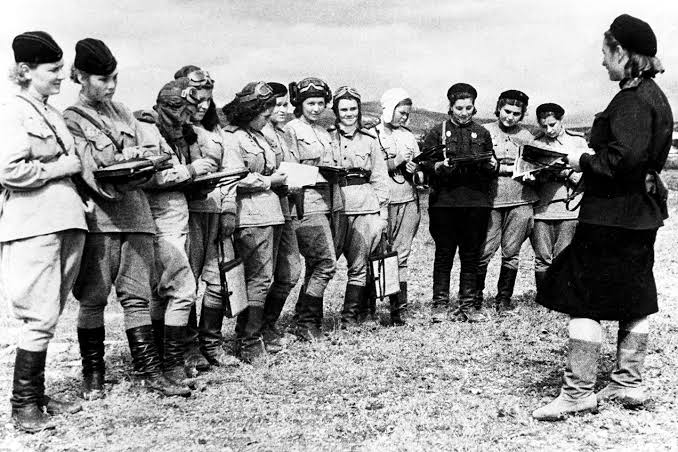
  • The Night Witches: How a Squadron of Women in Wooden Biplanes Terrorized the German Army

    The Night Witches: How a Squadron of Women in Wooden Biplanes Terrorized the German Army

    In the summer of 1942, German soldiers on the Eastern Front began reporting strange sightings: small wooden biplanes that appeared out of the darkness, dropped bombs, and vanished before their anti-aircraft guns could track them. The planes made a soft whooshing sound, like a broom sweeping across a floor, and they seemed to be flown by ghosts. The Germans called them Nachthexen Night Witches.

    But these were not ghosts. They were the women of the 588th Night Bomber Regiment, an all-female unit of the Soviet Air Forces. Over the course of three years, these pilots and navigators would fly more than 24,000 sorties, drop 23,000 tons of bombs, and become one of the most feared—and underestimated—units of World War II.

    A Desperate Gamble: Women Take to the Skies

    In 1941, the German invasion of the Soviet Union, Operation Barbarossa, unleashed a catastrophe. Within months, the Red Army had suffered millions of casualties, and the Luftwaffe controlled the skies. Stalin’s regime, desperate for any advantage, turned to an unlikely resource: its women.

    The Soviet Union was the only major power in WWII to deploy women in active combat roles on a large scale. This wasn’t a progressive experiment—it was a matter of survival. And at the heart of this experiment was Marina Raskova, a celebrated aviator known as the “Soviet Amelia Earhart.” Raskova used her fame to petition Stalin directly, securing permission to form three all-female air regiments. One of them was the 588th Night Bomber Regiment, a unit that would eventually become the 46th Guards Night Bomber Aviation Regiment.

    These were not raw recruits. Most of the women had learned to fly in civilian flying clubs before the war—a passion that had been officially encouraged in the 1930s as part of Soviet aviation culture. They arrived at training with real skill, but they faced an immediate obstacle: the aircraft they were given.

    The Po-2: An Obsolete Wonder

    The Polikarpov Po-2 was a training and crop-dusting biplane designed in the 1920s. It was made of wood and canvas, had an open cockpit, and could barely reach 94 miles per hour. By 1942, it was laughably obsolete. It carried no guns, no armor, and only two bombs at a time—typically 100 kilograms total. To German pilots in their Messerschmitts, it must have seemed like a joke.

    But the Po-2 had hidden advantages. Its slow speed and short takeoff and landing distance made it perfect for low-altitude night raids. It could fly so slowly that German fighters couldn’t engage it—their stall speeds were higher than the Po-2’s cruising speed. Radar had trouble detecting its wooden frame. And its durability was legendary: it could absorb punishment that would down a modern aircraft.

    The women made the most of these quirks. They flew in groups of three: two planes would act as decoys, drawing German searchlights and anti-aircraft fire, while the third would cut its engine and glide silently to drop its bombs. The whooshing sound of the wind over the wings—like a witch’s broom—gave them their name.

    The Price of Silence: Flying in Frozen Darkness

    Life for the Night Witches was brutal. They lived in dugouts near the front lines, often in freezing conditions. They sewed their own flight suits from parachute silk and used makeup and lipstick as small acts of defiance and morale—choices that earned them ridicule from male units who saw them as frivolous.

    The missions themselves were punishing. Because the Po-2 could carry only two bombs, the women had to fly multiple sorties per night—sometimes up to 18 during peak operations. Imagine flying an open-cockpit biplane in the dead of winter, your face numb with cold, navigating by the stars and the dim glow of the horizon, all while German searchlights sweep the sky and anti-aircraft fire crackles around you. One wrong move, one misjudged glide, and you’d be dead. Thirty-two of them were.

    For the German soldiers below, the effect was psychological as much as physical. The constant buzzing of the Po-2s kept them awake and anxious. They couldn’t sleep, they couldn’t relax, and they couldn’t shoot the planes down. German commanders reportedly offered Iron Crosses to anyone who could down a Night Witch—a testament to their desperation. The harassment bombing disrupted supply lines, morale, and rest, and its impact far outweighed the modest tonnage of explosives dropped.

    Proving Themselves: From Ridicule to Respect

    At first, the women faced skepticism from their own side. Some male pilots refused to fly with them. They were issued men’s uniforms, which were ill-fitting and impractical. But the Night Witches didn’t argue—they flew. And they flew well.

    Their combat record spoke for itself. Over the course of the war, they pushed from the Caucasus to Crimea, through Belarus and Poland, and eventually toward Berlin. They earned the respect of their male counterparts and the gratitude of the ground troops they supported. Twenty-three of them were awarded the Hero of the Soviet Union, the country’s highest military honor.

    Yet the war’s end did not bring justice. Many of the women struggled to reintegrate into a society that had no place for female veterans. Some were denied the career opportunities that men enjoyed. Their wartime service was often downplayed or forgotten—until recent decades, when historians and filmmakers began to restore their story.

    The Legacy of the Night Witches

    The Night Witches were more than a propaganda symbol. They were a military reality—a small, determined group of women who used an obsolete aircraft to achieve a disproportionate effect on the enemy’s psyche. Their story challenges the conventional narrative of war, showing that courage and skill can overcome the limits of equipment and prejudice.

    Today, their story serves as a reminder that history is full of overlooked chapters. The women who flew those wooden biplanes into the dark did not just fight a war—they redefined what was possible. And even if their names were buried for decades, the whooshing sound of their wings still echoes in the memory of the men who feared them.

    The Night Witches were a paradox: a unit of women flying obsolete aircraft who became one of the most effective harassment forces of WWII. Their story is not just about bombs and sorties—it’s about resilience, defiance, and the quiet power of those who fight against the odds. As their planes glided silently over German lines, they proved that the most terrifying weapon is often the one you can’t hear coming.

    Summary

    • The 588th Night Bomber Regiment was an all-female Soviet unit that flew over 24,000 sorties in WWII.
    • They flew the Polikarpov Po-2, a 1920s-era wooden biplane that was slow but highly maneuverable.
    • German soldiers called them “Night Witches” due to the whooshing sound of their engines and their radar invisibility.
    • The women used a three-plane decoy tactic: two planes drew fire while the third glided silently to bomb.
    • Despite facing sexism and freezing conditions, 23 members earned the Hero of the Soviet Union award.

    FAQ

    Q: Why were they called Night Witches?nA: German soldiers coined the term Nachthexen because the Po-2’s wooden frame made it nearly invisible to radar, and its engines made a whooshing sound like a broomstick, reminiscent of a witch flying.nnQ: How many women served in the Night Witches?nA: Approximately 400 women served as pilots, navigators, mechanics, and ground crew over the course of the war.nnQ: What kind of aircraft did they fly?nA: They flew the Polikarpov Po-2, a 1920s-era biplane made of wood and canvas. It was slow and unarmed, but highly maneuverable and could fly at very low altitudes.nnQ: How did they manage to bomb with such a small aircraft?nA: They flew in groups of three: two planes acted as decoys, drawing enemy fire, while the third cut its engine and glided silently to drop its bombs. They also flew multiple sorties per night—sometimes up to 18—because the Po-2 could only carry two bombs at a time.nnQ: Were their efforts effective?nA: Yes, both physically and psychologically. They dropped 23,000 tons of bombs, but their constant buzzing disrupted German sleep and morale, and German commanders offered Iron Crosses to anyone who could shoot one down.