Tag: US History

  • The Marshall Plan: How America Rebuilt Europe After the War

    The Marshall Plan: How America Rebuilt Europe After the War

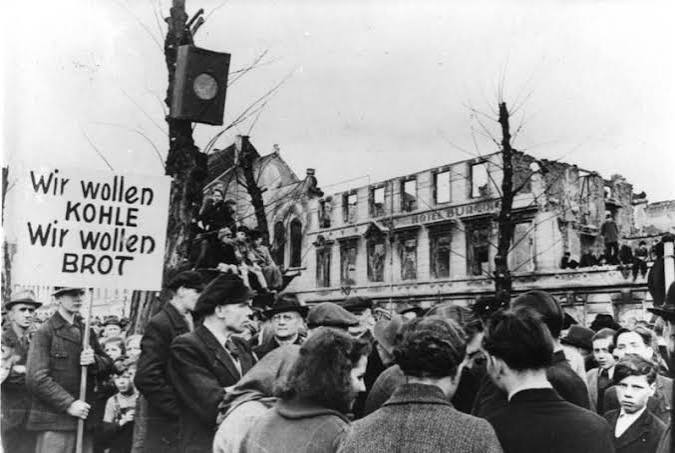
    In the spring of 1947, Europe was a continent of ruins. Industrial output had fallen to a third of pre-war levels, fields lay fallow, and millions of people huddled in bombed-out cities. The winter of 1946-47 had been brutally cold, freezing coal barges on the Rhine and closing factories across France and Britain. In Paris, bread rations were cut to 250 grams a day less than a pound. In Berlin, people burned books for warmth.

    Into this landscape stepped a single speech. On June 5, 1947, U.S. Secretary of State George C. Marshall stood before the graduating class at Harvard University and offered an unprecedented promise: America would help rebuild Europe not as charity, but as a strategic investment in stability. The program that followed, officially called the European Recovery Program, would disburse $13.3 billion over four years, reshape the continent’s economies, and draw the dividing lines of the Cold War.

    A Continent on the Brink

    The scale of destruction in 1947 is hard to overstate. The war had killed tens of millions, and the survivors faced a daily struggle for food, fuel, and shelter. Agriculture was in shambles grain harvests in France were half of what they had been before the war. Coal production in the Ruhr, the industrial heartland of Germany, had collapsed to barely a fifth of its pre-war output. In the winter of 1946-47, factories shut down across the continent because there was simply no power to run them.

    Europe was also starved of dollars. The continent needed to import food, raw materials, and machinery from the United States the only major industrial power left intact but it had no way to earn the currency to pay for them. This “dollar gap” threatened to strangle any recovery. Without American imports, Europe could not feed itself or rebuild its factories. Without a rebuilt Europe, American exports would have no market, and the global economy would remain stalled.

    The political stakes were equally dire. In France and Italy, powerful communist parties were gaining strength, fueled by economic desperation and the prestige of the Soviet Union’s role in defeating Hitler. In March 1947, President Truman had already pledged military and economic aid to Greece and Turkey to counter Soviet pressure—the Truman Doctrine. But a broader response was needed, one that would address the root causes of instability.

    The Speech at Harvard

    Marshall’s speech at Harvard was deliberately low-key. He spoke for only about ten minutes, with no grand rhetoric. He described a Europe “requiring far more help than it is now receiving” and warned that without it, the continent would face “economic, social, and political deterioration of a very grave character.” Crucially, he framed the problem not as charity but as self-interest: “It is logical that the United States should do whatever it is able to do to assist in the return of normal economic health in the world, without which there can be no political stability and no assured peace.”

    The plan was open to all European nations, including the Soviet Union. But Moscow quickly saw the danger. The conditions open economic reporting, cooperative planning among recipient countries, and integration into a Western-led system were incompatible with Soviet control. In July 1947, Soviet Foreign Minister Vyacheslav Molotov walked out of a meeting in Paris, and the USSR forced its satellites to refuse the aid. Czechoslovakia and Poland, which had initially expressed interest, were ordered to withdraw. Europe was splitting in two.

    How the Money Flowed

    Congress approved the Economic Cooperation Act in April 1948, and the program officially began. The total cost was $13.3 billion, roughly $170 billion in today’s dollars. But the mechanics were not a simple transfer of cash. The United States shipped goods wheat, coal, machinery, cotton, even tractors to recipient countries. The European governments then sold these goods to their own businesses and citizens in local currency. These “counterpart funds” were placed in a special account and used for infrastructure projects, debt reduction, or stabilizing currencies.

    This system had two advantages. First, it ensured that American aid actually translated into tangible goods, avoiding inflation. Second, it gave European governments a local-currency pool they could invest in reconstruction without printing more money. In France, counterpart funds financed the modernization of steel and coal industries. In the Netherlands, they funded land reclamation projects. In Britain, they helped stabilize the pound.

    The Results

    The program ran from April 1948 to December 1951. By the time it ended, Western Europe had not only recovered; it had transformed. Industrial production in the recipient countries rose by more than 35% during the program’s tenure. Agricultural output returned to pre-war levels. Trade among European nations expanded, and the dollar gap narrowed as exports picked up.

    West Germany, which received about $1.4 billion—roughly 10% of the total—is often cited as the most dramatic success. Combined with the currency reform of 1948, which replaced the worthless Reichsmark with the Deutsche Mark, the Marshall Plan helped unleash the “economic miracle” that would make West Germany the strongest economy on the continent. Chancellor Konrad Adenauer famously called the Plan “the great achievement” of American policy.

    The largest recipient was the United Kingdom, which received about $3.3 billion, followed by France ($2.7 billion) and Italy ($1.5 billion). But the Plan’s impact went beyond these numbers. It forced European nations to cooperate with each other through the Organisation for European Economic Co-operation (OEEC), the precursor to the OECD. This institutional habit of coordination laid the groundwork for the European Coal and Steel Community and, eventually, the European Union.

    A Legacy Debated

    Not all historians agree on the Plan’s role. Some revisionist scholars argue that Europe’s recovery was already underway by 1948, driven by domestic reforms and the revival of trade. They point out that the U.S. aid, while helpful, was not the sole cause of the boom. The German currency reform, for instance, is often credited with being more important than the Marshall Plan in restarting the German economy.

    Others, particularly on the left, view the Plan more critically, as a tool of American hegemony. The conditions attached—open markets to U.S. imports, anti-cartel policies, and the promotion of American business practices—opened Europe to American corporate influence. The productivity missions, which sent European factory managers to the United States to learn mass-production techniques, were part of a broader effort to reshape European capitalism along American lines.

    Still, the broad consensus remains that the Marshall Plan was a turning point. It gave Europeans the breathing room to rebuild, and it gave Americans a model of constructive engagement that would influence foreign policy for decades. As the historian Tony Judt put it, the Plan “did not rebuild Europe—Europeans did that themselves—but it provided the essential margin of support that made it possible.”

    The Marshall Plan ended in December 1951, but its effects rippled far beyond the four years it operated. It staved off the economic collapse that might have brought communist governments to power in Western Europe, and it cemented the transatlantic alliance that would define the Cold War. The program’s legacy is not just in the rebuilt cities and reopened factories, but in the very idea that generosity and self-interest can coincide—and that rebuilding an enemy can create a friend.

    Summary

    • The Marshall Plan, officially the European Recovery Program, disbursed $13.3 billion from 1948 to 1951 to 16 Western European nations.
    • Aid was delivered as goods, not cash, and counterpart funds were used for local infrastructure investment.
    • The plan was offered to the Soviet Union, but Moscow rejected it, deepening the division of Europe.
    • West Germany received about $1.4 billion and became a key example of the plan’s success.
    • The plan is credited with easing Europe’s recovery, but historians debate its causal importance.

    FAQ

    Q: Did the Marshall Plan give cash directly to European governments?
    A: No. The U.S. supplied goods and machinery, which governments sold to their citizens for local currency—these counterpart funds were then used for infrastructure and stabilization projects.

    Q: Why did the Soviet Union refuse the Marshall Plan?
    A: The USSR saw the conditions—open economic reporting and integration with Western Europe—as a threat to its control over Eastern Europe, and forced its satellites to decline.

    Q: Which country received the most aid?
    A: The United Kingdom received the most, about $3.3 billion, followed by France with $2.7 billion.

    Q: Was the Marshall Plan the main cause of Europe’s recovery?
    A: Historians differ. Many credit it with easing the recovery, but others note that domestic reforms, like Germany’s currency reform of 1948, were equally important.

    Q: What was the OEEC?
    A: It was the Organisation for European Economic Co-operation, created to coordinate the distribution of Marshall Plan funds. It later became the OECD.
  • How World War I Remade the United States

    How World War I Remade the United States

    In 1914, the United States was a nation at peace, its army smaller than Bulgaria’s, its federal government a distant presence in most citizens’ lives. Four years later, it had become the world’s leading creditor, with a federal budget twenty-five times larger and a government that reached into factories, farms, and even private speech. The transformation was not gradual; it was compressed into nineteen months of active belligerency that changed the country’s role in the world and the relationship between Washington and its citizens.

    The war’s legacy is often overshadowed by the Second World War, but the first global conflict was the crucible in which modern America was forged. From the Great Migration to the 19th Amendment, from the income tax to the surveillance state, the war’s effects are still visible today. This is the story of how a country that wanted nothing to do with Europe’s quarrels became a global power—and what it cost.

    A Nation Reluctant to Fight

    When war erupted in Europe in August 1914, President Woodrow Wilson declared neutrality, a stance that reflected both tradition and pragmatism. The United States had a standing army of roughly 100,000 men—smaller than most European powers—and a foreign policy rooted in George Washington’s warning against entangling alliances. German-Americans numbered about 8 million, and Irish-Americans were often hostile to Britain, making any pro-Allied stance politically dangerous.

    But neutrality proved difficult to maintain. Germany’s unrestricted submarine warfare, which sank the Lusitania in May 1915 and killed 128 Americans, tested American patience. The Zimmermann Telegram of January 1917, in which Germany proposed an alliance with Mexico against the U.S., was the final straw. By then, American banks had lent $2.3 billion to the Allies and only $27 million to Germany; a German victory would have meant default. On April 6, 1917, Congress declared war.

    The Machinery of War

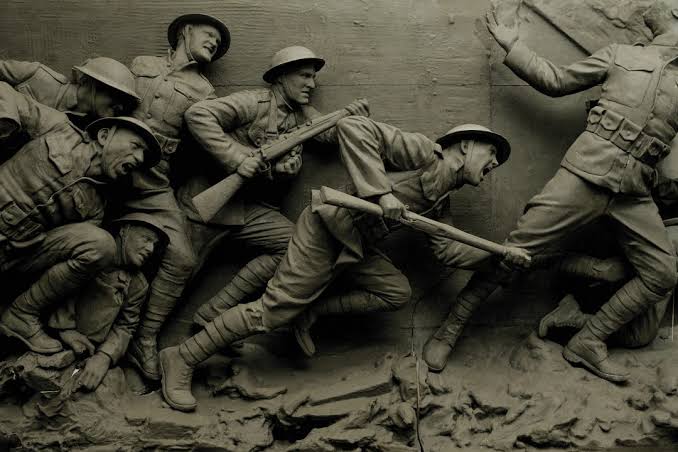
    The U.S. had only 19 months to mobilize, but it did so with astonishing speed. Over 4.7 million Americans served in the armed forces, and about 2 million reached France. The Selective Service Act of 1917 drafted men from all walks of life, creating a mass army for the first time since the Civil War.

    The war effort demanded more than soldiers; it demanded a reorganization of the economy. The War Industries Board coordinated production, the Food Administration under Herbert Hoover controlled prices and rationing, and the Railroad Administration temporarily nationalized the railroads. The federal budget ballooned from $725 million in 1914 to $18.5 billion in 1919. The top income tax rate soared from 7% to 77% under the War Revenue Act of 1917 and the Revenue Act of 1918.

    This expansion of federal power was unprecedented. The government became the largest purchaser of goods in the nation, and it used that leverage to set wages, working conditions, and even prices. The National War Labor Board mediated disputes, often favoring unions in exchange for no-strike pledges. For the first time, the federal government was a direct presence in the daily lives of ordinary workers.

    The Dark Side of Patriotism

    The war also brought a crackdown on dissent. The Espionage Act of 1917 and the Sedition Act of 1918 criminalized speech that interfered with the war effort. Over 2,000 people were prosecuted, including Eugene V. Debs, the Socialist Party leader, who was sentenced to ten years in prison for an anti-war speech. The Committee on Public Information, headed by journalist George Creel, churned out propaganda that demonized the enemy and encouraged vigilance against spies and saboteurs.

    This climate of suspicion spilled into the postwar period. The Red Scare of 1919–1920, marked by the Palmer Raids and the deportation of thousands of suspected radicals, was a direct legacy of wartime anti-dissent legislation. The war had normalized the idea that the government could restrict civil liberties in the name of national security—a tension that persists to this day.

    The Great Migration and the Changing Face of America

    The war also set in motion demographic changes that reshaped the country. European immigration, which had averaged 1.2 million people a year before the war, ground to a halt as the conflict consumed the continent. At the same time, the demand for industrial labor in northern cities drew African Americans from the South in what became known as the Great Migration. Between 1916 and 1919, approximately 500,000 African Americans moved north, seeking jobs in steel mills, packinghouses, and factories.

    This migration had profound social and political consequences. It created new urban communities, shifted political power in northern cities, and laid the groundwork for the civil rights movements of the twentieth century. The war also opened new opportunities for women, whose workforce participation increased by about 25%. Women filled jobs left vacant by men and took on roles in industry, government, and the military. The war effort gave a powerful boost to the suffrage movement, and the 19th Amendment, granting women the right to vote, was ratified in August 1920.

    A Debtor No More

    The economic transformation was equally dramatic. U.S. GDP grew from roughly $38 billion in 1914 to $78 billion in 1918. The nation shifted from a debtor country owing $3.7 billion to foreign investors to a creditor country owed $3.5 billion by foreign governments. The war had made the United States the world’s banker, a position it would not relinquish.

    But the cost was staggering. About 116,500 American military personnel died—53,000 in combat, the rest from disease, especially the 1918 influenza pandemic. The war also left a bitter political legacy. President Wilson’s dream of joining the League of Nations was dashed when the Senate refused to ratify the Treaty of Versailles in 1919 and 1920. The United States retreated into isolationism, but it had already been transformed.

    The War’s Lasting Legacy

    The United States entered World War I as a peripheral power and emerged as a global one. The war created the modern administrative state, with federal agencies that reached into every corner of the economy. It accelerated the Great Migration, expanded women’s rights, and made the income tax a permanent feature of American life.

    It also left a troubling legacy of government surveillance and suppression of dissent. The Espionage and Sedition Acts set a precedent for restricting civil liberties in times of crisis, a precedent that would be invoked again in the Second World War and beyond.

    The war’s significance is not just a matter of battles won or lost. It was the moment when the United States stopped being a collection of states and became a nation, with a centralized government, a powerful military, and a permanent global role. The changes were so profound that they still shape American life a century later.

    World War I was a catalyst that transformed the United States from a debtor nation with a small federal government into a creditor nation with a powerful administrative state. It ended American isolationism, accelerated social changes like the Great Migration and women’s suffrage, and left a legacy of federal power and civil liberties tensions that continue to define the nation. The war’s significance lies not in the battles, but in the remaking of America itself.

    Summary

    • The U.S. shifted from neutrality to full belligerency in 19 months, with over 4.7 million serving and 116,500 deaths.
    • The federal budget grew 25-fold, and the top income tax rate rose from 7% to 77%, funding a new administrative state.
    • The Great Migration moved 500,000 African Americans north, and women’s workforce participation rose 25%, boosting the suffrage movement.
    • The Espionage and Sedition Acts criminalized dissent, leading to over 2,000 prosecutions and setting a precedent for later restrictions.
    • The U.S. became a creditor nation, but rejected the Treaty of Versailles and the League of Nations, retreating into isolationism.

    FAQ

    Q: How long was the United States involved in World War I?
    A: The U.S. was an active belligerent for about 19 months, from April 6, 1917, to November 11, 1918.

    Q: What was the Great Migration during WWI?
    A: It was the movement of approximately 500,000 African Americans from the South to northern industrial cities between 1916 and 1919, driven by labor shortages and wartime industrial demand.

    Q: How did WWI affect women’s suffrage?
    A: The war effort, which saw women’s workforce participation increase by about 25%, is widely credited as a catalyst for the ratification of the 19th Amendment in August 1920.

    Q: What were the Espionage and Sedition Acts?
    A: They were federal laws enacted in 1917 and 1918 that criminalized dissent against the war, leading to over 2,000 prosecutions, including that of Eugene V. Debs.

    Q: Why did the U.S. not join the League of Nations?
    A: The Senate rejected the Treaty of Versailles in November 1919 and March 1920, largely due to concerns about sovereignty and partisan politics, despite President Wilson’s advocacy.