Tag: Economic History

  • The Box That Changed the World: How Containerization Shrank the Globe

    The Box That Changed the World: How Containerization Shrank the Globe

    On April 26, 1956, a retired WWII tanker named the Ideal X departed Newark, New Jersey, bound for Houston, Texas. Its deck was stacked with 58 steel boxes, each the size of a truck trailer. That unremarkable voyage, carrying no headline-grabbing cargo, marked the birth of modern container shipping and quietly set in motion a revolution that would redraw the map of global commerce.

    Before the container, shipping was a slow, laborious, and costly affair. Goods were handled piece by piece as break-bulk cargo barrels, crates, sacks, and bales hoisted by cranes and carried by longshoremen. A ship might spend weeks in port, and losses from theft and damage were so common that insurance premiums added significant costs. The container changed all that by turning a complex logistical puzzle into a simple matter of moving sealed boxes from truck to ship to train without ever opening them. What followed was a cascade of economic and geopolitical transformations, from the rise of East Asian export powerhouses to the decline of traditional port cities.

    The Trucker Who Saw Ships as Highways

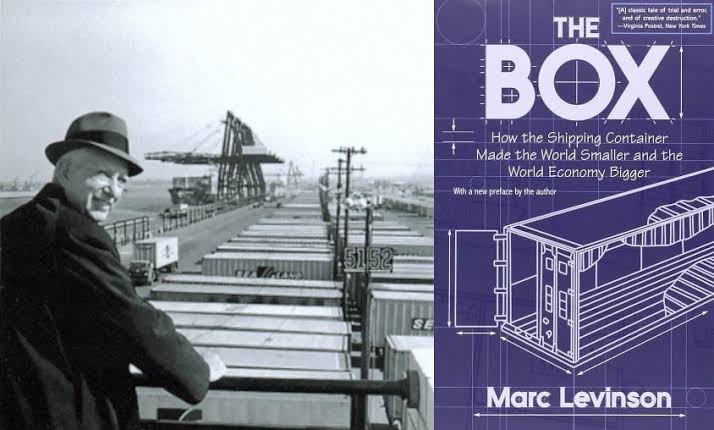
    Malcom McLean was not a shipping magnate. He was a trucking entrepreneur from North Carolina who had built a successful business hauling freight up and down the East Coast. What he saw when he looked at a cargo ship was not a vessel but a bottleneck—a place where his trailers had to be unloaded, their contents manhandled into the hold, and then reloaded on the other side. His insight was deceptively simple: why not load the entire trailer onto the ship, box and all?

    In 1956, McLean bought a steamship company and converted tankers to carry containers. The first voyage of the Ideal X carried 58 containers from Newark to Houston, a trip that took just a few days. The immediate savings were staggering: loading costs dropped from $5.86 per ton to $0.16 per ton—a 97 percent reduction. But the true significance was not just the cost; it was the speed. A ship that once spent days or weeks in port could now be unloaded and reloaded in hours.

    Standardization: The Quiet Revolution

    The container itself was not a technological marvel. It was, as economists later noted, a systems innovation. The real breakthrough came when the industry agreed on standard sizes. In 1968, the International Organization for Standardization (ISO) set the dimensions—20 feet and 40 feet in length, 8 feet wide, and 8 feet 6 inches high. The 20-foot unit became the global benchmark, the twenty-foot equivalent unit, or TEU, which today measures the capacity of ships and ports.

    Standardization meant that a container loaded in a factory in Ohio could move by truck to a port, be lifted onto a ship, and then transferred to a railcar in Rotterdam without ever being opened. This intermodal magic slashed handling time, reduced theft because boxes were sealed and traced, and cut insurance costs. The box was a closed system: once sealed, the cargo was untouched until destination.

    The Vietnam War as Accelerant

    Containerization might have remained a niche innovation for years if not for an unlikely catalyst: the Vietnam War. In the late 1960s, the US military needed to move massive volumes of supplies to Southeast Asia. Sea-Land, McLean’s company, won major military contracts and demonstrated the system’s efficiency at scale. The US government subsidized container port development in Vietnam, proving that the box could function in the most challenging environments—and that it could move enormous quantities of goods quickly and reliably.

    The Asian Miracle on the Water

    Perhaps the most profound impact of containerization was on global manufacturing geography. Before containers, factories had to be located near ports or rail hubs to minimize the cost of moving raw materials and finished goods. The container untethered production from geography. Suddenly, it became feasible to manufacture components in one country, assemble them in another, and sell them in a third, all with minimal handling costs.

    This was a necessary precondition for the export-led growth of Japan, the Asian Tigers, and eventually China. Without cheap, reliable ocean transport, these nations could not have industrialized for export. The numbers tell the story: In 1990, Chinese ports handled about 1.5 million TEUs. By 2020, that figure exceeded 250 million. Today, seven of the world’s ten busiest container ports are in China. The box made globalization possible.

    The Human Cost: Labor’s Resistance

    But the revolution was not without victims. Containerization displaced hundreds of thousands of longshoremen, whose jobs were physically demanding, often dangerous, and deeply rooted in port communities. Unions, particularly the International Longshoremen’s Association in the US, fought the change with strikes and slowdowns. The 1971 West Coast dock strike was a pivotal moment, leading to “Mechanization and Modernization” agreements that traded job security for automation—a template for labor negotiations in the decades ahead.

    Ports that resisted containerization, like London and Liverpool, saw their fortunes decline. Those that embraced it, like Rotterdam, Singapore, and Felixstowe, boomed. The container did not just change how goods moved; it remade the map of world commerce, elevating some cities and leaving others behind.

    The Box Today

    Today, roughly 90 percent of world trade by volume travels by sea, and the vast majority of non-bulk goods move in containers. Global container traffic exceeds 800 million TEUs annually. The box is so ubiquitous that its presence is almost invisible—a backdrop to the goods that fill our stores and homes. Yet its impact is written in the fabric of the global economy, in the ports that never sleep, the ships that carry tens of thousands of boxes, and the supply chains that deliver a product from a factory in Shenzhen to a doorstep in Ohio within weeks.

    The container was not a hero in the story of globalization; it was more like a hidden engine. It did not make headlines, but it made the modern world possible. From the first 58 boxes on the Ideal X to the millions that cross the oceans every day, the standardized steel box has quietly become one of the most transformative inventions of the twentieth century—a testament to how a simple idea, applied with rigor, can reshape the world.

    Summary

    • The first container voyage on the Ideal X in 1956 cut loading costs from $5.86 per ton to $0.16 per ton, a 97 percent reduction.
    • Standardization by the ISO in 1968 created the 20-foot equivalent unit (TEU), enabling seamless intermodal transport across trucks, ships, and trains.
    • Containerization reduced port time from weeks to hours and dramatically cut theft and damage, lowering insurance costs.
    • The Vietnam War accelerated adoption as the US military used containers for large-scale supply movements, proving the system at scale.
    • Containerization enabled the Asian export-led growth model, with Chinese ports growing from 1.5 million TEUs in 1990 to over 250 million by 2020, and seven of the world’s ten busiest container ports now in China.
    • Labor unions resisted, but ports that embraced containers (Rotterdam, Singapore) thrived, while those that resisted (London, Liverpool) declined.

    FAQ

    Q: Who invented the shipping container?
    A: Malcom McLean, a North Carolina trucking magnate, is credited as the father of containerization. In 1956, he purchased a steamship company and converted WWII tankers to carry containers, launching the first container voyage on the Ideal X.

    Q: What does TEU stand for and why is it important?
    A: TEU stands for Twenty-foot Equivalent Unit, a standard measure based on a 20-foot container. It was established by the ISO in 1968 and is used globally to express a port’s or ship’s cargo capacity.

    Q: How did containerization reduce shipping costs so dramatically?
    A: Before containers, goods were handled piece by piece as break-bulk cargo, which was slow and labor-intensive. Containers allowed goods to be sealed in boxes and transferred between truck, ship, and rail without unpacking, reducing loading costs from $5.86 per ton to $0.16 per ton—a 97 percent drop.

    Q: What role did the Vietnam War play in the spread of containers?
    A: The US military needed to move massive supplies to Southeast Asia in the late 1960s. Sea-Land won military contracts, and the US government subsidized container port development in Vietnam, demonstrating the system’s efficiency at scale and accelerating its adoption.

    Q: How did containerization affect labor and ports?
    A: Containerization displaced many longshoremen, leading to strikes and negotiations that traded job security for automation—a pattern repeated worldwide. Ports that embraced containerization, like Rotterdam and Singapore, thrived, while those that resisted, like London and Liverpool, declined.
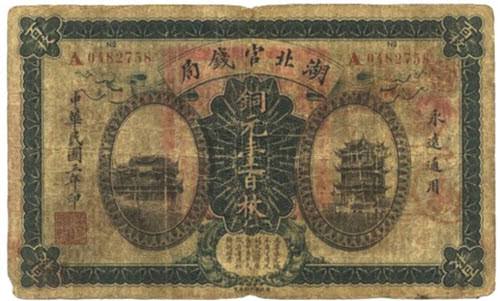

  • The Silk Road’s Forgotten Currency: How Chinese Paper Money Changed Global Trade and Taught Us About Inflation

    The Silk Road’s Forgotten Currency: How Chinese Paper Money Changed Global Trade and Taught Us About Inflation

    When we picture the Silk Road, we imagine caravans laden with silk, spices, and gems crossing deserts and mountains. But the most revolutionary cargo wasn’t a luxury good—it was an idea: paper money. Invented in China and tested across the Mongol Empire, paper currency didn’t just transform trade; it also delivered an early lesson in inflation that still echoes today.

    This is the story of how a lightweight piece of paper replaced heavy coins, unified a vast empire, and eventually collapsed under its own printing press—offering a cautionary tale that would take Europe centuries to learn.

    The Problem with Coins: Why China Invented Paper Money

    Imagine paying your taxes with a cartload of iron coins. In Sichuan province, during the early Song Dynasty, this was daily reality. The region used heavy iron currency because copper was scarce, and a single transaction could require wheelbarrows of coins. Even in the copper-using heartland, a string of 1,000 coins (guan) weighed up to 10 pounds—making large purchases a logistical nightmare.

    China’s economy was booming. Markets expanded, cities grew, and long-distance trade thrived. But the copper mines couldn’t keep pace with demand, and carrying metal over vast distances was inefficient. The solution emerged not from the imperial court but from private merchants, who began issuing paper receipts for deposits of coins. These receipts—light, portable, and trusted—quickly circulated as a medium of exchange.

    In 1024, the Song government took control of this experiment, issuing the first official state-backed paper money, known as jiaozi. It started as a regional solution in Sichuan but soon spread, as the government realized that paper currency could be produced at a fraction of the cost of minting metal and was far easier to transport.

    The Silk Road: A Network of Ideas, Not Just Goods

    The Silk Road was never a single road—it was a sprawling web of overland and maritime routes linking China, Central Asia, India, the Middle East, and Europe for over 1,500 years. While silk and spices were the headline commodities, the most enduring exports were often intangible: religions like Buddhism, technologies like papermaking, and economic concepts like credit.

    Paper money itself rarely traveled westward as physical notes. Instead, the idea traveled through the accounts of merchants, missionaries, and travelers. Marco Polo’s 13th-century descriptions of Kublai Khan’s paper currency were met with disbelief—Europeans simply couldn’t conceive of a currency with no intrinsic value.

    What did travel were related instruments: the Islamic world had the sakk, a written order for payment that gives us the word “check.” Italian merchants used bills of exchange and promissory notes to move money across Europe without hauling gold. These were not paper money—they represented specific deposits or debts—but they laid the groundwork for Europe’s later adoption of banknotes.

    The true breakthrough came with the Mongol Empire. When Genghis Khan’s successors unified much of Eurasia under one rule, they created a political and economic zone that stretched from China to Persia. The Yuan Dynasty, established by Kublai Khan, made paper money (chao) the sole legal tender across this vast territory. This was fiat currency in the modern sense: the notes had value because the state said so, not because they were backed by precious metal.

    The Mongol Experiment: A Unified Currency Zone

    Under Mongol rule, the Silk Road experienced its golden age. The Pax Mongolica—a “Mongol peace”—reduced banditry, standardized weights and measures, and encouraged trade. Merchants could travel from the Black Sea to Beijing with relative safety. Paper money facilitated this commerce: it was easy to carry, standardized, and accepted across an enormous area.

    Marco Polo marveled at this system, noting that the Great Khan could “cause the bark of trees… to be made into something resembling paper” and that his subjects eagerly accepted it. To Polo’s European audience, this seemed like magic—or madness. How could a piece of paper be worth anything?

    The Yuan state enforced acceptance of chao by decree: refusing paper money was a crime. Foreign merchants, however, were often required to exchange their gold and silver for paper notes upon entering China, and these notes could only be used within the empire. This created a captive market for the currency—and a temptation for the government.

    The Inflation Trap: When Paper Money Goes Wrong

    The Yuan Dynasty’s experiment worked for a while, but it contained the seeds of its own destruction. To fund military campaigns, public works, and court extravagance, the government printed ever more notes. As the money supply expanded, the value of each note fell. Prices soared. By the mid-14th century, hyperinflation had taken hold: the currency collapsed, savings were wiped out, and economic chaos contributed to the dynasty’s downfall.

    China’s experience was not unique—it was a preview of every paper-money crisis to come. The lesson was simple: when a government prints money without limit, its value evaporates. The Yuan’s fall in 1368 was followed by the Ming Dynasty, which initially continued paper currency but soon abandoned it after similar inflation. By the 15th century, China had reverted to silver bullion—a stable, if heavy, alternative.

    The first European experiments with paper money occurred centuries later. Sweden’s Stockholm Banco issued notes in 1661, and the Bank of England followed in 1694. Both initially maintained convertibility to silver, but governments soon discovered the same temptation to overissue. France’s Mississippi Bubble (1719–1720) and Britain’s South Sea Bubble (1720) were spectacular crashes caused by speculative paper assets and excessive money creation. These crises echoed China’s earlier mistakes, but Europeans had to learn the hard way—they had dismissed Polo’s accounts as fables.

    Why Paper Money Mattered: The Power of Trust

    Paper money succeeded in China because it solved a practical problem, but it flourished only when people trusted the issuer. That trust was the true revolution. Money, as Aristotle argued, was supposed to have intrinsic value—gold and silver were valuable in themselves. Paper money was a fiction, yet it worked because everyone agreed to accept it.

    Chinese thinkers like Ma Duanlin, writing in the 13th century, already wrestled with questions of money supply and state credit—centuries before European economists like John Locke or David Hume tackled similar issues. The Silk Road didn’t just move goods; it moved these ideas, though Europe was slow to absorb them.

    Ultimately, paper money’s greatest impact on the Silk Road was not as a physical cargo but as a model for economic integration. The Mongol Empire’s unified currency zone was an early prototype of a single monetary system covering a vast region. Its collapse demonstrated the dangers of fiscal irresponsibility—a warning that resonates in today’s world of central banks and quantitative easing.

    The Legacy: From Silk Road to Modern Finance

    The Silk Road declined in the 15th century, partly because maritime routes became more efficient, but also because monetary instability—including Chinese inflation—disrupted overland trade. Yet the idea of paper money had taken root. By the 19th century, nearly every major economy had adopted some form of paper currency, and today, cash is mostly digital—an even more abstract form of the same concept.

    When you hand over a piece of paper money, you’re participating in a system that began in Sichuan a thousand years ago. The Silk Road’s unsung cargo wasn’t a physical item but a financial technology that transformed global trade—and taught us that money is only as valuable as the trust we place in it.

    The Inflation Lesson: A Timeless Warning

    The story of paper money on the Silk Road is a powerful reminder of the delicate balance between economic growth and fiscal discipline. China’s invention solved a real problem, but it also created a new one: the temptation to print money as a shortcut to wealth. The Yuan Dynasty fell because it succumbed to that temptation, and every subsequent paper-money crisis—from the French Revolution’s assignats to the German Weimar Republic’s hyperinflation—has repeated the pattern.

    Understanding this history is not just an academic exercise. It helps us appreciate the foundations of modern finance and the importance of trust in our economic institutions. The next time you use a banknote, consider its journey: from a merchant’s receipt in 11th-century Sichuan to a tool of empire, a lesson in inflation, and a cornerstone of the global economy. That’s a cargo worth remembering.

    Paper money didn’t cross the Silk Road in a merchant’s saddlebag; it crossed as an idea, carried by travelers like Marco Polo and tested by empires. Its invention solved China’s coin shortage, enabled the Mongol Empire’s trade boom, and ultimately taught the world a bitter lesson about inflation. Today, we still grapple with the same questions: how much money is too much, and what gives currency its value? The answer, as the Yuan Dynasty discovered, lies not in the paper but in the trust we place in those who issue it.

    Summary

    • Paper money was invented in China during the Song Dynasty (11th century) as a solution to copper coin shortages and the impracticality of heavy metal currency.
    • The Mongol Empire under Kublai Khan made paper money the sole legal tender across much of the Silk Road, creating an early unified currency zone.
    • The concept of paper money traveled westward via travelers like Marco Polo, but it was centuries before Europe adopted it, with early experiments like the Bank of England in 1694.
    • Hyperinflation in the Yuan Dynasty (14th century) led to the collapse of its paper currency, contributing to the dynasty’s fall and serving as an early warning about excessive money printing.
    • The Silk Road facilitated the spread of economic ideas, including credit instruments like bills of exchange, which laid the groundwork for modern banking.

    FAQ

    **Q: Was paper money used along the Silk Road?
    A: Paper money itself wasn’t widely used as a physical medium across the entire Silk Road. The Yuan Dynasty’s paper currency circulated within its empire, but the concept of paper money traveled westward through travelers’ accounts, influencing later European experiments.

    **Q: What is “flying cash”?
    A: “Flying cash” (feiqian) was a Tang Dynasty instrument used to transfer funds over long distances—essentially a bill of exchange, not a currency. It allowed merchants to deposit funds at one location and withdraw them at another, avoiding the need to carry heavy coins.

    **Q: How did Marco Polo describe Chinese paper money?
    A: Marco Polo described how the Great Khan issued paper notes made from mulberry bark, and that these notes were accepted as payment throughout his domains. His accounts were so astonishing that many Europeans thought he was exaggerating or inventing stories.

    **Q: Why did the Ming Dynasty abandon paper money?
    A: The Ming Dynasty initially continued paper money but suffered from inflation due to overissuance. By the mid-15th century, they reverted to silver bullion as the standard, which was more stable and widely accepted in international trade.

    **Q: What is the main lesson from the Yuan Dynasty’s inflation?
    A: The main lesson is that a government cannot print money without limits—doing so leads to hyperinflation and economic collapse. The Yuan Dynasty’s overprinting of paper notes to fund wars and expenses ultimately destroyed the currency’s value.

  • When Merchants Ruled the North: The Rise and Fall of the Hanseatic League

    When Merchants Ruled the North: The Rise and Fall of the Hanseatic League

    In the 14th century, a herring fisherman in Scania could sell his catch to a merchant from Lübeck, who would salt it, load it onto a cog, and sail it to the bustling port of Bruges. From there, it might travel overland to Paris or London, feeding thousands. This trade was not organized by a king or a state, but by a loose alliance of German-speaking merchant guilds known as the Hanseatic League.

    For nearly 300 years, this alliance dominated Northern Europe’s economy, controlling everything from salt and grain to furs and amber. It was a strange beast: not a country, not a corporation, but a network of towns and merchants who pooled resources for mutual profit and protection. At its peak, it included over 200 towns and operated trading posts from London to Novgorod. Then, as quickly as it rose, it faded into irrelevance. How did a group of merchants build such an empire, and why did it crumble?

    The Seed of an Empire: Lübeck and the Baltic Boom

    The Hanseatic League didn’t start with a grand plan. It grew out of the bustling trade that followed German colonization of the Baltic coast in the 12th century. When Henry the Lion founded Lübeck in 1143, he created a port that could connect the North Sea to the Baltic Sea. But it wasn’t until 1241 that two cities, Lübeck and Hamburg, signed an alliance to protect their trade route between the seas. This partnership proved so profitable that other towns wanted in.

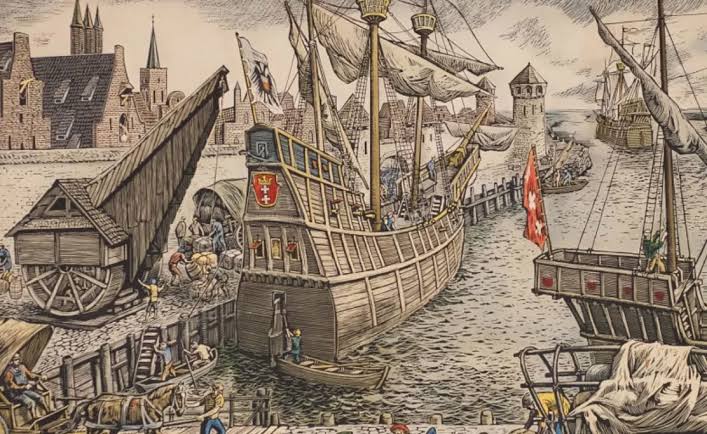
    What drove this expansion? Simple economics. Western Europe craved furs, wax, and timber from the East, while the East wanted cloth, salt, and wine from the West. The Baltic Sea was the highway, and German merchants, with their efficient cog ships, controlled the traffic. They soon developed a network of trading posts, called Kontors, in key foreign cities. These weren’t just warehouses; they were fortified compounds with their own laws, courts, and even bakeries. The most famous were in Novgorod, Bergen, Bruges, and London (the Steelyard).

    How the Hansa Actually Worked

    The Hanseatic League was an institution, but not like any you’d recognize today. It had no constitution, no standing army, and no formal membership list. Instead, it was a fluid association of towns that shared commercial privileges and a common legal framework. Every few years, delegates from member towns would gather in Lübeck for a Hansetag, a diet that made decisions on trade embargoes, piracy, and diplomatic disputes. But these decisions were only binding if each town ratified them locally—a weak system that worked only because all members saw the benefit of unity.

    Its real power lay in its economic muscle. The League could impose a Verhansung, effectively a trade embargo, on a city or country that reneged on trade privileges. In 1358, it used this weapon against Flanders, and in 1367, it assembled a coalition of cities to fight Denmark, which had been disrupting trade in the Sound. The resulting Treaty of Stralsund in 1370 gave the Hansa control over the Sound tolls and a say in Danish succession. Here was a trade alliance flexing political power usually reserved for kings.

    The Golden Age: Herring, Grain, and Furs

    By the mid-14th century, the Hansa was at its zenith. Its merchants handled a staggering volume of goods. Consider herring: each year, massive shoals entered the Baltic to spawn off the Scania coast, now part of Sweden. The Hansa set up seasonal fishing camps, salted and barreled the herring, and shipped it across Europe. This single commodity was the engine of the League’s wealth, but it wasn’t alone. Novgorod supplied furs that warmed the nobility of Europe; Bergen exported stockfish (dried cod); Lüneburg’s salt preserved everything; and Baltic grain fed the growing cities of the West.

    The League also pioneered the infrastructure of trade. In 1398, it completed the Stecknitz Canal, a 60-mile waterway connecting Lübeck to Hamburg, allowing goods to move between the Baltic and North Seas without overland portage. This was a feat of engineering that anticipated modern logistics.

    Why Did It Fall?

    The decline was gradual, not sudden. A major blow came in 1494 when Ivan III of Moscow closed the Novgorod Kontor, ending the Hansa’s monopoly on Russian furs. The League had already lost ground to Dutch and English merchants who traded directly with the Baltic, bypassing the Hansa’s middlemen. These newcomers had cheaper ships and no legacy costs.

    More fundamentally, the world was changing. The Hanseatic League was built on fragmentation: many small states, weak kings, and no dominant power. As England, Denmark, Sweden, and the Dutch Republic grew stronger, they asserted control over trade routes in their own waters. The League’s ability to enforce privileges through embargoes weakened. Its internal cohesion also frayed. Lübeck, the ‘Queen of the Hansa,’ tried to dominate, but other towns like Cologne and Danzig pursued their own interests. By the 16th century, the League was a shadow of its former self.

    The final Hansetag was held in 1669, though by then it was more a ceremonial gathering than a ruling body. The League dissolved not with a bang, but with a whimper. Yet its legacy endured: Lübeck, Hamburg, and Bremen retained the title ‘Hanseatic cities’ into modern times, a nod to their shared history of commerce.

    Measuring the Hansa’s Impact

    What did the Hansa leave behind? Beyond the economic integration of Northern Europe, it contributed to legal innovation. Merchants developed standardized contracts, arbitration procedures, and insurance practices that are direct precursors to modern trade law. The League’s approach to collective security—convoying ships and pooling resources to deter pirates—foreshadowed modern business consortia. And its story offers a powerful lesson: economic power can be wielded effectively without statehood, but it is also fragile when the political landscape shifts.

    The Hanseatic League was an anomaly in medieval Europe: an empire of merchants, not monarchs. Its rise was built on innovation, cooperation, and the simple demand for everyday goods like herring and salt. Its fall was sealed by the rise of the nation-state and the very global trade it had helped pioneer. Yet its memory persists—not just in the labels of a few German cities, but in the DNA of modern commerce, where networks of companies and cities can still wield influence that rivals governments.

    Summary

    • The Hanseatic League was a loose alliance of merchant guilds and towns, not a state or formal organization, that dominated Northern European trade from the 13th to 17th centuries.
    • It grew out of early partnerships like the Lübeck–Hamburg alliance (1241) and expanded to over 200 towns, with key trading posts (Kontors) in Novgorod, Bergen, Bruges, and London.
    • Its economic power was based on control of major commodities like herring, salt, grain, and furs, and its political influence was enforced through trade embargoes, as seen in the wars against Denmark and Flanders.
    • Decline came from external competition (Dutch and English), the rise of stronger centralized states, internal divisions, and the closure of the Novgorod Kontor in 1494.
    • The League’s legacy includes legal innovations (standardized contracts, arbitration) and the enduring title ‘Hanseatic cities’ for Lübeck, Hamburg, and Bremen.

    FAQ

    Q: When was the Hanseatic League founded and when did it end?
    A: The League did not have a single founding date. It grew out of alliances like the Lübeck–Hamburg pact in 1241, and its first formal diet was held in 1356. It effectively dissolved after the final Hansetag in 1669, though Lübeck, Hamburg, and Bremen kept the ‘Hanseatic’ label.

    Q: What did the Hanseatic League actually trade?
    A: The League dominated trade in several key commodities: salted herring from Scania, salt from Lüneburg, grain from the Baltic, timber, furs from Novgorod, wax, copper, iron, and cloth. It also traded stockfish (dried cod) from Bergen.

    Q: How did the League exert political power if it wasn’t a state?
    A: The League used economic weapons, primarily the Verhansung, or trade embargo. By cutting off a city’s access to vital goods, it could force compliance. It also organized armed convoys and even went to war, as it did against Denmark in the 1360s, winning control over the Sound tolls.

    Q: What were the four principal Kontors?
    A: These were the League’s main trading posts in foreign cities: Novgorod, Bergen, Bruges, and London (the Steelyard). They were self-governing enclaves with their own laws and warehouses.

    Q: Why did the Hanseatic League decline?
    A: Decline was driven by a combination of factors: competition from Dutch and English merchants who could trade more cheaply, the rise of stronger national governments that protected their own trade, internal divisions among member towns, and the closure of the vital Novgorod Kontor in 1494.

  • The Gold Dinar: The Silk Road’s Hard Currency That Built Modern Finance

    The Gold Dinar: The Silk Road’s Hard Currency That Built Modern Finance

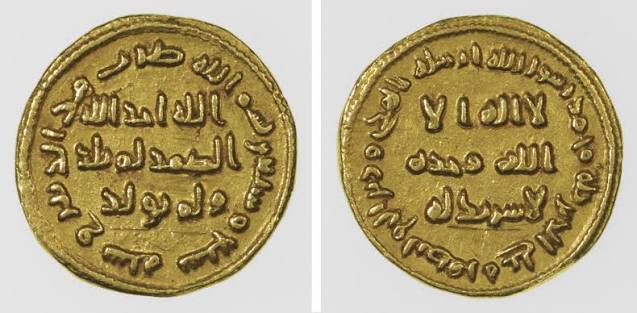
    Before the dollar and the euro, a small gold coin—weighing just 4.25 grams—served as the trusted currency across three continents. The Islamic gold dinar, first minted in 697 CE, was the backbone of trade from Spain to China, enabling merchants to move silk, spices, and gold across thousands of miles. Its consistency and purity made it the ‘hard currency’ of the medieval world, a status that modern economies still strive for. The dinar’s legacy is not just a tale of coins but of how trust, standardization, and financial innovation shaped the global economy.

    A Coin Born from Reform

    The gold dinar emerged during a pivotal moment in Islamic history. In 697 CE, the Umayyad Caliph Abd al-Malik initiated a monetary reform that replaced the imitative Byzantine and Sasanian coins that had circulated after the early conquests. The new coin was a statement of independence—both political and religious. It carried no images of emperors or gods, only Arabic calligraphy declaring the faith and the year of issue according to the Hijri calendar. Weighing 4.25 grams of near-pure gold, it was based on the Byzantine solidus but adjusted to align with Islamic weights, making it slightly lighter yet more consistent.

    This was not just a symbolic change. Abd al-Malik was centralizing his empire: Arabic became the administrative language, the Dome of the Rock was built in Jerusalem, and the dinar became the standard for taxes, legal payments, and long-distance contracts. The coin was a tool of statecraft, designed to unify a vast caliphate under a single economic standard.

    The Dinar’s Role in the Silk Road Network

    The Silk Road was not a single highway but a web of overland and maritime routes connecting East Asia, the Middle East, and Europe. The dinar was the one currency that bridged these diverse segments. Overland, caravans carried dinars into Central Asia and China, where they were often melted into bullion or used as weight standards because of their reliable purity. Maritime routes saw dinars in ports like Basra, Siraf, and Aden, linking to Indian and Southeast Asian markets.

    What made the dinar so effective was its consistency. Unlike many local coins, which varied in weight and fineness, the dinar maintained a high standard for centuries. This reliability was crucial for high-value transactions—silk, spices, horses, and even slaves. The 10th-century Cairo Geniza documents reveal how merchants used dinars in partnerships, letters of credit, and bills of exchange, laying the groundwork for modern banking instruments.

    Why Gold? The Geopolitics of Precious Metals

    The Islamic heartland, particularly the Hijaz and Iraq, was poor in gold. The metal flowed in from West Africa via trans-Saharan trade, from Nubia, and from Central Asian mines. In contrast, the eastern caliphate relied more on silver. This created a regional bimetallism: gold in the west and Mediterranean, silver in the east. The gold-silver ratio fluctuated, typically between 1:10 and 1:14, offering arbitrage opportunities but also causing periodic currency crises when one metal was overvalued.

    Gold was chosen for the dinar because it was the metal of international trade. Silver was too bulky for large transactions, and copper was for small change. Gold’s high value-to-weight ratio made it ideal for long-distance commerce, and its rarity in the Islamic heartland meant that its supply was closely tied to trade routes—making the dinar a barometer of economic connectivity.

    The Dinar’s Rivals and the Rise of European Gold

    The dinar did not exist in a vacuum. The Byzantine solidus and later the hyperpyron continued to circulate in the eastern Mediterranean, and the two currencies often traded at slight premiums relative to each other. But in the 13th century, European powers began to mint their own gold coins: Florence introduced the florin in 1252, and Venice followed with the ducat in 1284. These coins, inspired by the dinar’s example, soon dominated Mediterranean trade as Islamic gold supplies dwindled.

    Even the Mongols, who conquered much of the Islamic world, initially adopted the dinar system. But their later experiment with paper money in Persia in 1294 was a spectacular failure, serving as an early lesson on the dangers of fiat currency without backing or trust.

    The Legacy: From Dinar to Modern Finance

    The gold dinar’s influence extends far beyond its circulation period. Its principles—standardized weight, purity, and trust—are foundational to modern monetary systems. The dinar also paved the way for financial innovations like checks and letters of credit, which were essential for long-distance trade. Today, some Islamic finance advocates call for a return to the gold dinar as a way to avoid inflation and currency manipulation.

    In the numismatic world, the dinar is prized not only for its gold but for its artistic and historical value. The calligraphy on each coin tells a story of dynasties and empires, from the Umayyads to the Fatimids to the Almoravids. The Fatimid dinar, for instance, was so pure it was widely imitated, even by European mints.

    The Dinar in Today’s Economy

    While the dinar is no longer minted, its legacy persists in discussions about global currencies and financial stability. The euro, with its standardized coinage across nations, echoes the dinar’s role in unifying trade. The rise of cryptocurrencies like Bitcoin, which aim to be decentralized and trustless, also reflects the dinar’s appeal as a reliable store of value.

    Understanding the gold dinar helps us see that currencies are more than just money—they are instruments of power, trust, and connection. The dinar’s forgotten history is a reminder that economic systems are built on confidence, and that confidence can be as valuable as gold itself.

    The gold dinar was more than a coin; it was a catalyst for global trade and a precursor to modern finance. Its story is a testament to how a standardized currency can foster economic integration across diverse cultures. As we navigate today’s complex financial landscape, the dinar’s lessons about trust, purity, and interoperability remain as relevant as ever.

    Summary

    • The gold dinar, first minted in 697 CE, was a standardized Islamic coin weighing 4.25 grams of near-pure gold.
    • It served as the primary ‘hard currency’ for Silk Road trade, bridging overland and maritime routes from North Africa to China.
    • Its design rejected images in favor of Arabic calligraphy, reflecting religious and political authority.
    • The dinar’s consistency enabled financial innovations like letters of credit and bills of exchange.
    • It faced competition from Byzantine and later European gold coins, but set the standard for monetary trust and purity.

    FAQ

    Q: What was the gold dinar’s weight and purity?
    A: The dinar weighed approximately 4.25 grams of near-pure gold, typically 22-24 karats, based on the Byzantine solidus but adjusted to Islamic weights.

    Q: Why was the dinar important for Silk Road trade?
    A: Its consistent weight and purity made it a reliable medium of exchange for high-value goods across politically fragmented regions, facilitating long-distance contracts and trust.

    Q: What replaced the gold dinar?
    A: European gold coins like the Venetian ducat (1284) and Florentine florin (1252) replaced the dinar in Mediterranean trade as Islamic gold supplies declined.

    Q: How did the dinar influence modern finance?
    A: The dinar’s principles of standardization and trust underpinned early banking instruments like letters of credit, and its legacy is seen in discussions about currency stability and even cryptocurrencies.

    Q: Are there any modern attempts to revive the gold dinar?
    A: Some Islamic finance advocates propose a return to the gold dinar to avoid inflation, but no major economy has adopted it as official currency.

  • The Merchant Adventurers: How the Hanseatic League Invented Modern Trade

    The Merchant Adventurers: How the Hanseatic League Invented Modern Trade

    In the 14th century, a merchant from Lübeck could sail to Novgorod, sell Flemish cloth, buy Russian furs, and return home without ever worrying about border checks, currency exchange, or whether a foreign court would enforce his contracts. That was the miracle of the Hanseatic League a commercial network that spanned over 4,000 kilometers and dominated Northern European trade for 300 years, all without an army, a flag, or a central government.

    The League was not a state. It was a voluntary, polycentric network of more than 200 towns and merchant guilds that pooled resources for mutual defense and profit. Its innovations from extraterritorial trading posts to collective embargoes—laid the groundwork for modern trade, and its rise and fall offer lessons that still resonate in today’s global economy.

    The Problem: A Feudal Patchwork of Chaos

    Europe in the High Middle Ages was a mess of feudal fiefdoms, each with its own laws, tariffs, and currency. A merchant traveling from Cologne to London had to navigate dozens of tolls, risk banditry on land and piracy at sea, and hope that a foreign ruler would honor a contract signed in another jurisdiction. There was no central authority to standardize weights and measures or enforce agreements. Trade was a gamble, and most merchants stayed close to home.

    The Hanseatic League solved this problem not by building an empire, but by building a network. Its members—towns like Lübeck, Hamburg, and Bremen—agreed to protect each other’s merchants, standardize trade practices, and present a united front to foreign powers. The League’s first formal act was a mutual protection treaty between Lübeck and Hamburg in 1241, but by the 1350s, it had grown into a confederation that could challenge kings.

    The Kontor: A Free-Trade Zone in a Foreign Capital

    The League’s most enduring innovation was the kontor system. These were self-governing merchant enclaves established in foreign cities, operating under extraterritorial privileges granted by local rulers. The four principal kontors were in Bergen, Novgorod, Bruges, and London—each specializing in key commodities. The London Steelyard, for instance, was a walled compound with warehouses, offices, residences, and its own court. It functioned as a free-trade zone within a foreign capital, governed by Hanseatic law, not English law.

    Kontors were more than just trading posts. They served as chambers of commerce, consulates, and arbitration courts rolled into one. Young merchants were sent there as apprentices, learning the ropes of international commerce, languages, and law on the job. This was the medieval equivalent of a multinational corporation’s overseas branch, complete with its own legal jurisdiction.

    The kontor system gave Hanseatic merchants a competitive edge. They could operate in foreign markets with the same legal protections they enjoyed at home, reducing the risk of fraud or expropriation. This extraterritoriality was a radical departure from the norm, and it laid the groundwork for the consular system and international trade law that we know today.

    The League’s Playbook: Embargoes, Blockades, and Leverage

    The Hanseatic League had no standing army, but it wielded formidable power through economic leverage. Its most potent weapon was the Verhansung, a trade embargo that excluded a city or region from the League’s network. When the League imposed an embargo on a rival—be it a recalcitrant prince or a competing merchant group—it cut off their access to essential goods like salt, herring, and grain. The threat of exclusion was often enough to bring opponents to the negotiating table.

    The League also used military force when necessary, but always in a coordinated, strategic manner. During the Confederation of Cologne (1367–1370), a coalition of Hanseatic cities and their allies went to war with Denmark over trading rights in the Baltic. The resulting Treaty of Stralsund gave the League unprecedented control over the herring trade and the Sound, the strait connecting the North Sea to the Baltic. This was not conquest in the traditional sense; it was the enforcement of commercial privileges through collective action.

    This playbook—economic coercion backed by the threat of force—would later be adopted by the Dutch East India Company and the British Empire. The League proved that a network of cities could project power more effectively than many a king.

    A Network, Not an Empire: The League’s Governance

    The League was notoriously decentralized. It had no formal constitution until its later years, no permanent bureaucracy, and no single leader. Instead, decisions were made at irregular Hansetage (diets), where delegates from member cities gathered to vote on matters of common concern. Attendance was voluntary, and resolutions were not always binding, yet the League held together for centuries.

    This polycentric structure was both its strength and its weakness. It allowed for flexibility and local autonomy, but it also made the League slow to respond to challenges. As the political landscape of Europe shifted in the 15th and 16th centuries—with the rise of powerful nation-states and the discovery of new trade routes—the League’s loose confederation struggled to adapt. Its internal discord and inability to enforce discipline among members led to its gradual decline.

    The Golden Age and the Decline

    The League’s golden age ran from roughly 1375 to 1450. During this period, it held a near-monopoly on Baltic trade, moving grain, timber, furs, and herring across a vast network that stretched from London to Novgorod. The wealth generated by this trade fueled the urbanization of Northern Europe and the rise of a merchant middle class that was distinct from both the feudal nobility and the peasantry.

    But the seeds of decline were already sown. The League had always been a defensive alliance, and its power rested on the willingness of its members to cooperate. As the Dutch and English developed their own merchant fleets and began to challenge Hanseatic dominance, the League’s internal divisions became more pronounced. The discovery of the Americas and the shift of trade routes to the Atlantic further marginalized the Baltic trade.

    By the late 16th century, the League was a shadow of its former self. The final Hansetag was held in 1669, with only nine cities in attendance. Lübeck, Hamburg, and Bremen continued to call themselves Hanseatic cities, and they still do today—a testament to the League’s enduring legacy.

    The Legacy: How the Hanseatic League Shaped Modern Trade

    The Hanseatic League may have dissolved, but its innovations live on. The kontor system evolved into the modern concepts of the free-trade zone and the consulate. The League’s use of embargoes and economic sanctions became a standard tool of international relations. Its preference for standardized weights, measures, and accounting practices facilitated the growth of commerce in an era before double-entry bookkeeping and formal banking.

    More importantly, the League demonstrated that trade could flourish without central authority. It was a bottom-up, cooperative enterprise that proved the power of voluntary networks. In an age of global supply chains and digital marketplaces, the Hanseatic League’s model of decentralized, self-governing commerce feels remarkably prescient.

    The Hanseatic League was not the first merchant association, but it was the first to achieve such scale and sophistication. It invented the playbook for modern trade, and its lessons—about the importance of trust, legal certainty, and collective action—remain as relevant today as they were in the 14th century.

    The Hanseatic League was a merchant adventurer’s dream: a network that made trade safer, faster, and more profitable across a third of a continent. It thrived for three centuries because it solved a problem that still plagues global commerce—how to build trust in a fragmented world. Its story is a reminder that trade is not just about goods and money, but about the institutions and networks that make exchange possible. And as we navigate the complexities of modern globalization, we can still learn from the league of cities that invented modern trade.

    Summary

    • The Hanseatic League was a commercial and defensive confederation of merchant guilds and towns, active from the mid-12th to the 17th century, with over 200 member towns at its peak.
    • It solved the problem of feudal fragmentation by creating a voluntary, polycentric network that provided security, standardization, and legal protections for merchants.
    • The kontor system—self-governing trading posts in foreign cities—was a forerunner to modern free-trade zones and consulates.
    • The League wielded power through economic leverage, including embargoes and blockades, rather than standing armies, and its governance was decentralized, with decisions made at irregular diets.
    • Its decline came from internal divisions and external competition (Dutch and English), but its innovations shaped modern trade practices, and Lübeck, Hamburg, and Bremen still bear the Hanseatic title.

    FAQ

    Q: What does ‘Hanse’ mean?
    A: ‘Hanse’ comes from the Middle Low German word for ‘company’ or ‘guild,’ reflecting the League’s origins as an association of merchant guilds.

    Q: Was the Hanseatic League a state or an empire?
    A: Neither. It was a voluntary, polycentric network of cities and merchant guilds that cooperated for mutual defense and commercial advantage, without a central government or standing army.

    Q: What were the main trading posts of the League?
    A: The four principal kontors were in Bergen (fish), Novgorod (furs and wax), Bruges (cloth and luxury goods), and London (wool and cloth).

    Q: How did the League enforce its rules without an army?
    A: It used economic leverage, such as embargoes (Verhansung) and blockades, to pressure rivals and members alike. It also occasionally formed ad hoc military coalitions, as in the war against Denmark.

    Q: What caused the League’s decline?
    A: The rise of Dutch and English competition, shifting trade routes to the Atlantic, internal discord, and the growing power of nation-states all contributed to the League’s decline. The final diet was held in 1669 with only nine cities attending.

  • How World War I Remade the United States

    How World War I Remade the United States

    In 1914, the United States was a nation at peace, its army smaller than Bulgaria’s, its federal government a distant presence in most citizens’ lives. Four years later, it had become the world’s leading creditor, with a federal budget twenty-five times larger and a government that reached into factories, farms, and even private speech. The transformation was not gradual; it was compressed into nineteen months of active belligerency that changed the country’s role in the world and the relationship between Washington and its citizens.

    The war’s legacy is often overshadowed by the Second World War, but the first global conflict was the crucible in which modern America was forged. From the Great Migration to the 19th Amendment, from the income tax to the surveillance state, the war’s effects are still visible today. This is the story of how a country that wanted nothing to do with Europe’s quarrels became a global power—and what it cost.

    A Nation Reluctant to Fight

    When war erupted in Europe in August 1914, President Woodrow Wilson declared neutrality, a stance that reflected both tradition and pragmatism. The United States had a standing army of roughly 100,000 men—smaller than most European powers—and a foreign policy rooted in George Washington’s warning against entangling alliances. German-Americans numbered about 8 million, and Irish-Americans were often hostile to Britain, making any pro-Allied stance politically dangerous.

    But neutrality proved difficult to maintain. Germany’s unrestricted submarine warfare, which sank the Lusitania in May 1915 and killed 128 Americans, tested American patience. The Zimmermann Telegram of January 1917, in which Germany proposed an alliance with Mexico against the U.S., was the final straw. By then, American banks had lent $2.3 billion to the Allies and only $27 million to Germany; a German victory would have meant default. On April 6, 1917, Congress declared war.

    The Machinery of War

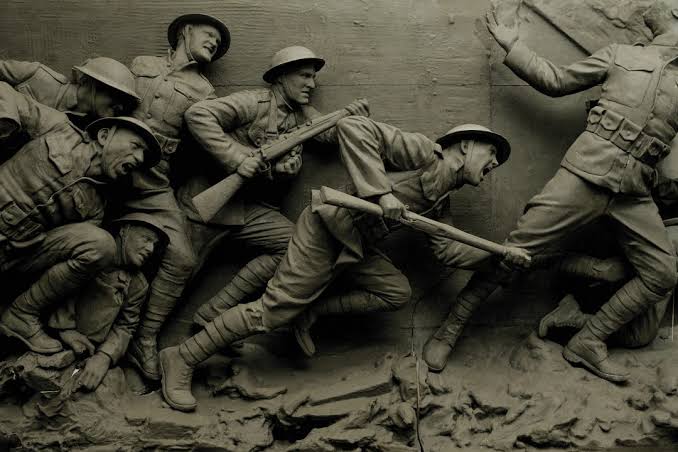
    The U.S. had only 19 months to mobilize, but it did so with astonishing speed. Over 4.7 million Americans served in the armed forces, and about 2 million reached France. The Selective Service Act of 1917 drafted men from all walks of life, creating a mass army for the first time since the Civil War.

    The war effort demanded more than soldiers; it demanded a reorganization of the economy. The War Industries Board coordinated production, the Food Administration under Herbert Hoover controlled prices and rationing, and the Railroad Administration temporarily nationalized the railroads. The federal budget ballooned from $725 million in 1914 to $18.5 billion in 1919. The top income tax rate soared from 7% to 77% under the War Revenue Act of 1917 and the Revenue Act of 1918.

    This expansion of federal power was unprecedented. The government became the largest purchaser of goods in the nation, and it used that leverage to set wages, working conditions, and even prices. The National War Labor Board mediated disputes, often favoring unions in exchange for no-strike pledges. For the first time, the federal government was a direct presence in the daily lives of ordinary workers.

    The Dark Side of Patriotism

    The war also brought a crackdown on dissent. The Espionage Act of 1917 and the Sedition Act of 1918 criminalized speech that interfered with the war effort. Over 2,000 people were prosecuted, including Eugene V. Debs, the Socialist Party leader, who was sentenced to ten years in prison for an anti-war speech. The Committee on Public Information, headed by journalist George Creel, churned out propaganda that demonized the enemy and encouraged vigilance against spies and saboteurs.

    This climate of suspicion spilled into the postwar period. The Red Scare of 1919–1920, marked by the Palmer Raids and the deportation of thousands of suspected radicals, was a direct legacy of wartime anti-dissent legislation. The war had normalized the idea that the government could restrict civil liberties in the name of national security—a tension that persists to this day.

    The Great Migration and the Changing Face of America

    The war also set in motion demographic changes that reshaped the country. European immigration, which had averaged 1.2 million people a year before the war, ground to a halt as the conflict consumed the continent. At the same time, the demand for industrial labor in northern cities drew African Americans from the South in what became known as the Great Migration. Between 1916 and 1919, approximately 500,000 African Americans moved north, seeking jobs in steel mills, packinghouses, and factories.

    This migration had profound social and political consequences. It created new urban communities, shifted political power in northern cities, and laid the groundwork for the civil rights movements of the twentieth century. The war also opened new opportunities for women, whose workforce participation increased by about 25%. Women filled jobs left vacant by men and took on roles in industry, government, and the military. The war effort gave a powerful boost to the suffrage movement, and the 19th Amendment, granting women the right to vote, was ratified in August 1920.

    A Debtor No More

    The economic transformation was equally dramatic. U.S. GDP grew from roughly $38 billion in 1914 to $78 billion in 1918. The nation shifted from a debtor country owing $3.7 billion to foreign investors to a creditor country owed $3.5 billion by foreign governments. The war had made the United States the world’s banker, a position it would not relinquish.

    But the cost was staggering. About 116,500 American military personnel died—53,000 in combat, the rest from disease, especially the 1918 influenza pandemic. The war also left a bitter political legacy. President Wilson’s dream of joining the League of Nations was dashed when the Senate refused to ratify the Treaty of Versailles in 1919 and 1920. The United States retreated into isolationism, but it had already been transformed.

    The War’s Lasting Legacy

    The United States entered World War I as a peripheral power and emerged as a global one. The war created the modern administrative state, with federal agencies that reached into every corner of the economy. It accelerated the Great Migration, expanded women’s rights, and made the income tax a permanent feature of American life.

    It also left a troubling legacy of government surveillance and suppression of dissent. The Espionage and Sedition Acts set a precedent for restricting civil liberties in times of crisis, a precedent that would be invoked again in the Second World War and beyond.

    The war’s significance is not just a matter of battles won or lost. It was the moment when the United States stopped being a collection of states and became a nation, with a centralized government, a powerful military, and a permanent global role. The changes were so profound that they still shape American life a century later.

    World War I was a catalyst that transformed the United States from a debtor nation with a small federal government into a creditor nation with a powerful administrative state. It ended American isolationism, accelerated social changes like the Great Migration and women’s suffrage, and left a legacy of federal power and civil liberties tensions that continue to define the nation. The war’s significance lies not in the battles, but in the remaking of America itself.

    Summary

    • The U.S. shifted from neutrality to full belligerency in 19 months, with over 4.7 million serving and 116,500 deaths.
    • The federal budget grew 25-fold, and the top income tax rate rose from 7% to 77%, funding a new administrative state.
    • The Great Migration moved 500,000 African Americans north, and women’s workforce participation rose 25%, boosting the suffrage movement.
    • The Espionage and Sedition Acts criminalized dissent, leading to over 2,000 prosecutions and setting a precedent for later restrictions.
    • The U.S. became a creditor nation, but rejected the Treaty of Versailles and the League of Nations, retreating into isolationism.

    FAQ

    Q: How long was the United States involved in World War I?
    A: The U.S. was an active belligerent for about 19 months, from April 6, 1917, to November 11, 1918.

    Q: What was the Great Migration during WWI?
    A: It was the movement of approximately 500,000 African Americans from the South to northern industrial cities between 1916 and 1919, driven by labor shortages and wartime industrial demand.

    Q: How did WWI affect women’s suffrage?
    A: The war effort, which saw women’s workforce participation increase by about 25%, is widely credited as a catalyst for the ratification of the 19th Amendment in August 1920.

    Q: What were the Espionage and Sedition Acts?
    A: They were federal laws enacted in 1917 and 1918 that criminalized dissent against the war, leading to over 2,000 prosecutions, including that of Eugene V. Debs.

    Q: Why did the U.S. not join the League of Nations?
    A: The Senate rejected the Treaty of Versailles in November 1919 and March 1920, largely due to concerns about sovereignty and partisan politics, despite President Wilson’s advocacy.