Tag: Colonial History

  • The 38-Minute War: When Britain Bombarded a Sultanate Before Breakfast


    At 9:02 AM on August 27, 1896, the British Royal Navy opened fire on the royal palace in Zanzibar. By 9:40 AM, it was all over. The sultan had fled, hundreds lay dead, and a new ruler had been installed. The Anglo-Zanzibar War holds the Guinness World Record for the shortest war in history—but its brevity masks a brutal colonial reality.

    This was not a quirky footnote but a sharp example of 19th-century gunboat diplomacy. A succession crisis on a tiny island off East Africa triggered a British ultimatum, a naval bombardment, and a decisive regime change—all before most people had finished their morning tea. Understanding why it happened reveals how European powers carved up Africa with little regard for local sovereignty.

    A Succession Crisis in a Spice Island

    In the late 19th century, Zanzibar was a wealthy trading hub, controlling the East African coast and profiting from the spice and slave trades. Though nominally independent, the sultanate had been a British protectorate in all but name since the 1886 Heligoland-Zanzibar Treaty, which split the mainland between British and German spheres of influence. The British effectively controlled Zanzibar’s foreign policy and had the right to approve any new sultan.

    When the pro-British Sultan Hamad bin Thuwaini died suddenly on August 25, 1896—possibly poisoned by his cousin—his nephew Khalid bin Barghash seized the palace and declared himself sultan. The British had other plans. They preferred Hamoud bin Mohammed, a known friend to British interests. Khalid’s unilateral power grab was a direct challenge to British authority.

    British Consul Basil Cave issued an ultimatum: step down by 9:00 AM on August 27, or face military action. Khalid refused, barricading himself in the palace with about 2,800 defenders—palace guards, sailors, and civilians. The British assembled a naval force in the harbor: three cruisers, two gunboats, 150 marines, and 900 Zanzibari troops loyal to their cause. Rear-Admiral Harry Rawson commanded the operation.

    The Anglo-Zanzibar War lasted just 38 minutes, but its effects rippled far beyond that morning. It entrenched British control over Zanzibar, installed a compliant sultan, and demonstrated the ruthless efficiency of imperial power. For the approximately 500 Zanzibaris killed or wounded, the “shortest war” was no trivia—it was a devastating loss. The war remains a stark reminder of how quickly colonial powers resorted to violence to enforce their will, and how the Scramble for Africa played out in human lives.

    Summary

    • The Anglo-Zanzibar War lasted about 38 minutes (9:02 AM to 9:40 AM) on August 27, 1896, making it the shortest war in history.
    • It was fought between the British Empire and the Sultanate of Zanzibar over a succession dispute, with Britain backing a different candidate for sultan.
    • British forces bombarded the palace and sank the royal yacht Glasgow, killing about 500 Zanzibari defenders while suffering only one wounded sailor.
    • Sultan Khalid bin Barghash fled to German East Africa, and the pro-British Hamoud bin Mohammed was installed as sultan.
    • The war exemplifies Victorian gunboat diplomacy and the broader context of European colonial expansion in Africa.

    FAQ

    Q: How did the war start?
    A: After the death of the pro-British Sultan Hamad bin Thuwaini, his nephew Khalid bin Barghash seized power without British approval. Britain issued an ultimatum demanding he step down by 9:00 AM on August 27, 1896. When he refused, British naval forces opened fire.

    Q: Why did Britain get involved?
    A: Zanzibar was a British protectorate, and Britain had the right to approve the succession. They feared Khalid would destabilize the region and threaten their strategic and economic interests. They preferred Hamoud bin Mohammed, who was friendlier to British ambitions.

    Q: What was the Zanzibari warship Glasgow?
    A: The Glasgow was the royal yacht of the Sultan of Zanzibar, named after a previous British naval visit. It was an outdated vessel armed with small guns and was no match for the modern British cruisers. It was sunk within minutes.

    Q: Was the war legal?
    A: Legally, it was more of a police action within a protectorate than a formal war between sovereign states. The British argued they were enforcing treaty obligations and upholding order. However, the term “war” is commonly used, and the conflict is listed in the Guinness Book of World Records.

    Q: How many people died?
    A: Approximately 500 Zanzibari defenders were killed or wounded. On the British side, only one sailor was wounded and later recovered. The lopsided casualty count highlights the technological and military disparity between the two sides.
  • The Forgotten Front: Colonial Soldiers’ Untold Stories of the Great War

    The Forgotten Front: Colonial Soldiers’ Untold Stories of the Great War

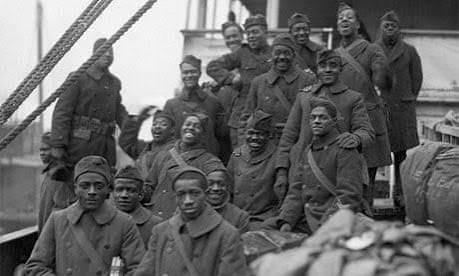
    When the guns of August 1914 fell silent, the world’s empires called upon their most distant subjects. From the plains of Punjab to the villages of Senegal, millions of men marched to a war they had no part in starting, yet whose consequences would shape their lives forever. This is the story of those soldiers—the men history often overlooks.

    Between 2 and 3 million colonial soldiers served in World War I, yet their experiences remain shadowed by the dominant narratives of European trenches. They fought in the mud of Flanders, the heat of Mesopotamia, and the jungles of East Africa. They died in numbers that rivaled their European counterparts, yet their sacrifices were met with broken promises and colonial indifference.

    The First to Arrive: Indian Soldiers on the Western Front

    In October 1914, the Indian Army Corps—comprising the Lahore and Meerut Divisions—became the first colonial troops to reach the Western Front. They were thrown into the Battle of Ypres, where they faced a new kind of warfare: trenches, machine guns, and poison gas. The cold, the mud, and the unfamiliar landscape took a heavy toll. By the war’s end, over 1.4 million Indian soldiers had served, and around 74,000 never returned home.

    Their presence was a radical departure from pre-war doctrine. The Indian Army was designed for imperial policing on the North-West Frontier, not European battlefields. Yet, the British Empire’s need for manpower was desperate. Indian soldiers fought at Neuve Chapelle, the Somme, and Gallipoli, earning a reputation for bravery that was often met with paternalistic racism.

    The experience was profoundly alienating. Men accustomed to the heat of South Asia suffered frostbite in the trenches. Their traditional diets were unavailable, and their religious practices were often ignored. As the war dragged on, morale plummeted, and some soldiers began to question why they were dying for a distant king.

    The Force Noire: France’s African Soldiers

    France, facing a demographic crisis, turned to its colonies with a theory known as the force noire. General Charles Mangin’s 1910 book of the same name argued that African soldiers were natural warriors who could be used as shock troops. When the war broke out, France mobilized roughly 600,000 colonial soldiers, including about 180,000 from sub-Saharan Africa and 475,000 from North Africa.

    The Tirailleurs Sénégalais—a catch-all term for West African soldiers—bore the brunt of the fighting. Around 135,000 served, and nearly 30,000 were killed. They were often placed in the most dangerous frontal assaults, suffering disproportionate casualties. At Verdun, they held the line when French units faltered, but their sacrifices were rarely acknowledged.

    Recruitment was often coercive. Village chiefs were pressured to supply quotas, and many men were taken against their will. They were promised pay, land, and citizenship—promises that were largely broken after the war. Despite their sacrifices, they returned to a colonial system that treated them as subjects, not citizens.

    The Carrier Corps: Africa’s Invisible Army

    In East Africa, the war took a different form. The German commander Paul von Lettow-Vorbeck led a guerrilla campaign with about 14,000 Askaris (African soldiers) and thousands of carriers. To counter him, the British assembled the Carrier Corps, a force of over 25,000 African porters who carried supplies, ammunition, and food across some of the most unforgiving terrain on Earth.

    These men were not soldiers in the traditional sense, but their contribution was vital. They died in staggering numbers—mortality rates reached 20–25%, largely from disease and starvation. Malaria, dysentery, and influenza killed more men than combat. The Carrier Corps was a logistical lifeline, but their suffering was invisible to the outside world.

    The campaign in East Africa was a sideshow to the European war, yet it consumed resources and lives on an enormous scale. The Germans, too, relied on African carriers, and the civilian population bore the brunt of the conflict. When the war ended, the survivors returned to villages devastated by famine and disease.

    The British West Indies Regiment: Black Soldiers in a White Man’s War

    The British West Indies Regiment (BWIR) was formed in 1915, with over 15,000 men volunteering from the Caribbean. They were initially used as laborers, but eventually saw combat in the Middle East and on the Western Front. The regiment suffered 185 killed in action, but over 1,000 died of disease—a common fate for colonial troops.

    Despite their service, the BWIR faced systemic racism. They were paid less than their white counterparts, and promotion was nearly impossible. After the war, many veterans were denied pensions, and their service was quietly forgotten. The war had been a crucible of hope, but the imperial system remained unchanged.

    Forgotten in the Mud: The Aftermath

    When the armistice was signed in November 1918, colonial soldiers returned to a world that had not changed. In India, veterans expected recognition for their service, but instead found the same colonial administration, the same poverty, and the same lack of rights. Their experiences fueled the growing nationalist movement, as men who had fought for the empire began to question why they should not govern themselves.

    In France, colonial troops were used to occupy the Rhineland after the war. This sparked a racist campaign in Germany, known as the “Black Shame,” which portrayed African soldiers as barbaric occupiers. This propaganda was a precursor to the racial ideologies that would engulf Europe in the next war.

    Commemoration was almost exclusively white. Few memorials were built to honor colonial soldiers, and their names were omitted from official histories. It was not until the 21st century that countries began to acknowledge their sacrifices, with memorials in places like London and Paris.

    Legacy: A Complex Reckoning

    The story of colonial soldiers is not one of simple heroism or victimhood. They fought for empires that often despised them, yet they fought with courage and determination. They were pawns in imperial power games, yet their experiences shaped the course of decolonization.

    In Africa, veterans returned with new ideas about rights and citizenship. In the Caribbean, the BWIR’s treatment fueled labor unrest. In India, the war accelerated the demand for self-rule. The war may have been fought for empire, but it sowed the seeds of its demise.

    Today, historians are piecing together these untold stories, revealing a war that was truly global. The colonial soldiers were not bystanders to history; they were actors who shaped it, even if their voices were silenced for too long.

    The Great War was a global conflict, fought not just by Europeans but by millions of men from every continent. Their stories challenge the traditional narrative of the war as a European tragedy, reminding us that the cost of empire was paid in blood across the globe. As we remember the fallen, we must also remember those who were forgotten—the colonial soldiers whose sacrifices were too often erased from history.

    Summary

    • Approximately 2–3 million colonial soldiers served in World War I, with over 1.4 million from India alone.
    • Colonial troops fought in major battles on the Western Front, Gallipoli, and Africa, often suffering disproportionate casualties.
    • African carriers in East Africa faced mortality rates as high as 20–25%, mostly from disease and starvation.
    • Despite their sacrifices, colonial veterans returned to unchanged colonial rule, with many denied pensions and recognition.
    • The war fueled nationalist movements and challenged imperial authority, shaping the 20th century.

    FAQ

    Q: How many colonial soldiers served in World War I?
    A: Estimates range from 2 to 3 million, though exact numbers are contested. The British Empire contributed over 1.4 million from India, and France about 600,000 from its colonies.

    Q: What role did colonial soldiers play on the Western Front?
    A: Indian troops arrived in October 1914 and fought in major battles like Ypres and the Somme. French colonial units, such as the Tirailleurs Sénégalais, were often used as shock troops in frontal assaults, suffering heavy casualties.

    Q: Why are colonial soldiers often forgotten in World War I history?
    A: Historians have traditionally focused on European experiences. Additionally, colonial powers had little interest in commemorating soldiers from their colonies, and many veterans faced discrimination that silenced their stories.

    Q: What was the Carrier Corps?
    A: The Carrier Corps was a group of African porters who supplied British forces in East Africa. They were not soldiers but were essential to the campaign, and they suffered high death rates from disease and starvation.

    Q: How did colonial service affect post-war independence movements?
    A: Veterans returned with new expectations of rights and citizenship. Their disillusionment with colonial rule fueled nationalist movements in India, Africa, and the Caribbean, contributing to decolonization after World War II.

  • The East African Campaign: The Four-Year Guerrilla War That Never Ended

    The East African Campaign: The Four-Year Guerrilla War That Never Ended

    When the guns fell silent on the Western Front on November 11, 1918, one German commander refused to lay down his arms. General Paul von Lettow-Vorbeck, leading a small force of European officers and African soldiers in the jungles of East Africa, continued fighting for two more weeks. He finally surrendered on November 25, 1918, not because he was defeated, but because a British officer showed him a newspaper announcing the Armistice.

    That surrender marked the end of the East African Campaign, a four-year conflict that stretched from the beaches of Tanzania to the mountains of Mozambique. It was a war of ambushes, disease, and endurance—a guerrilla war that cost the lives of over 100,000 African porters and tied down hundreds of thousands of Allied troops. Yet it remains one of the least-known chapters of World War I.

    The Opening Blow: The Battle of Tanga

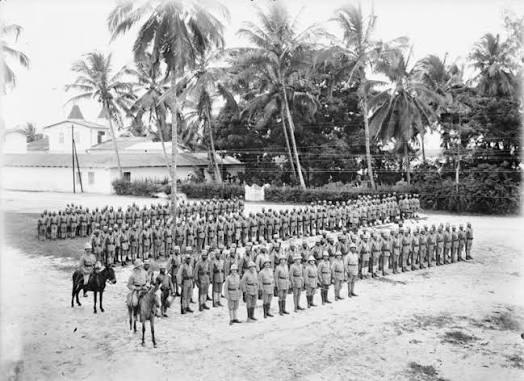
    The campaign began in earnest on November 2, 1914, when a British-Indian expeditionary force of about 8,000 men landed near the port of Tanga, on the coast of German East Africa. The British expected a quick victory against a small colonial garrison. Instead, they were met by Lettow-Vorbeck’s force of about 1,000 German officers and Askaris—professional African soldiers who were marksmen and disciplined fighters.

    Over two days of chaotic fighting in the jungle, the British were routed. The Askaris, armed with modern rifles and trained in bush warfare, outflanked the British and sent them fleeing back to their ships, leaving behind weapons, ammunition, and even medical supplies. The Battle of Tanga was a humiliating defeat for the British Empire and set the tone for the entire campaign: the Germans, though heavily outnumbered, were better led, better trained, and better adapted to the environment.

    Lettow-Vorbeck’s Strategy: Tie Down, Don’t Conquer

    Lettow-Vorbeck, a Prussian aristocrat and a veteran of colonial wars, understood that he could not hold the colony against the full might of the British Empire. His goal was simpler and more strategic: to tie down as many Allied troops as possible, for as long as possible, thereby diverting resources from the Western Front. He once said, “We must fight on as long as we can, and when we can no longer fight, we must die.”

    To achieve this, he adopted a guerrilla strategy. He avoided pitched battles, melted into the jungle or mountains, struck at supply lines and isolated outposts, and then vanished. His troops lived off the land, supplemented by captured Allied supplies. They moved quickly, often covering 20 miles a day through trackless bush, and they knew the terrain intimately.

    The Askaris, who numbered about 11,000–12,000 at the peak, were not conscripts. They were volunteers, drawn from the local population, and they were fiercely loyal to Lettow-Vorbeck. They were equipped with modern rifles, including captured British ones, and they were trained to a standard that made them the equal of any European soldier in Africa.

    The Allied Response: A Costly Escalation

    The British initially underestimated the campaign, sending small forces that were easily outmaneuvered. After Tanga, they escalated dramatically. By 1916, under the command of General Jan Smuts, a South African statesman-soldier, the Allies had amassed over 130,000 troops—including more than 60,000 South Africans and 40,000 Indians—against a German force that never exceeded about 15,000.

    Smuts’s strategy was to encircle and crush the Germans in a vast pincer movement. But the terrain was against him. The campaign was fought in some of the most disease-ridden country on Earth: malaria, dysentery, and sleeping sickness were rampant. Quinine, the antimalarial drug, was in short supply. More Allied soldiers died of disease than of German bullets. By 1917, Smuts’s South African troops were withdrawn, exhausted and decimated, and replaced by African and Belgian forces who were better acclimatized.

    The Carrier Corps: The Invisible Backbone

    Behind the front lines, an even larger tragedy unfolded. The Allies relied on over 1 million African porters, known as the Carrier Corps, to carry supplies on their heads through the trackless bush. These porters were often conscripted by force, and they faced brutal conditions. They had no medical care, inadequate food, and were frequently exposed to the same diseases that killed soldiers.

    Estimates suggest that over 100,000 porters died—from disease, starvation, and exhaustion. Their mortality rate in some units was as high as 20–30%. This human catastrophe went largely unrecorded at the time, and it remains one of the most tragic and underreported statistics of the war.

    The German side also used forced labor, but on a smaller scale. Both armies stripped the land as they moved, causing famine and suffering for the local population.

    The Pursuit Across Africa

    By 1917, Lettow-Vorbeck was being pursued relentlessly by Allied forces. He led his men south into Portuguese East Africa (Mozambique), where they raided Portuguese garrisons for supplies and evaded capture. In 1918, he turned north again, invading Northern Rhodesia (Zambia). Even as the war in Europe was ending, his force was still operational, still evading the Allies, and still fighting.

    The campaign finally ended on November 25, 1918, when Lettow-Vorbeck surrendered at Abercorn, Northern Rhodesia—two weeks after the Armistice. He surrendered only after being shown a newspaper that confirmed the war was over. His force was intact, undefeated in the field, and had achieved its goal: tying down over 130,000 Allied troops for four years.

    The Legacy: A Masterclass in Guerrilla Warfare

    The East African Campaign is studied today in military academies as a case study in asymmetric warfare. Lettow-Vorbeck is often called the “master of guerrilla war,” and his tactics anticipated many of the insurgencies of the 20th century. He used small, mobile forces, indigenous soldiers, and the environment to neutralize a vastly superior enemy.

    But the campaign’s legacy is also one of devastation. The local population suffered enormously—from disease, famine, and violence. The Carrier Corps deaths are a dark chapter in colonial history, and the campaign’s impact on East Africa was felt for decades.

    In the end, the East African Campaign was a war that should not have been fought, and yet it was fought with extraordinary tenacity on both sides. It was a war of attrition in the worst possible conditions, and it ended not with a decisive battle, but with a quiet surrender in the African bush.

    The East African Campaign was a strange and brutal side show of World War I. It was a guerrilla war that defied the conventional narratives of the Western Front, and it was fought with a ferocity and endurance that are hard to fathom. Lettow-Vorbeck’s surrender was not a defeat but a recognition that the war was over. His campaign remains a testament to the power of asymmetric warfare—and a sobering reminder of the human cost of colonial conflict.

    Summary

    • The East African Campaign lasted from August 1914 to November 1918, making it one of the longest continuous campaigns of WWI.
    • German forces, never exceeding about 15,000 men, tied down over 130,000 Allied troops using guerrilla tactics.
    • The Battle of Tanga (1914) was a disastrous British defeat that set the tone for the campaign.
    • Over 1 million African porters served the Allies, and an estimated 100,000+ died from disease, starvation, and exhaustion.
    • Lettow-Vorbeck surrendered on November 25, 1918, two weeks after the Armistice, with his force still undefeated in the field.

    FAQ

    Q: Why didn’t Lettow-Vorbeck surrender at the Armistice?
    A: He was deep in the bush of Northern Rhodesia and had no reliable communication with the outside world. He only learned of the Armistice when a British officer showed him a newspaper, and he surrendered two weeks later on November 25, 1918.

    Q: How many troops were involved on each side?
    A: The Germans never had more than about 14,000–15,000 men, including 3,000 German officers and NCOs. The Allies committed over 130,000 troops at various points, including South Africans, Indians, Africans, and Belgians.

    Q: What was the role of the Carrier Corps?
    A: The Carrier Corps were African porters conscripted by the British to carry supplies. Over 1 million served, and more than 100,000 died from disease, starvation, and exhaustion.

    Q: Was the campaign a German victory?
    A: In a military sense, the Germans were never decisively defeated in the field, but they ultimately lost the colony. The campaign is considered a strategic victory for the Allies because the German force surrendered, but it came at a huge cost.

    Q: Why is the campaign studied in military academies?
    A: It is a classic example of guerrilla warfare—how a small, mobile force can tie down a much larger enemy using terrain, indigenous troops, and unconventional tactics. Lettow-Vorbeck’s campaign is often cited as a model for asymmetric warfare.