Tag: inventions

  • The Slinky: A Naval Engineer’s Accidental Discovery That Walked Into History

    The Slinky: A Naval Engineer’s Accidental Discovery That Walked Into History

    In 1943, Richard James, a naval mechanical engineer, was working in a Philadelphia shipyard on springs designed to keep sensitive instruments steady on ships in rough seas. One spring fell from a shelf, and instead of hitting the floor flat, it ‘walked’ end-over-end, then stood upright. That unexpected motion sparked an idea that would lead to one of the most beloved toys of all time.

    What James saw wasn’t just a lucky break—it was a moment of insight that combined engineering knowledge with a keen sense of commercial potential. Over the next two years, he refined the spring’s design and manufacturing process, turning a curiosity into a product that would sell 300 million units. The Slinky’s story is a classic example of how accidents can lead to innovation, but it’s also a tale of persistence, business savvy, and the physics that make a simple coil so fascinating.

    The Happy Accident at the Shipyard

    Richard James was a graduate of Penn State with a degree in mechanical engineering. During World War II, he worked for the U.S. Navy at the William Cramp and Sons Shipyard in Philadelphia. His task: develop springs that could stabilize sensitive equipment aboard ships, preventing them from being jostled by rough seas.

    One day in 1943, James was handling a torsion spring—a type of spring that twists rather than compresses. It slipped from a shelf and fell to the floor. Instead of landing in a heap, the spring seemed to step end-over-end, walking across the floor before coming to rest upright. James was intrigued. He took the spring home to show his wife, Betty, who later recalled that she thought it was “a cute thing” but had no idea it would become a toy sensation.

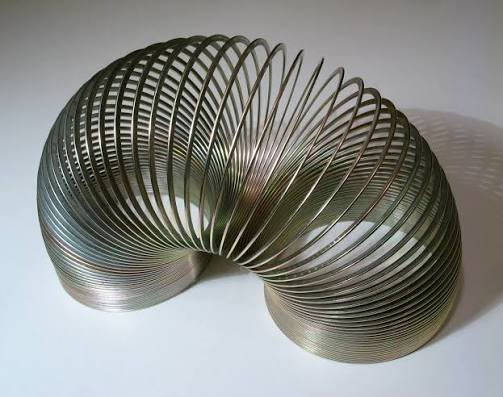
    James, however, saw potential. He spent the next two years perfecting the spring’s design and figuring out how to manufacture it consistently. The key was the material and heat treatment: high-carbon steel wire, coiled to precise specifications and then heat-treated to give it just the right springiness. A standard Slinky is about 2.5 inches in diameter and has 98 coils. When fully stretched, it can reach 87 feet.

    From Shipyard to Store Shelves

    In late 1945, with World War II over, the Jameses borrowed $500 to produce the first batch of 400 Slinkys. They approached Gimbels Department Store in Philadelphia, which agreed to a demonstration. On November 27, 1945, Betty James set up a wooden ramp in the store’s toy department. She placed a Slinky at the top, and it gracefully “walked” down the incline.

    The crowd was captivated. Within 90 minutes, all 400 Slinkys were sold at $1.00 each. The toy was a hit, and the Jameses knew they had a winner. They founded James Industries in 1947 to meet demand.

    But early success didn’t guarantee a smooth path. Manufacturing the springs required precision machinery that could coil the wire to exact specifications. The Jameses struggled to find a machine shop willing to take on the job. Eventually, they found a shop that could do it, and production began in earnest.

    The Physics of Walking

    Why does a Slinky walk? It’s all about the balance of forces. A Slinky is a helical spring, and when it’s at rest, it maintains its shape due to internal tension. When you tip it slightly, the coils at the bottom compress, storing potential energy. As the spring shifts, that energy converts to kinetic energy, causing the bottom coils to lift and move forward. The process repeats, creating a rhythmic “step” that looks like walking.

    The behavior depends on the spring’s stiffness, coil diameter, and the ratio of wire thickness to coil spacing. James’s genius was in finding the right combination to make the walking motion smooth and repeatable.

    The Slinky also demonstrates other fascinating physics. If you hold a Slinky by the top and let it go, the bottom remains suspended in midair until the top catches up. That’s because the spring’s tension holds the bottom up, and gravity doesn’t affect it until the top reaches it. This phenomenon has been studied in physics classrooms and even in microgravity experiments on the International Space Station.

    Betty James Takes the Helm

    Richard James was an engineer, not a businessman. He was more interested in tinkering than in marketing. As the company grew, he became increasingly disenchanted and, in 1960, he left. He reportedly moved to Bolivia to work as a missionary, leaving Betty to run the company.

    Betty James proved to be a savvy businesswoman. She moved the company to Hollidaysburg, Pennsylvania, in 1963, and expanded the product line. The Slinky Dog, introduced in 1952, became a classic in its own right. Plastic Slinkys in a rainbow of colors followed. Under Betty’s leadership, the company thrived for nearly four decades.

    Betty also understood the power of advertising. In 1962, she commissioned a jingle: “It’s Slinky, it’s Slinky, for fun it’s a wonderful toy…” The tune became one of the most recognizable advertising jingles in American history, cementing the Slinky’s place in pop culture.

    The Legacy of a Simple Toy

    Over 300 million Slinkys have been sold worldwide since 1945. The toy has been inducted into the National Toy Hall of Fame (2001) and was named one of the “Top 100 Toys of the Century” by Fortune magazine (2003). It’s a testament to the enduring appeal of a simple coil of wire.

    The Slinky’s story is often used as an example of accidental invention, but that framing misses an important point. Richard James’s engineering background was essential: he recognized the potential in the spring’s behavior and had the skills to develop it into a viable product. The discovery was serendipitous; the invention was not.

    In 1998, Betty James sold the company to Poof Products (now Poof-Slinky, LLC). The Slinky continues to be a beloved toy, and its origin story remains a reminder that sometimes the best ideas come when we least expect them—but only if we’re prepared to notice.

    The Slinky’s journey from a shipyard mishap to a toy icon is a story of observation, persistence, and smart business decisions. It shows that an “accident” is only the beginning; the real work lies in recognizing potential and following through. Next time you see a Slinky walk down a staircase, remember the naval engineer who saw something more in a fallen spring.

    Summary

    • In 1943, naval engineer Richard James discovered the Slinky when a torsion spring fell and “walked” across his workshop floor.
    • He spent two years refining the design and manufacturing process before launching the toy in 1945.
    • The first 400 units sold out in 90 minutes at Gimbels Department Store in Philadelphia.
    • Betty James took over the company in 1960 after her husband left, and she led it successfully for nearly four decades.
    • Over 300 million Slinkys have been sold, and the toy is recognized for its educational value in physics.

    FAQ

    Q: Who invented the Slinky?
    A: Richard T. James, a naval mechanical engineer, invented the Slinky in 1943. His wife, Betty, was crucial in bringing it to market.

    Q: Was the Slinky really an accident?
    A: Yes, the initial discovery was accidental—a spring fell and walked—but James deliberately refined it into a product over two years.

    Q: How much did the first Slinky cost?
    A: The first Slinkys sold for $1.00 each at Gimbels Department Store in 1945.

    Q: Why does a Slinky walk?
    A: The walking motion results from the conversion of potential energy to kinetic energy as the spring’s coils compress and release, creating a rhythmic step.

    Q: How many Slinkys have been sold?
    A: Over 300 million Slinkys have been sold worldwide since 1945.
  • The Accidental Spark: How John Walker’s 1826 Discovery Ignited the Modern Match

    The Accidental Spark: How John Walker’s 1826 Discovery Ignited the Modern Match

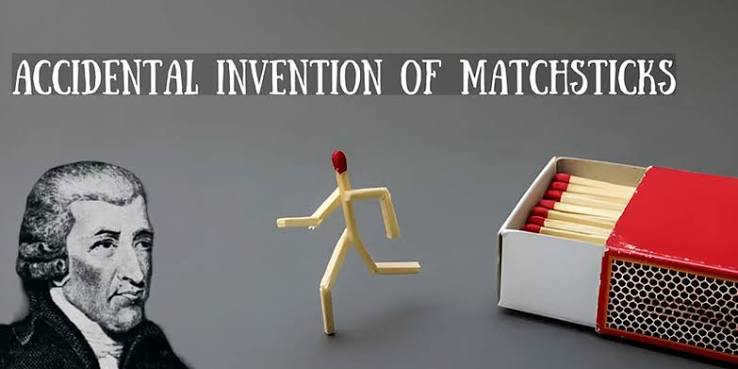
    In 1826, a chemist in northern England accidentally scraped a stick coated with a strange paste against his hearthstone. The stick burst into flame. That moment gave the world the friction match the first fire that anyone could start instantly, without skill, without waiting, and without a smoldering ember. John Walker’s discovery was accidental, but it was no stroke of luck; it was the result of careful observation and a deep understanding of reactive chemicals.

    Before Matches: Fire Was a Chore

    Imagine needing a fire to cook dinner, heat your home, or light a candle. Before the match, that required either keeping a fire constantly burning or mastering a laborious skill. The common method was flint and steel: striking a piece of steel against a flint to create sparks, which you then had to catch on specially prepared tinder—usually charred cloth or dried fungus. It took practice, good materials, and dry conditions. In damp weather, you might fail for hours. Other methods were even more demanding. The fire drill—spinning a stick against a wooden base—required stamina and technique. A solar lens worked only on sunny days. For most people, fire was maintained, not created. You banked your hearth fire overnight, hoping it would still be glowing in the morning. If it went out, you might have to borrow a hot coal from a neighbor.

    In the early 1800s, chemists began experimenting with ways to ignite fire chemically. They had discovered phosphorus (1669) and potassium chlorate (1786), both highly reactive. By 1805, a French chemist named Jean Chancel had made a match that ignited when you dipped it in a small bottle of sulfuric acid—but that was dangerous and cumbersome. What people needed was a simple, safe, and reliable way to start a fire with one hand, in any weather.

    The Accidental Spark: John Walker’s Discovery

    John Walker was a chemist and druggist in Stockton-on-Tees, a port town in northeast England. He was not a famous professor but a practical shopkeeper who mixed remedies and experimented with chemicals. In 1826, he was stirring a pot of a paste made of antimony sulfide, potassium chlorate, gum arabic, and starch. These were common ingredients in his experiments with explosives. When he wiped the stirring stick on his hearthstone to clean it, the dried paste scraped off and ignited, producing a flame.

    Walker recognized what he had seen. The friction had generated enough heat to trigger a chemical reaction between the potassium chlorate (which supplies oxygen) and the antimony sulfide (a fuel). He refined the mixture, shaped it into small sticks, and began selling them as “Congreves,” named after Sir William Congreve, a British rocket pioneer. Each box of 50 cost one shilling—about a day’s wage for a laborer, but still affordable for many households.

    Walker’s matches were not the first chemical matches, but they were the first to use friction to ignite. This was a crucial innovation. Earlier matches required dipping in acid or breaking a glass vial. Walker’s matches could be lit by scraping them against any rough surface—a brick, a piece of sandpaper, or a hearthstone. They were portable, simple, and worked on demand.

    A Missed Fortune: Why Walker Never Patented His Invention

    Walker never patented his invention. Why? Historians speculate that he was not commercially aggressive, or that he was content with his shop. He sold his matches locally, and they were popular. But without a patent, anyone could copy the idea. Within a few years, other chemists and entrepreneurs began producing their own friction matches, often improving on Walker’s formula. Walker did not pursue legal protection, and he died in 1859 without significant wealth from his discovery. His name is remembered in history books but not in the fortune he might have earned.

    The failure to patent had a silver lining: it allowed the match to spread rapidly. By the 1830s, friction matches were being manufactured across Europe and the United States. The principle was out in the open, and inventors could refine it.

    The Dark Side: White Phosphorus and ‘Phossy Jaw’

    Walker’s formula used antimony sulfide, which was relatively safe. But in 1830, a French chemist named Charles Sauria added white phosphorus to the match head. White phosphorus is extremely flammable—it can ignite from the heat of your pocket—but it is also highly toxic. It made matches easier to light, and a new industry grew around the “strike-anywhere” match.

    The cost was horrific. Factory workers who dipped matchsticks into the white phosphorus paste developed a disfiguring and often fatal condition called “phossy jaw”—necrosis of the jawbone. The phosphorus fumes caused the bone to decay, leading to abscesses, loss of teeth, and eventually death. Thousands of workers, many of them young women and children, suffered this fate. White phosphorus was also used in suicides and murders because it was readily available and lethal if ingested.

    The public health crisis eventually forced change. In 1906, the Berne Convention banned the use of white phosphorus in matches. The United States followed in 1912, largely due to the Diamond Match Company, which patented a safe alternative using phosphorus sesquisulfide (P₄S₃) and then donated the patent to the public. This non-toxic compound allowed strike-anywhere matches to remain convenient without the lethal side effects.

    Safety Matches: A Swedish Improvement

    Meanwhile, in Sweden, Gustaf Erik Pasch had introduced a better idea in 1844: separate the chemicals. He placed red phosphorus on the striking surface of the matchbox, not on the match head. The match head contained antimony sulfide and potassium chlorate. Only when you scrape the head against the red phosphorus strip does the reaction occur. This meant the matches were safer—they wouldn’t ignite accidentally on just any surface. However, Pasch’s design was not commercially successful until Johan Edvard Lundström perfected it in 1855. Lundström’s safety matches were a hit, and Sweden became a major match producer. The safety match reduced accidental fires and eliminated the toxic white phosphorus from the match head.

    Today, both safety matches and strike-anywhere matches exist, but the safety match is the standard in most countries due to its lower risk.

    The Matchstick’s Legacy: Fire for the Masses

    The matchstick changed daily life in profound ways. It made fire available to anyone, anytime, without skill or prior preparation. This had ripple effects:

    • Cigarettes became popular: Before matches, smoking a pipe required a lit ember from a fire. With matches, you could light a cigarette anywhere, anytime. This helped drive the rise of cigarette smoking in the late 19th century.
    • Household labor eased: No longer did families have to keep a fire burning all night or labor with flint and steel. A match could light a stove or lamp in seconds.
    • Industry grew: Match factories became major employers, though often under terrible conditions. The industry also drove innovation in industrial chemistry and manufacturing processes.

    The matchstick also illustrates a powerful lesson about innovation: a stroke of luck is only useful if you recognize it. John Walker’s accidental discovery was not a random event. He knew enough chemistry to understand what had happened and to develop it into a marketable product. His failure to patent, however, shows that a good invention is not enough—you need business acumen or a system that protects inventors. The match’s history is a mix of brilliance, tragedy, and eventual regulation, showing how technology can both empower and endanger, and how society eventually steps in to mitigate harm.

    John Walker’s accidental match was a spark that lit a revolution in fire-making. From that moment in 1826, fire became a tool accessible to everyone. But the story doesn’t end with the spark—it continues through the dark chapter of white phosphorus, the regulatory triumph of the Berne Convention, and the Swedish safety match that made fire-making safer for all. The matchstick is a tiny artifact, but it holds a large lesson: innovation can arise from a mishap, but its true value is shaped by human choices—about patents, safety, and responsibility.

    Summary

    • In 1826, John Walker accidentally discovered that a stick coated with a chemical paste ignited when scraped against a rough surface, leading to the first friction match.
    • Walker did not patent his invention, allowing others to copy and improve it, but he gained little financial reward.
    • The addition of white phosphorus in 1830 made matches easier to light but caused ‘phossy jaw’ and poisoning deaths among workers and consumers.
    • The Berne Convention (1906) and later Diamond Match Company’s donation of a safe formula (1911) led to the end of white phosphorus in matches.
    • Safety matches, invented by Gustaf Erik Pasch and perfected by Johan Edvard Lundström in Sweden (1855), separated chemicals and made matches safer.

    FAQ

    Q: Who invented the matchstick?
    A: The modern friction match was invented by John Walker, an English chemist, in 1826. He discovered it accidentally when a stick coated with a chemical paste ignited upon friction.

    Q: Why didn’t John Walker patent his invention?
    A: Historians are not entirely sure, but Walker likely did not see the commercial potential or was not aggressive in business. He sold his matches locally but never secured a patent.

    Q: What was ‘phossy jaw’?
    A: ‘Phossy jaw’ was a painful and often fatal condition caused by exposure to white phosphorus in match factories. It led to necrosis of the jawbone and was common among workers who dipped matches.

    Q: What is the difference between safety matches and strike-anywhere matches?
    A: Safety matches have the phosphorus (red phosphorus) on the striking surface, so they only ignite when struck on that surface. Strike-anywhere matches have phosphorus sesquisulfide in the head, allowing them to ignite on any rough surface.

    Q: When did the use of white phosphorus in matches end?
    A: The Berne Convention in 1906 banned white phosphorus, and the United States followed in 1912. The Diamond Match Company helped by patenting a safe alternative and donating the patent to the public.

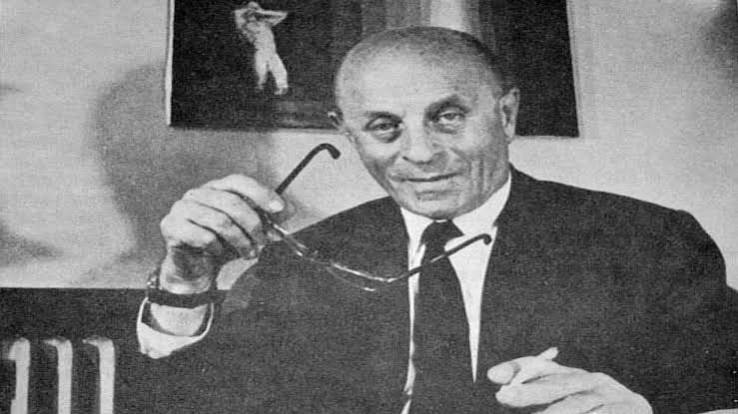
  • The Ballpoint Pen Was Invented by a Journalist Who Got Tired of Smudges

    The Ballpoint Pen Was Invented by a Journalist Who Got Tired of Smudges

    Every time you click a ballpoint pen, you’re using a design that changed the world—but the name behind it is barely a footnote. László Bíró, a Hungarian journalist with no formal engineering training, invented the ballpoint in the 1930s after getting fed up with fountain pens that smeared, leaked, and needed constant refilling. His solution was so simple and effective that it’s still the basis for billions of pens produced every year, yet most people credit the brand, not the man.

    Bíró’s story is not just about a clever mechanism. It’s about how a practical problem—seen through the eyes of a journalist—led to an invention that transformed writing. It’s also a story of fleeing Nazi persecution, rebuilding a life in Argentina, and watching a giant corporation turn his invention into a global commodity while his own name faded. Here’s how a frustrated writer became one of the most influential inventors of the 20th century.

    The Problem with Fountain Pens

    Before the ballpoint, writing was a messy affair. Fountain pens were the standard, but they had a host of problems. They required frequent refilling from ink bottles, used water-based ink that smeared easily, and were notorious for leaking and blotting. For a journalist like László Bíró, this was a daily frustration. He’d be in the middle of taking notes, and the ink would blob, or the pen would run dry, or—if he was writing on a moving train—the ink would spill everywhere.

    Bíró wasn’t an engineer. He was a journalist, and he’d also worked as a hypnotist in his youth. But he had a keen eye for observation and a mind that connected dots. One day, he noticed something about the ink used in newspaper printing presses. It was thick, viscous, and dried almost instantly—no smudging. The problem was that this ink was too thick to flow through a fountain pen nib. It would clog instantly.

    But what if you could use a different mechanism to get that thick ink onto paper?

    The solution came from an unlikely source: a ball bearing rolling through a puddle. Bíró reportedly saw a ball bearing roll through a puddle, leaving a trail of water behind it. He realized that a similar ball-and-socket mechanism could pick up thick ink from a reservoir and roll it onto paper, leaving a clean, even line. That’s the eureka moment—not a lab experiment, but a simple observation of how a ball rolls.

    The Invention and the Brothers

    Bíró teamed up with his brother György, who was a chemist. Together, they developed a prototype. The pen had a tiny ball at the tip that rotated as you wrote, picking up ink from a cartridge and transferring it to the paper. The ink was a special formula—based on the fast-drying printing ink—that was viscous enough to stay in the cartridge but thin enough to roll off the ball.

    The first prototype was demonstrated at the Budapest International Fair in 1931, but it wasn’t until 1938 that Bíró filed a patent—first in Hungary, then in Britain. The patent described the ball-and-socket mechanism, which was the key innovation. The design was solid, but there were still bugs to work out. The ball had to be perfectly smooth, and the ink had to be just right.

    Then the war changed everything.

    Fleeing Hitler, Finding Argentina

    László Bíró was Jewish, and as Nazi persecution intensified in Europe, he and his brother fled Hungary in 1941. They eventually made their way to Argentina, where they found a business partner, Juan Jorge Meyne. Together, they started producing the pen commercially in 1943 under the brand name “Birome”—a combination of Bíró and Meyne.

    The timing was perfect. The British government was looking for a pen that could work at high altitudes, where fountain pens leaked due to air pressure changes. They bought a license to produce Bíró’s pens for Royal Air Force pilots. The ballpoint worked flawlessly at 30,000 feet, and this wartime use proved its reliability.

    The Bic Empire and the $2 Million Mistake

    In 1945, Bíró sold his patent to Marcel Bich, a French manufacturer, for $2 million. At the time, that was a fortune—but it would turn out to be a fraction of what the ballpoint was worth. Bich refined the manufacturing process, making the pens cheaper and more reliable. He marketed them as “Bic” pens, and by the 1950s, they were everywhere.

    Bíró’s name lived on in the word “biro,” which became a generic term for ballpoint pens in the UK and Commonwealth, much like “Kleenex” or “Xerox.” But the man himself was largely forgotten. Bich became a billionaire; Bíró lived modestly in Argentina until his death in 1985.

    Why did Bíró sell so cheap? He wasn’t a businessman. He was an inventor who wanted to see his creation succeed, and Bich had the manufacturing and marketing muscle to make that happen. The sale was a strategic decision, but it also meant Bíró didn’t share in the massive profits that followed.

    A Journalist’s Legacy

    Bíró’s story challenges the stereotype of the inventor as a lab-coated scientist. He was a writer who solved a problem he faced every day. That’s a powerful reminder that innovation can come from anyone who’s willing to look closely at a problem and think creatively.

    His journey also highlights the role of immigrants in innovation. Bíró fled fascism, lost his homeland, and rebuilt his life in Argentina, where he made his most significant contribution. He became a naturalized Argentine citizen and died there in 1985, far from the Hungarian city of his birth.

    Today, the ballpoint is the most common writing instrument in the world. Billions are produced every year. And while we might say “Bic” or “biro,” we’re really using Bíró’s invention. His name may not be on the label, but his idea is in every click.

    László Bíró didn’t just invent a pen—he solved a problem that had plagued writers for decades. His story is a reminder that great ideas can come from anyone, and that the most transformative inventions often arise from the most ordinary frustrations. Next time you pick up a ballpoint, remember the journalist who saw a ball rolling through a puddle and changed the world.

    Summary

    • László Bíró, a Hungarian journalist, invented the ballpoint pen in 1938 after getting frustrated with fountain pens that smeared and leaked.
    • His key insight came from observing a ball bearing rolling through a puddle, which inspired the ball-and-socket mechanism.
    • He fled Nazi persecution in 1941 and settled in Argentina, where he produced the pens under the brand “Birome” with partner Juan Jorge Meyne.
    • The British Royal Air Force used his pens during WWII because they worked at high altitudes.
    • Bíró sold his patent to Marcel Bich for $2 million in 1945; Bich’s company, Bic, made billions while Bíró’s name faded.

    FAQ

    Q: What inspired László Bíró to invent the ballpoint pen?
    A: Bíró was a journalist who was frustrated by fountain pens that smeared, leaked, and needed frequent refilling. He noticed that newspaper printing ink dried quickly and didn’t smear, and he got the idea for a ball-and-socket mechanism from watching a ball bearing roll through a puddle.

    Q: How does a ballpoint pen work?
    A: A ballpoint pen uses a tiny rotating ball at the tip. As you write, the ball picks up viscous ink from a cartridge and rolls it onto the paper, leaving a clean, even line. The ink is thick enough to stay in the cartridge but thin enough to flow around the ball.

    Q: Why is the ballpoint pen sometimes called a “biro”?
    A: “Biro” became a genericized trademark in the UK and many Commonwealth countries, similar to “Kleenex” or “Xerox.” It comes from Bíró’s name, even though the brand “Bic” is more commonly known today.

    Q: Did Bíró become rich from his invention?
    A: He sold the patent to Marcel Bich for $2 million in 1945, which was a lot of money then, but far less than what Bic earned. Bich became a billionaire, while Bíró lived modestly.

    Q: What was Bíró’s background before inventing the pen?
    A: Bíró was a journalist and also worked as a hypnotist in his youth. He had no formal engineering or chemistry training, but his brother György, a chemist, helped develop the ink.

  • The Safety Pin: How a $15 Debt Sparked a 175-Year-Old Household Essential

    The Safety Pin: How a $15 Debt Sparked a 175-Year-Old Household Essential

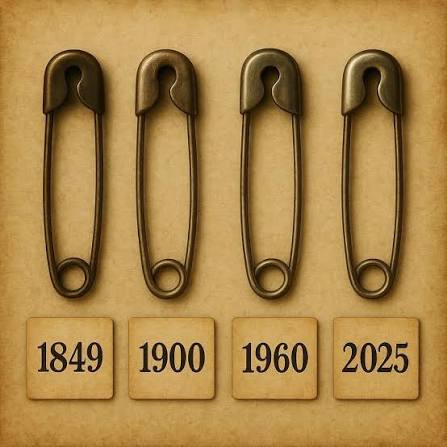
    In April 1849, Walter Hunt, a New York mechanic, was $15 in debt. To settle it, he twisted a piece of wire into a coil, added a clasp, and created what would become the safety pin. He sold the rights for $100 (or $400, depending on the account) and never saw another cent. Today, the safety pin is so ubiquitous that we rarely think about its origin but its design has barely changed in 175 years, and its invention was a direct answer to a very 19th-century problem: the corset.

    Hunt wasn’t just any tinkerer. He was a prolific inventor with over 100 patents, including an early sewing machine and a fountain pen. Yet he died without wealth, and his safety pin became a staple in every household. The story of its creation is a mix of ingenuity, debt, and a stroke of practical genius that solved a daily annoyance for millions of women.

    The Debt That Sparked an Idea

    Walter Hunt was a man of many inventions, but his motivation in 1849 was simple: he owed a friend $15 and needed quick cash. According to the story, he sat down with a piece of wire and, within three hours, had twisted it into a coiled spring at one end and a clasp at the other. The design was so effective that he filed for a patent on April 10, 1849, under the title “Dress Pin.” The patent, U.S. Patent No. 6,281, described a pin that would “secure the point” to prevent injury a feature that set it apart from every straight pin before it.

    Hunt sold the patent rights to W.R. Grace & Company for $100 (some sources say $400). The company likely profited enormously as the safety pin became a mass-market item. Hunt, meanwhile, never received royalties. He was a brilliant mechanic but a poor businessman—a pattern that repeated throughout his life. He had also invented a sewing machine in 1834 but didn’t patent it, fearing it would put seamstresses out of work. Elias Howe later patented a similar machine and became wealthy. Hunt’s story is a classic case of genius without commercial sense.

    Why the Safety Pin Was a Breakthrough

    Before 1849, pins were dangerous. Straight pins had been around for centuries, used in ancient Egypt and Rome, and by the 19th century they were essential for fastening clothing—especially women’s dresses and undergarments. But they had serious flaws: they could prick the wearer, fall out, get lost in fabric, and rust easily. For women wearing corsets, the problem was acute.

    The corset was a structural garment that shaped the torso, made of stiff whalebone, steel, or cord. It required tight lacing and frequent adjustment. Pins were used to hold the corset closed before lacing, secure the busk (the stiff front piece), and attach petticoats and chemises. A broken or slipped pin could scratch skin, tear fabric, or cause embarrassment. The safety pin’s spring-loaded clasp was specifically designed to cover the sharp point when closed, significantly reducing the risk of injury. It was a simple but revolutionary solution to a daily problem.

    The Industrial Context

    The mid-19th century was a time of rapid industrialization. Wire-drawing technology had improved, making it cheaper and easier to produce fine wire—the essential material for Hunt’s invention. The U.S. patent system, established in 1790, encouraged “useful arts,” and Hunt was part of a wave of self-taught inventors like Samuel Morse and Charles Goodyear. The sewing machine, which Hunt himself had a hand in, was about to transform clothing production, but in 1849 most clothing was still made at home or by hand. Pins were indispensable tools for dressmakers and homemakers, and a safer version was a genuine need.

    A Woman’s Technology

    While Hunt was a man, the safety pin was invented to solve a problem faced primarily by women. In the 1840s, corsets were a central piece of women’s fashion, and pins were a constant source of frustration. The term “pin money”—a small allowance for a woman—derives from the cost of pins, which were sold in paper packets and were a common household expense. The safety pin’s design, with its coiled spring and clasp, was a direct response to the needs of women’s dress. It was a women’s technology, even if its inventor was male.

    The Design That Endured

    The safety pin’s basic design has remained essentially unchanged since 1849. Modern versions are typically made of stainless steel or brass (often nickel-plated) to resist corrosion, and they come in a range of sizes, from tiny pins for delicate fabrics to large kilt pins. The coiled spring provides tension, and the clasp covers the point, making it safe. It’s a design so efficient that it hasn’t needed improvement.

    The Reluctant Genius

    Hunt’s story is often told as a cautionary tale: a man of immense creativity who lacked business acumen. He invented the safety pin to pay a debt, sold it for a pittance, and watched others profit. But some historians argue this narrative is overstated. Hunt was a working mechanic who needed quick cash; $100 in 1849 was roughly equivalent to $3,000 to $12,000 today—a significant sum. He may have made a rational choice, not a foolish one. Still, the irony is hard to ignore: a man who invented so many things, including the sewing machine, died without wealth, while his safety pin became a household essential.

    The Safety Pin Today

    Today, the safety pin is everywhere. It’s used for everything from securing baby diapers (before disposable diapers) to hemming pants, from punk fashion to emergency repairs. It’s a tool that’s so simple we take it for granted. But its invention was a direct result of a specific problem—the dangers of straight pins in corsets—and a man who needed $15. The next time you use a safety pin, think of Walter Hunt: a genius who solved a problem, sold his solution for a song, and left a legacy that’s still with us.

    The safety pin is a testament to the power of simple solutions. It was born out of a debt, a piece of wire, and a moment of inspiration. Walter Hunt may not have profited from his invention, but his design has endured for 175 years, outlasting the corsets that inspired it. It’s a reminder that great ideas often come from everyday problems—and that genius isn’t always rewarded in the way we expect.

    Summary

    • Invented by Walter Hunt in 1849 to pay off a $15 debt; he sold the patent for $100 and never got royalties.
    • Key innovation: a coiled spring and a clasp that covers the sharp point, making it safe to use.
    • Motivated by the corset: straight pins were dangerous and caused injuries, especially in women’s fashion.
    • Design unchanged: modern safety pins are still made of stainless steel or brass and come in various sizes.
    • Hunt’s legacy: a prolific inventor with over 100 patents, but he died without wealth, a cautionary tale of genius without business sense.

    FAQ

    Q: Why was the safety pin invented?
    A: It was invented to solve the problem of straight pins pricking and injuring people, particularly women wearing corsets. Walter Hunt created it in 1849 to pay off a $15 debt.

    Q: How much did Walter Hunt sell the safety pin patent for?
    A: He sold it to W.R. Grace & Company for $100 (some sources say $400). He didn’t receive royalties, so he missed out on long-term profits.

    Q: What was the safety pin originally called?
    A: The patent was titled “Dress Pin.” The term “safety pin” came into common use later.

    Q: How has the safety pin design changed over time?
    A: The basic design has remained essentially unchanged since 1849. Modern versions are made of stainless steel or brass (often nickel-plated) to resist corrosion and come in various sizes.

    Q: What else did Walter Hunt invent?
    A: Hunt was a prolific inventor with over 100 patents, including a sewing machine (which he didn’t patent), a fountain pen, a breech-loading rifle, a knife sharpener, and a streetcar bell.