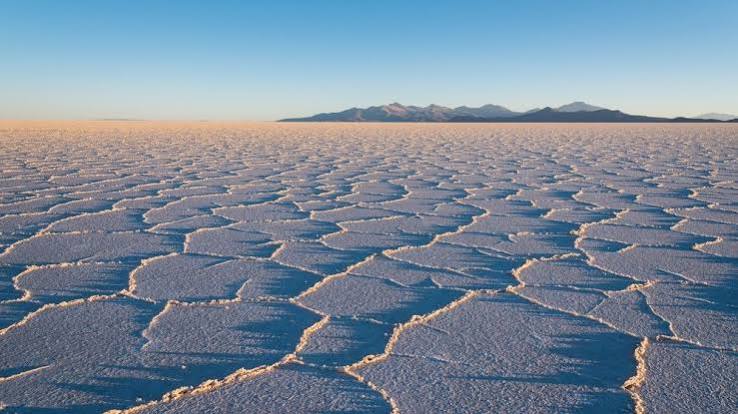
In the heart of the Atacama Desert, one of the most arid places on Earth, lies a clue to a time when this landscape was underwater. The Salar de Uyuni in Bolivia, the world’s largest salt flat, is the dried-up remnant of a prehistoric lake that once covered an area larger than modern-day Lake Titicaca. This vanished lake, known as Lake Minchin or Tauca, existed during the late Pleistocene, roughly 45,000 to 15,000 years ago, when the Altiplano experienced a wetter ‘pluvial’ period.
Today, the Atacama is famous for its extreme dryness, with some weather stations recording zero historical rainfall. But the story of how it became so dry is not just about the present—it’s a tale of ancient water, shifting climates, and a salt flat that holds secrets to both Earth’s past and our future.
The Atacama’s Aridity: More Than Just a Dry Spell
The Atacama Desert stretches across northern Chile and into parts of Peru, Bolivia, and Argentina, covering roughly 105,000 square kilometers. It’s the driest non-polar desert on Earth, a title it earns through a combination of factors. The towering Andes Mountains block moisture from the Atlantic, creating a rain shadow. The cold Humboldt Current off the Pacific coast suppresses evaporation and rainfall. And a semi-permanent high-pressure system, the Pacific Anticyclone, keeps the skies clear. These forces have shaped the desert over millions of years, but the vanished lake adds a temporal dimension: the Atacama wasn’t always this dry.
During the late Pleistocene, the Altiplano—a high plateau shared by Bolivia, Chile, and Peru—hosted a massive lake system. Lake Minchin, and its successor Lake Tauca, expanded and contracted in cycles, covering up to 50,000 square kilometers at their peak. That’s several times larger than today’s Lake Titicaca, the world’s highest navigable lake. The evidence for this ancient water is etched into the landscape: paleo-shorelines terraced into hillsides, sediment layers rich in diatomite (fossilized algae), and the remains of aquatic organisms like stromatolites and ostracods.
The Salar de Uyuni: A Dried-Up Lake’s Legacy
When the climate aridified around 15,000 to 10,000 years ago, the lake evaporated, leaving behind vast salt flats—the largest being Salar de Uyuni in Bolivia. This flat, at 3,650 meters elevation, is a surreal expanse of white salt crust, stretching over 10,582 square kilometers. During the rainy season, a thin layer of water transforms it into a giant mirror, a phenomenon that attracts tourists from around the world.
But the salar is more than a tourist attraction. Beneath its surface lies a brine rich in lithium, an estimated 21 million tonnes, making it central to the global battery economy. This lithium is a direct consequence of the ancient lake: as the water evaporated, it left behind concentrated salts, including lithium, which had been leached from the surrounding rocks over millennia. The same process created the lithium-rich brines in Chile’s Salar de Atacama, now a major mining site.
The salar’s history is also a crucial archive for scientists. Sediment cores drilled from the salt flat reveal wet-dry cycles that correlate with global climate events, such as Heinrich events and Antarctic cold reversals. By studying these layers, paleoclimatologists can model past precipitation patterns and understand the dynamics of the South American Summer Monsoon, which was driven by shifts in the Intertropical Convergence Zone and orbital cycles (Milankovitch forcing).
From Ancient Lake to Mars Analog
The Atacama’s hyper-arid core, often called the ‘absolute desert,’ is one of the most Mars-like environments on Earth. NASA uses it as a test site for life-detection instruments, and the vanished lake’s evaporite minerals—gypsum, halite, and others—are similar to those found by Mars rovers. These minerals hint at past water on Mars, and studying how they formed in the Atacama helps scientists interpret Martian geology.
The link between the vanished lake and modern aridity also informs debates about when the Atacama became hyper-arid. Some evidence suggests aridity onset as early as 15 million years ago, when the Andes reached sufficient height to block Atlantic moisture, but the lake’s existence shows that wetter periods punctuated this trend. Understanding these fluctuations is vital for predicting how the desert might respond to future climate change.
Cultural and Economic Echoes
The Atacama and the Altiplano have been home to indigenous peoples for millennia. The Atacameño, or Likan Antai, developed sophisticated water management systems, like raised-field agriculture (camellones), to thrive in this extreme environment. While the vanished lake predates human memory, the salt flats and mineral wealth shaped trade routes, with llama caravans carrying salt and copper across the Andes.
Today, the lithium boom has brought new attention to the region, sparking geopolitical interest. Bolivia’s Salar de Uyuni and Chile’s Atacama salars are at the center of a global race for battery metals. The ancient lake’s legacy is thus not just a geological curiosity; it’s a resource that could power the world’s transition to electric vehicles.
A Window into Earth’s Past and Future
The vanished lake of the Atacama is a reminder that our planet’s most extreme environments are not static. It challenges the assumption that the driest desert was always dry, offering a timeline of climatic shifts driven by astronomical and geological forces. As we face our own climate crisis, this ancient story underscores the dynamic nature of Earth’s systems and the interconnectedness of water, geology, and life.
The next time you see a salt flat or hear about lithium mining, remember the lake that once stood there—a vast body of water that shaped the land, the minerals, and the cultures that followed. It’s a story written in salt, waiting for us to read.
The Atacama’s aridity is not a fixed feature but a chapter in a longer geological narrative. The vanished lake that left behind Salar de Uyuni is a key to understanding the desert’s past, its present resources, and its potential future. As scientists study these ancient waters, they not only unlock Earth’s history but also inform our search for life on Mars and our management of critical minerals. The salt flat is more than a barren expanse—it’s a chronicle of change, resilience, and adaptation.
Summary
- The Atacama Desert is the driest non-polar desert, but it wasn’t always so; a vast lake once covered parts of the Altiplano.
- Lake Minchin/Tauca existed ~45,000–15,000 years ago, leaving behind the Salar de Uyuni, the world’s largest salt flat.
- The lake’s evaporation concentrated lithium, making the salar a key global source of this battery metal.
- Sediment records from the salt flat reveal past climate cycles, aiding paleoclimate research and Mars analog studies.
- The vanished lake highlights the dynamic nature of Earth’s climate and the interplay between geology, culture, and economy.
FAQ
Q: How did the Atacama become the driest desert?
A: The Atacama’s aridity results from the Andes rain shadow, the cold Humboldt Current, and the Pacific Anticyclone. These factors block moisture and suppress rainfall, creating hyper-arid conditions.
Q: What was Lake Minchin?
A: Lake Minchin was a massive prehistoric lake that covered parts of the Altiplano during the late Pleistocene. It was part of a system of lakes that expanded and contracted with climate cycles.
Q: Why is Salar de Uyuni important?
A: Salar de Uyuni is the world’s largest salt flat and a remnant of the vanished lake. It contains significant lithium reserves, crucial for batteries, and serves as a site for scientific research and tourism.
Q: How does the vanished lake relate to Mars?
A: The Atacama’s hyper-arid environment and evaporite minerals mimic Martian conditions, making it a testing ground for Mars missions. The lake’s history helps scientists understand past water on Mars.
Q: Did indigenous people interact with the lake?
A: The lake existed long before humans, but indigenous peoples like the Atacameño adapted to the desert’s salinity and developed water management techniques. The salt flats influenced trade and settlement patterns.
Leave a Reply