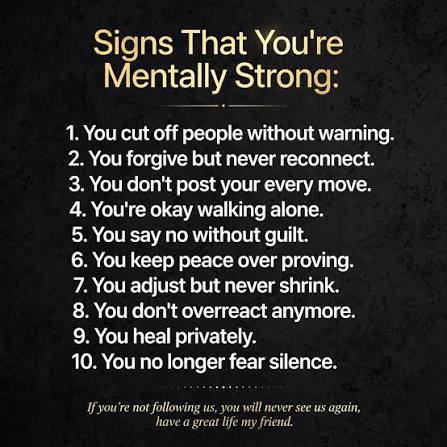
You’ve probably heard the phrase “mental strength” thrown around, but what does it actually look like in real life? It’s not about never crying, never doubting, or powering through exhaustion with a stiff upper lip. In fact, some of the most telling signs are counterintuitive—like asking for help or admitting you’re wrong.
Psychologists define mental strength as the ability to regulate emotions, manage thoughts, and behave productively even under stress. It’s a skill set, not a personality trait, and research shows it can be built over time. The following nine signs aren’t a checklist for superiority; they’re markers that you’ve developed habits that most people haven’t yet mastered. If you recognize yourself in several, you’re likely more resilient than you give yourself credit for.
1. You Feel Discomfort—and Stay Anyway
Mentally strong people don’t enjoy pain, but they don’t run from it either. Whether it’s an awkward conversation, a difficult deadline, or the anxiety of trying something new, they tolerate the discomfort long enough to make progress. This isn’t about being a masochist; it’s about recognizing that avoiding discomfort only makes it bigger. Psychologists call this “distress tolerance,” and it’s a core component of emotional regulation. If you’ve ever sat with a hard feeling instead of distracting yourself with your phone or a snack, you’ve practiced this.
2. You Regulate Your Emotions, Not Suppress Them
Mental strength is often mistaken for stoic indifference. But actually, it’s the opposite. People with high mental strength feel their emotions fully—they just don’t let them drive the car. When you’re angry, you can pause before firing off that email. When you’re sad, you let yourself cry, but you still show up to work the next day. This emotional regulation is a skill, and it’s linked to prefrontal cortex activity. It’s how you can be furious with your partner and still speak respectfully.
3. You Focus on What You Can Control
Ever catch yourself spiraling about the economy, a colleague’s mood, or the weather? Mentally strong people don’t waste energy there. They’ve internalized the Stoic distinction between what’s up to you and what isn’t. When a flight gets delayed, they don’t rant at the gate agent; they pull out a book. When a project gets canceled, they pivot to the next task instead of dwelling on the lost work. This isn’t apathy—it’s strategic energy management. You can’t control the storm, but you can control how you prepare for it.
4. You Say “No” Without Guilt
Setting boundaries feels uncomfortable, especially if you’re a people-pleaser. But mentally strong people have learned that saying “yes” to everything means saying “no” to their own priorities. They can decline a social invitation, turn down extra work, or leave a toxic relationship without feeling the need to over-explain. This self-advocacy is a sign of self-respect, and it’s a skill you can build. If you’ve ever said “no” and didn’t immediately apologize, you’re ahead of the curve.
5. You See Failure as Data, Not Identity
When you fail a test, lose a client, or get rejected, what’s your inner monologue? Mentally strong people treat failure as feedback. They ask, “What can I learn from this?” rather than “What’s wrong with me?” This is the growth mindset that Carol Dweck identified. It’s not about sugarcoating mistakes; it’s about separating your worth from your outcomes. If you’ve ever failed at something and still felt good about yourself, that’s a sign of mental strength.
6. You’re Kind to Yourself After Mistakes
This one surprises people. You might think mental strength means beating yourself up for a misstep to “stay sharp.” But research shows that self-compassion—treating yourself with the same kindness you’d offer a friend—is actually linked to greater resilience. When you mess up, you acknowledge it, comfort yourself, and then get back up. This isn’t letting yourself off the hook; it’s preventing shame from becoming a barrier to progress. If you’ve ever told yourself “It’s okay, everyone makes mistakes” and meant it, you’re practicing this.
7. You Choose Long-Term Rewards Over Short-Term Pleasure
The Marshmallow Test isn’t destiny, but delayed gratification is a real skill. Mentally strong people can resist the immediate dopamine hit—whether it’s a shopping spree, a sugar rush, or a binge-watch—when it conflicts with a bigger goal. They save for retirement, skip the dessert, and hit the gym. This isn’t about being a robot; it’s about having a clear sense of your priorities. If you’ve ever said “I’ll skip this now so I can have something better later,” you’re exercising this muscle.
8. You Adapt When Plans Go Off the Rails
Life is unpredictable. Mentally strong people don’t get married to a single plan. When a sudden illness, a job loss, or a global pandemic disrupts their trajectory, they mourn the loss, then adjust. This adaptability is what psychologists call cognitive flexibility—the ability to reframe a situation and find a new path. If you’ve ever had your life upended and managed to find a new routine, you’ve shown this.
9. You Ask for Help When You Need It
Contrary to the lone-wolf myth, mentally strong people recognize when they’re in over their heads. They reach out to a therapist, a mentor, or a friend because they know that seeking support is a strategy, not a weakness. This is particularly counterintuitive in cultures that prize self-reliance. But research shows that social support is a key resilience factor. If you’ve ever said “I can’t do this alone” and reached out, you’re demonstrating mental strength, not the lack of it.
Mental strength isn’t about being invincible. It’s about being flexible, self-aware, and willing to grow. If you recognized yourself in these signs, you’re likely more resilient than you thought. And if you didn’t, remember: these are skills, not fixed traits. You can start building them today, one small choice at a time.
Summary
- Mental strength is a skill set, not a personality trait; it can be developed with practice.
- Key signs include tolerating discomfort, regulating emotions, and focusing on what you can control.
- Saying “no” without guilt and asking for help are signs of strength, not weakness.
- Failure is viewed as feedback, not identity, by mentally strong individuals.
- Self-compassion and adaptability are crucial components, often overlooked in pop psychology.
FAQ
Q: Is mental strength the same as resilience?
A: They overlap, but there’s a subtle difference. Resilience is about bouncing back from adversity, while mental strength is a broader skill set that includes emotional regulation, cognitive flexibility, and self-discipline. You can be resilient without yet having all the other skills.
Q: Can I become mentally stronger if I don’t have these signs?
A: Absolutely. Mental strength is like a muscle—it grows with practice. You can start by practicing one skill, like focusing on what you can control or saying “no” more often.
Q: Does mental strength mean I never feel negative emotions?
A: No. In fact, mentally strong people feel a full range of emotions. The difference is they don’t let negative emotions dictate their actions. They experience anger, sadness, and fear, but they still behave productively.
Q: Is asking for help a sign of weakness?
A: No, it’s a sign of self-awareness and strategic thinking. Everyone has limits, and recognizing when you need support is a hallmark of mental strength.
Q: How does culture affect what mental strength looks like?
A: Cultural norms shape how people express mental strength. In collectivist cultures, asking for help might be more normalized, while in individualistic cultures, self-reliance is emphasized. The signs are the same, but they may manifest differently.
Leave a Reply