Tag: resilience

  • The Unbroken Mind: How POWs Held Onto Sanity in Captivity

    The Unbroken Mind: How POWs Held Onto Sanity in Captivity

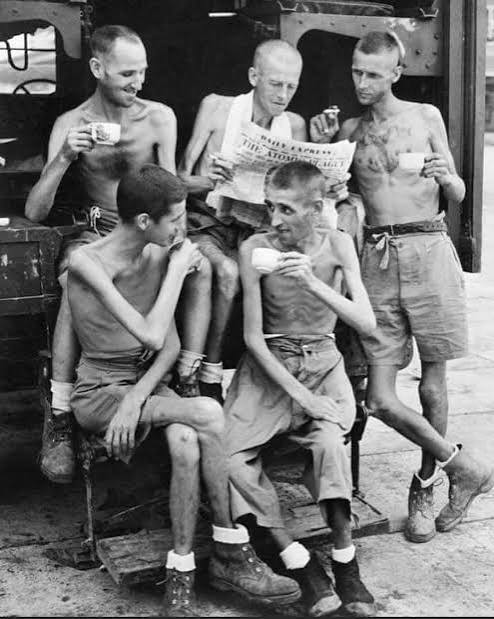
    In the summer of 1942, a young American soldier named Lester Tenney was captured by Japanese forces on the island of Java. He would spend the next three and a half years as a prisoner of war, working on the infamous Burma Railway, where starvation, beatings, and disease were constants. Yet Tenney survived, and like many former POWs, he returned home with his mind intact. His story is not unique it is part of a larger, little-understood phenomenon: how did millions of prisoners, held for years under brutal conditions, keep from losing their sanity?

    The answer lies not in a single heroic act, but in a toolkit of psychological strategies, social structures, and inner resources that POWs developed sometimes consciously, sometimes instinctively to endure the unendurable. This article explores the documented methods that helped these men and women survive the psychological assault of captivity, from the camps of World War II to the prisons of Vietnam.

    The Scale of the Ordeal

    To understand the psychological challenge, consider the numbers. During World War II alone, an estimated 35 million soldiers were taken prisoner. The conditions varied wildly by theater. In German camps for Western Allied POWs, survival was high—96 to 99 percent—thanks to Red Cross parcels and a relatively rule-bound system. But for Soviet POWs under the Nazis, the death rate was catastrophic: roughly 57 percent, a genocidal neglect. In Japanese camps, about 27 percent of Western POWs died—one in four—from starvation, disease, and violence.

    Many POWs were held for three to five years. Some, like those captured during the Korean War or Vietnam War, endured seven or eight. The experience was a “total stressor”—combining physical deprivation, loss of autonomy, isolation, uncertainty, and constant threat. Yet post-war studies found that a majority of POWs did not develop chronic PTSD or depression. They returned with remarkable resilience. This “survivor paradox” puzzled researchers and pointed to deep psychological defenses.

    The Internal Toolkit: Mental Discipline

    When the body is imprisoned, the mind becomes the last territory. POWs used a variety of internal strategies to maintain cognitive control.

    Memory exercises were common. Prisoners in the Hanoi Hilton, the Vietnamese prison for American pilots, would recall poetry, recite multiplication tables, or mentally reconstruct entire books. Some built imaginary houses in their minds, room by room, furnishing them with meticulous detail. These exercises served a dual purpose: they occupied the mind and preserved a sense of agency.

    Compartmentalization was another key strategy. POWs often separated their mental state from their physical suffering. One former POW described it as “watching my body endure”—a dissociation that allowed him to withstand torture without surrendering his identity. This was not denial; it was a deliberate cognitive split.

    Cognitive reframing transformed the meaning of captivity. Instead of viewing imprisonment as a punishment, many POWs framed it as a test, a mission, or even a research project. Admiral James Stockdale, a Vietnam POW for over seven years, called this the “Stockdale Paradox”: you must retain faith that you will prevail while confronting the brutal facts of your current reality. In his own words, the optimists—those who believed they’d be home by Christmas—died of broken hearts. The survivors accepted the long haul.

    Time management was critical. POWs created internal calendars, marked days, and set micro-goals. Breaking the endless monotony into manageable chunks made the years feel less overwhelming. One POW in a German camp kept a detailed journal of imaginary chess games, playing out entire tournaments in his head.

    The Social Dimension: Bonds and Hierarchy

    Captivity often meant forced proximity with strangers, yet social structures emerged as a lifeline. In many camps, senior officers maintained military discipline, organizing daily roll calls, classes, and even theatrical performances. This hierarchy provided a sense of order and purpose.

    Social bonds were perhaps the strongest defense. POWs formed tight-knit groups, sharing food, information, and emotional support. A study of American POWs in Vietnam found that those who had strong friendships were less likely to develop severe psychological symptoms. In the camps, a shared joke or a whispered conversation could stave off despair.

    Defiance as resistance also played a role. For some, survival itself became an act of resistance—a way to deny the enemy victory. This was particularly strong among Vietnam POWs, who developed elaborate communication codes, tapping on walls to pass news and maintain morale. This defiance gave meaning to suffering.

    The Role of Hope and Faith

    Hope was not a passive feeling; it was an active practice. POWs planned post-war lives in detail—the meals they would eat, the people they would see, the careers they would pursue. This future-orientation kept the present bearable.

    Religious faith was another anchor. Many POWs reported that prayer or meditation provided comfort and a sense of connection beyond the camps. For some, faith offered a framework for understanding their suffering—as a test, a penance, or a mission.

    Humor, too, was a survival tool. In the darkest moments, a joke could cut through despair. POWs in Changi prison in Singapore staged elaborate musicals and comedy sketches, using whatever materials they had. This creativity was not frivolous; it was a assertion of humanity.

    The Fourth Phase: Repatriation

    Surviving captivity was only half the battle. Repatriation brought its own challenges—what psychologists call the “fourth phase.” Many POWs struggled to readjust to civilian life, facing nightmares, anxiety, and a sense of alienation. Yet even here, resilience showed. A significant minority developed chronic PTSD, but the majority did not, and many went on to lead productive lives.

    Admiral Stockdale, after his release, became a philosopher and naval leader. Lester Tenney became a professor. Their stories illustrate a broader truth: the mind, even under extreme duress, can find ways to endure. The psychology of survival is not about avoiding pain; it is about finding meaning within it.

    The POW experience is a testament to human resilience—not because the survivors were extraordinary, but because they used ordinary tools: memory, routine, friendship, and hope. These strategies did not erase suffering, but they made it bearable. In understanding how POWs kept their sanity, we learn something about ourselves: that even in the darkest circumstances, the mind can build a shelter.

    Summary

    • POWs faced total stressors: physical deprivation, isolation, and uncertainty, yet most did not develop chronic PTSD.
    • Internal strategies included memory exercises, compartmentalization, cognitive reframing, and time management.
    • Social bonds and military hierarchies in camps provided crucial support and a sense of purpose.
    • The Stockdale Paradox—faith in eventual victory combined with acceptance of brutal reality—was vital for long-term survival.
    • Hope, faith, and humor were active practices that helped POWs endure.

    FAQ

    Q: What was the most common psychological strategy used by POWs?
    A: Cognitive reframing—reinterpreting captivity as a test or mission—was widespread, along with mental exercises like memory recall to maintain cognitive control.

    Q: Did all POWs develop PTSD?
    A: No, the majority did not. While a significant minority developed chronic PTSD or depression, many returned with remarkable resilience, often using the strategies described above.

    Q: How did social bonds help POWs survive?
    A: Friendships provided emotional support, a shared sense of purpose, and practical aid like food sharing. In Vietnam POW camps, communication codes maintained morale and cohesion.

    Q: What is the Stockdale Paradox?
    A: Named after Admiral James Stockdale, it is the ability to hold onto faith that you will prevail while confronting the brutal facts of reality. Survivors accepted the long haul rather than clinging to false optimism.

    Q: What was the “fourth phase” of captivity?
    A: Repatriation—the period after release when POWs faced readjustment challenges, including nightmares and anxiety. It was often overlooked but crucial for long-term psychological health.
  • 5 Expert-Backed Ways to Cope with Grief and Loss

    5 Expert-Backed Ways to Cope with Grief and Loss

    Grief is one of the most universal human experiences, yet it often leaves us feeling isolated and unsure how to move forward. Whether you’re mourning the death of a loved one, the end of a marriage, or the loss of a job, the pain can feel overwhelming. The good news is that psychologists, counselors, and researchers have identified specific strategies that genuinely help. These five approaches, drawn from years of clinical research and expert consensus, won’t erase your pain—but they can help you carry it with more resilience and hope.

    What We Get Wrong About Grief

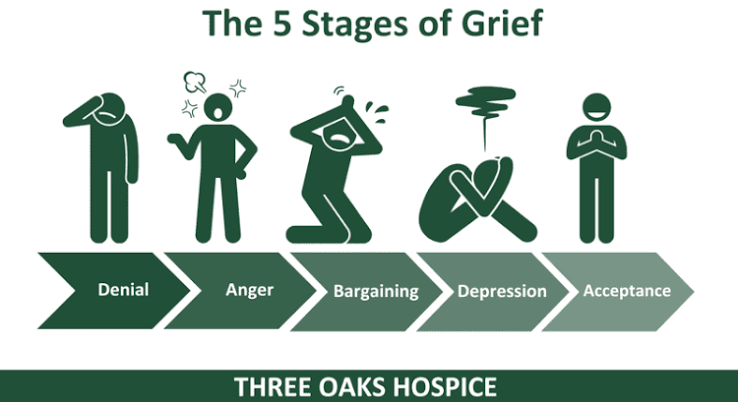
    Many of us grew up hearing about the ‘five stages of grief’—denial, anger, bargaining, depression, and acceptance. But here’s the thing: that model, introduced by psychiatrist Elisabeth Kübler-Ross in 1969, was never intended as a universal roadmap for the bereaved. It was based on her work with terminally ill patients facing their own death, not on how people grieve a lost loved one.

    Modern experts, like those at Columbia University’s Center for Complicated Grief, describe grief as a ‘roller coaster’ or a series of waves. It doesn’t follow a linear path. You might feel fine for weeks, then suddenly be hit by a wave of sadness on a random Tuesday. That’s not a setback—it’s normal. There’s no ‘correct’ timeline, and comparing your grief to someone else’s is a guaranteed way to feel worse.

    So if the stages model doesn’t hold up, what does? Over the past two decades, grief researchers have reached a strong consensus on what actually helps people adapt to loss. Here are the five strategies that keep showing up in the evidence.

    1. Let Yourself Feel the Pain (Instead of Avoiding It)

    It’s tempting to stay busy, throw yourself into work, or numb the pain with alcohol or binge-watching. But avoidance tends to backfire. Research on ‘meaning-making’ by psychologist Robert Neimeyer and others shows that people who actively engage with their loss—rather than suppressing it—adjust better in the long run.

    This doesn’t mean you need to be sad 24/7. It means carving out time to sit with your feelings. Cry if you need to. Write in a journal about what you’re going through. Talk to a trusted friend about how you’re really doing. The goal is to acknowledge the pain so it can begin to soften.

    A practical way to start: set a daily ‘grief check-in’ of just 10 minutes. Use that time to feel whatever arises, without judgment. When the time is up, gently return to your day. This gives your grief a place to exist without letting it take over everything.

    2. Stay Connected (Isolation Makes It Worse)

    Grief can make you want to withdraw. But isolation is one of the biggest risk factors for complicated grief—a persistent, debilitating form of grief that lasts more than a year. Human beings are wired for connection, and that doesn’t stop when we’re grieving.

    Talk about the person you lost. Share memories, even the painful ones. You might worry that bringing up your loss will burden others, but most friends and family want to help—they just don’t know how. You can help them by being direct: ‘I’m struggling today. Could we grab coffee?’ or ‘Would you be okay if I talked about my mom for a bit?’

    Joining a grief support group can also be transformative. Unlike friends who may not understand, group members have walked a similar path. You’ll find a space where you can say ‘I’m not okay’ without any pressure to explain or apologize. Many groups are now online, making them more accessible than ever.

    3. Rebuild Your Routines and Take Care of Your Body

    Grief is exhausting—and it’s not just in your head. It triggers a real physiological response: increased inflammation, disrupted sleep, and a spike in stress hormones like cortisol. There’s even a documented condition called ‘broken heart syndrome,’ where intense emotional stress causes temporary heart muscle dysfunction.

    This is why self-care isn’t selfish; it’s survival. When you’re grieving, basic routines often fall apart. You might forget to eat, lie awake at night, or have no energy to exercise. Start small. Focus on getting enough sleep, even if that means going to bed earlier or taking a short nap. Eat regular meals, even if they’re simple. Go for a short walk—gentle exercise has been shown to boost mood and reduce stress.

    Structure can be a lifeline. Create a simple daily schedule: wake up at the same time, have a set mealtime, go for a walk at a consistent hour. These anchors give your day shape when everything else feels chaotic. As you feel stronger, you can gradually add more activities.

    4. Create Meaning and Memorialize

    Grief expert Robert Neimeyer calls this ‘meaning reconstruction’—the process of finding new meaning in life after a loss. One powerful way to do this is through memorialization. Rituals and projects that honor the person or thing you lost can help you integrate the loss into your life story.

    There are countless ways to do this. You might plant a tree in your mother’s favorite spot, volunteer for a cause she cared about, or create a photo album of happy memories. Some people find comfort in writing a letter to the person they lost, or continuing a tradition the person loved. Others channel their grief into creative work—writing, painting, music.

    The key is that the act is meaningful to you. It doesn’t have to be grand. Even something as simple as lighting a candle on important anniversaries can provide a sense of connection and purpose. These rituals help transform grief from something that ‘happens to you’ into something you actively shape.

    5. Know When to Seek Professional Help

    Grief is normal, but sometimes it becomes more than you can handle alone. Prolonged Grief Disorder—a condition recognized in the DSM-5-TR since 2022—affects about 7-10% of bereaved people. It’s characterized by intense, debilitating grief that persists for more than a year and interferes with daily functioning.

    You don’t need to hit that threshold to benefit from professional support. Grief counseling and therapy can help at any stage. Specialty treatments like Complicated Grief Therapy (CGT) and Cognitive Behavioral Therapy (CBT) for grief have been shown to be highly effective. Therapists can help you process painful emotions, challenge unhelpful thoughts, and gradually rebuild your life.

    Unfortunately, only a minority of grieving people seek therapy, often because they think they ‘should’ be fine or that it’s a sign of weakness. But asking for help is a sign of self-awareness and strength. If you’re struggling to function, feeling hopeless, or using substances to cope, it’s time to reach out. Your doctor can refer you, or you can find a grief specialist through organizations like the National Alliance for Grieving Children or local hospices.

    Cultural Context: Grief Is Not One-Size-Fits-All

    It’s important to remember that these strategies come from a Western psychological framework. Grief expression varies widely across cultures. Some cultures encourage public lamentation, while others value stoic restraint. Some communities have elaborate mourning rituals that provide structure and support, while others are more private. These differences are not right or wrong—they’re simply different ways of being human.

    The five strategies above are not meant to be universal laws. They’re evidence-based tools that many people find helpful, but the best approach to grief is the one that resonates with your values, your community, and your own unique experience. The goal isn’t to ‘get over’ the loss, but to learn to live with it in a way that allows you to find meaning again.

    Grief is not a problem to be solved but a process to be lived. There’s no finish line, no magical moment when the pain disappears. Instead, there are days when the waves are smaller, and days when they crash over you without warning. By allowing yourself to feel, staying connected, caring for your body, creating meaning, and seeking help when needed, you give yourself the best chance to adapt—not just to survive, but to eventually find moments of joy and purpose again. You don’t have to do it perfectly, and you don’t have to do it alone.

    Summary

    • Grief is not linear: The five-stage model is outdated; expect waves, not stages.
    • Feel the pain: Avoidance prolongs suffering; engage with your emotions.
    • Stay connected: Isolation increases risk of complicated grief; seek support.
    • Self-care is essential: Grief affects your body; prioritize sleep, nutrition, and gentle exercise.
    • Create meaning: Rituals and memorials help integrate the loss into your life.
    • Professional help works: Complicated Grief Therapy and counseling are effective; don’t hesitate to ask.

    FAQ

    Q: How long does grief last?
    A: There’s no set timeline. Acute grief often softens within 6-12 months, but waves can return for years, especially around anniversaries. That’s normal.

    Q: Is it normal to feel physical symptoms from grief?
    A: Absolutely. Grief can cause fatigue, sleep disruption, changes in appetite, and even increased inflammation. The ‘broken heart syndrome’ is a real medical condition linked to emotional stress.

    Q: What is complicated grief?
    A: Complicated grief, now called Prolonged Grief Disorder, is when intense grief lasts more than a year and interferes with your ability to function. It’s treatable with specialized therapy.

    Q: Can I grieve for a pet or a job?
    A: Yes, grief is a response to any significant loss, not just death. Pet loss, divorce, job loss, and other transitions can trigger genuine grief.

    Q: How do I support a grieving friend?
    A: Be present, listen without trying to fix, and offer specific help (like bringing a meal). Avoid clichés like ‘they’re in a better place.’ Simply showing up matters most.

  • 9 Signs You Are Mentally Stronger Than Most People

    9 Signs You Are Mentally Stronger Than Most People

    You’ve probably heard the phrase “mental strength” thrown around, but what does it actually look like in real life? It’s not about never crying, never doubting, or powering through exhaustion with a stiff upper lip. In fact, some of the most telling signs are counterintuitive—like asking for help or admitting you’re wrong.

    Psychologists define mental strength as the ability to regulate emotions, manage thoughts, and behave productively even under stress. It’s a skill set, not a personality trait, and research shows it can be built over time. The following nine signs aren’t a checklist for superiority; they’re markers that you’ve developed habits that most people haven’t yet mastered. If you recognize yourself in several, you’re likely more resilient than you give yourself credit for.

    1. You Feel Discomfort—and Stay Anyway

    Mentally strong people don’t enjoy pain, but they don’t run from it either. Whether it’s an awkward conversation, a difficult deadline, or the anxiety of trying something new, they tolerate the discomfort long enough to make progress. This isn’t about being a masochist; it’s about recognizing that avoiding discomfort only makes it bigger. Psychologists call this “distress tolerance,” and it’s a core component of emotional regulation. If you’ve ever sat with a hard feeling instead of distracting yourself with your phone or a snack, you’ve practiced this.

    2. You Regulate Your Emotions, Not Suppress Them

    Mental strength is often mistaken for stoic indifference. But actually, it’s the opposite. People with high mental strength feel their emotions fully—they just don’t let them drive the car. When you’re angry, you can pause before firing off that email. When you’re sad, you let yourself cry, but you still show up to work the next day. This emotional regulation is a skill, and it’s linked to prefrontal cortex activity. It’s how you can be furious with your partner and still speak respectfully.

    3. You Focus on What You Can Control

    Ever catch yourself spiraling about the economy, a colleague’s mood, or the weather? Mentally strong people don’t waste energy there. They’ve internalized the Stoic distinction between what’s up to you and what isn’t. When a flight gets delayed, they don’t rant at the gate agent; they pull out a book. When a project gets canceled, they pivot to the next task instead of dwelling on the lost work. This isn’t apathy—it’s strategic energy management. You can’t control the storm, but you can control how you prepare for it.

    4. You Say “No” Without Guilt

    Setting boundaries feels uncomfortable, especially if you’re a people-pleaser. But mentally strong people have learned that saying “yes” to everything means saying “no” to their own priorities. They can decline a social invitation, turn down extra work, or leave a toxic relationship without feeling the need to over-explain. This self-advocacy is a sign of self-respect, and it’s a skill you can build. If you’ve ever said “no” and didn’t immediately apologize, you’re ahead of the curve.

    5. You See Failure as Data, Not Identity

    When you fail a test, lose a client, or get rejected, what’s your inner monologue? Mentally strong people treat failure as feedback. They ask, “What can I learn from this?” rather than “What’s wrong with me?” This is the growth mindset that Carol Dweck identified. It’s not about sugarcoating mistakes; it’s about separating your worth from your outcomes. If you’ve ever failed at something and still felt good about yourself, that’s a sign of mental strength.

    6. You’re Kind to Yourself After Mistakes

    This one surprises people. You might think mental strength means beating yourself up for a misstep to “stay sharp.” But research shows that self-compassion—treating yourself with the same kindness you’d offer a friend—is actually linked to greater resilience. When you mess up, you acknowledge it, comfort yourself, and then get back up. This isn’t letting yourself off the hook; it’s preventing shame from becoming a barrier to progress. If you’ve ever told yourself “It’s okay, everyone makes mistakes” and meant it, you’re practicing this.

    7. You Choose Long-Term Rewards Over Short-Term Pleasure

    The Marshmallow Test isn’t destiny, but delayed gratification is a real skill. Mentally strong people can resist the immediate dopamine hit—whether it’s a shopping spree, a sugar rush, or a binge-watch—when it conflicts with a bigger goal. They save for retirement, skip the dessert, and hit the gym. This isn’t about being a robot; it’s about having a clear sense of your priorities. If you’ve ever said “I’ll skip this now so I can have something better later,” you’re exercising this muscle.

    8. You Adapt When Plans Go Off the Rails

    Life is unpredictable. Mentally strong people don’t get married to a single plan. When a sudden illness, a job loss, or a global pandemic disrupts their trajectory, they mourn the loss, then adjust. This adaptability is what psychologists call cognitive flexibility—the ability to reframe a situation and find a new path. If you’ve ever had your life upended and managed to find a new routine, you’ve shown this.

    9. You Ask for Help When You Need It

    Contrary to the lone-wolf myth, mentally strong people recognize when they’re in over their heads. They reach out to a therapist, a mentor, or a friend because they know that seeking support is a strategy, not a weakness. This is particularly counterintuitive in cultures that prize self-reliance. But research shows that social support is a key resilience factor. If you’ve ever said “I can’t do this alone” and reached out, you’re demonstrating mental strength, not the lack of it.

    Mental strength isn’t about being invincible. It’s about being flexible, self-aware, and willing to grow. If you recognized yourself in these signs, you’re likely more resilient than you thought. And if you didn’t, remember: these are skills, not fixed traits. You can start building them today, one small choice at a time.

    Summary

    • Mental strength is a skill set, not a personality trait; it can be developed with practice.
    • Key signs include tolerating discomfort, regulating emotions, and focusing on what you can control.
    • Saying “no” without guilt and asking for help are signs of strength, not weakness.
    • Failure is viewed as feedback, not identity, by mentally strong individuals.
    • Self-compassion and adaptability are crucial components, often overlooked in pop psychology.

    FAQ

    Q: Is mental strength the same as resilience?
    A: They overlap, but there’s a subtle difference. Resilience is about bouncing back from adversity, while mental strength is a broader skill set that includes emotional regulation, cognitive flexibility, and self-discipline. You can be resilient without yet having all the other skills.

    Q: Can I become mentally stronger if I don’t have these signs?
    A: Absolutely. Mental strength is like a muscle—it grows with practice. You can start by practicing one skill, like focusing on what you can control or saying “no” more often.

    Q: Does mental strength mean I never feel negative emotions?
    A: No. In fact, mentally strong people feel a full range of emotions. The difference is they don’t let negative emotions dictate their actions. They experience anger, sadness, and fear, but they still behave productively.

    Q: Is asking for help a sign of weakness?
    A: No, it’s a sign of self-awareness and strategic thinking. Everyone has limits, and recognizing when you need support is a hallmark of mental strength.

    Q: How does culture affect what mental strength looks like?
    A: Cultural norms shape how people express mental strength. In collectivist cultures, asking for help might be more normalized, while in individualistic cultures, self-reliance is emphasized. The signs are the same, but they may manifest differently.

  • Vanished Worlds: What Lost Civilizations Reveal About Our Own Future

    Vanished Worlds: What Lost Civilizations Reveal About Our Own Future

    Imagine a bustling city with grand palaces, intricate irrigation systems, and a thriving trade network—then imagine it empty, swallowed by jungle or sand, its name forgotten for centuries. This is the story of the world’s lost civilizations: the Indus Valley, the Maya, the Khmer Empire, and many others. Their sudden or gradual disappearances have captivated us for generations, but these are not just tales of mystery and adventure. They are cautionary tales, offering profound insights into the fragility of human societies and the enduring power of human innovation.

    Today, as we face our own global challenges—climate change, resource depletion, and social inequality—the fates of these ancient cultures feel more relevant than ever. By examining why they thrived and why they vanished, we can uncover lessons about sustainability, resilience, and the legacy we leave behind. This is not a story about failure; it’s a story about the enduring influence of those who came before us and the choices we must make to avoid their fate.

    What Makes a Civilization ‘Lost’?

    The term ‘lost civilization’ conjures images of Atlantis or El Dorado—mythical places of advanced technology and hidden wisdom. But in reality, a lost civilization is simply a complex society whose original cultural identity was erased from living memory, often rediscovered only through archaeology. The Maya, for instance, were never truly lost; the Spanish encountered them in the 16th century, but their full achievements—their writing system, mathematics, and astronomy—were suppressed or forgotten until the 19th century. Similarly, the Indus Valley civilization was unknown to the world until the 1920s, when excavations at Mohenjo-daro revealed a sophisticated urban culture that had thrived 4,000 years earlier.

    What unites these societies is not their obscurity but their dramatic transformation. Whether through climate change, invasion, or internal strife, they reached a tipping point where their complex systems could no longer be sustained. The result was not always a complete disappearance—many populations persisted and adapted—but their cultural identity as a distinct civilization faded, leaving behind ruins that would puzzle and inspire future generations.

    The Many Faces of Collapse

    Why do civilizations fall? The answer is rarely simple. Environmental factors often play a starring role. The Classic Maya collapse in the 9th century CE, for example, was likely triggered by a series of severe droughts, compounded by deforestation and soil erosion. The Khmer Empire, which built the magnificent Angkor Wat, faced a similar crisis: its extensive water management system, once a marvel of engineering, became vulnerable to climate variability, leading to food shortages and political instability. The Norse settlers of Greenland, who arrived in 985 CE, vanished by 1450 CE as the Little Ice Age made farming impossible and trade with Europe dwindled.

    But environmental stress is only part of the story. Social and political factors often determine a civilization’s resilience. Joseph Tainter’s influential theory, outlined in The Collapse of Complex Societies, argues that societies collapse when the cost of maintaining their complexity exceeds the benefits. As elites accumulate power and bureaucracies expand, the marginal returns on investment diminish, making the system vulnerable to shocks. The Roman Empire, for instance, stretched its resources too thin, leading to economic decline and vulnerability to invasion.

    External forces—invasion, conquest, disease—can also deliver the final blow, though they often exploit existing weaknesses. The Minoan civilization of Crete, for example, was devastated by the Thera volcanic eruption around 1600 BCE, which triggered tsunamis and ashfall that destroyed crops and trade. The weakened society then fell to the Mycenaeans from mainland Greece. Similarly, the Spanish conquest of the Aztec and Inca empires was aided by the introduction of European diseases, which decimated populations and destabilized political structures.

    Rethinking ‘Collapse’: A Modern Perspective

    In recent decades, scholars have pushed back against the term ‘collapse’ as too absolute. The Maya, for instance, never truly disappeared—millions of Maya people live in the same region today, speaking Mayan languages and maintaining cultural traditions. The Ancestral Pueblo people of the American Southwest, often called the Anasazi, abandoned their cliff dwellings in the 13th century due to drought and social upheaval, but they migrated and formed new communities, such as the modern Pueblo tribes. Even the Indus Valley civilization, which declined around 1900 BCE, left a genetic and cultural legacy that persists in South Asia.

    The ‘collapse’ narrative, critics argue, is a Western framing that obscures continuity and resilience. It implies a linear progression from rise to fall, ignoring the complex ways societies adapt and transform. For indigenous communities today, the framing of their ancestors as ‘lost’ can be offensive, erasing their living heritage. This has led to a growing movement to repatriate artifacts and involve local communities in archaeological research, ensuring that the stories of these civilizations are told with respect and accuracy.

    The Enduring Influence of ‘Lost’ Cultures

    Despite their disappearance, lost civilizations continue to shape our world in profound ways. Their innovations in agriculture, architecture, mathematics, and governance are woven into the fabric of modern life. The Inca’s terraced farming techniques, which allowed cultivation on steep Andean slopes, are now being revived as a sustainable solution to soil erosion and climate change. The Aztec’s chinampas, or floating gardens, are a model for urban agriculture in crowded cities. The Indus Valley’s sophisticated drainage systems, which included covered sewers and public baths, rival those of ancient Rome and inspire modern urban planning.

    In mathematics, the Maya independently developed the concept of zero, a revolutionary idea that underpins modern arithmetic. Babylonian astronomers mapped the stars and developed a base-60 number system that we still use for time and angles. Egyptian medicine, with its surgical techniques and herbal remedies, laid the groundwork for Greek and Roman practice. In governance, Roman law and Greek democracy are direct ancestors of Western political systems, while the Iroquois Confederacy influenced the framing of the U.S. Constitution.

    Even our stories and myths are shaped by these ancient cultures. Flood narratives, such as the Epic of Gilgamesh and the biblical story of Noah, appear across civilizations, suggesting a shared human experience. The hero’s journey, a narrative pattern identified by Joseph Campbell, recurs in myths from Greece to India to Mesoamerica, and it continues to drive modern storytelling in books and films.

    Lessons for Today

    So, what can we learn from the rise and fall of these civilizations? Perhaps the most urgent lesson is the importance of sustainability. The Maya, Khmer, and Norse Greenlanders all faced environmental challenges that were exacerbated by human actions—deforestation, overexploitation of resources, and poor water management. As we confront climate change, these ancient examples serve as stark warnings of what can happen when societies fail to adapt to environmental stress.

    But there is also a message of resilience. Many of these cultures did not simply vanish; they transformed, migrated, and adapted. The Maya people today are a testament to the endurance of cultural identity. The Ancestral Puebloans became the modern Pueblo tribes. The legacy of the Indus Valley lives on in the languages and genetics of South Asia. This resilience offers hope that even in the face of collapse, human societies can find new ways to thrive.

    Finally, the study of lost civilizations reminds us of the impermanence of human achievements. No empire lasts forever, and our own civilization will one day be a subject of archaeological study. The question is not whether we will fall, but what we will leave behind. Will future generations marvel at our cities and innovations, or will they wonder how we squandered our resources and ignored the warning signs? The choice is ours.

    The mysteries of lost civilizations are not just puzzles to be solved but mirrors reflecting our own vulnerabilities and strengths. They remind us that no society is immune to collapse, but they also show us the power of human creativity and adaptation. As we navigate the challenges of the 21st century, we would do well to heed the lessons of the past—to build sustainable systems, to value resilience, and to remember that our legacy is not just what we build, but how we care for the world and each other.

    Summary

    • Lost civilizations are not necessarily unknown to history; they are societies whose original cultural identity was erased from living memory, often rediscovered through archaeology.
    • Collapse is rarely caused by a single factor; it typically involves a combination of environmental stress, social/political mismanagement, economic decline, and external pressures.
    • The term ‘collapse’ is increasingly challenged by scholars who emphasize continuity and resilience, noting that many ‘lost’ cultures persist in modern descendants.
    • These ancient civilizations have left enduring legacies in language, architecture, agriculture, mathematics, governance, and storytelling that shape our world today.
    • The study of lost civilizations offers urgent lessons for sustainability and resilience in the face of climate change and other global challenges.

    FAQ

    Q: What is the most common cause of civilization collapse?
    A: There is no single cause. Most collapses involve a combination of environmental stress (like drought or deforestation), social/political instability, economic decline, and external pressures such as invasion or disease. The relative importance of each factor varies by civilization.

    Q: Are there any lost civilizations that were never rediscovered?
    A: Many civilizations are known only through archaeological evidence and have no written records, so their names and languages are unknown. Examples include the Indus Valley civilization, whose script remains undeciphered, and the builders of Göbekli Tepe in Turkey, which predates writing.

    Q: Did the Maya really disappear?
    A: No. The Classic Maya civilization collapsed politically, but millions of Maya people live in Mexico, Guatemala, Belize, and Honduras today, speaking Mayan languages and maintaining cultural traditions. The term ‘collapse’ refers to the decline of their political and urban centers, not the extinction of the people.

    Q: How do archaeologists decide when a civilization is ‘lost’?
    A: A civilization is considered ‘lost’ when its original cultural identity is no longer remembered by living people, often because it was forgotten, suppressed, or assimilated. Rediscovery typically occurs through archaeological excavation, decipherment of texts, or historical records from other cultures.

    Q: What can we learn from lost civilizations about climate change?
    A: Lost civilizations provide case studies of how societies respond to environmental stress. The Maya, Khmer, and Norse Greenlanders all faced climate challenges that contributed to their decline, offering lessons about the importance of sustainable resource management and adaptive capacity in the face of climate change.