Tag: trench warfare

  • Tanks vs Gas: Which Weapon Terrified WWI Soldiers More?

    Tanks vs Gas: Which Weapon Terrified WWI Soldiers More?

    At 6:30 AM on April 22, 1915, near Ypres, a strange yellow-green cloud drifted toward French colonial troops. Within minutes, soldiers were choking, clawing at their throats, and fleeing in panic. It was the first large-scale gas attack in history. Eighteen months later, on September 15, 1916, at the Somme, another new horror emerged: a 28-ton steel box clanking across no man’s land, spitting fire. Both weapons were born of the same desperation to break the trench stalemate, but they terrified soldiers in profoundly different ways. Which was more terrifying? The answer depends on whether you’re talking about the fear of a sudden, agonizing death or the dread of a slow, lingering one.

    The Tactical Problem That Spawned Both Weapons

    By 1915, the Western Front had become a killing field of static horror. Barbed wire, machine guns, and rapid-fire artillery made any frontal assault a suicide mission. The generals needed a way to break the deadlock—something that could cross the wire, crush the trenches, or simply erase the enemy. The tank and the gas cloud were two very different answers to the same question.

    The Tank: A Moving Fortress That Often Broke Down

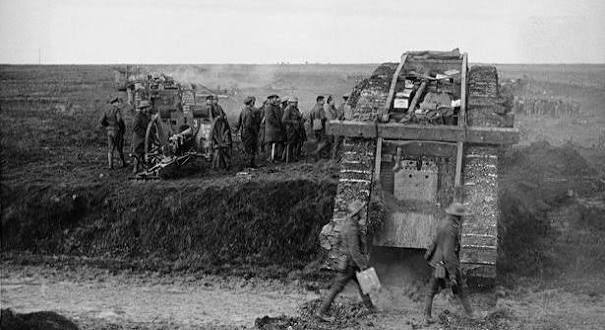
    The British Mark I tank debuted at the Battle of the Somme on September 15, 1916. Of the 49 available, only 32 even reached the start line. Many broke down or ditched in the mud. The specifications were impressive on paper: 28 tons, a top speed of 3.7 mph, a crew of eight, and armor up to 12mm—enough to stop bullets, but not artillery. It was armed with two 6-pounder guns (in the ‘male’ version) or machine guns (in the ‘female’ version).

    But the tank’s real power was psychological. German troops, who had never seen such a machine, often fled at the sight of it. They called it a ‘devil’ or a ‘monster’. For Allied infantry, the sight of a tank was a burst of hope—’our tanks are coming’ became a rallying cry. Yet for the crew inside, the tank was a death trap. Poor ventilation meant heat, fumes, and carbon monoxide poisoning. The noise was deafening, and the fear of burning alive was constant.

    Despite its fearsome appearance, the tank killed relatively few soldiers directly. Its main value was breaking barbed wire, crossing trenches, suppressing machine-gun nests, and demoralizing the enemy. At Cambrai in November 1917, 476 tanks broke through the Hindenburg Line on day one, but the exploitation failed. By the end of the war, Britain had produced about 2,600 tanks, France about 3,900 (including the revolutionary Renault FT with a rotating turret), and Germany only about 20.

    Gas: The Invisible Killer That Could Strike Anytime

    Gas was different. It was invisible, silent, and could strike at any moment—even while soldiers slept. The first large-scale attack at Ypres on April 22, 1915, used chlorine gas released from 5,700 cylinders. The result: about 1,200 killed and 3,000 wounded, but the terror was far greater. French colonial troops broke in panic, creating a gap in the line.

    Gas came in several forms. Chlorine caused choking, coughing, vomiting, and a greenish froth at the mouth. Phosgene, introduced later, was more deadly—it caused delayed pulmonary edema, and it was responsible for about 85% of gas deaths. Mustard gas, first used by Germany in July 1917, was the most terrifying of all. It caused massive blisters, temporary blindness, and agonizing pain. It also contaminated the ground for weeks, forcing troops to wear heavy protective gear that slowed them down and exhausted them.

    Gas was more a disabler than a killer. Total gas casualties across all sides are estimated at 1.2 to 1.3 million, with about 90,000 to 100,000 deaths—only about 2-3% of total war deaths. But gas caused roughly 1 in 4 of all US casualties, and many survivors suffered chronic lung or eye damage for the rest of their lives.

    The Terror of the Invisible vs. The Terror of the Inevitable

    Soldiers feared gas because it was unpredictable and could strike without warning. You couldn’t see it coming, and the countermeasures—gas masks—were uncomfortable and often ineffective. A gas mask could save you from chlorine or phosgene, but mustard gas was designed to defeat masks by attacking the skin. The fear of gas was a constant, low-grade dread that wore on men’s nerves.

    Tanks, on the other hand, were terrifying because they were visible, loud, and seemingly unstoppable. To face a tank was to face a mobile fortress that could crush you under its tracks or cut you down with machine-gun fire. But tanks were also unreliable and vulnerable to artillery. A well-placed shell could turn one into a burning coffin. The terror of a tank was immediate and visceral, but it was also brief—you either survived the encounter or you didn’t.

    Which Was More Terrifying?

    Both weapons were terrifying in their own ways, but for different reasons. Gas was a slow, lingering terror that could strike at any time, even in the safety of a dugout. It was a weapon that disabled more than it killed, leaving survivors with permanent scars. Tanks were a sudden, explosive terror that announced themselves with a roar and a cloud of smoke. They were deadly to face, but they were also a source of hope for the troops who had them on their side.

    In the end, artillery remained the true ‘king of battle,’ causing 60-70% of all casualties. But among the new weapons of WWI, gas and tanks each carved out a unique niche of fear. Gas was the invisible enemy that made soldiers dread the air they breathed. Tanks were the mechanical monsters that made them dread the ground they stood on. Both were horrifying, and both changed the face of warfare forever.

    The question of which weapon was more terrifying may never have a single answer. It depends on whether you fear the unknown or the inevitable. Gas was a weapon of psychological attrition, wearing down soldiers with the constant threat of a silent, painful death. Tanks were a weapon of shock and awe, crushing the enemy with raw mechanical power. Both were born of the same desperation, and both left an indelible mark on the soldiers who faced them. In the end, the true horror of WWI was not any single weapon, but the brutal reality that mankind had found new and inventive ways to kill each other on an industrial scale.

    Summary

    • Gas caused an estimated 1.2-1.3 million casualties, with about 90,000-100,000 deaths; it was more a disabler than a killer.
    • Tanks killed relatively few soldiers directly but were a major psychological weapon, causing German troops to flee at the sight of them.
    • Gas was invisible, silent, and could strike anytime, creating constant dread; mustard gas could defeat gas masks by attacking the skin.
    • Tanks were loud, visible, and terrifying to face, but also unreliable and vulnerable to artillery; they inspired hope in Allied troops.
    • Artillery remained the biggest killer, causing 60-70% of casualties, but both tanks and gas added new dimensions of terror to the battlefield.

    FAQ

    Q: How many tanks were used in WWI?
    A: Britain produced about 2,600 tanks, France about 3,900, and Germany only about 20. The first use was at the Somme in 1916, with only 32 of 49 tanks reaching the start line.

    Q: Why was mustard gas so terrifying?
    A: Mustard gas caused severe blisters, temporary blindness, and agonizing pain. It also contaminated the ground for weeks, forcing troops to wear heavy protective gear, and it could penetrate gas masks by attacking the skin.

    Q: Did gas kill more soldiers than tanks?
    A: Yes, gas caused an estimated 90,000-100,000 deaths, while tanks killed relatively few directly. However, both were secondary to artillery, which caused 60-70% of all casualties.

    Q: How did soldiers protect themselves from gas?
    A: Gas masks, such as the box respirators introduced in 1916, were effective against chlorine and phosgene, but mustard gas could defeat them by causing skin burns.

    Q: What was the main tactical role of tanks?
    A: Tanks were used primarily to break barbed wire, cross trenches, suppress machine-gun nests, and demoralize enemy infantry. Their psychological impact was often greater than their physical destruction.
  • Why the First World War Lasted So Long: The Anatomy of a Stalemate

    Why the First World War Lasted So Long: The Anatomy of a Stalemate

    On the morning of August 22, 1914, the French Army suffered 27,000 casualties—the deadliest single day in its history. The war was barely three weeks old, and already the quick, decisive victory every general staff had promised was unraveling. By September, the German advance on Paris had been halted at the Marne, and within months, a line of trenches stretched from the North Sea to Switzerland. The war would grind on for another four years, consuming millions of lives and toppling empires.

    Why did the First World War, expected to be over by Christmas, drag on for over 1,500 days of trench warfare? The answer lies not in a single blunder, but in a lethal combination of military technology, industrial mobilization, and political inflexibility that turned a continental conflict into a global war of attrition.

    The Quick-War Mirage

    In 1914, every major European power planned for a short war. The German Schlieffen Plan aimed to knock out France in six weeks, then turn east to face Russia. Austria-Hungary expected a swift punitive strike against Serbia. Russia’s mobilization plans were geared toward rapid offensives into East Prussia. These plans were built on speed, rail timetables, and the belief that modern economies could not sustain a long war.

    But the plans ignored a fundamental shift in warfare: the firepower revolution. The magazine rifle, the machine gun, quick-firing artillery, and barbed wire gave defenders an overwhelming advantage. A handful of men with machine guns could mow down advancing infantry by the thousands. The first months of the war proved this brutally. At the Battle of the Marne in September 1914, the French and British halted the German advance, but at a staggering cost. The “Race to the Sea” that followed extended the front line northward, but neither side could outflank the other. By Christmas, the Western Front was a continuous, fortified line.

    The Defense Dominates

    The technology of the era favored the defender. Artillery, which caused the majority of casualties, could be pre-sighted on no-man’s-land. Barbed wire slowed attackers, turning them into targets. Machine guns swept the battlefield. And when an offensive did achieve a breakthrough, the reserves—moved by rail—could seal the gap faster than the attackers could exploit it on foot or horseback. The tactical mobility of defenders outpaced the strategic mobility of attackers.

    Commanders tried to break the deadlock with sheer mass. At Verdun in 1916, German General Falkenhayn aimed not to take the city but to “bleed the French Army white”—to force them into a battle of attrition they could not win. The French held, but at a cost of over 700,000 casualties on both sides. The Somme, launched the same year, was meant to relieve pressure on Verdun. It produced over a million casualties for a maximum advance of about seven miles. Neither battle changed the strategic picture.

    The Industrial War of Attrition

    The war lasted because both sides could absorb enormous losses and keep fighting. Total war economies shifted to produce shells, guns, and equipment on an unprecedented scale. Factories churned out artillery shells by the millions. Conscription replaced the men who fell. The British blockade of Germany and the German U-boat campaign against Allied shipping turned the war into an economic contest as much as a military one. Each side’s industrial capacity allowed it to replace losses, so neither could achieve a decisive breakthrough.

    The learning curve was slow. Tanks appeared on the Somme in 1916, but were too few and mechanically unreliable. Stormtrooper tactics and creeping barrages matured only by 1917–18. Yet even the great German spring offensive of 1918, using these new tactics, failed to break the Allied lines before American reinforcements arrived in strength.

    The Global Reach

    The war was never just a European affair. The Ottoman Empire’s entry in 1914 opened fronts in Gallipoli, Mesopotamia, Palestine, and the Caucasus. Colonial empires mobilized troops from Africa, India, and the Pacific. The British naval blockade and German U-boat campaigns made this a global economic war. This global dimension stretched resources and ensured that no single defeat could end the conflict.

    The Political Lock

    War aims expanded as the war ground on. What began as a punitive action against Serbia grew into maximalist goals: annexations, reparations, regime change, the destruction of rival empires. Neither alliance could accept a compromise peace without risking domestic political collapse. Nationalist publics, war-bond investments, and the “spirit of 1914” made it politically impossible for leaders to seek a negotiated peace. Governments feared that admitting failure would trigger revolution—a fear realized in Russia in 1917, and nearly in Germany and France the same year.

    The Russian Revolution and the Treaty of Brest-Litovsk in March 1918 removed Russia from the war, giving Germany a temporary advantage. But the subsequent spring offensives failed to break the Allied lines before American troops arrived in force. The war ended not with a decisive battlefield victory, but with military exhaustion, the collapse of the Central Powers’ home fronts, and the Armistice of 11 November 1918.

    The Final Months

    By the summer of 1918, the Central Powers were cracking. The Allied blockade had caused widespread famine in Germany. Mutinies broke out in the German Navy, and revolutions toppled the Kaiser. Austria-Hungary dissolved into nationalist chaos. The war ended because the home fronts collapsed, not because the armies were defeated in a single battle. The First World War lasted so long because it became a war of attrition—a grinding, industrial slaughter that neither side could win quickly, but neither could abandon.

    The First World War lasted so long because it was a war of attrition fought with the technology of the industrial age. The quick-war plans of 1914 failed because the defense dominated, and total war economies allowed both sides to absorb staggering losses. Political leaders, trapped by their own maximalist war aims and nationalist publics, could not accept a compromise peace. The war ended only when the Central Powers’ home fronts collapsed under the strain of blockade and exhaustion. The Great War’s longevity was not an accident—it was the logical outcome of a world that had industrialized warfare but had not yet developed the means to end it quickly.

    Summary

    • The First World War lasted over 1,500 days because no decisive military breakthrough was possible given contemporary technology and tactics.
    • The defense dominated due to machine guns, barbed wire, and quick-firing artillery; railways allowed defenders to reinforce faster than attackers could exploit breakthroughs.
    • Total war economies enabled both sides to replace losses, turning the conflict into a war of attrition.
    • War aims expanded over time, making compromise politically impossible for leaders.
    • The war ended through exhaustion, blockade, and home-front collapse, not a single decisive battle.

    FAQ

    Q: What was the Schlieffen Plan and why did it fail?
    A: The Schlieffen Plan was Germany’s strategy to defeat France quickly by invading through Belgium, then turning east to face Russia. It failed at the Battle of the Marne in September 1914, when the French and British halted the German advance. The plan underestimated the speed of Russian mobilization and the resilience of the French army.

    Q: Why did trench warfare lead to a stalemate?
    A: Trench warfare created a static, fortified line where the defense had overwhelming advantages. Machine guns, barbed wire, and pre-sighted artillery made frontal assaults extremely costly. Even when breakthroughs occurred, defenders could use railways to rush reserves to seal the gap, while attackers on foot could not exploit the breach quickly enough.

    Q: How did the war become a global conflict?
    A: The Ottoman Empire’s entry in 1914 opened fronts in the Middle East and Caucasus. Colonial empires mobilized troops from Africa, India, and the Pacific. The British naval blockade and German U-boat campaigns turned the war into an economic struggle across the globe.

    Q: What role did the Russian Revolution play in prolonging the war?
    A: The Russian Revolution in 1917 led to Russia’s withdrawal from the war, allowing Germany to concentrate forces on the Western Front. However, the resulting spring offensives in 1918 failed to break the Allied lines before American troops arrived in strength, prolonging the war until autumn.

    Q: Why didn’t either side seek a negotiated peace?
    A: War aims expanded over time to include annexations, reparations, and regime change. Nationalist publics and political leaders feared that compromising would trigger domestic collapse. The fear of revolution, which became reality in Russia, made it politically impossible to accept a less-than-total victory.

  • Mud, Rats, and the Human Cost: Inside the Trenches of World War I

    Mud, Rats, and the Human Cost: Inside the Trenches of World War I

    By 1917, the Western Front stretched 475 miles from the North Sea to the Swiss border, a scar across Europe that would hold for years. Within that line, soldiers carved out a world of mud, rats, and constant fear—a world that produced its own kind of horror, from trench foot to shell shock. This is the story of that world, told through the daily grind of the men who lived it.

    A City Underground

    The trench system was not a single ditch but a sprawling network. An estimated 35,000 miles of trenches crisscrossed the Western Front, with front-line, support, and reserve lines connected by zigzag communication trenches. The fire trench faced the enemy, its sandbagged parapet offering a slim shield against bullets. Behind it, support and reserve trenches sat 70 to 100 yards back, housing reinforcements and supplies. Dugouts—some shallow, some deep—provided shelter from shells and a place to sleep, though many were vulnerable to direct hits.

    Soldiers lived in these cramped, damp spaces for days at a time. A typical rotation sent men to the front for four to six days, then back to support, then reserve, then rest areas behind the lines. But even in “rest,” there was little rest: fatigues, repairs, and drills filled the hours.

    The Mud That Swallowed Men

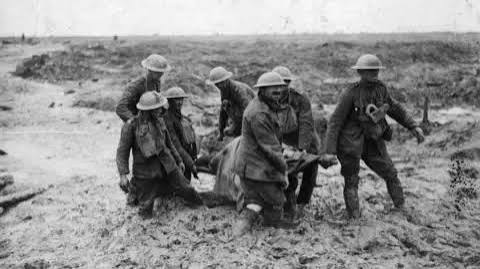
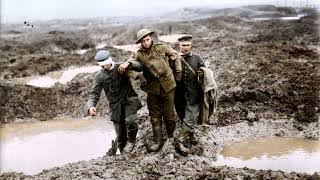
    Flanders’ clay-heavy soil turned to glue with the first rain. A single storm could leave trenches waist-deep in water, and the mud was more than an inconvenience—it was a killer. At Passchendaele in 1917, men and horses drowned in shell craters filled with liquid mud. Artillery shells that hit the muck often failed to explode, while soldiers struggled to move, their boots sucked down with each step.

    Trench foot, a non-freezing cold injury, became epidemic. In the winter of 1914–15 alone, over 20,000 British soldiers were treated for it. The condition—swollen, numb, decaying tissue—often led to amputation. Soldiers tried to ward it off by drying their feet and changing socks, but in the waterlogged trenches, such efforts were rarely enough.

    Rats and Lice: The Constant Companions

    Brown rats, Rattus norvegicus, thrived in the trenches. They fed on corpses, food scraps, and horse carcasses, growing to the size of cats, soldiers claimed. Millions of rats infested the front lines, and men killed them with shovels, bayonets, and even trained dogs—but the numbers were overwhelming. One soldier wrote of rats running over his face at night, their claws scratching against his skin.

    Lice were just as pervasive. They caused “trench fever,” a relapsing illness that added fever and pain to the misery. The daily ritual of “chatting”—searching clothing for lice—was a constant, futile battle.

    The Invisible Wound: Shell Shock

    The term “shell shock” emerged during the war to describe the tremors, paralysis, mutism, and nightmares that struck soldiers without physical injury. The British Army recorded around 80,000 cases, and in 1916, shell shock accounted for about 40% of casualties in some front-line units. Treatments ranged from rest and tonics to electroshock and hypnosis—often with little understanding of the condition.

    Many shell-shocked men were branded cowards or malingerers. Some faced courts-martial and execution for desertion; the British executed 306 soldiers, several of whom likely suffered from shell shock. The legacy of shell shock helped shape modern military psychiatry, but for the men who endured it, the war never ended.

    A Day in the Trenches

    Life followed a grim rhythm. “Stand-to” at dawn and dusk meant manning the fire step, bayonets fixed, watching for attack. Days were spent inspecting, repairing, and hauling supplies. Nights were for work—repairing wire, patrolling No Man’s Land, or raiding enemy trenches.

    Food was cold and monotonous: bully beef, hard biscuits, jam, and tea. Fresh food was a luxury, often arriving in parcels from home. Sleep came in shifts, in wet clothes, in cramped dugouts. Chronic exhaustion was universal.

    The Human Toll

    The trenches were a machine designed to grind men down—body and mind. The mud, the rats, the lice, the fear—they all combined into a daily endurance test. The men who survived carried the scars, visible and invisible. Shell shock and trench foot were just the names for the damage; the reality was a generation changed forever.

    The trenches of World War I were more than a military strategy; they were a world unto themselves, a place where the human spirit was tested to its limits. The mud, the vermin, and the psychological wounds left an indelible mark on all who passed through. Understanding that world is not just about remembering the past—it’s about honoring the endurance of those who lived it.

    Summary

    • The Western Front spanned 475 miles, with 35,000 miles of trenches by 1917.
    • Trench foot affected over 20,000 British soldiers in the winter of 1914–15 alone.
    • Brown rats and lice were ubiquitous, causing disease and constant torment.
    • Shell shock affected an estimated 80,000 British soldiers, yet many were treated as cowards.
    • Daily life was a cycle of stand-to, hard labor, and sleep deprivation, all under the threat of death.

    FAQ

    Q: What was the typical depth and width of a trench?
    A: Trenches were usually 6–8 feet deep and 3–5 feet wide, with duckboards on the floor to keep men above water.

    Q: How did soldiers deal with rats?
    A: They used shovels, bayonets, and dogs to kill rats, and tried traps and poison—but the rat population was so vast that these efforts had little impact.

    Q: What were the symptoms of shell shock?
    A: Symptoms included tremors, paralysis, mutism, nightmares, anxiety, and dissociation. It was not a formal diagnosis at the time.

    Q: How long did soldiers spend in the front line?
    A: Typically 4–6 days, after which they rotated to support and reserve lines, then to rest areas, though the cycle repeated continuously.

    Q: What caused trench foot?
    A: Prolonged exposure to wet, cold conditions caused swelling, numbness, and tissue decay, often leading to amputation.

  • From Trench Knives to Flamethrowers: How WWI Reshaped the Infantryman’s Arsenal

    From Trench Knives to Flamethrowers: How WWI Reshaped the Infantryman’s Arsenal

    In 1914, infantrymen went to war with bolt-action rifles, long bayonets, and sabers—weapons designed for open battlefields that no longer existed. By 1918, the trenches had forced a revolution in personal weaponry, giving rise to trench knives, grenades, shotguns, and even flamethrowers.

    This article traces that transformation, from the improvised clubs of the first trench raids to the world’s first submachine gun, and shows how the static stalemate of the Western Front turned close-quarters combat into a brutal science.

    The Problem: Long Rifles in a Short-Range War

    Before 1914, infantry doctrine emphasized massed rifle fire at ranges of 500 to 800 yards. The standard-issue rifles—the British Lee-Enfield SMLE, the German Mauser Gewehr 98, and the French Lebel M1886—were accurate and powerful, but they were long, heavy, and awkward in a trench. Bayonets were even longer: the French Épée-Baïonnette measured a full 20 inches, designed for bayonet drills that never anticipated a muddy ditch 6 feet wide.

    Trench warfare shattered these assumptions. By late 1914, the Western Front had congealed into a network of zigzagging trenches, and attacks across No Man’s Land meant closing with the enemy at distances under 100 yards—often less than 30. In this environment, a bolt-action rifle with a 30-inch barrel was a liability. Soldiers needed weapons that were compact, quick to deploy, and devastating at point-blank range.

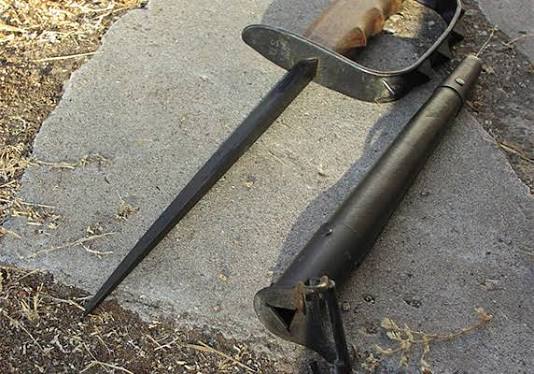
    The result was a frantic period of improvisation. Troops on all sides fashioned clubs from entrenching tools, wire, and scrap metal. They lashed bayonets to wooden handles to make spears. They traded rifles for pistols and knives. By 1915, armies began issuing purpose-built trench knives, such as the French Couteau Poignard M1916 and the German Nahkampfmesser. Many featured brass knuckles on the grip, turning the knife into a dual-purpose weapon for stabbing and punching.

    The Grenade: From Improvisation to Mass Production

    Grenades were almost nonexistent in 1914. Pre-war armies had experimented with hand-thrown explosives, but none had standardized them. The trench experience changed that overnight. Soldiers soon discovered that a thrown explosive could clear a trench section or bunker without exposing the thrower to enemy fire.

    The early war saw a flood of improvised grenades—jam tins packed with nails and gunpowder, glass bottles filled with explosives. But these were dangerous and unreliable. The first practical answer came in 1915 with the British Mills bomb, a fragmentation grenade with a serrated cast-iron body and a lever-and-pin mechanism. It could be thrown accurately and exploded into dozens of lethal fragments.

    The Germans took a different approach with the Stielhandgranate, or stick grenade. Its long wooden handle allowed for longer throws and could be rolled into trenches. By 1918, Britain alone had produced roughly 75 million grenades, compared to about 500,000 in 1914. The grenade had gone from a makeshift tool to a standard infantry weapon, essential for trench raids and assaults.

    The Trench Gun: America’s Controversial Addition

    When the United States entered the war in 1917, it brought a weapon that no European army had used: the pump-action shotgun. The Winchester Model 1897, already a civilian hunting gun, was modified with a bayonet mount and a heat shield, earning the nickname “trench broom” or “trench sweeper.”

    Its effectiveness was undeniable. Each pump-action blast fired a spread of buckshot that could hit multiple targets in a confined space. In the close quarters of a trench, it was arguably the most lethal personal weapon on the battlefield. The Germans were so outraged that they issued a formal protest in 1918, claiming the shotgun violated the Hague Conventions’ ban on inhumane weapons. The US rejected the protest, noting that shotguns were not explicitly prohibited. The controversy illustrates how desperate the war had become—and how quickly new weapons blurred the line between acceptable and barbaric.

    The Flamethrower: Terror as a Weapon

    The flamethrower was the most terrifying weapon introduced in the war. The Germans first used the Flammenwerfer on July 30, 1915, at Hooge, Belgium, against British troops. The effect was immediate and psychological: men fled in panic, and the weapon’s ability to clear bunkers and trenches made it a feared assault tool.

    Portable models, such as the Kleinflammenwerfer, could project a stream of burning fuel up to 20 or 30 meters. Larger static versions, like the British Livens Large Gallery Flame Projector, could reach 40 meters but were effectively one-shot devices. The flamethrower’s tactical value was limited—the operator was vulnerable to snipers, and the fuel tanks were heavy—but its terror value was immense. A soldier facing a stream of fire had to break cover or burn, which made flamethrowers effective at forcing enemy troops out of strongpoints.

    The weapon’s legality was murky. The Hague Conventions banned poison gas and expanding bullets but said nothing about fire. As with the shotgun, Germany used flamethrowers extensively, so the moral high ground was shaky. The weapon’s legacy was clear: future wars would see improved versions, and the psychological impact of fire would never be forgotten.

    Early Machine Guns and Submachine Guns: The Seeds of Modern Firepower

    Machine guns existed before the war—the Maxim gun had been in service since 1884—but they were treated as artillery, not infantry weapons. The war changed that. The British Lewis Gun, the French Chauchat, and the German MG 08/15 were all portable enough to accompany infantry, though they were heavy, prone to jamming, and required crews to operate.

    The real breakthrough came in 1918 with the German MP 18. Designed for the stormtrooper units that spearheaded the Spring Offensive, the MP 18 was the world’s first practical submachine gun. It fired 9mm pistol ammunition at a rate of about 400 rounds per minute, and its short barrel and detachable magazine made it ideal for close-quarters fighting. Issued to assault troops, the MP 18 allowed a single soldier to lay down a withering volume of fire while moving. It was the direct ancestor of every modern submachine gun and a clear sign of where infantry weapons were headed.

    From Static Lines to Stormtroopers

    The shift in weapons reflected a shift in tactics. By 1917, the Germans had developed infiltration tactics, using small, highly trained teams of stormtroopers armed with grenades, pistols, and flamethrowers to bypass strongpoints and attack command posts and supply lines. This approach required light, portable firepower, which drove the adoption of SMGs and grenades.

    The rest of the Allies followed, though more slowly. By November 1918, the infantryman’s kit was vastly different from 1914. The long bayonet was still present, but it was now a secondary weapon. Grenades were standard issue. Shotguns and submachine guns had made their debut. The flamethrower, though still niche, had proven its psychological power.

    These changes were not just technological; they were cultural. The war had broken the old rules of warfare, and the new weapons reflected a brutal pragmatism. Soldiers no longer fought in lines; they fought in bursts of violence, using whatever tool could give them an edge.

    The Legacy of WWI Infantry Weapons

    The weapons developed between 1914 and 1918 laid the foundation for modern infantry combat. The submachine gun, the fragmentation grenade, and the portable flame weapon all became standard in subsequent conflicts. The trench shotgun, though controversial, was used again in World War II and beyond.

    More importantly, the war demonstrated that infantry weapons must adapt to the realities of the battlefield. The lessons of the trenches—close-quarters lethality, portability, and psychological impact—remain central to small-arms design today. When you see a soldier with a carbine and a grenade launcher, you are seeing a descendant of the MP 18 and the Mills bomb.

    The trenches of WWI were a crucible that forged a new kind of warfare. The weapons that emerged from that crucible were brutal, innovative, and often terrifying. They were also a necessary response to a war that had turned the world upside down.

    World War I forced armies to abandon 19th-century weapons and embrace the close-quarters tools of modern war. From the trench knife to the flamethrower, each innovation was a pragmatic answer to the unique horror of the trenches. These weapons not only changed how wars were fought but also set the stage for the infantry arsenals of the 20th century. The stalemate of the Western Front may have been a deadlock, but it was also a forge—one that produced the tools that would define warfare for generations to come.

    Summary

    • Trench warfare made long rifles and bayonets obsolete, leading to the development of compact close-quarters weapons like trench knives and pistols.
    • Grenades went from improvised jam tins to mass-produced Mills bombs and stick grenades, with Britain producing 75 million by 1918.
    • The US shotgun, or “trench broom,” was so effective that Germany protested it as inhumane, though it was not banned.
    • Flamethrowers, first used by Germany in 1915, were more about psychological terror than tactical efficiency, with ranges of 20–40 meters.
    • The MP 18, the first practical submachine gun, was introduced in 1918 and directly influenced modern infantry weapons.

    FAQ

    Q: Why were trench knives so important in WWI?
    A: Trench knives, often with brass knuckles, were essential for silent raids and close-quarters combat, where rifles were too long and noisy. They were compact, deadly, and could be used in the confined spaces of trenches.

    Q: Did the shotgun really cause a diplomatic protest?
    A: Yes. In 1918, Germany formally protested the US use of pump-action shotguns, claiming they violated the Hague Conventions. The US rejected the protest, and shotguns remained in use.

    Q: How effective were flamethrowers in combat?
    A: Their effectiveness was mixed. They were terrifying and could clear bunkers, but they had short range (20–30 meters), were heavy, and made operators vulnerable. Their main impact was psychological.

    Q: What was the first submachine gun?
    A: The German MP 18, introduced in 1918, is generally considered the first practical submachine gun. It was used by stormtroopers during the Spring Offensive.

    Q: How did grenades change during the war?
    A: Grenades went from improvised, unreliable devices to standardized, mass-produced weapons like the British Mills bomb and German stick grenade. Production increased from about 500,000 in 1914 to 75 million by 1918.

  • Passchendaele: The Battle Where Men Drowned in Mud

    Passchendaele: The Battle Where Men Drowned in Mud

    The Third Battle of Ypres, known to history as Passchendaele, lasted 103 days and produced one of the most haunting images of the First World War: soldiers, horses, and even entire guns sinking into a sea of mud. The battle was fought over a few kilometers of Belgian farmland that became a swamp, and its name is now synonymous with the brutality and futility of trench warfare.

    But Passchendaele was not just a meaningless slaughter—it was a calculated, if flawed, strategic gamble. The British commander, Sir Douglas Haig, believed he could break the German line and relieve pressure on the exhausted French army. Instead, the offensive became a brutal war of attrition, costing hundreds of thousands of casualties for a strip of ground that would be abandoned in the German spring offensives of 1918.

    This article explores the facts, the mud, and the human cost of Passchendaele, and asks why the battle remains a symbol of the Great War’s tragedy.

    A Salient That Became a Trap

    The battle was fought around the Ypres Salient, a bulge in the Allied line that had been held since 1914. The town of Ypres was a symbol of Belgian resistance, but it was surrounded on three sides by German-held ridges. The most important of these was Passchendaele Ridge, a low rise that gave the Germans perfect observation over the British positions.

    For two years, the Allies had tried to break out of the salient, but every attack was met with devastating German fire. Haig’s plan in 1917 was to capture the ridge and then push on to the Belgian coast, where German submarine bases at Zeebrugge and Ostend were strangling Britain’s supply lines. He also needed to keep the Germans busy while the French recovered from a series of mutinies that had left their army in disarray.

    The Artillery That Destroyed the Ground

    The offensive began with a massive artillery bombardment. Over 4.25 million shells were fired in ten days, more than in any previous battle. The idea was to destroy German barbed wire, trenches, and gun positions, and to allow the infantry to advance with minimal opposition.

    But the bombardment had a devastating side effect. The area around Ypres was reclaimed marshland, drained by a network of ditches and pumps. The shells tore up the drainage system and churned the clay soil into a waterlogged moonscape. Every shell hole became a potential death trap, filling with water and mud. When the infantry attacked on 31 July 1917, they found the ground already turning to sludge.

    The weather made things worse. August 1917 was the wettest in thirty years. Rain began on the first day of the battle and continued almost without letup. The mud became so deep that men and animals drowned in shell holes. Rifles jammed, artillery pieces sank, and wounded soldiers were lost in the mire.

    The Phases of the Battle

    The battle was not one continuous push but a series of separate engagements, each with its own name and its own tragedy.

    Pilckem Ridge and Langemarck: The Hopes and the Rain

    The opening attack, the Battle of Pilckem Ridge (31 July – 2 August), made some initial gains. British, French, and Belgian troops advanced up to 1.8 kilometers in places, capturing German positions and taking thousands of prisoners. But German counterattacks, combined with the rain, halted the advance.

    The Battle of Langemarck (16–18 August) was a follow-up attempt. It achieved little, and the mud was already slowing movement and making artillery support unreliable. The infantry struggled to keep up with the creeping barrage, and many attacks failed in the morass.

    Plumer’s ‘Bite and Hold’: A Brief Success

    In September, Haig handed command of the main effort to General Herbert Plumer, who adopted a different tactic: ‘bite and hold.’ Instead of trying to break through, the Allies would advance in small, well-supported steps, each one capturing a limited objective and then digging in to repel counterattacks.

    This approach worked. At the Battle of Menin Road (20–25 September) and Polygon Wood (26 September – 3 October), the Allies gained ground with relatively low casualties. The Battle of Broodseinde (4 October) was the most successful day of the entire offensive: Australian and New Zealand troops overran German positions and captured the ridge’s crest.

    But then the rain returned with a vengeance. The low ground turned into a quagmire, and the next attacks bogged down.

    The Mud at Poelcappelle and Passchendaele

    The Battle of Poelcappelle (9 October) was a disaster. The infantry could barely move, and many men fell into shell holes and drowned. The First Battle of Passchendaele (12 October) was fought by the ANZACs, who suffered heavy casualties for no gain. The mud was so deep that the wounded could not be evacuated, and many died where they lay.

    The Canadian Corps, under Lieutenant-General Arthur Currie, was brought in for the final push. Currie had initially opposed the attack, calling it ‘not a matter of military skill but of pure endurance.’ But he obeyed orders. The Second Battle of Passchendaele (26 October – 10 November) was a series of bloody, step-by-step advances. On 6 November, Canadian troops finally captured the ruined village of Passchendaele. The ridge was in Allied hands.

    The Cost of the Ridge

    By the time the battle ended on 10 November, the Allies had gained about eight kilometers of ground. The cost was staggering: between 275,000 and 325,000 Allied casualties (killed, wounded, or missing). German casualties are harder to estimate, but they were likely between 220,000 and 260,000, with some sources suggesting as many as 400,000.

    In some sectors, the ground gained was measured in yards. The official British history calculated that the offensive cost about one man per square yard of ground taken. The village of Passchendaele, which had been the objective, was a pile of rubble. The ridge was captured, but it was a hollow prize: the Germans simply withdrew to a new defensive line, and the ground was abandoned in 1918.

    The Generals and the Men

    The battle raised questions that are still debated today. Haig argued that it was necessary to wear down the German army and prevent a collapse of the Allied war effort. He believed the Germans were near exhaustion. But his critics, including Prime Minister David Lloyd George, called it a reckless gamble. Lloyd George later wrote that the battle was ‘a reckless gamble’ that could have been avoided.

    The German perspective was different. They adopted a defense-in-depth strategy, using concrete pillboxes and counterattack divisions to inflict maximum casualties on the Allies. They, too, suffered heavily, but they could afford it less. Ludendorff later wrote that the battle ‘placed the German army under a strain from which it never recovered.’

    For the men who fought, the mud was the enemy. One soldier wrote: ‘The mud is not just mud—it is a living thing that grips you, pulls you down, and swallows you.’ The battle became a byword for the horror of the Western Front.

    The Legacy of Passchendaele

    Passchendaele did not win the war. It did not break the German line, and it did not capture the submarine bases. It was a tactical success, in that the Allies held the ground they had gained, but it was a strategic failure. The German army was damaged, but it was not destroyed, and the war would drag on for another year.

    Yet the battle had a profound effect on the course of the war. It forced the Germans to commit reserves that they could not replace. It also demonstrated the limits of attrition as a strategy. And it gave the world a new symbol of the futility of war: the image of a soldier sinking into the mud, unable to move, waiting for death.

    The battle is remembered today through the Menin Gate Memorial in Ypres, which bears the names of 54,000 missing British and Commonwealth soldiers. Every night at 8 p.m., the Last Post is sounded under the arch, a ceremony that has taken place almost without interruption since 1928. The names on the gate are a reminder of the cost of the battle, and of the folly of war.

    In the end, the ground gained at Passchendaele was given back in 1918. But the men who died there are not forgotten. Their sacrifice, like the mud, remains a part of the landscape.

    Passchendaele is a lesson in the limits of military power. It shows what happens when ambition outruns the terrain, the weather, and the endurance of soldiers. The battle was not just a defeat or a victory—it was a tragedy that consumed hundreds of thousands of lives for a few kilometers of mud. And yet, it was also a testament to the courage of the men who fought, and to the resilience of the human spirit in the face of unimaginable horror. The memory of Passchendaele should serve as a warning, not just about war, but about the dangers of pursuing an objective at any cost.

    Summary

    • Dates and Duration: The Third Battle of Ypres lasted from 31 July to 10 November 1917, a total of 103 days.
    • Casualties: Allied casualties were between 275,000 and 325,000; German casualties were between 220,000 and 260,000.
    • Terrain: The battle was fought over reclaimed marshland that was destroyed by artillery and rain, turning into a swamp.
    • Key Tactics: The ‘bite and hold’ tactics under General Plumer were initially successful, but the rain and mud made later attacks impossible.
    • Outcome: The Allies captured Passchendaele Ridge, but the gain was small and was abandoned in 1918. The battle is remembered as a symbol of the futility of trench warfare.

    FAQ

    Q: Why is the battle called ‘Passchendaele’?
    A: The battle is named after the village of Passchendaele, which was the final objective. The village was on a ridge that gave the Allies a vantage point over the German lines. The name became synonymous with the battle and its horrors.

    Q: How many people died at Passchendaele?
    A: Estimates vary, but the total number of casualties (killed, wounded, and missing) for both sides is around 500,000 to 600,000. The exact number is difficult to determine due to the nature of the fighting and the mud.

    Q: What was the ‘bite and hold’ tactic?
    A: This was a tactic used by General Plumer in September 1917. Instead of a full breakthrough, the Allies would advance in small steps, capture a limited objective, and then dig in and defend it against German counterattacks. This was initially successful, but the rain and mud made it impossible to maintain.

    Q: Did the battle have any strategic impact?
    A: The battle did not achieve its main objectives of breaking the German line or capturing the submarine bases. It did, however, inflict heavy casualties on the German army and forced them to use reserves. Some historians argue that it contributed to the eventual Allied victory in 1918.

    Q: What is the Menin Gate?
    A: The Menin Gate is a memorial in Ypres, Belgium, that commemorates the missing British and Commonwealth soldiers who died in the Ypres Salient. It lists over 54,000 names. The Last Post is played there every evening as a tribute.