Tag: World War I

  • The Sussex Incident: The Sinking That Forced Germany to Change Its U-Boat Rules

    The Sussex Incident: The Sinking That Forced Germany to Change Its U-Boat Rules

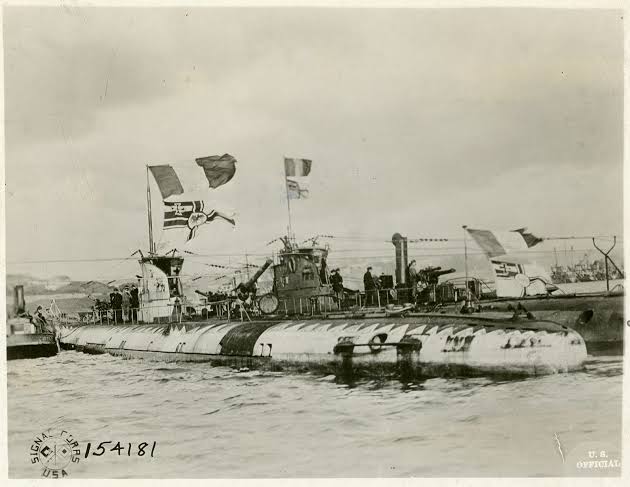
    On March 24, 1916, the French cross-Channel ferry SS Sussex was steaming from Folkestone to Dieppe with roughly 380 passengers and crew aboard. About 15 miles off the French coast, a German U-boat fired a single torpedo without warning. The bow blew off, and the ship began to sink rapidly. Within minutes, the lives of dozens of civilians hung in the balance—and the course of World War I was about to shift.

    The attack killed between 50 and 80 people, and while no Americans died, several were injured. That fact set off a diplomatic firestorm. The Sussex sinking became the second major U-boat crisis for the United States, following the Lusitania disaster just ten months earlier. But this time, President Woodrow Wilson drew a harder line, issuing an ultimatum that forced Germany to back down—temporarily. The result was the Sussex Pledge, a promise that changed U-boat tactics for nearly a year and revealed the fragile balance between military necessity and international pressure.

    The Sinking of the Sussex

    The SS Sussex was a 1,530-ton steam ferry operated by the London, Brighton and South Coast Railway, a workhorse of cross-Channel travel. On that March day, it carried a mix of military personnel and civilians, including women and children. The German submarine SM U-29, commanded by Kapitänleutnant Herbert Pustkuchen, stalked the ferry and launched a single torpedo. The explosion tore off the bow, yet the aft section stayed afloat long enough for French and British vessels to rescue survivors and tow the wreck to Boulogne.

    Casualty figures vary by source—between 50 and 80 dead or missing. Among the passengers were several Americans, and although none were killed, the injuries they suffered would have outsized political consequences.

    The Strategic Backdrop: Unrestricted Submarine Warfare

    Germany had declared the waters around the British Isles a war zone in February 1915, ordering U-boats to sink enemy merchant ships without warning. This was a direct response to the British naval blockade that was strangling German imports. Submarines were fragile, slow, and vulnerable when surfaced; stopping to inspect a merchant ship exposed them to attack from Q-ships—armed decoy vessels. Unrestricted warfare wasn’t just a policy choice; it was a tactical necessity for the U-boat arm.

    The Lusitania sinking in May 1915, which killed 1,198 people including 128 Americans, had already created a major crisis. Germany, fearing U.S. entry into the war, issued the Arabic Pledge in September 1915, promising not to sink passenger liners without warning and to ensure the safety of non-combatants. The Sussex attack, coming just six months later, broke that promise.

    Wilson’s Ultimatum and the Sussex Pledge

    President Wilson responded with a high-stakes gamble. In April 1916, he threatened to sever diplomatic relations with Germany unless it abandoned unrestricted submarine warfare against passenger and merchant ships. The ultimatum was a test of his policy of “strict accountability,” and it risked war if Germany refused. Domestic pressure from pacifists and pro-German immigrant communities made the gamble even riskier.

    Germany, not yet ready for a war with the United States, capitulated. On May 4, 1916, it issued the Sussex Pledge: U-boats would no longer sink merchant ships without warning, would follow prize rules (visit and search), and would ensure the safety of passengers and crew.

    The pledge was a diplomatic victory for Wilson, but it was temporary. Germany’s naval command, led by Admiral Henning von Holtzendorff, viewed it as a tactical concession, not a moral one. They argued that unrestricted warfare was the only way to break Britain and that U.S. entry into the war was inevitable anyway. That view would prevail within eight months.

    The German Perspective: Denial and Justification

    Germany initially denied the attack, then claimed it was a mistake—that the submarine had mistaken the ferry for a minelayer. They also argued that the Sussex was a legitimate target because it carried troops. Eventually, Germany offered an indemnity, but the damage was done.

    The incident highlighted a key tactical reality: controlling U-boats from shore was difficult. Pustkuchen may have acted against standing orders, or the orders themselves were ambiguous. Either way, the attack showed how easily a single commander could trigger an international crisis.

    The Short Life of the Pledge

    The Sussex Pledge held for roughly eight months. On February 1, 1917, Germany rescinded it, resuming unrestricted submarine warfare. That decision directly led to the U.S. declaration of war in April 1917. In hindsight, the pledge was a delaying tactic, not a genuine change of heart.

    The Humanitarian Toll and Shifting Public Opinion

    The Sussex carried civilians, and the attack violated the then-existing rules of naval warfare, such as the 1909 London Declaration. It was part of a broader pattern of civilian casualties at sea that shaped public opinion in neutral countries, especially the United States. The sinking of the Sussex—coming after the Lusitania—convinced many Americans that Germany was willing to kill innocents to win the war. That perception, more than any single event, prepared the U.S. public for eventual entry into the conflict.

    The Sussex incident was a pivotal moment in World War I, not because of the death toll, but because it forced Germany to make a public promise that it couldn’t keep. The Sussex Pledge delayed U.S. entry into the war, but it also revealed the fundamental tension in submarine warfare: a weapon that relies on stealth and surprise cannot easily follow rules designed for surface ships. When Germany broke the pledge in 1917, the U.S. had a clear casus belli. The sinking of a small ferry had, in the end, helped bring the world’s most powerful neutral nation into the war.

    Summary

    • On March 24, 1916, the French ferry SS Sussex was torpedoed without warning by German submarine U-29, killing 50-80 people, including some Americans injured.
    • The attack violated Germany’s earlier Arabic Pledge and prompted President Woodrow Wilson to issue an ultimatum.
    • On May 4, 1916, Germany issued the Sussex Pledge, promising to stop sinking merchant ships without warning and to follow prize rules.
    • The pledge was a tactical concession, not a moral change, and Germany rescinded it on February 1, 1917, leading to U.S. entry into the war.
    • The incident highlighted the tactical impossibility of submarines following prize rules and shaped American public opinion against Germany.

    FAQ

    Q: How many Americans were killed in the Sussex sinking?
    A: No Americans were killed, but several were injured. This fact was politically significant because it allowed Wilson to issue an ultimatum without inflaming public opinion further.

    Q: What was the Sussex Pledge?
    A: The Sussex Pledge was a promise by Germany, made on May 4, 1916, to stop sinking merchant ships without warning, to follow prize rules (visit and search), and to ensure the safety of passengers and crew. It was a response to a U.S. ultimatum after the Sussex sinking.

    Q: Why did Germany break the Sussex Pledge?
    A: Germany’s naval command believed unrestricted submarine warfare was the only way to break the British blockade and win the war. They saw U.S. entry into the war as inevitable, so they rescinded the pledge on February 1, 1917.

    Q: How did the Sussex incident differ from the Lusitania sinking?
    A: The Lusitania (May 1915) killed 1,198 people, including 128 Americans, and caused a major crisis. The Sussex (March 1916) killed fewer people and no Americans, but it showed Germany had not changed its tactics, leading to a stronger U.S. ultimatum and the Sussex Pledge.

    Q: What was the tactical reason for unrestricted submarine warfare?
    A: Submarines were fragile, slow, and vulnerable when surfaced. Stopping to inspect a merchant ship exposed them to attack from Q-ships or armed merchantmen. Unrestricted warfare allowed U-boats to attack without surfacing, which was safer and more effective.
  • The Day the Wind Turned Deadly: Poison Gas at Ypres

    The Day the Wind Turned Deadly: Poison Gas at Ypres

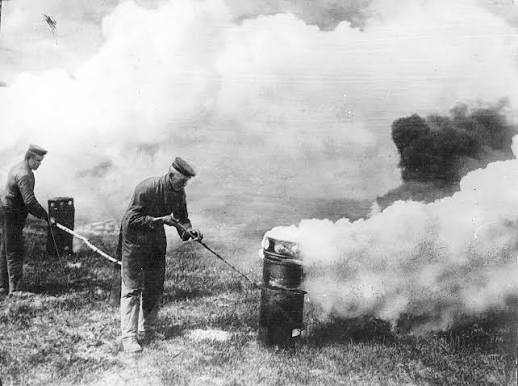
    At 5:00 PM on April 22, 1915, a strange greenish-yellow cloud began to roll across no-man’s-land near Ypres, Belgium. It wasn’t smoke from artillery or a weather phenomenon—it was chlorine gas, released from thousands of cylinders by German troops. Within minutes, French colonial soldiers were choking, coughing up blood, and collapsing in the trenches. The first large-scale chemical attack in history had begun, and it would change the nature of warfare forever.

    The attack was a desperate attempt to break the deadlock of trench warfare, where millions of soldiers faced each other across a wasteland of mud and barbed wire. For months, both sides had tried frontal assaults, artillery barrages, and even the first use of tear gas, but nothing had moved the front line more than a few miles. The German High Command, facing a shortage of conventional explosives and a naval blockade, turned to science for a solution. The result was a weapon so terrifying that it would later be banned by international treaty, but not before it had killed and maimed thousands.

    The Weapon: Chlorine Gas

    Chlorine gas is a simple chemical—a yellow-green gas with a pungent, suffocating odor. When inhaled, it reacts with water in the lungs to form hydrochloric acid, which burns and destroys lung tissue. Even at low concentrations, it causes violent coughing, chest pain, and shortness of breath. At higher concentrations, it can cause death by asphyxiation. The gas is heavier than air, so it tends to settle in trenches and dugouts, making them death traps.

    The German military had been experimenting with chemical agents since the beginning of 1915. On January 31, they tried using xylyl bromide (a type of tear gas) in shells at the Battle of Bolimov, but the cold weather caused the liquid to freeze, and the gas failed to vaporize. The commander of the 4th Army, Albrecht von Württemberg, then suggested using chlorine gas from pressurized cylinders, a method that had been tested at the German Army’s chemical weapons facility. The plan was ambitious: dig in thousands of cylinders along the front line, wait for a favorable wind, and release the gas in a massive cloud that would drift toward the Allied trenches.

    The man behind the weapon was Fritz Haber, a brilliant chemist who would later win the Nobel Prize for his work on nitrogen fixation. Haber was a fervent patriot who believed that science could win the war. He personally oversaw the placement of the cylinders and the training of the troops who would release them. His wife, Clara Immerwahr, also a chemist, was so horrified by his work that she committed suicide in May 1915, reportedly in protest.

    The Attack: Chaos at Ypres

    The Ypres Salient was a bulge in the Allied line that had been held since the First Battle of Ypres in November 1914. It was a vulnerable position, surrounded on three sides by German-held high ground, and the Allies had been reinforcing it with troops from France and the British Empire. On April 22, the German 4th Army faced French colonial troops from Algeria and Morocco, as well as the Canadian Division, which had recently arrived from training in England.

    At 5:00 PM, the Germans opened the valves on 5,730 cylinders, releasing 168 tons of chlorine gas. The cloud, about 6 kilometers wide, drifted slowly toward the Allied lines, carried by a light wind. The effect was instantaneous. The French colonial troops, who had no protection, began to choke and panic. Many fled, leaving a gap of about 4 miles in the Allied line. The Canadians, on the left flank, were also hit, but they managed to hold on, partly because some soldiers improvised by urinating on handkerchiefs and holding them over their mouths—the ammonia in urine neutralized the chlorine.

    Within the first hour, an estimated 6,000 Allied soldiers were affected, and between 800 and 1,000 died, many from asphyxiation. The greenish-yellow cloud was followed by German infantry, but they advanced cautiously, wearing gas masks or holding cloths over their faces, and they were slowed by the fear of the gas and the need to wait for it to dissipate. This hesitation gave the Allies time to seal the breach with counterattacks, and the German breakthrough was contained.

    The Aftermath: A New Era of Warfare

    The attack at Ypres was a tactical failure for the Germans—they did not achieve the strategic breakthrough they had hoped for. But it was a strategic turning point in the war. The Allies were outraged by the use of poison gas, which they saw as a barbaric violation of the Hague Conventions of 1899 and 1907, which prohibited the use of “poison or poisoned weapons.” The Germans argued that the conventions did not explicitly ban chemical clouds or shells, but the international community was not convinced. The British and French governments used the attack as a propaganda tool, describing the suffering of the victims in lurid detail to galvanize public opinion against Germany.

    The attack also sparked a chemical weapons arms race. By the end of 1915, the Allies had developed their own gas masks and were producing chlorine gas. In September 1915, the British launched their own gas attack at the Battle of Loos, with mixed results due to wind shifts. Throughout the war, both sides developed more potent agents, including phosgene and mustard gas, which caused even more horrific injuries. By the end of the war, chemical weapons had killed an estimated 90,000 soldiers and injured over a million more.

    The legacy of Ypres is a cautionary tale about the intersection of science and warfare. Fritz Haber, who was later awarded the Nobel Prize in Chemistry in 1918, would become a controversial figure, condemned by some for his role in developing chemical weapons and admired by others for his contributions to agriculture. His wife’s suicide, in protest of his work, remains a poignant symbol of the moral dilemmas posed by scientific progress in wartime.

    The use of poison gas at Ypres also led to the Geneva Protocol of 1925, which banned the use of chemical and biological weapons in war. The protocol was a step forward, but it did not prevent the use of chemical weapons in later conflicts, such as the Iran-Iraq War in the 1980s and the Syrian Civil War in the 2010s. The ghost of Ypres still haunts the modern battlefield.

    The first use of poison gas at Ypres was a watershed moment in military history. It demonstrated that science could create weapons of mass destruction, and it set a precedent for the use of chemical agents in warfare. The attack was a tactical failure, but it had a profound strategic impact, galvanizing the Allies and leading to an arms race in chemical warfare. The suffering of the soldiers at Ypres, many of whom died gasping for air in the trenches, remains a powerful reminder of the human cost of technological innovation in war.

    Summary

    • On April 22, 1915, Germany launched the first large-scale poison gas attack in history at Ypres, using 168 tons of chlorine gas from 5,730 cylinders.
    • The attack created a 4-mile gap in the Allied lines, but German infantry were slow to advance, allowing the Allies to seal the breach.
    • Around 6,000 Allied soldiers were affected within the first hour, with 800–1,000 deaths, mostly among French colonial troops.
    • The attack was planned by General Erich von Falkenhayn and developed by chemist Fritz Haber, whose wife later committed suicide in protest.
    • The use of gas was condemned as a violation of the Hague Conventions, leading to the development of gas masks and an arms race in chemical weapons, culminating in the Geneva Protocol of 1925.

    FAQ

    Q: What was the first poison gas used in World War I?
    A: Chlorine gas, released from pressurized cylinders by German forces at the Second Battle of Ypres on April 22, 1915.

    Q: How did soldiers protect themselves from the gas?
    A: Initially, soldiers had no protection. Some improvised by urinating on handkerchiefs and holding them over their mouths, as the ammonia in urine neutralized the chlorine. Later, both sides developed effective gas masks.

    Q: Why did the Germans use poison gas?
    A: Germany was facing a stalemate on the Western Front and a shortage of conventional explosives. The German High Command saw chemical weapons as a potential war-winning technology and believed it would shorten the war.

    Q: Was the use of poison gas a violation of international law?
    A: The Hague Conventions of 1899 and 1907 prohibited the use of “poison or poisoned weapons,” but the language was ambiguous regarding gas. Germany argued that it was not explicitly banned, but the Allies condemned it as a violation of international law.

    Q: What was the long-term impact of the gas attack at Ypres?
    A: The attack led to the development of more lethal chemical agents, such as phosgene and mustard gas, and the eventual ban on chemical weapons in the Geneva Protocol of 1925. It also highlighted the moral and ethical dilemmas of scientific research in wartime.

  • The Battle of Belleau Wood: How US Marines Forged a Legend in France

    The Battle of Belleau Wood: How US Marines Forged a Legend in France

    On June 26, 1918, a short message crackled across the wire: “Woods now entirely — US Marine Corps.” The words ended a brutal three-week struggle for a patch of forest in northern France, but they also marked the moment the US Marine Corps announced itself on the world stage. Belleau Wood was not just a battle; it was a crucible that transformed raw American troops into battle-hardened veterans and gave the Marines their enduring reputation as elite shock troops.

    The fight came at a desperate time. Germany’s Spring Offensive had pushed Allied lines to the breaking point, and Paris lay within striking distance. Into this breach stepped the 4th Marine Brigade, a force of roughly 8,000 men who would face machine-gun fire, poison gas, and some of the toughest terrain on the Western Front. By the time the wood fell, they had suffered over 5,000 casualties — but they had stopped the German advance cold.

    The Road to Belleau Wood

    In the spring of 1918, the Western Front was on the verge of collapse. With Russia out of the war, Germany transferred nearly 50 divisions to France, hoping to win a decisive victory before American troops could tip the balance. The third German offensive, Operation Blücher-Yorck, smashed through Allied lines along the Aisne River on May 27, driving toward Paris.

    The Americans were green. The US had entered the war in April 1917, but by spring 1918, only a handful of divisions were ready for combat. The 2nd Division was one of them, and it included the 4th Marine Brigade — the only Marine brigade in the American Expeditionary Forces. Initially used for rear-area security, the Marines were rushed to the front when the Germans broke through.

    By June 1, they were digging in along the Paris-Metz highway, blocking the road to the capital. The terrain favored the defender: Belleau Wood sat on a ridge overlooking the Marne Valley, a dense tangle of trees, boulders, and ravines that made it a natural fortress. But the Marines were untested, and the Germans were confident they could brush aside these inexperienced colonials.

    “Retreat? Hell, We Just Got Here!”

    The first days of June were a trial by fire. German attacks slammed into Marine positions along the highway, but the Americans held. It was during this period that Capt. Lloyd Williams of the 5th Marines supposedly delivered the line that would become legend. When a French officer suggested his men pull back, Williams reportedly replied: “Retreat? Hell, we just got here!”

    The Germans soon learned that the Marines were not going to be easy prey. But holding the line was only the beginning. On June 6, the Allies launched the first major American offensive of the war, with the Marines ordered to take Belleau Wood itself.

    The attack was a disaster in the making. The Marines had to cross open wheat fields swept by machine-gun fire from the wood’s edge. They advanced in waves, and the casualties were horrific. The 6th Marine Regiment’s commander, Lt. Col. Albertus Catlin, was shot through the lungs almost immediately. By day’s end, the Marines had suffered 1,087 casualties — the bloodiest single day in Marine Corps history to that point.

    Fighting in the “Devil’s Wood”

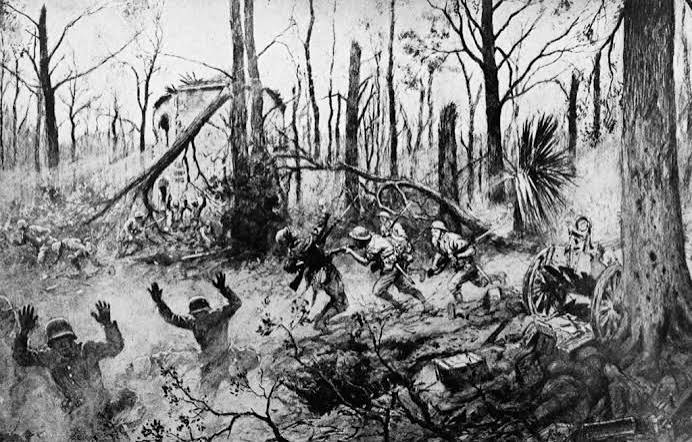
    What followed was weeks of brutal, close-quarters combat inside the wood. The terrain made artillery support nearly useless; the fighting devolved into small-unit actions where men relied on grenades, bayonets, and raw courage.

    One of the most famous moments came when Gunnery Sgt. Dan Daly, a two-time Medal of Honor recipient, rallied his men for an assault on a German machine-gun nest. According to accounts, he shouted: “Come on, you sons of bitches! Do you want to live forever?” The Marines surged forward and took the position.

    The Germans, for their part, were stunned by the ferocity of the Americans. They had expected inexperienced troops who would break under fire. Instead, they faced men who kept coming despite devastating losses. German reports referred to the Marines as “devil dogs” — a nickname that stuck.

    But the fighting was far from one-sided. The Marines were repeatedly counterattacked, and the wood changed hands several times. Between June 13 and June 21, the battle ground to a stalemate as both sides pounded each other with artillery. The Marines were exhausted, their units shattered, but they refused to give up.

    The Final Push

    By late June, fresh American troops were brought up, and the Allies launched a renewed offensive. The Marines, despite their losses, were determined to finish the job. On June 26, after a final assault, the wood was declared secure. The message — “Woods now entirely — US Marine Corps” — signaled the end of the battle.

    The cost had been staggering. The 2nd Division as a whole lost nearly 10,000 men, including over 1,800 killed. The Marine Brigade alone suffered more than 5,000 casualties, with over 1,000 dead. German losses were estimated at over 10,000, though exact numbers remain disputed.

    But the victory had strategic significance beyond the bloodshed. The German drive on Paris was halted, and the Allies had proven that American troops could fight — and win — against the best the German army could throw at them. The battle also marked a turning point in the war, as the initiative shifted to the Allies.

    The Legacy of Belleau Wood

    The battle’s impact on the US Marine Corps was profound. Before 1918, the Marines were a small, often overlooked branch of the US military. After Belleau Wood, they were recognized as an elite fighting force, feared by their enemies and respected by their allies. The French government renamed the forest “Bois de la Brigade de Marine” in honor of the Marines’ sacrifice.

    But the legacy is also one of sorrow. The Marines who fought at Belleau Wood were volunteers and regulars who had signed up for a war they believed was just. They faced horrors — poison gas, machine guns, and hand-to-hand combat — that would haunt them for the rest of their lives. Many never made it home.

    The battle also served as a lesson in leadership and tenacity. Gen. John J. Pershing, commander of the AEF, had insisted on keeping American units together, and Belleau Wood validated that decision. It showed that American troops, when properly led, could match the veteran armies of Europe.

    Why It Still Matters

    Today, Belleau Wood is a site of pilgrimage for Marines, who visit to pay tribute to their predecessors. The battle is taught in military academies as an example of how determination and tactical flexibility can overcome difficult odds. It also stands as a reminder of the human cost of war — the thousands of young men who died in a forest that, by all accounts, was not worth the sacrifice in purely strategic terms.

    But at the time, the stakes were existential. If the Germans had broken through, Paris could have fallen, and the war might have ended differently. The Marines at Belleau Wood held the line, and in doing so, they helped turn the tide of World War I. Their baptism of fire was not just a test — it was a transformation.

    The Battle of Belleau Wood was a brutal, costly victory that proved the mettle of the US Marine Corps. It was a fight fought with raw courage against a determined enemy, in a forest that became a graveyard for thousands. But it was also a turning point, both for the war and for the Marines. The legends born there — Daly’s battle cry, Williams’s defiance — still echo through the Corps today. Belleau Wood was not just a battle; it was a defining moment that shaped the identity of the United States military for a century.

    Summary

    • The Battle of Belleau Wood (June 1–26, 1918) was the first major offensive by US Marines in World War I, halting the German advance toward Paris.
    • The 4th Marine Brigade suffered over 5,000 casualties (more than half their strength), with the bloodiest day on June 6 costing 1,087 men.
    • Key figures included Capt. Lloyd Williams (“Retreat? Hell, we just got here!”) and Gunnery Sgt. Dan Daly (“Come on, you sons of bitches! Do you want to live forever?”).
    • The victory proved American troops could fight effectively, boosting Allied morale and leading the French to rename the wood “Bois de la Brigade de Marine.”
    • The battle cemented the Marines’ reputation as an elite fighting force, earning them the nickname “Devil Dogs” from the Germans.

    FAQ

    Q: What was the ‘baptism of fire’ for the US Marines?
    A: It refers to the Battle of Belleau Wood in June 1918, the first major combat test for American Marines in World War I. They were thrown into a desperate fight to stop a German offensive and proved their toughness despite heavy losses.

    Q: How many Marines died at Belleau Wood?
    A: The 4th Marine Brigade suffered approximately 1,062 killed and 5,183 wounded or missing out of about 8,000 men — a casualty rate of over 60%.

    Q: What is the origin of the term ‘Devil Dogs’?
    A: German soldiers, impressed by the Marines’ ferocity, reportedly called them ‘Teufel Hunden’ (devil dogs), a nickname that stuck in American lore.

    Q: Why was Belleau Wood strategically important?
    A: It sat on a ridge overlooking the Marne Valley, and controlling it was crucial for blocking the German drive toward Paris. The battle halted that advance.

    Q: How did the battle affect the US Marine Corps’ reputation?
    A: It transformed the Marines from a small, secondary force into an elite infantry unit, solidifying their role as shock troops and leading to the French renaming the forest in their honor.

  • The East African Campaign: The Four-Year Guerrilla War That Never Ended

    The East African Campaign: The Four-Year Guerrilla War That Never Ended

    When the guns fell silent on the Western Front on November 11, 1918, one German commander refused to lay down his arms. General Paul von Lettow-Vorbeck, leading a small force of European officers and African soldiers in the jungles of East Africa, continued fighting for two more weeks. He finally surrendered on November 25, 1918, not because he was defeated, but because a British officer showed him a newspaper announcing the Armistice.

    That surrender marked the end of the East African Campaign, a four-year conflict that stretched from the beaches of Tanzania to the mountains of Mozambique. It was a war of ambushes, disease, and endurance—a guerrilla war that cost the lives of over 100,000 African porters and tied down hundreds of thousands of Allied troops. Yet it remains one of the least-known chapters of World War I.

    The Opening Blow: The Battle of Tanga

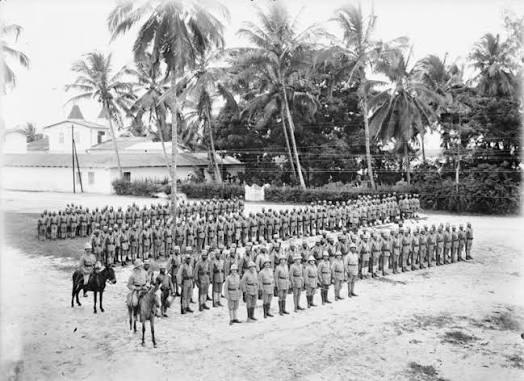
    The campaign began in earnest on November 2, 1914, when a British-Indian expeditionary force of about 8,000 men landed near the port of Tanga, on the coast of German East Africa. The British expected a quick victory against a small colonial garrison. Instead, they were met by Lettow-Vorbeck’s force of about 1,000 German officers and Askaris—professional African soldiers who were marksmen and disciplined fighters.

    Over two days of chaotic fighting in the jungle, the British were routed. The Askaris, armed with modern rifles and trained in bush warfare, outflanked the British and sent them fleeing back to their ships, leaving behind weapons, ammunition, and even medical supplies. The Battle of Tanga was a humiliating defeat for the British Empire and set the tone for the entire campaign: the Germans, though heavily outnumbered, were better led, better trained, and better adapted to the environment.

    Lettow-Vorbeck’s Strategy: Tie Down, Don’t Conquer

    Lettow-Vorbeck, a Prussian aristocrat and a veteran of colonial wars, understood that he could not hold the colony against the full might of the British Empire. His goal was simpler and more strategic: to tie down as many Allied troops as possible, for as long as possible, thereby diverting resources from the Western Front. He once said, “We must fight on as long as we can, and when we can no longer fight, we must die.”

    To achieve this, he adopted a guerrilla strategy. He avoided pitched battles, melted into the jungle or mountains, struck at supply lines and isolated outposts, and then vanished. His troops lived off the land, supplemented by captured Allied supplies. They moved quickly, often covering 20 miles a day through trackless bush, and they knew the terrain intimately.

    The Askaris, who numbered about 11,000–12,000 at the peak, were not conscripts. They were volunteers, drawn from the local population, and they were fiercely loyal to Lettow-Vorbeck. They were equipped with modern rifles, including captured British ones, and they were trained to a standard that made them the equal of any European soldier in Africa.

    The Allied Response: A Costly Escalation

    The British initially underestimated the campaign, sending small forces that were easily outmaneuvered. After Tanga, they escalated dramatically. By 1916, under the command of General Jan Smuts, a South African statesman-soldier, the Allies had amassed over 130,000 troops—including more than 60,000 South Africans and 40,000 Indians—against a German force that never exceeded about 15,000.

    Smuts’s strategy was to encircle and crush the Germans in a vast pincer movement. But the terrain was against him. The campaign was fought in some of the most disease-ridden country on Earth: malaria, dysentery, and sleeping sickness were rampant. Quinine, the antimalarial drug, was in short supply. More Allied soldiers died of disease than of German bullets. By 1917, Smuts’s South African troops were withdrawn, exhausted and decimated, and replaced by African and Belgian forces who were better acclimatized.

    The Carrier Corps: The Invisible Backbone

    Behind the front lines, an even larger tragedy unfolded. The Allies relied on over 1 million African porters, known as the Carrier Corps, to carry supplies on their heads through the trackless bush. These porters were often conscripted by force, and they faced brutal conditions. They had no medical care, inadequate food, and were frequently exposed to the same diseases that killed soldiers.

    Estimates suggest that over 100,000 porters died—from disease, starvation, and exhaustion. Their mortality rate in some units was as high as 20–30%. This human catastrophe went largely unrecorded at the time, and it remains one of the most tragic and underreported statistics of the war.

    The German side also used forced labor, but on a smaller scale. Both armies stripped the land as they moved, causing famine and suffering for the local population.

    The Pursuit Across Africa

    By 1917, Lettow-Vorbeck was being pursued relentlessly by Allied forces. He led his men south into Portuguese East Africa (Mozambique), where they raided Portuguese garrisons for supplies and evaded capture. In 1918, he turned north again, invading Northern Rhodesia (Zambia). Even as the war in Europe was ending, his force was still operational, still evading the Allies, and still fighting.

    The campaign finally ended on November 25, 1918, when Lettow-Vorbeck surrendered at Abercorn, Northern Rhodesia—two weeks after the Armistice. He surrendered only after being shown a newspaper that confirmed the war was over. His force was intact, undefeated in the field, and had achieved its goal: tying down over 130,000 Allied troops for four years.

    The Legacy: A Masterclass in Guerrilla Warfare

    The East African Campaign is studied today in military academies as a case study in asymmetric warfare. Lettow-Vorbeck is often called the “master of guerrilla war,” and his tactics anticipated many of the insurgencies of the 20th century. He used small, mobile forces, indigenous soldiers, and the environment to neutralize a vastly superior enemy.

    But the campaign’s legacy is also one of devastation. The local population suffered enormously—from disease, famine, and violence. The Carrier Corps deaths are a dark chapter in colonial history, and the campaign’s impact on East Africa was felt for decades.

    In the end, the East African Campaign was a war that should not have been fought, and yet it was fought with extraordinary tenacity on both sides. It was a war of attrition in the worst possible conditions, and it ended not with a decisive battle, but with a quiet surrender in the African bush.

    The East African Campaign was a strange and brutal side show of World War I. It was a guerrilla war that defied the conventional narratives of the Western Front, and it was fought with a ferocity and endurance that are hard to fathom. Lettow-Vorbeck’s surrender was not a defeat but a recognition that the war was over. His campaign remains a testament to the power of asymmetric warfare—and a sobering reminder of the human cost of colonial conflict.

    Summary

    • The East African Campaign lasted from August 1914 to November 1918, making it one of the longest continuous campaigns of WWI.
    • German forces, never exceeding about 15,000 men, tied down over 130,000 Allied troops using guerrilla tactics.
    • The Battle of Tanga (1914) was a disastrous British defeat that set the tone for the campaign.
    • Over 1 million African porters served the Allies, and an estimated 100,000+ died from disease, starvation, and exhaustion.
    • Lettow-Vorbeck surrendered on November 25, 1918, two weeks after the Armistice, with his force still undefeated in the field.

    FAQ

    Q: Why didn’t Lettow-Vorbeck surrender at the Armistice?
    A: He was deep in the bush of Northern Rhodesia and had no reliable communication with the outside world. He only learned of the Armistice when a British officer showed him a newspaper, and he surrendered two weeks later on November 25, 1918.

    Q: How many troops were involved on each side?
    A: The Germans never had more than about 14,000–15,000 men, including 3,000 German officers and NCOs. The Allies committed over 130,000 troops at various points, including South Africans, Indians, Africans, and Belgians.

    Q: What was the role of the Carrier Corps?
    A: The Carrier Corps were African porters conscripted by the British to carry supplies. Over 1 million served, and more than 100,000 died from disease, starvation, and exhaustion.

    Q: Was the campaign a German victory?
    A: In a military sense, the Germans were never decisively defeated in the field, but they ultimately lost the colony. The campaign is considered a strategic victory for the Allies because the German force surrendered, but it came at a huge cost.

    Q: Why is the campaign studied in military academies?
    A: It is a classic example of guerrilla warfare—how a small, mobile force can tie down a much larger enemy using terrain, indigenous troops, and unconventional tactics. Lettow-Vorbeck’s campaign is often cited as a model for asymmetric warfare.

  • The Battle of the Frontiers: How August 1914 Shattered War Plans

    The Battle of the Frontiers: How August 1914 Shattered War Plans

    In the first two weeks of August 1914, over a million men marched into battle along the Franco-German border, expecting a swift victory. Instead, they walked into a meat grinder. The Battle of the Frontiers—a series of five clashes from the Vosges to the Sambre River—produced casualties that shocked the world and set the stage for four years of trench warfare.

    This was not a single engagement, but a cascade of offensive disasters. The French, following their Plan XVII, launched massed infantry attacks in bright blue coats and red trousers. The Germans, executing the Schlieffen Plan’s right-wing sweep, met them with machine guns and artillery. By the end of August, both sides had lost hundreds of thousands of men, and the war had already broken every pre-war expectation.

    The Plans That Failed

    Before the war, every power had a plan, and every plan was wrong.

    Germany’s Schlieffen Plan assumed a two-front war. It called for a massive right-wing sweep through neutral Belgium, swinging around Paris to encircle the French army within six weeks. To achieve this, the left wing in Alsace-Lorraine was deliberately weakened. The plan was a gamble on speed.

    France’s Plan XVII was built on the cult of the offensive (offensive à outrance). Joffre, the French commander-in-chief, concentrated his armies on the German border, planning a rapid thrust into Lorraine and Alsace. He largely ignored the Belgian frontier, assuming the Germans would not violate Belgian neutrality. This assumption was catastrophic.

    When Germany invaded Belgium on August 4, Britain declared war, honoring the 1839 Treaty of London. The British Expeditionary Force (BEF), a small professional army of about 80,000 men, began deploying to Maubeuge, on the French left flank.

    The Five Battles

    Mulhouse: A Brief Triumph

    On August 7, the French VII Corps crossed into Alsace and captured Mulhouse on August 8. The city was liberated, church bells rang, and the tricolor flew. Then the German counterattack came. By August 10, the French were driven back, and Mulhouse was lost. The first French offensive was already a failure, but Joffre was not discouraged.

    Lorraine: The Bloody Nose

    From August 14, the French First and Second Armies advanced into Lorraine. They met the German Sixth and Seventh Armies in a series of engagements. The French infantry, in their conspicuous uniforms, advanced in dense columns, only to be mowed down by machine guns and artillery. By August 20, the French were in retreat, having suffered 20,000 casualties in a single day. The Germans had held their weakened left flank, but the plan’s architect, Moltke, was already shifting troops away from the decisive right wing.

    The Ardennes: Into the Trap

    The French Third and Fourth Armies advanced into the Ardennes forest on August 21, expecting weak German forces. Instead, they ran into the German Fourth and Fifth Armies. The dense woods negated French artillery, while German machine guns and infantry tactics proved superior. The French were decisively defeated, losing 40,000 men in two days. The attack was based on faulty intelligence; Joffre believed the Germans were not there.

    Charleroi and Mons: The Left Flank Collapses

    While the Ardennes battle raged, the French Fifth Army, under General Lanrezac, and the BEF, under Sir John French, faced German Second and Third Armies along the Sambre River. On August 21-23, the German assault forced the French Fifth Army to retreat, breaking the Allied left flank. The BEF, positioned near Mons, was ordered to hold their ground.

    At Mons, on August 23, the British fought their first major engagement. The German First Army attacked in dense formations, and the British infantry, with their rapid rifle fire, inflicted heavy losses—the Germans thought they were facing machine guns. The British held for a day, losing 1,600 men, but then began a long retreat.

    The Fog of War and the Culture of the Offensive

    Commanders operated with almost no reliable intelligence. Aerial reconnaissance was in its infancy, and reports were often exaggerated or false. Joffre, in particular, was slow to accept the scale of the disaster. He had been so committed to the offensive that he dismissed reports of German strength in Belgium, believing his own armies were winning.

    This was not just a cultural arrogance; it was a doctrine. The French army had been taught that the offensive spirit could overcome firepower. But the reality of modern weapons—quick-firing artillery, machine guns, and bolt-action rifles—meant that massed infantry assaults were suicidal. The French lost 140,000 soldiers in the first two weeks, a number that shocked the world. German casualties were comparable, between 90,000 and 120,000.

    The BEF’s experience was different. At Mons, they demonstrated the effectiveness of disciplined, aimed fire. But the subsequent retreat was a grueling ordeal. Sir John French, the British commander, became increasingly reluctant to cooperate with the French, and at one point considered retreating all the way to the coast. Only Joffre’s personal intervention at a meeting on August 26 prevented a complete breakdown of the alliance.

    The German Gamble Begins to Unravel

    Despite their tactical victories, the Germans were already deviating from the Schlieffen Plan. Moltke, worried about the Eastern Front and the Russian advance, transferred corps from the right wing to the east and to Lorraine. These corps would have been decisive in the sweep around Paris.

    Moreover, the German First Army, under General von Kluck, was exhausted after weeks of marching and fighting. Its supply lines were stretched, and it was far ahead of the rest of the army. The German high command, operating with its own fog of war, believed the campaign was nearly won. They were wrong.

    The Road to the Marne

    The Battle of the Frontiers ended on August 24, but the war did not pause. The Allied armies were in full retreat, heading toward the Marne River. The British and French fell back over 200 miles, fighting rear-guard actions and enduring terrible heat and exhaustion.

    Joffre, finally acknowledging the disaster, sacked dozens of generals and reorganized his armies. He created a new Ninth Army under Ferdinand Foch, and he prepared a counterattack. By September 6, the German right wing was so overextended and weakened that it was vulnerable. The First Battle of the Marne would halt the German advance and end any hope of a quick victory.

    A Battle of Lost Illusions

    The Battle of the Frontiers was a brutal lesson in the realities of modern war. The tactics that had won colonial wars and the Franco-Prussian War were obsolete. The technology of the industrial age had made the battlefield a killing ground. The losses were staggering: nearly 300,000 casualties on both sides in two weeks. And yet, the war would only get worse.

    In the coming months, the trenches would stretch from the North Sea to Switzerland. The Western Front would become a static, grinding war of attrition. The Battle of the Frontiers was not just the war’s opening shots; it was the prologue to a century of industrial warfare.

    The Battle of the Frontiers was a catastrophic opening act. It shattered pre-war illusions, bled the French army white, and exposed the flaws in every plan. But it also set the stage for the Marne, where the German advance was finally halted. The lessons of August 1914—that firepower dominates, that offensives are costly, and that intelligence is never perfect—would be learned only through years of bloodshed.

    Summary

    • The Battle of the Frontiers was a series of five battles (Mulhouse, Lorraine, Ardennes, Charleroi, Mons) fought August 7–24, 1914.
    • The French Plan XVII and German Schlieffen Plan both failed strategically: the French suffered 140,000–160,000 casualties, the Germans 90,000–120,000.
    • The BEF’s disciplined rifle fire at Mons inflicted heavy German casualties, but the Allies were forced into a general retreat.
    • German commander Moltke weakened the decisive right wing, a mistake that contributed to their defeat at the Marne.
    • The battle shattered the doctrine of the offensive and led to the trench warfare that defined the Western Front.

    FAQ

    Q: Why is it called ‘The Battle of the Frontiers’?
    A: It’s a collective term for five battles fought along the French and Belgian borders in August 1914, not a single battle. They are grouped together because they were part of the same strategic confrontation.

    Q: What was Plan XVII?
    A: It was France’s pre-war offensive plan, which focused on a rapid thrust into Alsace-Lorraine. It ignored the possibility of a German invasion through Belgium, a fatal oversight.

    Q: What was the Schlieffen Plan?
    A: Germany’s plan to avoid a two-front war by quickly defeating France through a right-wing sweep through Belgium, then turning east to fight Russia. It assumed France would surrender in six weeks.

    Q: Why did the French wear blue and red uniforms?
    A: The French army believed in the ‘offensive spirit’ and thought that bright colors would intimidate the enemy. In reality, it made them easy targets for German machine guns and artillery.

    Q: What was the significance of the BEF at Mons?
    A: It was the British Expeditionary Force’s first major battle. Their rapid rifle fire was so effective that the Germans believed they faced machine guns. Although they had to retreat, it proved the professionalism of the British regulars.

  • The Battle of Cambrai: When Tanks Changed the Rules of War

    The Battle of Cambrai: When Tanks Changed the Rules of War

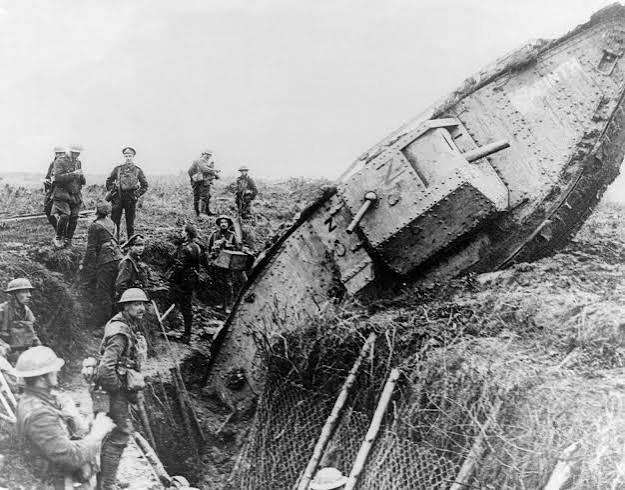
    At 6:20 AM on November 20, 1917, the ground near Cambrai, France, trembled. Not from an earthquake, but from the roar of nearly 476 Mark IV tanks—the largest concentration of armored vehicles ever assembled at that time. Their mission: smash through the seemingly impenetrable Hindenburg Line without a single preliminary artillery shell. It was a gamble that would either prove tanks as war-winning weapons or consign them to the scrapheap of failed experiments.

    For years, the Western Front had been a bloody stalemate. Soldiers huddled in muddy trenches, and offensives gained yards at the cost of thousands of lives. The tank, introduced in 1916, had sputtered and stalled in small numbers, but at Cambrai, the British deployed them en masse, in a coordinated attack that combined armor, artillery, and infantry in a way never seen before. The result was a dramatic breakthrough that changed military thinking forever—even though the battle itself ended in a bitter stalemate.

    The Road to Cambrai: Why Tanks Had to Prove Themselves

    By 1917, the tank was not a new invention. The British had first used them at Flers-Courcelette in September 1916, and again at Messines in June 1917. But those deployments were small-scale, plagued by mechanical breakdowns, and often bogged down in mud. Skeptics called them unreliable behemoths. Even their supporters admitted they were slow, clumsy, and prone to breaking down.

    However, the Mark IV tank was an improvement. It boasted better armor, a steering system that was slightly less temperamental, and came in two versions: “male” tanks with 6-pounder cannons, and “female” tanks with only machine guns. The Tank Corps, led by the flamboyant Brigadier-General Hugh Elles, was desperate for a chance to prove their worth on a grand scale.

    They found an unlikely ally in an artillery officer, Brigadier-General Henry Tudor. Tudor had developed a new technique called “predicted fire,” which allowed artillery to target enemy positions using map coordinates and sound ranging, rather than firing a few sighting shots first. This meant the guns could open fire at the exact moment of attack, without warning the enemy. No preliminary bombardment—a radical departure from standard practice.

    The Plan: Tanks, Fascines, and a Surprise Assault

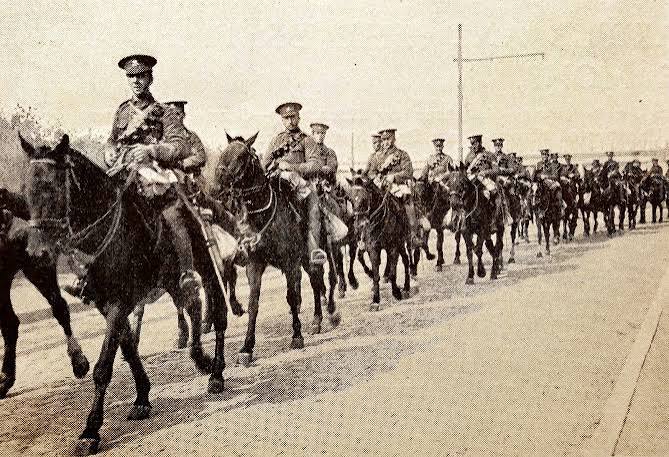
    The Cambrai sector was chosen for its firm chalk soil, which was ideal for tanks. The plan was audacious: tanks would crush the barbed wire, cross the wide trenches using bundles of brushwood called fascines (dropped into the trenches as makeshift bridges), and then infantry would follow to mop up. Cavalry, still considered a decisive arm, would then ride through the gap and capture Cambrai, a vital rail hub.

    The attack began at dawn, with no warning. The tanks lumbered forward, their engines roaring, and the infantry followed. The German defenders, manning the formidable Hindenburg Line, were taken completely by surprise. In a few hours, the British had broken through, gaining up to five miles in some places. Church bells rang in Britain to celebrate the victory.

    The Breakthrough: A Glimpse of the Future

    The initial success was stunning. The Hindenburg Line, thought to be unbreachable, had been pierced. In the village of Bourlon Wood and at Fontaine-Notre-Dame, bitter fighting raged, but the tank had proven its worth as a weapon of shock and awe. The German soldiers, many of whom had never seen a tank, were terrified. The sheer mass of armor, crushing wire and crossing trenches, was demoralizing.

    But the breakthrough was not exploited. The cavalry, which had been waiting to charge through, found the ground churned up and the enemy quickly reinforcing. There were not enough reserves to push deeper. The tanks, too, were suffering. Of the 476 that started, about 180 were knocked out by the end of the battle—many from mechanical failure or bogging down in the soft ground, not from enemy fire.

    The German Counteroffensive: A Lesson in Defense

    The Germans were not idle. Under General Georg von der Marwitz, they launched a counteroffensive on November 30, using stormtrooper infiltration tactics—small, elite units that bypassed strongpoints and struck at command centers. They recaptured most of the ground the British had taken, and the battle ended in a stalemate on December 7.

    The casualties were heavy: about 45,000 British and 50,000 German killed, wounded, or missing. For the British, it was a bitter pill—a victory that had turned into a defeat. But for military theorists, it was a revelation. The tank, used in mass, had created a breakthrough that was unprecedented. It was a forerunner of the Blitzkrieg tactics of World War II.

    The Aftermath: What Cambrai Really Proved

    Cambrai was not the first use of tanks, but it was the first time they were used in mass, in a coordinated assault. It proved that tanks could overcome trench warfare, at least temporarily. It also proved that they could be stopped—by anti-tank guns, by mud, and by determined infantry.

    The battle had a profound impact on the Germans. They quickly developed anti-tank tactics, including armor-piercing ammunition and wider trenches. The British, meanwhile, learned that a breakthrough needed to be exploited with reserves and that tanks needed better reliability.

    Historians still debate whether Cambrai was a revolution in warfare. Some argue it was an evolutionary step, building on earlier experiments. But most agree that it marked a turning point: the tank had moved from the sidelines to the center of military planning. The age of armored warfare had begun.

    The Human Cost and the Human Experience

    Beyond the tactics and technology, Cambrai was a brutal struggle. Soldiers in the tank crews described the terror of being inside a metal box, the heat, the fumes, and the fear of being burned alive. For the infantry, the sight of tanks crushing through wire and trenches was awe-inspiring, but the close-quarters fighting in villages like Bourlon Wood was savage.

    The battle also highlighted the obsolescence of cavalry. The horse-mounted troops, who had been waiting for the gap to open, were unable to exploit it. They were misused, perhaps, but their failure symbolized the end of an era.

    Conclusion: The Battle That Changed Warfare

    Cambrai was not a decisive victory for either side. But it was a decisive moment in the history of warfare. It showed that tanks, used in mass and in coordination with artillery and infantry, could break the stalemate of the trenches. It also showed the importance of reserves and the dangers of overreach. The lessons of Cambrai echoed through the next century, from the blitzkrieg of 1940 to the armored warfare of today. The tank had arrived, and the rules of war would never be the same.

    In the annals of military history, the Battle of Cambrai stands as a paradox: a breakthrough that failed, yet transformed warfare. It was the first major use of tanks, and it proved that armor could be a decisive weapon. Though the battle ended in a stalemate, its lessons shaped the future of combat. Cambrai was not the end of the story—it was the beginning of a new one.

    Summary

    • The Battle of Cambrai (Nov 20–Dec 7, 1917) was the first large-scale use of tanks in warfare, with ~476 Mark IV tanks.
    • The attack used a surprise assault without a preliminary bombardment, breaking the Hindenburg Line initially.
    • Despite the breakthrough, a German counteroffensive recaptured most ground, ending in a stalemate.
    • The battle demonstrated the potential of combined arms (tanks, artillery, infantry) and the obsolescence of cavalry.
    • Casualties were heavy: ~45,000 British and ~50,000 German.
    • Cambrai is often seen as a forerunner of Blitzkrieg and a turning point in armored warfare.

    FAQ

    Q: Was Cambrai the first battle to use tanks?
    A: No. Tanks were first used at Flers-Courcelette in September 1916 and at Messines in June 1917. Cambrai was the first massed use of tanks (hundreds at once) in a surprise assault without a preliminary bombardment.

    Q: Why was Cambrai considered a success if it ended in a stalemate?
    A: The initial breakthrough was a success, proving that tanks could break trench defenses. But the Germans counterattacked and recaptured most ground. The battle is seen as a tactical success but a strategic failure, yet it demonstrated the future of armored warfare.

    Q: What was the ‘predicted fire’ technique?
    A: It was an artillery method using map coordinates and sound ranging to target enemy positions without prior registration, allowing for a surprise barrage at the moment of attack. This was a key innovation at Cambrai.

    Q: How many tanks were used and how many were lost?
    A: About 476 British tanks were initially committed. Around 180 were knocked out, many due to mechanical failure or bogging down, not just enemy fire.

    Q: What was the German response to the tanks?
    A: The Germans were impressed but developed anti-tank tactics, including field guns with armor-piercing ammunition and wider trenches. Their counteroffensive used stormtrooper infiltration tactics to reverse the British gains.

  • First Battle of Ypres: How the ‘Race to the Sea’ Forged the Trenches

    First Battle of Ypres: How the ‘Race to the Sea’ Forged the Trenches

    In the autumn of 1914, the Great War was still a war of movement. Armies marched, cavalry charged, and generals dreamed of decisive victories. But by the time the leaves fell in Flanders, that dream was dying. The First Battle of Ypres, fought from October 19 to November 22, 1914, was the last great open-field battle of the war—and the one that slammed the door on mobility. It marked the end of the ‘Race to the Sea’ and the beginning of the trenches that would define the next four years.

    This battle was not just another clash. It was a brutal lesson in the cost of outdated tactics against modern firepower, a fight that bled the British Expeditionary Force white, and a German failure that turned into a national tragedy. Understanding Ypres means understanding how the Western Front froze into stalemate, and why the names of places like Langemarck and Gheluvelt still echo in military history.

    The Race That Ended at the Coast

    After the Battle of the Marne in September 1914, the German advance on Paris was halted. Both sides then tried to outflank each other to the north, in a series of maneuvers that became known as the ‘Race to the Sea.’ Each attempt simply extended the front line westward, until by mid-October it ran from the Swiss border to the North Sea. The only gap left was around the Belgian city of Ypres.

    The Germans wanted to break through to the Channel ports—Calais and Dunkirk—to cut off British supply lines and potentially knock Britain out of the war. The British, with their small but professional expeditionary force, were determined to hold Ypres and keep those ports safe. Both sides rushed troops to the area, and by October 19, the stage was set for a collision.

    The Old Contemptibles’ Last Stand

    The British Expeditionary Force (BEF) was a force unlike any other. It was small—roughly 100,000 to 160,000 men—but it was a professional army, with well-trained regulars who could fire an astonishing 15 aimed shots per minute, a skill known as the ‘mad minute.’ These veterans, later nicknamed the ‘Old Contemptibles’ after a (likely apocryphal) order from Kaiser Wilhelm II calling them a ‘contemptible little army,’ were about to face a German force that vastly outnumbered them.

    The German Fourth and Sixth Armies, commanded by Albrecht, Duke of Württemberg, and directed by Chief of Staff Erich von Falkenhayn, launched repeated assaults against the Ypres salient—a bulge in the Allied line. The fighting was intense from the start. At Langemarck (October 21–24), the Germans threw in reserve corps made up of young, poorly trained volunteers and older reservists. These inexperienced troops advanced in dense formations, singing patriotic songs, and were mown down by the British rifles. The slaughter was so appalling that the battle became known in Germany as the ‘Kindermord bei Ypern’—the Massacre of the Innocents at Ypres.

    The Crisis at Gheluvelt

    The most critical moment came on October 31, at the village of Gheluvelt. The German assault had broken through the British line, and the situation was desperate. The British I Corps, commanded by Douglas Haig, was on the verge of collapse. In a famous counterattack, Haig threw in the 2nd Worcestershire Regiment, which recaptured the village and steadied the line. This action is often credited with saving the entire Ypres salient from being overrun.

    But the cost was staggering. By the end of the battle, the BEF had suffered approximately 54,000 to 58,000 casualties. The pre-war regular army was effectively destroyed. Many of its best officers and men were killed or wounded, replaced by reservists and raw recruits who would never match their skill. The term ‘Old Contemptibles’ became a badge of honor for those who survived, but also a reminder of what had been lost.

    The German Tragedy at Langemarck

    While the British remember Ypres as a heroic last stand, the German memory is darker. The battle became a national trauma, centered on the image of young, idealistic volunteers marching to their deaths. The ‘Kindermord’ was later used both to glorify sacrifice and to criticize the military leadership. Falkenhayn’s decision to commit these inexperienced reserve corps to frontal assaults was widely condemned as wasteful and tactically inept.

    German casualties at Ypres are harder to pin down, with estimates ranging from 20,000 to 46,000, but the psychological impact was immense. The loss of so many young men, many of them students and graduates who had volunteered with patriotic fervor, left a scar on German society. The battle also revealed that the German army, despite its numerical superiority, could not break the Allied line. The offensive was called off in mid-November, and both sides, exhausted and soaked by autumn rains, began to dig in for the winter.

    The Birth of Trench Warfare

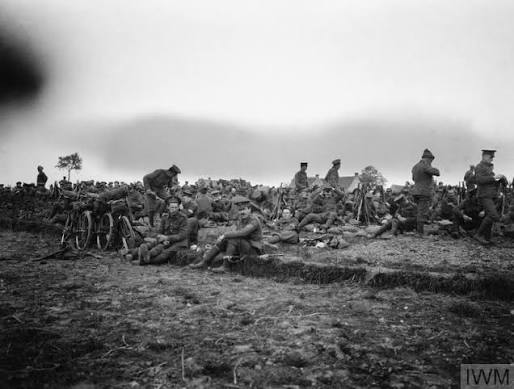
    The First Battle of Ypres was a transitional battle. Armies still used Napoleonic-era tactics—massed infantry assaults, cavalry in reserve—against modern weapons like machine guns, rapid-fire artillery, and magazine rifles. The result was catastrophic casualties. The battle proved, in blood, that frontal infantry attacks against prepared positions were suicidal. Yet the lesson would have to be relearned painfully over the next four years.

    By the end of November, the front line had stabilized. The Ypres Salient, a bulge in the Allied line around the city, would remain a focal point of fighting for the rest of the war. The trenches that began as shallow ditches would grow into vast networks of earthworks, barbed wire, and bunkers, stretching from the North Sea to the Swiss border. The war of movement was over; the war of attrition had begun.

    The Role of the French and the Wider Picture

    The French played a significant role in the battle, particularly in the southern part of the salient. General Ferdinand Foch, coordinating Allied efforts in the north, launched aggressive counterattacks that were crucial in holding the line. However, French casualties—estimated between 10,000 and 50,000—are often overshadowed in English-language accounts. The French were also focused on their own offensives in Artois and Champagne, which limited their support at Ypres.

    The battle’s strategic significance cannot be overstated. The Germans failed to reach the Channel ports, and the Allies maintained a foothold in Belgium. But the cost was immense. The BEF, once a small but elite force, was never the same. The war would go on for four more years, and the trenches of Ypres would witness some of the bloodiest battles in history, including the Second and Third Battles of Ypres (Passchendaele). The First Battle of Ypres was not just a battle; it was the birth of a new kind of warfare, one that would consume a generation.

    The First Battle of Ypres ended in mud and exhaustion, with no clear winner. But its legacy is profound. It marked the end of the war of movement and the beginning of trench warfare, a brutal stalemate that would define the Western Front for years to come. The ‘Old Contemptibles’ held the line, but at a terrible price, and the German ‘Kindermord’ left a scar that would haunt Germany. As the guns fell silent in November 1914, the soldiers on both sides could not have known that they were digging the graves of millions, and that the trenches they carved into the Flanders mud would become the symbol of a generation lost.

    Summary

    • The First Battle of Ypres (Oct 19–Nov 22, 1914) was the final battle of the ‘Race to the Sea’ and the beginning of trench warfare.
    • The British Expeditionary Force, despite being outnumbered, held the Ypres salient against German assaults, but suffered ~54,000–58,000 casualties, effectively destroying the pre-war regular army.
    • Key engagements included Langemarck, Gheluvelt, and Nonne Bosschen, where German reserve corps of young volunteers were decimated, leading to the ‘Kindermord’ myth.
    • The battle ended in a stalemate, with both sides digging in for the winter, creating the trenches that would define the war.
    • The French played a crucial role, but their efforts are often overlooked in English-language accounts.

    FAQ

    Q: Why is it called the ‘Race to the Sea’?
    A: After the Battle of the Marne, both the Allies and Germans tried to outflank each other to the north, racing toward the North Sea. Each attempt extended the front line, until it reached the coast. The ‘race’ ended at Ypres, where the last gap was closed.

    Q: Who were the ‘Old Contemptibles’?
    A: The British Expeditionary Force, a small professional army, was reportedly called a ‘contemptible little army’ by Kaiser Wilhelm II. The soldiers adopted the name proudly. They were highly skilled regulars who suffered devastating losses at Ypres.

    Q: What was the ‘Kindermord bei Ypern’?
    A: It means ‘Massacre of the Innocents at Ypres.’ It refers to the slaughter of young, inexperienced German volunteer soldiers at Langemarck, who advanced in dense formations and were mown down by British rifle fire. The event became a tragic national myth in Germany.

    Q: How many casualties were there?
    A: British casualties were approximately 54,000–58,000. German casualties are estimated between 20,000 and 46,000, and French casualties between 10,000 and 50,000, though figures vary widely.

    Q: Why was the battle important?
    A: It marked the end of mobile warfare and the beginning of trench warfare on the Western Front. The failure of frontal attacks against modern weapons at Ypres foreshadowed the costly tactics of the rest of the war.