Tag: World War I

  • Bread, Bullets, and the Fall of the Romanovs: How World War I Toppled the Tsar

    Bread, Bullets, and the Fall of the Romanovs: How World War I Toppled the Tsar

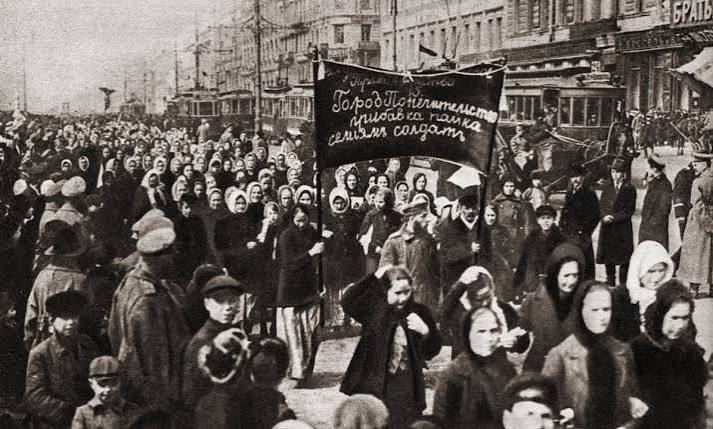
    In the winter of 1917, Petrograd’s streets filled with women demanding bread. Within days, the Romanov dynasty, which had ruled Russia for 300 years, collapsed like a house of cards. The trigger was not a conspiracy but a simple shortage of food, amplified by the catastrophic strains of World War I.

    World War I did not just weaken the Tsarist regime; it broke it. The war’s demands on Russia’s fragile economy, its incompetent military leadership, and the Tsar’s own political blunders created the conditions for revolution. This article traces the chain of events from the battlefields of Tannenberg to the Winter Palace, showing how the war toppled the Tsar and set the stage for the Bolshevik seizure of power.

    The War That Exposed the Autocracy

    When Russia entered World War I in August 1914, patriotic fervor swept the nation. Crowds gathered in Palace Square, singing the anthem and blessing the troops. The Tsar, Nicholas II, seemed more popular than ever. But the euphoria masked a fragile state. Russia’s economy was industrializing rapidly, but its railways and agriculture were ill-equipped for a modern war. The military had recovered from the humiliation of the 1905 Russo-Japanese War, but it still lacked the industrial base to sustain a prolonged conflict.

    The first major test came in August 1914 at the Battle of Tannenberg. The Russian Second Army, commanded by General Alexander Samsonov, invaded East Prussia with over 150,000 men. German forces, under Paul von Hindenburg and Erich Ludendorff, encircled and annihilated the Russian army. Samsonov shot himself. The defeat was catastrophic: over 90,000 Russians were captured or killed. Tannenberg set the pattern for the Eastern Front—Russian armies consistently suffered massive casualties due to poor logistics, outdated equipment, and incompetent leadership.

    By 1915, the strain was evident. The army had lost nearly 2 million men, and desertions were rampant. Soldiers went to the front without rifles, instructed to pick up weapons from fallen comrades. The war economy was collapsing: factories churned out shells but not enough food; the railways, overloaded with military supplies, could not deliver grain to the cities. Inflation soared, and by 1916, bread queues in Petrograd stretched for hours.

    The Tsar’s Fatal Mistake

    In September 1915, Nicholas II made a decision that sealed his fate: he took personal command of the army. He moved to the front at Mogilev, leaving the government in the hands of his wife, Alexandra, and her advisor, Grigori Rasputin. Rasputin, a self-proclaimed holy man, had gained the Tsarina’s trust by seemingly alleviating the hemophilia of their son, Alexei. His influence over court appointments and even military strategy bred scandal and distrust among the elite. The murder of Rasputin in December 1916 by a group of nobles did not restore confidence; it merely highlighted the regime’s decay.

    The Tsar’s absence from the capital meant that when crisis hit, there was no one to make decisions. The Duma, the parliament created after the 1905 revolution, had been dissolved and reconvened multiple times, but Nicholas had never allowed it real power. By 1917, even conservative monarchists were plotting to replace him. General Mikhail Alekseev, the Chief of Staff, was aware of plans for a palace coup. The elite had lost faith in the Tsar, but the revolution would come from below, not from a palace intrigue.

    February’s Spontaneous Uprising

    The February Revolution began not with a plan but with a shortage. On March 8, 1917 (February 23 in the old Russian calendar), International Women’s Day, thousands of women took to the streets of Petrograd demanding bread. They were workers from textile factories, many of them soldiers’ wives, and their protests struck a chord. Within days, the demonstrations grew to include industrial workers, students, and professionals. The city’s factories shut down. On March 10, a general strike paralyzed Petrograd.

    The Tsar, from his headquarters at Mogilev, ordered the garrison to restore order. But the soldiers, many of them raw recruits and reservists fed up with the war, refused to fire on the crowds. Mutiny spread through the Petrograd garrison. By March 12, the city was in the hands of the revolutionaries. The Duma, defying the Tsar’s order to dissolve, established a Provisional Government under Prince Georgy Lvov. Simultaneously, workers and soldiers formed the Petrograd Soviet, a council that claimed to represent the people. This ‘dual power’ arrangement—a liberal government and a socialist soviet—created an unstable political structure that mirrored the contradictions of the revolution itself.

    On March 15, Nicholas II abdicated. He first tried to pass the throne to his son, then to his brother, Grand Duke Michael. But Michael, seeing the writing on the wall, declined the crown the next day. The Romanov dynasty, which had ruled since 1613, was over. The abdication was not the result of a Bolshevik plot; it was the product of a spontaneous uprising driven by hunger, war weariness, and the collapse of authority.

    The Provisional Government’s Struggles

    The Provisional Government, led first by Lvov and then by Alexander Kerensky, faced an impossible task. It was committed to continuing the war, honoring Russia’s alliance with Britain and France. But the Russian people, exhausted by three years of slaughter, wanted peace. The Soviet, meanwhile, issued Order No. 1, which stripped officers of their authority and placed them under the control of elected soldier committees. This destroyed military discipline and made the army increasingly unreliable.

    The government also delayed land reform, fearing that confiscating estates would alienate the propertied classes. But for peasants, who made up 80% of the population, land was the central issue. The government’s failure to address it eroded its legitimacy. By the summer of 1917, Kerensky’s government was losing support on all sides. The June Offensive, an ill-fated military campaign, ended in disaster, further discrediting the government. In July, a Bolshevik-inspired uprising in Petrograd was suppressed, and Lenin fled to Finland. But the government’s weakness was evident.

    Lenin and the Bolshevik Seizure of Power

    Vladimir Lenin had been in exile in Switzerland when the February Revolution broke out. With the help of the German government, which saw him as a tool to destabilize Russia, Lenin traveled in a sealed train across Germany and arrived in Petrograd in April 1917. His ‘April Theses’ demanded an immediate end to the war, the redistribution of land to peasants, and all power to the Soviets. He rejected any cooperation with the Provisional Government, calling for a socialist revolution.

    The Bolsheviks, a minority party within the soviets, gained popularity by offering simple solutions to overwhelming problems: ‘Peace, Land, and Bread.’ Their slogans resonated with soldiers tired of war, peasants wanting land, and workers facing shortages. By October, the Bolsheviks had won majorities in the Petrograd and Moscow soviets.

    On the night of November 7, 1917, Bolshevik Red Guards seized key government buildings, the telegraph, and the railway stations. The cruiser Aurora fired a blank shot at the Winter Palace, where the Provisional Government was meeting. After a brief skirmish, the ministers were arrested. The takeover was almost bloodless. Lenin announced the establishment of a new government, the Council of People’s Commissars, with himself as chairman. The October Revolution had begun.

    The Bolsheviks did not have a majority in the country, but they had control of the capital and a clear program. Over the following months, they consolidated power, disbanded the Constituent Assembly, and signed the Treaty of Brest-Litovsk in March 1918, taking Russia out of the war. The revolution, which had begun with women demanding bread, ended with a communist dictatorship that would shape the 20th century.

    The War’s Role: The Sine Qua Non

    The Russian Revolution cannot be understood without World War I. The war was not just a catalyst; it was the essential condition that made the revolution possible. It exposed the Tsarist regime’s incompetence, devastated the economy, and created a massive, armed, and disgruntled population. Without the war, the Tsar might have survived for years, perhaps decades, as an autocrat. The war turned a chronic crisis into an acute one.

    The revolution also had profound international consequences. It took Russia out of the war, allowing Germany to transfer troops to the Western Front. It inspired socialist and anti-colonial movements worldwide, and it set the stage for the Cold War that would dominate the second half of the 20th century. The Russian Revolution was a world-historical event, but its roots were deeply Russian and deeply tied to the catastrophe of World War I.

    The Russian Revolution was not a single event but two distinct upheavals, each with its own logic. The February Revolution was a spontaneous uprising against war and hunger, a collapse of the old order that no one had planned. The October Revolution was a deliberate seizure of power by a determined minority, the Bolsheviks, who exploited the chaos. Both were products of World War I, which had broken the Tsarist regime and created the conditions for radical change. The empire that had once stretched across Eurasia fell not to foreign conquest but to the weight of its own contradictions, sharpened by the greatest war the world had ever seen.

    Summary

    • The February Revolution (March 1917) was a spontaneous uprising triggered by food shortages and war weariness, not a Bolshevik plot.
    • World War I was the essential cause: it exposed the Tsar’s incompetence, strained the economy, and created a massive, armed, disgruntled population.
    • The Tsar’s decision to take personal command of the army and leave the government to the Tsarina and Rasputin fatally weakened the regime.
    • The Provisional Government’s failure to end the war and address land reform eroded its legitimacy, paving the way for the Bolsheviks.
    • Lenin’s ‘Peace, Land, and Bread’ slogan resonated with a war-weary population, enabling the almost bloodless October Revolution of November 1917.

    FAQ

    Q: Was the February Revolution planned by the Bolsheviks?
    A: No. The February Revolution was a spontaneous uprising of workers, soldiers, and women demanding bread and an end to the war. Most Bolshevik leaders were in exile or prison, and the party was caught by surprise.

    Q: Did Rasputin cause the Russian Revolution?
    A: Rasputin was a symptom, not a cause. His influence discredited the Tsarist court, but the deeper causes were the war, economic collapse, and the Tsar’s political failures. His murder in December 1916 did not save the monarchy.

    Q: Why was the Provisional Government so weak?
    A: It was trapped in a ‘dual power’ arrangement with the Petrograd Soviet, continued the unpopular war, and delayed land reform. This eroded its support among soldiers, workers, and peasants.

    Q: How did Germany help Lenin return to Russia?
    A: Germany transported Lenin in a sealed train from Switzerland to Russia in April 1917, hoping he would destabilize Russia’s war effort. The funding was opportunistic; Lenin’s goals were his own.

    Q: What was the ‘dual power’ arrangement?
    A: After the February Revolution, the liberal Provisional Government and the socialist Petrograd Soviet shared power. This created confusion and conflict over key issues like the war and land, undermining effective governance.
  • How World War I Remade the United States

    How World War I Remade the United States

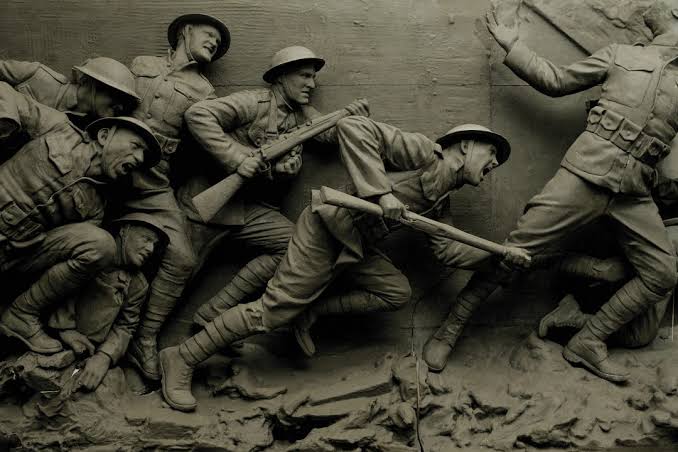
    In 1914, the United States was a nation at peace, its army smaller than Bulgaria’s, its federal government a distant presence in most citizens’ lives. Four years later, it had become the world’s leading creditor, with a federal budget twenty-five times larger and a government that reached into factories, farms, and even private speech. The transformation was not gradual; it was compressed into nineteen months of active belligerency that changed the country’s role in the world and the relationship between Washington and its citizens.

    The war’s legacy is often overshadowed by the Second World War, but the first global conflict was the crucible in which modern America was forged. From the Great Migration to the 19th Amendment, from the income tax to the surveillance state, the war’s effects are still visible today. This is the story of how a country that wanted nothing to do with Europe’s quarrels became a global power—and what it cost.

    A Nation Reluctant to Fight

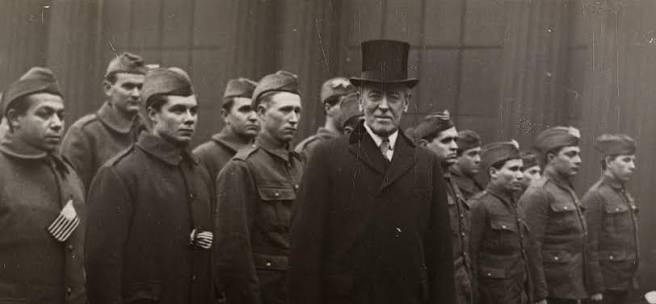
    When war erupted in Europe in August 1914, President Woodrow Wilson declared neutrality, a stance that reflected both tradition and pragmatism. The United States had a standing army of roughly 100,000 men—smaller than most European powers—and a foreign policy rooted in George Washington’s warning against entangling alliances. German-Americans numbered about 8 million, and Irish-Americans were often hostile to Britain, making any pro-Allied stance politically dangerous.

    But neutrality proved difficult to maintain. Germany’s unrestricted submarine warfare, which sank the Lusitania in May 1915 and killed 128 Americans, tested American patience. The Zimmermann Telegram of January 1917, in which Germany proposed an alliance with Mexico against the U.S., was the final straw. By then, American banks had lent $2.3 billion to the Allies and only $27 million to Germany; a German victory would have meant default. On April 6, 1917, Congress declared war.

    The Machinery of War

    The U.S. had only 19 months to mobilize, but it did so with astonishing speed. Over 4.7 million Americans served in the armed forces, and about 2 million reached France. The Selective Service Act of 1917 drafted men from all walks of life, creating a mass army for the first time since the Civil War.

    The war effort demanded more than soldiers; it demanded a reorganization of the economy. The War Industries Board coordinated production, the Food Administration under Herbert Hoover controlled prices and rationing, and the Railroad Administration temporarily nationalized the railroads. The federal budget ballooned from $725 million in 1914 to $18.5 billion in 1919. The top income tax rate soared from 7% to 77% under the War Revenue Act of 1917 and the Revenue Act of 1918.

    This expansion of federal power was unprecedented. The government became the largest purchaser of goods in the nation, and it used that leverage to set wages, working conditions, and even prices. The National War Labor Board mediated disputes, often favoring unions in exchange for no-strike pledges. For the first time, the federal government was a direct presence in the daily lives of ordinary workers.

    The Dark Side of Patriotism

    The war also brought a crackdown on dissent. The Espionage Act of 1917 and the Sedition Act of 1918 criminalized speech that interfered with the war effort. Over 2,000 people were prosecuted, including Eugene V. Debs, the Socialist Party leader, who was sentenced to ten years in prison for an anti-war speech. The Committee on Public Information, headed by journalist George Creel, churned out propaganda that demonized the enemy and encouraged vigilance against spies and saboteurs.

    This climate of suspicion spilled into the postwar period. The Red Scare of 1919–1920, marked by the Palmer Raids and the deportation of thousands of suspected radicals, was a direct legacy of wartime anti-dissent legislation. The war had normalized the idea that the government could restrict civil liberties in the name of national security—a tension that persists to this day.

    The Great Migration and the Changing Face of America

    The war also set in motion demographic changes that reshaped the country. European immigration, which had averaged 1.2 million people a year before the war, ground to a halt as the conflict consumed the continent. At the same time, the demand for industrial labor in northern cities drew African Americans from the South in what became known as the Great Migration. Between 1916 and 1919, approximately 500,000 African Americans moved north, seeking jobs in steel mills, packinghouses, and factories.

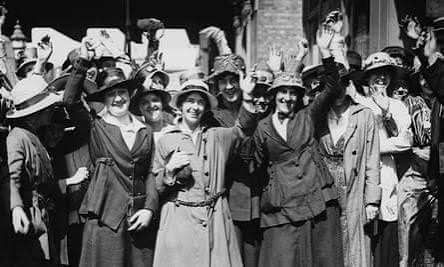
    This migration had profound social and political consequences. It created new urban communities, shifted political power in northern cities, and laid the groundwork for the civil rights movements of the twentieth century. The war also opened new opportunities for women, whose workforce participation increased by about 25%. Women filled jobs left vacant by men and took on roles in industry, government, and the military. The war effort gave a powerful boost to the suffrage movement, and the 19th Amendment, granting women the right to vote, was ratified in August 1920.

    A Debtor No More

    The economic transformation was equally dramatic. U.S. GDP grew from roughly $38 billion in 1914 to $78 billion in 1918. The nation shifted from a debtor country owing $3.7 billion to foreign investors to a creditor country owed $3.5 billion by foreign governments. The war had made the United States the world’s banker, a position it would not relinquish.

    But the cost was staggering. About 116,500 American military personnel died—53,000 in combat, the rest from disease, especially the 1918 influenza pandemic. The war also left a bitter political legacy. President Wilson’s dream of joining the League of Nations was dashed when the Senate refused to ratify the Treaty of Versailles in 1919 and 1920. The United States retreated into isolationism, but it had already been transformed.

    The War’s Lasting Legacy

    The United States entered World War I as a peripheral power and emerged as a global one. The war created the modern administrative state, with federal agencies that reached into every corner of the economy. It accelerated the Great Migration, expanded women’s rights, and made the income tax a permanent feature of American life.

    It also left a troubling legacy of government surveillance and suppression of dissent. The Espionage and Sedition Acts set a precedent for restricting civil liberties in times of crisis, a precedent that would be invoked again in the Second World War and beyond.

    The war’s significance is not just a matter of battles won or lost. It was the moment when the United States stopped being a collection of states and became a nation, with a centralized government, a powerful military, and a permanent global role. The changes were so profound that they still shape American life a century later.

    World War I was a catalyst that transformed the United States from a debtor nation with a small federal government into a creditor nation with a powerful administrative state. It ended American isolationism, accelerated social changes like the Great Migration and women’s suffrage, and left a legacy of federal power and civil liberties tensions that continue to define the nation. The war’s significance lies not in the battles, but in the remaking of America itself.

    Summary

    • The U.S. shifted from neutrality to full belligerency in 19 months, with over 4.7 million serving and 116,500 deaths.
    • The federal budget grew 25-fold, and the top income tax rate rose from 7% to 77%, funding a new administrative state.
    • The Great Migration moved 500,000 African Americans north, and women’s workforce participation rose 25%, boosting the suffrage movement.
    • The Espionage and Sedition Acts criminalized dissent, leading to over 2,000 prosecutions and setting a precedent for later restrictions.
    • The U.S. became a creditor nation, but rejected the Treaty of Versailles and the League of Nations, retreating into isolationism.

    FAQ

    Q: How long was the United States involved in World War I?
    A: The U.S. was an active belligerent for about 19 months, from April 6, 1917, to November 11, 1918.

    Q: What was the Great Migration during WWI?
    A: It was the movement of approximately 500,000 African Americans from the South to northern industrial cities between 1916 and 1919, driven by labor shortages and wartime industrial demand.

    Q: How did WWI affect women’s suffrage?
    A: The war effort, which saw women’s workforce participation increase by about 25%, is widely credited as a catalyst for the ratification of the 19th Amendment in August 1920.

    Q: What were the Espionage and Sedition Acts?
    A: They were federal laws enacted in 1917 and 1918 that criminalized dissent against the war, leading to over 2,000 prosecutions, including that of Eugene V. Debs.

    Q: Why did the U.S. not join the League of Nations?
    A: The Senate rejected the Treaty of Versailles in November 1919 and March 1920, largely due to concerns about sovereignty and partisan politics, despite President Wilson’s advocacy.

  • How the First World War Redrew the Boundaries of Gender

    How the First World War Redrew the Boundaries of Gender

    In 1914, a British woman’s place was presumed to be the home. By 1918, over a million of them were making artillery shells, driving trams, and serving in uniform. The war did not just empty the factories of men—it filled them with women, and in doing so, it cracked the ideological foundation of separate spheres. But the story of gender after the war is not a simple tale of progress. It is a story of temporary disruption, political reward, and stubborn continuity.

    The Manpower Crisis That Opened the Doors

    In 1915, Britain’s army was bleeding. By the end of that year, over half a million soldiers had been killed or wounded. The Somme, in 1916, would add another 400,000 casualties in a single battle. With conscription introduced in 1916, nearly six million men were eventually mobilized. The factories, farms, and offices they left behind needed workers. The government, which had initially resisted women’s labor, began actively recruiting them.

    The numbers are stark. In 1914, about 5.9 million women were employed in Britain. By 1918, that figure had risen to 7.3 million. But the nature of the work mattered more than the count. Women moved into jobs that had been coded as masculine: heavy engineering, transport, and munitions. In the munitions factories alone, over one million women worked, producing 80% of the UK’s artillery shells. They were nicknamed ‘canary girls’ because TNT exposure turned their skin yellow. It was dangerous, dirty, and essential work.

    The Uniformed Woman: Auxiliary Forces and the Eastern Front

    Women also served closer to the front lines, though not in combat roles. Britain’s Women’s Army Auxiliary Corps (WAAC), Women’s Royal Naval Service (WRNS), and Women’s Royal Air Force (WRAF) attracted over 80,000 women. They worked as clerks, cooks, and drivers, freeing men for the trenches. Russia went further, fielding the Women’s Battalion of Death in 1917, a combat unit that fought in the chaos of the Revolution. These uniformed women were visible symbols of a world turned upside down.

    The war also created a demographic catastrophe. Britain ended the conflict with an estimated 1.7 to 2 million more women than men—the ‘surplus women’ problem. Millions of women became widows, and many more became sole breadwinners with no state support. The ‘lost generation’ was not a metaphor; it was a statistical reality that reshaped marriage patterns and public discourse.

    The Vote: A Reward or a Limited Concession?

    The most famous political change came with the Representation of the People Act in 1918. It gave the vote to women over 30 who met property qualifications—about 8.5 million women. Prime Minister Lloyd George framed it as gratitude for women’s war work. But the act was deliberately restrictive. It excluded women under 30 and most working-class women. Full equal suffrage did not arrive until 1928. In the United States, the 19th Amendment followed in 1920, and Germany granted women the vote in 1919. But France and Italy, despite their own massive wars, did not. France waited until 1944, Italy until 1945.

    The war also broke down legal barriers. Britain’s Sex Disqualification (Removal) Act of 1919 opened professions like law, civil service, and accountancy to women. But these were symbolic victories for a minority.

    The Backlash: Restoration of Pre-War Practices

    The revisionist view holds that the war’s impact was temporary. In 1919, the Restoration of Pre-War Practices Act forced women out of ‘men’s jobs’ in munitions and transport. By 1921, women’s employment rates had largely returned to pre-war levels. The interwar years saw a glorification of domesticity, a ‘cult of motherhood,’ and a cultural push for women to return home. The gender division of labor was reasserted, but the justification was weakened. Women had proven they could do the work; the argument that they were biologically incapable no longer held.

    The Cultural Shift: Fashion, Freedom, and the Flapper

    What did change irreversibly was culture. The war demanded practicality. Women wore shorter skirts and shed corsets for factory work. They bobbed their hair. They smoked, drank, and dated unchaperoned. The ‘flapper’ of the 1920s was a direct descendant of the munitionette. The war did not overturn the structures of patriarchy, but it undermined the myths that supported it. The separate spheres ideology—that women belonged in the home—was never fully restored. Even as women were pushed back into domestic roles, the memory of their wartime service lingered. It became a reference point for future feminist movements.

    The Verdict: A Disruption, Not a Revolution

    The First World War was not a clean break. It was a violent rupture that opened new possibilities and then slammed many doors shut. Women gained the vote in some countries, but not others. They entered new professions, but were pushed out after the war. They proved their capability, but were told to go home. The most lasting change was cognitive: the idea that women’s place was solely in the home was dealt a blow from which it never fully recovered. The war changed perceptions more than structures, but perceptions matter. They set the stage for the slow, grinding progress of the twentieth century.

    The First World War did not ‘give’ women equality, nor did it permanently erase gender divisions. It was a cataclysm that forced societies to reconsider what women could do. The vote came, but it was limited. Jobs opened, but they closed again. The war’s greatest legacy was not a law or a policy, but a shift in the collective imagination. Once women had built shells and driven trains, the old arguments about their fragility rang hollow. The door did not swing fully open, but it was never again locked shut.

    Summary

    • Women’s employment in Britain rose from 5.9 million (1914) to 7.3 million (1918), with over a million in munitions.
    • Over 80,000 women served in British auxiliary forces; Russia fielded an all-female combat unit.
    • Suffrage breakthroughs came in Britain (1918, partial), the US (1920), and Germany (1919), but France and Italy held out for decades.
    • The Restoration of Pre-War Practices Act (1919) pushed women out of wartime jobs, but cultural shifts—like shorter skirts and bobbed hair—persisted.
    • The war changed perceptions of women’s capabilities more than it changed economic structures, laying groundwork for future feminist advances.

    FAQ

    Q: Did all women get the vote in Britain after WWI?
    A: No. The 1918 Representation of the People Act gave the vote only to women over 30 who met property qualifications—about 8.5 million women. Full equal suffrage came in 1928.

    Q: Why didn’t France and Italy grant women the vote after WWI?
    A: Despite women’s significant war contributions, both countries delayed suffrage—France until 1944, Italy until 1945. The reasons varied, including fears of conservative women’s voting patterns and political instability.

    Q: What were ‘canary girls’?
    A: Women munitions workers whose skin turned yellow from TNT exposure. They produced 80% of the UK’s artillery shells during the war.

    Q: Did women’s employment remain high after the war?
    A: No. The Restoration of Pre-War Practices Act (1919) forced women out of ‘men’s jobs,’ and by 1921 employment rates had largely returned to pre-war levels.

    Q: What was the ‘surplus women’ problem?
    A: Britain had 1.7–2 million more women than men after the war, leading to public debate about unmarried women and their societal role.

  • Did Alliances Really Cause World War I? A Closer Look at the July Crisis

    Did Alliances Really Cause World War I? A Closer Look at the July Crisis

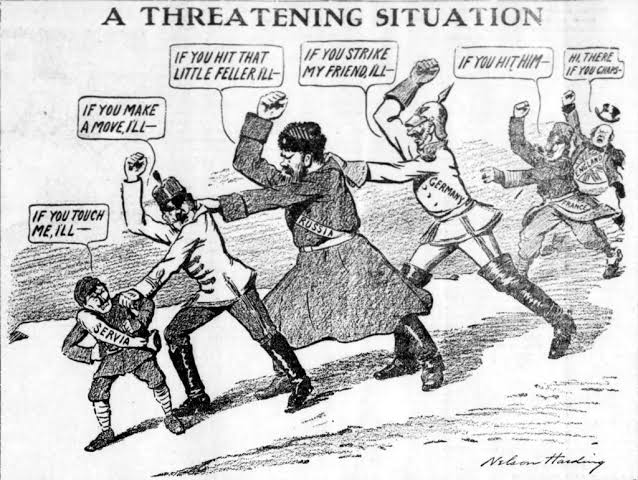
    On June 28, 1914, a teenage nationalist fired two shots in Sarajevo, killing Archduke Franz Ferdinand and his wife. Within five weeks, the great powers of Europe were at war. The standard explanation? A web of alliances dragged them in. But was the alliance system truly the main culprit, or did it merely provide the scaffolding for a tragedy built on deeper faults?

    The alliance system did not cause the assassination, nor did it create the nationalist fervor, imperial rivalries, or military planning that made war thinkable. But it did determine the war’s terrifying speed and scope. This article examines the evidence, weighing the role of alliances against other long-term factors, and asks whether the system was a cause or a catalyst.

    The Machinery of Alliances

    By 1914, Europe was divided into two blocs. The Triple Alliance—Germany, Austria-Hungary, and Italy—had existed since 1882, originally as a defensive pact. On the other side, the Triple Entente—France, Russia, and Britain—was a looser diplomatic understanding, formalized by 1907. These alliances were not born of aggression; Bismarck had designed his earlier system to isolate France and preserve peace. Yet they created a dangerous dynamic: each power assumed its allies would back it, encouraging risk-taking.

    The July Crisis illustrates this. Austria-Hungary, determined to punish Serbia, sought Germany’s support. On July 5, Kaiser Wilhelm II offered the “blank cheque”—unconditional backing. Emboldened, Austria issued an ultimatum to Serbia on July 23, deliberately harsh. Serbia accepted most terms, but Austria declared war on July 28. Russia, Serbia’s Slavic protector, mobilized. Germany, bound to Austria and fearing Russia’s growing strength, declared war on Russia on August 1. Two days later, Germany declared war on France and invaded Belgium, bringing Britain into the conflict on August 4.

    The cascade was swift and almost mechanical, following alliance lines. Without these commitments, the war might have remained a localized Balkan affair, as had happened in 1912 and 1913. The alliance system, in this view, was the main cause—it transformed a bilateral dispute into a continental war.

    The Deeper Faults

    But alliances alone do not explain why Europe was so ready to fight. Nationalism had been simmering for decades. Pan-Slavism drove Russia to support Serbia; French revanchism yearned to reclaim Alsace-Lorraine; Austria-Hungary’s multi-ethnic empire was threatened by nationalist movements. Imperialism had created colonial frictions, from the Morocco crises of 1905 and 1911 to the Balkan Wars. Militarism fueled an arms race—Britain and Germany competed in dreadnoughts, while armies expanded and planning became rigid.

    Most critically, the Schlieffen Plan made war almost inevitable once Russia mobilized. Germany’s only strategy for a two-front war required a swift invasion of France through Belgium. This meant that German mobilization was not a defensive act but a trigger for war. As historian Fritz Fischer argued, Germany’s leaders actively sought war in 1914, using the crisis as an opportunity. The alliance system was a vehicle, not the driver.

    The Verdict: Necessary but Not Sufficient

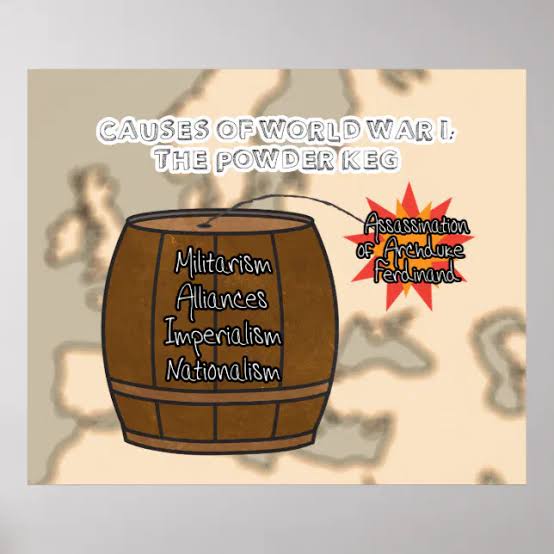
    Could the war have been avoided without alliances? Possibly, but only if the underlying tensions—nationalism, imperialism, militarism—had been resolved, which seems unlikely. The alliances were a necessary condition: without them, the war would not have escalated as it did. But they were not sufficient. The assassination, the blank cheque, and the decisions of leaders like Kaiser Wilhelm II and Tsar Nicholas II were all crucial. The alliance system was like a powder keg’s fuse—it made the explosion possible, but the powder was already there.

    Perhaps the most compelling evidence for alliances as the main cause is the speed of escalation. In just over a week, Europe went from peace to world war. This was not a slow build-up but a chain reaction. Yet that chain reaction was set off by human choices, not just structural obligations. Austria-Hungary chose to issue an ultimatum; Germany chose to give the blank cheque; Russia chose to mobilize; Germany chose to invade Belgium. The alliances set the stage, but the actors chose the play.

    The alliance system was a critical mechanism that turned a regional crisis into a world war, but it was not the root cause. Nationalism, imperialism, militarism, and the failures of diplomacy created the conditions for war. Alliances amplified these forces, making escalation rapid and nearly automatic. To blame alliances alone is to ignore the deeper currents of history. Yet to dismiss their role is to miss how structure and choice combined in July 1914. The war was not inevitable, but the alliances made it far more likely.

    Summary

    • The alliance system (Triple Alliance vs. Triple Entente) turned a localized conflict into a continental war within a week.
    • Alliances were originally defensive, but they encouraged risk-taking, as seen in Germany’s ‘blank cheque’ to Austria-Hungary.
    • Long-term causes—nationalism, imperialism, militarism—created a powder keg; the assassination was the spark.
    • The Schlieffen Plan made mobilization a trigger for war, forcing Germany to attack France upon Russian mobilization.
    • Alliances were necessary but not sufficient; human decisions during the July Crisis were equally crucial.

    FAQ

    Q: Was the Triple Entente a formal military alliance?
    A: No, the Triple Entente was an informal diplomatic understanding between France, Russia, and Britain, with no binding military obligations. The Triple Alliance, by contrast, was a formal defensive pact, but Italy’s commitment was conditional and it stayed neutral in 1914.

    Q: How did the alliance system contribute to the outbreak of war?
    A: Alliances created a chain reaction: Austria-Hungary’s war on Serbia led Russia to mobilize, which triggered Germany’s declaration of war on Russia and France, and then Britain’s entry due to Belgium’s invasion. This cascade was possible because each power had obligations to its allies.

    Q: Could the war have been avoided without alliances?
    A: Possibly, but only if the deeper tensions—nationalism, imperialism, militarism—had been managed. The Balkan Wars of 1912–1913 remained localized because no great power intervened; in 1914, alliances ensured they did.

    Q: What was the ‘blank cheque’?
    A: On July 5–6, 1914, Germany gave Austria-Hungary unconditional support for any action against Serbia. This emboldened Austria to issue a harsh ultimatum and declare war, knowing Germany would back it.

    Q: Did the Schlieffen Plan make war inevitable?
    A: The plan assumed a two-front war and required a rapid attack on France via Belgium. Once Russia mobilized, Germany had no alternative plan, so it immediately declared war on France and invaded Belgium, making escalation almost mechanical.

  • The Unfinished War: How WWI Laid the Powder Keg for WWII

    The Unfinished War: How WWI Laid the Powder Keg for WWII

    In November 1918, the guns of the Western Front fell silent, but the peace that followed was anything but settled. The Armistice was a ceasefire, not a resolution—a pause that left the deep fractures of a continent-wide conflict unhealed. Twenty years later, those fractures would crack wide open again, plunging the world into an even deadlier conflict. The Treaty of Versailles, the collapse of empires, and a global economic depression did not make World War II inevitable, but they created the conditions in which a charismatic demagogue could rise and exploit the grievances of a humiliated nation.

    To understand how WWI set the stage for WWII, we must look beyond the trenches and the armistice. We must examine the punitive peace, the myth of betrayal, and the fragile international order that was built on sand. This is the story of how the Great War’s ending became the prelude to an even greater catastrophe.

    The Treaty of Versailles: A Carthaginian Peace

    The Paris Peace Conference of 1919 was dominated by four men: Woodrow Wilson of the United States, David Lloyd George of Britain, Georges Clemenceau of France, and Vittorio Orlando of Italy. Wilson brought his idealistic Fourteen Points, calling for self-determination and a League of Nations. Clemenceau, scarred by the war that had been fought largely on French soil, demanded security and revenge.

    The result was a compromise that pleased no one. Germany was forced to sign the Treaty of Versailles, which included the infamous War Guilt Clause (Article 231), assigning full responsibility for the war to Germany. The treaty demanded reparations of 132 billion gold marks—a staggering sum that would take decades to pay. Germany lost 13% of its European territory, including Alsace-Lorraine to France, and all of its overseas colonies. Its military was reduced to a token force of 100,000 men, with no air force, submarines, or conscription. The Rhineland was demilitarized, leaving Germany defenseless in the west.

    French Marshal Ferdinand Foch, who had commanded the Allied forces, famously remarked, “This is not a peace. It is an armistice for twenty years.” His prediction proved eerily accurate. The treaty was too harsh to be accepted by Germans as fair, yet too lenient to permanently cripple Germany. It created a reservoir of resentment that would be tapped by nationalist demagogues.

    The Collapse of Empires and the Birth of a New Order

    World War I destroyed four great empires: the Austro-Hungarian, Ottoman, Russian, and German. Their collapse redrew the map of Europe and the Middle East, creating new states and new tensions.

    The Austro-Hungarian Empire dissolved into Austria, Hungary, Czechoslovakia, and parts of Poland, Romania, and Yugoslavia. The Ottoman Empire was partitioned under the Treaty of Sèvres in 1920, with modern Turkey emerging and the Middle East divided into League of Nations mandates under British and French control—Syria, Iraq, Palestine, Transjordan. The Russian Empire collapsed in 1917, leading to the Bolshevik Revolution and the creation of the Soviet Union. Germany became the Weimar Republic, a democratic experiment born from defeat.

    These new nations were often fragile, with borders that did not match ethnic divisions. The principle of self-determination was applied selectively, leaving large German populations outside Germany’s borders—notably in the Sudetenland of Czechoslovakia and Danzig (now Gdańsk, Poland). These irredentist claims would become a rallying cry for Hitler.

    The League of Nations: A Paper Tiger

    President Wilson’s dream of a League of Nations was realized in the Treaty of Versailles, but it was a crippled institution from the start. The United States, the world’s rising superpower, never joined—the Senate rejected membership, fearing it would entangle the US in foreign conflicts. Germany was initially excluded, and the Soviet Union was also shut out. The League had no enforcement mechanism; it had no army, and any action required unanimous consent from its members, making it nearly impossible to act decisively.

    When Japan invaded Manchuria in 1931, the League’s response was a series of ineffective condemnations. When Italy invaded Ethiopia in 1935, the League imposed sanctions that were not enforced. These failures demonstrated that the international order created after WWI was incapable of maintaining peace. The League was a paper tiger, and revisionist powers like Germany, Italy, and Japan knew it.

    The Stab-in-the-Back Myth: A Poisonous Lie

    One of the most toxic legacies of WWI was the German “stab-in-the-back” myth (Dolchstoßlegende). German right-wing propaganda claimed that the army was undefeated in the field but was betrayed by politicians, socialists, and Jews on the home front. This narrative was actively promoted by military leaders like Hindenburg and Ludendorff, who sought to deflect blame for the defeat.

    The myth was a lie—the German army was exhausted and starving, and the civilian government had no choice but to seek an armistice—but it was powerful. It allowed Germans to believe that their nation had been robbed of victory. Hitler and the Nazis seized on this myth, using it to delegitimize the Weimar Republic and to scapegoat Jews and leftists. The myth became a cornerstone of Nazi propaganda, fueling the hatred that would lead to the Holocaust.

    Economic Devastation and the Rise of Extremism

    The German economy was shattered by the war and the reparations burden. In 1923, hyperinflation struck as the government printed money to pay reparations and resist French occupation of the Ruhr. The currency collapsed, wiping out the savings of the middle class and creating a deep sense of insecurity.

    But the worst was yet to come. The Great Depression, triggered by the US stock market crash in 1929, hit Germany with brutal force. The US had been lending money to Germany to help it pay reparations, and American loans were recalled. Global trade collapsed, and German unemployment soared to about 30% by 1932. The Weimar Republic, already fragile, was destroyed by the economic crisis. Political extremism flourished: the Communist Party and the Nazi Party grew rapidly, each promising a radical solution.

    Hitler’s rise was not inevitable, but the Depression created the conditions. In 1933, he was appointed Chancellor, and he quickly dismantled democracy, establishing a dictatorship. His foreign policy was explicitly aimed at overturning Versailles—rearming Germany, remilitarizing the Rhineland, and uniting all Germans in a Greater Germany.

    A Thirty Years’ War? The Continuity and Break

    The

    Historians debate whether WWII was the inevitable result of WWI or a separate catastrophe. Some, like A.J.P. Taylor and Eric Hobsbawm, argue that the period from 1914 to 1945 was a “Thirty Years’ War” with a 20-year truce. The unresolved issues of WWI—territorial disputes, economic instability, ideological extremism—directly produced WWII.

    Others contend that WWII was not inevitable. They point out that the Great Depression, the failure of appeasement, and the specific rise of Hitler were contingent events. Versailles created grievances, but it did not make Hitler inevitable. The Depression, not the treaty, destroyed the Weimar Republic’s viability.

    The economic angle supports a middle view: the global economic system built after WWI was inherently unstable. The US lent money to Germany, Germany paid reparations to France and Britain, and they paid war debts to the US—a circular flow that collapsed in 1929. This economic collapse, not Versailles alone, radicalized European politics and empowered fascism.

    Geopolitically, the collapse of the Ottoman Empire and the redrawing of the Middle East created long-lasting conflicts. The arbitrary borders and mandates sowed the seeds of instability that continue to this day. But the immediate link to WWII was the way the Treaty of Versailles and the League of Nations failed to resolve the power vacuum left by the fallen empires.

    The debate between continuity and break is not merely academic. It shapes how we understand the causes of war and the responsibility of peacemakers. What is clear is that WWI set the stage for WWII by creating a world of unresolved grievances, economic turmoil, and a weak international order—a powder keg waiting for a spark.

    World War I did not directly cause World War II, but it created the conditions that made it possible. The Treaty of Versailles humiliated Germany without destroying its potential for resurgence. The collapse of empires created new nations with deep ethnic tensions. The League of Nations proved too weak to enforce peace. And the Great Depression, building on the economic instability of the post-war order, radicalized politics across Europe. When Hitler rose to power, he was not a random accident—he was the culmination of these forces. The unfinished business of the Great War, left to fester for two decades, exploded again with a vengeance.

    Summary

    • The Treaty of Versailles imposed harsh terms on Germany, including the War Guilt Clause and massive reparations, creating deep resentment.
    • The collapse of four empires led to new states with ethnic tensions and irredentist claims.
    • The League of Nations was fatally weak, lacking the US, military force, and unanimous action.
    • The ‘stab-in-the-back’ myth poisoned German politics, delegitimizing democracy and scapegoating Jews.
    • The Great Depression, amplified by the unstable post-war economic system, radicalized Europe and empowered extremists like Hitler.

    FAQ

    Q: Why is the Treaty of Versailles considered a cause of WWII?
    A: The treaty imposed punitive terms on Germany—war guilt, huge reparations, territorial losses, and military restrictions—creating widespread resentment and undermining the legitimacy of the Weimar Republic. This grievance was exploited by nationalist movements, including the Nazis.

    Q: How did the collapse of empires contribute to WWII?
    A: The collapse of the Austro-Hungarian, Ottoman, Russian, and German empires created new states with borders that did not match ethnic populations, leading to irredentist claims (e.g., Germans in the Sudetenland) and regional instability that Hitler exploited to justify aggression.

    Q: What was the ‘stab-in-the-back’ myth?
    A: It was a false narrative promoted by German military leaders that the army was undefeated but betrayed by civilians—especially socialists and Jews—on the home front. The Nazis used it to attack democracy and to justify extreme nationalism and anti-Semitism.

    Q: How did the Great Depression lead to WWII?
    A: The Depression devastated Germany’s economy, with unemployment reaching ~30% by 1932, destroying public confidence in the Weimar Republic and driving voters to extremist parties. It also weakened the international community’s ability to respond to aggression.

    Q: Could WWII have been avoided?
    A: Many historians argue that WWII was not inevitable. The Depression and Hitler’s rise were contingent events. But the unresolved issues of WWI—especially the Versailles treaty and the weak League of Nations—created a fertile ground for a second conflict.

  • The Somme: 141 Days That Defined the Futility of War

    The Somme: 141 Days That Defined the Futility of War

    On July 1, 1916, at 7:30 AM, British infantry climbed out of their trenches along a 25-mile front in northern France and walked into machine-gun fire. By nightfall, nearly 57,000 of them were casualties—19,000 dead—the worst single-day loss in British military history. The Battle of the Somme would drag on for another 140 days, cost over a million lives, and move the front line barely six miles. It has since become the enduring symbol of the First World War’s senseless slaughter.

    But was the Somme truly futile? Or did the horror obscure a grim necessity? The battle’s legacy is contested: in popular memory, it stands for incompetent generals and wasted youth; in revisionist histories, it emerges as a brutal but vital learning curve that ultimately won the war. This article explores the facts, the interpretations, and why the Somme still haunts us a century later.

    The Plan That Failed Before It Began

    The Somme offensive was conceived as a joint Anglo-French strike to break the stalemate on the Western Front. But the German assault on Verdun in February 1916 bled the French army white, so the burden shifted to the British Expeditionary Force under General Sir Douglas Haig. The plan was straightforward: a seven-day artillery bombardment—1.5 million shells—would destroy German barbed wire, trenches, and artillery. Then infantry would advance in orderly lines, expecting little resistance.

    The bombardment did little of what it promised. Many shells were duds. German deep dugouts, some 40 feet below ground, sheltered soldiers from the blast. When the guns lifted, the Germans emerged to man their machine guns. British troops, each carrying about 60 pounds of equipment, were ordered to walk—not run—across no man’s land. They were mown down in rows.

    By the end of the first day, the British had gained almost no ground. The French, attacking on the southern sector, fared better, but the overall offensive had already failed its primary objective: a quick breakthrough.

    The Human Cost: More Than a Million Casualties

    The battle ground on for 141 days. By the time it ended on November 18, the Allies had advanced just six miles at the deepest point. The price: approximately 420,000 British Empire casualties, 200,000 French, and around 500,000 German—roughly 1.1 million men killed, wounded, or missing.

    To put that in perspective, that’s about the entire population of a city like San Jose, California, in 1916, either dead or maimed. The Germans, though defending, suffered nearly as much as the attackers—their losses were equally irreplaceable.

    The First Tanks: A Glimmer of the Future

    On September 15, 1916, at Flers-Courcelette, the British deployed the first tanks in warfare—the Mark I. These lumbering machines were meant to crush barbed wire and cross trenches, but they were mechanically unreliable, broke down frequently, and moved at walking pace. They had limited tactical impact in the battle, but they signaled a new era of mechanized warfare that would mature by 1918.

    A Battle of Attrition: Who Won?

    In terms of territory, the Somme was a draw. In terms of attrition, it was a mutual bloodbath. The German army, however, lost many of its best pre-war regulars—veterans who could not be replaced. German commanders like Crown Prince Rupprecht recognized the battle as a strategic defeat in the sense that their army was bled white. The British, meanwhile, learned painful lessons in artillery coordination, infantry tactics, and logistics, evolving into the force that would eventually break the Hindenburg Line in 1918.

    The Futility Narrative: Poetry, Film, and the ‘Donkeys’

    The Somme became the archetype of war’s futility not just because of the numbers, but because of how it was remembered. The official film The Battle of the Somme (1916) brought images of the dead and wounded to British cinemas. Soldier-poets like Wilfred Owen and Siegfried Sassoon captured the horror in verse—Owen’s “Dulce et Decorum Est” described gas victims drowning in their own lungs. In 1963, Alan Clark’s The Donkeys popularized the “lions led by donkeys” trope, painting General Haig as a butcher. This narrative dominated for decades.

    The Revisionist View: A Grim Necessity

    More recent historians—Gary Sheffield, William Philpott, John Terraine—argue that the Somme was not futile. They point out that it inflicted irreplaceable losses on the German army, relieved pressure on Verdun, and forced the British army to modernize. The high ground captured around Thiepval and Pozières, though small, was strategically useful. Haig’s attritional strategy, they argue, was the only way to win a war of this scale—there was no cheap victory.

    But even revisionists admit the cost was staggering. The “futility” label may be a moral judgment, but it reflects a human reality: over a million families lost sons, husbands, brothers, and the ground gained could be walked in an afternoon.

    The Somme’s Legacy in German Memory

    In Germany, the Somme is less celebrated but no less painful. For German soldiers, it was a defensive ordeal—they suffered massive casualties from Allied artillery. The experience refined their “elastic defense” tactics, but the human cost was devastating. German memory focuses on the Verdun battlefield more often, but the Somme’s dead are equally mourned in collective remembrance.

    Why the Somme Still Matters

    The Somme remains a touchstone because it asks uncomfortable questions. Was the sacrifice a noble cause or a senseless waste? Can a battle be both necessary and futile? The answer may be that it was both—a brutal necessity in a war that had no easy exits, but also a tragedy of immense proportion. As we mark a century since, the Somme’s lesson is not that war is avoidable, but that its costs must be counted in human terms before we commit to it.

    The Battle of the Somme was not a victory or a defeat in the conventional sense—it was a catastrophic wound on the body of Europe. Its legacy as a symbol of futility is both a warning and a memorial. To understand the Somme is to understand the First World War’s terrible arithmetic: millions of lives for mere miles of mud. Yet even in that horror, the Somme also shows human endurance and the painful process of learning. The Somme will never be forgotten because it embodies the ultimate cost of war.

    Summary

    • The Battle of the Somme lasted from July 1 to November 18, 1916, with over 1.1 million total casualties.
    • The first day remains the bloodiest in British military history: ~57,470 casualties, including 19,240 killed.
    • The Allies gained only about 6 miles of ground, failing to break German lines.
    • The battle saw the first use of tanks in warfare, at Flers-Courcelette on September 15, 1916.
    • Popular memory frames the Somme as futile, but revisionist historians argue it was a necessary attritional step toward Allied victory in 1918.

    FAQ

    Q: Why is the Battle of the Somme considered a symbol of futility?
    A: Because of its massive casualties (over 1.1 million) for minimal territorial gains (6 miles), combined with the failure of the initial plan and the perception of incompetent leadership, particularly General Haig. The battle came to epitomize the senseless slaughter of trench warfare.

    Q: What was the bloodiest day of the Somme?
    A: July 1, 1916, the first day of the battle, when the British suffered approximately 57,470 casualties, including 19,240 killed—the worst one-day loss in British military history.

    Q: Did the Battle of the Somme have any positive outcomes?
    A: Yes, according to revisionist historians. It relieved pressure on the French at Verdun, inflicted irreplaceable losses on the German army, and forced the British army to develop effective modern tactics that contributed to the Allied victory in 1918. It also saw the first use of tanks.

    Q: How did the German experience of the Somme differ?
    A: The Germans experienced the Somme as a defensive ordeal, suffering heavy casualties from Allied artillery. They refined their defensive tactics but lost many irreplaceable pre-war regulars, which weakened their army in the long run.

    Q: How did the Somme shape public memory of World War I?
    A: Through film (the 1916 documentary The Battle of the Somme) and the poetry of soldiers like Wilfred Owen and Siegfried Sassoon, the Somme became the archetype of war’s horror and futility, shaping anti-war sentiment for generations.

  • Verdun 1916: The 303-Day Battle That Became a Symbol of Industrialized Slaughter

    Verdun 1916: The 303-Day Battle That Became a Symbol of Industrialized Slaughter

    On February 21, 1916, at 7:15 AM, the German army unleashed over 2 million shells on a narrow front near the French fortress city of Verdun. The bombardment lasted nine hours, and the sound was heard 100 miles away. By the time it stopped, the landscape had been transformed into a lunar crater field, and the battle that followed would not end for 303 days.

    Verdun was not just another battle on the Western Front. It became the ultimate symbol of the futility and horror of World War I—a battle fought not for territory, but for national pride and the destruction of an army. When it was over, an estimated 700,000 to 800,000 soldiers were dead, wounded, or missing, and the front line had barely moved.

    The Strategy of Bleeding France White

    Verdun was the brainchild of Erich von Falkenhayn, the German Chief of Staff. By late 1915, the Western Front was a stalemate of trenches and barbed wire. Germany faced a war of attrition against the Allies, who had more manpower and industrial capacity. Falkenhayn believed France was the weaker link in the Allied chain. In a December 1915 memorandum to the Kaiser, he argued that by attacking a position the French could not abandon—for reasons of strategy and national honor—Germany could force the French army to “bleed to death.”

    Verdun was the perfect target. It was a fortified salient jutting into German lines, a historic fortress city on the Meuse River that had guarded the route to Paris since Roman times. Its loss would be a psychological blow and open a corridor into the French rear. Falkenhayn’s plan was not to capture Verdun itself, but to draw the French army into a battle of attrition where German artillery would slaughter them.

    The German preparations were massive. Over 1,200 artillery pieces, including 420mm “Big Bertha” howitzers, were massed along an 8-mile front. The initial bombardment was designed to be so overwhelming that it would crush French morale and allow a rapid infantry advance. The Germans also had a secret weapon: the new flamethrower, used for the first time in large numbers.

    The Fortresses That Were Supposed to Be Obsolete

    Verdun was ringed by a series of forts built after the Franco-Prussian War of 1870. Fort Douaumont and Fort Vaux were the most formidable, with thick concrete and steel armor. But by 1916, the French high command, led by General Joseph Joffre, had stripped many of these forts of their heavy artillery, believing they were obsolete in the age of modern siege guns. The forts were undermanned and poorly supplied.

    This was a critical mistake. On February 25, just four days after the attack began, a small German raiding party captured Fort Douaumont—the largest and most powerful fort on the Verdun perimeter—without firing a shot. The French were shocked. The fort’s fall was a major blow to French morale and gave the Germans a strong defensive position.

    Fort Vaux would hold out longer, but not by much. Its commander, Major Sylvain Eugène Raynal, and his garrison defended the fort for seven days in June, fighting in the dark, flooded corridors, and communicating with the outside world by carrier pigeon. When they finally surrendered, they were down to their last canteen of water.

    The Sacred Way and the Noria System

    After the initial German advance, the French reacted with desperation. General Philippe Pétain was given command of the 2nd Army and tasked with holding Verdun at all costs. Pétain understood that the key to survival was logistics. The city was nearly surrounded, with only one road connecting it to the rear—a narrow, two-lane road from Bar-le-Duc.

    Pétain organized an around-the-clock convoy of trucks to keep the road open. At its peak, a truck passed every 14 seconds, delivering 1,800 tons of supplies and 2,000 troops per day. The road became known as the “Voie Sacrée” (Sacred Way), and it was the lifeline of the French defense. Without it, Verdun would have fallen in weeks.

    Pétain also implemented the “noria” system—a rotation of divisions. Instead of leaving units in the line until they were destroyed, he cycled them through the battle for short periods, then pulled them back to rest and refit. Over the course of the battle, 70% of the entire French army passed through Verdun. This kept morale relatively intact and ensured that no single unit bore the full brunt of the slaughter.

    The Human Cost: A Hell on Earth

    Verdun was a battle of matériel, but it was fought by flesh and blood. The soldiers on both sides described it as “hell on earth.” The constant artillery bombardment churned the ground into a muddy, cratered moonscape. Bodies were buried and reburied by each new shell. The wounded often drowned in mud-filled craters. Rats and lice were constant companions.

    The psychological toll was immense. French soldier René Benjamin wrote: “You have to have seen Verdun to understand what war really is. It’s not war; it’s apocalypse.” A German soldier described the battlefield as “a sea of mud, blood, and iron.”

    The battle also took a toll on the officers who would later become famous. Charles de Gaulle was a young French captain at Verdun. He was captured by the Germans in March 1916 and spent the rest of the war as a prisoner of war. On the German side, a young lieutenant named Friedrich Paulus fought at Verdun; he would later command the German 6th Army at Stalingrad.

    The Failure of Attrition

    The battle dragged on for months, with neither side able to achieve a decisive breakthrough. The Germans captured the village of Fleury in June, coming within 2.5 miles of Verdun, but they could not take the city itself. The French counterattacked in October, recapturing Fort Douaumont and Fort Vaux. By December, the front line had returned to roughly where it had started in February.

    The strategic outcome was a French victory, but at a staggering cost. French casualties numbered about 377,000, while German casualties were about 337,000. Falkenhayn’s plan to bleed France white had failed—Germany had bled nearly as much as its enemy. The battle also failed to prevent the Allied offensive on the Somme, which began in July 1916 and further drained German resources.

    Historians today debate whether Falkenhayn’s “bleed France white” memo was a genuine strategy or a post-hoc justification for a failed breakthrough attempt. Crown Prince Wilhelm, who commanded the German 5th Army, later wrote that he believed the goal was to capture Verdun, not to bleed the French. The evidence is ambiguous, but the result is clear: Verdun was a military and human disaster for both sides.

    The Legacy of Verdun

    Verdun became a symbol of French resistance and sacrifice. The phrase “Ils ne passeront pas” (“They shall not pass”)—attributed to General Robert Nivelle, who succeeded Pétain—became a rallying cry for the entire war. In France, Verdun is still remembered as the quintessential battle of World War I, a place where the nation’s soul was tested and preserved.

    The battle had political consequences as well. In France, Joffre was replaced as Commander-in-Chief by Nivelle in December 1916, partly due to the perceived mishandling of Verdun. In Germany, Falkenhayn was dismissed as Chief of Staff in August 1916, replaced by Paul von Hindenburg and Erich Ludendorff.

    Today, the battlefield of Verdun is a memorial to the dead. The remains of 130,000 unidentified soldiers lie in the Douaumont Ossuary, a bone house built after the war. The ground is still scarred by craters and littered with unexploded shells, making it one of the most dangerous places in France—a century later, it is still too dangerous to farm or walk freely.

    The Battle in Numbers

    • 303 days: the length of the battle
    • 2 million: shells fired in the first 24 hours
    • 1,200+: German artillery pieces massed
    • 70%: percentage of the French army that served at Verdun
    • 14 seconds: the interval between trucks on the Voie Sacrée
    • 800,000: approximate total casualties
    • 300,000+: estimated dead on both sides

    Verdun was a battle that should never have been fought, and once fought, could not be stopped. It was a product of industrial warfare, where the logic of attrition trumped human life. The battle’s legacy is not a glorious victory, but a grim reminder of what happens when nations commit to total war. Today, Verdun stands as a warning—a silent, scarred landscape that tells us that some battles are not won, but survived.

    Summary

    • The Battle of Verdun lasted from February 21 to December 18, 1916, approximately 303 days, making it the longest battle of World War I.
    • German Chief of Staff Erich von Falkenhayn designed the attack to “bleed France white” through attrition, but the plan backfired, costing Germany nearly as many casualties as France.
    • French commander Philippe Pétain organized the Voie Sacrée supply road and a division rotation system that kept the French army functioning, becoming a symbol of French endurance.
    • The battle resulted in an estimated 700,000–800,000 total casualties, with about 300,000–400,000 dead, and ended with the front line nearly unchanged.
    • Verdun became a powerful symbol of the futility of war, memorialized by the Douaumont Ossuary and the phrase “Ils ne passeront pas.”

    FAQ

    Q: Why was Verdun so important to the French?
    A: Verdun was a historic fortress city on the Meuse River, guarding the route to Paris. It had been a bastion since Roman times and was a point of French national pride. Its loss would have been a psychological blow and opened a corridor into the French rear.

    Q: What was the “Voie Sacrée”?
    A: The Voie Sacrée was a single road from Bar-le-Duc to Verdun that was kept open by continuous truck convoys. At peak, a truck passed every 14 seconds, delivering 1,800 tons of supplies and 2,000 troops per day. It was the lifeline of the French defense.

    Q: Did the Germans actually aim to capture Verdun?
    A: There is debate. Falkenhayn’s plan was to “bleed France white” through attrition, not necessarily to capture the city. However, Crown Prince Wilhelm and field commanders believed the goal was to take Verdun itself. The plan’s failure led to Falkenhayn’s dismissal.

    Q: How many soldiers died at Verdun?
    A: Estimates of total casualties (killed, wounded, missing) range from 700,000 to 800,000. Of those, about 300,000 to 400,000 were killed, with French losses around 377,000 and German around 337,000.

    Q: What is the Douaumont Ossuary?
    A: The Douaumont Ossuary is a memorial building near Verdun that contains the remains of at least 130,000 unidentified soldiers from the battle. It was built after the war as a resting place for the dead of both sides.

  • The Last German Gamble: How the Second Battle of the Marne Broke the Kaiser’s Army

    The Last German Gamble: How the Second Battle of the Marne Broke the Kaiser’s Army

    In the summer of 1918, the German army made one final, desperate gamble to win World War I before American troops could tip the balance. The Second Battle of the Marne, fought from July 15 to July 18, 1918, was the last German offensive of the war—and it failed catastrophically. This article unpacks the battle’s strategy, the turning point it represented, and why it set the stage for the Armistice just four months later.

    The battle was not just another clash on the Western Front. It was a high-stakes race against time. Germany had knocked Russia out of the war and transferred hundreds of thousands of troops west, hoping to achieve a decisive victory before the United States could deploy its millions of fresh soldiers. The Marne was where that gamble collapsed, and the Allied counteroffensive that followed marked the beginning of the Hundred Days Offensive that ended the war.

    The Strategic Setting: A Salient Pointing at Paris

    By early 1918, Germany’s strategic position was dire. The British naval blockade was strangling its economy, and the entry of the United States into the war in 1917 threatened to tip the manpower balance decisively against the Central Powers. General Erich Ludendorff, the de facto German commander, launched a series of massive offensives in the spring of 1918—Operation Michael, Georgette, Blücher-Yorck, and others—designed to crush the Allies before American divisions arrived in force.

    These Spring Offensives drove deep into Allied territory, creating a large bulge in the front line along the Marne River, only about 60 miles from Paris. This salient was a tempting target for the Allies, but for Ludendorff it was a launching pad. His plan, Operation Marneschutz-Reims, called for a two-pronged assault: one army would cross the Marne east of Reims, another west of Reims, to encircle the city and split the French lines. If successful, the Germans would capture Reims, roll up the French defenses, and potentially force a negotiated peace before the Americans could matter.

    But Ludendorff was overreaching. His troops were exhausted after months of offensive operations, supply lines were stretched thin, and he had no significant reserves to exploit a breakthrough. The plan was a gamble that relied on speed and surprise—and surprise was the one thing he didn’t have.

    The Allied Intelligence Advantage

    The French had broken German radio codes and knew the timing and location of the attack in advance. General Henri Gouraud, commanding the French Fourth Army east of Reims, used this intelligence to devastating effect. He deliberately evacuated his frontline trenches, leaving only light screening forces to absorb the initial German barrage. Meanwhile, he concentrated his artillery on the rear areas where German troops would mass.

    When the German artillery opened fire on July 15, it was largely wasted on empty trenches. Then, as German infantry advanced, they walked into a killing zone of French artillery and machine-gun fire. The attack east of Reims stalled almost immediately.

    West of Reims, the Germans initially had more success. They crossed the Marne River and pushed forward several miles, but they were soon slowed by determined resistance, particularly from the American 3rd Division. This division, which had only recently arrived in France, held its ground at the Marne crossings, earning the nickname “Rock of the Marne.” At the bridge at Mézy, American troops counterattacked and threw the Germans back across the river.

    The Great Counteroffensive: July 18, 1918

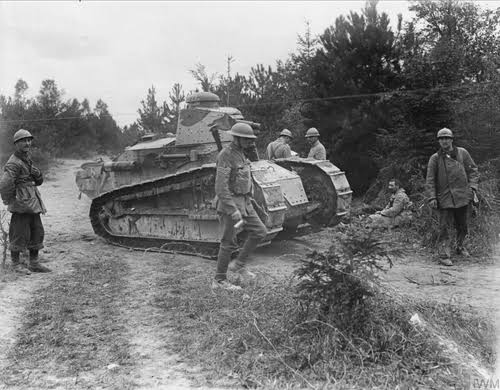
    With the German attack stalling, Supreme Allied Commander Ferdinand Foch saw his opportunity. On July 18, he launched a massive counteroffensive against the western flank of the Marne salient, near Soissons. The attack featured about 350 tanks—mostly French Renault FTs—and a combined force of French and American infantry, including the U.S. 1st and 2nd Divisions.

    The assault caught the Germans completely off guard. They had been focused on their own offensive and had not expected the Allies to launch a major attack so quickly. The use of tanks, which were still a relatively new weapon, allowed the Allies to break through German lines despite minimal artillery preparation. The French and Americans advanced up to five miles on the first day, threatening to cut off the German forces inside the salient.

    Faced with the prospect of encirclement, Ludendorff ordered a retreat. Over the following weeks, the Allies pushed the Germans back to the Aisne and Vesle rivers, erasing the Marne salient entirely by early August. The battle was over, and the strategic initiative had passed permanently to the Allies.

    Why the Battle Was a Turning Point

    The Second Battle of the Marne was decisive for several reasons. First, it marked the end of German offensive capability on the Western Front. The German army had suffered approximately 139,000 casualties during the battle—killed, wounded, or captured—and had lost irreplaceable equipment and experienced soldiers. Ludendorff’s dream of winning the war before the Americans arrived was shattered.

    Second, it demonstrated the effectiveness of combined-arms tactics. The Allied counteroffensive integrated infantry, artillery, tanks, and air power in a coordinated assault, a precursor to the more sophisticated operations of the Hundred Days Offensive. The success also validated Foch’s strategy of maintaining a strong central reserve and using it to strike at the enemy’s weakest point.

    Third, the battle had profound psychological effects. For the French, it was a vindication after the devastating mutinies of 1917 and the German advances of early 1918. The defense of Paris was a national triumph. For the Americans, it proved that their troops could fight and win against the best of the German army. For the Germans, the defeat was a demoralizing blow; many soldiers began to see the war as unwinnable, and desertions increased in the months that followed.

    The Human Cost

    Casualty figures are grim. Allied losses were approximately 95,000 French, 16,000 British, and 12,000–15,000 American soldiers. German losses were higher, around 139,000. For many American soldiers, this was their first major battle, and they showed remarkable bravery and effectiveness. The 3rd Division’s stand at the Marne became a legend, but it came at a price: the division suffered over 1,900 casualties in three days of fighting.

    German soldiers faced a different kind of suffering. Many were underfed, exhausted, and increasingly disillusioned. The arrival of fresh American troops, who seemed to have endless supplies and high morale, further undermined their confidence. The Second Marne was not just a military defeat; it was a psychological blow from which the German army never recovered.

    The Road to the Armistice

    The Allied counteroffensive at the Marne did not end the war overnight, but it set the stage. In August 1918, the Allies launched the Hundred Days Offensive, a series of coordinated attacks that pushed the Germans back relentlessly. With its army collapsing and its allies surrendering, Germany sued for peace, and the Armistice was signed on November 11, 1918.

    The Second Battle of the Marne is often overshadowed by other events of the war, but it deserves recognition as one of the most important battles of the conflict. It was the turning point where the Allies seized the initiative and never let go. For the Germans, it was the last great offensive, and its failure sealed the fate of the Kaiserreich.

    The Second Battle of the Marne was more than just a military engagement; it was the decisive moment when the tide of World War I turned irrevocably. The failure of the German offensive and the success of the Allied counteroffensive demonstrated that the Central Powers could no longer win the war. It was a battle of intelligence, courage, and strategic vision, and it paved the way for the final Allied victory. Understanding this battle helps us appreciate the complexity of the Great War and the fragility of empires that dared to overreach.

    Summary

    • Dates and Outcome: The Second Battle of the Marne (July 15–18, 1918) was the last German offensive of WWI, ending in a decisive Allied victory.
    • German Plan: Operation Marneschutz-Reims aimed to encircle Reims and split French lines, but the Allies knew the plan in advance thanks to broken codes.
    • Allied Counteroffensive: On July 18, Foch launched a tank-led attack that collapsed the Marne salient, forcing the Germans to retreat.
    • Casualties: German losses were ~139,000; Allied losses were ~95,000 French, 16,000 British, and 12,000–15,000 American.
    • Significance: The battle ended German offensive capability, boosted Allied morale, and set the stage for the Hundred Days Offensive and the Armistice in November 1918.

    FAQ

    Q: Why was the Second Battle of the Marne important?
    A: It was the last major German offensive of World War I. Its failure marked the turning point of the war, as the Allies seized the initiative and launched the Hundred Days Offensive that led to the Armistice.

    Q: What was the “Rock of the Marne”?
    A: It was the nickname given to the U.S. 3rd Division for its determined defense of the Marne River crossings on July 15, 1918, where it held its ground against German attacks.

    Q: How did the Allies know about the German attack?
    A: The French had broken German radio codes and knew the timing and location of the offensive. This allowed them to prepare a devastating defense, including evacuating frontline trenches and concentrating artillery.

    Q: What role did tanks play in the battle?
    A: The Allied counteroffensive on July 18 used about 350 tanks, mostly French Renault FTs. Their surprise appearance helped break through German lines and was crucial to the success of the attack.

    Q: How many American troops fought in the Second Battle of the Marne?
    A: Approximately 85,000–110,000 American troops participated, including the 3rd, 1st, and 2nd Divisions, among others. Their performance demonstrated that American soldiers could fight effectively against the German army.

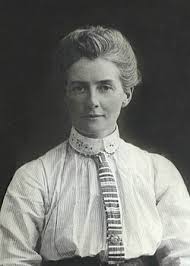
  • Edith Cavell: The Nurse Who Defied an Empire and Paid the Ultimate Price

    Edith Cavell: The Nurse Who Defied an Empire and Paid the Ultimate Price

    At 7:00 AM on October 12, 1915, a 49-year-old British nurse named Edith Cavell was led before a German firing squad in Brussels. Her crime: helping roughly 200–300 Allied soldiers, Belgian volunteers, and French civilians escape German-occupied Belgium to the neutral Netherlands. Her last words, spoken to the Anglican chaplain the night before, have echoed through history: “Patriotism is not enough. I must have no hatred or bitterness towards anyone.”

    Cavell was not a soldier, nor a spy. She was a matron at a Red Cross hospital, a professional nurse who had dedicated her life to caring for the sick. But when her adopted country fell under occupation, she chose to resist — not with weapons, but with courage, compassion, and a network of guides that ferried stranded men to safety. Her execution turned her into a martyr, a symbol of Allied propaganda, and a lasting question about the rules of war and the limits of humanity.

    From Norfolk to Brussels: The Making of a Nursing Pioneer

    Edith Louisa Cavell was born on December 4, 1865, in the small village of Swardeston, Norfolk, where her father was a vicar. She trained as a nurse at the London Hospital under the formidable Matron Eva Lückes, a demanding mentor who instilled in her a rigorous professional standard. After a stint as a private nurse, Cavell’s career took a decisive turn in 1907 when Dr. Antoine Depage recruited her to become the matron of the newly established Berkendael Medical Institute in Brussels.

    At the time, nursing in Belgium was far behind British standards. Cavell transformed the institute into a secular nursing school, training hundreds of nurses and earning widespread respect in Belgian medical circles. By 1914, she had built a reputation as a skilled administrator and a compassionate caregiver. When Germany invaded neutral Belgium in August 1914, Brussels fell within weeks, and Cavell’s hospital became part of the Red Cross, treating soldiers from both sides. But the occupation brought with it a moral dilemma that Cavell could not ignore.

    Edith Cavell’s execution was a turning point in the First World War, a moment that crystallized the brutality of the conflict and the heroism of those who resisted it. Her story is not just a tale of martyrdom; it is a reminder that courage can take many forms, and that even in the darkest times, individuals can choose to act with compassion. Her legacy endures in the statue in St Martin’s Place, in the postage stamp issued in 2015, and in the quiet pride of a nation that remembers her as one of its greatest. But perhaps her most lasting message is the one she whispered to the chaplain: that patriotism, while noble, is not enough — we must also strive to be human.

    Summary

    • Edith Cavell was a British nurse who helped 200–300 soldiers and civilians escape German-occupied Belgium during WWI.
    • She was arrested, court-martialed, and executed by firing squad on October 12, 1915.
    • Her last words, “Patriotism is not enough,” became a rallying cry for the Allies and a symbol of her Christian forgiveness.
    • Her execution sparked international outrage and was used extensively in Allied propaganda.
    • Her legacy includes a statue in London, recognition as one of the 100 Greatest Britons, and a memorial at Norwich Cathedral.

    FAQ

    Q: How many people did Edith Cavell help escape?
    A: Cavell is estimated to have helped roughly 200–300 Allied soldiers, Belgian volunteers, and French civilians escape to the Netherlands between November 1914 and August 1915.

    Q: What was Edith Cavell’s crime?
    A: She was charged with treason under German military law for assisting enemy soldiers to cross into neutral territory. She confessed to her role, stating she felt it her duty to help those who came to her.

    Q: Why was her execution controversial?
    A: Many believed she was treated unfairly: she was held in solitary confinement, denied legal counsel until the trial, and the proceedings were conducted in German, which she did not speak. The international community saw the execution as a German atrocity, while Germany maintained it was a legal necessity.

    Q: What did Edith Cavell say before she died?
    A: To the Anglican chaplain, Rev. Stirling Gahan, she said: “Patriotism is not enough. I must have no hatred or bitterness towards anyone.” The exact wording is debated, but the sentiment of forgiveness has endured.

    Q: Where is Edith Cavell buried?
    A: She was originally buried in Brussels, but after the war her body was exhumed and reinterred at Norwich Cathedral in England, where her grave remains today.

  • The Red Baron: How a Prussian Nobleman Became WWI’s Deadliest Ace

    The Red Baron: How a Prussian Nobleman Became WWI’s Deadliest Ace

    On April 21, 1918, a single bullet ended the life of the most feared pilot of World War I. Manfred von Richthofen, the ‘Red Baron,’ had just claimed his 80th aerial victory, a record that still stands. His death, shrouded in controversy, marked the end of an era of chivalrous air combat.

    But who was the man behind the red Fokker triplane? Born into Prussian aristocracy, Richthofen was less a daredevil and more a cold, calculating hunter. His story is one of adaptation, from cavalry to cockpit, and of a legend that grew far beyond the facts of his life.

    From Cavalry to Cockpit

    Manfred Albrecht Freiherr von Richthofen entered the world on May 2, 1892, in Kleinburg, then part of the German Empire. His family was aristocratic, with a father who served as a cavalry officer. Following tradition, young Manfred joined the Uhlan regiment in 1911, eager to prove himself on horseback.

    But the Great War shattered that romantic vision. By 1915, trench warfare had made cavalry charges obsolete. Horses were mowed down by machine guns; glory was found in the mud. Richthofen, seeking a new way to fight, transferred to the Imperial German Army Air Service. He started as an observer, learning the war from above, before earning his pilot’s wings.

    His first confirmed kill came on September 17, 1916, when he downed a British FE.2b. It was the beginning of a meteoric rise. By January 1917, he commanded Jasta 11, a squadron that would become legendary under his leadership.

    The Birth of the Red Baron

    The red paint was a practical choice. In the chaotic swirl of dogfights, Richthofen wanted to be instantly recognizable to his own pilots—and to strike fear in his enemies. He began painting his Albatros D.III red in early 1917, and later switched to the iconic Fokker Dr.I triplane, also painted a vivid crimson.

    The British and French press dubbed him the ‘Red Baron’ (der Rote Baron in German), while the French called him ‘Le Petit Rouge.’ His unit, Jagdgeschwader 1, formed in June 1917, became known as the ‘Flying Circus’—not just for the bright colors of its aircraft, but for its mobile, tent-based operations that moved across the front like a traveling show.

    The Hunter’s Ethos

    Richthofen was not a flamboyant ace. Contemporaries described him as cold, methodical, and calculating. He approached aerial combat like a hunter, not a sportsman. In his memoir, Der rote Kampfflieger (‘The Red Battle Flyer’), he wrote clinically about his kills, often comparing them to game hunting.

    He collected trophies from his victims—serial numbers, machine guns, even a table that he had made from the wreckage of a British plane. Yet, there were moments of strange chivalry. He reportedly once refused to shoot a downed enemy pilot who was struggling in the water. Such contradictions made him both admired and feared.

    The Deadliest Month: Bloody April

    April 1917 was Richthofen’s apex. During ‘Bloody April,’ he shot down 22 British aircraft, a staggering feat that cemented his reputation. The German air force enjoyed a period of superiority, and the Red Baron was its undisputed master.

    But the war was changing. The Allies were producing more planes, and new tactics were emerging. Richthofen, ever the strategist, adapted. Yet, after a severe head wound in July 1917, some historians argue his judgment began to falter. He became more reckless in 1918, pushing into danger with a bravado that was uncharacteristic.

    The Final Flight

    On April 21, 1918, Richthofen took to the skies near the Somme River. He was pursuing a Canadian pilot, Wilfrid ‘Wop’ May, when a single bullet tore through his chest. He managed to land his red triplane in a field, but he was dead by the time Allied soldiers reached him.

    The question of who fired the fatal shot has fueled debate for over a century. The Royal Air Force officially credited Captain Arthur Roy Brown, a Canadian ace who attacked Richthofen from behind and above. But many historians believe the bullet came from Australian ground fire—specifically from machine gunners like Sergeant Cedric Popkin or Gunner Robert Buie.

    Modern forensic analysis of the bullet trajectory (entering from the right and exiting left) suggests the shot came from the ground, not from Brown’s position. Yet, the debate persists, with no definitive answer.

    The Legacy

    Richthofen was buried with full military honors by the Allies at Bertangles, France—a mark of respect for a worthy adversary. His remains were later moved to Wiesbaden, Germany, where they rest today. He had 80 confirmed victories, the highest of any ace in World War I, and his legend only grew after his death.

    The Red Baron became a symbol of a bygone era of air combat, where knights of the sky dueled above the trenches. But the reality was brutal, and Richthofen was a product of that brutality. His death, just seven months before the Armistice, was a turning point—not just for the German air force, but for the mythology of the war itself.

    Manfred von Richthofen was more than a pilot; he was a phenomenon. His life and death encapsulate the contradictions of World War I: the chivalry and the carnage, the skill and the luck. The Red Baron remains a haunting figure, a reminder that even the most skilled hunter can become the hunted.

    Summary

    • Manfred von Richthofen was a German aristocrat who became WWI’s top ace with 80 confirmed victories.
    • He painted his aircraft red for recognition and fear, earning the nickname ‘Red Baron.’
    • His unit, the ‘Flying Circus,’ was famous for its mobile operations and colorful planes.
    • Richthofen was killed on April 21, 1918, and the identity of his killer remains disputed.
    • He was buried with honors by the Allies, and his legacy endures as a symbol of WWI aviation.

    FAQ

    Q: How many planes did the Red Baron shoot down?
    A: Manfred von Richthofen had 80 confirmed aerial victories, the highest of any ace in World War I.

    Q: Why was his plane red?
    A: He painted his aircraft red for easy recognition in combat and to intimidate enemies. The color became his trademark.

    Q: Who shot down the Red Baron?
    A: The official credit went to Canadian Captain Roy Brown, but many historians believe he was killed by Australian ground fire. The exact shooter remains a subject of debate.

    Q: What was the ‘Flying Circus’?
    A: It was the nickname for Jagdgeschwader 1, Richthofen’s unit, known for its brightly colored aircraft and mobile, tent-based operations.

    Q: Where is the Red Baron buried?
    A: He was initially buried in France, then moved to Wiesbaden, Germany, where he rests in the Südfriedhof cemetery.

  • The 14 Points: How a President’s Dream of Peace Became a Century of Consequences

    The 14 Points: How a President’s Dream of Peace Became a Century of Consequences

    On a cold January evening in 1918, Woodrow Wilson stood before a joint session of Congress and unveiled a vision that would redefine the world’s understanding of peace. The 14 Points were not a treaty or a list of demands, but a moral blueprint—a declaration that the slaughter of millions must end not with vengeance, but with justice. Wilson’s words echoed beyond the chamber, reaching the trenches of the Western Front and the chancelleries of Europe, promising a new order where open diplomacy, self-determination, and a league of nations would banish the shadows of secret alliances and imperial greed.

    Yet the dream that captivated the world would crumble within a year, betrayed by the very leaders who sat at the peace table—and by the American Senate that rejected its own president’s triumph. The 14 Points were never fully realized, but their legacy is not failure. It is a story of how ideals, however compromised, can reshape the course of history, for better and for worse.

    A Speech That Shook the World

    Wilson’s address on January 8, 1918, was a masterstroke of timing. Russia had just exited the war, leaving the Allies to face the full might of the Central Powers alone. The American president, who had entered the war only nine months earlier, needed to give the conflict a purpose beyond territorial conquest. He needed to offer the German and Austrian publics a reason to turn against their own leaders.

    The speech was the product of months of intense intellectual labor. Wilson had assembled a team of about 150 scholars—geographers, historians, economists—known as The Inquiry. They pored over maps, ethnic distributions, and economic data, producing voluminous reports that Wilson distilled into a single, soaring vision. The result was a document of remarkable clarity: open covenants, freedom of the seas, free trade, disarmament, and a league of nations to guarantee the peace.

    Each point was a direct repudiation of the old world order. Point 1, banning secret treaties, struck at the heart of the diplomatic culture that had dragged Europe into war. Point 14, the League of Nations, was the keystone—a permanent institution to enforce the new rules. Wilson was not merely proposing a peace; he was proposing a revolution in international affairs.

    The Paris Chessboard

    When Wilson sailed for France in December 1918, he became the first sitting American president to travel to Europe. He was greeted by crowds of ecstatic Parisians, who saw him as a savior. But the euphoria did not last.

    At the Paris Peace Conference, Wilson faced three formidable opponents. Georges Clemenceau of France, known as ‘The Tiger,’ cared little for ideals; he had seen his country invaded twice in a generation and demanded security. David Lloyd George of Britain was determined to preserve the British Empire and naval supremacy. Vittorio Orlando of Italy sought territorial gains for his young nation.

    The Big Four negotiated in secret, a direct violation of Point 1. Clemenceau pushed for the Rhineland to be detached from Germany, while Lloyd George insisted on a punitive naval blockade. Wilson fought for his principles, but he was forced to make compromises. Germany was saddled with a ‘war guilt’ clause and crushing reparations. The Treaty of Versailles, signed on June 28, 1919, incorporated only some of the 14 Points—and even those were often watered down.

    The German Betrayal

    Perhaps the most tragic consequence of the Versailles Treaty was its impact on Germany. Germany had agreed to the armistice in November 1918 on the explicit understanding that the peace would be based on the 14 Points. When the treaty was unveiled, the Germans were stunned. The territorial losses, the war guilt clause, the astronomical reparations—none of it matched Wilson’s promised ‘peace without victory.’

    The sense of betrayal was not just diplomatic; it was visceral. German nationalists, including a young Adolf Hitler, would use this ‘stab in the back’ myth to undermine the Weimar Republic. The treaty’s harshness did not create Nazism, but it provided the fuel for the fire. Wilson’s dream of a just peace had become, in the eyes of many Germans, a tool of Allied vengeance.

    The League That Never Was

    The League of Nations was created in 1920, with its headquarters in Geneva. Wilson had staked his presidency on it, but he faced an insurmountable obstacle at home: the U.S. Senate. Isolationists, led by Henry Cabot Lodge, opposed the League’s Article X, which committed members to protect each other’s territorial integrity. Wilson refused to compromise, and the Senate refused to ratify the Treaty of Versailles. The United States never joined the League.

    Without American participation, the League was crippled from birth. It had no enforcement mechanism, no standing army, and no great-power unity. It failed to prevent the Italian invasion of Ethiopia, the Japanese annexation of Manchuria, or the rise of Hitler. By 1939, the League was a hollow shell, and the world was at war again.

    The Colonial Blind Spot

    Wilson’s vision of self-determination was revolutionary, but it had a glaring flaw: it applied only to Europeans. Point 5 called for an ‘impartial adjustment of colonial claims,’ with equal weight given to the interests of colonial peoples. But in practice, the victors simply divided up the German and Ottoman empires under the mandate system. The peoples of Africa, the Middle East, and Asia were given no say in their own futures.

    The League’s mandate system was a fig leaf for continued imperial control. ‘Self-determination’ was a promise for the Balkans and the Austro-Hungarian Empire, but not for the subjects of British, French, or Belgian empires. Wilson’s idealism, which had inspired anticolonial movements worldwide, ultimately reinforced the very structures it claimed to reform.

    A Legacy That Endures

    Despite its failures, the 14 Points did not vanish. The League of Nations, however flawed, established the template for the United Nations. The principle of self-determination reshaped the world map, leading to the independence of dozens of nations in the decades after World War II. The idea of open diplomacy, free trade, and international law became the bedrock of the postwar order.

    Wilson received the 1919 Nobel Peace Prize, but he died in 1924 a broken man, convinced his life’s work had failed. He could not foresee that his ideas would outlive him. The 14 Points were a profound moral statement—a recognition that peace cannot be built on revenge, that nations must be governed by law, and that the world’s peoples have a right to shape their own destinies.

    As we look at the wars and conflicts of the 21st century, the questions Wilson raised remain urgent. Can international institutions truly guarantee peace? Can self-determination be reconciled with territorial integrity? The 14 Points were a dream, but dreams have consequences. They may not be realized, but they set the course.

    Woodrow Wilson’s 14 Points remain a touchstone of internationalist thought, a reminder that peace is not merely the absence of war but a positive vision of justice. The dream failed in its time, but it planted seeds that would grow into the architecture of the modern world. Whether we look at the United Nations, the European Union, or the ongoing struggles for self-determination, Wilson’s shadow looms large. His dream was imperfect, and its consequences were often tragic, but it gave the world a new language of hope—one that we still speak today.

    Summary

    • The 14 Points were delivered on January 8, 1918, as a blueprint for a just peace, with significant input from The Inquiry, a team of ~150 experts.
    • Only some points were incorporated into the Treaty of Versailles, which was far harsher than Wilson promised, fueling German resentment and the ‘stab in the back’ myth.
    • The League of Nations was created but the U.S. Senate refused to join, leaving it without great-power support and doomed to fail.
    • Wilson’s self-determination was applied selectively, ignoring the colonial peoples of Africa and Asia, and the mandate system merely legitimized imperial control.
    • Despite its failures, the 14 Points inspired the UN and modern international institutions, and remain a powerful symbol of the pursuit of peace.

    FAQ

    Q: What were the main goals of the 14 Points?
    A: The 14 Points aimed to establish a framework for a just and lasting peace after World War I, including open diplomacy, freedom of the seas, free trade, disarmament, self-determination for European peoples, and the creation of a League of Nations to guarantee peace.

    Q: Why did the U.S. not join the League of Nations?
    A: The U.S. Senate refused to ratify the Treaty of Versailles, partly because of objections to Article X, which required members to protect each other’s territorial integrity. This was a victory for isolationist sentiment led by Senator Henry Cabot Lodge.

    Q: How did Germany react to the Treaty of Versailles?
    A: Germany felt betrayed because it had agreed to the armistice on the assumption that peace would be based on the 14 Points. The treaty’s harsh terms—war guilt, reparations, territorial losses—created a deep sense of injustice that nationalist leaders later exploited.

    Q: Did the 14 Points apply to colonial peoples?
    A: No, despite Point 5 calling for impartial adjustment of colonial claims, the mandate system simply transferred control, and self-determination was applied only to European nations, not to people in Asia, Africa, or the Middle East.

    Q: What is the lasting legacy of the 14 Points?
    A: The 14 Points influenced the creation of the United Nations and other international institutions, and the principle of self-determination reshaped global politics. They remain a symbol of the ideal that peace can be built on justice rather than vengeance, even if that ideal is never fully achieved.

  • The Unfinished War: How Shell Shock Shaped the Lost Generation

    The Unfinished War: How Shell Shock Shaped the Lost Generation

    In 1926, Ernest Hemingway opened The Sun Also Rises with a line he’d heard from Gertrude Stein: “You are all a lost generation.” The phrase captured a cohort that had survived the Great War but seemed permanently adrift. Yet behind the literary glamour of Paris cafés lay a more painful reality: millions of veterans returned home with minds shattered by what they’d seen. The war didn’t end for them at the Armistice—it followed them into peacetime.

    The War That Broke the Mind

    World War I mobilized about 65 million men across all belligerent nations. The death toll—between 8.5 and 10 million—was staggering, but the wounded numbered more than twice that: 21 to 23 million. Among those wounded were tens of thousands whose injuries weren’t visible.

    The British Army alone recorded over 80,000 official cases of “shell shock” by 1918, and some estimates put the true figure at 200,000. France and Germany saw comparable numbers, though incomplete records make exact counts impossible.

    Before the war, military psychiatry barely existed. The prevailing view held that psychological collapse in battle reflected cowardice or weak character. Punitive treatment was standard: courts-martial, imprisonment, or worse. The British executed 306 soldiers for desertion or cowardice, many of whom likely suffered from shell shock.

    The war itself was unlike anything before. Industrialized, attritional warfare meant weeks in muddy trenches under constant artillery bombardment. Soldiers witnessed comrades blown apart, lived in filth, endured sleep deprivation, and faced death from unseen enemies. The scale of trauma was unprecedented.

    The Shell Shock Debate

    Initially, doctors believed shell shock was a physical injury—microscopic damage to the brain or spinal cord from exploding shells. The term itself, coined by British psychologist Charles Samuel Myers in 1915, reflected this theory.

    But by 1916–17, physicians realized many cases occurred in men who had never been near an explosion. This forced a shift toward psychological explanations, though the name stuck.

    Class bias permeated diagnosis and treatment. Officers were more likely to receive a diagnosis of “neurasthenia”—a respectable nervous condition—and were sent to rest homes. Enlisted men were more often labeled “hysterical” or “cowardly” and treated harshly.

    Treatments: From Talking Cure to Torture

    Britain’s Dr. W.H.R. Rivers pioneered a “talking cure” at Craiglockhart War Hospital, using dream analysis to treat officers—including poets Siegfried Sassoon and Wilfred Owen. Other approaches included hypnosis, electrical stimulation, rest, and occupational therapy.

    France took a similar path, with Dr. Jean Lhermitte using “persuasion” and re-education. Germany was more brutal: some doctors used “active therapy,” exposing patients to war sounds, while others applied painful electrical shocks to “cure” malingerers.

    The U.S. initially denied shell shock existed, but after entering the war in 1917, adopted British methods. Thomas Salmon, the AEF’s chief psychiatrist, advocated for “forward psychiatry”—treating men close to the front with rest and reassurance so they could return to duty quickly.

    The Post-War Fallout

    When the guns fell silent on November 11, 1918, veterans returned to societies eager to forget. Pensions for psychological disability were often denied or minimal. Suicide rates among veterans spiked in the 1920s and 1930s across Britain, France, Germany, and the U.S.

    Many veterans remained institutionalized for decades. In the U.S., the Veterans Bureau (later the VA) reported that over 50% of its hospital beds in the 1920s were occupied by neuropsychiatric cases.

    The Great Depression compounded the misery. Economic collapse left many veterans destitute, with no support from governments that preferred to move on.

    A Generation’s Literary Echo

    The psychological toll found expression in literature. Hemingway, F. Scott Fitzgerald, T.S. Eliot, and others wrote of disillusionment and fragmentation. Eliot’s The Waste Land (1922) and Hemingway’s The Sun Also Rises (1926) captured a generation’s alienation.

    These works weren’t just artistic statements—they were testimony. The “Lost Generation” label stuck because it described something real: men and women who had seen too much, too young, and couldn’t find their way back to normal life.

    The Legacy

    Today, we recognize shell shock as a combination of PTSD, combat fatigue, survivor’s guilt, and moral injury. The term itself faded, but the condition didn’t. The war’s psychological casualties were the first mass demonstration that war breaks minds as surely as bodies.

    The Lost Generation’s experience reshaped military psychiatry and public attitudes toward mental health. But for the veterans themselves, the war was never truly over. They carried it with them, as Hemingway wrote, “in all the ways you can’t talk about.”

    The Lost Generation’s psychological scars were not a metaphor—they were measured in hospital beds, suicide rates, and broken lives. The war didn’t end in 1918; it persisted in the minds of millions. Recognizing shell shock as a legitimate wound was the first step, but for many veterans, healing never came. Their story remains a sobering reminder of war’s true cost.

    Summary

    • Shell shock affected hundreds of thousands of WWI veterans; the British Army alone recorded 80,000+ cases.
    • Initial theories blamed physical injury, but psychological explanations emerged by 1916–17.
    • Treatment varied widely, from talking cures to brutal electrical shocks, reflecting class and national biases.
    • Post-war, many veterans faced denied pensions, institutionalization, and rising suicide rates.
    • The literary works of the Lost Generation captured this psychological fragmentation for posterity.

    FAQ

    Q: What was ‘shell shock’?
    A: Shell shock was a term coined during WWI to describe psychological breakdown in soldiers. It’s now understood as a combination of PTSD, combat fatigue, survivor’s guilt, and moral injury.

    Q: How many soldiers suffered from shell shock?
    A: The British Army recorded over 80,000 official cases, with estimates up to 200,000. France and Germany had comparable numbers, though records are incomplete.

    Q: How was shell shock treated?
    A: Treatments varied: Britain used talking cures and rest; France used persuasion; Germany used sometimes brutal methods like electric shocks. The U.S. favored forward psychiatry near the front.

    Q: Why is it called the ‘Lost Generation’?
    A: The term was popularized by Gertrude Stein and used by Hemingway in The Sun Also Rises. It refers to the generation that came of age during WWI, marked by disillusionment and psychological damage.

    Q: What happened to shell-shocked veterans after the war?
    A: Many faced denied pensions, institutionalization, and higher suicide rates. Over 50% of VA hospital beds in the 1920s were occupied by neuropsychiatric cases.

  • How the Trenches Reshaped Art and Literature: WWI’s Cultural Aftermath

    How the Trenches Reshaped Art and Literature: WWI’s Cultural Aftermath

    On a grey morning in July 1916, near the Somme River in France, a young British officer named Wilfred Owen led his men into a hail of machine-gun fire. He would survive that day, but the experience would strip away every romantic notion of war he had carried into battle. Two years later, he wrote ‘Dulce et Decorum Est,’ a poem that described a soldier dying from a gas attack—’guttering, choking, drowning.’ The poem’s title, a Latin phrase meaning ‘it is sweet and fitting to die for one’s country,’ became the bitterest irony of a generation.

    Owen was one of millions whose lives were broken by the First World War, and his poetry—published after his death in 1918—helped spark a cultural revolution that would redefine how the West saw art, literature, and humanity itself. The war did not just kill soldiers; it killed a way of seeing the world. In its place rose movements that rejected beauty, order, and meaning, because the war had shown those to be lies.

    The Death of Romantic War

    Before 1914, European culture still carried the torch of the 19th century. War was something that happened to other people—far away, brief, and noble. Paintings showed cavalry charges and brave officers waving swords. Poetry spoke of glory and sacrifice. The Italian Futurists even celebrated war as ‘the world’s only hygiene,’ a cleansing force that would sweep away the old and usher in the new.

    Then the guns of August 1914 fired, and the world learned what industrial warfare truly meant. The numbers are staggering: nearly 10 million soldiers dead, 21 million wounded, 7 million civilians killed. But those statistics obscure the reality of the trenches—mud, rats, poison gas, and corpses rotting in the wire. The Battle of the Somme alone produced a million casualties in five months, most of them in the first day. The British Army lost 57,000 men on July 1, 1916, the bloodiest day in its history.

    This was not war as anyone had imagined it. The machine gun made charging infantry obsolete. Artillery shells could kill from miles away. Gas attacks burned lungs and eyes. Soldiers died anonymously, often unrecognizable, their bodies swallowed by the earth. The romantic imagination simply could not process this. It needed new forms, new language, new art.

    The Poets Who Spoke the Unspeakable

    No group captured the shift more powerfully than the British war poets. Rupert Brooke, writing in 1914, still believed in the old ideals. His poem ‘The Soldier’ begins: ‘If I should die, think only this of me: / That there’s some corner of a foreign field / That is forever England.’ It was patriotic, beautiful, and utterly out of touch with what lay ahead. Brooke died in 1915, before the Somme, before he could see the truth.

    Wilfred Owen and Siegfried Sassoon saw it. Sassoon, who served in the trenches and won the Military Cross, wrote ‘Counter-Attack’ in 1918, describing a soldier’s corpse caught on a wire—’his face / A white, long, writhing horror.’ Owen went further. His poem ‘Dulce et Decorum Est’ showed a man drowning in his own lungs after a gas attack, and ended by calling the old lie—’dulce et decorum est pro patria mori’—a lie. Both men were decorated heroes. Both were also traumatized, and both used their poetry to tell the public what the politicians and censors would not.

    Their work did not just describe the war; it created a new poetic language. Broken rhythms, harsh imagery, and a refusal to smooth things over. This was the beginning of Modernism in literature, a movement that would explode after the war with T.S. Eliot’s The Waste Land (1922), a poem of fragments and despair, and James Joyce’s Ulysses, which shattered the conventional novel with stream of consciousness.

    The Shattered World of Modernism

    The war broke the idea that the world made sense. How could it, after the Somme? Modernist writers responded by breaking narrative itself. Eliot’s The Waste Land is a collage of voices, myths, and quotations, all of them decaying. It opens with ‘April is the cruellest month,’ a reversal of the old springtime hope. Virginia Woolf’s Mrs Dalloway (1925) sets a shell-shocked veteran, Septimus Smith, against the genteel world of post-war London. His suicide is not a personal failure but a verdict on a society that refuses to acknowledge what the war did to its young men.

    Ernest Hemingway, an ambulance driver on the Italian front, took a different approach. In A Farewell to Arms (1929), he wrote in a stripped-down, declarative style—no decorative adjectives, no moralizing. The hero, Frederic Henry, makes his own separate peace, deserting an army that has become meaningless. Hemingway called his generation the ‘Lost Generation,’ a term he borrowed from Gertrude Stein, and he made it famous in The Sun Also Rises (1926), a novel about aimless expatriates drinking their way through Paris and Spain.

    Erich Maria Remarque’s All Quiet on the Western Front (1929) became the definitive soldier’s novel. Written by a German veteran, it shows the war from the other side of the wire. The narrator, Paul Bäumer, speaks for his whole generation: ‘We were eighteen and had begun to love life and the world; and we had to shoot it to pieces.’ The book was banned and burned by the Nazis, who understood its power.

    Dada: The Anti-Art Response

    If the writers rebuilt language, the artists of Dada tried to destroy it. The movement was born in 1916 at the Cabaret Voltaire in Zurich, a neutral city where refugees, pacifists, and deserters gathered. Its founders—Hugo Ball, Tristan Tzara, Hans Arp—were horrified by the war’s irrational slaughter. Their answer was to make art that was just as irrational, absurd, and meaningless as the war itself.

    Marcel Duchamp’s Fountain (1917), a urinal signed ‘R. Mutt,’ was the ultimate Dada gesture. It was not a painting of a war scene; it was a rejection of the very idea of art. If the world had gone mad, then art should be mad too. Dada produced collages made from war debris, nonsense poetry, and performances that mocked the audience. Kurt Schwitters made ‘Merz Pictures’ from tram tickets, wire, and other trash he found on the streets. It was art that said: nothing matters.

    Out of Dada grew Surrealism. Andre Breton, who had worked in a psychiatric hospital during the war, saw the madness of the trenches and concluded that the rational mind had failed. Surrealism would explore the unconscious, dreams, and the irrational. Its imagery—melting clocks, floating objects, impossible spaces—was a direct response to a world where reality had become impossible.

    The German Expressionists and New Objectivity

    Germany, defeated and humiliated, produced some of the war’s most devastating art. Expressionism had already existed before the war, with its distorted forms and raw emotion, but the conflict intensified it. Artists like Otto Dix and George Grosz had served in the trenches, and they brought that experience back with them.

    Dix’s work is unflinching. His triptych War (1929–1932) shows soldiers crawling through a blasted landscape, their faces masks of horror. The Trench (1920–23) depicts the aftermath of a battle—bodies half-buried in mud, faces eaten by rats. These images were so graphic that they were hidden for decades. Dix was labeled a ‘degenerate artist’ by the Nazis, who understood that such art could not coexist with their glorification of war.

    By the mid-1920s, a new movement emerged in Germany: New Objectivity (Neue Sachlichkeit). It was a cold, realistic response to Expressionism’s emotionalism. Artists like Dix and Grosz rejected both romanticism and abstraction. They painted what they saw: crippled veterans begging on the streets, prostitutes, corrupt businessmen, the social decay of the Weimar Republic. This was the world the war had made, and they would not look away.

    The war’s impact was not limited to the Western Front. Paul Nash, a British artist, painted the blasted landscapes of Ypres and Passchendaele. His We Are Making a New World (1918) shows a devastated field, the title dripping with irony. John Singer Sargent’s Gassed (1919), a massive canvas of soldiers blinded by gas, is one of the most famous war paintings ever made—not heroic, but tragic.

    A Generation Lost and Found

    The war did not end in 1918. It lived on in the minds of those who survived. ‘Shell shock’—the era’s term for what we now call PTSD—affected hundreds of thousands of soldiers. At first, it was dismissed as cowardice. Some were executed for it. But gradually, doctors and writers forced a recognition of psychological trauma. Woolf’s Mrs Dalloway and Hemingway’s stories are full of men like Septimus Smith, unable to reconnect with a world that did not understand what they had been through.

    The ‘Lost Generation’ was not just a literary label. It described a real cohort—men and women who came of age during the war, who had seen too much, and who often abandoned their homelands. Many moved to Paris, where Hemingway, Fitzgerald, Stein, and Joyce created an expatriate community that produced some of the century’s greatest literature. They were exiles, not just geographically, but psychologically. They had lost faith in the institutions that had lied to them—governments, churches, schools, families.

    The war also shattered the old class structures. The Battle of the Somme killed an entire generation of British public school officers, the ‘lions led by donkeys.’ The war levelled aristocrats and laborers in the same mud, and post-war writers like Robert Graves (Good-Bye to All That, 1929) and David Jones (In Parenthesis, 1937) documented this leveling. Jones, an artilleryman, wrote his book in a mixture of prose and verse, reflecting the shattered consciousness of men who had lived through the absurdity.

    The Enduring Legacy

    By 1930, the war’s cultural impact was everywhere. The optimism of the Belle Époque was dead. The idea that progress was inevitable was dead. The belief that art could be beautiful and uplifting was dead. In their place came fragmentation, irony, and a deep suspicion of authority. Modernism, Dada, Surrealism, Expressionism, New Objectivity—all were children of the trenches.

    The war also changed how we think about trauma. Before 1914, there was no language for what soldiers experienced. After the war, there was. The poems of Owen and Sassoon, the novels of Remarque and Hemingway, the paintings of Dix and Nash—they gave a voice to the voiceless. They told the truth about war, and in doing so, they made it harder for future generations to lie about it.

    When World War II came, there was no initial patriotic enthusiasm. The poets who wrote about it—Auden, Spender, Keith Douglas—had learned from their predecessors. They knew that war was not glorious. This was a direct consequence of the cultural revolution of 1914–1918. The artists and writers of the Great War had done something extraordinary: they had turned horror into art, and in doing so, they had changed the world.

    The War’s Art in Context

    It is impossible to fully separate the art from the war. Every work—whether Owen’s poetry or Dix’s paintings—was a response to a specific historical event. But these works have outlived the trenches. They speak to us today because they deal with timeless themes: trauma, loss, the failure of authority, the search for meaning in a meaningless world.

    A young person today, reading All Quiet on the Western Front for the first time, can still feel the mud and the fear. Looking at The Waste Land, we still recognize the fragmentation of modern life. The war’s cultural impact was not limited to its own generation. It created the artistic language we still use to make sense of catastrophe.

    The First World War was a catastrophe that killed millions, but it also birthed some of the most powerful art and literature ever created. The poets, novelists, and painters of the Lost Generation did not simply document the war; they transformed human understanding. They showed us that war is not glorious, that trauma leaves invisible wounds, and that the old ways of seeing—romantic, ordered, certain—were never true to begin with. A century later, their work remains a warning and a testament, a reminder of what happens when the world breaks, and the artists who help us see it.

    Summary

    • WWI shattered the pre-war romantic view of war, leading to Modernism’s fragmented narratives in literature and the rise of Dada’s anti-art.
    • Poets like Wilfred Owen and Siegfried Sassoon rejected the ‘glory’ of war in works like ‘Dulce et Decorum Est,’ exposing the horror of industrial slaughter.
    • The ‘Lost Generation’ writers—Hemingway, Eliot, Woolf—explored trauma, shell shock, and alienation in works like The Waste Land and Mrs Dalloway.
    • German Expressionism and New Objectivity reflected the brutal aftermath of war, with artists like Otto Dix depicting crippled veterans and social decay.
    • The war gave birth to modern psychological understanding of trauma, and its cultural impact shaped how we remember and represent conflict today.

    FAQ

    Q: What was the ‘Lost Generation’?
    A: The Lost Generation refers to the cohort of men and women who came of age during World War I, and who were disillusioned and alienated by the war’s horrors. The term was popularized by Gertrude Stein and used by Ernest Hemingway in his memoir A Moveable Feast. Many of them became expatriate writers and artists in Paris, including Hemingway, Fitzgerald, and Joyce.

    Q: How did Dada respond to the war?
    A: Dada was an anti-art movement founded in 1916 in Zurich’s Cabaret Voltaire. It rejected traditional artistic values—beauty, order, and reason—because those values had failed to prevent the war. Dadaists used absurdity, chaos, and nonsense to reflect a world that had become irrational. Marcel Duchamp’s Fountain, a urinal displayed as art, is a famous example.

    Q: What is shell shock, and why did it matter?
    A: Shell shock was the World War I term for what we now call post-traumatic stress disorder (PTSD). It was initially dismissed as cowardice, and some affected soldiers were executed. Over time, its recognition forced a rethinking of psychological trauma, and it became a major theme in post-war literature, such as Virginia Woolf’s Mrs Dalloway.

    Q: What was the New Objectivity movement?
    A: New Objectivity (Neue Sachlichkeit) was a German artistic movement from the 1920s that reacted against Expressionism’s emotionalism. It used cold, realistic, and detached styles to depict the brutal aftermath of war, including crippled veterans, poverty, and social decay. Otto Dix and George Grosz were key figures.

    Q: How did WWI change literature’s portrayal of war?
    A: Before WWI, war was often depicted as heroic and glorious. After the war, writers like Wilfred Owen, Erich Maria Remarque, and Ernest Hemingway depicted it as horrific, senseless, and dehumanizing. This marked a permanent shift in how war is represented in literature, influencing all subsequent war writing.

  • Mud, Rats, and the Human Cost: Inside the Trenches of World War I

    Mud, Rats, and the Human Cost: Inside the Trenches of World War I

    By 1917, the Western Front stretched 475 miles from the North Sea to the Swiss border, a scar across Europe that would hold for years. Within that line, soldiers carved out a world of mud, rats, and constant fear—a world that produced its own kind of horror, from trench foot to shell shock. This is the story of that world, told through the daily grind of the men who lived it.

    A City Underground

    The trench system was not a single ditch but a sprawling network. An estimated 35,000 miles of trenches crisscrossed the Western Front, with front-line, support, and reserve lines connected by zigzag communication trenches. The fire trench faced the enemy, its sandbagged parapet offering a slim shield against bullets. Behind it, support and reserve trenches sat 70 to 100 yards back, housing reinforcements and supplies. Dugouts—some shallow, some deep—provided shelter from shells and a place to sleep, though many were vulnerable to direct hits.

    Soldiers lived in these cramped, damp spaces for days at a time. A typical rotation sent men to the front for four to six days, then back to support, then reserve, then rest areas behind the lines. But even in “rest,” there was little rest: fatigues, repairs, and drills filled the hours.

    The Mud That Swallowed Men

    Flanders’ clay-heavy soil turned to glue with the first rain. A single storm could leave trenches waist-deep in water, and the mud was more than an inconvenience—it was a killer. At Passchendaele in 1917, men and horses drowned in shell craters filled with liquid mud. Artillery shells that hit the muck often failed to explode, while soldiers struggled to move, their boots sucked down with each step.

    Trench foot, a non-freezing cold injury, became epidemic. In the winter of 1914–15 alone, over 20,000 British soldiers were treated for it. The condition—swollen, numb, decaying tissue—often led to amputation. Soldiers tried to ward it off by drying their feet and changing socks, but in the waterlogged trenches, such efforts were rarely enough.

    Rats and Lice: The Constant Companions

    Brown rats, Rattus norvegicus, thrived in the trenches. They fed on corpses, food scraps, and horse carcasses, growing to the size of cats, soldiers claimed. Millions of rats infested the front lines, and men killed them with shovels, bayonets, and even trained dogs—but the numbers were overwhelming. One soldier wrote of rats running over his face at night, their claws scratching against his skin.

    Lice were just as pervasive. They caused “trench fever,” a relapsing illness that added fever and pain to the misery. The daily ritual of “chatting”—searching clothing for lice—was a constant, futile battle.

    The Invisible Wound: Shell Shock

    The term “shell shock” emerged during the war to describe the tremors, paralysis, mutism, and nightmares that struck soldiers without physical injury. The British Army recorded around 80,000 cases, and in 1916, shell shock accounted for about 40% of casualties in some front-line units. Treatments ranged from rest and tonics to electroshock and hypnosis—often with little understanding of the condition.

    Many shell-shocked men were branded cowards or malingerers. Some faced courts-martial and execution for desertion; the British executed 306 soldiers, several of whom likely suffered from shell shock. The legacy of shell shock helped shape modern military psychiatry, but for the men who endured it, the war never ended.

    A Day in the Trenches

    Life followed a grim rhythm. “Stand-to” at dawn and dusk meant manning the fire step, bayonets fixed, watching for attack. Days were spent inspecting, repairing, and hauling supplies. Nights were for work—repairing wire, patrolling No Man’s Land, or raiding enemy trenches.

    Food was cold and monotonous: bully beef, hard biscuits, jam, and tea. Fresh food was a luxury, often arriving in parcels from home. Sleep came in shifts, in wet clothes, in cramped dugouts. Chronic exhaustion was universal.

    The Human Toll

    The trenches were a machine designed to grind men down—body and mind. The mud, the rats, the lice, the fear—they all combined into a daily endurance test. The men who survived carried the scars, visible and invisible. Shell shock and trench foot were just the names for the damage; the reality was a generation changed forever.

    The trenches of World War I were more than a military strategy; they were a world unto themselves, a place where the human spirit was tested to its limits. The mud, the vermin, and the psychological wounds left an indelible mark on all who passed through. Understanding that world is not just about remembering the past—it’s about honoring the endurance of those who lived it.

    Summary

    • The Western Front spanned 475 miles, with 35,000 miles of trenches by 1917.
    • Trench foot affected over 20,000 British soldiers in the winter of 1914–15 alone.
    • Brown rats and lice were ubiquitous, causing disease and constant torment.
    • Shell shock affected an estimated 80,000 British soldiers, yet many were treated as cowards.
    • Daily life was a cycle of stand-to, hard labor, and sleep deprivation, all under the threat of death.

    FAQ

    Q: What was the typical depth and width of a trench?
    A: Trenches were usually 6–8 feet deep and 3–5 feet wide, with duckboards on the floor to keep men above water.

    Q: How did soldiers deal with rats?
    A: They used shovels, bayonets, and dogs to kill rats, and tried traps and poison—but the rat population was so vast that these efforts had little impact.

    Q: What were the symptoms of shell shock?
    A: Symptoms included tremors, paralysis, mutism, nightmares, anxiety, and dissociation. It was not a formal diagnosis at the time.

    Q: How long did soldiers spend in the front line?
    A: Typically 4–6 days, after which they rotated to support and reserve lines, then to rest areas, though the cycle repeated continuously.

    Q: What caused trench foot?
    A: Prolonged exposure to wet, cold conditions caused swelling, numbness, and tissue decay, often leading to amputation.

  • From Trench Knives to Flamethrowers: How WWI Reshaped the Infantryman’s Arsenal

    From Trench Knives to Flamethrowers: How WWI Reshaped the Infantryman’s Arsenal

    In 1914, infantrymen went to war with bolt-action rifles, long bayonets, and sabers—weapons designed for open battlefields that no longer existed. By 1918, the trenches had forced a revolution in personal weaponry, giving rise to trench knives, grenades, shotguns, and even flamethrowers.

    This article traces that transformation, from the improvised clubs of the first trench raids to the world’s first submachine gun, and shows how the static stalemate of the Western Front turned close-quarters combat into a brutal science.

    The Problem: Long Rifles in a Short-Range War

    Before 1914, infantry doctrine emphasized massed rifle fire at ranges of 500 to 800 yards. The standard-issue rifles—the British Lee-Enfield SMLE, the German Mauser Gewehr 98, and the French Lebel M1886—were accurate and powerful, but they were long, heavy, and awkward in a trench. Bayonets were even longer: the French Épée-Baïonnette measured a full 20 inches, designed for bayonet drills that never anticipated a muddy ditch 6 feet wide.

    Trench warfare shattered these assumptions. By late 1914, the Western Front had congealed into a network of zigzagging trenches, and attacks across No Man’s Land meant closing with the enemy at distances under 100 yards—often less than 30. In this environment, a bolt-action rifle with a 30-inch barrel was a liability. Soldiers needed weapons that were compact, quick to deploy, and devastating at point-blank range.

    The result was a frantic period of improvisation. Troops on all sides fashioned clubs from entrenching tools, wire, and scrap metal. They lashed bayonets to wooden handles to make spears. They traded rifles for pistols and knives. By 1915, armies began issuing purpose-built trench knives, such as the French Couteau Poignard M1916 and the German Nahkampfmesser. Many featured brass knuckles on the grip, turning the knife into a dual-purpose weapon for stabbing and punching.

    The Grenade: From Improvisation to Mass Production

    Grenades were almost nonexistent in 1914. Pre-war armies had experimented with hand-thrown explosives, but none had standardized them. The trench experience changed that overnight. Soldiers soon discovered that a thrown explosive could clear a trench section or bunker without exposing the thrower to enemy fire.

    The early war saw a flood of improvised grenades—jam tins packed with nails and gunpowder, glass bottles filled with explosives. But these were dangerous and unreliable. The first practical answer came in 1915 with the British Mills bomb, a fragmentation grenade with a serrated cast-iron body and a lever-and-pin mechanism. It could be thrown accurately and exploded into dozens of lethal fragments.

    The Germans took a different approach with the Stielhandgranate, or stick grenade. Its long wooden handle allowed for longer throws and could be rolled into trenches. By 1918, Britain alone had produced roughly 75 million grenades, compared to about 500,000 in 1914. The grenade had gone from a makeshift tool to a standard infantry weapon, essential for trench raids and assaults.

    The Trench Gun: America’s Controversial Addition

    When the United States entered the war in 1917, it brought a weapon that no European army had used: the pump-action shotgun. The Winchester Model 1897, already a civilian hunting gun, was modified with a bayonet mount and a heat shield, earning the nickname “trench broom” or “trench sweeper.”

    Its effectiveness was undeniable. Each pump-action blast fired a spread of buckshot that could hit multiple targets in a confined space. In the close quarters of a trench, it was arguably the most lethal personal weapon on the battlefield. The Germans were so outraged that they issued a formal protest in 1918, claiming the shotgun violated the Hague Conventions’ ban on inhumane weapons. The US rejected the protest, noting that shotguns were not explicitly prohibited. The controversy illustrates how desperate the war had become—and how quickly new weapons blurred the line between acceptable and barbaric.

    The Flamethrower: Terror as a Weapon

    The flamethrower was the most terrifying weapon introduced in the war. The Germans first used the Flammenwerfer on July 30, 1915, at Hooge, Belgium, against British troops. The effect was immediate and psychological: men fled in panic, and the weapon’s ability to clear bunkers and trenches made it a feared assault tool.

    Portable models, such as the Kleinflammenwerfer, could project a stream of burning fuel up to 20 or 30 meters. Larger static versions, like the British Livens Large Gallery Flame Projector, could reach 40 meters but were effectively one-shot devices. The flamethrower’s tactical value was limited—the operator was vulnerable to snipers, and the fuel tanks were heavy—but its terror value was immense. A soldier facing a stream of fire had to break cover or burn, which made flamethrowers effective at forcing enemy troops out of strongpoints.

    The weapon’s legality was murky. The Hague Conventions banned poison gas and expanding bullets but said nothing about fire. As with the shotgun, Germany used flamethrowers extensively, so the moral high ground was shaky. The weapon’s legacy was clear: future wars would see improved versions, and the psychological impact of fire would never be forgotten.

    Early Machine Guns and Submachine Guns: The Seeds of Modern Firepower

    Machine guns existed before the war—the Maxim gun had been in service since 1884—but they were treated as artillery, not infantry weapons. The war changed that. The British Lewis Gun, the French Chauchat, and the German MG 08/15 were all portable enough to accompany infantry, though they were heavy, prone to jamming, and required crews to operate.

    The real breakthrough came in 1918 with the German MP 18. Designed for the stormtrooper units that spearheaded the Spring Offensive, the MP 18 was the world’s first practical submachine gun. It fired 9mm pistol ammunition at a rate of about 400 rounds per minute, and its short barrel and detachable magazine made it ideal for close-quarters fighting. Issued to assault troops, the MP 18 allowed a single soldier to lay down a withering volume of fire while moving. It was the direct ancestor of every modern submachine gun and a clear sign of where infantry weapons were headed.

    From Static Lines to Stormtroopers

    The shift in weapons reflected a shift in tactics. By 1917, the Germans had developed infiltration tactics, using small, highly trained teams of stormtroopers armed with grenades, pistols, and flamethrowers to bypass strongpoints and attack command posts and supply lines. This approach required light, portable firepower, which drove the adoption of SMGs and grenades.

    The rest of the Allies followed, though more slowly. By November 1918, the infantryman’s kit was vastly different from 1914. The long bayonet was still present, but it was now a secondary weapon. Grenades were standard issue. Shotguns and submachine guns had made their debut. The flamethrower, though still niche, had proven its psychological power.

    These changes were not just technological; they were cultural. The war had broken the old rules of warfare, and the new weapons reflected a brutal pragmatism. Soldiers no longer fought in lines; they fought in bursts of violence, using whatever tool could give them an edge.

    The Legacy of WWI Infantry Weapons

    The weapons developed between 1914 and 1918 laid the foundation for modern infantry combat. The submachine gun, the fragmentation grenade, and the portable flame weapon all became standard in subsequent conflicts. The trench shotgun, though controversial, was used again in World War II and beyond.

    More importantly, the war demonstrated that infantry weapons must adapt to the realities of the battlefield. The lessons of the trenches—close-quarters lethality, portability, and psychological impact—remain central to small-arms design today. When you see a soldier with a carbine and a grenade launcher, you are seeing a descendant of the MP 18 and the Mills bomb.

    The trenches of WWI were a crucible that forged a new kind of warfare. The weapons that emerged from that crucible were brutal, innovative, and often terrifying. They were also a necessary response to a war that had turned the world upside down.

    World War I forced armies to abandon 19th-century weapons and embrace the close-quarters tools of modern war. From the trench knife to the flamethrower, each innovation was a pragmatic answer to the unique horror of the trenches. These weapons not only changed how wars were fought but also set the stage for the infantry arsenals of the 20th century. The stalemate of the Western Front may have been a deadlock, but it was also a forge—one that produced the tools that would define warfare for generations to come.

    Summary

    • Trench warfare made long rifles and bayonets obsolete, leading to the development of compact close-quarters weapons like trench knives and pistols.
    • Grenades went from improvised jam tins to mass-produced Mills bombs and stick grenades, with Britain producing 75 million by 1918.
    • The US shotgun, or “trench broom,” was so effective that Germany protested it as inhumane, though it was not banned.
    • Flamethrowers, first used by Germany in 1915, were more about psychological terror than tactical efficiency, with ranges of 20–40 meters.
    • The MP 18, the first practical submachine gun, was introduced in 1918 and directly influenced modern infantry weapons.

    FAQ

    Q: Why were trench knives so important in WWI?
    A: Trench knives, often with brass knuckles, were essential for silent raids and close-quarters combat, where rifles were too long and noisy. They were compact, deadly, and could be used in the confined spaces of trenches.

    Q: Did the shotgun really cause a diplomatic protest?
    A: Yes. In 1918, Germany formally protested the US use of pump-action shotguns, claiming they violated the Hague Conventions. The US rejected the protest, and shotguns remained in use.

    Q: How effective were flamethrowers in combat?
    A: Their effectiveness was mixed. They were terrifying and could clear bunkers, but they had short range (20–30 meters), were heavy, and made operators vulnerable. Their main impact was psychological.

    Q: What was the first submachine gun?
    A: The German MP 18, introduced in 1918, is generally considered the first practical submachine gun. It was used by stormtroopers during the Spring Offensive.

    Q: How did grenades change during the war?
    A: Grenades went from improvised, unreliable devices to standardized, mass-produced weapons like the British Mills bomb and German stick grenade. Production increased from about 500,000 in 1914 to 75 million by 1918.