Tag: Silk Road

  • The Silk Road’s Forgotten Currency: How Chinese Paper Money Changed Global Trade and Taught Us About Inflation

    The Silk Road’s Forgotten Currency: How Chinese Paper Money Changed Global Trade and Taught Us About Inflation

    When we picture the Silk Road, we imagine caravans laden with silk, spices, and gems crossing deserts and mountains. But the most revolutionary cargo wasn’t a luxury good—it was an idea: paper money. Invented in China and tested across the Mongol Empire, paper currency didn’t just transform trade; it also delivered an early lesson in inflation that still echoes today.

    This is the story of how a lightweight piece of paper replaced heavy coins, unified a vast empire, and eventually collapsed under its own printing press—offering a cautionary tale that would take Europe centuries to learn.

    The Problem with Coins: Why China Invented Paper Money

    Imagine paying your taxes with a cartload of iron coins. In Sichuan province, during the early Song Dynasty, this was daily reality. The region used heavy iron currency because copper was scarce, and a single transaction could require wheelbarrows of coins. Even in the copper-using heartland, a string of 1,000 coins (guan) weighed up to 10 pounds—making large purchases a logistical nightmare.

    China’s economy was booming. Markets expanded, cities grew, and long-distance trade thrived. But the copper mines couldn’t keep pace with demand, and carrying metal over vast distances was inefficient. The solution emerged not from the imperial court but from private merchants, who began issuing paper receipts for deposits of coins. These receipts—light, portable, and trusted—quickly circulated as a medium of exchange.

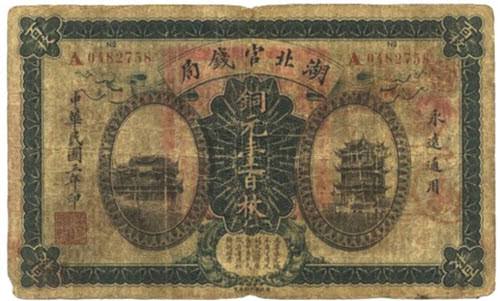
    In 1024, the Song government took control of this experiment, issuing the first official state-backed paper money, known as jiaozi. It started as a regional solution in Sichuan but soon spread, as the government realized that paper currency could be produced at a fraction of the cost of minting metal and was far easier to transport.

    The Silk Road: A Network of Ideas, Not Just Goods

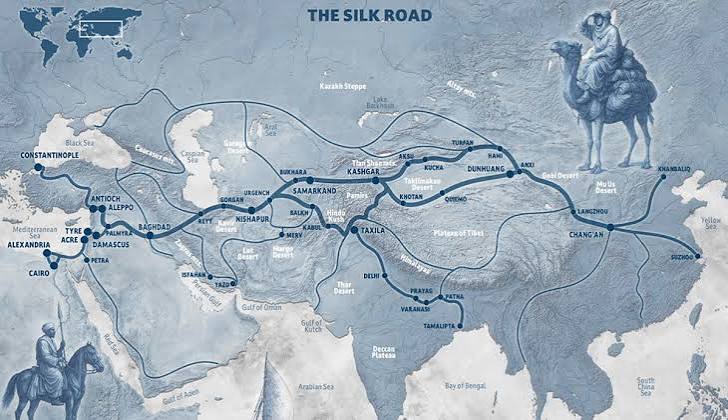
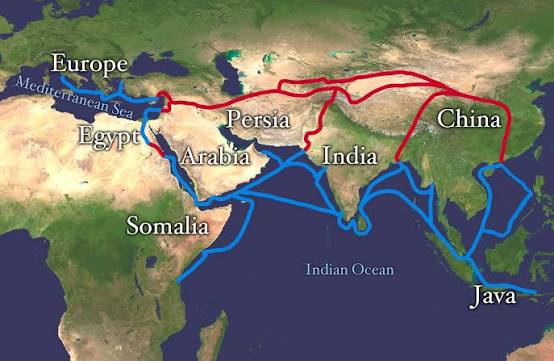
    The Silk Road was never a single road—it was a sprawling web of overland and maritime routes linking China, Central Asia, India, the Middle East, and Europe for over 1,500 years. While silk and spices were the headline commodities, the most enduring exports were often intangible: religions like Buddhism, technologies like papermaking, and economic concepts like credit.

    Paper money itself rarely traveled westward as physical notes. Instead, the idea traveled through the accounts of merchants, missionaries, and travelers. Marco Polo’s 13th-century descriptions of Kublai Khan’s paper currency were met with disbelief—Europeans simply couldn’t conceive of a currency with no intrinsic value.

    What did travel were related instruments: the Islamic world had the sakk, a written order for payment that gives us the word “check.” Italian merchants used bills of exchange and promissory notes to move money across Europe without hauling gold. These were not paper money—they represented specific deposits or debts—but they laid the groundwork for Europe’s later adoption of banknotes.

    The true breakthrough came with the Mongol Empire. When Genghis Khan’s successors unified much of Eurasia under one rule, they created a political and economic zone that stretched from China to Persia. The Yuan Dynasty, established by Kublai Khan, made paper money (chao) the sole legal tender across this vast territory. This was fiat currency in the modern sense: the notes had value because the state said so, not because they were backed by precious metal.

    The Mongol Experiment: A Unified Currency Zone

    Under Mongol rule, the Silk Road experienced its golden age. The Pax Mongolica—a “Mongol peace”—reduced banditry, standardized weights and measures, and encouraged trade. Merchants could travel from the Black Sea to Beijing with relative safety. Paper money facilitated this commerce: it was easy to carry, standardized, and accepted across an enormous area.

    Marco Polo marveled at this system, noting that the Great Khan could “cause the bark of trees… to be made into something resembling paper” and that his subjects eagerly accepted it. To Polo’s European audience, this seemed like magic—or madness. How could a piece of paper be worth anything?

    The Yuan state enforced acceptance of chao by decree: refusing paper money was a crime. Foreign merchants, however, were often required to exchange their gold and silver for paper notes upon entering China, and these notes could only be used within the empire. This created a captive market for the currency—and a temptation for the government.

    The Inflation Trap: When Paper Money Goes Wrong

    The Yuan Dynasty’s experiment worked for a while, but it contained the seeds of its own destruction. To fund military campaigns, public works, and court extravagance, the government printed ever more notes. As the money supply expanded, the value of each note fell. Prices soared. By the mid-14th century, hyperinflation had taken hold: the currency collapsed, savings were wiped out, and economic chaos contributed to the dynasty’s downfall.

    China’s experience was not unique—it was a preview of every paper-money crisis to come. The lesson was simple: when a government prints money without limit, its value evaporates. The Yuan’s fall in 1368 was followed by the Ming Dynasty, which initially continued paper currency but soon abandoned it after similar inflation. By the 15th century, China had reverted to silver bullion—a stable, if heavy, alternative.

    The first European experiments with paper money occurred centuries later. Sweden’s Stockholm Banco issued notes in 1661, and the Bank of England followed in 1694. Both initially maintained convertibility to silver, but governments soon discovered the same temptation to overissue. France’s Mississippi Bubble (1719–1720) and Britain’s South Sea Bubble (1720) were spectacular crashes caused by speculative paper assets and excessive money creation. These crises echoed China’s earlier mistakes, but Europeans had to learn the hard way—they had dismissed Polo’s accounts as fables.

    Why Paper Money Mattered: The Power of Trust

    Paper money succeeded in China because it solved a practical problem, but it flourished only when people trusted the issuer. That trust was the true revolution. Money, as Aristotle argued, was supposed to have intrinsic value—gold and silver were valuable in themselves. Paper money was a fiction, yet it worked because everyone agreed to accept it.

    Chinese thinkers like Ma Duanlin, writing in the 13th century, already wrestled with questions of money supply and state credit—centuries before European economists like John Locke or David Hume tackled similar issues. The Silk Road didn’t just move goods; it moved these ideas, though Europe was slow to absorb them.

    Ultimately, paper money’s greatest impact on the Silk Road was not as a physical cargo but as a model for economic integration. The Mongol Empire’s unified currency zone was an early prototype of a single monetary system covering a vast region. Its collapse demonstrated the dangers of fiscal irresponsibility—a warning that resonates in today’s world of central banks and quantitative easing.

    The Legacy: From Silk Road to Modern Finance

    The Silk Road declined in the 15th century, partly because maritime routes became more efficient, but also because monetary instability—including Chinese inflation—disrupted overland trade. Yet the idea of paper money had taken root. By the 19th century, nearly every major economy had adopted some form of paper currency, and today, cash is mostly digital—an even more abstract form of the same concept.

    When you hand over a piece of paper money, you’re participating in a system that began in Sichuan a thousand years ago. The Silk Road’s unsung cargo wasn’t a physical item but a financial technology that transformed global trade—and taught us that money is only as valuable as the trust we place in it.

    The Inflation Lesson: A Timeless Warning

    The story of paper money on the Silk Road is a powerful reminder of the delicate balance between economic growth and fiscal discipline. China’s invention solved a real problem, but it also created a new one: the temptation to print money as a shortcut to wealth. The Yuan Dynasty fell because it succumbed to that temptation, and every subsequent paper-money crisis—from the French Revolution’s assignats to the German Weimar Republic’s hyperinflation—has repeated the pattern.

    Understanding this history is not just an academic exercise. It helps us appreciate the foundations of modern finance and the importance of trust in our economic institutions. The next time you use a banknote, consider its journey: from a merchant’s receipt in 11th-century Sichuan to a tool of empire, a lesson in inflation, and a cornerstone of the global economy. That’s a cargo worth remembering.

    Paper money didn’t cross the Silk Road in a merchant’s saddlebag; it crossed as an idea, carried by travelers like Marco Polo and tested by empires. Its invention solved China’s coin shortage, enabled the Mongol Empire’s trade boom, and ultimately taught the world a bitter lesson about inflation. Today, we still grapple with the same questions: how much money is too much, and what gives currency its value? The answer, as the Yuan Dynasty discovered, lies not in the paper but in the trust we place in those who issue it.

    Summary

    • Paper money was invented in China during the Song Dynasty (11th century) as a solution to copper coin shortages and the impracticality of heavy metal currency.
    • The Mongol Empire under Kublai Khan made paper money the sole legal tender across much of the Silk Road, creating an early unified currency zone.
    • The concept of paper money traveled westward via travelers like Marco Polo, but it was centuries before Europe adopted it, with early experiments like the Bank of England in 1694.
    • Hyperinflation in the Yuan Dynasty (14th century) led to the collapse of its paper currency, contributing to the dynasty’s fall and serving as an early warning about excessive money printing.
    • The Silk Road facilitated the spread of economic ideas, including credit instruments like bills of exchange, which laid the groundwork for modern banking.

    FAQ

    **Q: Was paper money used along the Silk Road?
    A: Paper money itself wasn’t widely used as a physical medium across the entire Silk Road. The Yuan Dynasty’s paper currency circulated within its empire, but the concept of paper money traveled westward through travelers’ accounts, influencing later European experiments.

    **Q: What is “flying cash”?
    A: “Flying cash” (feiqian) was a Tang Dynasty instrument used to transfer funds over long distances—essentially a bill of exchange, not a currency. It allowed merchants to deposit funds at one location and withdraw them at another, avoiding the need to carry heavy coins.

    **Q: How did Marco Polo describe Chinese paper money?
    A: Marco Polo described how the Great Khan issued paper notes made from mulberry bark, and that these notes were accepted as payment throughout his domains. His accounts were so astonishing that many Europeans thought he was exaggerating or inventing stories.

    **Q: Why did the Ming Dynasty abandon paper money?
    A: The Ming Dynasty initially continued paper money but suffered from inflation due to overissuance. By the mid-15th century, they reverted to silver bullion as the standard, which was more stable and widely accepted in international trade.

    **Q: What is the main lesson from the Yuan Dynasty’s inflation?
    A: The main lesson is that a government cannot print money without limits—doing so leads to hyperinflation and economic collapse. The Yuan Dynasty’s overprinting of paper notes to fund wars and expenses ultimately destroyed the currency’s value.
  • The Gold Dinar: The Silk Road’s Hard Currency That Built Modern Finance

    The Gold Dinar: The Silk Road’s Hard Currency That Built Modern Finance

    Before the dollar and the euro, a small gold coin—weighing just 4.25 grams—served as the trusted currency across three continents. The Islamic gold dinar, first minted in 697 CE, was the backbone of trade from Spain to China, enabling merchants to move silk, spices, and gold across thousands of miles. Its consistency and purity made it the ‘hard currency’ of the medieval world, a status that modern economies still strive for. The dinar’s legacy is not just a tale of coins but of how trust, standardization, and financial innovation shaped the global economy.

    A Coin Born from Reform

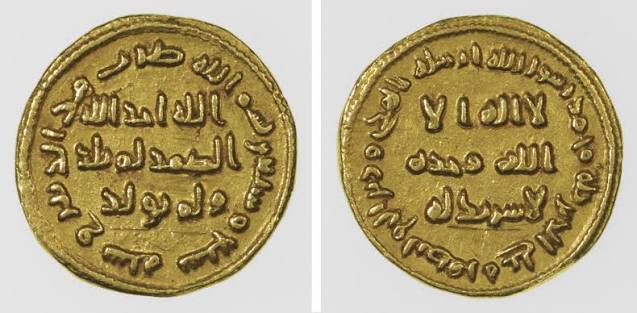
    The gold dinar emerged during a pivotal moment in Islamic history. In 697 CE, the Umayyad Caliph Abd al-Malik initiated a monetary reform that replaced the imitative Byzantine and Sasanian coins that had circulated after the early conquests. The new coin was a statement of independence—both political and religious. It carried no images of emperors or gods, only Arabic calligraphy declaring the faith and the year of issue according to the Hijri calendar. Weighing 4.25 grams of near-pure gold, it was based on the Byzantine solidus but adjusted to align with Islamic weights, making it slightly lighter yet more consistent.

    This was not just a symbolic change. Abd al-Malik was centralizing his empire: Arabic became the administrative language, the Dome of the Rock was built in Jerusalem, and the dinar became the standard for taxes, legal payments, and long-distance contracts. The coin was a tool of statecraft, designed to unify a vast caliphate under a single economic standard.

    The Dinar’s Role in the Silk Road Network

    The Silk Road was not a single highway but a web of overland and maritime routes connecting East Asia, the Middle East, and Europe. The dinar was the one currency that bridged these diverse segments. Overland, caravans carried dinars into Central Asia and China, where they were often melted into bullion or used as weight standards because of their reliable purity. Maritime routes saw dinars in ports like Basra, Siraf, and Aden, linking to Indian and Southeast Asian markets.

    What made the dinar so effective was its consistency. Unlike many local coins, which varied in weight and fineness, the dinar maintained a high standard for centuries. This reliability was crucial for high-value transactions—silk, spices, horses, and even slaves. The 10th-century Cairo Geniza documents reveal how merchants used dinars in partnerships, letters of credit, and bills of exchange, laying the groundwork for modern banking instruments.

    Why Gold? The Geopolitics of Precious Metals

    The Islamic heartland, particularly the Hijaz and Iraq, was poor in gold. The metal flowed in from West Africa via trans-Saharan trade, from Nubia, and from Central Asian mines. In contrast, the eastern caliphate relied more on silver. This created a regional bimetallism: gold in the west and Mediterranean, silver in the east. The gold-silver ratio fluctuated, typically between 1:10 and 1:14, offering arbitrage opportunities but also causing periodic currency crises when one metal was overvalued.

    Gold was chosen for the dinar because it was the metal of international trade. Silver was too bulky for large transactions, and copper was for small change. Gold’s high value-to-weight ratio made it ideal for long-distance commerce, and its rarity in the Islamic heartland meant that its supply was closely tied to trade routes—making the dinar a barometer of economic connectivity.

    The Dinar’s Rivals and the Rise of European Gold

    The dinar did not exist in a vacuum. The Byzantine solidus and later the hyperpyron continued to circulate in the eastern Mediterranean, and the two currencies often traded at slight premiums relative to each other. But in the 13th century, European powers began to mint their own gold coins: Florence introduced the florin in 1252, and Venice followed with the ducat in 1284. These coins, inspired by the dinar’s example, soon dominated Mediterranean trade as Islamic gold supplies dwindled.

    Even the Mongols, who conquered much of the Islamic world, initially adopted the dinar system. But their later experiment with paper money in Persia in 1294 was a spectacular failure, serving as an early lesson on the dangers of fiat currency without backing or trust.

    The Legacy: From Dinar to Modern Finance

    The gold dinar’s influence extends far beyond its circulation period. Its principles—standardized weight, purity, and trust—are foundational to modern monetary systems. The dinar also paved the way for financial innovations like checks and letters of credit, which were essential for long-distance trade. Today, some Islamic finance advocates call for a return to the gold dinar as a way to avoid inflation and currency manipulation.

    In the numismatic world, the dinar is prized not only for its gold but for its artistic and historical value. The calligraphy on each coin tells a story of dynasties and empires, from the Umayyads to the Fatimids to the Almoravids. The Fatimid dinar, for instance, was so pure it was widely imitated, even by European mints.

    The Dinar in Today’s Economy

    While the dinar is no longer minted, its legacy persists in discussions about global currencies and financial stability. The euro, with its standardized coinage across nations, echoes the dinar’s role in unifying trade. The rise of cryptocurrencies like Bitcoin, which aim to be decentralized and trustless, also reflects the dinar’s appeal as a reliable store of value.

    Understanding the gold dinar helps us see that currencies are more than just money—they are instruments of power, trust, and connection. The dinar’s forgotten history is a reminder that economic systems are built on confidence, and that confidence can be as valuable as gold itself.

    The gold dinar was more than a coin; it was a catalyst for global trade and a precursor to modern finance. Its story is a testament to how a standardized currency can foster economic integration across diverse cultures. As we navigate today’s complex financial landscape, the dinar’s lessons about trust, purity, and interoperability remain as relevant as ever.

    Summary

    • The gold dinar, first minted in 697 CE, was a standardized Islamic coin weighing 4.25 grams of near-pure gold.
    • It served as the primary ‘hard currency’ for Silk Road trade, bridging overland and maritime routes from North Africa to China.
    • Its design rejected images in favor of Arabic calligraphy, reflecting religious and political authority.
    • The dinar’s consistency enabled financial innovations like letters of credit and bills of exchange.
    • It faced competition from Byzantine and later European gold coins, but set the standard for monetary trust and purity.

    FAQ

    Q: What was the gold dinar’s weight and purity?
    A: The dinar weighed approximately 4.25 grams of near-pure gold, typically 22-24 karats, based on the Byzantine solidus but adjusted to Islamic weights.

    Q: Why was the dinar important for Silk Road trade?
    A: Its consistent weight and purity made it a reliable medium of exchange for high-value goods across politically fragmented regions, facilitating long-distance contracts and trust.

    Q: What replaced the gold dinar?
    A: European gold coins like the Venetian ducat (1284) and Florentine florin (1252) replaced the dinar in Mediterranean trade as Islamic gold supplies declined.

    Q: How did the dinar influence modern finance?
    A: The dinar’s principles of standardization and trust underpinned early banking instruments like letters of credit, and its legacy is seen in discussions about currency stability and even cryptocurrencies.

    Q: Are there any modern attempts to revive the gold dinar?
    A: Some Islamic finance advocates propose a return to the gold dinar to avoid inflation, but no major economy has adopted it as official currency.

  • The Viking Silk Road: How Norse Traders Reached Baghdad and Reshaped European Fashion


    When you picture a Viking, you probably imagine a horned helmet and a raid on a monastery. But thousands of Norsemen never swung an axe in anger. They rowed east, down rivers through Russia, to trade furs for silver in the markets of the Abbasid Caliphate. Their journeys, spanning over 1,000 miles, connected the Baltic to Baghdad and funneled Islamic silver, silk, and style into the heart of Scandinavia.

    This eastern trade, known as the Austrvegr, wasn’t a footnote to Viking history. It was a major engine of their economy. Between the 9th and 11th centuries, tens of millions of silver dirhams flowed north, and with them came fabrics and fashions that would transform what Europeans wore. The Vikings didn’t just raid their way into history—they traded their way across a continent.

    The Eastward Expansion

    While western Vikings were pillaging monasteries, their eastern counterparts were establishing trade networks that would eventually span from Sweden to the Caspian Sea. The primary route began in the Baltic, wound through the Gulf of Finland, and followed rivers like the Neva and Volkhov to reach lake systems and portages that connected to the Volga and Dnieper rivers.

    These waterways became the highways of a vast commercial enterprise. The Volga route led to the Caspian Sea and then to Baghdad, while the Dnieper route reached the Black Sea and Constantinople, which the Norse called Miklagard. The whole network was often dubbed the ‘Route from the Varangians to the Greeks.’

    Silver: The Fuel of the Trade

    What drove these arduous journeys? Silver. Islamic dirhams, minted in the Abbasid Caliphate, were the currency that made the entire enterprise worthwhile. Over 100,000 such coins have been unearthed in Scandinavia, with the vast majority found on the island of Gotland, Sweden—the epicenter of this eastern commerce.

    The sheer volume was staggering. Estimates suggest tens of millions of dirhams flowed north over the course of the 9th to 11th centuries. In exchange, the Norse offered goods that were highly prized in the Islamic world: furs from sable, marten, beaver, and squirrel; honey and wax for lighting; walrus ivory; and slaves captured from Baltic tribes.

    The Rus: Norse Traders in the East

    The Norse who settled and traded in these eastern lands became known as the Rus—a term likely derived from the Finnish word ‘Ruotsi,’ meaning ‘rowers.’ They were the ones who gave Russia and Belarus their names. Their leaders, like the legendary Rurik and his successor Oleg of Novgorod, established dynasties and moved their capital to Kyiv, creating a political entity that would define the region for centuries.

    One of the most vivid accounts of the Rus comes from Ahmad ibn Fadlan, a Persian diplomat who encountered them on the Volga in 921–922 AD. His writings describe their customs, including a ship burial that involved human sacrifice, offering a rare glimpse into their world.

    Key Trading Hubs Along the Way

    The trade route was punctuated by bustling centers that served as meeting points for different cultures. Staraya Ladoga, founded around 750 AD, was the earliest known Scandinavian settlement in Russia. Novgorod later became a major commercial city where Norse, Slavic, and Finnic peoples mingled.

    Further east, the city of Bulgar on the Volga served as a crucial intermediary market. Here, Norse traders met Muslim merchants from the south. The capital of the Khazar Khaganate, Itil, at the Volga delta, was another key stop. The Khazars, a semi-nomadic Turkic people who converted to Judaism, controlled the lower Volga and levied tolls on passing traders. Volga Bulgaria, a Muslim state, was often the primary meeting point, as most Norse traders didn’t travel all the way to Baghdad—they exchanged goods with Muslim merchants who carried them south.

    The Silk Road’s Northernmost Branch

    The traditional ‘Silk Road’ isn’t a single route but a network of overlapping paths. The Viking route was its northernmost branch, connecting the Baltic to the Caspian and Black Seas, and thereby linking into a trade network that extended to China, India, and Central Asia.

    This connection brought more than silver. Silk fragments have been discovered in Viking graves in Sweden and Norway, likely arriving via this eastern path. The Vikings didn’t just bring back coins; they brought back luxury goods that would influence European tastes.

    Changing European Fashion

    The influx of eastern goods had a tangible impact on what Europeans wore. Before this era, Scandinavian clothing was primarily made of local materials like wool and linen. The arrival of silk and other fine fabrics introduced new textures and colors to the Norse wardrobe.

    Silk was a status symbol, reserved for the elite. Its presence in graves indicates that high-ranking individuals wore it, possibly as trim or decorative elements on otherwise woolen garments. This adoption of eastern styles was a clear sign of wealth and connection to the wider world. The flow of silver also fueled a taste for luxury, leading to an increase in the production of intricate jewelry and fine textiles across Scandinavia.

    The Decline of the Eastern Route

    The golden age of the eastern trade began to wane in the late 10th century. Several factors contributed to its decline. The silver mines in Central Asia, such as the Panjshir mines, became depleted, reducing the supply of dirhams. The Abbasid Caliphate weakened, and the Khazar Khaganate—which had provided stability—was defeated by the Rus under Svyatoslav in the 960s. This destabilized the route, and by the 1000s, trade had shifted westward, towards the emerging economies of Western Europe.

    Though the route faded, its legacy endured. The Rus they left behind became the foundation of modern Russia and Belarus. The genetic and cultural imprints of the Norse were left in the East, while the silver and silk they brought home had already reshaped European fashion and economy.

    The Viking Silk Road was more than a footnote to the age of raids. It was a complex network that connected the Norse to the wealth of the Islamic world, driven by silver and furs. In the process, it brought silk and style to Europe, transformed local economies, and left a lasting mark on the political map of the East. The Vikings didn’t just sail west to pillage; they rowed east to trade—and in doing so, they changed the course of European history.

    Summary

    • Vikings traveled east along river routes to reach the Caspian and Black Seas, connecting the Baltic to Baghdad and Constantinople.
    • The trade was fueled by Islamic silver dirhams, with over 100,000 coins found in Scandinavia, primarily on Gotland.
    • Norse traders, known as the Rus, exchanged furs, honey, wax, and slaves for silver and luxury goods.
    • The route functioned as the northernmost branch of the Silk Road, bringing silk and other eastern fabrics that influenced European fashion.
    • The decline of the route in the late 10th century was due to depleted silver mines and the collapse of the Khazar Khaganate, shifting trade westward.

    FAQ

    Q: Did Vikings really reach Baghdad?
    A: Most Norse traders did not travel all the way to Baghdad themselves. They typically traded at intermediary stops like Volga Bulgaria or Itil, where Muslim merchants carried goods south. However, some Norse did travel further, and the route certainly connected them to the Abbasid Caliphate’s markets.

    Q: What did Vikings trade for silver?
    A: They traded furs (sable, marten, beaver, squirrel), honey, wax, walrus ivory, and slaves. These goods were highly valued in the Islamic world.

    Q: How did the eastern trade influence European fashion?
    A: The influx of silk and other eastern fabrics introduced new materials to Scandinavia. Silk became a status symbol for the elite, and its use in clothing and decorative elements reflected a broader adoption of eastern styles.

    Q: Why is the Viking trade route considered part of the Silk Road?
    A: The Silk Road was a network of overlapping routes, not a single path. The Viking route connected the Baltic to the Caspian and Black Seas, linking to the broader Islamic trade network that reached China and India, making it the northernmost branch of this network.

    Q: What caused the decline of the eastern Viking trade?
    A: The depletion of silver mines in Central Asia, the weakening of the Abbasid Caliphate, and the fall of the Khazar Khaganate all contributed to the decline. By the 11th century, trade had shifted westward.

  • The Sogdians: The Silk Road’s Forgotten Middlemen and the Secrets of Their Rise and Fall

    The Sogdians: The Silk Road’s Forgotten Middlemen and the Secrets of Their Rise and Fall

    Two thousand years ago, a merchant in Samarkand loaded his caravan with bolts of silk, jars of rhubarb, and a stack of written contracts. He was a Sogdian, and his people controlled the arteries of commerce between China and the Mediterranean. They spoke a language that became the lingua franca of Central Asia, built self-governing colonies from Mongolia to Korea, and translated Buddhist scriptures for the Chinese. Yet today, their name barely registers outside academic circles.

    For six centuries, the Sogdians were the indispensable intermediaries of the Silk Road. They didn’t build an empire or field a great army. Instead, they built something more durable: a network. When the Arabs arrived in the 8th century and the Tang dynasty retreated, that network collapsed. The Sogdians didn’t vanish—they assimilated, converted, and dissolved into the Persianate world. Their story is a masterclass in how trade can shape history, and how geopolitics can erase a people.

    Who Were the Sogdians?

    Imagine a land of fertile river valleys ringed by desert and steppe. That was Sogdiana, centered on the Zeravshan River in what is now Uzbekistan and Tajikistan. The Sogdians were an Eastern Iranian people, with roots stretching back to the Achaemenid Empire of the 6th century BCE. By the 4th century BCE, Alexander the Great had stormed through their territory, folding them into the Hellenistic world. But they were never a unified state—they were a collection of oasis city-states: Samarkand, Bukhara, Panjakent.

    Their language, Sogdian, was written in a script borrowed from Aramaic and adapted over time. It doesn’t sound like much, but that language became the diplomatic and commercial language of the Silk Road for centuries. If you were doing business in Central Asia in the 6th century, you did it in Sogdian.

    The Silk Road’s Commercial Geniuses

    The Sogdians didn’t invent the Silk Road, but they perfected the art of moving goods across it. They were the middlemen who connected China’s silk and paper with Persia’s silver and glass, India’s spices, and the steppe’s horses. They didn’t just carry things—they engineered the entire logistics.

    Take the Sogdian Ancient Letters, a cache of correspondence from the early 4th century CE, found near Dunhuang. These letters reveal a sophisticated commercial network. Merchants wrote to each other about credit, debts, and market conditions. They used written contracts and agency relationships, where one merchant would represent another’s interests in a distant city. In modern terms, they invented supply chain management and international brokerage.

    They also spread their diaspora communities along the routes. In Tang China’s capital, Chang’an, a whole quarter was Sogdian. They had their own self-governing colonies in Dunhuang, Turfan, and even Mongolia and Korea. These weren’t just trading posts—they were cultural bubbles where Sogdian customs, religions, and art flourished.

    What did they trade? Silk, of course, but also jade, musk, rhubarb (a prized medicine), and horses from the steppes. They dealt in glassware and silverware from the west, and they traded slaves. They were experts in arbitrage—buying low in one empire and selling high in another, while navigating the patchwork of imperial taxes and tariffs.

    Cultural Middlemen: More Than Merchants

    The Sogdians’ role wasn’t just commercial. They were cultural conduits. As they moved goods, they moved ideas. They practiced Zoroastrianism, but they were remarkably tolerant. They adopted Buddhism, Manichaeism, and Nestorian Christianity and spread them along the Silk Road.

    Their most impressive cultural feat was translation. When Buddhism traveled from India to China, the Sogdians acted as intermediaries. They translated Buddhist scriptures into Chinese, not directly from Sanskrit but via Sogdian. They shaped how East Asia received a world religion.

    Their art reflects this synthesis. The wall paintings of Panjakent and Afrasiab show a visual blend of Persian motifs, Indian postures, Greek drapery, and Chinese brushwork. The Sogdians didn’t just carry objects—they carried aesthetics and styles, fusing them into something new.

    Their language left a lasting mark, too. The Sogdian script influenced the Uyghur script, which later gave rise to the Mongolian and Manchu scripts. So the next time you see Mongolian writing, you’re looking at a distant descendant of Sogdian.

    Empires and Alliances: The Geopolitical Tightrope

    The Sogdians survived for centuries by being useful to larger powers. They served as administrators under the Achaemenids, as diplomats under the Göktürk Khaganate, and as officials in Tang China. They weren’t a threat, so empires tolerated them. They were an asset.

    Their partnership with the Göktürks in the 6th and 7th centuries was particularly fruitful. The Sogdians provided the commercial expertise, and the Göktürks provided military protection on the northern Silk Road. This nomadic-sedentary alliance was a model of cooperation that kept trade flowing.

    In Tang China, Sogdians reached the highest levels. They served as generals, ministers, and even influenced court politics. But this dependence on empires was their Achilles’ heel. When those empires clashed, the Sogdians were caught in the middle.

    The Fall: Squeezed Between Caliph and Emperor

    The Arab conquest of Transoxiana began in the early 8th century. By 722 CE, the Arabs had taken Samarkand and Bukhara. The Sogdians resisted, but they were not a unified state, and their city-states fell one by one.

    The decisive blow came at the Battle of Talas in 751 CE. The Abbasid Caliphate faced Tang China on the banks of the Talas River in modern Kyrgyzstan. Sogdians fought on both sides. The Arabs won, and the battle shifted the balance of power in Central Asia. The Tang withdrew their influence, and the Arabs tightened their grip.

    For the Sogdians, this was a catastrophe. They were squeezed between two expanding powers. With the Arabs in control and the Chinese retreating, their comfortable position as intermediaries vanished. The trade routes shifted, and the Sogdian network began to unravel.

    Assimilation and Legacy

    The Sogdians didn’t die out—they were absorbed. Over the next two centuries, they converted to Islam and adopted Persian culture. The Sogdian language faded, replaced by Persian and Tajik. By the 10th or 11th century, it was effectively dead.

    But their legacy persisted. The Sogdian diaspora in China—families with names like Shi and An—continued for generations, even as they assimilated into Chinese society. Their descendants included famous generals and officials. The artistic styles they helped spread lived on in later Central Asian cultures.

    Their greatest legacy might be the model of trade itself. The Sogdians showed that you don’t need an army to shape the world—you need a network, a language, and the ability to adapt. Their rise was built on innovation and tolerance. Their fall came when geopolitics left no room for middlemen.

    The Sogdians are a reminder that history often forgets the mediators. Empires write chronicles; merchants leave ledgers. But those ledgers shaped civilization. The Sogdians connected worlds, carried ideas, and paid the price when the worlds collided. Their story isn’t just a chapter in Central Asian history—it’s a lesson in how commerce and culture intertwine, and how fragile that web can be.

    Summary

    • The Sogdians were an Eastern Iranian people from Sogdiana (modern Uzbekistan/Tajikistan), who dominated Silk Road trade from the 4th to 8th centuries CE.
    • They operated a vast commercial network with diaspora colonies from China to Korea, using language, contracts, and logistics to control trade.
    • They were cultural brokers, spreading Buddhism, Christianity, and Manichaeism, and translating scriptures into Chinese.
    • Their power came from alliances with empires like the Göktürks and Tang China, but they were squeezed between the Arab Caliphate and Tang, leading to their decline after the Battle of Talas (751 CE).
    • They assimilated into Islamic Persianate culture, with their language dying out by the 10th century, but their influence on scripts and trade practices endured.

    FAQ

    Q: What was the Sogdians’ main contribution to the Silk Road?
    A: The Sogdians were the dominant middlemen, connecting China with Persia and the Mediterranean. They pioneered logistics, credit instruments, and multilingual brokerage, moving goods and ideas across Central Asia.

    Q: Why did the Sogdians disappear?
    A: They didn’t disappear suddenly. After the Arab conquest and the Battle of Talas, they lost their privileged position. They gradually converted to Islam and adopted Persian culture, and their language died out by the 10th century.

    Q: Where can we see Sogdian influence today?
    A: Their script influenced Mongolian and Manchu scripts. Their art and culture left traces in Central Asian heritage, and their descendants in China kept family names like Shi and An.

    Q: Were the Sogdians a unified empire?
    A: No, they were a network of independent city-states like Samarkand and Bukhara. Their power relied on commercial cooperation, not political unity.

    Q: What did the Sogdians trade?
    A: They traded silk, jade, horses, glass, silverware, rhubarb, and slaves, among other goods. They were skilled at arbitrage across different imperial tax systems.

  • The Silk Road’s Unsung Traders: How the Sogdians Shaped Eurasian History

    The Silk Road’s Unsung Traders: How the Sogdians Shaped Eurasian History

    When we think of the Silk Road, images of camel caravans laden with Chinese silk and Roman glass often come to mind. But who actually drove these caravans? The answer, for centuries, was the Sogdians a people from Central Asia who were the ultimate middlemen of the ancient world. They were not just traders; they were diplomats, translators, and cultural catalysts who linked the great empires of China, Persia, and Byzantium.

    Yet today, their name is barely known outside specialist circles. This article uncovers the story of these unsung traders, from their bustling city-states on the Zeravshan River to their far-flung colonies in China, revealing how they helped shape the course of Eurasian history.

    Who Were the Sogdians?

    The Sogdians were an Eastern Iranian people who inhabited Sogdiana, a region centered on the fertile Zeravshan River valley in what is now Uzbekistan and Tajikistan. Their heartland was a patchwork of independent city-states, including Samarkand, Bukhara, and Panjakent. Unlike their neighbors, the Sogdians never formed a unified empire. Instead, they built a network of commercially driven cities, each governed by local lords known as afshins. This decentralized structure proved to be an advantage: it allowed them to act as neutral intermediaries between rival powers, trusted by all sides.

    Their language, Sogdian, was an Eastern Iranian tongue written in a script derived from Aramaic. Remarkably, this script later influenced the development of the Uyghur and Mongolian alphabets, a lasting legacy of their cultural reach. From the 6th century BCE to the 10th century CE, the Sogdians rose and fell, with their golden age spanning the 4th to 8th centuries CE.

    Masters of the Silk Road

    The Sogdians dominated the central section of the Silk Road, controlling trade routes that linked China, India, Persia, and the Byzantine Empire. Their caravans carried a vast array of goods: silk, spices, glassware, precious metals, horses, and even slaves. They established merchant colonies, known as karvansarai networks, along the routes, with significant communities in Dunhuang, Turfan, and Chang’an (modern Xi’an). Some even ventured as far as the Korean Peninsula.

    But their trade was not limited to luxury goods. They were instrumental in the exchange of ideas and technologies. For instance, they helped transmit papermaking technology westward, a revolutionary development that would transform the Islamic world and Europe. They also dealt in horses, which were crucial for the Tang military, and jade from Khotan, prized in China.

    The Sogdians’ rise to prominence began under the Kushan Empire (1st–3rd centuries CE) and peaked during the early Tang Dynasty (7th–8th centuries CE). The Tang’s expansion into Central Asia created a stable political environment that fostered long-distance trade. The Sogdians also forged a vital alliance with the Turkic Khaganates, serving as administrators, scribes, and diplomats. In effect, they managed the political economy of the steppe, bridging the nomadic and sedentary worlds.

    The Cultural Intermediaries

    The Sogdians were more than just merchants; they were the primary translators and cultural brokers between the Indian, Persian, Chinese, and Turkic worlds. Their religious tolerance was remarkable—they practiced Zoroastrianism, Buddhism, Manichaeism, and Nestorian Christianity, often simultaneously. This openness made them uniquely suited to bridge diverse cultures.

    One of their most significant contributions was the transmission of Buddhism from India to China. Sogdian monks, such as Kang Senghui in the 3rd century CE, traveled to China and helped translate numerous Sanskrit texts into Chinese. They played a similar role for Manichaeism and Nestorian Christianity, spreading these faiths along the Silk Road.

    Their artistic legacy is equally rich. The murals of Panjakent and Afrasiab (near Samarkand) provide some of the most vivid visual records of Silk Road life, depicting scenes of trade, feasting, and mythology. These paintings offer a window into the cosmopolitan world the Sogdians inhabited.

    Sogdians in Chinese Courts

    Sogdians wielded significant political power in China, serving as military generals, court advisors, and even imperial consorts. The most dramatic example is An Lushan, a Sogdian-Turkic general who led a massive rebellion against the Tang Dynasty in 755 CE. The An Lushan Rebellion nearly toppled the dynasty and caused millions of deaths, fundamentally weakening Tang authority and disrupting the very trade networks the Sogdians had built.

    The rebellion also marked a turning point for the Sogdians in China. After its suppression, anti-Sogdian sentiment grew, and many Sogdians assimilated into Chinese society, losing their distinct identity over time.

    The Fall of the Sogdians

    The decline of the Sogdians was a gradual process, driven by two major forces. First, the Arab conquest of Transoxiana in the early 8th century CE eroded their political independence. The last ruler of Panjakent, Divashtich, resisted the invasion but was defeated and killed in 722 CE. Many Sogdians converted to Islam and were assimilated into Persian and Turkic cultures.

    Second, the collapse of Tang authority after the An Lushan Rebellion disrupted their trade networks in China. By the 10th century, the Sogdian language had largely died out, replaced by Persian and Turkic dialects. The Samanid Empire (819–999 CE) absorbed the remnants of Sogdian culture, and the once-thriving merchant communities faded into history.

    Yet their legacy endured. The Sogdians left an indelible mark on the regions they touched, from the scripts of Central Asia to the spread of Buddhism and the artistic traditions of the Silk Road. They were the connective tissue of the ancient world, and their story is a testament to the power of trade and cultural exchange.

    The Sogdians may not have built grand empires or left behind monumental architecture, but their impact on Eurasian history is undeniable. As the unsung traders of the Silk Road, they facilitated the exchange of goods, ideas, and beliefs that shaped the development of entire civilizations. Their story reminds us that history is often driven not by kings and conquerors, but by the merchants and middlemen who connect the world.

    Summary

    • The Sogdians were an Eastern Iranian people from Central Asia who dominated Silk Road trade between the 4th and 8th centuries CE.
    • They acted as cultural brokers, transmitting Buddhism, Manichaeism, and Nestorian Christianity, as well as artistic and literary traditions, between East and West.
    • Their decentralized city-states allowed them to remain neutral intermediaries among powerful empires like the Tang, Sassanian Persia, and the Byzantine Empire.
    • Sogdians held significant political power in China, exemplified by An Lushan, whose rebellion in 755 CE nearly toppled the Tang Dynasty.
    • The Arab conquest and the collapse of Tang authority led to their decline, but their legacy persists in scripts, art, and the flow of ideas across Eurasia.

    FAQ

    Q: Why are the Sogdians considered “unsung” traders?
    A: Despite their crucial role as the main middlemen of the Silk Road, the Sogdians are not as well-known as the Romans, Chinese, or Persians. Their decentralized political structure and eventual assimilation into other cultures meant they left no single dominant empire to preserve their fame.

    Q: What did the Sogdians trade besides silk?
    A: They traded a wide variety of goods, including horses, jade, glassware, spices, precious metals, and slaves. They also helped transmit technologies like papermaking.

    Q: How did the Sogdians influence the spread of Buddhism?
    A: Sogdian monks and translators, such as Kang Senghui, played a key role in translating Buddhist texts from Sanskrit into Chinese, making the religion accessible to Chinese audiences. They also facilitated cultural exchange along the trade routes.

    Q: What was the An Lushan Rebellion and why is it significant?
    A: The An Lushan Rebellion (755–763 CE) was a massive uprising led by An Lushan, a Sogdian-Turkic general, against the Tang Dynasty. It nearly toppled the dynasty, caused millions of deaths, and weakened Tang control over Central Asia, disrupting Silk Road trade.

    Q: When did the Sogdian civilization decline?
    A: The Sogdians began to decline in the early 8th century with the Arab conquest of Transoxiana. Their language and culture gradually disappeared over the following centuries, assimilating into Persian and Turkic populations by the 10th century.

  • The Sogdians: The Ancient Silk Road Traders Who Shaped Eurasian History

    The Sogdians: The Ancient Silk Road Traders Who Shaped Eurasian History

    Long before the Silk Road became a byword for exotic goods and cultural exchange, a network of city-states in Central Asia had already turned trade into an art form. The Sogdians, an Eastern Iranian people from the fertile valleys of modern Uzbekistan and Tajikistan, were the master middlemen of Eurasia for over five centuries. Their language became the lingua franca of the Silk Road, their merchants reached the courts of Byzantium and Chang’an, and their ideas religious, artistic, and technological flowed across continents.

    Yet, despite their outsized influence, the Sogdians remain a footnote in most history books. They never built an empire, raised a massive army, or left behind monumental architecture. Instead, they built something more durable: a commercial and cultural network that held Eurasia together. This is the story of how a people without a state shaped the course of world history, and why their legacy still matters today.

    Who Were the Sogdians?

    The Sogdians were an Eastern Iranian people who inhabited Sogdiana, a region centered on the Zarafshan River Valley in modern-day Uzbekistan and Tajikistan. Their major cities—Samarkand, Bukhara, and Panjakent—were not capitals of a unified kingdom but independent city-states that cooperated for commercial gain. They spoke Sogdian, an Eastern Iranian language written in a script adapted from Aramaic, which later evolved into the Uyghur and Mongolian scripts.

    Their civilization flourished from roughly the 6th century BCE to the 10th century CE, with a golden age between the 4th and 8th centuries CE. Sogdiana sat at the crossroads of the steppe nomads to the north, Persia to the west, India to the south, and China to the east. This geographic position made them natural intermediaries, but their success was not just luck—it was a deliberate strategy of cultural and commercial adaptability.

    The Trading Network That Connected Continents

    The Sogdians were the dominant middlemen of the Silk Road for over 500 years. They controlled trade routes that linked China, India, Persia, and the Mediterranean, handling goods like silk, glassware, spices, precious metals, horses, and even slaves. Their commercial networks stretched from Byzantium in the west to Chang’an (modern Xi’an) in the east, with diaspora communities established at every major trading post along the way.

    What set the Sogdians apart was their business acumen. They developed sophisticated commercial practices, including partnership agreements, credit instruments, and long-distance agency relationships. These were not just informal arrangements—they were legally binding contracts that facilitated trade across vast distances. The Sogdians essentially operated as proto-capitalists, creating a framework for commerce that would later be adopted by other cultures.

    The Ancient Letters: A Window into Sogdian Life

    In 1907, a cache of Sogdian letters was discovered in a watchtower near Dunhuang, China. Known as the Ancient Letters, they date from the early 4th century CE and offer a rare first-person glimpse into the Sogdian world. The letters reveal the everyday concerns of merchants, including trade disputes, family matters, and the disruptions caused by political instability. One letter, written by a Sogdian merchant named Nanai-Vandak, describes the chaos following the fall of the Han Dynasty and the collapse of trade routes. These letters are invaluable historical documents, showing that the Sogdians were not just faceless traders but real people dealing with the same challenges we face today: market volatility, political risk, and the struggle to maintain connections across borders.

    Cultural Transmitters: More Than Merchants

    The Sogdians were not just carriers of goods; they were carriers of ideas. They played a pivotal role in transmitting Buddhism from India to China, translating numerous sutras into Chinese. One prominent figure, Kang Senghui, was a Sogdian Buddhist monk who helped spread Buddhism in southern China in the 3rd century CE. They also carried Manichaeism and Nestorian Christianity eastward, while practicing Zoroastrianism themselves.

    Their artistic influence was equally profound. The murals of Panjakent and Afrasiab are among the richest visual records of Silk Road life, depicting scenes of trade, warfare, and mythology. These works blended Persian, Indian, and Chinese influences, creating a unique Sogdian style that would later inspire the art of the Tang Dynasty and beyond.

    The An Lushan Rebellion: A Sogdian Who Shook China

    Perhaps the most dramatic impact the Sogdians had on world history came through a man named An Lushan. Born in 703 CE to a Sogdian father and a Turkic mother, An Lushan rose to become a powerful general in the Tang Dynasty. In 755 CE, he launched a massive rebellion that nearly toppled the dynasty, plunging China into a devastating civil war that killed millions. The An Lushan Rebellion, as it came to be known, not only shattered the Tang’s golden age but also disrupted the Silk Road trade that the Sogdians had built their fortunes on. This event was a turning point in Sogdian history, marking the beginning of their decline.

    Decline and Legacy

    The Arab conquest of Sogdiana in the 8th century was the beginning of the end. Qutayba ibn Muslim’s armies captured Samarkand in 712 CE, and a series of Sogdian revolts against Arab rule in the 720s-740s were ultimately unsuccessful. The An Lushan Rebellion further devastated Sogdian communities in China, and the rise of maritime trade routes shifted commercial power away from the overland Silk Road. By the 10th century, the Samanid Empire had absorbed Sogdiana, and the Sogdian language gradually gave way to Persian and Turkic.

    Yet the Sogdian legacy endures. Their script influenced the Uyghur and Mongolian writing systems. Their commercial practices laid the groundwork for modern international trade. And their role as cultural intermediaries helped shape the religious and artistic landscape of Asia. The Sogdians may have vanished as a distinct people, but their impact on Eurasian history is undeniable.

    The Sogdians were the unseen architects of the Silk Road, a people who built bridges between civilizations without ever building an empire. Their story reminds us that history is often shaped not by kings and generals but by merchants and translators who move goods, ideas, and beliefs across borders. In an age of globalization, the Sogdians offer a powerful lesson: that the most enduring connections are forged not by conquest but by commerce and cultural exchange.

    Summary

    • The Sogdians were an Eastern Iranian people from Central Asia who dominated Silk Road trade for over 500 years.
    • They never formed a unified empire, organizing instead as a network of city-states like Samarkand and Bukhara.
    • Their language became the lingua franca of the Silk Road, and they were key transmitters of Buddhism, Manichaeism, and Nestorian Christianity.
    • The Ancient Letters, discovered near Dunhuang, offer a rare first-hand look at their trade operations and daily life.
    • Their decline came after the Arab conquest and the An Lushan Rebellion, but their legacy lives on in commercial practices and cultural transmission.

    FAQ

    Q: Who were the Sogdians?
    A: The Sogdians were an Eastern Iranian people who lived in Sogdiana, a region in modern-day Uzbekistan and Tajikistan, from the 6th century BCE to the 10th century CE. They were renowned as the dominant traders of the Silk Road.

    Q: What made the Sogdians such successful traders?
    A: Their success lay in their sophisticated business practices, including partnership agreements, credit instruments, and long-distance agency relationships. They also controlled key trade routes and established diaspora communities across Eurasia.

    Q: How did the Sogdians influence religion and culture?
    A: They transmitted Buddhism from India to China, translating sutras into Chinese, and also carried Manichaeism and Nestorian Christianity eastward. Their art and murals blended Persian, Indian, and Chinese styles, influencing the artistic traditions of the Silk Road.

    Q: What was the An Lushan Rebellion and why is it significant?
    A: The An Lushan Rebellion was a massive uprising in Tang China led by An Lushan, a general of Sogdian-Turkic origin. It nearly toppled the dynasty and disrupted Silk Road trade, contributing to the decline of Sogdian influence.

    Q: Why did the Sogdians disappear?
    A: The Arab conquest in the 8th century, combined with the An Lushan Rebellion and the rise of maritime trade routes, weakened their networks. By the 10th century, they were assimilated into Persian and Turkic cultures.

  • A Culinary Journey Through the Silk Road: Dishes That Connected Civilizations

    A Culinary Journey Through the Silk Road: Dishes That Connected Civilizations

    When the German geographer Ferdinand von Richthofen coined the term “Silk Road” in 1877, he was describing a network of trade routes that had connected East Asia to the Mediterranean for over a millennium. But silk was just one of many treasures that traveled those dusty paths and stormy seas. Food—living, perishable, and essential—moved along the same arteries, transforming kitchens and palates from Xi’an to Rome.

    This article traces the journeys of key ingredients and dishes along the Silk Road, showing how noodles, dumplings, and spices crossed borders and became local staples. It’s a story of trade, adaptation, and the universal human desire for flavor.

    The Noodle’s Long March

    Noodles originated in China around 2000 BCE, but their spread westward was a gradual process that took centuries. By the Han Dynasty (206 BCE–220 CE), Chinese traders were already exchanging goods along nascent routes, and noodles likely traveled with them. Central Asian nomads adopted the technique, adding their own twist: lamb and hearty vegetables. The result was lagman, a noodle soup that remains a staple in Kyrgyzstan, Kazakhstan, and Xinjiang.

    In Persia, noodles evolved into a dish called reshteh, often served with herbs and meat. By the medieval period, Arab cookbooks featured noodle dishes that may have influenced Italian pasta. The exact path is debated, but the similarity between Chinese mian, Persian reshteh, and Italian tagliatelle is hard to ignore.

    Dumplings followed a parallel path. Chinese jiaozi—folded pockets of dough filled with meat or vegetables—spread west to Central Asia, becoming mantu in Uzbekistan and Afghanistan. Further south, Tibetan and Nepali momo are direct descendants, typically steamed and served with spicy chutney. The technique of wrapping filling in dough proved so versatile that nearly every culture along the route developed its own version.

    Pilaf: A Dish of Empires

    Rice itself traveled from China to India and then westward, but the method of cooking it in seasoned broth—pilaf—has Persian roots. The Persian word polow refers to a rice dish cooked with meat, vegetables, and spices. As Persian influence spread, so did pilaf. The Uzbeks made it their national dish, plov, cooked in a large kazan over an open fire, often with carrots, onions, and lamb. In India, it evolved into biryani, layered with marinated meat and fragrant basmati rice. Even Spanish paella is considered a distant descendant, brought by Arabs to Iberia.

    The Samosa’s Many Names

    The triangular filled pastry known as the samosa has a murky origin, but it likely emerged in Central Asia or Persia before spreading to India, Central Asia, and East Africa. In India, the samosa is a beloved snack, typically filled with spiced potatoes and peas. In Uzbekistan, samsa is baked in a tandoor oven, often with lamb and onions. In East Africa, sambusa is a staple during Ramadan, filled with spiced meat or lentils. The pastry’s portability and savory filling made it ideal for travelers and traders.

    Breads and Tandoor Ovens

    Flatbreads have been a staple across the Silk Road for millennia. The tandoor oven—a cylindrical clay oven—originated in Persia or India and spread with Persian and Turkic traders. It gave rise to naan in India, lavash in Armenia and Iran, and tandoori breads in Central Asia. These breads were not only food but also used as utensils, plates, and even edible packaging for meat dishes.

    Spices: The Currency of Desire

    Spices were the most valuable commodities per weight along the Silk Road. A pound of saffron could cost as much as a horse, and pepper was literally used as currency in some periods. Cinnamon came from Sri Lanka, cardamom from India, cloves from the Moluccas, and nutmeg from the Banda Islands. These spices not only flavored food but also acted as preservatives before refrigeration. The demand for spices drove exploration and trade, with the Roman Empire’s appetite for silk and spices fueling early exchanges.

    The Islamic Agricultural Revolution

    Between the 8th and 13th centuries, the Abbasid Caliphate in Baghdad became a culinary melting pot. Arab scholars and farmers systematically introduced, cultivated, and disseminated crops from India, China, and Africa across the Mediterranean. Rice, sugarcane, citrus, eggplant, spinach, artichokes, and hard wheat for pasta all spread during this period. This “Golden Age” of food exchange transformed Mediterranean cuisine, laying the groundwork for many dishes we enjoy today.

    The Mongol Peace and Global Appetites

    The Mongol Empire’s unification of the Silk Road in the 13th century made travel safer and faster. Marco Polo’s accounts from the late 13th century document the exchange of foods and customs. The Mongols themselves spread dairy-based foods like yogurt and dried milk, which became central to Central Asian cuisine. The Pax Mongolica allowed for greater exchange than ever before, influencing cuisines from China to Persia.

    The Legacy on Our Plates

    Today, the Silk Road’s culinary legacy is everywhere. Lagman is served in noodle shops in Almaty, samosas are a British pub snack, and pilaf is a staple from Central Asia to the Middle East. The next time you bite into a dumpling or enjoy a kebab, you’re tasting a dish that traveled thousands of miles over centuries, shaped by countless hands and cultures.

    The Silk Road was not just a route for silk; it was a superhighway of flavor. The exchange of ingredients, techniques, and dishes along this network transformed global cuisine in ways we still taste today. From noodles in Central Asia to pilaf in Spain, the culinary journey of the Silk Road is a testament to human curiosity and connection.

    Summary

    • The Silk Road was a network of trade routes, not a single road, active from ~130 BCE to the mid-15th century.
    • Foods like noodles, dumplings, and pilaf spread across continents, adapting to local tastes.
    • Spices were the most valuable commodities, driving trade and even serving as currency.
    • The Islamic Agricultural Revolution and the Mongol Peace were key periods of accelerated exchange.
    • Modern dishes like lagman, samosa, and baklava are direct descendants of Silk Road exchanges.

    FAQ

    Q: What was the Silk Road exactly?
    A: It was a network of overland and maritime trade routes connecting East Asia, Central Asia, India, the Middle East, and Europe, active from roughly 130 BCE to the mid-15th century CE. The term was coined in 1877 by Ferdinand von Richthofen.

    Q: How did noodles spread from China to the West?
    A: Noodles originated in China around 2000 BCE and spread westward over centuries. Central Asian nomads adapted them into lagman, Persians developed reshteh, and eventually similar dishes appeared in Europe, possibly influencing Italian pasta.

    Q: What is the difference between plov, pilaf, and biryani?
    A: They are all rice dishes cooked in seasoned broth, but each region adapted the method. Plov is Central Asian (often with lamb and carrots), pilaf is the Persian version, and biryani is the Indian layered version with marinated meat and spices.

    Q: Why were spices so valuable?
    A: Spices were rare, had preservative properties, and were used to mask spoilage before refrigeration. A pound of saffron could cost as much as a horse, and pepper was used as currency in some periods.

    Q: What role did the Mongols play in food exchange?
    A: The Mongol Empire unified the Silk Road under one rule, making travel safer and faster. They also spread dairy-based foods like yogurt and dried milk, which became staples in Central Asian cuisine.

  • The Silk Road on a Plate: How Ancient Trade Routes Spiced Up the World’s Kitchens

    The Silk Road on a Plate: How Ancient Trade Routes Spiced Up the World’s Kitchens

    Imagine a world where your dinner plate is a map of ancient connections. The cinnamon in your morning oatmeal might have traveled from Sri Lanka, the black pepper on your eggs from India, and the technique for pulling noodles from China. This isn’t just globalization—it’s the legacy of the Silk Road, a network of trade routes that for over 1,500 years linked East and West, not only with silk and gold but with flavors that would forever change how humanity eats.

    Today, we often take for granted the spices and dishes that define our cuisines. But behind every pinch of cumin or forkful of pilaf lies a story of caravans crossing deserts, ships braving monsoons, and empires rising and falling. The Silk Road wasn’t just a highway for goods; it was a superhighway for culinary innovation, where ingredients, techniques, and recipes mingled and evolved. This is the story of how a network of dusty trails and maritime routes turned local eats into global feasts.

    The Spice Rack of Empires

    Before refrigeration, spices were more than just flavor—they were power. Black pepper, known as ‘black gold,’ was so valuable it could be used as currency or to pay rent. Cloves, nutmeg, and cinnamon came from tiny islands in Southeast Asia, and their trade made and broke empires. The Portuguese and Dutch fought bloody wars, including the horrific massacre of the Banda Islands in 1621, to control the nutmeg trade. But the Silk Road was the original spice highway, moving these treasures from the East to the Mediterranean and beyond.

    Each region contributed its own signature spices. From China and Southeast Asia came cinnamon, ginger, star anise, and Sichuan pepper. India offered black pepper, cardamom, turmeric, and cumin. Persia (modern Iran) gave the world saffron, sumac, and dried limes. The Mediterranean added oregano, thyme, and bay leaves. This exchange wasn’t just about adding heat or aroma; it was about status. In medieval Europe, owning spices was a sign of wealth, and they were often displayed as prominently as jewels.

    Noodles, Dumplings, and the Art of the Stretch

    One of the most enduring gifts of the Silk Road is the noodle. In Central Asia, you’ll find lagman, a dish of hand-pulled noodles with spiced meat and vegetables. It’s a direct descendant of Chinese lamian, brought west by travelers and adapted with local ingredients like lamb and cumin. The technique of pulling noodles by hand is a skill that traveled alongside the noodles themselves, and it eventually reached Italy, though the popular myth that Marco Polo brought pasta from China is likely false—pasta existed in the Mediterranean before his travels. Still, the Silk Road facilitated a cross-pollination of noodle-making that enriched both East and West.

    Dumplings tell a similar story. Chinese jiaozi, Central Asian manti, Tibetan momos, and Russian pelmeni are all variations on a theme: seasoned meat wrapped in dough. Each culture added its own twist, from the dipping sauces of China to the yogurt toppings of Central Asia. These portable, satisfying parcels were perfect for travelers and became staples along the route.

    Rice, Bread, and the Rise of the Feast

    Rice, too, made its journey. Plov, or pilaf, is a dish of rice cooked with meat, carrots, and spices that spread from Persia to Central Asia and India, where it evolved into biryani. In Uzbekistan, plov is a national dish, often cooked in massive cauldrons for celebrations. The technique of cooking rice in seasoned broth, rather than plain water, is a Silk Road innovation that transformed grains into centerpieces.

    Bread, the staff of life, also traveled. Naan, with its Persian origins, became a staple across the Middle East and South Asia. Tandoor breads, baked in clay ovens, spread from India to Central Asia. And the humble flatbread, in its many forms, became a universal companion to stews and kebabs. Kebabs themselves, from the Persian kabab, spread across the Turkic world and into South Asia, becoming a global favorite.

    Sweets and Fermented Delights

    Desserts also crossed borders. Baklava, with its layers of phyllo, nuts, and honey, has a lineage that includes Ottoman, Byzantine, and Central Asian Turkic influences. Samosas, the fried pastries filled with spiced potatoes or meat, originated as Persian sanbosag and made their way to India and East Africa. And fermented dairy—yogurt, kefir, and dried curds called qurut—became essential in Central Asian cuisine, providing protein and probiotics that sustained travelers on long journeys.

    The People Behind the Plates

    The Silk Road wasn’t just about goods; it was about people. Zhang Qian, a Han Dynasty envoy in the 2nd century BCE, opened Central Asian routes that would become the Silk Road. Marco Polo, the Venetian merchant, popularized Eastern foods in Europe (even if his accounts were sometimes embellished). Ibn Battuta, the Moroccan traveler, documented foods from Timbuktu to China, giving us a rich record of culinary diversity. And Genghis Khan’s Mongol Empire, in the 13th century, unified much of the route, creating a period of peace—the Pax Mongolica—that allowed unprecedented cultural and culinary exchange.

    The Maritime Shift and the Columbian Exchange

    The overland Silk Road declined after the 15th century, as Ottoman-Venetian tensions and the rise of Portuguese and Dutch maritime routes shifted trade to the seas. But the story didn’t end there. The Columbian Exchange, following Columbus’s voyages, introduced New World foods like chili peppers, tomatoes, potatoes, and maize to Asia. Chilies, for instance, became integral to Sichuan and Korean cuisine only in the last 400 years. So the next time you enjoy a spicy Sichuan dish, you’re tasting a fusion of ancient Silk Road trade and post-1492 globalization.

    A Living Legacy

    Today, the Silk Road lives on in our kitchens. The spices on our racks, the noodles in our bowls, and the dumplings on our plates are all testaments to a time when the world was connected by caravans and courage. The next time you cook a pilaf or sprinkle cumin on a dish, remember: you’re not just following a recipe—you’re participating in a culinary journey that spans millennia and continents.

    The Silk Road was more than a trade route; it was a culinary bridge that connected distant cultures and transformed how we eat. From the spice-laden caravans to the humble dumpling, its legacy is on every table. As we savor these flavors, we honor the travelers, traders, and cooks who, over centuries, wove a global tapestry of taste.

    Summary

    • The Silk Road was a network of routes (130 BCE–15th century CE) that exchanged not just silk but spices, ingredients, and cooking techniques between East and West.
    • Key spices like pepper, cinnamon, and saffron were so valuable they shaped economies and fueled empires.
    • Dishes like lagman, plov, dumplings, and kebabs evolved as they traveled, blending local ingredients with foreign techniques.
    • Empires like Persia, the Mongols, and the Ottomans facilitated this exchange, creating periods of peace and cultural mixing.
    • The maritime shift and Columbian Exchange later added new ingredients, but the Silk Road’s culinary influence remains foundational.

    FAQ

    Q: Was the Silk Road a single road?
    A: No, it was a network of overland and maritime routes connecting East Asia to the Mediterranean, not a single path.

    Q: Did Marco Polo really bring pasta to Italy?
    A: Likely not. Pasta existed in the Mediterranean before his travels, though the Silk Road did facilitate noodle-making techniques.

    Q: What was the most valuable spice on the Silk Road?
    A: Black pepper was often called ‘black gold’ and was so valuable it could be used as currency.

    Q: How did chili peppers become part of Asian cuisine?
    A: They were introduced after 1492 via the Columbian Exchange, and only became integral to Sichuan and Korean food in the last 400 years.

    Q: What is a signature dish that shows Silk Road influence?
    A: Plov (pilaf) is a great example—it spread from Persia to Central Asia and India, becoming biryani, and is still a national dish in Uzbekistan.

  • A Culinary Tour of the Silk Road: Dishes That Traveled Across Continents

    A Culinary Tour of the Silk Road: Dishes That Traveled Across Continents

    The Silk Road was more than a conduit for silk and spices—it was a superhighway of culinary exchange that reshaped how the world eats. From the noodle shops of Xi’an to the kebab stalls of Istanbul, the dishes we savor today carry the DNA of ancient trade routes. This article traces the migration of iconic foods across continents, revealing the hidden history in every bite.

    When you twirl spaghetti or bite into a dumpling, you’re tasting centuries of cultural fusion. The Silk Road, active from 130 BCE to the 15th century, connected East Asia to the Mediterranean, and along its dusty trails, cooks, ingredients, and recipes traveled as eagerly as merchants. The result? A global pantry that owes its diversity to this ancient network of exchange.

    The Silk Road: More Than Silk

    Contrary to popular belief, the Silk Road was not a single road but a sprawling network of overland and maritime routes linking China, Central Asia, Persia, and the Mediterranean. It operated from roughly 130 BCE, during China’s Han Dynasty, until the 15th century. While silk gave the route its name, the caravans carried a far richer cargo: spices, tea, ceramics, glass, and—most importantly—foodstuffs and culinary techniques.

    These routes were not just for merchants; they were conduits for cultural exchange. Cooks traveled with caravans, and roadside inns called caravanserais became melting pots where travelers shared recipes and ingredients. Royal courts from the Tang to the Ottoman empires were hubs of culinary innovation, absorbing and refining dishes from distant lands.

    Noodles: From China to the World

    One of the most enduring culinary legacies of the Silk Road is the noodle. Archaeological evidence places noodles in China as early as 2000 BCE, with a 4,000-year-old bowl of millet noodles discovered at the Lajia site in Qinghai province. From China, noodles traveled westward along the trade routes, evolving into the laghman of Central Asia—a hearty dish of hand-pulled noodles with meat and vegetables—and eventually influencing pasta in Italy, though the exact path is debated.

    The story of Marco Polo bringing pasta to Italy is a popular myth, but historians largely debunk it: pasta existed in Italy before Polo’s travels, with references in 12th-century Sicilian documents. Still, the legend underscores how the Silk Road captured the imagination as a source of culinary innovation.

    Dumplings: A Traveling Staple

    Dumplings, another Chinese invention from the Western Han period, spread westward with remarkable success. In Turkey and Central Asia, they became manti—small, boiled dumplings often served with yogurt and garlic. Poland has pierogi, Russia has pelmeni, and Tibet and Nepal have momos. Each culture adapted the basic concept to local ingredients and tastes, but the lineage is unmistakable.

    Bread and Flatbreads: The Eastward Journey

    While noodles and dumplings traveled west, bread moved east. The earliest flatbreads originated in Mesopotamia and Egypt, and they journeyed along the Silk Road to become naan in India, mantou in China, and the various tandoori breads of Central Asia. The tandoor oven itself, a cylindrical clay oven, spread from the Middle East to India and beyond, transforming how bread was baked.

    Pilaf: A Persian Gift to the World

    Pilaf, or rice dishes, originated in Persia (modern Iran) and spread in all directions. In Uzbekistan, it became plov, the national dish, a fragrant rice pilaf with carrots, onions, and meat. In India, it evolved into biryani, layered with spices and sometimes meat. Even paella in Spain bears the influence of Moorish rice cooking, which itself was shaped by Silk Road exchanges.

    Kebabs: From Persian Skewers to Global Street Food

    Kebabs, rooted in Persian and Turkic traditions, spread across Central Asia and the Middle East, becoming a ubiquitous street food. From shish kebab in Turkey to seekh kebab in India, and later satay in Southeast Asia, the technique of grilling meat on skewers traveled far and wide, adapting to local spices and cooking methods.

    Spices, Tea, and Sugar: The Flavor of Exchange

    Spices were among the most valuable commodities on the Silk Road. Black pepper from India, cinnamon from Sri Lanka, and cloves from the Moluccas transformed cuisines globally, adding depth and preservation to dishes. Tea, originating in China, traveled westward via caravan routes, giving rise to chai in India, samovar culture in Russia, and afternoon tea in Britain.

    Sugar, first crystallized in India around 500 BCE, moved west through Persia and Arab traders, eventually sweetening desserts across Europe and the Middle East. Without the Silk Road, our palates would be far less adventurous.

    Fermented Dairy: The Nomadic Contribution

    Central Asian nomadic cultures contributed yogurt and other fermented dairy products, which spread both east and west. Yogurt became ayran in Turkey, lassi in India, and various yogurt cultures throughout the region. These products not only added flavor but also provided a way to preserve milk in the absence of refrigeration.

    Specific Dishes with Documented Lineage

    Some dishes have particularly well-documented Silk Road lineages:

    • Laghman: A Central Asian noodle dish that combines Chinese noodle techniques with Turkic meat and vegetable stews.
    • Manti: Dumplings that traveled from China to Turkey, with regional variations in between.
    • Baklava: A layered pastry that may have originated in Central Asian Turkic traditions and was refined in Ottoman kitchens.
    • Samosas: From the Central Asian sambusa (Persian) to the Indian samosa, via trade routes.
    • Pilaf/Plov: The signature dish of Uzbekistan, with roots in Persian cooking.
    • Kashk: A fermented dairy product used across Iran, Turkey, and Central Asia.

    The Role of Key Regions

    Persia was a major culinary bridge, introducing rice cultivation techniques, citrus, and sophisticated stews. Central Asia, where East met West, blended nomadic dairy traditions with settled agricultural cooking. Xinjiang in China preserves many Silk Road hybrids, such as polo, a Central Asian pilaf eaten in western China. The Ottoman Empire absorbed and refined dishes from conquered territories, creating a fusion cuisine that influenced the Balkans, the Middle East, and North Africa.

    The Marco Polo Myth and the ‘Who Invented It?’ Debate

    The legend that Marco Polo brought pasta to Italy persists, but historians agree it’s a myth. However, it serves as a useful reminder that food origin stories are often oversimplified. The debate over who invented noodles, for instance, is complex: while Chinese origin is well-supported, some scholars argue for independent invention in other regions. What’s clear is that the Silk Road facilitated the exchange that allowed these foods to evolve and spread.

    The Silk Road was not just a trade route; it was a culinary bridge that connected continents and cultures. The dishes we enjoy today—from noodles to kebabs, from pilaf to dumplings—are living testaments to this ancient exchange. As you savor your next meal, take a moment to appreciate the centuries of travel and transformation that brought it to your plate.

    Summary

    • The Silk Road was a network of trade routes that facilitated the exchange of foodstuffs and culinary techniques between East Asia and the Mediterranean.
    • Noodles, dumplings, and pilaf are among the dishes that traveled along these routes, evolving into regional variations like laghman, manti, and biryani.
    • Bread and flatbreads moved eastward, while spices, tea, and sugar moved in both directions, transforming global cuisines.
    • The Marco Polo pasta myth is debunked, but it highlights how food origin stories are often oversimplified.
    • Key regions like Persia, Central Asia, and the Ottoman Empire acted as culinary bridges, blending traditions and creating new dishes.

    FAQ

    Q: Did Marco Polo really bring pasta to Italy?
    A: No, historians largely debunk this myth. Pasta existed in Italy before Polo’s travels, with references in 12th-century Sicilian documents. However, the Silk Road did facilitate culinary exchange, but pasta’s origins are likely independent.

    Q: What is the difference between pilaf, plov, and biryani?
    A: They are all rice dishes that share a common origin in Persian cooking. Pilaf is a general term for rice cooked in seasoned broth. Plov is the Central Asian version, typically with meat and vegetables. Biryani is the Indian adaptation, often layered with spices and sometimes meat, and cooked with a distinct technique.

    Q: How did dumplings spread across the world?
    A: Dumplings originated in China and spread westward via the Silk Road. As they traveled, they were adapted to local ingredients and tastes, resulting in manti in Turkey, pierogi in Poland, pelmeni in Russia, and momos in Tibet and Nepal.

    Q: What role did caravanserais play in culinary exchange?
    A: Caravanserais were roadside inns that provided food and lodging for travelers. They became nodes of culinary mixing, where cooks from different cultures shared recipes and techniques, contributing to the spread of dishes along the Silk Road.

    Q: How did religious dietary laws affect the spread of food?
    A: Religious dietary laws, such as halal and kosher, shaped how dishes were adapted in different regions. For example, pork was replaced with other meats in Muslim-majority areas, and Buddhist vegetarianism influenced the development of meatless versions of certain dishes.

  • The Spice That Built Empires: How the Silk Road’s Flavor Trade Shaped Our World

    The Spice That Built Empires: How the Silk Road’s Flavor Trade Shaped Our World

    Imagine a world where a single peppercorn could buy a slave, where nations went to war over a nutmeg, and where the quest for cinnamon launched ships into unknown oceans. This was the reality of the Silk Road, a vast network of trade routes that for over a millennium connected the East and West not just with silk, but with the most coveted commodities of the ancient world: spices.

    Today, we sprinkle black pepper on our eggs without a second thought, but in the time of the Roman Empire, it was a luxury so precious it was used as currency. The story of how these humble seeds, barks, and roots traveled thousands of miles, crossing deserts and oceans, is not just a tale of commerce—it’s a saga of human ambition, cultural fusion, and the birth of globalization. This article takes you on a culinary journey along the Silk Road, exploring how the spice trade didn’t just flavor our food, but fundamentally connected civilizations.

    The Spice Road: More Than Just Silk

    When we think of the Silk Road, we often picture caravans laden with shimmering fabrics. But in reality, spices were the true engine of this ancient trade network. Active from roughly 130 BCE, when the Han Dynasty of China opened routes to the West, to the mid-15th century, the Silk Road was a complex web of overland paths through Central Asia and maritime routes across the Indian Ocean. The latter, often called the ‘Spice Route,’ was equally crucial for moving bulk quantities of spices.

    Key hubs like Chang’an (modern Xi’an) in China, Samarkand in Uzbekistan, Baghdad in Iraq, and Constantinople (Istanbul) in Turkey became bustling melting pots where merchants from different worlds exchanged goods, ideas, and recipes. At the western end, Venice and Genoa grew wealthy as the final European gateways for these exotic flavors.

    The Golden Spices: A Pantheon of Flavor

    Each region contributed its own treasures to this global pantry. From India came black pepper, the ‘King of Spices,’ and turmeric, the golden root that would define curries. Sri Lanka offered cinnamon, while the remote Moluccas (Indonesia) supplied cloves and nutmeg, so valuable that they were worth more than gold by weight. China contributed star anise and Sichuan pepper, while Persia (modern Iran) gave us saffron, the world’s most expensive spice, and sumac. Even Africa played a part, with grains of paradise from West Africa and long pepper from Ethiopia.

    These spices were not just for the elite. They transformed cooking across the globe. In Europe, pepper and cloves became essential for preserving meat and masking the taste of spoilage—a practice that, while debated by historians, certainly shaped medieval cuisine. In Central Asia, the fusion of Persian and Chinese techniques gave birth to dishes like laghman noodles and pilaf, which are still enjoyed today. In India, the Mughal Empire, which itself arose from Central Asian conquerors, integrated dried fruits and nuts into its cuisine, creating the rich, complex flavors we associate with Mughlai food.

    The Business of Spice: Middlemen, Monopolies, and Risk

    The spice trade was a brutal business. A single peppercorn might change hands ten to fifteen times before reaching a European kitchen, with each middleman adding a hefty markup. Caravans of camels faced bandits, harsh deserts, and political instability, while maritime dhows relied on monsoon winds—sailing east in summer and west in winter—to make their perilous journeys.

    This complexity created immense wealth for those who controlled the routes. Arab and Venetian merchants held a near-monopoly on the European spice trade for centuries, keeping prices artificially high. This stranglehold was a major motivation for European exploration. When Vasco da Gama sailed around Africa to India in 1498, he broke the monopoly, and when Christopher Columbus sailed west in 1492, he was seeking a direct route to the spice islands. The Dutch later took control of the nutmeg and clove trade in the 17th century, often with brutal violence, such as the infamous Banda Islands massacre of 1621.

    Beyond the Kitchen: A Cultural Superhighway

    The Silk Road was never just about spices. It was a superhighway for culture. Buddhism traveled from India to China along these routes, as did Islam, papermaking, gunpowder, and the compass. Spices were often bundled with other luxury goods like silk and porcelain, making them part of a broader system of exchange.

    This cultural fusion is visible in the spice blends we use today. Garam masala in India, baharat in the Middle East, Chinese five-spice, and North African ras el hanout are all palimpsests of centuries of trade, each blend a unique record of the flavors that passed through their regions. The very concept of ‘curry’ is a British colonial umbrella term, not a single Silk Road dish, but it reflects the diversity of spiced cooking that emerged from this interconnected world.

    The Modern Legacy: From Ancient Trade to Global Cuisine

    The legacy of the Silk Road spice trade is still on our plates. Persian stews, Indian curries, Turkish kebabs, and North African tagines all trace their lineage to this ancient network. The spice trade also laid the groundwork for modern capitalism, with its complex logistics, financing, and risk management, and for the monopolies and cartels that would shape global commerce.

    Today, UNESCO has recognized parts of the Silk Road as World Heritage sites, and China’s Belt and Road Initiative has revived interest in the route’s history. But the most tangible reminder is in our kitchens. Every time we reach for a jar of cumin or a stick of cinnamon, we are connecting with a history that spans continents and millennia—a testament to the power of flavor to bring the world together.

    The Silk Road spice trade was more than a commercial enterprise; it was a force that shaped the modern world. It fueled exploration, built empires, and created a global palate that transcends borders. As we savor the complex flavors of a curry or the warmth of a cinnamon bun, we are tasting the legacy of those ancient traders who braved the unknown to connect civilizations through the simple, yet profound, desire for good food.

    Summary

    • The Silk Road was a network of overland and maritime routes that carried spices, not just silk, from East Asia to Europe for over a millennium.
    • Spices like black pepper, cinnamon, cloves, and nutmeg were worth more than gold, driving trade and exploration.
    • The trade was controlled by middlemen and monopolies, leading to high prices and motivating European voyages of discovery.
    • Spices transformed cuisines worldwide, creating fusion dishes and spice blends that are still central to regional identities.
    • The spice trade was a cultural superhighway, spreading religion, technology, and ideas alongside flavors.

    FAQ

    Q: What was the most valuable spice on the Silk Road?
    A: Black pepper was known as the ‘King of Spices’ and was often used as currency. However, saffron, cloves, and nutmeg were also extremely valuable, sometimes worth more than gold by weight.

    Q: Did spices really preserve meat, or is that a myth?
    A: The idea that spices were used primarily to mask spoilage is debated. While some spices have antimicrobial properties, the amounts needed for preservation would have been prohibitively expensive. More likely, spices were used to add flavor to bland or salted foods and as status symbols.

    Q: How did the spice trade end?
    A: The spice trade didn’t end, but it was transformed. The Portuguese broke the Arab-Venetian monopoly in 1498, and later the Dutch and British East India companies dominated the trade. The routes shifted to maritime paths, and spices became more accessible and affordable.

    Q: What is the ‘Spice Route’?
    A: The Spice Route refers to the maritime trade routes across the Indian Ocean that connected Southeast Asia, India, the Middle East, and East Africa. It was a crucial complement to the overland Silk Road, especially for bulk spice transport.

    Q: How did the spice trade influence modern cuisine?
    A: The spice trade created a global palate, introducing ingredients and techniques that blended across cultures. It gave rise to iconic spice blends like garam masala and five-spice, and shaped the culinary identities of regions from Persia to China.