Tag: film history

  • From Stop-Motion to CGI: How Cinema’s Special Effects Evolved and Why It Matters

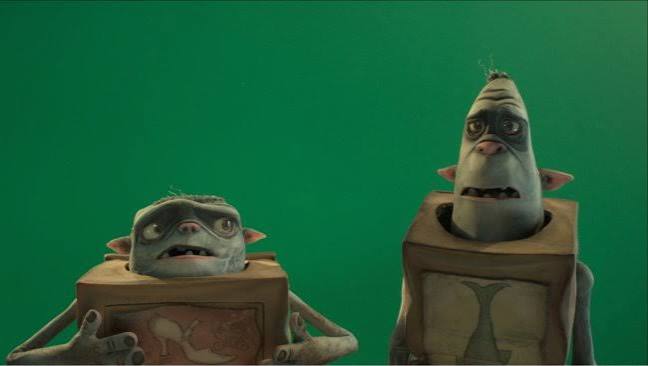
    Boxtrolls highlights innovative mix of CGI, stop-motion and even 3D printing

    When Georges Méliès sent a rocket into the eye of the Man in the Moon in 1902, audiences gasped at what they thought was magic. Over a century later, we watch photorealistic dinosaurs roam the screen and alien worlds rendered entirely in computers. The journey from hand-painted glass to real-time virtual production is a story of relentless innovation, economic pressures, and artistic ambition.

    Special effects are more than technical tricks—they shape how stories are told and what we believe is possible on screen. Understanding this evolution reveals not just the history of cinema, but the cultural and economic forces that drive filmmaking today. From the tactile craft of stop-motion to the limitless canvas of CGI, each era’s effects reflect the tools, budgets, and expectations of its time.

    The Birth of Cinematic Magic: Méliès and the Era of Trick Photography

    In the late 1890s, Georges Méliès, a magician turned filmmaker, discovered that by stopping the camera and replacing an object, he could create the illusion of transformation. This substitution splice became the foundation of cinematic special effects. His 1902 masterpiece, A Trip to the Moon, used multiple exposures, hand-painted color, and elaborate sets to transport audiences to a fantastical lunar landscape. Méliès didn’t just record reality—he invented it, proving that film could be a medium for imagination.

    These early tricks were simple by today’s standards, but they established the core principle of visual effects: manipulating the image to create something that doesn’t exist in front of the camera. As cinema grew, so did the ambition of its illusions, leading to the development of more sophisticated techniques like stop-motion and matte paintings.

    The Art of the Handmade: Stop-Motion and Miniatures

    Willis O’Brien brought prehistoric creatures to life in The Lost World (1925) and King Kong (1933) using stop-motion animation—physically moving models frame by frame to simulate movement. Combined with miniature sets, rear projection, and matte paintings, these films created worlds that felt tangible and real. The labor-intensive process required immense patience: for every second of footage, animators had to shoot 24 individual frames, each with slight adjustments to the model.

    Ray Harryhausen, O’Brien’s protégé, refined this craft with his “Dynamation” technique, which composited animated models into live-action footage. The famous skeleton fight in Jason and the Argonauts (1963) remains a testament to the artistry and physicality of stop-motion. These effects had a tactile presence that audiences could sense—the models were real objects, lit and photographed in the real world.

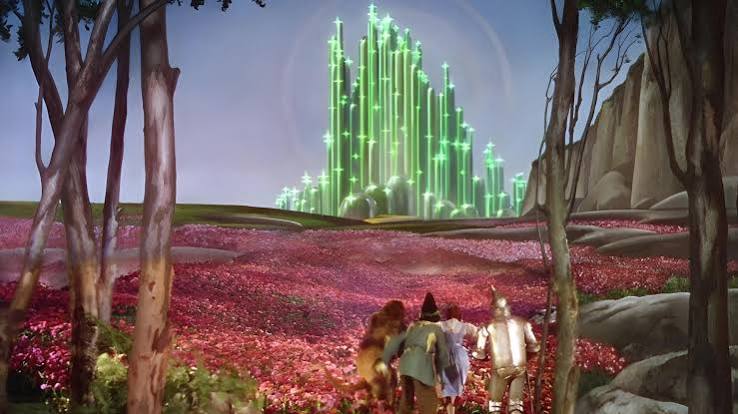
    Miniatures and matte paintings were equally essential. In Citizen Kane (1941), Orson Welles used forced perspective and painted glass to create the illusion of vast spaces. The Wizard of Oz (1939) combined Technicolor with practical effects to build a magical world. These techniques required skilled artisans—painters, model makers, and cameramen—who worked by hand to create cinematic reality.

    The Blockbuster Era: Motion Control and the Rise of ILM

    The 1970s marked a turning point with the rise of the blockbuster. Star Wars (1977) revolutionized effects with motion-control cameras that could repeat precise movements, allowing for complex miniature photography. Industrial Light & Magic (ILM), founded by George Lucas, pushed the boundaries of what was possible, blending miniatures, matte paintings, and optical compositing to create a galaxy far, far away.

    Close Encounters of the Third Kind (1977) used practical lighting and model work to create awe-inspiring UFOs. These films made spectacle a commercial priority, funding research and development in effects technology. The economic success of blockbusters like Jaws and Star Wars demonstrated that audiences would pay for visual wonder, driving studios to invest heavily in effects.

    The Digital Revolution: CGI and the Turning Point of Jurassic Park

    While early CGI appeared in films like Tron (1982) and The Last Starfighter (1984), it was Jurassic Park (1993) that proved CGI could carry photorealistic creatures. Director Steven Spielberg combined animatronics with computer-generated dinosaurs, seamlessly blending the two so that audiences couldn’t tell where the practical ended and the digital began. This film marked a paradigm shift: CGI was no longer a novelty but a viable tool for storytelling.

    Two years later, Toy Story (1995) became the first fully CGI feature film, demonstrating that digital animation could sustain an entire narrative. The 1990s saw CGI become cheaper and more accessible, accelerating its adoption. Films like Terminator 2 (1991) popularized morphing effects, and by the 2000s, CGI was ubiquitous.

    The Age of Performance: Motion Capture and Virtual Production

    The 2000s brought motion capture into the mainstream. Andy Serkis’s portrayal of Gollum in The Lord of the Rings (2001–2003) showed that digital characters could be driven by human performance, adding emotional depth to CGI. James Cameron’s Avatar (2009) pushed mocap further with facial capture and virtual cameras, creating the immersive world of Pandora.

    Virtual production, exemplified by The Mandalorian (2019), uses real-time rendering engines and LED walls to project backgrounds live on set. This allows actors to interact with digital environments in real time, blending physical and digital filmmaking. The technology continues to evolve with AI-assisted VFX tools, which are becoming standard in the industry.

    The Craft vs. The Code: Practical Effects in a Digital Age

    Despite the dominance of CGI, practical effects have not disappeared. Directors like Christopher Nolan and Denis Villeneuve advocate for practical effects to maintain realism. Mad Max: Fury Road (2015) used extensive practical stunts and miniatures, seamlessly integrated with CGI, creating a visceral experience that audiences loved. Studies suggest that when done well, audiences often cannot distinguish between practical and digital effects—what matters is the final image, not the method.

    However, the shift to digital has raised concerns about labor and artistry. The VFX industry is notorious for crunch culture and wage stagnation, highlighted by the 2013 bankruptcy of Rhythm & Hues, the studio behind Life of Pi, despite winning an Oscar. Outsourcing to countries like India and China has lowered costs but also concentrated power in a few large studios. The question remains: does CGI democratize effects or exploit the artists who create them?

    The Philosophical Shift: What Does Realism Mean?

    CGI has expanded the possibilities of cinema, allowing filmmakers to create hyperreal worlds that never existed. This challenges the traditional notion of film as a documentary record of reality. The “uncanny valley”—where digital characters look almost human but not quite—raises questions about our perception of realism. As AI and real-time rendering advance, the line between physical and digital continues to blur, forcing us to reconsider what we see on screen.

    Special effects are not just about spectacle; they reflect the cultural and economic ambitions of cinema. Each era’s effects were constrained by technology, budget, and audience expectations. The evolution from stop-motion to CGI is a story of human ingenuity, but also of the changing nature of filmmaking itself.

    The evolution of special effects is a testament to cinema’s endless capacity for wonder. From Méliès’s magic tricks to the virtual worlds of today, each advancement has expanded what we can imagine and see on screen. While the tools have changed, the goal remains the same: to create moments that transport us beyond the ordinary. As technology continues to evolve, so too will the art of illusion, reminding us that in cinema, anything is possible.

    Summary

    • Special effects evolved from simple trick photography (Méliès) to complex stop-motion (O’Brien, Harryhausen) and miniatures, which were the standard until the 1970s.
    • The blockbuster era (Star Wars) drove innovation with motion-control cameras and ILM’s practical effects.
    • CGI became a turning point with Jurassic Park (1993) and Toy Story (1995), proving digital could be photorealistic and carry full films.
    • Motion capture and virtual production (Avatar, The Mandalorian) now blend performance and real-time rendering.
    • Practical effects remain relevant for realism, but the VFX industry faces labor challenges and ethical questions about realism.

    FAQ

    Q: What was the first movie to use special effects?
    A: Georges Méliès’s A Trip to the Moon (1902) is often cited as a pioneering work, using substitution splices and multiple exposures to create magical transformations.

    Q: Why did CGI replace practical effects?
    A: CGI became cheaper and more flexible for certain shots, allowing filmmakers to create impossible scenes and creatures without physical limitations. However, practical effects are still used for realism and tactility.

    Q: What is motion capture?
    A: Motion capture records an actor’s movements and expressions to drive a digital character, as seen with Gollum in The Lord of the Rings and the Na’vi in Avatar.

    Q: Are practical effects better than CGI?
    A: It depends on the context. Practical effects have a physical presence that can feel more real, but CGI allows for greater scale and flexibility. Many films combine both seamlessly, like Mad Max: Fury Road.

    Q: How has virtual production changed filmmaking?
    A: Virtual production uses real-time rendering and LED walls to project backgrounds live, allowing actors to interact with digital environments on set, as seen in The Mandalorian. This reduces post-production time and enhances actor performance.

  • How Silent Film Pioneers Invented the Language of Modern Cinema

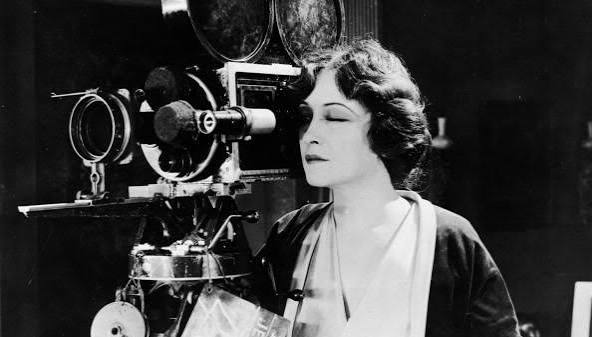
    5 Highlights from Women Film Pioneers Project: African-American Women in Silent Film, Women Camera Operators and More

    Before a single word was spoken on screen, filmmakers were already writing the grammar of cinema. The silent era—roughly from the mid-1910s to the late 1920s—was not a primitive prelude to ‘real’ movies, but a period of explosive creativity where directors, actors, and technicians developed the visual language that still governs how stories are told today. From the close-up to the montage, from the dolly shot to the star system, the foundations of modern filmmaking were laid in silence.

    When we watch a modern thriller with its rapid cuts, a romantic comedy with its witty banter, or a sci-fi epic with its sprawling worlds, we are seeing the distant echo of innovations made over a century ago. The silent era was a time of bold experimentation, where limitations—no synchronized sound, no color, no CGI—forced artists to think purely in images. The result was a visual storytelling toolkit so powerful that it remains the backbone of cinema, even in the age of Dolby Atmos and 4K streaming.

    The Birth of a Visual Language

    In the beginning, films were little more than moving photographs. The Lumière brothers’ 1895 actualities showed a train arriving at a station or workers leaving a factory—single, unedited shots that captured reality without narrative. It was Georges Méliès, a French magician, who first realized that film could create illusions. His A Trip to the Moon (1902) used trick photography and fantastical sets to tell a story, but it was still essentially a series of tableaux, each shot like a stage play.

    The real breakthrough came with Edwin S. Porter’s The Great Train Robbery (1903), which introduced parallel editing—cutting between two simultaneous actions to build suspense. This was the first step toward what we now call continuity editing, the seamless system of shot construction that makes a film feel like a continuous flow of time and space. By the 1910s, D.W. Griffith had expanded these techniques into a full grammar: the close-up to reveal emotion, cross-cutting to create tension, and the ‘last-minute rescue’ to deliver catharsis. Griffith’s The Birth of a Nation (1915) was a landmark in feature-length storytelling, though its racist content makes it a deeply problematic milestone. Nevertheless, its technical innovations—like the use of parallel editing to intercut multiple storylines—set the template for narrative cinema.

    The Masters of Visual Storytelling

    The silent era produced a remarkable generation of filmmakers who each contributed unique tools to the cinematic toolbox. Charlie Chaplin, the most famous star of the era, showed that comedy could carry deep emotion. His ‘Little Tramp’ character was a masterclass in physical acting, using gesture and expression to convey everything from slapstick humor to profound pathos. In The Kid (1921), Chaplin blended laughter and tears in a way that demonstrated film’s power to move audiences without a single word.

    Buster Keaton, meanwhile, was the ultimate visual purist. His films are celebrated for their precise geometric compositions and death-defying stunts, all performed without a stunt double. In The General (1926), Keaton turned a Civil War chase into a masterpiece of comic timing and spatial clarity. His deadpan expression was a perfect foil for the chaos around him, and his use of long takes and wide shots allowed audiences to appreciate the full physical comedy of each gag.

    Across the Atlantic, German Expressionism was pushing cinema into the realm of psychology and atmosphere. F.W. Murnau’s The Last Laugh (1924) is a landmark for its moving camera—a camera that glides through space, following the protagonist’s emotional state. This was a radical departure from the static cameras of earlier films, and it paved the way for the fluid camerawork we take for granted today. Murnau’s Nosferatu (1922) used chiaroscuro lighting and distorted sets to create a sense of dread, proving that visual style could be a narrative tool in itself.

    In the Soviet Union, Sergei Eisenstein developed a different approach: montage. For Eisenstein, editing was not just about continuity but about collision. By juxtaposing two unrelated shots, he could create a new meaning in the viewer’s mind. The Odessa Steps sequence in Battleship Potemkin (1925) is the most famous example, where the rhythmic cutting of a massacre creates an almost unbearable tension. This intellectual montage became a cornerstone of film theory and influenced everything from propaganda films to music videos.

    Technical Innovations That Shaped the Future

    Beyond the artistic breakthroughs, the silent era was a time of rapid technical innovation. Intertitles—the text cards that conveyed dialogue and narration—evolved from simple exposition to stylized graphic design, as seen in the art-deco titles of Metropolis (1927). Color was not absent from silent films; many were hand-tinted or stencil-colored, and two-strip Technicolor was used in films like The Phantom of the Opera (1925).

    Camera movement, which had been limited to static tripods, was revolutionized in the 1920s. The dolly shot and crane shot allowed filmmakers to move through space, as Murnau demonstrated in The Last Laugh. This opened up new possibilities for visual storytelling, allowing the camera to become an active participant in the narrative.

    Makeup and lighting also became more sophisticated. German Expressionists used painted shadows and exaggerated makeup to convey psychological states, while Hollywood developed the three-point lighting system that still dominates film and television today. The star system, too, was born in this era, with actors like Mary Pickford and Rudolph Valentino becoming global icons whose images were carefully crafted and marketed.

    The Global Reach of Silent Cinema

    The silent era was truly international. While Hollywood emerged as the dominant force, thanks to its sunny climate and distance from Edison’s patent trust, other countries made vital contributions. French Impressionists like Abel Gance experimented with split-screen and rapid editing in Napoléon (1927). Scandinavian directors like Victor Sjöström brought a naturalistic sensibility to their films. And the Soviet montage school, as we’ve seen, turned editing into an ideological weapon.

    This cross-pollination of ideas was facilitated by the fact that silent films were, in a sense, a universal language. Without spoken dialogue, a film made in Germany could be understood in Japan, with only the intertitles needing translation. This global reach helped cinema become the dominant art form of the 20th century.

    The End of an Era, the Beginning of a Legacy

    The Jazz Singer (1927) is often cited as the film that killed the silent era, but the transition was gradual. Many silent films continued to be made into the early 1930s, and some, like Chaplin’s City Lights (1931), were released as silents even after sound had become standard. The arrival of sound was not a sudden death but a slow transformation. Some silent stars, like Greta Garbo, made the transition successfully; others, like Buster Keaton, struggled to adapt to the new medium.

    Yet the legacy of the silent era is not just a historical curiosity. Every time a director uses a close-up to convey emotion, every time an editor cuts between two actions to build suspense, every time a camera glides through a scene, they are drawing on the innovations of the silent pioneers. The language of cinema was invented in silence, and it remains the foundation of all visual storytelling.

    The Golden Age of Silent Cinema was not a primitive precursor to ‘real’ movies, but a period of extraordinary creativity that defined the very essence of film. The techniques developed by Griffith, Chaplin, Keaton, Murnau, Eisenstein, and countless others are so fundamental that we often forget they were ever invented. As we continue to push the boundaries of cinema with new technologies, it’s worth remembering that the most powerful tools of storytelling are still the ones that were forged in silence.

    Summary

    • The silent era (mid-1910s to late 1920s) established the core techniques of film editing, camera movement, and visual storytelling.
    • Pioneers like D.W. Griffith, Charlie Chaplin, Buster Keaton, F.W. Murnau, and Sergei Eisenstein each contributed unique innovations that remain foundational.
    • Technical advances included continuity editing, intertitles, color processes, and moving cameras, all developed before sound.
    • Silent cinema was a global phenomenon, with German Expressionism, Soviet Montage, and French Impressionism enriching the medium.
    • The transition to sound was gradual, but the visual language of silent film continues to influence every movie made today.

    FAQ

    Q: What is considered the ‘Golden Age’ of silent cinema?
    A: It generally spans from the mid-1910s to the late 1920s, roughly 1915–1929, when feature-length narrative films became the norm and the art form reached its peak.

    Q: Who were the most influential silent film directors?
    A: Key figures include D.W. Griffith, Charlie Chaplin, Buster Keaton, F.W. Murnau, Fritz Lang, and Sergei Eisenstein, each of whom pioneered specific techniques.

    Q: How did silent films convey dialogue and story without sound?
    A: They used intertitles (text cards) for dialogue and narration, and relied on expressive acting, visual composition, and editing to tell the story.

    Q: Were silent films actually silent?
    A: No, they were typically accompanied by live music, often played by a pianist or an orchestra, and sometimes included sound effects or narration.

    Q: Why did silent films end?
    A: The introduction of synchronized dialogue in The Jazz Singer (1927) made sound films commercially viable, and by 1929–1930, most studios had converted to sound production.

  • The Golden Age of Italian Neorealism: How Post-War Cinema Changed Filmmaking Forever

    The Film Industry in the 1960s: How Cinema Changed Forever

    In the smoldering ruins of post-World War II Italy, a handful of filmmakers picked up cameras and turned them toward the streets, the slums, and the faces of ordinary people struggling to survive. What emerged was a movement that would not only capture a nation’s trauma but also redefine the very language of cinema. Italian Neorealism, born from desperation and moral urgency, rejected the glossy escapism of the past and embraced a raw, documentary-like authenticity that still echoes in films today.

    This was not just a new style; it was a new way of seeing. By abandoning studio sets, professional actors, and tidy plots, directors like Roberto Rossellini, Vittorio De Sica, and Luchino Visconti created a cinema that felt less like fiction and more like life itself. Their films—shot on location with natural light and non-professional performers—told stories of unemployment, poverty, and resilience that resonated far beyond Italy’s borders.

    More than seventy years later, the fingerprints of Neorealism are everywhere, from the gritty realism of modern independent cinema to the social consciousness of global auteurs. Understanding this movement is key to understanding how film evolved from an industry of illusions into a medium of profound human truth.

    The Ashes of War: A Nation in Ruins

    To understand Italian Neorealism, you have to picture Italy in 1945. The country was a patchwork of bombed-out cities, collapsed bridges, and displaced families. The Fascist regime, which had controlled the film industry for two decades, was gone. Cinecittà, the sprawling studio complex outside Rome, had been turned into a refugee camp. The infrastructure for filmmaking—soundstages, equipment, even electricity—was in shambles.

    Yet out of this devastation came an extraordinary creative surge. Filmmakers who had been silenced or compromised under Mussolini now felt a moral imperative to document what had really happened. They wanted to show the war’s toll on ordinary Italians, the resistance against occupation, and the daily grind of survival. The result was a movement that turned limitations into aesthetics: no studios meant shooting on real streets; no professional actors meant casting real people; no money for elaborate sets meant relying on natural light and the stark beauty of ruins.

    This was a radical departure from the ‘white telephone’ films of the Fascist era—lavish, escapist comedies that ignored the harsh realities of the time. Neorealism was a direct rebuke to that escapism, a cinematic reckoning with truth.

    The Pioneers and Their Masterpieces

    The movement’s unofficial starting point is Roberto Rossellini’s Rome, Open City (1945), a film that captured the chaos of the Nazi occupation with a raw urgency that stunned audiences. Rossellini shot on location, often with a handheld camera, and mixed professional actors with real resistance fighters and a priest. The film’s gritty realism and moral complexity set the template for what was to come.

    Rossellini continued with Paisan (1946), a series of six vignettes tracing the Allied advance up the Italian peninsula, and Germany Year Zero (1948), a harrowing look at a boy in bombed-out Berlin. Together, these films formed a trilogy that examined the moral wreckage of war.

    Vittorio De Sica, working with screenwriter Cesare Zavattini, brought a more intimate, humanist touch. Shoeshine (1946) told the story of two boys trying to survive on the black market, while Bicycle Thieves (1948) became the movement’s most iconic film. It follows a poor father and his young son as they search Rome for a stolen bicycle—the father’s only means of work. De Sica cast Lamberto Maggiorani, a real factory worker, in the lead role, and the film’s heartbreaking simplicity made it an international sensation. Umberto D. (1952), about an elderly pensioner and his dog, is often cited as the movement’s swan song, a poignant meditation on loneliness and dignity.

    Luchino Visconti, a Marxist aristocrat, brought a different flavor with La Terra Trema (1948), a sprawling, almost documentary-like portrait of Sicilian fishermen. Shot in the actual village of Aci Trezza with local non-actors speaking in dialect, the film was a monumental exercise in realism, though its length and austerity made it less accessible than De Sica’s work.

    Giuseppe De Santis’s Bitter Rice (1949) added a more commercial, melodramatic twist, setting a crime story among rice-field workers. It was a hit, showing that Neorealism could also entertain.

    The Theory Behind the Lens: Zavattini’s Vision

    If Rossellini and De Sica were the movement’s filmmakers, Cesare Zavattini was its philosopher. A prolific screenwriter and theorist, Zavattini argued that cinema should be an ‘act of attention’—a way of observing life without the interference of contrived plots. He famously said that a film should follow a man for ninety minutes as he goes about his day, capturing the ‘banal’ moments that reveal deeper truths.

    Zavattini’s ideas were revolutionary. He rejected the classical three-act structure, the hero’s journey, and the neat resolutions that had dominated cinema. Instead, he advocated for ‘the encounter’—placing the camera in the midst of real situations and letting them unfold naturally. This approach is evident in Bicycle Thieves, where the search for the bicycle becomes a metaphor for the precariousness of working-class life, and in Umberto D., where the old man’s daily routine is rendered with almost unbearable intimacy.

    His 1952 essay ‘A Thesis on Neo-Realism’ became a manifesto for the movement, influencing generations of filmmakers who sought to break free from studio-bound artifice.

    A New Visual Language: Style and Technique

    Neorealism’s aesthetic was born of necessity, but it became a powerful artistic choice. On-location shooting gave films a documentary authenticity, with real streets, crumbling buildings, and natural light creating a sense of immediacy. Handheld cameras and long takes allowed scenes to breathe, making viewers feel like witnesses rather than spectators.

    Non-professional actors were a key element. In Rome, Open City, the priest and resistance fighters played themselves, lending an unvarnished quality to the performances. In Bicycle Thieves, Maggiorani’s lack of training made his anguish feel painfully real. This wasn’t just a gimmick; it was a philosophical stance. Zavattini and De Sica believed that ordinary people, placed in their own environments, could convey a truth that trained actors might miss.

    The use of dubbing was another practical necessity. Because shooting on noisy streets made synchronous sound recording difficult, many films were shot silent and dubbed in post-production. This created a slight disconnect between image and sound, which some critics argue added to the films’ dreamlike, memory-like quality.

    The Movement’s Decline and Transformation

    By the early 1950s, Neorealism began to fade. Italy’s economy was recovering, and audiences were growing tired of unrelenting misery. The government, wary of the movement’s leftist leanings, imposed censorship and withdrew support. Cinecittà reopened, and a new wave of escapist comedies and melodramas—dubbed ‘pink Neorealism’—softened the movement’s edges.

    Yet Neorealism didn’t die; it evolved. Directors like Federico Fellini, who had worked on Rome, Open City, moved toward a more personal, fantastical style. Michelangelo Antonioni took the movement’s psychological introspection to new extremes. And internationally, the influence was profound. The French New Wave, British social realism, and American independent cinema all owe a debt to Neorealism’s commitment to authenticity and social engagement.

    Filmmakers like Satyajit Ray in India, Ken Loach in Britain, and the Dardenne brothers in Belgium have carried the torch, using non-professional actors and on-location shooting to tell stories of the marginalized. Even Hollywood’s ‘gritty’ reboots and the rise of streaming ‘realism’ can trace their lineage back to those post-war Italian streets.

    Why Neorealism Still Matters

    In an age of CGI spectacles and franchise blockbusters, Neorealism reminds us that cinema’s power lies not in spectacle but in empathy. It showed that a simple story, told with honesty, can move audiences more than any special effect. The movement’s legacy is a challenge to filmmakers: to look at the world around them, to listen to the voices often unheard, and to use the camera as a tool for truth.

    As we grapple with our own crises—pandemics, inequality, political division—the lessons of Neorealism feel more relevant than ever. It teaches us that art can emerge from ruin, that beauty can be found in the mundane, and that the most profound stories are often the ones we live every day.

    Italian Neorealism was a brief, blazing moment in cinema history, but its impact has been eternal. It transformed film from a medium of fantasy into a medium of conscience, proving that the camera could be a force for social change. As we watch modern films that echo its techniques and themes, we are reminded that the movement’s spirit lives on—in every director who chooses authenticity over gloss, in every story that centers the overlooked, and in every audience that yearns for truth on screen.

    Summary

    • Italian Neorealism emerged in post-WWII Italy (1943–1952) as a response to the devastation of war and the escapism of Fascist-era cinema.
    • Key films include Rome, Open City, Bicycle Thieves, and Umberto D., directed by Rossellini and De Sica, with screenwriter Cesare Zavattini as chief theorist.
    • The movement’s style featured on-location shooting, non-professional actors, natural light, and loose, episodic narratives focused on working-class struggles.
    • Neorealism declined by the early 1950s due to economic recovery, censorship, and changing audience tastes, but its influence spread globally.
    • Its legacy persists in modern cinema, inspiring filmmakers like the French New Wave, Ken Loach, and the Dardenne brothers, and reminding us of film’s power to capture human truth.

    FAQ

    Q: What defines Italian Neorealism?
    A: Italian Neorealism is defined by its commitment to realism: on-location shooting, non-professional actors, natural light, and stories about ordinary people facing everyday struggles. It emerged in post-WWII Italy as a reaction to Fascist-era escapism and aimed to document the harsh realities of the time.

    Q: Why is Bicycle Thieves considered a masterpiece?
    A: Bicycle Thieves is celebrated for its simple yet powerful story of a father and son searching for a stolen bicycle, which becomes a metaphor for poverty and dignity. Its use of a non-professional actor, real Rome locations, and a loose narrative structure exemplify Neorealism’s principles, making it an enduring symbol of the movement.

    Q: How did Neorealism influence later cinema?
    A: Neorealism influenced the French New Wave, British social realism, and American independent film. Directors like Satyajit Ray, Ken Loach, and the Dardenne brothers adopted its techniques and humanist focus, and its emphasis on authenticity continues to shape filmmaking today.

    Q: Why did Neorealism end?
    A: Neorealism declined by the early 1950s due to Italy’s economic recovery, government censorship of leftist themes, and audience fatigue with bleak stories. The reopening of Cinecittà studios and a shift toward more commercial ‘pink Neorealism’ also diluted the movement’s radical edge.

    Q: Who was Cesare Zavattini?
    A: Cesare Zavattini was a screenwriter and theorist who collaborated with Vittorio De Sica on films like Bicycle Thieves and Umberto D.. He was the movement’s chief theorist, advocating for a cinema of ‘the encounter’ that followed ordinary people in real time, rejecting contrived plots.

  • The Golden Age of Hollywood: How the Studio System Shaped Modern Cinema

    When Was the Golden Age of Hollywood — And Why Did It End?

    When we think of Hollywood’s Golden Age, we picture glamorous stars, sweeping epics, and timeless classics like Casablanca and Singin’ in the Rain. But behind the silver screen was a powerful machine: the studio system. This vertically integrated model—where a single company controlled production, distribution, and exhibition—didn’t just create movies; it invented modern cinema as we know it.

    From the late 1920s to the early 1960s, the Big Five studios (MGM, Paramount, Warner Bros., 20th Century Fox, and RKO) operated like factories, churning out films with assembly-line precision. They built stars from scratch, enforced strict moral codes, and shaped the way stories were told. While the system eventually crumbled under antitrust laws and the rise of television, its DNA remains embedded in today’s blockbuster culture, franchise filmmaking, and even the way we talk about directors and actors.

    In this article, we’ll explore how the studio system worked, why it fell, and how its legacy continues to influence the movies we watch today.

    The Birth of the Studio System

    The studio system didn’t emerge overnight. In the early 1900s, cinema was a chaotic free-for-all, with independent producers, exhibitors, and distributors battling for control. Thomas Edison’s Motion Picture Patents Company (MPPC) tried to monopolize the industry with patents, but it collapsed by 1918. The void was filled by ambitious entrepreneurs who saw the potential in vertical integration—owning every step of the movie-making process.

    By the 1920s and 1930s, the Big Five had consolidated their power. They bought up theater chains, locked talent into long-term contracts, and built massive studio lots in Hollywood. This wasn’t just about making movies; it was about controlling the entire pipeline. A film would be conceived, written, shot, edited, and distributed—all under one roof. The studios even owned the theaters where the films played, guaranteeing an audience and a steady revenue stream.

    The Assembly Line of Dreams

    Inside the studio walls, movies were produced like cars on an assembly line. Scripts were developed in-house, sets were reused across productions, and genres were standardized to maximize efficiency. MGM became known for its glamorous musicals, Warner Bros. for gritty crime dramas, and Universal for horror. This specialization gave each studio a distinct identity, a “house style” that audiences came to recognize.

    The star system was the engine of this machine. Actors were signed to seven-year contracts with options, giving studios complete control over their careers. Publicity departments manufactured their images, dictating everything from their hairstyles to their personal lives. Stars like Humphrey Bogart, Katharine Hepburn, and Marilyn Monroe were not just performers—they were products, carefully packaged and marketed to the public. The system could be brutal: actors were overworked, underpaid, and often trapped in roles that typecast them for life. Judy Garland’s struggles with pills and Bette Davis’s legal battles with Warner Bros. are stark reminders of the human cost.

    The Hays Code: Censorship and Creativity

    From 1934 to 1968, the Hays Code (officially the Motion Picture Production Code) dictated what could and couldn’t be shown on screen. Enforced by Joseph Breen, the code banned explicit violence, sexual content, and any depiction of “immorality.” Crime couldn’t pay, couples had to sleep in separate beds, and villains always got their comeuppance.

    While the code was restrictive, it also forced filmmakers to be creative. Directors like Alfred Hitchcock and Billy Wilder used innuendo and suggestion to imply what they couldn’t show, creating a sophisticated language of subtext. The code also shaped narrative conventions: the classic three-act structure, with its clear moral resolution, became the standard. When the code finally loosened in the late 1960s, it paved the way for a new era of cinematic freedom—but its influence on storytelling persists.

    The Paramount Decree and the Fall

    The studio system’s downfall began with the Paramount Decree of 1948. The U.S. Supreme Court ruled that the majors’ vertical integration violated antitrust laws, forcing them to sell their theater chains. Without guaranteed exhibition, the economic foundation crumbled. At the same time, television was stealing audiences, and the Hollywood blacklist (from the HUAC hearings) was silencing creative voices.

    By the early 1960s, the Golden Age was over. Studios shifted to financing independent productions and selling off their backlots. But the legacy of the system was far from dead. The studios adapted, and their influence can still be felt in every corner of modern cinema.

    The Legacy: How the Studio System Lives On

    Today, the studio system has evolved into the franchise era. The Big Five (now including Disney, Universal, Warner Bros., Sony, and Paramount) still dominate, but instead of owning theaters, they own intellectual property. The assembly-line approach is now applied to superhero movies and sequels, with interconnected universes and formulaic structures. The star system has been replaced by the influencer economy, but studios still carefully craft public images for their actors.

    Even the auteur theory—the idea that the director is the author of a film—was born as a reaction to the studio system. French critics in the 1950s championed directors like Hitchcock and Ford, arguing that their personal vision shone through despite the constraints of the system. This debate continues today: are blockbusters the work of a single visionary or a corporate committee?

    The Hays Code’s legacy is visible in the ratings system (G, PG, PG-13, R) that replaced it, and in the ongoing culture wars over representation and censorship. And the studio system’s emphasis on genre and spectacle still shapes what gets greenlit. When you watch a Marvel movie or a Netflix original, you’re seeing the ghost of the Golden Age—a system that, for all its flaws, created the language of modern cinema.

    The Golden Age of Hollywood was a paradox: a factory that produced art, a machine that created magic. The studio system was exploitative, censorious, and monopolistic, yet it gave us some of the most beloved films of all time. Its collapse didn’t erase its influence; it merely transformed it. Today’s studios, streaming platforms, and filmmakers still operate in the shadow of that era, using its techniques, conventions, and star-making machinery. Understanding the studio system isn’t just a history lesson—it’s a key to understanding how movies are made, marketed, and remembered.

    Summary

    • The studio system (1920s–1960s) was a vertically integrated model where studios controlled production, distribution, and exhibition.
    • The Big Five (MGM, Paramount, Warner Bros., 20th Century Fox, RKO) dominated, creating assembly-line films and manufactured stars.
    • The Hays Code (1934–1968) imposed strict moral censorship, shaping narrative conventions and forcing creative subtext.
    • The 1948 Paramount Decree broke up the system by forcing studios to sell their theaters, leading to its decline.
    • The system’s legacy persists in franchise filmmaking, the star system, genre conventions, and the ongoing debate over authorship.

    FAQ

    Q: What was the studio system?
    A: The studio system was a business model in Hollywood from the 1920s to the 1960s where a few major studios controlled every aspect of a film’s life—production, distribution, and exhibition (theaters). This vertical integration allowed them to dominate the industry and produce films efficiently.

    Q: Why did the studio system end?
    A: The system ended primarily due to the 1948 Paramount Decree, a Supreme Court ruling that declared the studios’ ownership of theaters a violation of antitrust laws. Combined with the rise of television and the Hollywood blacklist, this dismantled the economic foundation of the system.

    Q: What was the Hays Code?
    A: The Hays Code was a set of moral guidelines enforced from 1934 to 1968 that dictated what could be shown in films. It banned explicit violence, sex, and “immorality,” and required that crime be punished and marriage respected. It shaped the content and storytelling of Golden Age films.

    Q: How did the studio system affect actors?
    A: Actors were signed to long-term contracts (often seven years) that gave studios control over their roles, public image, and even personal lives. While this created stars, it also led to exploitation, typecasting, and personal struggles for many performers.

    Q: Does the studio system still exist today?
    A: Not in its original form, but its legacy lives on. Modern studios still dominate the industry, but they focus on owning intellectual property (like franchises) rather than theaters. The star system, genre conventions, and corporate control of filmmaking all trace back to the Golden Age.

  • How the Studio System Forged Modern Cinema: Lessons from Hollywood’s Golden Age

    What Is the Hollywood Studio System? History | Saturation.io

    When you settle into a movie theater today, you’re experiencing a legacy shaped by an era when Hollywood operated like a dream factory—literally. From the late 1920s to 1960, a handful of studios controlled nearly every aspect of filmmaking, from the scripts to the stars to the theaters where audiences watched. This vertical integration, known as the studio system, produced an astonishing volume of films and defined genres, visual styles, and storytelling norms that still underpin modern cinema.

    But the Golden Age wasn’t just about business efficiency. It was a cultural phenomenon that turned actors into icons, perfected genres like film noir and the musical, and created a visual language that became the global standard. Understanding this era isn’t just a history lesson—it’s a key to decoding why movies look and feel the way they do today. In this article, we’ll explore how the studio system’s innovations, constraints, and eventual collapse left an indelible mark on filmmaking, from the assembly-line production model to the rise of the blockbuster.

    The Machinery of the Dream Factory

    At its peak, the studio system operated like a well-oiled machine. The Big Five—MGM, Warner Bros., Paramount, 20th Century-Fox, and RKO—owned production studios, distribution networks, and theater chains. This vertical integration meant a film made in Hollywood was guaranteed a nationwide release, creating a captive audience. The Little Three—Universal, Columbia, and United Artists—operated on a smaller scale but still thrived within the system.

    This assembly-line approach allowed studios to churn out 400–500 films per year combined. Weekly attendance hit 90 million Americans in 1946, roughly 65% of the population. To keep up with demand, studios employed in-house writers, directors, technicians, and actors under exclusive contracts. Stars like Judy Garland and Humphrey Bogart were groomed for specific roles, their public images meticulously managed by studio publicity departments. The system was efficient, but it also stifled creative freedom—actors often had little say in their projects, and directors worked within strict genre conventions.

    Genre Codification: Templates That Endure

    One of the most enduring legacies of the Golden Age is the codification of genres. Studios perfected the western, the musical, the screwball comedy, and film noir, establishing narrative formulas that remain templates today. For instance, the western’s classic structure—the lone hero, the frontier setting, the moral showdown—was refined in films like Stagecoach (1939) and The Searchers (1956). Musicals like Singin’ in the Rain (1952) set the standard for integrating song and dance into storytelling, a formula still used in modern hits like La La Land.

    Film noir, with its shadowy visuals and cynical protagonists, emerged in the 1940s as a distinct genre, influenced by German Expressionism and hardboiled fiction. Its visual style—low-key lighting, skewed camera angles—was a direct result of studio constraints, where directors had to work with limited sets and artificial lighting. This aesthetic, born of necessity, has been revived countless times in neo-noir films like Chinatown (1974) and Blade Runner (1982).

    The Invisible Style: How Classical Hollywood Shaped Storytelling

    The Golden Age also established the “invisible style” of filmmaking—a set of conventions designed to make the audience forget they’re watching a movie. Continuity editing, which ensures smooth, logical transitions between shots, became the norm. Cause-and-effect plotting, motivated lighting, and seamless sound design all worked together to create a immersive, realistic experience. This classical Hollywood narrative became the global default, influencing filmmakers from Japan to Italy to India.

    Directors like Orson Welles pushed the boundaries of this style with deep-focus cinematography in Citizen Kane (1941), allowing multiple planes of action to remain in sharp focus. This technique, along with innovative sound and editing, demonstrated that the studio system could foster artistic experimentation, even within its constraints.

    The Hays Code: Censorship and Creativity

    The Production Code, enforced from 1934 to 1968, imposed strict moral guidelines on content. No nudity, no “sympathetic” criminals, and a mandate for “compensating moral values” meant that films had to uphold a certain ethical standard. This censorship was a response to scandals like the Fatty Arbuckle trial and was designed to avoid government regulation.

    While the Code restricted subject matter, it also forced filmmakers to be creative. Directors used innuendo, visual metaphor, and clever dialogue to suggest what couldn’t be shown. For example, the famous “cigarette scene” in Now, Voyager (1942) conveys a sexual relationship through a shared smoke. This indirect approach gave Golden Age films a sophistication that modern audiences still admire.

    The Decline: What Broke the System?

    The studio system began to unravel with the Paramount Decree of 1948, when the Supreme Court ruled that vertical integration violated antitrust laws. Studios were forced to sell their theater chains, breaking the guaranteed distribution model. This, combined with the rise of television—by 1955, over half of American homes had a TV—eroded the industry’s dominance.

    Studios responded with spectacle: widescreen formats like CinemaScope, Technicolor, and epic productions like Ben-Hur (1959) to lure audiences away from the small screen. But the contract system was already crumbling. Stars and directors began forming independent production companies, seeking creative control and a share of profits. By 1960, the Golden Age was over, replaced by a more fragmented, risk-averse industry that would eventually give rise to the blockbuster era.

    Lasting Legacy: From Golden Age to Modern Cinema

    Despite its decline, the studio system’s influence is everywhere. The genres it codified—from the superhero movie (a modern-day western) to the romantic comedy (a descendant of the screwball)—still dominate box offices. The invisible style remains the default for mainstream filmmaking, even as auteurs like Christopher Nolan and Quentin Tarantino play with its conventions.

    The star system, too, has evolved but persists. Today’s actors are brands, managed by PR teams and social media, much like the contract players of old. And the studio model, while no longer vertically integrated, has seen a resurgence in the form of conglomerates like Disney, which own production, distribution, and streaming platforms—a modern echo of the Big Five.

    Conclusion

    The Golden Age of Hollywood was more than a nostalgic era; it was a crucible that forged the language of cinema. The studio system’s assembly-line efficiency, genre codification, and visual innovations created a foundation that filmmakers still build upon. While the system’s constraints were often criticized, they also bred creativity, and its collapse paved the way for new voices and independent visions. Understanding this history helps us appreciate the movies we watch today—and the invisible hand of the dream factory that still shapes them.

    The Golden Age of Hollywood wasn’t just a period of glitz and glamour—it was a transformative era that established the very grammar of filmmaking. From the assembly-line production model to the codification of genres and the invisible style, the studio system’s innovations continue to influence how stories are told on screen. As we watch modern blockbusters and indie gems alike, we’re seeing the echoes of a system that, despite its flaws, created an enduring legacy. The dream factory may have closed its doors, but its dreams still play on.

    Summary

    • The studio system (1927–1960) was a vertically integrated model where studios controlled production, distribution, and exhibition, enabling a high volume of films and a captive audience.
    • Genres like film noir, the musical, and the screwball comedy were codified during this era, providing templates that modern films still follow.
    • The “invisible style” of classical Hollywood—continuity editing, cause-and-effect plotting, and seamless sound—became the global standard for narrative filmmaking.
    • The Hays Code imposed strict moral censorship, but it also forced filmmakers to use innuendo and metaphor, adding sophistication to Golden Age films.
    • The Paramount Decree (1948) and the rise of television led to the system’s decline, but its legacy persists in modern studio conglomerates, star branding, and genre conventions.

    FAQ

    Q: What exactly was the studio system?
    A: The studio system was a business model where a few major studios (MGM, Warner Bros., Paramount, 20th Century-Fox, RKO) controlled every stage of filmmaking—production, distribution, and exhibition—through vertical integration. This allowed them to produce films efficiently and guarantee their release in theaters they owned.

    Q: How did the Hays Code affect filmmaking?
    A: The Hays Code, enforced from 1934 to 1968, imposed strict moral guidelines, banning nudity, sympathetic criminals, and requiring “compensating moral values.” This censorship forced filmmakers to use innuendo and visual metaphor, which often added a layer of sophistication to films.

    Q: Why did the Golden Age end?
    A: The Golden Age ended due to a combination of factors: the Paramount Decree (1948) forced studios to sell their theater chains, breaking their monopoly; the rise of television in the 1950s reduced movie attendance; and the contract system collapsed as stars and directors sought independence.

    Q: What are some enduring innovations from this era?
    A: Key innovations include genre codification (westerns, musicals, noir), the invisible style of editing and narrative, Technicolor and widescreen formats, and the star system, which evolved into modern celebrity branding.

    Q: How does the studio system influence today’s movies?
    A: Modern studios like Disney use a similar model of vertical integration, owning production, distribution, and streaming platforms. Genres and storytelling conventions from the Golden Age remain the foundation of mainstream cinema, and the star system persists in the form of actor branding and franchise casting.