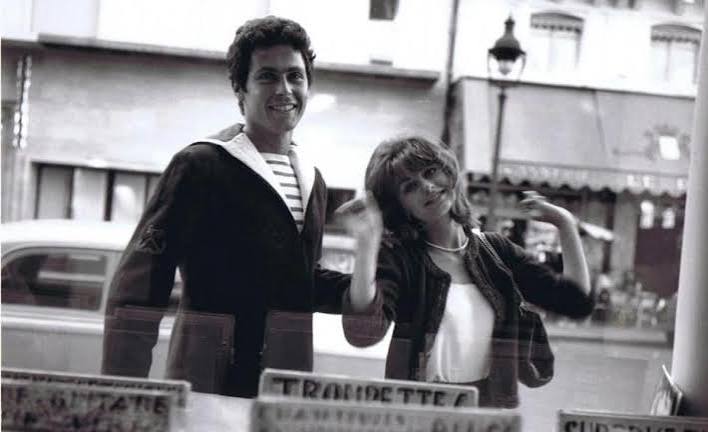
When we think of the French New Wave, names like Jean-Luc Godard and François Truffaut dominate. But behind the jump cuts and existential dialogues, a cohort of women were shaping the movement as directors, editors, and collaborators. Their contributions, often erased by the cult of the male auteur, are finally getting their due. This article uncovers the hidden figures who made the New Wave what it was, and why their stories matter today.
The New Wave’s “Mother” Who Arrived First
Agnès Varda’s La Pointe Courte (1955) is now recognized as the true starting point of the French New Wave, but for decades, the credit went to Godard’s Breathless (1960) or Truffaut’s The 400 Blows (1959). Varda, who called herself a “young woman who made films” rather than a New Wave director, was the only woman in the Left Bank group. Her debut used location shooting and non-linear editing years before the movement was named. She resisted the label, but history has crowned her the “mother of the New Wave.”
The Editors Who Made the Cuts
Editing was a rare space where women could rise, and they were essential to the New Wave’s signature style. Cécile Decugis edited Godard’s Breathless, whose jump cuts became a global sensation. She also worked on Truffaut’s Jules and Jim and Varda’s Cléo from 5 to 7. Marie-Josèphe Yoyotte, a Black French editor, collaborated with Varda on Cléo and Le Bonheur, but her name barely appears in the standard histories. Nathalie Lafaurie edited several Godard films, including Vivre sa vie and Bande à part, yet her work is often overshadowed by the director’s fame.
The Forgotten Directors: Audry and Kaplan
Jacqueline Audry was one of France’s most commercially successful directors in the 1950s, with films like Olivia (1951) exploring female desire and sexuality. But the Cahiers du Cinéma critics dismissed her as “literary,” and she was excluded from the New Wave canon. Nelly Kaplan, an Argentine-born filmmaker, made La Fiancée du pirate (1969), a feminist revenge comedy that aligned with the movement’s later radical phase. Both women fought against a system that saw female directors as anomalies.
The Auteur Theory That Silenced Them
The “politique des auteurs” prized the director as the sole creative genius, which systematically devalued collaborative labor—especially editing, a feminized craft. This theory, championed by the male critics who became the New Wave’s stars, erased the contributions of women like Decugis and Yoyotte. It also marginalized directors who didn’t fit the mold of the male cinephile-critic.
Institutional Barriers and Cultural Norms
Post-war France was conservative about gender roles. The IDHEC film school had quotas that limited women’s admission, and producing a first feature required connections in a male-dominated industry. While the New Wave broke formally with the past, it did not break with its patriarchal structures. Women often entered via editing or acting, not directing, and were rarely granted the same creative autonomy.
Why It Matters Today
Rediscovering these women is not just an academic exercise. It challenges the myth of the lone genius and highlights the collaborative nature of cinema. It also inspires a new generation of filmmakers to question who gets credited, who gets remembered, and why. As Varda once said, “I’m not a mother of the New Wave; I’m its grandmother.” But her grandmother status—and the work of editors like Yoyotte—is precisely what deserves our attention.
The French New Wave was not just Godard and Truffaut. It was Varda, Audry, Kaplan, Decugis, Yoyotte, and countless others whose names have been forgotten. By bringing them back into the spotlight, we don’t just correct history—we enrich our understanding of a movement that was never as revolutionary as it claimed to be, and yet was far more diverse than we’ve been told.
Summary
- Agnès Varda’s La Pointe Courte (1955) predates the canonical New Wave films, making her the movement’s true originator.
- Editors like Cécile Decugis and Marie-Josèphe Yoyotte were crucial to the New Wave’s visual style, but their work was often uncredited or overshadowed.
- The auteur theory systematically erased collaborative labor and marginalized women directors who didn’t fit the male critic-turned-director mold.
- Jacqueline Audry and Nelly Kaplan are among the forgotten female directors whose work challenged gender norms.
- Institutional barriers, such as IDHEC’s quotas and male-dominated production networks, kept women from directing in the New Wave era.
FAQ
Q: Who was the only female director in the core French New Wave?
A: Agnès Varda was the only woman in the Left Bank group, and she directed her debut feature La Pointe Courte in 1955, before the movement’s canonical start.
Q: What did Cécile Decugis contribute to the French New Wave?
A: She edited Godard’s Breathless (1960), which featured the famous jump cuts, as well as Truffaut’s Jules and Jim and Varda’s Cléo from 5 to 7.
Q: Why were women largely excluded from directing in the New Wave?
A: Institutional barriers like IDHEC’s quotas, critical bias from the male Cahiers critics, and economic challenges in a male-dominated industry all contributed to their exclusion.
Q: What is the auteur theory and how did it affect women?
A: The “politique des auteurs” argues that the director is the primary creative force behind a film. This minimized the contributions of editors and other collaborators, many of whom were women, and marginalized female directors who didn’t fit the male auteur mold.
Q: Are there any other forgotten female directors from that era?
A: Yes, Jacqueline Audry, who made Olivia (1951), and Nelly Kaplan, who directed La Fiancée du pirate (1969), are notable examples. Both were overlooked by the New Wave canon despite their significant work.
Leave a Reply