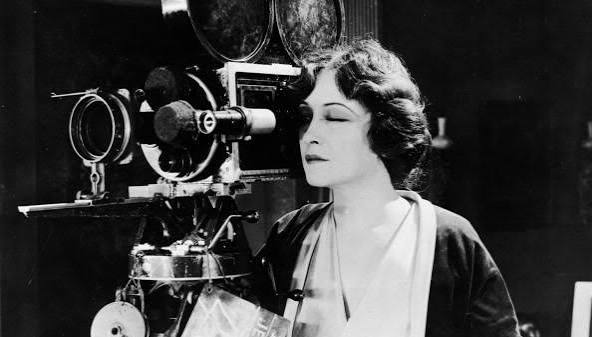
Before a single word was spoken on screen, filmmakers were already writing the grammar of cinema. The silent era—roughly from the mid-1910s to the late 1920s—was not a primitive prelude to ‘real’ movies, but a period of explosive creativity where directors, actors, and technicians developed the visual language that still governs how stories are told today. From the close-up to the montage, from the dolly shot to the star system, the foundations of modern filmmaking were laid in silence.
When we watch a modern thriller with its rapid cuts, a romantic comedy with its witty banter, or a sci-fi epic with its sprawling worlds, we are seeing the distant echo of innovations made over a century ago. The silent era was a time of bold experimentation, where limitations—no synchronized sound, no color, no CGI—forced artists to think purely in images. The result was a visual storytelling toolkit so powerful that it remains the backbone of cinema, even in the age of Dolby Atmos and 4K streaming.
The Birth of a Visual Language
In the beginning, films were little more than moving photographs. The Lumière brothers’ 1895 actualities showed a train arriving at a station or workers leaving a factory—single, unedited shots that captured reality without narrative. It was Georges Méliès, a French magician, who first realized that film could create illusions. His A Trip to the Moon (1902) used trick photography and fantastical sets to tell a story, but it was still essentially a series of tableaux, each shot like a stage play.
The real breakthrough came with Edwin S. Porter’s The Great Train Robbery (1903), which introduced parallel editing—cutting between two simultaneous actions to build suspense. This was the first step toward what we now call continuity editing, the seamless system of shot construction that makes a film feel like a continuous flow of time and space. By the 1910s, D.W. Griffith had expanded these techniques into a full grammar: the close-up to reveal emotion, cross-cutting to create tension, and the ‘last-minute rescue’ to deliver catharsis. Griffith’s The Birth of a Nation (1915) was a landmark in feature-length storytelling, though its racist content makes it a deeply problematic milestone. Nevertheless, its technical innovations—like the use of parallel editing to intercut multiple storylines—set the template for narrative cinema.
The Masters of Visual Storytelling
The silent era produced a remarkable generation of filmmakers who each contributed unique tools to the cinematic toolbox. Charlie Chaplin, the most famous star of the era, showed that comedy could carry deep emotion. His ‘Little Tramp’ character was a masterclass in physical acting, using gesture and expression to convey everything from slapstick humor to profound pathos. In The Kid (1921), Chaplin blended laughter and tears in a way that demonstrated film’s power to move audiences without a single word.
Buster Keaton, meanwhile, was the ultimate visual purist. His films are celebrated for their precise geometric compositions and death-defying stunts, all performed without a stunt double. In The General (1926), Keaton turned a Civil War chase into a masterpiece of comic timing and spatial clarity. His deadpan expression was a perfect foil for the chaos around him, and his use of long takes and wide shots allowed audiences to appreciate the full physical comedy of each gag.
Across the Atlantic, German Expressionism was pushing cinema into the realm of psychology and atmosphere. F.W. Murnau’s The Last Laugh (1924) is a landmark for its moving camera—a camera that glides through space, following the protagonist’s emotional state. This was a radical departure from the static cameras of earlier films, and it paved the way for the fluid camerawork we take for granted today. Murnau’s Nosferatu (1922) used chiaroscuro lighting and distorted sets to create a sense of dread, proving that visual style could be a narrative tool in itself.
In the Soviet Union, Sergei Eisenstein developed a different approach: montage. For Eisenstein, editing was not just about continuity but about collision. By juxtaposing two unrelated shots, he could create a new meaning in the viewer’s mind. The Odessa Steps sequence in Battleship Potemkin (1925) is the most famous example, where the rhythmic cutting of a massacre creates an almost unbearable tension. This intellectual montage became a cornerstone of film theory and influenced everything from propaganda films to music videos.
Technical Innovations That Shaped the Future
Beyond the artistic breakthroughs, the silent era was a time of rapid technical innovation. Intertitles—the text cards that conveyed dialogue and narration—evolved from simple exposition to stylized graphic design, as seen in the art-deco titles of Metropolis (1927). Color was not absent from silent films; many were hand-tinted or stencil-colored, and two-strip Technicolor was used in films like The Phantom of the Opera (1925).
Camera movement, which had been limited to static tripods, was revolutionized in the 1920s. The dolly shot and crane shot allowed filmmakers to move through space, as Murnau demonstrated in The Last Laugh. This opened up new possibilities for visual storytelling, allowing the camera to become an active participant in the narrative.
Makeup and lighting also became more sophisticated. German Expressionists used painted shadows and exaggerated makeup to convey psychological states, while Hollywood developed the three-point lighting system that still dominates film and television today. The star system, too, was born in this era, with actors like Mary Pickford and Rudolph Valentino becoming global icons whose images were carefully crafted and marketed.
The Global Reach of Silent Cinema
The silent era was truly international. While Hollywood emerged as the dominant force, thanks to its sunny climate and distance from Edison’s patent trust, other countries made vital contributions. French Impressionists like Abel Gance experimented with split-screen and rapid editing in Napoléon (1927). Scandinavian directors like Victor Sjöström brought a naturalistic sensibility to their films. And the Soviet montage school, as we’ve seen, turned editing into an ideological weapon.
This cross-pollination of ideas was facilitated by the fact that silent films were, in a sense, a universal language. Without spoken dialogue, a film made in Germany could be understood in Japan, with only the intertitles needing translation. This global reach helped cinema become the dominant art form of the 20th century.
The End of an Era, the Beginning of a Legacy
The Jazz Singer (1927) is often cited as the film that killed the silent era, but the transition was gradual. Many silent films continued to be made into the early 1930s, and some, like Chaplin’s City Lights (1931), were released as silents even after sound had become standard. The arrival of sound was not a sudden death but a slow transformation. Some silent stars, like Greta Garbo, made the transition successfully; others, like Buster Keaton, struggled to adapt to the new medium.
Yet the legacy of the silent era is not just a historical curiosity. Every time a director uses a close-up to convey emotion, every time an editor cuts between two actions to build suspense, every time a camera glides through a scene, they are drawing on the innovations of the silent pioneers. The language of cinema was invented in silence, and it remains the foundation of all visual storytelling.
The Golden Age of Silent Cinema was not a primitive precursor to ‘real’ movies, but a period of extraordinary creativity that defined the very essence of film. The techniques developed by Griffith, Chaplin, Keaton, Murnau, Eisenstein, and countless others are so fundamental that we often forget they were ever invented. As we continue to push the boundaries of cinema with new technologies, it’s worth remembering that the most powerful tools of storytelling are still the ones that were forged in silence.
Summary
- The silent era (mid-1910s to late 1920s) established the core techniques of film editing, camera movement, and visual storytelling.
- Pioneers like D.W. Griffith, Charlie Chaplin, Buster Keaton, F.W. Murnau, and Sergei Eisenstein each contributed unique innovations that remain foundational.
- Technical advances included continuity editing, intertitles, color processes, and moving cameras, all developed before sound.
- Silent cinema was a global phenomenon, with German Expressionism, Soviet Montage, and French Impressionism enriching the medium.
- The transition to sound was gradual, but the visual language of silent film continues to influence every movie made today.
FAQ
Q: What is considered the ‘Golden Age’ of silent cinema?
A: It generally spans from the mid-1910s to the late 1920s, roughly 1915–1929, when feature-length narrative films became the norm and the art form reached its peak.
Q: Who were the most influential silent film directors?
A: Key figures include D.W. Griffith, Charlie Chaplin, Buster Keaton, F.W. Murnau, Fritz Lang, and Sergei Eisenstein, each of whom pioneered specific techniques.
Q: How did silent films convey dialogue and story without sound?
A: They used intertitles (text cards) for dialogue and narration, and relied on expressive acting, visual composition, and editing to tell the story.
Q: Were silent films actually silent?
A: No, they were typically accompanied by live music, often played by a pianist or an orchestra, and sometimes included sound effects or narration.
Q: Why did silent films end?
A: The introduction of synchronized dialogue in The Jazz Singer (1927) made sound films commercially viable, and by 1929–1930, most studios had converted to sound production.
Leave a Reply