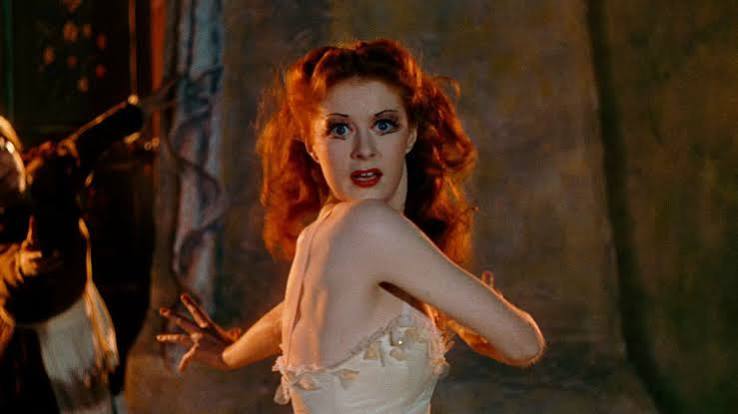
In 1948, a British film about a ballerina who dances herself to death was released to a lukewarm reception in its home country. Within a year, it had crossed the Atlantic and become a sensation, eventually earning two Academy Awards and redefining what color could do in cinema. The film was The Red Shoes, and its directors, Michael Powell and Emeric Pressburger, had just made a movie that would quietly upend every rule of Technicolor filmmaking.
Most color films of the era used the process to make musicals brighter or historical epics more lavish. Powell and Pressburger, working with cinematographer Jack Cardiff, treated color as a psychological tool—saturating reds to near-neon intensity, using lighting as a color source, and building a 15-minute ballet sequence that still leaves audiences wondering how it was done. This was not decoration. It was emotion, made visible.
The Archers and Their Unlikely Hit
Michael Powell and Emeric Pressburger formed a partnership in the early 1940s, calling themselves “The Archers” after their production company. They made a string of distinctive British films, from the supernatural A Matter of Life and Death to the wartime classic Black Narcissus. But The Red Shoes was their boldest swing yet—a backstage melodrama about a young ballerina, Victoria Page (Moira Shearer), who is torn between her love for a young composer and the ruthless impresario who demands total devotion to art.
The film was a gamble. It starred a real ballet dancer, Moira Shearer, who was making her acting debut. Its plot was a meditation on artistic obsession. And it was shot in Technicolor, which at the time was still mostly reserved for musicals, fantasies, or historical epics. Psychological dramas were expected to be in black and white.
In the UK, the film initially flopped. But in the United States, it found an audience through word of mouth, slowly building into one of the most profitable British films of its era. By the end of its run, it had won two Academy Awards (for Best Art Direction and Best Score) and been nominated for Best Picture, Best Director, and Best Story. More importantly, it had shown a generation of filmmakers what color could actually do.
Technicolor Before The Red Shoes
To understand the film’s impact, you have to understand what Technicolor was like in 1948. The three-strip process required a massive camera that exposed three separate black-and-white negatives simultaneously—each one filtered through a different primary color. It was expensive, complicated, and required enormous amounts of light.
The result, when done well, was vivid and saturated. But it was also often used simply to make things look pretty. Films like Gone with the Wind or The Wizard of Oz used color for spectacle; the camera captured what was there, and the goal was to make it look as close to reality as possible—only more colorful.
Jack Cardiff, the cinematographer for The Red Shoes, had different ideas. He saw color as a source of emotion, not just a filter. Instead of using white light and letting the colors of the set and costumes do the work, Cardiff used colored gels and filters to light the scenes themselves. He bounced colored light off surfaces, used smoke to diffuse it, and manipulated exposure to create painterly effects that went far beyond naturalistic reproduction.
This was a radical departure. Cardiff was treating light itself as a color, not just the objects the light fell on. And Powell and Pressburger were thinking about color in equally expressive terms.
Color as Psychology
The most obvious example is the use of red. Throughout the film, red is not just a color—it is a symbol. It appears in the ballet slippers that Victoria puts on, in the curtain of the stage, in the blood that stains her feet as she dances herself to death. But Powell and Pressburger weren’t content with simple symbolism. They used saturation and contrast to make red feel almost violently alive.
When Victoria is on stage, the reds are hyper-saturated, pushed to near-neon intensity. The rest of the film uses a more muted palette, with natural skin tones and subdued backgrounds. The effect is that red doesn’t just appear when something important happens—it seems to leak out of the screen, grabbing the viewer’s attention with a force that is almost uncomfortable.
This was expressive color, not decorative color. It was color used to convey psychological states, to externalize the internal debate between love and art that is the film’s central theme. The red shoes are not just a prop; they are a manifestation of Victoria’s obsession, and the film’s use of color makes sure we feel that obsession in our gut.
The Ballet Sequence: A Technical and Artistic Marvel
At the center of the film is a 15–17 minute ballet sequence that has become legendary. It tells the story of a girl who puts on red shoes and cannot stop dancing, and it is framed as a performance by Victoria’s troupe. But as the sequence unfolds, it becomes something more than a stage show.
The camera follows Victoria as she dances, and the world around her begins to change. A newspaper becomes a swirling sky. A room melts into a surreal dreamscape. The transitions are seamless, with live action, painted backdrops, and expressionistic set changes blending together so smoothly that it’s easy to believe the entire sequence was shot in a single continuous take.
It wasn’t. The sequence was meticulously choreographed and edited over several weeks, using multiple setups, process shots, and trick photography. Cardiff and his team used rear projection, matte paintings, and forced perspective to create transitions that look impossible, even today.
The ballet is not just a technical showpiece. It is a psychological projection of Victoria’s dilemma. The red shoes force the girl to dance to death, mirroring the choice Victoria faces in her own life—between the love of composer Julian Craster and the demands of impresario Boris Lermontov, who tells her that a dancer who relies on the doubtful comforts of human love will never be a great dancer. The ballet makes that conflict visible, using the stage as a mirror for the character’s inner turmoil.
This was radical. Most films of the era treated “show within a show” sequences as simple spectacle—a chance to show off the studio’s production values. Powell and Pressburger used it to advance character and theme, making the ballet an essential part of the story rather than a break from it.
Influence and Rediscovery
The immediate influence of The Red Shoes can be seen in the work of directors who grew up watching it. Martin Scorsese has cited it as a major inspiration, and his use of saturated red in Raging Bull owes a clear debt to Powell and Pressburger’s color palette. Darren Aronofsky’s Black Swan (2010) is almost a direct homage, with its ballet setting and its descent into obsession.
But the film’s influence goes beyond direct references. It helped convince a generation of filmmakers that color could be used for emotional and psychological ends, not just spectacle. It opened the door for the bold, expressive color palettes of the 1950s and 1960s, from Douglas Sirk’s melodramas to the saturated hues of early Technicolor epics.
Why, then, are Powell and Pressburger often forgotten? The answer lies in the changing tastes of the 1960s. British cinema turned toward social realism, and Powell and Pressburger’s flamboyant, stylized approach fell out of fashion. Powell’s own career was effectively derailed by the critical revulsion to his 1960 film Peeping Tom, a psychological horror film that was savaged at the time and is now considered a classic. The pair’s work was rediscovered in the 1970s by American directors like Scorsese, Coppola, and De Palma, who championed them as masters.
Despite this, they never achieved the same level of popular recognition as Hitchcock or Lean. The Red Shoes is now widely available and regularly screened at film festivals, but it remains a film that is more beloved by filmmakers and critics than by the general public. That is a shame, because it is not just a technical achievement—it is a deeply emotional film that uses every tool at its disposal to tell a story about the price of artistic passion.
Why It Still Matters
The technical achievements of The Red Shoes are remarkable, but they are not the reason the film endures. The reason is that Powell and Pressburger used those techniques to tell a universal story—about the choices we make between love and ambition, and about the sacrifices that art demands.
The ballet sequence, with its impossible transitions and its saturated reds, is not just a display of visual virtuosity. It is an attempt to put the viewer inside Victoria’s mind, to make us feel the seductive pull of art even as it destroys her. That is something that no amount of technical skill can achieve on its own; it requires a director who understands that color, movement, and sound are not just tools for telling a story, but tools for creating emotion.
Powell and Pressburger were such directors, and The Red Shoes remains their masterpiece—a film that changed how filmmakers thought about color, and that continues to inspire new generations of artists to push the boundaries of what cinema can do.
The Red Shoes is a film that should not work. It is a ballet movie that is not really about ballet. It is a color film that uses color to depict psychological states. It is a melodrama with a dark, tragic ending. Yet it all comes together in a way that is both deeply emotional and visually breathtaking. Powell and Pressburger, with the help of Jack Cardiff, did not just make a great film—they expanded the language of cinema itself, showing that color could be used to express the interior life of a character, not just to decorate a scene. If you have not seen it, seek it out. And if you have, watch it again—you will notice something new every time.
Summary
- The Red Shoes (1948) is a British film by Michael Powell and Emeric Pressburger that used Technicolor expressively, not just decoratively.
- Cinematographer Jack Cardiff used colored lighting and filters to create painterly, emotional effects, pushing reds to near-neon intensity.
- The 15-minute ballet sequence blended live action, painted backdrops, and trick photography to depict a character’s psychological conflict, not just spectacle.
- The film was a box office failure in the UK but became a hit in the US, winning two Academy Awards.
- Powell and Pressburger were later rediscovered by directors like Martin Scorsese, and The Red Shoes influenced the color palettes of films like Raging Bull and Black Swan.
FAQ
Q: Was the ballet sequence in The Red Shoes shot in a single continuous take?
A: No. It was meticulously choreographed and edited over several weeks using multiple setups, process shots, and trick photography, including rear projection, matte paintings, and forced perspective.
Q: What was three-strip Technicolor?
A: It was a color film process that used a special camera exposing three separate black-and-white negatives through red, green, and blue filters. The negatives were then combined to create a full-color image. It required huge amounts of light and was expensive and complex.
Q: Why is the use of red in the film significant?
A: Red is used as a psychological symbol for passion, obsession, and artistic sacrifice. It appears when Victoria’s inner life is at stake, and the saturation is heightened to create an emotional impact, making the color feel almost violent.
Q: Who were Powell and Pressburger?
A: Michael Powell and Emeric Pressburger were a British filmmaking duo known as “The Archers.” They made influential films in the 1940s and 1950s but fell out of fashion in the 1960s. They were rediscovered in the 1970s by directors like Martin Scorsese.
Q: How did The Red Shoes influence later films?
A: It inspired directors like Martin Scorsese (who restored the film in 2009) and Darren Aronofsky, whose Black Swan is a direct homage. Its use of saturated color and psychological ballet sequences shaped how color could be used expressively in cinema.
Leave a Reply