Tag: AI

  • Semantic SEO and Entity Optimization: Making Your Content Understandable to AI

    Semantic SEO and Entity Optimization: Making Your Content Understandable to AI

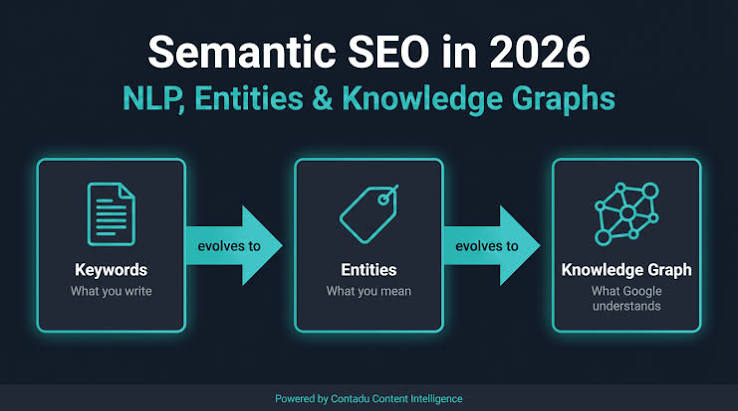
    In 2013, Google quietly changed how it ranked websites. Instead of just matching the exact words you typed, it started trying to understand what you meant. That shift  from keywords to meaning has only accelerated. Today, with AI-generated answers appearing at the top of search results, your content isn’t just read by people; it’s parsed by machines. Semantic SEO and entity optimization are the practices that make your content clear to these AI systems, and they’re no longer optional.

    Think of it like this: a few years ago, search engines were like librarians scanning for specific book titles. Now, they’re like research assistants who read every book, summarize the key points, and explain how each one relates to the others. If your content doesn’t clearly state who you are, what you’re about, and how you connect to the wider world, that assistant will ignore you or, worse, attribute your ideas to someone else.

    The Evolution from Keywords to Meaning

    The old way of SEO was simple: use the exact keyword phrase on your page as many times as possible, and you’d rank. Google’s early algorithm was basically a word counter. But that approach led to spammy, low-quality content that didn’t actually answer people’s questions. So, Google started making updates:

    • 2013: Hummingbird – Focused on conversational search and query intent, not just matching words.
    • 2015: RankBrain – Used machine learning to understand never-before-seen queries by mapping them to known concepts.
    • 2019: BERT – A huge leap. Google could now understand the context of each word in a sentence. For example, the word “bank” is different in “river bank” vs. “savings bank.” BERT gets that.
    • 2021-2023: MUM and LaMDA – Expanded to understand images, videos, and conversational context.
    • 2024-2025: AI Overviews – Google now generates AI-written summaries at the top of results. These summaries pull from content that is structured and entity-rich.

    Each of these updates was a step toward one goal: understanding meaning, not just text. Semantic SEO is the practice of making that understanding easy for search engines.

    What Is Semantic SEO?

    Semantic SEO is an approach to search engine optimization that focuses on the meaning and intent behind search queries. Instead of optimizing for a single keyword phrase, you optimize for a whole topic. This involves:

    • Topical Authority: Creating content that covers a subject in depth, using related terms, synonyms, and subtopics. For example, if you’re writing about “electric cars,” you might also cover “battery technology,” “charging stations,” and “environmental impact.” This builds a “topic cluster” that signals to Google you’re an expert.
    • Entity-Based Optimization: Structuring your content around named entities—people, places, things, concepts—and their relationships. Instead of just writing “the CEO,” you’d write “Tim Cook, CEO of Apple.”
    • Structured Data: Using schema markup to explicitly tell search engines what entities are present and how they relate. This is like giving the search engine a map of your content.

    Why It Matters Now

    Semantic SEO is considered “table stakes” for advanced SEO professionals. It’s not a niche tactic; it’s the baseline. With AI Overviews, the “position zero” is no longer a link but a synthesized answer. To be the source behind that answer, your content must be understandable to AI. If it’s ambiguous or unstructured, the AI will either ignore it or attribute your facts to a different entity.

    What Is Entity Optimization?

    An entity is a distinct thing: a person, brand, product, place, or concept. Entity optimization is the practice of making your entity easily identifiable, understandable, and authoritative to search engines and AI systems. It’s about creating a consistent, unambiguous digital footprint.

    Key Components

    • Knowledge Graph Presence: Google’s Knowledge Graph is a database of over 500 million entities and 35 billion facts. It powers the information panel on the right side of search results. If your entity isn’t in there, you’re invisible to AI-driven search features. Getting listed requires consistent, structured data across the web.
    • Entity Resolution: Ensuring that mentions of your brand or name are correctly attributed to you, not confused with homonyms or competitors. For example, if you’re “Apple” the tech company, you don’t want to be confused with “Apple” the fruit or a local orchard.
    • Relationship Mapping: Clearly defining how your entity relates to others. For example, “Apple” → “Tim Cook” → “iPhone” → “Cupertino.” This helps search engines build a coherent picture.
    • Consistent NAP (Name, Address, Phone): For local businesses, ensuring your name, address, and phone number are identical across all platforms. This is a fundamental entity signal.

    The Role of the Knowledge Graph

    Launched in 2012, the Knowledge Graph is built from sources like Wikipedia, Wikidata, and structured data from websites. If you want to be recognized as an entity, you need to be in these sources. But even if you’re not a global brand, you can still optimize for your local entity: make sure your business listings are consistent, use schema markup on your website, and get mentioned on reputable sites.

    How AI Understands Content

    Modern search engines and LLMs (large language models like ChatGPT) don’t read your content like a human. They parse it into triples: subject-predicate-object. For example, “Barack Obama – was born in – Honolulu.” This is how they build their understanding of the world.

    Semantic SEO is about making this parsing easy. If your content is ambiguous—for example, you use “it” without a clear antecedent—the AI might miss the point. If you have multiple entities with the same name, the AI might confuse them.

    Practical Example

    Let’s say you run a coffee shop called “The Daily Grind” in Austin, Texas. Without entity optimization, an AI might see your content and think you’re a coffee grinder manufacturer or a music band with the same name. To fix this:

    • Use consistent NAP (Name, Address, Phone) on your website, Google Business Profile, Yelp, and anywhere else.
    • Add LocalBusiness schema markup to your website, specifying your name, address, phone, hours, and menu.
    • Get mentioned on local news sites and blogs with a link to your website.
    • Make sure your social media profiles are consistent and link to each other.

    This tells the AI: “This is a specific coffee shop in Austin, owned by this person, and it serves espresso and pastries.”

    The Rise of Generative Engine Optimization (GEO)

    With the rise of LLMs like ChatGPT and Gemini, a new field has emerged: Generative Engine Optimization (GEO). This is about being cited by AI tools when they answer questions. For example, if someone asks ChatGPT “What’s the best coffee shop in Austin?” and you want to be mentioned, your content needs to be structured, entity-rich, and authoritative.

    GEO is related to but distinct from semantic SEO. It focuses on being present in the training data and having clear, quotable content. But the same principles apply: make your entities clear, use structured data, and build topical authority.

    Practical Steps to Get Started

    1. Map Your Entities: List the key entities in your content: your brand, your products, your people, your locations. How do they relate? Use this to structure your content.
    2. Implement Schema Markup: Use Schema.org vocabulary to mark up your content. For example, use Person schema for your team, Product schema for your products, and Organization schema for your brand.
    3. Build Topic Clusters: Instead of writing standalone blog posts, create a pillar page that covers a topic broadly and then link to subtopic pages. This signals depth.
    4. Be Consistent: Use the same name, logo, and information everywhere. This helps with entity resolution.
    5. Get Cited: Appear on reputable websites, especially those that are themselves well-recognized entities. This boosts your authority.
    6. Monitor Your Knowledge Panel: Search for your brand name and see if a Knowledge Panel appears. If not, work on the steps above to get one.

    Measuring Success

    One challenge with semantic SEO is measuring success. Keyword rankings are clear, but topical authority is fuzzy. Instead of tracking a single keyword, track:

    • Visibility across a topic cluster: Are you ranking for multiple related terms?
    • Impressions for AI Overviews: Are you appearing in AI-generated summaries?
    • Knowledge Panel presence: Do you have one?
    • Referral traffic from AI tools: Are people clicking through from ChatGPT or Perplexity?

    These metrics give a clearer picture of whether AI understands and trusts your content.

    The days of gaming search algorithms with keyword stuffing are long gone. Semantic SEO and entity optimization are about building a digital footprint that is clear, consistent, and authoritative. It’s not about tricking AI; it’s about making your content genuinely understandable. The reward is not just higher rankings, but being the answer when someone asks a question—whether they ask Google, ChatGPT, or a voice assistant. Start by mapping your entities and cleaning up your structured data. The AI research assistants are already reading; make sure they get you right.

    Summary

    • Semantic SEO focuses on meaning and intent, not just keywords. It involves building topical authority and using structured data.
    • Entity optimization makes your brand, person, or product identifiable to search engines and AI, often through Knowledge Graph presence and consistent NAP.
    • Google’s evolution from keyword matching to BERT and AI Overviews has made semantic SEO essential.
    • AI parses content into triples (subject-predicate-object), so clear, unambiguous content is critical.
    • Generative Engine Optimization (GEO) is the next step, focusing on being cited by AI tools like ChatGPT.

    FAQ

    Q: What’s the difference between semantic SEO and traditional SEO?
    A: Traditional SEO focused on matching exact keywords. Semantic SEO focuses on understanding user intent and covering a topic comprehensively, using related terms, synonyms, and entities.

    Q: How does entity optimization help a small local business?
    A: It ensures your business is correctly identified online. Consistent NAP, schema markup, and local citations help Google understand you’re a real, specific place, which is crucial for local search and AI-generated local recommendations.

    Q: Do I need to use schema markup on every page?
    A: Not every page, but on key pages like your homepage, product pages, and about page. Schema markup tells search engines exactly what your content is about, making it easier for them to understand and feature your content.

    Q: How does Google’s Knowledge Graph affect my SEO?
    A: If you’re in the Knowledge Graph, you’re more likely to appear in AI Overviews and knowledge panels. Getting there requires consistent, structured data and citations from authoritative sources.

    Q: What is Generative Engine Optimization (GEO)?
    A: GEO is the practice of optimizing your content to be cited by AI tools like ChatGPT and Perplexity. It involves creating clear, factual, and well-structured content that AI models can easily reference.

  • SEO AI Agents: The 285% Surge and What It Really Means

    SEO AI Agents: The 285% Surge and What It Really Means

    Searches for “SEO AI agents” have jumped 285% year-over-year. That’s not a typo. SEO professionals are flocking to a new breed of software that doesn’t just suggest it does. But what exactly is an SEO AI agent, and why the sudden frenzy? This article unpacks the technology, separates hype from reality, and offers a practical guide for anyone trying to decide if agents belong in their workflow.

    What Is an SEO AI Agent?

    An SEO AI agent is a software system that uses large language models (LLMs) to perform SEO tasks with minimal human intervention. Unlike traditional AI SEO tools like Surfer SEO or Clearscope—which offer recommendations you have to implement yourself—agents can take action. They might update your meta tags, generate content drafts, or submit sitemaps on their own. Think of the difference: a calculator gives you the answer; an autonomous car drives you to the destination. Traditional tools are the calculator; agents are the self-driving car.

    Why the 285% Spike?

    The surge in searches didn’t happen in a vacuum. Several forces aligned. First, the release of GPT-4 and similar models gave agents the ability to handle unstructured data—reading a webpage, understanding user intent—rather than just structured APIs. Second, SEO work is repetitive and data-heavy, making it a natural fit for automation. Third, agencies and in-house teams face pressure to do more with less, and agents promise 24/7 operation at a fraction of the cost of junior hires. Finally, Google’s own shift toward AI-generated overviews and the Search Generative Experience has made SEO professionals nervous; they’re looking for tools to keep pace with a changing landscape.

    What Can SEO AI Agents Actually Do?

    Current agents can perform a range of tasks:
    Keyword clustering and content gap analysis: They group thousands of keywords by intent and identify topics your competitors cover but you don’t.
    Content generation: They draft SEO-optimized articles, though human review is still the norm.
    Technical SEO: They crawl your site, spot broken links or missing schema markup, and even fix them automatically.
    Rank tracking: They monitor your positions in real time, including SERP features like featured snippets.
    Internal linking: They suggest or automatically add internal links to improve site structure.
    Competitor monitoring: They watch your rivals’ changes and alert you to new opportunities.

    The Human-in-the-Loop Reality

    Despite the hype, most practitioners use agents as “co-pilots,” not replacements. A 2024 survey from Ahrefs found that while 87% of SEO professionals are aware of AI agents, only 18% have fully integrated them into their workflows. The dominant model is human-in-the-loop: the agent does the grunt work, and a human reviews and approves the output. This approach mitigates the risk of generating low-quality content that could trigger Google penalties.

    Google’s Stance: Quality Over Origin

    Google’s spam policies explicitly target “scaled content abuse.” If an agent mass-produces low-value pages, you’re asking for trouble. But Google also uses AI internally (RankBrain, MUM) and says it rewards genuinely helpful AI-assisted content. The line isn’t “AI vs. human”; it’s “helpful vs. spam.” Agents that prioritize quality and adhere to E-E-A-T guidelines can thrive. Those that cut corners will get penalized.

    The Vendor Landscape and Economic Drivers

    Major platforms like Semrush, Ahrefs, and Moz are integrating agentic features. Startups are popping up daily. The economic appeal is clear: agents reduce the cost of delivering SEO services, allowing agencies to scale without hiring. For clients, that can mean lower prices and faster results. But there’s a catch: automation can lead to a race to the bottom on pricing, and some tools overpromise autonomous capabilities that fail in production.

    The Risks and Misconceptions

    • “AI agent” ≠ “AI chatbot”: A chatbot responds to prompts; an agent plans and executes multi-step tasks. Don’t confuse the two.
    • Search interest ≠ adoption: The 285% spike might reflect curiosity, not usage. Actual adoption remains under 20%.
    • Quality control: Agents can make factual errors or produce generic content. Without human oversight, you risk brand damage.
    • Transparency issues: Clients may find it hard to audit what an agent did, raising accountability concerns.

    Practical Advice for Using SEO AI Agents

    1. Start small: Use agents for low-risk tasks like keyword clustering or rank tracking before letting them touch your content.
    2. Keep a human in the loop: Always review AI-generated content for accuracy and brand voice.
    3. Monitor Google’s guidelines: Stay updated on spam policies and algorithm updates to avoid penalties.
    4. Choose tools wisely: Look for agents that offer transparency—logs of actions taken—and clear integration with your existing stack.

    The Future Outlook

    As LLMs improve, agents will become more autonomous and capable. But the core principle won’t change: SEO is about earning trust, not gaming algorithms. Agents that help you create genuinely useful content and improve user experience will be assets. Those used to spam will be liabilities. The 285% surge signals a shift, but the smartest practitioners will treat it as an opportunity to work smarter, not to replace human judgment entirely.

    SEO AI agents are not a passing fad, but they’re also not a magic bullet. The 285% spike in searches shows real interest, but adoption is still in its early stages. The key is to use agents as powerful assistants, not autonomous overlords. Keep humans in the loop, focus on quality, and stay aligned with search engine guidelines. Done right, agents can free you to focus on strategy and creativity—the parts of SEO that truly move the needle.

    Summary

    • Searches for “SEO AI agents” rose 285% year-over-year, reflecting growing interest in automating SEO workflows.
    • An SEO AI agent is an autonomous system that can execute tasks like keyword research, content generation, and technical audits, unlike assistive tools that only provide recommendations.
    • Current adoption is low (under 20%), with most practitioners using agents as co-pilots rather than full replacements.
    • Google penalizes scaled content abuse, but rewards helpful AI-assisted content—quality, not origin, is the key.
    • Practical advice: start small, keep human oversight, and choose transparent tools to avoid pitfalls.

    FAQ

    Q: What is the difference between an AI SEO tool and an AI agent?
    A: An AI SEO tool (like Surfer SEO) provides recommendations that you implement yourself. An AI agent takes action—e.g., it can update meta tags or generate content drafts autonomously. Tools are assistive; agents are executive.

    Q: Will SEO AI agents replace SEO professionals?
    A: Most practitioners use agents as co-pilots, not replacements. The human-in-the-loop model is dominant because agents still need oversight to ensure quality and avoid penalties. Full replacement is unlikely in the near term.

    Q: Are SEO AI agents safe to use with Google?
    A: Yes, if used responsibly. Google targets scaled content abuse, not AI per se. Agents that produce high-quality, helpful content align with Google’s guidelines. Low-quality mass production can lead to penalties.

    Q: How can I start using an SEO AI agent?
    A: Begin with low-risk tasks like keyword clustering or rank tracking. Choose a tool that offers transparency and integrates with your existing stack. Always review AI output before publishing.

    Q: Is the 285% increase in searches a sign that agents are widely adopted?
    A: No. Search interest doesn’t equal usage. Surveys suggest actual adoption is under 20%. The spike reflects curiosity and awareness, not necessarily mainstream implementation.

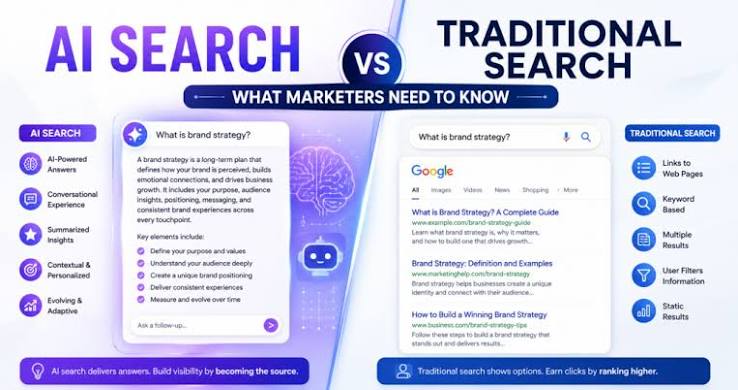
  • AI Search vs. Traditional Search: Which One Actually Serves You Better?

    AI Search vs. Traditional Search: Which One Actually Serves You Better?

    When you need an answer, do you type keywords into Google, or do you ask ChatGPT? That choice shapes how you get information, how much you trust it, and how long it takes. Traditional search and AI search are fundamentally different experiences, and knowing the difference can save you time and frustration.

    For over two decades, traditional search has been the default: type a few words, scan a list of blue links, click, refine. But since late 2022, AI search has emerged as a serious alternative, offering direct answers and conversational follow-ups. By 2026, Gartner predicts traditional search volume will drop by 25% as AI chatbots take over more queries. Yet, each approach has clear strengths and weaknesses. This article breaks down the real user experience differences not the hype so you can choose the right tool for the task.

    The Core Difference: Links vs. Answers

    Traditional search is built around the SERP—the search engine results page. You enter keywords like “best budget laptop for video editing,” and Google returns a ranked list of blue links, with sponsored results at the top. The system is transparent: you see exactly which websites appear, and you can jump in and out of them. The trade-off is that you do the work—scanning, clicking, and comparing.

    AI search, on the other hand, uses retrieval-augmented generation (RAG) to pull content from the web and then synthesizes it into a direct answer. In Perplexity or ChatGPT, you can ask a full question in natural language: “What’s the best budget laptop for video editing in 2025?” The AI returns a concise, cited response that combines multiple sources. No need to click through a dozen tabs.

    That basic shift—from a list of options to a single answer—changes everything about the experience.

    Speed vs. Depth: The Time-to-Answer Trade-off

    AI search wins on raw speed. A well-formed query can produce a solid answer in seconds, with citations. For instance, ask ChatGPT “Summarize the key differences between OLED and QLED TVs,” and you’ll get a bulleted comparison immediately. Traditional search would require you to open multiple reviews and cross-reference specs yourself.

    But speed can come at the cost of depth. Traditional search exposes you to a diversity of perspectives, letting you serendipitously discover a niche blog or a critical review that an AI might have flattened. AI compresses information, which can be great for a quick overview, but it may also lose nuance or over-rely on a few popular sources.

    Consider this scenario: You need to find the official opening hours for a local museum. Traditional search gives you the museum’s website as the top result, and you click through to confirm. AI might also get it right, but if it hallucinates the hours, you could show up to a closed door. For time-sensitive, factual queries, traditional search’s direct access to the source is safer.

    Control and Refinement: Who’s in the Driver’s Seat?

    Traditional search puts you in control. You refine your query with precise keywords:
    – “best budget laptop for video editing” → “best budget laptop for video editing under $800” → “best budget laptop for video editing under $800 with 16GB RAM.”

    You see the URLs, and you can assess the credibility of each source. The process is iterative, and you always know why a result appeared.

    AI search, by contrast, uses conversational context to remember your previous questions. You can say, “What about under $800?” and the AI knows you’re still talking about laptops. This is a huge advantage for multi-step research. But it also requires prompt engineering—you have to learn how to phrase questions clearly to get the best results. Vague questions can lead to broad or useless answers.

    For users who struggle with keyword formulation—non-native speakers, people with low literacy, or those with disabilities—AI’s natural language interface is a game-changer. It removes the barrier of guessing the “right” words.

    Trust: Sources vs. Citations

    Traditional search is transparent about its sources. You see the domain, the snippet, and the page rank. You can judge whether a result comes from a reputable news outlet or a random blog. The system doesn’t “make up” information—it only surfaces what exists.

    AI search relies on source citation and the model’s confidence. Perplexity and ChatGPT show numbered references, which is a step in the right direction. But AI can still hallucinate—confidently generate false information, especially on niche topics or recent events. A 2024 study found that AI Overviews in Google returned incorrect information for 27% of queries tested. That’s a trust risk you don’t have with traditional search.

    However, AI’s synthesis can also be more useful for complex questions. For “Explain the differences between Keynesian and supply-side economics,” an AI can generate a coherent summary that weaves together multiple sources, while traditional search gives you links to Wikipedia, Investopedia, and a few academic papers—leaving you to do the synthesis.

    The Hybrid Reality: Most People Use Both

    The truth is, most users aren’t choosing one over the other. They use both, depending on the task:

    • AI for synthesis: “Summarize this article,” “Compare these two products,” “Explain this concept.”
    • Traditional for verification: Checking official sites, local hours, shopping, and breaking news.
    • Traditional for serendipity: When you want to explore broadly and stumble upon unexpected sources.
    • AI for follow-ups: When you need to drill down on a topic through a conversation.

    A 2025 survey found that 70% of users who tried AI search still used traditional search for at least half of their queries. The key is matching the tool to the job.

    The Skeptical View: Echo Chambers, Ads, and Privacy

    AI search isn’t without its critics. Three main concerns stand out:

    1. Echo chamber risk: Because AI models are trained on popular web content, they may over-represent mainstream perspectives and under-represent fringe or minority viewpoints. Traditional search, for all its flaws, at least shows you a messy, diverse web.
    2. Ad creep: AI search is already monetizing. Perplexity has introduced sponsored follow-up questions, and Google AI Overviews include ads. This could eventually replicate the same ad-driven biases that plague traditional search.
    3. Privacy: Conversational AI retains your query history and context to provide continuity. That’s a privacy trade-off compared to traditional search, where you can browse anonymously or use incognito mode.

    These issues don’t mean AI search is bad—they mean you should be aware of the costs.

    What the Data Says About the Shift

    Gartner’s prediction of a 25% drop in traditional search volume by 2026 is a big deal. It’s driven by younger users: Gen Z already prefers TikTok and AI chat for discovery. But the shift isn’t a complete replacement. Traditional search remains dominant for transactional and local queries—the stuff of daily life.

    For now, the best strategy is to be bilingual in search. Use AI when you need a fast, synthesized answer. Switch to traditional when you need to verify, explore, or find a specific website. The user experience is no longer about one search box—it’s about choosing the right tool for the right moment.

    AI search and traditional search are not enemies—they’re different tools for different jobs. AI is faster and more conversational, but it can hallucinate. Traditional search is transparent and reliable, but it’s slower and requires more effort. The smartest approach is to use both, matching the tool to the task. As AI improves and becomes more integrated, the line will blur, but your role as a savvy user is to stay in control of how you seek information.

    Summary

    • AI search provides direct, synthesized answers via natural language, saving time but risking hallucinations.
    • Traditional search offers transparent, source-visible results, giving users control but requiring more manual effort.
    • Hybrid usage is common: AI for synthesis and traditional for verification, local queries, and shopping.
    • Trust and privacy are key trade-offs: AI relies on citations, while traditional search shows raw URLs; AI retains conversational context, while traditional allows anonymous browsing.
    • Task-dependent choice is the smart strategy: use AI for quick explanations and comparisons, traditional for official sources and breaking news.

    FAQ

    Q: Is AI search faster than traditional search?
    A: Yes, for simple factual queries or summaries. AI compresses multiple sources into a single answer, while traditional search requires clicking through links. However, for complex or time-sensitive queries, traditional search may be faster because you can directly access the source.

    Q: Can AI search be trusted for accurate information?
    A: It depends. AI is generally reliable for general knowledge, but it can hallucinate on niche topics or recent events. Traditional search, by showing you the actual sources, allows you to verify accuracy yourself. Always cross-check AI answers for health, financial, or legal advice.

    Q: Will traditional search disappear?
    A: No, but it will decline. Gartner predicts a 25% drop in traditional search volume by 2026 as AI chatbots take over more queries. Traditional search will likely remain dominant for transactional and local searches, like buying products or finding store hours.

    Q: Is using AI search private?
    A: Less so than traditional search. Conversational AI retains your query history and context to provide follow-up answers. If privacy is a concern, use incognito mode or a traditional search engine like DuckDuckGo for sensitive queries.

    Q: How can I get the best results from AI search?
    A: Be specific and use natural language. Instead of typing “best laptop,” ask “What is the best budget laptop for video editing in 2025?” You can also refine with follow-up questions like “What about under $800?”—the AI remembers context and adjusts its answers.

  • How to Talk to an AI Assistant: A Practical Guide to Better Prompts

    How to Talk to an AI Assistant: A Practical Guide to Better Prompts

    You’ve probably asked an AI assistant a question and gotten a vague, rambling, or just plain wrong answer. It’s not necessarily your fault but it might be your prompt. The difference between a generic reply and a spot-on response often comes down to how you phrase your request.

    This guide turns the art of prompting into a set of practical, evidence-backed techniques. Whether you’re using ChatGPT, Claude, or Gemini, these strategies will help you get more accurate, relevant, and useful answers whether you’re writing an email, debugging code, or brainstorming ideas.

    What Actually Happens When You Type a Prompt?

    Before we get to the tips, it helps to understand what the AI is doing. Large language models (LLMs) like GPT-4 are statistical text predictors. They don’t query a database of facts; they generate the most likely next word based on patterns in their training data. That means the quality of your output depends heavily on the clarity and specificity of your input.

    There’s also no memory beyond the current conversation window (which varies from model to model, typically 8,000 to 200,000 tokens). And they can hallucinate—confidently produce false information—especially on niche topics. Keeping these quirks in mind will make you a more effective prompter.

    The Core Techniques That Actually Work

    1. Be Specific and Detailed

    Vague prompts produce vague answers. Instead of “Tell me about marketing,” try “Explain the key differences between inbound and outbound marketing for a small business owner with a limited budget.” Adding context—who the audience is, what format you want, any constraints—dramatically improves the response.

    Example:
    – Weak: “Write a poem about the ocean.”
    – Strong: “Write a haiku about the ocean at sunset, using vivid sensory language.”

    2. Provide Examples (Few-Shot Prompting)

    Showing the model 1–3 examples of what you want is one of the most reliable ways to get the right format and tone. This is called few-shot prompting.

    Example: If you want a summary in a specific style, give one:

    “Summarize the following article in three bullet points, each under 50 words. Example: [insert example]. Now do this for: [your text]”

    3. Use Role-Playing or Personas

    Asking the AI to “act as” an expert changes the depth and structure of the response. This works because it nudges the model toward certain vocabulary, tone, and levels of detail.

    Example:
    – Instead of: “Give me tips for negotiating a salary.”
    – Try: “Act as a career coach with 20 years of experience. Provide a step-by-step strategy for negotiating a salary at a tech startup.”

    4. Break Complex Tasks into Steps (Chain-of-Thought)

    For logic, math, or multi-step problems, ask the model to “think step by step” or “explain your reasoning.” This often improves accuracy because it forces the model to work through the problem incrementally.

    Example:
    – Weak: “Solve this: 15% of 240 plus 8.”
    – Strong: “Solve this step by step: First, calculate 15% of 240. Then add 8 to the result. Show each step.”

    5. Iterate and Refine

    Don’t expect a perfect answer the first time. Treat prompting as a conversation: ask follow-ups, correct errors, and rephrase. The best results often come from two or three exchanges.

    Example:
    – First prompt: “Draft a thank-you email to my team.”
    – Follow-up: “Make it more casual and add a specific mention of the project we just finished.”

    6. Specify Output Format

    If you want a table, a list, JSON, or a specific word count, say so. This controls the structure and makes the output usable.

    Example: “List the pros and cons of electric cars in a table with columns: Pro, Con, Explanation.”

    Beyond the Basics: Advanced Prompting Strategies

    Use System Prompts (If You Have Access)

    In many AI tools (especially via APIs), you can set a system prompt that defines the assistant’s behavior for the entire conversation. For example: “You are a concise, helpful assistant that always cites sources.” This is a powerful way to set expectations.

    A/B Test Your Prompts

    Because LLMs are sensitive to wording, small changes can flip an answer from wrong to right. If you’re not getting what you want, try rewording the same request in a couple of different ways and compare the outputs.

    Know Your Model’s Strengths

    Different models have different quirks. For instance, Claude is known for handling long contexts well, while ChatGPT’s code interpreter excels at data analysis. Tailor your prompts to leverage these strengths.

    Common Pitfalls to Avoid

    • Being too vague: “Tell me about history” will get you a generic overview. Narrow it down.
    • Overloading the prompt: Too many requirements can confuse the model. Prioritize what matters most.
    • Ignoring hallucinations: Always fact-check critical information, especially for medical, legal, or financial topics.
    • Giving up after one try: One poor answer doesn’t mean the AI is useless—it means you need to refine your prompt.

    Why Prompting Matters More Than Ever

    As AI tools become ubiquitous, prompting is turning into a job skill. Companies now hire prompt engineers, and online courses have proliferated. But you don’t need a certification to benefit. Start applying these techniques today, and you’ll see a noticeable difference in the quality of your AI interactions.

    One caveat: Some researchers argue that future models will be robust to poorly worded prompts, making these skills less critical. Others see prompting as a durable literacy, like learning to search effectively on Google. Either way, knowing how to communicate your intent clearly is a useful skill right now.

    A Quick Reference Cheat Sheet

    • Vague prompt? Add context: audience, format, constraints.
    • Need a specific format? Show an example or ask for a table/list/JSON.
    • Complex problem? Ask for step-by-step reasoning.
    • Wrong tone? Use a persona: “Act as…”
    • Not satisfied? Iterate—don’t start over.

    Talking to an AI assistant is a skill, and like any skill, it improves with practice. Start by being more specific, providing examples, and breaking tasks into steps. Treat each interaction as a conversation, and don’t be afraid to refine your prompts based on the responses you get. With these techniques, you’ll be getting better answers in no time.

    Summary

    • Be specific: Vague prompts lead to vague answers; add context and constraints.
    • Use examples: Few-shot prompting helps the model match your desired format and style.
    • Break down complex tasks: Ask for step-by-step reasoning to improve accuracy.
    • Iterate: Treat prompting as a conversation; refine based on responses.
    • Specify output format: Request tables, lists, or JSON for structured results.

    FAQ

    Q: Why does my AI give different answers to the same question?
    A: LLMs are stochastic—they generate the most likely next token, and slight variations in wording or random sampling can produce different outputs. This is normal. If you need consistency, try rephrasing your prompt to be more specific or using a lower ‘temperature’ setting if available.

    Q: How do I get the AI to stop being too verbose?
    A: Explicitly request a concise answer. For example: ‘Answer in 3 bullet points, each under 50 words.’ Or use a persona: ‘Act as a concise editor and summarize…’

    Q: Can I trust the AI’s facts?
    A: No, not always. LLMs can hallucinate—make up plausible-sounding but false information. Always verify critical facts, especially for medical, legal, or financial topics.

    Q: What if my prompt still doesn’t get the right answer?
    A: Try rephrasing, adding more context, or breaking the task into smaller parts. Also consider that the model may not have enough information—provide any missing details.

    Q: How long can my prompt be?
    A: It depends on the model’s context window, which ranges from 8k to 200k tokens. In practice, keep prompts under a few thousand words for best results. If you have a long document, summarize it first or use chunking techniques.

  • How AI Could Pay Publishers Back: Licensing, Lawsuits, and the Future of Content Compensation

    How AI Could Pay Publishers Back: Licensing, Lawsuits, and the Future of Content Compensation

    Every time you ask ChatGPT a question, there’s a chance it’s drawing on an article written by a journalist who won’t see a cent for that use. Generative AI models were trained on vast swaths of the open web, including copyrighted news, books, and essays. Publishers argue they deserve compensation; AI companies claim fair use. The result is a legal and economic standoff that will shape the future of digital content.

    But money is already moving. OpenAI has signed licensing deals with major publishers like News Corp and Axel Springer. Google pays French publishers under neighboring rights. Perplexity shares ad revenue. These early arrangements offer a glimpse of what ‘giving back’ might look like—and who gets left out.

    The Core Problem: Your Content Trained the Model

    Generative AI models are built on web crawls like Common Crawl, which contains billions of pages. News articles, blog posts, and book excerpts form a significant chunk of that data. The models don’t store exact copies, but they learn patterns, facts, and styles from the text. This is where the trouble starts.

    Publishers see this as unauthorized use of their property. AI companies call it transformative fair use. The U.S. Copyright Office hasn’t settled it, and the courts are only beginning to weigh in. The most closely watched case is The New York Times’ lawsuit against OpenAI and Microsoft, filed in December 2023. The Times alleges ‘massive copyright infringement’ and seeks billions in damages. OpenAI says the claim is ‘without merit.’ The outcome will likely set the rules for everyone else.

    The Compensation Models Already in Play

    While lawsuits drag on, some publishers have cut deals. These fall into three broad categories:

    • Licensing agreements: OpenAI has signed multi-year deals with Axel Springer, the Associated Press, News Corp, and Le Monde. Google has similar arrangements with French publishers under the EU’s neighboring rights law. These are typically flat fees or annual payments for access to content.
    • Revenue sharing: Perplexity, an AI search engine, launched a publisher program that shares a portion of ad revenue when its chatbot cites a source. It’s an experiment, but one that directly links compensation to usage.
    • One-time payments: Some smaller outlets have accepted flat fees for content use, though the amounts are often undisclosed and rarely recurring.

    Still, the vast majority of publishers and independent creators receive nothing. The deals are selective, favoring big names with legal teams and bargaining power.

    Why the ‘Value Gap’ Matters

    The real conflict isn’t just about unpaid training data. It’s about what happens after. AI tools like ChatGPT and Perplexity can answer a user’s question directly, without sending them to the publisher’s website. That means fewer page views, less ad revenue, and fewer subscriptions. Publishers call this the ‘value gap.’

    AI companies counter that citations drive traffic and that the impact is overstated. Studies are mixed. Some show a decline in referral traffic from search engines; others suggest AI tools can boost brand visibility. The uncertainty hasn’t cooled the rhetoric.

    Historical Precedents: Google Books and the Music Industry

    This isn’t the first time technology outpaced copyright law. Google Books scanned millions of books and showed snippets. The Authors Guild sued, but courts ruled it was fair use. AI companies cite that case as precedent.

    A closer parallel might be the music industry’s fight against Napster. After years of litigation, the industry shifted to licensed streaming—Spotify, Apple Music—which now generates billions in revenue. Some argue AI compensation will follow the same arc: disruption, litigation, then licensing. But the music industry had a central collection society (ASCAP, BMI) to manage royalties. Publishing has no such mechanism, making collective licensing harder.

    Regulatory Pressure and the EU’s Example

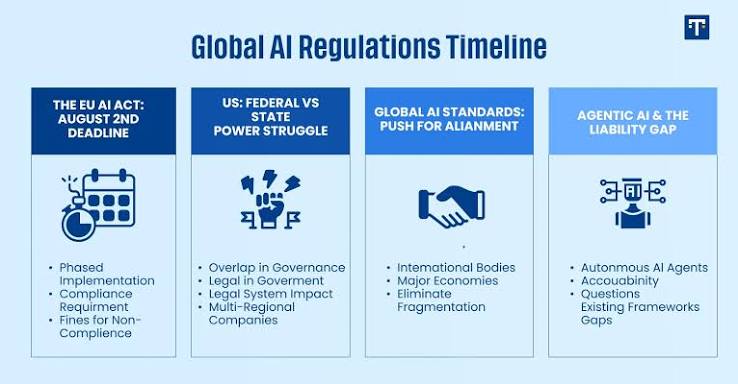
    The EU has moved further than the U.S. The 2019 Copyright Directive gave publishers ‘neighboring rights’—the right to be paid when their content is used online. The EU AI Act, passed in 2024, adds transparency requirements: AI companies must disclose what they train on. In practice, this has forced Google and others to negotiate with French publishers.

    The U.S. has no federal AI copyright law. The Copyright Office has issued reports but stopped short of recommending sweeping changes. State-level bills are emerging, but a patchwork of laws could create more confusion. The UK has proposed a ‘text and data mining’ exception that allows training unless publishers opt out—a model publishers strongly oppose, because it puts the burden on them.

    What Could ‘Giving Back’ Look Like?

    Beyond the current deals, several models are on the table:

    • Collective licensing: A central body (like a music rights society) that collects fees from AI companies and distributes them to publishers. The EU’s neighboring rights hint at this, but no equivalent exists in the U.S.
    • Pro-rata revenue sharing: AI companies could set aside a percentage of revenue to be split among publishers based on how often their content is cited or used in training. This would require new metrics and transparency.
    • Micro-payments and blockchain: Some startups propose per-use payments via blockchain, but adoption is low and the infrastructure is untested.
    • Bundled deals with platforms: Rather than individual contracts, publishers could negotiate collectively through trade associations. The News Media Alliance has proposed a similar approach.

    Each model has flaws. Collective licensing is slow to set up. Revenue sharing needs reliable tracking. Micro-payments may not scale. But the direction is clear: AI companies will have to pay for the content that powers them. The question is how much, and who gets to decide.

    The standoff between AI companies and publishers won’t be resolved by a single lawsuit or regulation. The most likely future is a messy hybrid: court rulings that chip away at fair use, licensing deals that expand beyond the biggest players, and new technologies that track content usage in real time. For independent creators, the outlook is less certain—they lack the leverage of a News Corp. But the principles are the same: if AI profits from human creativity, some of that value should flow back to the creators. How to make that fair, efficient, and scalable is the defining challenge of the AI era.

    Summary

    • The problem: AI models are trained on copyrighted content without compensation, sparking lawsuits like The New York Times v. OpenAI.
    • Existing models: Licensing deals (OpenAI with News Corp, Google with French publishers), revenue sharing (Perplexity), and one-time payments cover only a fraction of publishers.
    • The value gap: AI tools reduce traffic to publisher sites, threatening ad revenue and subscriptions.
    • Precedents: Google Books set a fair use precedent, but the music industry’s shift to licensed streaming suggests a similar path for publishing.
    • Future options: Collective licensing, pro-rata revenue sharing, and micro-payments are emerging ideas, but none is fully realized yet.

    FAQ

    Q: Is AI training on copyrighted content legal?
    A: It’s contested. AI companies argue fair use, while publishers say it’s infringement. The U.S. Copyright Office hasn’t ruled definitively, and the outcome of The New York Times v. OpenAI will be pivotal.

    Q: What does a typical licensing deal look like?
    A: Multi-year agreements with flat fees or annual payments for access to content. Examples include OpenAI’s deals with Axel Springer, the AP, and News Corp. Terms are usually confidential.

    Q: How can independent creators get compensated?
    A: Currently, they rarely do. Collective licensing or pro-rata revenue sharing could help, but no such system exists yet. Some startups are exploring micro-payments, but they’re not widespread.

    Q: Will AI tools really hurt publisher traffic?
    A: Evidence is mixed. Some studies show a decline in referral traffic, while others suggest AI can increase visibility. Publishers argue the impact is significant; AI companies say it’s overstated.

    Q: What is the EU doing differently?
    A: The EU’s 2019 Copyright Directive gives publishers neighboring rights, requiring compensation for online use. The EU AI Act adds transparency rules. This has led to licensing deals with Google in France.

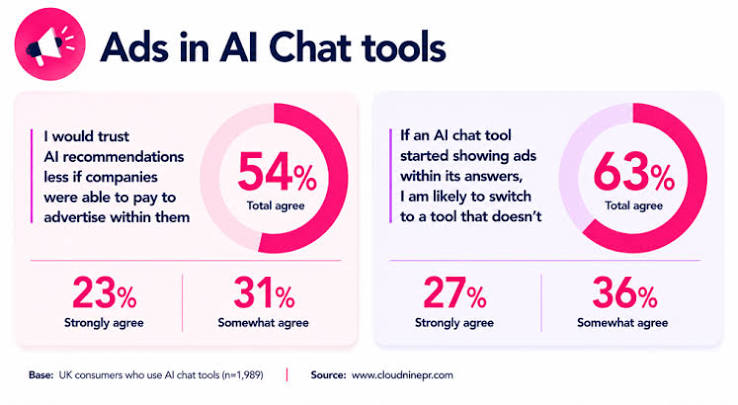
  • Why 48% of Consumers Trust AI Recommendations (and What the Other 52% Need)

    Why 48% of Consumers Trust AI Recommendations (and What the Other 52% Need)

    Nearly half of consumers say they would trust an AI to recommend products. That’s 48% — a figure that could reshape e-commerce, marketing, and the very nature of shopping. But what does that number actually mean? It’s not a blanket endorsement of AI. It’s a conditional, context-dependent trust that varies by product, platform, and person.

    This article unpacks the 48% statistic, explores why the other 52% remain skeptical, and looks at what it takes to build or break consumer trust in AI recommendations. From the evolution of recommendation engines to the rise of generative AI, we’ll examine the factors that drive trust and the pitfalls that erode it.

    The Anatomy of the 48%

    The 48% figure comes from a survey asking consumers if they’d trust an AI to recommend products. It’s a significant minority, but not a majority. To understand what this number really means, we need to look at the conditions under which trust is granted.

    Trust in AI is conditional. Consumers are more likely to trust AI for low-stakes, low-cost purchases — a book, a movie, a pair of socks — than for high-stakes ones like a car, a medical device, or financial advice. The stakes matter. A wrong book recommendation is a minor annoyance; a wrong car recommendation is a costly mistake.

    Context also plays a role. Trust in a recommendation algorithm embedded in a familiar platform (like Netflix or Amazon) may be higher than trust in a standalone AI chatbot. Consumers have years of experience with Netflix’s suggestions, many of which have been spot-on. That track record builds trust.

    From Invisible Algorithms to Visible AI

    Recommendation systems have been around since the 1990s, when Amazon introduced collaborative filtering — “customers who bought this also bought that.” These early algorithms were invisible, operating behind the scenes. Consumers didn’t think about them; they just saw suggestions.

    The rise of deep learning and neural networks in the 2010s made recommendations hyper-personalized, but still opaque. Netflix, Spotify, and TikTok use AI to serve content tailored to individual tastes, often with uncanny accuracy.

    The game changed in 2022 with generative AI. ChatGPT and similar tools made AI visible and conversational. Instead of passively receiving suggestions, consumers now ask an AI directly: “What should I buy for a camping trip?” This shift changes the trust calculus. When AI is a visible agent, consumers scrutinize it more.

    Why Do People Trust AI? The Key Drivers

    Research points to several factors that build trust in AI recommendations:

    • Transparency: When users understand why a recommendation was made, they trust it more. “Because you watched The Crown” is more persuasive than a mysterious algorithm.
    • Control: Giving users the ability to adjust, override, or dismiss AI suggestions increases trust. A recommendation is a suggestion, not a command.
    • Track record: Past accuracy builds trust. If an AI consistently recommends good books, you’ll trust it more over time.
    • Brand reputation: Trust in the platform hosting the AI transfers to the AI itself. If you trust Amazon, you’re more likely to trust Amazon’s AI.
    • Perceived stakes: As mentioned, low-risk items generate higher trust. You’ll let AI pick a movie, but not a surgeon.

    Why Do the Other 52% Say No?

    Skepticism is not irrational. The “black box” problem is real: consumers can’t see how AI arrives at its recommendations. This opacity breeds distrust. Here are the main concerns:

    • Manipulation: AI may be optimized for seller profit, not consumer benefit. If a recommendation serves the retailer’s bottom line more than your needs, it’s not trustworthy.
    • Bias: Algorithms trained on historical data can perpetuate existing biases — racial, gender, or socioeconomic. This can lead to unfair or discriminatory recommendations.
    • Privacy: Recommendations require vast amounts of personal data. Many consumers are uncomfortable with the surveillance required to power these systems.

    These are legitimate concerns, and they explain why a majority of consumers remain wary.

    The Generational and Cultural Divide

    Trust in AI is not monolithic. Younger consumers (18–34) grew up with algorithmic feeds and are generally more trusting of AI. Older consumers (55+) often prefer human judgment and established brands. The 48% figure likely skews younger and more digitally native.

    Culture also matters. Research shows that trust in AI varies by country — higher in East Asia, lower in parts of Europe and North America. Collectivist cultures may value “what people like me buy,” while individualist cultures want “what’s best for me.” These differences shape how recommendations are received.

    The Optimistic and Skeptical Views

    The Optimistic View: AI as a Trusted Advisor

    AI can process far more data than any human, leading to better, more personalized recommendations. In niche categories — indie music, obscure books, specialized gear — AI often outperforms human curators. As AI becomes more explainable (the field of XAI), trust is likely to increase.

    The Skeptical View: The Black Box Problem

    Consumers cannot verify how AI arrives at recommendations, creating an inherent trust deficit. The 52% majority likely includes those who fear manipulation or loss of autonomy. They want to know: Is this AI working for me, or for the seller?

    What Does This Mean for Businesses?

    For retailers and platforms, the 48% figure represents a huge opportunity. AI-driven recommendations already drive an estimated 35% of Amazon’s revenue. But to win over the skeptical majority, businesses must address the trust deficit.

    Transparency is key. Explain why a recommendation was made. Give users control — let them tune the AI’s parameters or opt out entirely. Build a track record of accurate, beneficial recommendations. And above all, ensure the AI is aligned with the consumer’s interests, not just the seller’s.

    Regulation is also coming. The EU AI Act (2024) and similar frameworks mandate transparency in AI-driven decisions, including recommendations. Businesses that embrace transparency now will be ahead of the curve.

    The Future of Trust in AI Recommendations

    As AI becomes more explainable and consumers gain more control, trust is likely to grow. The 48% may become 60% or 70% over time. But trust is fragile. One high-profile failure — a harmful recommendation, a privacy breach — could set back progress significantly.

    The path forward is clear: build AI that is transparent, controllable, and genuinely beneficial. The 48% are ready to trust; the 52% are waiting for a reason to.

    The 48% figure is a starting point, not a finish line. It shows that a substantial portion of consumers are open to AI-driven recommendations, but trust is conditional and easily lost. For businesses, the message is simple: earn trust through transparency, control, and alignment with consumer interests. For consumers, the message is equally clear: AI can be a powerful tool, but it’s up to you to decide when to trust it.

    Summary

    • 48% of consumers trust AI to recommend products, but trust is conditional and context-dependent.
    • Trust is higher for low-stakes, low-cost purchases and on familiar platforms with a good track record.
    • Key trust drivers: transparency, control, track record, brand reputation, and perceived stakes.
    • The skeptical 52% worry about manipulation, bias, and privacy.
    • Younger and more digitally native consumers are more trusting; cultural and geographic factors also play a role.
    • Businesses can build trust by being transparent, giving users control, and aligning AI with consumer interests.

    FAQ

    Q: Does the 48% trust statistic mean nearly half of consumers will buy anything an AI recommends?
    A: No. The statistic reflects conditional trust — consumers may trust AI for some products but not others, and trust doesn’t always translate to purchase behavior. People might say they trust AI but still rely on human reviews or friends.

    Q: What kinds of AI recommendations are included in this statistic?
    A: The statistic covers product recommendations specifically (e.g., retail, e-commerce), not high-stakes decisions like medical, financial, or legal advice. Trust is generally higher for low-risk purchases.

    Q: Why are younger consumers more trusting of AI recommendations?
    A: Younger consumers (18–34) grew up with algorithmic feeds on platforms like Netflix and Spotify, so they’re more familiar with AI-driven suggestions and have seen them work well over time.

    Q: Can AI recommendations be biased?
    A: Yes. Algorithms trained on historical data can perpetuate existing biases, leading to unfair or discriminatory recommendations. This is one of the key concerns raised by skeptics.

    Q: What can companies do to increase trust in their AI recommendations?
    A: Companies can build trust by being transparent about how recommendations are made, giving users control to adjust or opt out, maintaining a good track record, and ensuring the AI is aligned with consumer interests rather than just seller profits.

  • Can You Really Tell If Text Was Written by AI? The Truth About Detectors

    Can You Really Tell If Text Was Written by AI? The Truth About Detectors

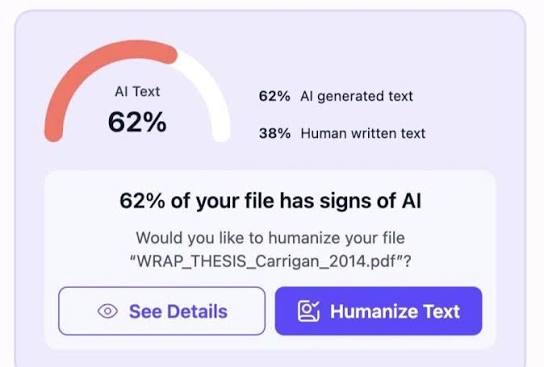
    Since ChatGPT launched in November 2022, a new question has crept into our digital lives: “Is this AI-written?” Whether you’re a teacher grading essays, a recruiter reading cover letters, or just someone scrolling through social media, you’ve probably wondered which parts of the internet were crafted by a human and which were generated by a machine. Google searches for “AI detector” and “how to tell if text is AI-generated” have skyrocketed, and a whole industry of detection tools has sprung up to answer the call. But here’s the uncomfortable truth: these detectors are far from perfect, and the race to catch AI-generated text is more complicated than it seems.

    The Surge in AI Detection Searches

    Interest in AI detection exploded right after ChatGPT went public. Before November 2022, almost nobody was searching for “AI detector.” Now, millions of people are trying to figure out if the text they’re reading or writing is machine-made. This interest has stayed high, with spikes whenever a new AI model like GPT-4 or Gemini hits the market.

    Why the sudden concern? Because AI-generated content has flooded the internet. From blog posts and product reviews to academic papers and news articles, machines are now writing at scale. This has created what some call an “authenticity crisis”: we can no longer assume that words were written by a human. That matters for trust in journalism, fairness in education, and even personal communication like dating profiles and emails.

    How Do AI Detectors Actually Work?

    Most detectors rely on two main signals: perplexity and burstiness. Perplexity measures how “surprised” a language model is by a piece of text. AI-generated text tends to be more predictable, so it has lower perplexity. Burstiness looks at variation in sentence length and structure. Humans naturally mix long and short sentences, while AI text tends to be more uniform.

    Some newer tools use watermarking, which involves embedding invisible statistical patterns in AI output. But that only works if the AI provider cooperates, and it’s not widely deployed yet.

    The Problem: Detectors Are Not Reliable

    Here’s the catch: no AI detector is definitively reliable. OpenAI itself shut down its AI Classifier in July 2023, admitting it had a “low rate of accuracy.” Independent studies have found that detectors frequently misclassify non-native English writing as AI-generated. This has real consequences. Students have been falsely accused of cheating, and freelance writers have lost clients because a detector flagged their human-written work.

    The tools claim accuracy rates of 80–99%, but those numbers are contested. In practice, the results can be wildly inconsistent. A text that one detector flags as AI-written might be cleared by another. And as AI models improve, they get better at mimicking human quirks, making detection even harder.

    The Arms Race Between Detectors and AI

    This is a cat-and-mouse game. As detectors get better, AI models are trained to produce more “human-like” text. Users also use paraphrasing tools to evade detection. It’s a continuous loop: one side builds a better trap, the other side finds a way around it.

    Some researchers argue that reliable detection is fundamentally impossible in the long run. As models improve, AI text will become indistinguishable from human text. They advocate for a shift from detection to provenance—cryptographic signing of human-authored content. That way, you could verify a human wrote something, rather than trying to guess if a machine did.

    Who’s Searching, and Why?

    Different groups search for AI detection for different reasons:

    • Students and educators: Teachers want to catch AI-generated essays; students want to avoid false accusations.
    • Employers and recruiters: They check whether cover letters or resumes were AI-written.
    • Content consumers: People want to know if news articles, reviews, or social media posts are machine-made.
    • Writers and creators: They self-check their own work to make sure it passes filters, especially for SEO or academic submission.

    The Educator’s Dilemma

    Teachers and professors are on the front lines. Many see AI detection as a necessary tool to preserve academic integrity. But false positives are a major frustration. Students who write in a straightforward, formulaic style—especially non-native English speakers—are often flagged as AI, even when their work is entirely human.

    Some educators argue that detection is the wrong approach entirely. They say education should adapt to an AI world by emphasizing the process over the product: in-class writing, oral defenses, and project-based assessments. This might be a more sustainable solution than an endless technological arms race.

    The Student’s Double Bind

    Students face a tough situation. Many use AI as a legitimate learning tool—for brainstorming, outlining, or grammar checking. But they fear being falsely accused of cheating. Some report being forced to “prove” their humanity, which is an absurd burden to place on a student.

    Non-native English speakers are disproportionately affected. Their natural writing style often triggers false positives, which is deeply unfair. Imagine writing an essay in a second language, only to be told it’s too “robot-like” to be human.

    The Writer’s Burden of Proof

    Freelance writers and journalists are also caught in the crossfire. Clients increasingly ask them to run their work through AI detectors, even when the work is entirely human-written. This creates a burden of proof and can lead to lost income if a detector falsely flags their work. It’s a strange world where a human has to prove they’re not a machine.

    Platform Responses: Labeling and Enforcement

    Major platforms like Google, Meta, and TikTok have started requiring or encouraging AI-content labeling. But enforcement and detection remain inconsistent. Google has said it will penalize “scaled content abuse,” meaning mass-produced AI content that manipulates search rankings. But distinguishing between helpful AI-assisted writing and spam is tricky.

    As AI-generated content becomes more common, platforms will need clearer policies. But given the unreliability of detectors, any automated enforcement will likely have false positives and negatives.

    What Should You Do?

    If you’re trying to decide whether a piece of text is AI-written, here’s some practical advice:

    • Don’t rely solely on detectors. Use them as one signal, not the final word.
    • Look for context clues. Is the text unusually uniform in tone? Does it lack personal anecdotes or specific examples? These can be hints, but they’re not definitive.
    • Consider the source. If the content comes from a known AI-heavy site, it’s more likely AI-written.
    • When in doubt, ask. If you’re an educator, have a conversation with the student. If you’re a recruiter, talk to the candidate. A human conversation can reveal authenticity better than any algorithm.

    The Future: Detection vs. Provenance

    The AI detection industry is booming, but its future is uncertain. As AI models get better, detectors will struggle to keep up. The most promising long-term solution might be provenance: a way to cryptographically sign human-authored content, so we can verify origin rather than guess.

    For now, the honest answer to “Can you tell if text was written by AI?” is: sometimes, but not reliably. The tools are improving, but they’re not perfect. And as the arms race continues, the question itself might become obsolete.

    The surge in searches for “is this AI-written” reflects a real shift in how we consume and produce text. AI detectors are helpful tools, but they’re not infallible. The best approach is to use them with caution, combine them with human judgment, and push for broader solutions like provenance. As AI becomes even more integrated into our lives, the ability to navigate this new landscape with critical thinking will matter more than any single detection tool.

    Summary

    • Google searches for AI detection terms have surged since ChatGPT’s release, with interest remaining high.
    • Detectors use perplexity and burstiness to identify AI text, but these methods are unreliable and often produce false positives.
    • OpenAI shut down its own AI Classifier due to low accuracy, and studies show detectors disproportionately flag non-native English writing.
    • Different groups—educators, students, employers, writers—use detectors for various reasons, but many face unfair consequences from false positives.
    • The long-term solution may be provenance (cryptographic signing) rather than detection, but for now, we must use detectors with caution.

    FAQ

    Q: How accurate are AI detectors?
    A: Most detectors claim 80–99% accuracy, but these claims are contested. Independent studies have found significant error rates, especially for non-native English speakers. OpenAI’s own classifier was shut down due to low accuracy.

    Q: Can I get falsely accused of using AI?
    A: Yes. Many students and writers have been falsely flagged by detectors. False positives are a known issue, particularly for text that is clear, formulaic, or written by non-native speakers.

    Q: What’s the difference between perplexity and burstiness?
    A: Perplexity measures how predictable the text is to a language model. Burstiness measures variation in sentence length and structure. AI text tends to have lower perplexity and burstiness than human writing.

    Q: Will AI detectors ever be perfect?
    A: Many researchers doubt it. As AI models improve, they become better at mimicking human writing. Some argue that reliable detection is impossible in the long run, and we should focus on provenance instead.

    Q: What should I do if my work is flagged as AI?
    A: If you wrote the text yourself, you can explain the context, show drafts or notes, and discuss your process. Tools like history logs or timestamps can also help prove authorship.

  • What Does an AI Search Query Really Cost?

    What Does an AI Search Query Really Cost?

    Every time you ask ChatGPT a question or let Perplexity dig through the web, you’re not just typing a query you’re renting a slice of a data center. The bill for that rental is paid somewhere, by someone, and it’s a lot higher than the cost of a traditional Google search. But exactly how much? The answer depends on which model you’re using, how long your prompt is, and whether you’re paying per token or a flat monthly fee. Here’s a breakdown of the real numbers behind AI search economics.

    The Price of a Single Query

    When you use a premium AI model like GPT-4o or Claude 3 Opus, the cost is calculated per token roughly four characters or 0.75 words. A typical query and response might consume between 1,000 and 5,000 tokens total. At GPT-4o pricing, which runs about $2.50 per million input tokens and $10 per million output tokens, a standard query might cost between $0.003 and $0.05. That’s less than a penny for a simple question, but it adds up. If you’re using a more powerful model like Claude 3 Opus with input at $15 per million tokens and output at $75 per million the same query could cost anywhere from $0.02 to $0.40. The variance is huge, and it’s driven by model choice and the length of your conversation.

    Why Subscriptions Make Sense (for Heavy Users)

    Most consumer AI tools charge a flat $20 per month for premium access. That’s the price for ChatGPT Plus, Claude Pro, Perplexity Pro, and Copilot Pro. For a light user who asks a few questions a day, that subscription might be more expensive than paying per query via an API. But for someone who makes 20 or more queries daily, the subscription is almost always cheaper. At $0.05 per query, 20 queries a day would cost $1 per day—$30 a month. So the $20 flat fee is a bargain for power users. The catch is that subscription services often impose rate limits, and they may not give you access to the absolute latest models. But for most people, the convenience and predictability of a subscription win out.

    The Hidden Costs of Free Tiers

    Free tiers exist, but they’re not really free. Providers like OpenAI and Google use them as loss leaders. When you use ChatGPT Free, you’re often getting a smaller, older model like GPT-3.5, and you’re subject to rate limits. The company absorbs the compute cost as customer acquisition spend, hoping you’ll eventually upgrade. Some free tiers are ad-supported, like Perplexity’s sponsored follow-up questions. But even with ads, the cost per query is still 10 to 100 times higher than traditional search. Google can serve a search ad for fractions of a cent, but an AI-generated answer requires GPU time that costs real money. That’s why the free tier experience is always more limited than the paid one.

    The Business Case for AI Search

    For enterprises, the calculus is different. If you’re building a product that uses AI search, you’re looking at API pricing, which scales with usage. But the raw API cost is just the beginning. The total cost of ownership includes integration, prompt engineering, fine-tuning, and human review—often three to five times the API cost. Instead of cost per query, businesses think in terms of cost per resolved ticket or cost per successful answer. A $0.10 AI query that replaces a task that would take a human five minutes is trivially cost-effective. The math changes when you’re dealing with millions of queries, but even then, AI can be cheaper than human labor for many tasks.

    What’s Driving Costs Down

    AI search is getting cheaper every year. Hardware improvements—like NVIDIA’s shift from H100 to B200 GPUs—have dramatically improved price-performance. Model distillation has created smaller models like GPT-4o mini and Claude 3 Haiku that deliver near-frontier quality at a fraction of the cost. Optimization techniques like FP8 inference, speculative decoding, and KV-cache caching reduce compute per query. And the competitive pressure between OpenAI, Anthropic, Google, and Meta has pushed API prices down 50 to 80 percent year-over-year for comparable capability. As costs fall, the economic barrier to AI search disappears, making it viable for more use cases.

    The Provider’s Dilemma

    For providers, consumer subscriptions are a tough business. Margins are thin or negative at $20 per month, especially when users are hammering the service with long, complex queries. Providers are betting on scale and future cost reductions to turn a profit. They’re also using a land-and-expand strategy: offer low API prices to attract developers, then monetize through higher-tier models, fine-tuning services, and enterprise contracts. Some are experimenting with advertising, like Bing’s hybrid search, but it’s unclear if ads can cover the compute costs. The bottom line is that AI search is expensive to run, and providers are still figuring out how to make it sustainable.

    The Bottom Line

    AI search costs more than traditional search, but the gap is closing. For consumers, a $20 monthly subscription is a reasonable price for unlimited access to a powerful tool. For businesses, the cost is justified when it replaces human labor or improves productivity. And for providers, the challenge is to keep costs low while maintaining quality. As hardware and software improve, the cost per query will continue to fall, making AI search increasingly accessible. So next time you get an answer from an AI, remember: it’s not magic, it’s math—and someone’s paying for it.

    The economics of AI search are still in flux, but the trend is clear: costs are falling, and adoption is rising. Whether you’re a casual user, a power user, or an enterprise developer, understanding the cost per query helps you make smarter choices about which tools to use and how to use them. As the technology matures, the cost gap between AI and traditional search will shrink, and AI search will become the default way we find information online.

    Summary

    • AI search queries cost between $0.003 and $0.40 each, depending on model and token usage.
    • Consumer subscriptions at $20/month are cost-effective for heavy users (20+ queries/day).
    • Free tiers use older models and rate limits to manage costs, often supported by ads or as loss leaders.
    • For businesses, total cost of ownership (including integration and review) can be 3–5x raw API costs.
    • Costs are falling due to hardware improvements, model distillation, and competitive pricing.

    FAQ

    Q: How much does a single AI search query cost?
    A: For typical queries using models like GPT-4o, the cost ranges from $0.003 to $0.05. With premium models like Claude 3 Opus, it can be $0.02 to $0.40.

    Q: Is a $20/month AI subscription worth it?
    A: For users who make 20 or more queries daily, yes—the subscription is cheaper than paying per query via API. For light users, a free tier or pay-as-you-go might be better.

    Q: Why are free AI search tiers limited?
    A: Free tiers use smaller or older models and enforce rate limits because each query consumes expensive GPU compute. Providers absorb costs as customer acquisition, hoping users will upgrade to paid plans.

    Q: What are the hidden costs for businesses using AI search?
    A: Beyond API fees, businesses face costs for integration, prompt engineering, fine-tuning, and human review—often totaling 3–5 times the raw API cost.

    Q: Are AI search costs decreasing?
    A: Yes, API prices have dropped 50–80% year-over-year due to hardware improvements, model distillation, and optimization techniques like caching and quantization.

  • Can AI Plan Your Dinner Party? The Rise of Agentic Assistants

    Can AI Plan Your Dinner Party? The Rise of Agentic Assistants

    Imagine asking your AI assistant to plan a dinner party for 8 and having it handle everything from menu design to grocery ordering. This isn’t science fiction—it’s the new frontier of AI, where assistants evolve from answering questions to executing multi-step tasks. But how close are we really to this reality, and what does it mean for your wallet? This article explores the current capabilities, limitations, and financial implications of using AI as a personal logistics manager.

    From Q&A to Action: The Agentic Shift

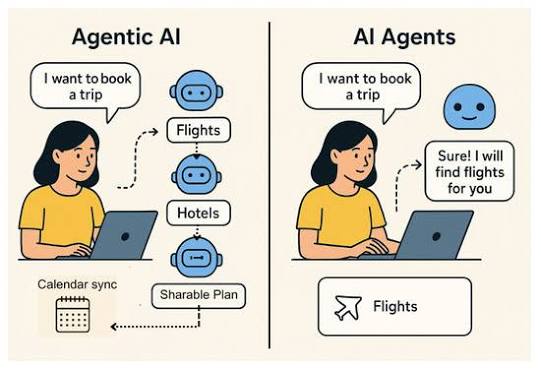
    For years, AI assistants like Siri and Alexa were limited to single commands—set a timer, play a song, check the weather. They were reactive, not proactive. Then came large language models like ChatGPT, which could hold conversations but still couldn’t do much beyond generating text. The latest evolution is “agentic AI”: systems that can plan, use tools, and execute multi-step workflows with human supervision. This shift turns AI from a passive oracle into an active coordinator.

    When you ask, “Can you help me plan a dinner party for 8?” an agentic AI doesn’t just spit out a recipe. It breaks the task into subtasks: define the menu, create a shopping list, set a budget, build a timeline, handle invitations. It remembers that your friend is vegan and that you only have $150 to spend. It can even connect to your calendar, a grocery delivery app, and a payment platform to move from planning to execution. The catch? Full autonomous execution remains limited—most systems require your approval at key steps, especially when money is involved.

    What AI Can Do Today: A Menu of Possibilities

    Let’s get concrete. As of 2025, mainstream AI assistants like ChatGPT with plugins, Google Gemini, and Claude with tools can perform several dinner-party tasks with varying degrees of autonomy:

    • Menu generation: Based on your preferences and dietary restrictions, AI can propose a three-course menu, complete with recipes and estimated costs.
    • Shopping list creation: It can generate a categorized list with quantities, and even check items off against what you already have.
    • Budget tracking: You can set a budget, and AI will tally costs as it builds the list, suggesting substitutions if you’re over (e.g., cheaper wine or seasonal vegetables).
    • Timeline building: AI can create a step-by-step schedule from days before to the event, factoring in prep times and when to buy fresh ingredients.
    • Invitation drafting: It can write polite invitation messages for you to review before sending.

    However, true execution—like actually ordering groceries or sending invites via APIs—is still in its infancy. Most tools will generate a list and ask you to click “buy,” or draft an email for you to hit “send.” The technology exists to automate these actions, but companies are cautious about letting AI spend money or contact people without explicit human confirmation.

    The Financial Angle: A Microcosm of Money Management

    Planning a dinner party is more than logistics—it’s a mini-exercise in personal finance. AI’s ability to handle this task is a gateway to broader financial planning. If you trust AI with a $150 dinner, could you trust it with your monthly budget? Let’s break down the financial capabilities:

    • Budget setting and tracking: AI can allocate funds across courses, track spending in real-time, and alert you if you’re about to overshoot.
    • Cost optimization: It might suggest buying generic brands, using in-season produce, or swapping expensive ingredients. One user reported that AI planned a dinner for 8 on a $120 budget, with a shopping list totaling $118.50—including a dessert they’d never have thought of.
    • Expense splitting: After the party, AI can calculate each guest’s share and even draft payment reminders. But it can’t actually process payments or access your bank account without your explicit authorization and oversight.

    The critical limitation is security. For AI to handle transactions, it needs access to payment platforms, which raises concerns about fraud and data breaches. Companies are implementing safeguards like spending caps and approval prompts, but the technology is not yet at a point where you’d hand over your credit card details without a second thought.

    The Skeptic’s View: When AI Gets It Wrong

    For all its promise, AI planning has real limitations that can hit your wallet or your social standing. Here are the main concerns:

    • Hallucinations and errors: AI might invent a recipe that doesn’t work, or suggest ingredients that are out of season or unavailable locally. This could lead to extra trips to the store or last-minute substitutions—costing both time and money.
    • Lack of sensory judgment: AI can’t taste food, smell a fish market, or know that your aunt hates cilantro unless you tell it. It relies entirely on the information you provide, which is often incomplete.
    • Sequential dependencies: A good plan knows you can’t buy fresh fish five days in advance. While AI can handle this in theory, it might miss nuances like the need to brine a turkey for 24 hours or that a specific cake needs to chill overnight.
    • Financial risk from miscalculation: If AI underestimates portion sizes, you’ll overspend on groceries. If it books a reservation and you can’t make it, you could face cancellation fees.

    These aren’t deal-breakers, but they mean you should always review AI’s suggestions before committing money or sending messages. The AI is a planner, not a guarantor.

    The Future: Agentic Commerce and Guardrails

    Looking ahead, dinner party planning is a stepping stone to “agentic commerce,” where AI negotiates prices, compares deals, and executes transactions on your behalf. For that to happen, we need a massive ecosystem of interconnected data—your calendar, grocery store inventory, payment methods, and guest preferences—all securely linked. That ecosystem doesn’t fully exist yet.

    When it does, we’ll need new “autonomous spending guardrails” to prevent AI from going rogue. Imagine setting a monthly spending cap, requiring approval for any purchase over $50, and having an audit trail of every transaction AI makes. These are the kinds of controls financial institutions and tech companies are exploring right now.

    Practical Takeaways: How to Use AI for Your Next Dinner Party

    If you’re curious to try AI planning today, here’s a responsible approach:

    1. Start with a budget and constraints. Tell the AI your guest count, dietary restrictions, and spending limit.
    2. Use it for drafts, not final decisions. Let AI generate a menu and shopping list, but review everything for accuracy and personal touches.
    3. Keep the human in the loop. Approve any purchases, and double-check that the AI hasn’t missed a key preference or ingredient.
    4. Track costs manually, too. Use the AI’s budget tracker as a guide, but cross-check with your own records to avoid surprises.

    By treating AI as a skilled assistant rather than an autopilot, you can save time and money while avoiding the pitfalls of blind trust.

    The ability of AI to plan a dinner party is a litmus test for its role in our daily lives. It shows how far we’ve come from simple voice commands to proactive problem-solving, and it hints at a future where AI manages complex logistics—including finances—on our behalf. But that future is not here yet. Today, AI can draft, suggest, and calculate, but it still needs you to pull the trigger. As the technology matures, the key will be finding the right balance between convenience and control, ensuring that AI amplifies your decision-making without overriding it.

    Summary

    • Agentic AI can break down complex tasks like dinner party planning into subtasks, use tools, and execute steps, but full autonomy is limited.
    • Current capabilities include menu generation, shopping lists, budget tracking, timelines, and invitations, but purchases and sends require human approval.
    • The financial angle is significant: AI can optimize costs, track budgets, and split expenses, but security concerns limit direct payment handling.
    • Skeptics worry about hallucinations, sensory limitations, and miscalculations leading to overspending or social blunders.
    • The future points to agentic commerce with guardrails like spending caps and approval workflows, but the ecosystem is not yet fully built.

    FAQ

    Q: Can AI actually order groceries for my dinner party?
    A: As of 2025, most AI assistants can generate a shopping list and link to grocery delivery services, but they typically require you to review and confirm the order before purchase. Full autonomous ordering without human approval is not yet mainstream due to security and error risks.

    Q: How does AI handle dietary restrictions?
    A: AI can incorporate dietary restrictions if you specify them (e.g., vegan, gluten-free). It will generate menus and shopping lists that exclude offending ingredients. However, it only knows what you tell it, so you must be explicit about all allergies and preferences.

    Q: Is AI budgeting for a dinner party reliable?
    A: AI can create a budget and track costs based on current prices from its training data or live web searches. It’s reliable for estimates, but prices can vary by location and time, so it’s wise to verify with actual store prices. AI can also suggest substitutions to stay within budget.

    Q: What are the risks of using AI for payment-related tasks?
    A: The main risks are data breaches and AI miscalculations. If AI has access to your payment information, a security flaw could expose it. Also, AI might make errors in amounts or timing, leading to overcharges or missed payments. Always review and approve any financial transactions.

    Q: Will AI replace the need for a human party planner?
    A: Not yet. AI can handle logistics, budgeting, and scheduling, but it lacks the personal touch and sensory judgment of a human planner. It can’t taste food or know your guests’ personalities. For now, AI is best used as a tool to assist human planners, not replace them.

  • Will AI Take Your Job? What the Data Really Shows

    Will AI Take Your Job? What the Data Really Shows

    The question “Can AI replace my job?” has become a persistent search query since ChatGPT launched in November 2022. Every new model release GPT-4, Claude 3, Gemini—triggers another wave of anxiety. But the answer is more nuanced than a simple yes or no.

    Economists, research firms like McKinsey and Goldman Sachs, and institutions like MIT and the OECD have studied this question extensively. Their consensus might surprise you: AI will transform far more jobs than it will outright eliminate. This article breaks down what the data actually shows, how automation works in practice, and what it means for your career.

    The Persistent Question

    The search volume for “Can AI replace my job?” doesn’t spike once—it surges repeatedly. Google Trends shows sustained high interest, not a one-time blip. Each major AI release reignites the fear. This isn’t just about technology; it’s about economic anxiety. When layoffs hit the tech sector in 2023 and 2024, searches went up. When inflation worries people, they look for threats to their livelihood.

    But here’s the key insight from current research: AI automates tasks, not occupations. Most jobs are bundles of tasks, and typically only 20–40% of those tasks are automatable. Rarely is the entire job automatable.

    The ATM and the Bank Teller: A Helpful Analogy

    When ATMs were introduced in the 1970s, everyone predicted bank tellers would vanish. Instead, the opposite happened. Teller numbers actually rose for a decade after ATMs became common. Why? Because ATMs handled cash dispensing, tellers shifted to customer service, opening accounts, and solving problems. The job changed, but it didn’t disappear.

    Similarly, spreadsheet software didn’t eliminate accountants. It freed them from manual calculation and shifted their work toward analysis and strategic advice. The pattern is consistent: technology removes drudgery, and humans move to more complex, interpersonal, or creative work.

    The Numbers: How Many Jobs Are Actually at Risk?

    A widely cited 2013 Oxford study claimed 47% of US jobs were at “high risk” of automation. That study created a lasting narrative of fear. But later research by the OECD and MIT found that figure overstated the risk. The study conflated “automation possible” with “automation likely.” In reality, even in high-exposure occupations, only a fraction of tasks are fully automatable with current technology.

    Goldman Sachs estimated that generative AI could affect 300 million full-time jobs globally—but “affected” is not “eliminated.” Most roles will see partial automation of tasks, not wholesale replacement. For example, a lawyer might use AI to draft initial contracts, but they still review, negotiate, and advise. A copywriter might use AI for first drafts, but they still provide strategy, voice, and final polish.

    What the Actual Data Shows So Far

    As of 2024–2025, AI-driven layoffs remain modest. There are a few notable examples—some customer service and translation roles, certain content production jobs—but mass displacement hasn’t materialized. Companies report using AI to augment workers, not replace them. A McKinsey survey found that most organizations using generative AI expect it to change job roles rather than eliminate them.

    This is not to dismiss the anxiety. The impact is real, and it’s concentrated in white-collar work. Unlike previous automation waves that hit manufacturing, generative AI targets office, clerical, legal, and creative tasks. Data entry, basic copywriting, first-draft legal work, and translation are most exposed. If your job consists largely of routine cognitive tasks, you’re on the front line.

    The Two Camps: Augmentation vs. Replacement

    Economists largely fall into two camps. The augmentation camp—the majority—sees AI as a productivity tool. Like the calculator for mathematicians, it makes workers more valuable, not less. The replacement camp—some technologists and labor economists—argues that this time is different. AI can reason and create, and the pace of improvement is unprecedented. Entry-level writing, basic coding, and routine customer service may genuinely shrink.

    Both camps have valid points. The question is not whether AI will change jobs—it will—but whether the pace of change gives workers time to adapt. Historically, transitions took decades. The internet created new roles like social media manager and SEO specialist, but that took years. AI is moving faster, and some workers may not have time to reskill.

    What Actually Happens to Your Job

    Let’s look at a concrete example. A customer service representative spends their day answering common questions, resolving issues, and escalating complex problems. AI chatbots can handle the first two tasks. But the tricky issues—angry customers, nuanced problems, emotional conversations—still need a human. The job shifts from repetitive answering to more complex problem-solving. It doesn’t disappear; it gets harder and more valuable.

    Similarly, a translator might use AI for a first draft, then refine it. A junior lawyer might use AI to review documents, then focus on strategy. A graphic designer might use AI to generate concepts, then polish and customize. In each case, the worker becomes more productive, not obsolete.

    The Psychological Question

    The question “Will AI replace my job?” is often less about economics and more about identity. People define themselves by their work. “Will I still matter?” is the real fear. This is a legitimate concern, but it’s also part of a historical pattern. Every major technological shift—mechanization, electricity, computers—triggered the same anxiety. Yet humans have always adapted.

    What You Can Do About It

    If your job involves routine cognitive tasks, the smart move is to learn how to use AI tools to augment your work. This is the “augmentation” strategy. Instead of fearing the technology, become the person who knows how to use it well. That’s the new skill set: AI literacy, prompt engineering, and knowing when to trust AI output.

    Also, focus on skills that AI struggles with: emotional intelligence, complex problem-solving, creativity, and human judgment. These are the hardest to automate. And consider that AI will create new jobs—prompt engineering, AI ethics, model fine-tuning, data curation—just as the internet created social media managers and SEO specialists.

    The data is clear: AI will transform your job, but it’s unlikely to replace it entirely. The ATM didn’t kill bank tellers, and spreadsheets didn’t kill accountants. AI is the next tool in that line. The workers who thrive will be those who use it to become more productive, not those who fear it. The question isn’t “Will AI replace my job?” but “Will you adapt?”

    Summary

    • AI automates tasks, not entire jobs. Most occupations have only 20–40% automatable tasks.
    • Historical precedents (ATMs, spreadsheets) show that technology transforms jobs rather than eliminating them.
    • Actual AI-driven layoffs remain modest; companies mostly use AI to augment workers.
    • White-collar roles with routine cognitive tasks (data entry, basic writing, translation) are most exposed.
    • The best strategy is to learn AI tools and focus on skills that AI can’t replicate: emotional intelligence, complex problem-solving, and creativity.

    FAQ

    Q: Will AI replace my job completely?
    A: Research indicates that AI automates tasks, not whole occupations. Most jobs are bundles of tasks, and typically only 20–40% are automatable. So while your job will change, it’s unlikely to disappear entirely.

    Q: Which jobs are most at risk?
    A: Jobs with high routine cognitive tasks are most exposed: data entry, basic copywriting, first-draft legal work, translation, and routine customer service. However, even in these roles, only parts of the job are automatable.

    Q: How can I make my job safe from AI?
    A: Focus on skills AI struggles with: emotional intelligence, complex problem-solving, creativity, and human judgment. Also, learn to use AI tools to augment your work—that makes you more valuable, not less.

    Q: Are AI-driven layoffs happening now?
    A: There are a few cases, but mass displacement hasn’t materialized. Most companies report using AI to augment workers, not replace them. The impact so far is modest.

    Q: Will AI create new jobs?
    A: Yes, historically technology creates new roles. With AI, we’re seeing new jobs like prompt engineering, AI ethics, model fine-tuning, and data curation. The number may be fewer than displaced jobs, but they exist.

  • AI Regulation in 2026: From Voluntary Pledges to Binding Law

    AI Regulation in 2026: From Voluntary Pledges to Binding Law

    In 2023, tech CEOs lined up to sign voluntary AI safety commitments at the White House. By 2026, those handshake deals have been replaced by binding legal obligations, hefty fines, and the first international treaty on AI. The shift from self-regulation to government enforcement is the defining story of AI policy this year.

    Three major jurisdictions—the European Union, the United States, and China—are now charting very different courses. The EU is enforcing the world’s first comprehensive AI law. The US is still relying on a patchwork of state rules and federal guidance. And China has doubled down on strict content controls and state oversight. Understanding these diverging approaches is essential for anyone building, deploying, or using AI systems in 2026.

    The EU AI Act: The World’s First Comprehensive AI Law Goes Live

    The European Union’s AI Act became binding law in August 2024, but 2026 is the year it really bites. The most significant deadline falls in August 2026, when all “high-risk” AI systems—those used in hiring, credit scoring, healthcare, and law enforcement—must be fully compliant. That means companies deploying these systems need to have risk management frameworks, data governance practices, and human oversight mechanisms in place.

    General-purpose AI models (like the ones powering ChatGPT) also face new transparency rules. Providers must publish summaries of the copyrighted material used in training, and they need to respect EU copyright law. The European AI Office, established in 2024, is now coordinating enforcement across member states, and the first fines are expected this year. Penalties can reach up to 7% of global annual turnover—a figure designed to get the attention of even the largest tech companies.

    The United States: A State-Level Patchwork and a Federal Vacuum

    No comprehensive federal AI law exists in the US as of early 2026. The 2023 executive order on AI was rescinded in January 2025, and Congress has yet to pass anything substantial. Instead, regulation is happening in two arenas: sectoral agencies and state legislatures.

    The FDA regulates AI in medical devices, the FTC polices consumer harm and deceptive practices, and the EEOC is scrutinizing algorithmic hiring. But the most aggressive action is at the state level. Colorado’s AI Act, which takes effect in 2026, requires companies to conduct impact assessments for high-risk systems. California has passed several laws, including SB 53 (mandating transparency for AI-generated content) and AB 2013 (requiring disclosure of training data). Texas also has deepfake disclosure rules with 2026 effective dates.

    This state-by-state approach creates a compliance headache for businesses, but it also reflects a political stalemate in Washington. The federal government’s focus has shifted toward national security, with the US AI Safety Institute testing frontier models and export controls limiting advanced chip sales to China.

    China: The Strictest and Most Comprehensive Model

    China’s approach is the most centralized and restrictive. The 2023 Interim Measures for Generative AI remain in force, and by 2026 they’ve been supplemented with rules on AI-generated content labeling, algorithmic recommendation transparency, and deepfake registration. All AI systems must align with “core socialist values,” and companies must conduct security assessments before releasing generative AI services to the public.

    Chinese regulations also require algorithms to be transparent to regulators, and recommendation systems must offer users options to disable personalized content. The state’s priorities are clear: maintaining social stability, controlling information flows, and ensuring the Communist Party retains ultimate authority over AI deployment.

    The Council of Europe Treaty: A Global Baseline

    The Council of Europe’s Framework Convention on AI is the first binding international treaty focused on AI. It opened for signature in September 2024, and by late 2026 it’s expected to hit the ratification thresholds needed to enter into force. The treaty covers human rights, democracy, and the rule of law, and it’s open to non-European countries—the UK, the US, and Japan are among the signatories.

    This is significant because it creates a common baseline for AI governance across very different legal systems. It requires signatories to ensure AI systems are not used to undermine democratic processes, and it mandates legal remedies for those harmed by AI decisions. Even if enforcement is weak, the treaty establishes a shared vocabulary and a mechanism for international cooperation.

    The OECD and UN: Soft Law Becoming Harder

    The OECD’s AI Principles were updated in 2024 to cover general-purpose AI and foundation models. By 2026, the OECD is running a peer-review mechanism where countries assess each other’s AI policies. This soft-law approach doesn’t have direct penalties, but it creates reputational pressure and helps spread best practices.

    At the UN level, the Global Digital Compact adopted in 2024 calls for an international AI governance body. A feasibility report is due to the General Assembly in 2026. While this is unlikely to produce a binding global regulator soon, it keeps the idea of international coordination alive.

    Enforcement and Litigation: The New Frontier

    Voluntary commitments are out; binding obligations are in. The first enforcement actions under the EU AI Act are expected in 2026, and they’ll set precedents for how the rules are interpreted. Fines are the primary tool, but injunctions—forcing companies to stop using non-compliant systems—are also possible.

    Copyright cases are also coming to a head. The New York Times v. OpenAI and Getty Images v. Stability AI lawsuits will likely see major rulings this year. The outcomes will define whether training on copyrighted works is “fair use” (the US standard) or requires explicit licensing (the EU approach). These decisions could reshape the economics of AI development.

    The Innovation vs. Safety Tension

    Industry groups warn that heavy regulation will drive AI development to friendlier shores and hurt small businesses. Civil society argues the current rules are too weak, pointing to AI systems deployed in hiring and policing with little accountability. Governments are split: the EU leans on the precautionary principle, while the US favors light-touch rules to maintain its edge.

    This tension is playing out in debates about facial recognition bans, mandatory human oversight, and the right to explanation. Expect more litigation and more legislative activity as the consequences of AI become impossible to ignore.

    The Global South’s Call for a Seat at the Table

    African, Latin American, and Southeast Asian nations argue that AI governance is being written by the Global North without their input. They’re pushing for technology transfer, data sovereignty, and protections against “AI colonialism”—where developed countries extract data from developing ones without benefit sharing. This perspective is gaining traction at the UN and OECD, but concrete concessions have been slow.

    What to Watch for the Rest of 2026

    Three things will define the rest of the year. First, the EU’s first enforcement actions will show whether the AI Act has real teeth. Second, the US midterm elections could shift federal priorities, potentially leading to a national AI law if Democrats regain control of Congress. Third, the Council of Europe treaty’s entry into force will cement international norms.

    AI regulation is no longer a theoretical debate. It’s a practical compliance issue for companies and a pressing policy challenge for governments. The rules are being written now, and they’ll shape the technology’s trajectory for decades.

    The era of voluntary AI commitments is over. In 2026, governments are translating principles into penalties, and the first enforcement cases are setting the course for the next decade. Whether you’re a developer, a business leader, or just someone using AI-enabled tools, the regulatory landscape is now part of your reality. Staying informed isn’t optional—it’s a survival skill.

    Summary

    • The EU AI Act is the first comprehensive AI law, with high-risk obligations fully applicable by August 2026.
    • The US relies on sectoral rules and state laws (e.g., Colorado, California) due to a lack of federal legislation.
    • China enforces strict content controls and state security requirements.
    • The Council of Europe’s AI treaty is expected to enter into force in late 2026.
    • The first major enforcement actions and copyright rulings will shape AI governance.

    FAQ

    Q: What is the EU AI Act?
    A: The EU AI Act is the world’s first comprehensive, binding law regulating AI. It categorizes AI systems by risk and imposes strict obligations on high-risk systems and general-purpose AI models. It entered into force in August 2024, with phased implementation.

    Q: Does the US have a federal AI law?
    A: No, as of early 2026, there is no comprehensive federal AI law. Regulation is a patchwork of sectoral rules (from agencies like FDA and FTC) and state laws, such as the Colorado AI Act and California’s SB 53.

    Q: How does China regulate AI?
    A: China has the strictest and most comprehensive AI regulations, focusing on state security, content control, and alignment with “core socialist values.” It requires security assessments, transparency for algorithms, and labeling of AI-generated content.

    Q: What is the Council of Europe’s Framework Convention on AI?
    A: It’s the first binding international treaty on AI, covering human rights, democracy, and the rule of law. It opened for signature in September 2024 and is expected to enter into force by late 2026.

    Q: What are the major 2026 deadlines?
    A: The EU’s high-risk AI compliance deadline is August 2026. Several US state laws take effect in 2026, and the UN’s Global Digital Compact feasibility report is due this year.

  • Why Running AI Models, Not Building Them, Will Drive Data Center Growth

    Why Running AI Models, Not Building Them, Will Drive Data Center Growth

    The Next Generation of AI Data Centers Explained | GMI Cloud

    For the past few years, the biggest data centers on Earth have been built for one purpose: training AI models. These facilities, packed with tens of thousands of GPUs, run for weeks at a time to teach models like GPT-4 how to generate text or images. But that era is ending. By 2026–2028, the industry consensus is that running AI models a process called inference will surpass training as the dominant driver of data center demand. This shift isn’t just a change in workload; it’s a fundamental transformation in how data centers are designed, powered, and located.

    Inference is what happens when you ask ChatGPT a question and get an answer. It’s the always-on, millisecond-sensitive process that powers every AI assistant, recommendation engine, and autonomous agent. Unlike training, which is a massive, one-time burst of compute, inference is a continuous, scaling workload that grows with every new user and every new model. As AI moves from a niche experiment to a mainstream utility, inference is becoming the new cloud workload—and it’s reshaping the data center industry from the ground up.

    The Shift from Training to Inference

    To understand why inference will dominate, you need to know the difference between the two phases of AI compute. Training is like building a rocket: you pour enormous resources into a single, intense project that lasts months. Inference is like launching the rocket every time a user asks a question—it’s the ongoing operation that keeps the service alive.

    Training workloads are batch-processed and can be run in centralized, high-density facilities. They’re tolerant of downtime and latency—if a training run pauses for an hour, no one notices. Inference, on the other hand, is latency-sensitive. When you ask Siri for the weather, you expect an answer in under a second. That means inference servers need to be geographically distributed, closer to the user, to minimize delay.

    NVIDIA has already reported that inference accounts for about 40% of its data center revenue, and it’s growing faster than training. Microsoft, Google, and Amazon are all building out regional edge data centers specifically for inference. The shift is not speculative; it’s happening right now.

    The Numbers Behind the Shift

    The growth projections are staggering. McKinsey estimates that AI-related data center capacity will grow from about 10 gigawatts (GW) in 2024 to 50–60 GW by 2030, with inference driving the majority of that growth. Goldman Sachs projects that data center power demand will increase by 165% by 2030, again with AI inference as the leading contributor.

    What’s driving this? Token generation—the unit of output for AI models—is growing at 3 to 5 times annually across major providers like OpenAI, Anthropic, and Google. As more applications integrate AI, from coding assistants to customer service chatbots, the volume of inference requests skyrockets. And each request consumes compute power, which translates directly to data center demand.

    Why Inference Is Structurally Different

    Inference isn’t just a smaller version of training; it’s a different beast altogether. Training clusters run at near-100% utilization for weeks, making them ideal for a few massive, centralized facilities. Inference, however, has variable utilization—peak during business hours, low at night. That variability requires over-provisioning and new scheduling techniques to handle the load efficiently.

    Hardware is also diverging. Training is dominated by NVIDIA’s H100 and B200 GPUs, but inference is increasingly using specialized chips like Google’s TPU, AWS’s Inferentia, and Groq’s LPU, which are optimized for low latency and high throughput per watt. Software is evolving too, with frameworks like vLLM and TensorRT-LLM that optimize models for inference, sometimes at the cost of making hardware obsolete faster than in the training era.

    The Rise of Agentic AI

    One of the most explosive drivers of inference demand is the shift toward agentic AI—autonomous agents that don’t just answer a single question but perform a series of tasks. Imagine an AI assistant that books a flight, reserves a hotel, and schedules meetings. Each of those steps requires multiple inference calls, multiplying demand by 10 to 100 times per user interaction.

    For example, a simple chatbot might make one inference call per query. An agentic system could make dozens, each with its own latency requirement. This is why companies like OpenAI and Google are investing heavily in agentic frameworks—they know that each agent multiplies the compute needed, and thus the revenue.

    Multimodal Models and Context Windows

    Text-only models were just the beginning. Multimodal models that generate images, audio, and video are far more compute-intensive at inference time. Video generation, for instance, is 100 to 1000 times more expensive per token than text. As these models become mainstream, they’ll add a massive new layer of demand.

    Another factor is the growing size of context windows. Modern models can now process over 1 million tokens in a single request—like reading a whole book before answering a question. The compute needed for inference grows quadratically with context length, meaning that a 1M-token context is not just 10 times more expensive than a 100K-token one; it’s 100 times more. As users demand longer, more nuanced interactions, the cost per request climbs.

    Power and Infrastructure Implications

    Inference workloads have lower power density per rack than training, but they require higher reliability and lower latency. That’s pushing data center design toward regional edge locations. AWS Local Zones and Azure Edge Zones are prime examples—smaller facilities distributed across cities, designed to bring compute closer to users.

    Power procurement is also shifting. Training facilities are the classic “megaprojects”—500 MW or more, built in remote areas with cheap land and power. Inference, by contrast, needs power where people are. That means a distributed portfolio of 50–200 MW sites across many regions. This creates new challenges for grid capacity and reliability, but also opportunities for integration with local renewable energy sources.

    The Economic Logic of Inference

    Training is a capital expense—you build it once and amortize the cost. Inference is a recurring operating expense—you pay per token, per request. That makes it a more predictable revenue stream for cloud providers and a persistent cost for enterprises. The unit economics of inference are improving about 2x per year, but demand is growing faster than efficiency gains. So even as each query becomes cheaper, total spending keeps rising.

    This is why hyperscalers are pouring $200 billion combined into AI infrastructure through 2026, even as skeptics question the near-term returns. They’re betting that inference will become the new cloud workload—the base of a multi-trillion-dollar industry.

    The Skeptic’s View: Is It a Bubble?

    Not everyone is convinced. Some analysts, like Sequoia’s David Cahn, have raised the “$600 billion question”: if inference revenue doesn’t materialize fast enough, the massive capex could be a bubble. If AI adoption plateaus or monetization fails, inference demand could disappoint.

    But the counterpoint is strong: even if consumer AI plateaus, enterprise and government adoption—in coding, healthcare, defense—provides a floor. Companies are already paying for AI copilots that boost productivity, and the ROI is measurable in some sectors. The question isn’t whether inference will grow, but how fast and how sustainably.

    The Energy and Sustainability Angle

    Inference’s distributed nature means power is needed where people live and work, not just in remote deserts. This creates tension with the current data center siting model, which often favors cheap land and abundant power over proximity to users. As cities compete for edge data centers, they’ll need to balance local power demands with sustainability goals.

    The good news is that inference workloads are often more flexible than training—they can be spread out and even shifted between locations based on grid conditions. This opens the door for smart load balancing that can reduce strain on the grid and integrate more renewable energy.

    Looking Ahead

    The era of inference is already here, and it will only accelerate. As AI becomes embedded in every software product, from spreadsheets to medical diagnostics, the demand for running models will dwarf the demand for training them. Data centers will evolve from massive, remote campuses into a web of distributed, edge facilities that bring compute to the user.

    For anyone planning the next decade of infrastructure, the message is clear: the future is not about building the biggest AI model; it’s about running it billions of times a day, reliably, cheaply, and fast. That’s the new reality of data center demand.

    The shift from training to inference is a fundamental change in the data center industry. It’s not just about new hardware or software—it’s about rethinking where data centers are built, how they’re powered, and how they serve the always-on, latency-sensitive demands of AI applications. As inference becomes the primary driver of demand, the winners will be those who can build the most efficient, distributed, and reliable infrastructure.

    Summary

    • Inference is overtaking training as the dominant AI compute workload, with NVIDIA reporting ~40% of data center revenue from inference and growing.
    • Data center capacity is projected to grow from ~10 GW in 2024 to 50–60 GW by 2030, driven largely by inference.
    • Inference is latency-sensitive and requires distributed edge data centers, unlike training’s centralized, batch-processed facilities.
    • Agentic AI and multimodal models multiply inference demand by 10–100x per user interaction.
    • Power procurement shifts from 500MW+ megaprojects to 50–200MW distributed portfolios, closer to users.

    FAQ

    Q: What is the difference between training and inference?
    A: Training is the process of building an AI model, using huge amounts of compute over weeks or months. Inference is the process of running that model to generate outputs, like answering a question or generating an image. Training is a one-time cost, while inference is continuous and scales with usage.

    Q: Why will inference drive more data center demand than training?
    A: Because inference is an always-on workload that grows with every user and every new model. Training, while compute-intensive, is finite and happens less frequently. As AI adoption grows, the number of inference requests multiplies, requiring more data center capacity.

    Q: How does inference affect data center design?
    A: Inference requires low latency, so data centers need to be distributed closer to users. This means more edge data centers in urban areas, with lower power density per rack but higher reliability requirements. It’s a shift from a few massive facilities to many smaller ones.

    Q: What is agentic AI and why does it increase inference demand?
    A: Agentic AI refers to autonomous agents that perform multiple steps to accomplish a task, like booking a trip. Each step involves an inference call, so a single user interaction can trigger 10-100x more compute than a simple chatbot query.

    Q: Is the growth in inference demand a bubble?
    A: Some analysts worry that AI revenue won’t justify the massive investment, but enterprise and government adoption provides a floor. Even if consumer AI plateaus, business use cases like coding and healthcare are expanding, so inference demand is likely to keep growing, though the pace is uncertain.

  • AI Layoffs: Turning Disruption into a Career Pivot

    AI Layoffs: Turning Disruption into a Career Pivot

    In 2024, IBM announced a hiring freeze on back-office roles it expects AI to replace about 7,800 positions. Google restructured its ad sales unit, cutting thousands of jobs, citing AI-enabled efficiency. These are not isolated events. Over 250,000 tech workers lost their jobs in 2023, and the pace continued into 2024–2025. While many layoffs stem from pandemic overhiring and economic pressure, AI is now a stated factor in a significant subset.

    If you’re a tech worker or in a role that involves routine cognitive tasks, this feels unsettling. But history offers a different lens: past tech shifts from mainframes to PCs, from the internet to cloud computing caused short-term pain but ultimately created more jobs than they eliminated. The key is that the new jobs required different skills. This article cuts through the noise to give you a clear, practical roadmap for navigating AI-related layoffs: understanding what’s happening, which skills employers actually want, and how to pivot your career with confidence.

    Why This Wave Feels Different

    The release of ChatGPT in November 2022 marked an inflection point. For the first time, generative AI made automation of knowledge work commercially viable at scale. Tools like Microsoft Copilot, Google Gemini, and Anthropic’s Claude can draft emails, write code, analyze data, and even create art. This is not just about replacing manual labor; it’s about automating cognitive tasks.

    But economists distinguish between automation (replacing tasks) and augmentation (helping humans do tasks better). Current layoffs skew toward automation of routine cognitive work—like basic customer support, data entry, and junior coding. However, augmentation is also creating new roles that never existed before.

    The Numbers: What the Data Shows

    Layoffs.fyi tracks tech layoffs and shows over 250,000 workers laid off in 2023, with a slower but steady pace in 2024–2025. Goldman Sachs estimated in 2023 that AI could automate 300 million full-time jobs globally, but economists emphasize that this means task displacement, not whole-job elimination. In practice, most jobs consist of a bundle of tasks, and AI might automate some while leaving others—especially those requiring human judgment—untouched.

    Tech unemployment remains low, around 2–3%, but the perception of instability is high. Layoffs are concentrated in tech hubs like the Bay Area, Seattle, and NYC, but remote work spreads both the impact and the opportunity.

    The Skills Employers Are Actually Hiring For

    Let’s get practical. What do employers want right now? The research points to four key areas:

    1. AI Literacy

    This is the baseline. You don’t need to be a machine learning engineer, but you must understand how AI models work, how to prompt them effectively, and when to use them. Prompt engineering—crafting inputs to get useful outputs—is a skill in demand across roles. For example, a marketing manager who can use Midjourney to create visuals or ChatGPT to draft campaign copy is more valuable than one who can’t.

    2. AI-Adjacent Technical Skills

    If you’re in a technical role, Python, data analysis, machine learning fundamentals, and MLOps (managing ML models in production) are gold. But you don’t need a PhD. A software engineer can upskill into ML engineering or AI product management with focused courses and projects.

    3. Human-Centric Skills

    Critical thinking, emotional intelligence, complex problem-solving, adaptability, and cross-functional communication are consistently cited as the hardest to automate. These are the skills that AI can’t replicate—yet. For example, a customer service representative who can handle an irate customer with empathy and creative problem-solving is not easily replaced by a chatbot.

    4. Domain Expertise + AI

    The fastest-growing job postings combine AI skills with a specific industry. Healthcare AI, legal AI, marketing analytics—these hybrid roles are booming. For instance, a nurse who understands AI diagnostic tools is more valuable than a generic AI engineer. The pattern is clear: AI is a multiplier, but you need the domain to multiply.

    Career Pivot Trends: Where People Are Going

    Let’s look at real-world pivot patterns:

    From Technical to AI-Specific: Software engineers are moving into ML engineering, AI product management, and AI infrastructure. They’re not starting from zero; they’re building on existing coding skills.

    From Routine to Strategic: People in repetitive roles—data entry, basic customer support, junior design—are pivoting into roles that require judgment, client relationship management, or oversight of AI systems. A data entry clerk might become an AI trainer who labels data for model training, or an AI implementation consultant who helps businesses integrate tools.

    Growth of AI-Adjacent Roles: New categories are emerging: AI trainers, prompt engineers, AI content reviewers, AI safety analysts, and AI implementation consultants. These roles often don’t require deep technical expertise but do require understanding of AI and strong communication.

    Historical Precedent: The Long View

    The shift from mainframes to PCs in the 1980s displaced many clerical jobs but eventually created an entire industry of software developers, IT support, and computer trainers. The internet boom of the 1990s eliminated some middlemen but created e-commerce, digital marketing, and web development. Each time, there was a lag between job destruction and creation, and the new jobs required different skills.

    Some economists invoke the Jevons paradox: AI will increase demand for human labor in adjacent areas. For example, if AI makes it cheaper to build software, more software will be built, requiring more product managers, QA testers, and UX designers. But this is contested—and the transition period can be brutal for those caught in the middle.

    Practical Steps to Pivot Your Career

    Here’s a concrete plan to future-proof your career:

    1. Assess your current role: List the tasks you do daily. Which are routine and repetitive? Which require judgment, creativity, or human interaction? The first category is at risk; the second is your safety net.
    2. Learn AI basics: Take a free course on prompt engineering or AI literacy. Understand how models work, their limitations, and their ethical implications. This is table stakes now.
    3. Build a portfolio: Apply AI to your current domain. If you’re in marketing, create a project using AI to analyze customer data. If you’re in HR, use AI to screen resumes ethically. Show, don’t tell.
    4. Network strategically: Connect with people in AI-adjacent roles. Join communities, attend webinars, and inform your network about your pivot. Opportunities often come through people.
    5. Consider certification: While not essential, certifications in data science, AI ethics, or project management can signal commitment.

    The Role of Employers and Policy

    Layoffs are not purely a personal problem. Employers have a responsibility to reskill and redeploy workers. IBM’s hiring freeze is a case in point—they also invested in training employees for AI-related roles. Governments can support with unemployment benefits, reskilling programs, and portable benefits.

    But in the end, individual adaptability is key. The research is clear: those who learn to work with AI, rather than against it, will thrive.

    AI-related layoffs are real, but they are not the end of work. They are a signal that the skill mix is changing. The workers who will succeed are those who embrace AI literacy, double down on human-centric skills, and combine their domain expertise with new tools. Start today: assess your tasks, learn the basics, and build a portfolio. The future is not about being replaced; it’s about becoming indispensable in a new way.

    Summary

    • AI-related layoffs are happening, but they often reflect task automation, not whole-job elimination.
    • Employers are hiring for AI literacy, human-centric skills, and domain expertise + AI.
    • Career pivots are moving from technical to AI-specific, and routine to strategic roles.
    • Historical tech shifts show net job creation over time, but with a lag and new skill requirements.
    • Practical steps: assess your tasks, learn AI basics, build a portfolio, and network strategically.

    FAQ

    Q: Will AI really replace my job?
    A: AI is more likely to replace certain tasks within your job, not the entire job. For example, a data entry clerk might lose the typing part but gain a role overseeing AI accuracy. Focus on tasks that require judgment, empathy, and creativity—those are hardest to automate.

    Q: What skills should I learn to stay relevant?
    A: Start with AI literacy—understand how models work and how to prompt them. Then, add human-centric skills like critical thinking and communication. Finally, combine AI with your domain expertise; for instance, a marketer who can use AI analytics is highly valued.

    Q: Are there new jobs being created because of AI?
    A: Yes, roles like AI trainers, prompt engineers, AI content reviewers, and AI safety analysts are emerging. These often don’t require deep technical backgrounds but do require understanding of AI and strong communication.

    Q: If I’m in a repetitive role, is it too late to pivot?
    A: Not at all. Many people in routine roles are pivoting into AI-adjacent positions. Start by learning AI basics and look for opportunities to apply them in your current job. Build a small project to demonstrate your skills.

    Q: How long will the transition take?
    A: Historically, job creation lagged behind displacement by a few years. In the meantime, focus on upskilling and networking. The key is to stay adaptable and keep learning.

  • AI Sovereignty: Why Nations Are Racing to Build Their Own Compute

    AI Sovereignty: Why Nations Are Racing to Build Their Own Compute

    In 2022, the U.S. government restricted the export of advanced AI chips to China, sending shockwaves through the global tech industry. Almost overnight, countries around the world realized that their AI ambitions and by extension, their economic and military security depended on a handful of foreign companies and a single island nation, Taiwan. This moment crystallized a new geopolitical imperative: AI sovereignty.

    AI sovereignty is the ability of a nation to develop, deploy, and control its own AI capabilities compute hardware, data, algorithms, and talent—without undue dependence on foreign entities. It’s not about building everything from scratch; it’s about ensuring that critical nodes of the AI supply chain are under domestic control. As nations pour billions into domestic chip fabs, data centers, and AI research, understanding this concept is essential to grasping the future of technology and international relations.

    The Compute Bottleneck: Why Chips Became the New Oil

    AI models like GPT-4 are trained on tens of thousands of graphics processing units (GPUs), each costing thousands of dollars. These GPUs, manufactured primarily by NVIDIA, are produced in a handful of foundries, with the most advanced chips fabricated by TSMC in Taiwan and Samsung in South Korea. This concentration creates a bottleneck: if a geopolitical crisis disrupts supply, countries without domestic alternatives would find their AI development grinding to a halt.

    The U.S. recognized this vulnerability and passed the CHIPS and Science Act in 2022, committing over $50 billion to boost domestic semiconductor manufacturing. The EU followed with its European Chips Act, a €43 billion package to double its global market share in semiconductors. China, facing direct restrictions on access to advanced chips, has been investing heavily in its own fabs, though it lags in cutting-edge lithography equipment.

    But sovereignty isn’t just about chips. It’s about the entire stack—data, algorithms, and talent. A nation with chips but no data or skilled workforce is still dependent. For example, Japan has strong semiconductor materials but relies on foreign AI models. To address this, Japan announced a national AI compute initiative in 2023, aiming to build domestic supercomputing infrastructure and foster local AI startups.

    The Geopolitical Chessboard: Export Controls and Strategic Hedging

    The U.S.-China tech war has accelerated sovereignty efforts. In October 2022, the U.S. imposed export controls on advanced semiconductors (A100/H100-class chips) and chip-making equipment, citing national security concerns. This move forced China to double down on domestic alternatives, but it also prompted other nations to hedge their bets. If the U.S. can cut off China, what stops it from doing the same to other countries?

    Countries like Saudi Arabia and the UAE, with deep pockets and energy resources, are building sovereign AI infrastructure to diversify their economies beyond oil. They are creating massive data centers and investing in AI research, aiming to become regional hubs. Meanwhile, India, with its large pool of software engineers, is launching national AI missions to build indigenous models and reduce reliance on foreign cloud providers.

    Beyond Chips: Data Localization and Sovereign Clouds

    Imagine your country’s health records, financial data, and social media interactions are stored on servers owned by a foreign company. If that company’s government decides to restrict access, you lose control. This is why data localization is a key driver of AI sovereignty. The EU’s General Data Protection Regulation (GDPR) already mandates strict data protection, but sovereignty takes it further: countries want their own cloud infrastructure to keep data within borders.

    This has led to the concept of “sovereign clouds”—cloud services that comply with local laws and keep data resident in the country. Major providers like AWS and Azure offer sovereign cloud options, but critics argue that this still leaves control in foreign hands. Startups and national champions, such as Mistral in France and Aleph Alpha in Germany, are developing AI models on European infrastructure, with government support, to create true alternatives.

    The Energy Factor: Powering the AI Revolution

    AI data centers are power-hungry beasts. Training a single large model can consume as much electricity as a small town. This makes energy supply a hidden determinant of AI sovereignty. Nations with cheap, reliable, and low-carbon energy have a strategic advantage. Nordic countries like Iceland and Norway, with abundant geothermal and hydroelectric power, are attracting data centers. The Middle East, with its solar potential, is also positioning itself.

    Conversely, countries with energy constraints may struggle to scale AI infrastructure. This creates an interesting dynamic: sovereignty isn’t just about tech; it’s about energy policy. For example, the U.S. is considering repurposing nuclear reactors to power data centers, while China is expanding its grid to support massive AI clusters.

    The Global South: Risk of Becoming AI Colonies

    Not all nations can afford sovereign AI. Smaller and developing countries often lack the capital, technical expertise, and energy resources to build their own compute infrastructure. They risk becoming “AI colonies”—consumers of foreign AI services with no control over data or models. This could perpetuate digital dependencies and widen the gap between the haves and have-nots.

    To address this, some experts advocate for regional compute pools or shared infrastructure. The EU’s GAIA-X project, which aims to create a federated data infrastructure, is one example. Similarly, the African Union is exploring continental AI strategies to pool resources. However, these efforts are in early stages and face significant hurdles, including political coordination and funding.

    The Human Rights Angle: Sovereignty as a Double-Edged Sword

    AI sovereignty has a dark side. Authoritarian governments can use it as a pretext for surveillance and control. China’s social credit system and Russia’s AI-driven censorship are often cited as examples. Sovereignty can also fragment the internet, making it harder to share data and collaborate globally. This creates tension: while sovereignty protects against foreign interference, it can also enable domestic abuse.

    Civil liberties advocates warn that “AI sovereignty” should not become a license for mass surveillance. They call for safeguards to protect human rights in any national AI strategy. The challenge is to balance national security and economic interests with individual freedoms and global cooperation.

    The Corporate View: Fragmentation vs. Innovation

    Big tech companies often oppose strict sovereignty measures because they fragment markets and increase compliance costs. They prefer “sovereign cloud” solutions that keep data local while using their infrastructure. For example, Microsoft’s Azure and AWS offer sovereign cloud options that comply with local laws, allowing countries to maintain control without building from scratch.

    However, national champions and startups see sovereignty as an opportunity. By partnering with governments, they can gain funding and market access to compete with the giants. This dynamic is reshaping the global tech landscape, as countries like France and Germany invest in homegrown AI companies to reduce dependence on U.S. hyperscalers.

    Building a Sovereign AI Ecosystem: What It Takes

    Achieving AI sovereignty isn’t a single project; it’s an ecosystem. Here are the key components:

    • Compute: Domestic data centers, supercomputers, and access to advanced chips.
    • Data: Local data repositories, data governance frameworks, and data-sharing mechanisms.
    • Talent: Education, research programs, and incentives to retain or attract AI experts.
    • Algorithms: Development of local models, open-source initiatives, and research collaborations.
    • Standards: Participation in global standards-setting bodies to shape AI norms.
    • Energy: Reliable, affordable, and sustainable power supply.

    Countries like Japan, South Korea, and India are addressing these areas through public-private partnerships. Japan’s planned Fugaku successor, South Korea’s AI chips development, and India’s AI for All initiative are examples. The key is to avoid autarky—total self-sufficiency—which is unrealistic. Instead, nations should aim for strategic control over critical nodes, ensuring they can function even if global supply chains are disrupted.

    AI sovereignty is not a fleeting trend; it’s a fundamental shift in how nations approach technology. As AI becomes more integral to economic and military strength, control over compute, data, and talent will define power dynamics. While no country can be fully self-sufficient, the race to build domestic capabilities is reshaping global alliances and sparking innovation. The stakes are high: those who lag risk becoming dependent on others, while those who lead may set the rules for the AI era. Understanding these dynamics is the first step in navigating this new landscape.

    Summary

    • AI sovereignty means a nation controls its own AI compute, data, algorithms, and talent, avoiding foreign dependence.
    • Key drivers include supply chain vulnerabilities, geopolitical tensions, data localization needs, and economic competitiveness.
    • The U.S., EU, China, India, Japan, and others are investing billions in domestic chip fabs, data centers, and AI research.
    • Sovereignty isn’t just about chips; it involves energy, talent, and data governance.
    • There are risks of fragmentation, surveillance, and a widening gap with developing nations.

    FAQ

    Q: What is AI sovereignty?
    A: AI sovereignty is a nation’s ability to develop, deploy, and control its own AI capabilities—including hardware, data, algorithms, and talent—without undue reliance on foreign countries or companies.

    Q: Why are countries investing so much in AI sovereignty?
    A: The main reasons are supply chain vulnerabilities (most advanced chips are made in Taiwan and South Korea), geopolitical tensions (like U.S.-China trade restrictions), data privacy concerns, and the desire to capture economic value from AI.

    Q: Does AI sovereignty mean a country has to produce everything itself?
    A: No. True sovereignty is about strategic control over critical components, not total self-sufficiency. For example, a country might still import some parts but ensure it has domestic alternatives or stockpiles.

    Q: How does AI sovereignty affect developing countries?
    A: Developing countries often lack resources to build sovereign AI infrastructure, risking dependence on foreign AI services without control. This could widen the gap between developed and developing nations.

    Q: Can AI sovereignty lead to negative outcomes?
    A: Yes. It can be used as a pretext for mass surveillance and authoritarian control, and it can fragment the internet, hindering global cooperation. Balancing sovereignty with human rights is a major challenge.

  • AI Job Searches Have Grown 11-Fold Since ChatGPT: What It Means for Workers and Employers

    AI Job Searches Have Grown 11-Fold Since ChatGPT: What It Means for Workers and Employers

    When ChatGPT launched on November 30, 2022, it didn’t just introduce a new tool  it triggered a seismic shift in how people think about their careers. Within months, searches for “AI jobs” on major job platforms skyrocketed. According to Indeed’s Hiring Lab, the volume of searches for AI-related terms has grown roughly 11-fold since before ChatGPT’s release. That’s not a small blip; it’s a tidal wave of interest.

    But here’s the twist: while interest exploded, the actual number of AI job postings grew far more slowly only about 2 to 4 times in the same period. That gap between what people are searching for and what’s actually available is the real story. It’s a tale of hope, hype, and a workforce trying to figure out its place in an AI-driven world.

    The ChatGPT Effect: From Curiosity to Career Change

    Before ChatGPT, AI jobs were a niche corner of the tech industry. Data scientists, machine learning engineers, and research scientists held advanced degrees and specialized skills. If you weren’t already in that world, you probably didn’t think about AI jobs at all.

    Then ChatGPT made AI tangible. Suddenly, anyone could ask a computer to write a poem, debug code, or summarize a dense report. It was like watching a magic trick that turned out to be real. That moment of accessibility sparked a global “aha” — and with it, a wave of career-related searches.

    Indeed’s data shows the spike wasn’t just about “AI jobs” as a phrase. Searches for “AI engineer,” “prompt engineer,” “machine learning engineer,” and even “AI safety” all climbed sharply. LinkedIn reported similar trends, adding “AI” as a top skill tag. Google Trends confirmed the surge was worldwide, with especially high interest in India, the U.S., the UK, and Canada.

    But why did search volume grow so much faster than actual job openings? Part of the answer is that ChatGPT arrived during a turbulent time in the labor market. Tech layoffs in 2022–2023 left many workers looking for their next move, and AI seemed like a safe bet. Venture capital poured into AI startups, creating new roles — but not enough to match the flood of searchers.

    The Demand-Supply Gap: More Searchers Than Jobs

    Here’s a number that puts things in perspective: searches went up 11 times, but postings only went up 2 to 4 times. That’s a huge mismatch. For every AI job listed, there are far more people searching than before.

    What does that mean for job seekers? Put simply, it’s competitive. Many searchers don’t yet have the skills employers want — things like Python, PyTorch, or model fine-tuning. That creates a lot of frustration and what some call “AI job search fatigue.” People see the hype, apply to roles, and then discover the bar is higher than expected.

    On the employer side, recruiters are drowning in applications, many from unqualified candidates. Some job seekers have started adding “AI” to their resumes without real experience, a kind of keyword inflation that forces companies to rely more on technical tests and practical assessments.

    This gap isn’t necessarily bad news. It’s a signal that the workforce is eager to learn. Enrollment in AI courses on platforms like Coursera and Udacity has surged. Universities report record numbers of students in AI and data science programs. The search spike is a leading indicator of a more AI-literate workforce in the making.

    Why People Are Searching: Opportunity and Fear

    The surge isn’t just about ambition; it’s also about anxiety. A significant chunk of those searches likely come from workers worried that AI might replace their jobs. They’re not necessarily applying — they’re checking the horizon to see if their role is at risk.

    That dual motivation — hope and fear — shapes how the trend plays out. On the optimistic side, AI can be a skill multiplier. A marketer who learns to use AI tools can become more productive without becoming a programmer. A writer who understands prompt engineering can offer new services. Many roles are being redefined rather than eliminated.

    New job categories have also emerged that didn’t exist before 2022. “Prompt engineer,” “AI ethicist,” “AI trainer,” and “LLM operator” are genuinely new titles. These roles blend technical and non-technical skills, opening doors for people from diverse backgrounds.

    On the skeptical side, there’s a risk of a hype bubble. Gartner-style hype cycles suggest that interest might normalize as employers clarify what AI roles actually require. The initial gold rush may settle into a more realistic landscape where the hype fades but the underlying demand for AI skills remains steady.

    How Employers Are Responding

    Faced with a flood of unqualified applicants, many companies are changing their approach. Instead of hiring externally, they’re investing in internal upskilling programs. They’re training existing employees in AI basics, data literacy, and even model fine-tuning. This approach has two benefits: it builds a loyal, skilled workforce, and it avoids the risk of hiring someone who just looks good on paper.

    For job seekers, this means that the path to an AI role isn’t always a new job title. Sometimes it’s about adding AI skills to your current role. An accountant who learns to use AI for data analysis becomes more valuable without needing to switch careers. A customer service manager who understands AI chatbots can improve their team’s efficiency.

    A Global Perspective

    Interest in AI jobs isn’t uniform around the world. India and Southeast Asia show the highest growth rates, driven by large young populations and strong IT outsourcing industries. In the U.S. and Europe, growth is steadier, with more focus on AI ethics, governance, and applied roles.

    Remote work has accelerated this global trend. AI jobs are disproportionately remote-friendly, which makes them attractive to talent in lower-cost regions. A developer in Bangalore can apply for a role at a Silicon Valley startup without relocating. That’s a powerful draw for searchers worldwide.

    What This Means for Your Career

    So, what should you take away from this 11-fold surge? First, don’t let the hype pressure you into a panic. The search spike doesn’t mean everyone needs to become an AI engineer tomorrow. It means there’s a growing demand for AI literacy across many fields.

    Second, focus on skills, not just titles. If you’re interested in AI, start with the fundamentals: understanding what AI can and can’t do, learning basic data concepts, and experimenting with tools like ChatGPT. You don’t need a Ph.D. to get started.

    Third, be realistic about the job market. The gap between searches and postings means competition is fierce. But it also means that those who do invest in real, verifiable skills will stand out. Employers are desperate for people who can actually do the work, not just talk about it.

    Finally, consider how AI applies to your current job. The most successful workers will likely be those who combine their existing expertise with AI capabilities. That’s a powerful combination that no algorithm can replace.

    The 11-fold surge in AI job searches is a reflection of a workforce waking up to a new reality. It’s a mix of excitement and anxiety, opportunity and uncertainty. While the gap between searches and actual openings is real, it also points to a transition period. As the hype settles, the true value will lie in skills and adaptability. Whether you’re a job seeker, an employer, or just someone curious about the future, the message is clear: AI is here to stay, and learning to work with it is one of the smartest career moves you can make.

    Summary

    • Searches for “AI jobs” have grown 11-fold since ChatGPT launched in November 2022.
    • Job postings for AI roles grew only 2-4 times in the same period, creating a demand-supply gap.
    • The surge is driven by both opportunity-seeking and fear of automation, especially after tech layoffs.
    • Employers are responding with internal upskilling programs rather than relying solely on external hires.
    • AI jobs are increasingly remote-friendly, fueling global interest, particularly in India and Southeast Asia.

    FAQ

    Q: Why did searches for AI jobs grow so much faster than actual job postings?
    A: The 11x search growth reflects a surge in curiosity and career exploration triggered by ChatGPT, but the actual number of AI roles grew more slowly. Many searchers are exploring possibilities or upskilling, not all are applying, and employers are also being more selective due to a flood of unqualified applications.

    Q: Do I need a technical degree to get an AI job?
    A: Not necessarily. While many AI roles require strong technical skills, there are also new positions like prompt engineer or AI ethicist that value non-technical backgrounds. Focus on building practical skills through courses and hands-on projects.

    Q: Is the AI job search trend just a hype bubble?
    A: There’s some hype, but the underlying demand for AI skills is real and likely to persist. The initial spike may normalize, but AI is becoming integral to many industries, so jobs will continue to evolve.

    Q: How can I stand out when applying for AI roles?
    A: Employers are skeptical of resume keyword inflation, so demonstrate real skills. Build a portfolio of projects, contribute to open-source, or take certifications from recognized platforms. Show that you can apply AI to solve practical problems.

    Q: What should I do if I’m worried AI might replace my job?
    A: Instead of panicking, invest in learning AI tools relevant to your field. Understand how AI can augment your work. Upskilling is the best defense against automation.