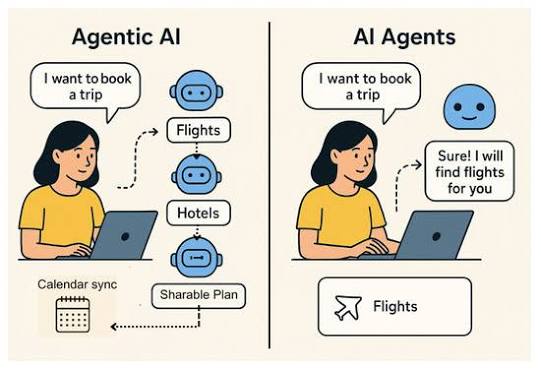
Imagine asking your AI assistant to plan a dinner party for 8 and having it handle everything from menu design to grocery ordering. This isn’t science fiction—it’s the new frontier of AI, where assistants evolve from answering questions to executing multi-step tasks. But how close are we really to this reality, and what does it mean for your wallet? This article explores the current capabilities, limitations, and financial implications of using AI as a personal logistics manager.
From Q&A to Action: The Agentic Shift
For years, AI assistants like Siri and Alexa were limited to single commands—set a timer, play a song, check the weather. They were reactive, not proactive. Then came large language models like ChatGPT, which could hold conversations but still couldn’t do much beyond generating text. The latest evolution is “agentic AI”: systems that can plan, use tools, and execute multi-step workflows with human supervision. This shift turns AI from a passive oracle into an active coordinator.
When you ask, “Can you help me plan a dinner party for 8?” an agentic AI doesn’t just spit out a recipe. It breaks the task into subtasks: define the menu, create a shopping list, set a budget, build a timeline, handle invitations. It remembers that your friend is vegan and that you only have $150 to spend. It can even connect to your calendar, a grocery delivery app, and a payment platform to move from planning to execution. The catch? Full autonomous execution remains limited—most systems require your approval at key steps, especially when money is involved.
What AI Can Do Today: A Menu of Possibilities
Let’s get concrete. As of 2025, mainstream AI assistants like ChatGPT with plugins, Google Gemini, and Claude with tools can perform several dinner-party tasks with varying degrees of autonomy:
- Menu generation: Based on your preferences and dietary restrictions, AI can propose a three-course menu, complete with recipes and estimated costs.
- Shopping list creation: It can generate a categorized list with quantities, and even check items off against what you already have.
- Budget tracking: You can set a budget, and AI will tally costs as it builds the list, suggesting substitutions if you’re over (e.g., cheaper wine or seasonal vegetables).
- Timeline building: AI can create a step-by-step schedule from days before to the event, factoring in prep times and when to buy fresh ingredients.
- Invitation drafting: It can write polite invitation messages for you to review before sending.
However, true execution—like actually ordering groceries or sending invites via APIs—is still in its infancy. Most tools will generate a list and ask you to click “buy,” or draft an email for you to hit “send.” The technology exists to automate these actions, but companies are cautious about letting AI spend money or contact people without explicit human confirmation.
The Financial Angle: A Microcosm of Money Management
Planning a dinner party is more than logistics—it’s a mini-exercise in personal finance. AI’s ability to handle this task is a gateway to broader financial planning. If you trust AI with a $150 dinner, could you trust it with your monthly budget? Let’s break down the financial capabilities:
- Budget setting and tracking: AI can allocate funds across courses, track spending in real-time, and alert you if you’re about to overshoot.
- Cost optimization: It might suggest buying generic brands, using in-season produce, or swapping expensive ingredients. One user reported that AI planned a dinner for 8 on a $120 budget, with a shopping list totaling $118.50—including a dessert they’d never have thought of.
- Expense splitting: After the party, AI can calculate each guest’s share and even draft payment reminders. But it can’t actually process payments or access your bank account without your explicit authorization and oversight.
The critical limitation is security. For AI to handle transactions, it needs access to payment platforms, which raises concerns about fraud and data breaches. Companies are implementing safeguards like spending caps and approval prompts, but the technology is not yet at a point where you’d hand over your credit card details without a second thought.
The Skeptic’s View: When AI Gets It Wrong
For all its promise, AI planning has real limitations that can hit your wallet or your social standing. Here are the main concerns:
- Hallucinations and errors: AI might invent a recipe that doesn’t work, or suggest ingredients that are out of season or unavailable locally. This could lead to extra trips to the store or last-minute substitutions—costing both time and money.
- Lack of sensory judgment: AI can’t taste food, smell a fish market, or know that your aunt hates cilantro unless you tell it. It relies entirely on the information you provide, which is often incomplete.
- Sequential dependencies: A good plan knows you can’t buy fresh fish five days in advance. While AI can handle this in theory, it might miss nuances like the need to brine a turkey for 24 hours or that a specific cake needs to chill overnight.
- Financial risk from miscalculation: If AI underestimates portion sizes, you’ll overspend on groceries. If it books a reservation and you can’t make it, you could face cancellation fees.
These aren’t deal-breakers, but they mean you should always review AI’s suggestions before committing money or sending messages. The AI is a planner, not a guarantor.
The Future: Agentic Commerce and Guardrails
Looking ahead, dinner party planning is a stepping stone to “agentic commerce,” where AI negotiates prices, compares deals, and executes transactions on your behalf. For that to happen, we need a massive ecosystem of interconnected data—your calendar, grocery store inventory, payment methods, and guest preferences—all securely linked. That ecosystem doesn’t fully exist yet.
When it does, we’ll need new “autonomous spending guardrails” to prevent AI from going rogue. Imagine setting a monthly spending cap, requiring approval for any purchase over $50, and having an audit trail of every transaction AI makes. These are the kinds of controls financial institutions and tech companies are exploring right now.
Practical Takeaways: How to Use AI for Your Next Dinner Party
If you’re curious to try AI planning today, here’s a responsible approach:
- Start with a budget and constraints. Tell the AI your guest count, dietary restrictions, and spending limit.
- Use it for drafts, not final decisions. Let AI generate a menu and shopping list, but review everything for accuracy and personal touches.
- Keep the human in the loop. Approve any purchases, and double-check that the AI hasn’t missed a key preference or ingredient.
- Track costs manually, too. Use the AI’s budget tracker as a guide, but cross-check with your own records to avoid surprises.
By treating AI as a skilled assistant rather than an autopilot, you can save time and money while avoiding the pitfalls of blind trust.
The ability of AI to plan a dinner party is a litmus test for its role in our daily lives. It shows how far we’ve come from simple voice commands to proactive problem-solving, and it hints at a future where AI manages complex logistics—including finances—on our behalf. But that future is not here yet. Today, AI can draft, suggest, and calculate, but it still needs you to pull the trigger. As the technology matures, the key will be finding the right balance between convenience and control, ensuring that AI amplifies your decision-making without overriding it.
Summary
- Agentic AI can break down complex tasks like dinner party planning into subtasks, use tools, and execute steps, but full autonomy is limited.
- Current capabilities include menu generation, shopping lists, budget tracking, timelines, and invitations, but purchases and sends require human approval.
- The financial angle is significant: AI can optimize costs, track budgets, and split expenses, but security concerns limit direct payment handling.
- Skeptics worry about hallucinations, sensory limitations, and miscalculations leading to overspending or social blunders.
- The future points to agentic commerce with guardrails like spending caps and approval workflows, but the ecosystem is not yet fully built.
FAQ
Q: Can AI actually order groceries for my dinner party?
A: As of 2025, most AI assistants can generate a shopping list and link to grocery delivery services, but they typically require you to review and confirm the order before purchase. Full autonomous ordering without human approval is not yet mainstream due to security and error risks.
Q: How does AI handle dietary restrictions?
A: AI can incorporate dietary restrictions if you specify them (e.g., vegan, gluten-free). It will generate menus and shopping lists that exclude offending ingredients. However, it only knows what you tell it, so you must be explicit about all allergies and preferences.
Q: Is AI budgeting for a dinner party reliable?
A: AI can create a budget and track costs based on current prices from its training data or live web searches. It’s reliable for estimates, but prices can vary by location and time, so it’s wise to verify with actual store prices. AI can also suggest substitutions to stay within budget.
Q: What are the risks of using AI for payment-related tasks?
A: The main risks are data breaches and AI miscalculations. If AI has access to your payment information, a security flaw could expose it. Also, AI might make errors in amounts or timing, leading to overcharges or missed payments. Always review and approve any financial transactions.
Q: Will AI replace the need for a human party planner?
A: Not yet. AI can handle logistics, budgeting, and scheduling, but it lacks the personal touch and sensory judgment of a human planner. It can’t taste food or know your guests’ personalities. For now, AI is best used as a tool to assist human planners, not replace them.
Leave a Reply