Tag: spice trade

  • The Spice That Built Empires: How Nutmeg Drove Exploration, Conquest, and the Global Palate

    The Spice That Built Empires: How Nutmeg Drove Exploration, Conquest, and the Global Palate

    In the 17th century, a single nutmeg could buy a small fortune. It was worth more by weight than gold, and the quest to control its source—a handful of tiny islands in the Indonesian archipelago—would reshape the world. European powers fought wars, committed genocide, and traded entire colonies over this humble seed.

    Today, nutmeg is a kitchen staple, sprinkled into pumpkin pie and eggnog without a second thought. But its journey from tropical island to spice rack is a story of colonial ambition, economic ruthlessness, and culinary transformation. This is the tale of how a forgotten spice built an empire and changed what we eat.

    A Spice Worth Killing For

    Nutmeg comes from the seed of the Myristica fragrans tree, native only to the Banda Islands in Indonesia’s Maluku archipelago—the legendary Spice Islands. For centuries, the Bandanese enjoyed a natural monopoly: the tree would not grow elsewhere, and the tropical maritime climate of these islands was essential for its cultivation.

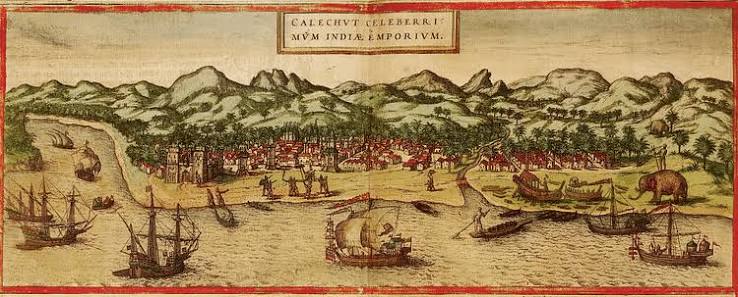
    Long before Europeans arrived, Arab and Gujarati traders had established a lucrative spice route, moving nutmeg from the Malukus to markets in the Middle East and India. Venetian merchants then distributed it across Europe, where it commanded astronomical prices. The source was a closely guarded secret, deliberately obscured by middlemen to protect their margins. This mystery only added to its allure.

    Nutmeg’s value was driven by more than just rarity. In an era without refrigeration, spices masked the taste of spoiled meat and made preserved foods palatable. Physicians prescribed nutmeg for everything from the plague to gout, and it was even thought to have hallucinogenic properties in high doses. For European elites, possessing nutmeg was a status symbol—a marker of wealth and sophistication. Prices were so high that nutmeg was often stored in ornate boxes and grated fresh at the table, a display of conspicuous consumption.

    The Portuguese and the First Monopoly

    In 1511, the Portuguese captured Malacca, a key trading port in the region, and soon after sailed to the Banda Islands directly. They established the first European monopoly on nutmeg, cutting out the Arab and Venetian middlemen. For the next century, Portugal controlled the global supply, reaping enormous profits.

    But the Portuguese were not alone for long. In 1602, the Dutch East India Company (VOC) was founded, and it aggressively pushed into the Spice Islands. The Dutch were determined to dominate the nutmeg trade, and they were willing to do whatever it took.

    The Banda Massacre and Dutch Ruthlessness

    The Dutch East India Company’s pursuit of a total nutmeg monopoly reached its horrifying peak in 1621. Under the command of Jan Pieterszoon Coen, Dutch forces launched a brutal campaign against the native Bandanese, who had resisted the company’s demands for exclusive trade. The result was the Banda Massacre: an estimated 15,000 people were killed or exiled, and the islands were depopulated. Coen’s forces enslaved the survivors and imposed a system of forced labor to cultivate nutmeg for the VOC.

    This genocide was a calculated act of economic strategy. By eliminating the local population and replacing them with enslaved laborers, the Dutch secured absolute control over nutmeg production. They then went to extreme lengths to protect their monopoly: they coated exported nutmeg with lime to prevent germination, killed anyone caught smuggling seeds, and destroyed nutmeg trees on other islands to maintain scarcity.

    The strategy worked. At its 17th-century peak, nutmeg voyages returned profits of 600 to 1,500 percent. The VOC became the world’s first multinational corporation, partly on the back of this single spice. The Dutch model of artificial scarcity—restricting supply to keep prices high—was a precursor to modern cartel economics.

    The islands themselves became a fortress of sorts, with the Dutch enforcing their monopoly through a combination of violence, surveillance, and trade restrictions. The nutmeg trade was so lucrative that it funded the Dutch Golden Age, financing everything from art to military campaigns.

    A Colony Traded for Nutmeg

    One of the most famous episodes in nutmeg history occurred in 1667 with the Treaty of Breda. The Dutch, who had captured the small nutmeg-producing island of Run from the English, ceded it to England in exchange for Manhattan (then New Amsterdam). In hindsight, this seems like an absurd trade—Manhattan would become one of the world’s most valuable cities, while Run is a tiny speck in the Pacific.

    But at the time, it made perfect sense. Nutmeg was a strategic resource, and Run was one of the few places where it grew. Manhattan, by contrast, was a struggling settlement with little economic value. The Dutch were making a rational choice based on the economic logic of the day. Today, the trade is often cited as a prime example of how the spice trade shaped global geopolitics.

    Breaking the Monopoly: The French and British

    The Dutch monopoly on nutmeg lasted for over a century, but it was not unbreakable. In the 1770s, a French naturalist named Pierre Poivre (literally ‘Peter Pepper’) managed to smuggle nutmeg seedlings out of the Banda Islands to Mauritius, then a French colony. Despite Dutch efforts to prevent the export of live plants, Poivre succeeded, and the monopoly began to crumble.

    The British followed suit, transplanting nutmeg to Penang, Singapore, and Grenada in the 19th century. With multiple producers now in the game, prices plummeted, and the spice became accessible to the masses. Grenada, in particular, became a major producer, and nutmeg is still a significant part of its economy today.

    The Culinary Legacy

    Nutmeg’s journey from luxury spice to everyday ingredient is a direct result of this colonial history. During the Renaissance, European cooks incorporated nutmeg into savory dishes like meat pies and sausages, as well as sweet treats like puddings and mulled wine. Its warm, nutty flavor was a mark of sophistication.

    As the spice became more affordable, it found its way into béchamel sauce, eggnog, pumpkin pie spice blends, and holiday baking. These culinary traditions are a legacy of the colonial supply chains that once made nutmeg a commodity worth fighting over.

    But nutmeg was not new to the cuisines of Asia and the Middle East. For centuries, it had been a staple in South Asian and Middle Eastern cooking, appearing in garam masala, biryani, and Persian stews. European adoption came much later and was driven by the same trade networks that built empires.

    Today, nutmeg is so common that we rarely think about its origins. But every time we sprinkle it into a latte or a pie, we are tasting the result of a global struggle for power and wealth—a story of exploration, exploitation, and culinary exchange that changed the world.

    Nutmeg is not just a spice; it is a relic of an era when a single commodity could drive nations to conquest. The Dutch East India Company’s ruthless monopoly, the Banda Massacre, and the Treaty of Breda are reminders of the human cost behind the flavors we take for granted. Yet nutmeg’s legacy is also one of cultural fusion—it bridged continents and enriched cuisines from Europe to Asia. The next time you reach for that jar in your spice rack, remember: you’re holding history in your hands.

    Summary

    • Nutmeg was once worth more than gold, driving European exploration and colonial expansion.
    • The Dutch East India Company committed genocide in the Banda Islands to secure a monopoly.
    • The Treaty of Breda traded Manhattan for a nutmeg island, reflecting the spice’s strategic value.
    • Nutmeg’s culinary integration into global cuisines is a direct legacy of colonial trade networks.
    • The spice’s monopoly was broken by smuggling and transplantation in the 18th and 19th centuries.

    FAQ

    Q: Why was nutmeg so valuable in the 17th century?
    A: Nutmeg was rare, exotic, and believed to have medicinal properties. It was used to mask spoiled meat, preserve food, and as a status symbol for the wealthy. European prices were extraordinarily high, often exceeding the value of gold by weight.

    Q: What was the Banda Massacre?
    A: In 1621, Dutch forces under Jan Pieterszoon Coen slaughtered or enslaved nearly the entire native population of the Banda Islands—an estimated 15,000 people—to secure total control of nutmeg production. This genocide was a calculated act to eliminate resistance and enforce a monopoly.

    Q: How did the Dutch maintain their nutmeg monopoly?
    A: The Dutch used a combination of violence, surveillance, and artificial scarcity. They coated exported nutmeg with lime to prevent germination, killed smugglers, and destroyed nutmeg trees on other islands. They also enslaved the local population to work on plantations.

    Q: What was the Treaty of Breda?
    A: The Treaty of Breda (1667) ended the Second Anglo-Dutch War. The Dutch ceded the small nutmeg-producing island of Run to the English in exchange for Manhattan (New Amsterdam). At the time, nutmeg was considered more valuable than the future site of New York City.

    Q: How did the nutmeg monopoly end?
    A: In the 1770s, French naturalist Pierre Poivre smuggled nutmeg seedlings to Mauritius, breaking the Dutch monopoly. The British later transplanted nutmeg to Penang, Singapore, and Grenada, leading to multiple producers and a collapse in prices.
  • How a Nutmeg Island Cost the Dutch Their Empire in America


    In 1667, two global powers signed a treaty that would redraw the map of the world. The Dutch handed over a muddy, contentious patch of North America—including the island of Manhattan—to the English. In return, they received a tiny volcanic speck in the Banda Sea called Run, barely three kilometers long. The prize? A monopoly on nutmeg, a spice worth more than its weight in gold.

    This was not an isolated quirk of diplomacy. For two centuries, the Banda Islands—the only source of nutmeg on Earth—fueled a trade that built empires, funded the Dutch Golden Age, and ultimately led to one of the most brutal colonial genocides in history. The story of nutmeg is not just about a spice; it’s about how a single seed can shape the fate of nations.

    The Spice That Launched a Thousand Ships

    Long before coffee or tea, nutmeg was the world’s most coveted luxury. Its warm, sweet aroma and purported medicinal powers made it a status symbol for European aristocrats. In the 16th century, a single nutmeg could sell in London for enough to buy a small property or several sheep. It was believed to cure plague, stomach ailments, and even act as a general panacea. While modern science shows nutmeg has mild antibacterial properties, its mystique was enough to drive explorers across uncharted oceans.

    The source of this treasure was a secret: the Banda Islands, a cluster of ten volcanic islets in eastern Indonesia, totaling just 180 square kilometers. For centuries, nutmeg and its derivative mace grew nowhere else. Arab and Indian merchants controlled the trade, moving the spice westward through a chain of middlemen—from Maluku to Java to Malacca to India to the Middle East to Venice. Each step added a markup of 1,000% to 3,000%, so that by the time nutmeg reached European tables, it was literally worth more than gold.

    The Portuguese Crack the Code, Then Lose It

    In 1511, the Portuguese captured Malacca, the key trading hub of Southeast Asia, and finally discovered the source of nutmeg. They established a fort on Banda Neira, but they never managed to monopolize the trade. The Bandanese were skilled negotiators who played European powers against each other, selling to anyone who paid well. The Portuguese held on for a century but failed to break the local resistance.

    The Dutch, however, were not content with a share of the market. In 1602, they chartered the Dutch East India Company (VOC)—the world’s first multinational corporation, with its own army, navy, and authority to sign treaties. The VOC’s mission was total control of the spice trade, by any means necessary.

    The Genocide That Secured a Monopoly

    Between 1609 and 1621, the Dutch tightened their grip on the Banda Islands. They demanded exclusive trading rights, but the Bandanese resisted. In 1621, Governor-General Jan Pieterszoon Coen launched a brutal campaign. With the help of Japanese mercenaries, his forces overwhelmed the islands. An estimated 15,000 Bandanese were killed, enslaved, or fled. Those who survived were either enslaved or escaped to neighboring islands.

    The Dutch then repopulated the islands with slaves and convicts to work the nutmeg plantations. They also introduced a system of ecological control: they destroyed all nutmeg trees on non-Banda islands to prevent any outside supply. Every nutmeg had to be processed and stored in Amsterdam, and the seeds were lime-washed before export to prevent germination if smuggled. Patrol fleets, called hongi, enforced the monopoly by burning any unauthorized nutmeg trees.

    The result was a global monopoly that generated enormous profits for the VOC, funding the Dutch Golden Age—its art, its infrastructure, and its naval power. For the Bandanese, it was a genocide that nearly wiped out an entire people.

    The Island Trade That Changed the World

    One island in the Banda group, Run, had remained under English control since 1616. The English had signed a treaty with the Bandanese to protect them from the Dutch, but they were no match for the VOC’s might. After years of skirmishes, the two nations decided to settle their colonial disputes with a treaty.

    The Treaty of Breda in 1667 was a land-for-spice swap: the Dutch ceded New Netherland—including Manhattan, which they had founded as New Amsterdam—to the English. In exchange, they received Run, a tiny nutmeg-producing island that the English had held.

    This trade is often cited as the moment “Manhattan was traded for nutmeg.” At the time, it seemed like a good deal for the Dutch. Nutmeg was worth more than gold, and Run was the key to their monopoly. Manhattan, on the other hand, was a relatively small settlement of about 1,500 people. The English renamed it New York.

    In hindsight, it looks like one of the worst trades in history, but it illustrates how the spice trade dominated global politics. Nutmeg was not just a commodity; it was a strategic asset that could fund an empire.

    The Dutch monopoly on nutmeg lasted until the late 18th century. In the 1770s, a French naturalist named Pierre Poivre (which literally means “pepper” in French) smuggled nutmeg seedlings to Mauritius, then a French colony. This broke the Dutch exclusivity. By 1817, the British had transplanted nutmeg trees to their own colonies, including Grenada in the Caribbean. Within decades, nutmeg cultivation spread across the tropics, ending the Banda Islands’ unique status forever.

    A Lesson in Monopoly and Empire

    The story of nutmeg is a textbook case of monopoly economics. The VOC created artificial scarcity by controlling supply, manipulating prices, and using violence to enforce exclusivity. It’s a brutal reminder of what companies and nations will do to protect a profitable resource.

    It also shows how a single agricultural product can drive imperial competition. The Portuguese, Dutch, and English fought over these small islands, and the Dutch were willing to commit genocide to secure their monopoly. The spice trade was not just about flavor; it was about power.

    Today, nutmeg is a common kitchen spice, costing a few dollars per jar. But its history is anything but ordinary. The Banda Islands were the center of a global economy for centuries, and the lengths to which nations went to control them changed the course of world history. The next time you sprinkle nutmeg on your eggnog, remember that each seed carries the weight of empires, genocides, and a treaty that shaped the modern world.

    Summary

    • The Banda Islands in Indonesia were the only source of nutmeg in the world until the 19th century.
    • Nutmeg was worth more than gold in 17th-century Europe, driving European exploration and competition.
    • The Dutch East India Company committed genocide against the Bandanese in 1621 to secure a monopoly.
    • In the Treaty of Breda (1667), the Dutch traded Manhattan for the tiny nutmeg island of Run, illustrating the spice’s immense value.
    • The monopoly was broken in the late 18th century when botanists smuggled nutmeg seedlings to other colonies, ending the Banda Islands’ exclusive status.

    FAQ

    Q: Why was nutmeg so valuable in the 17th century?
    A: Nutmeg was prized for its supposed medicinal properties and as a status symbol for aristocrats. It was also used to flavor foods, and because it came from a single, distant source, the supply was limited and the price was astronomical—worth more than gold by weight.

    Q: What was the Dutch East India Company (VOC)?
    A: The VOC was a Dutch trading company founded in 1602, often considered the first multinational corporation. It had its own army, navy, and authority to sign treaties, and it used these powers to establish a monopoly on nutmeg and other spices.

    Q: How did the Dutch enforce their nutmeg monopoly?
    A: They used a combination of treaties, violence, and ecological control. They destroyed nutmeg trees on other islands, forced locals to sell only to the VOC, and used patrol fleets to enforce exclusivity. They also lime-washed nutmeg seeds to prevent germination if smuggled.

    Q: What happened to the native Bandanese people?
    A: In 1621, the Dutch launched a brutal campaign against the Bandanese, killing or enslaving an estimated 15,000 people. The survivors were either enslaved or fled, and the islands were repopulated with slaves and convicts to work the nutmeg plantations.

    Q: Did the Dutch really trade New York for a nutmeg island?
    A: Yes, in the Treaty of Breda (1667), the Dutch ceded New Netherland (including Manhattan) to the English in exchange for the island of Run, a nutmeg-producing island. This trade highlights how valuable nutmeg was at the time.

  • The Spice That Built Empires: How the Silk Road’s Flavor Trade Shaped Our World

    The Spice That Built Empires: How the Silk Road’s Flavor Trade Shaped Our World

    Imagine a world where a single peppercorn could buy a slave, where nations went to war over a nutmeg, and where the quest for cinnamon launched ships into unknown oceans. This was the reality of the Silk Road, a vast network of trade routes that for over a millennium connected the East and West not just with silk, but with the most coveted commodities of the ancient world: spices.

    Today, we sprinkle black pepper on our eggs without a second thought, but in the time of the Roman Empire, it was a luxury so precious it was used as currency. The story of how these humble seeds, barks, and roots traveled thousands of miles, crossing deserts and oceans, is not just a tale of commerce—it’s a saga of human ambition, cultural fusion, and the birth of globalization. This article takes you on a culinary journey along the Silk Road, exploring how the spice trade didn’t just flavor our food, but fundamentally connected civilizations.

    The Spice Road: More Than Just Silk

    When we think of the Silk Road, we often picture caravans laden with shimmering fabrics. But in reality, spices were the true engine of this ancient trade network. Active from roughly 130 BCE, when the Han Dynasty of China opened routes to the West, to the mid-15th century, the Silk Road was a complex web of overland paths through Central Asia and maritime routes across the Indian Ocean. The latter, often called the ‘Spice Route,’ was equally crucial for moving bulk quantities of spices.

    Key hubs like Chang’an (modern Xi’an) in China, Samarkand in Uzbekistan, Baghdad in Iraq, and Constantinople (Istanbul) in Turkey became bustling melting pots where merchants from different worlds exchanged goods, ideas, and recipes. At the western end, Venice and Genoa grew wealthy as the final European gateways for these exotic flavors.

    The Golden Spices: A Pantheon of Flavor

    Each region contributed its own treasures to this global pantry. From India came black pepper, the ‘King of Spices,’ and turmeric, the golden root that would define curries. Sri Lanka offered cinnamon, while the remote Moluccas (Indonesia) supplied cloves and nutmeg, so valuable that they were worth more than gold by weight. China contributed star anise and Sichuan pepper, while Persia (modern Iran) gave us saffron, the world’s most expensive spice, and sumac. Even Africa played a part, with grains of paradise from West Africa and long pepper from Ethiopia.

    These spices were not just for the elite. They transformed cooking across the globe. In Europe, pepper and cloves became essential for preserving meat and masking the taste of spoilage—a practice that, while debated by historians, certainly shaped medieval cuisine. In Central Asia, the fusion of Persian and Chinese techniques gave birth to dishes like laghman noodles and pilaf, which are still enjoyed today. In India, the Mughal Empire, which itself arose from Central Asian conquerors, integrated dried fruits and nuts into its cuisine, creating the rich, complex flavors we associate with Mughlai food.

    The Business of Spice: Middlemen, Monopolies, and Risk

    The spice trade was a brutal business. A single peppercorn might change hands ten to fifteen times before reaching a European kitchen, with each middleman adding a hefty markup. Caravans of camels faced bandits, harsh deserts, and political instability, while maritime dhows relied on monsoon winds—sailing east in summer and west in winter—to make their perilous journeys.

    This complexity created immense wealth for those who controlled the routes. Arab and Venetian merchants held a near-monopoly on the European spice trade for centuries, keeping prices artificially high. This stranglehold was a major motivation for European exploration. When Vasco da Gama sailed around Africa to India in 1498, he broke the monopoly, and when Christopher Columbus sailed west in 1492, he was seeking a direct route to the spice islands. The Dutch later took control of the nutmeg and clove trade in the 17th century, often with brutal violence, such as the infamous Banda Islands massacre of 1621.

    Beyond the Kitchen: A Cultural Superhighway

    The Silk Road was never just about spices. It was a superhighway for culture. Buddhism traveled from India to China along these routes, as did Islam, papermaking, gunpowder, and the compass. Spices were often bundled with other luxury goods like silk and porcelain, making them part of a broader system of exchange.

    This cultural fusion is visible in the spice blends we use today. Garam masala in India, baharat in the Middle East, Chinese five-spice, and North African ras el hanout are all palimpsests of centuries of trade, each blend a unique record of the flavors that passed through their regions. The very concept of ‘curry’ is a British colonial umbrella term, not a single Silk Road dish, but it reflects the diversity of spiced cooking that emerged from this interconnected world.

    The Modern Legacy: From Ancient Trade to Global Cuisine

    The legacy of the Silk Road spice trade is still on our plates. Persian stews, Indian curries, Turkish kebabs, and North African tagines all trace their lineage to this ancient network. The spice trade also laid the groundwork for modern capitalism, with its complex logistics, financing, and risk management, and for the monopolies and cartels that would shape global commerce.

    Today, UNESCO has recognized parts of the Silk Road as World Heritage sites, and China’s Belt and Road Initiative has revived interest in the route’s history. But the most tangible reminder is in our kitchens. Every time we reach for a jar of cumin or a stick of cinnamon, we are connecting with a history that spans continents and millennia—a testament to the power of flavor to bring the world together.

    The Silk Road spice trade was more than a commercial enterprise; it was a force that shaped the modern world. It fueled exploration, built empires, and created a global palate that transcends borders. As we savor the complex flavors of a curry or the warmth of a cinnamon bun, we are tasting the legacy of those ancient traders who braved the unknown to connect civilizations through the simple, yet profound, desire for good food.

    Summary

    • The Silk Road was a network of overland and maritime routes that carried spices, not just silk, from East Asia to Europe for over a millennium.
    • Spices like black pepper, cinnamon, cloves, and nutmeg were worth more than gold, driving trade and exploration.
    • The trade was controlled by middlemen and monopolies, leading to high prices and motivating European voyages of discovery.
    • Spices transformed cuisines worldwide, creating fusion dishes and spice blends that are still central to regional identities.
    • The spice trade was a cultural superhighway, spreading religion, technology, and ideas alongside flavors.

    FAQ

    Q: What was the most valuable spice on the Silk Road?
    A: Black pepper was known as the ‘King of Spices’ and was often used as currency. However, saffron, cloves, and nutmeg were also extremely valuable, sometimes worth more than gold by weight.

    Q: Did spices really preserve meat, or is that a myth?
    A: The idea that spices were used primarily to mask spoilage is debated. While some spices have antimicrobial properties, the amounts needed for preservation would have been prohibitively expensive. More likely, spices were used to add flavor to bland or salted foods and as status symbols.

    Q: How did the spice trade end?
    A: The spice trade didn’t end, but it was transformed. The Portuguese broke the Arab-Venetian monopoly in 1498, and later the Dutch and British East India companies dominated the trade. The routes shifted to maritime paths, and spices became more accessible and affordable.

    Q: What is the ‘Spice Route’?
    A: The Spice Route refers to the maritime trade routes across the Indian Ocean that connected Southeast Asia, India, the Middle East, and East Africa. It was a crucial complement to the overland Silk Road, especially for bulk spice transport.

    Q: How did the spice trade influence modern cuisine?
    A: The spice trade created a global palate, introducing ingredients and techniques that blended across cultures. It gave rise to iconic spice blends like garam masala and five-spice, and shaped the culinary identities of regions from Persia to China.