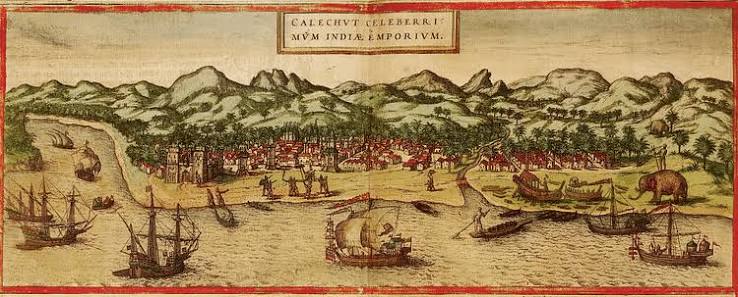
In the 17th century, a single nutmeg could buy a small fortune. It was worth more by weight than gold, and the quest to control its source—a handful of tiny islands in the Indonesian archipelago—would reshape the world. European powers fought wars, committed genocide, and traded entire colonies over this humble seed.
Today, nutmeg is a kitchen staple, sprinkled into pumpkin pie and eggnog without a second thought. But its journey from tropical island to spice rack is a story of colonial ambition, economic ruthlessness, and culinary transformation. This is the tale of how a forgotten spice built an empire and changed what we eat.
A Spice Worth Killing For
Nutmeg comes from the seed of the Myristica fragrans tree, native only to the Banda Islands in Indonesia’s Maluku archipelago—the legendary Spice Islands. For centuries, the Bandanese enjoyed a natural monopoly: the tree would not grow elsewhere, and the tropical maritime climate of these islands was essential for its cultivation.
Long before Europeans arrived, Arab and Gujarati traders had established a lucrative spice route, moving nutmeg from the Malukus to markets in the Middle East and India. Venetian merchants then distributed it across Europe, where it commanded astronomical prices. The source was a closely guarded secret, deliberately obscured by middlemen to protect their margins. This mystery only added to its allure.
Nutmeg’s value was driven by more than just rarity. In an era without refrigeration, spices masked the taste of spoiled meat and made preserved foods palatable. Physicians prescribed nutmeg for everything from the plague to gout, and it was even thought to have hallucinogenic properties in high doses. For European elites, possessing nutmeg was a status symbol—a marker of wealth and sophistication. Prices were so high that nutmeg was often stored in ornate boxes and grated fresh at the table, a display of conspicuous consumption.
The Portuguese and the First Monopoly
In 1511, the Portuguese captured Malacca, a key trading port in the region, and soon after sailed to the Banda Islands directly. They established the first European monopoly on nutmeg, cutting out the Arab and Venetian middlemen. For the next century, Portugal controlled the global supply, reaping enormous profits.
But the Portuguese were not alone for long. In 1602, the Dutch East India Company (VOC) was founded, and it aggressively pushed into the Spice Islands. The Dutch were determined to dominate the nutmeg trade, and they were willing to do whatever it took.
The Banda Massacre and Dutch Ruthlessness
The Dutch East India Company’s pursuit of a total nutmeg monopoly reached its horrifying peak in 1621. Under the command of Jan Pieterszoon Coen, Dutch forces launched a brutal campaign against the native Bandanese, who had resisted the company’s demands for exclusive trade. The result was the Banda Massacre: an estimated 15,000 people were killed or exiled, and the islands were depopulated. Coen’s forces enslaved the survivors and imposed a system of forced labor to cultivate nutmeg for the VOC.
This genocide was a calculated act of economic strategy. By eliminating the local population and replacing them with enslaved laborers, the Dutch secured absolute control over nutmeg production. They then went to extreme lengths to protect their monopoly: they coated exported nutmeg with lime to prevent germination, killed anyone caught smuggling seeds, and destroyed nutmeg trees on other islands to maintain scarcity.
The strategy worked. At its 17th-century peak, nutmeg voyages returned profits of 600 to 1,500 percent. The VOC became the world’s first multinational corporation, partly on the back of this single spice. The Dutch model of artificial scarcity—restricting supply to keep prices high—was a precursor to modern cartel economics.
The islands themselves became a fortress of sorts, with the Dutch enforcing their monopoly through a combination of violence, surveillance, and trade restrictions. The nutmeg trade was so lucrative that it funded the Dutch Golden Age, financing everything from art to military campaigns.
A Colony Traded for Nutmeg
One of the most famous episodes in nutmeg history occurred in 1667 with the Treaty of Breda. The Dutch, who had captured the small nutmeg-producing island of Run from the English, ceded it to England in exchange for Manhattan (then New Amsterdam). In hindsight, this seems like an absurd trade—Manhattan would become one of the world’s most valuable cities, while Run is a tiny speck in the Pacific.
But at the time, it made perfect sense. Nutmeg was a strategic resource, and Run was one of the few places where it grew. Manhattan, by contrast, was a struggling settlement with little economic value. The Dutch were making a rational choice based on the economic logic of the day. Today, the trade is often cited as a prime example of how the spice trade shaped global geopolitics.
Breaking the Monopoly: The French and British
The Dutch monopoly on nutmeg lasted for over a century, but it was not unbreakable. In the 1770s, a French naturalist named Pierre Poivre (literally ‘Peter Pepper’) managed to smuggle nutmeg seedlings out of the Banda Islands to Mauritius, then a French colony. Despite Dutch efforts to prevent the export of live plants, Poivre succeeded, and the monopoly began to crumble.
The British followed suit, transplanting nutmeg to Penang, Singapore, and Grenada in the 19th century. With multiple producers now in the game, prices plummeted, and the spice became accessible to the masses. Grenada, in particular, became a major producer, and nutmeg is still a significant part of its economy today.
The Culinary Legacy
Nutmeg’s journey from luxury spice to everyday ingredient is a direct result of this colonial history. During the Renaissance, European cooks incorporated nutmeg into savory dishes like meat pies and sausages, as well as sweet treats like puddings and mulled wine. Its warm, nutty flavor was a mark of sophistication.
As the spice became more affordable, it found its way into béchamel sauce, eggnog, pumpkin pie spice blends, and holiday baking. These culinary traditions are a legacy of the colonial supply chains that once made nutmeg a commodity worth fighting over.
But nutmeg was not new to the cuisines of Asia and the Middle East. For centuries, it had been a staple in South Asian and Middle Eastern cooking, appearing in garam masala, biryani, and Persian stews. European adoption came much later and was driven by the same trade networks that built empires.
Today, nutmeg is so common that we rarely think about its origins. But every time we sprinkle it into a latte or a pie, we are tasting the result of a global struggle for power and wealth—a story of exploration, exploitation, and culinary exchange that changed the world.
Nutmeg is not just a spice; it is a relic of an era when a single commodity could drive nations to conquest. The Dutch East India Company’s ruthless monopoly, the Banda Massacre, and the Treaty of Breda are reminders of the human cost behind the flavors we take for granted. Yet nutmeg’s legacy is also one of cultural fusion—it bridged continents and enriched cuisines from Europe to Asia. The next time you reach for that jar in your spice rack, remember: you’re holding history in your hands.
Summary
- Nutmeg was once worth more than gold, driving European exploration and colonial expansion.
- The Dutch East India Company committed genocide in the Banda Islands to secure a monopoly.
- The Treaty of Breda traded Manhattan for a nutmeg island, reflecting the spice’s strategic value.
- Nutmeg’s culinary integration into global cuisines is a direct legacy of colonial trade networks.
- The spice’s monopoly was broken by smuggling and transplantation in the 18th and 19th centuries.
FAQ
Q: Why was nutmeg so valuable in the 17th century?
A: Nutmeg was rare, exotic, and believed to have medicinal properties. It was used to mask spoiled meat, preserve food, and as a status symbol for the wealthy. European prices were extraordinarily high, often exceeding the value of gold by weight.
Q: What was the Banda Massacre?
A: In 1621, Dutch forces under Jan Pieterszoon Coen slaughtered or enslaved nearly the entire native population of the Banda Islands—an estimated 15,000 people—to secure total control of nutmeg production. This genocide was a calculated act to eliminate resistance and enforce a monopoly.
Q: How did the Dutch maintain their nutmeg monopoly?
A: The Dutch used a combination of violence, surveillance, and artificial scarcity. They coated exported nutmeg with lime to prevent germination, killed smugglers, and destroyed nutmeg trees on other islands. They also enslaved the local population to work on plantations.
Q: What was the Treaty of Breda?
A: The Treaty of Breda (1667) ended the Second Anglo-Dutch War. The Dutch ceded the small nutmeg-producing island of Run to the English in exchange for Manhattan (New Amsterdam). At the time, nutmeg was considered more valuable than the future site of New York City.
Q: How did the nutmeg monopoly end?
A: In the 1770s, French naturalist Pierre Poivre smuggled nutmeg seedlings to Mauritius, breaking the Dutch monopoly. The British later transplanted nutmeg to Penang, Singapore, and Grenada, leading to multiple producers and a collapse in prices.
Leave a Reply